

الملفّ المروري في الإمارات (2026): ما هو، وكيف تفتح واحداً، وكيف تجد رقمه
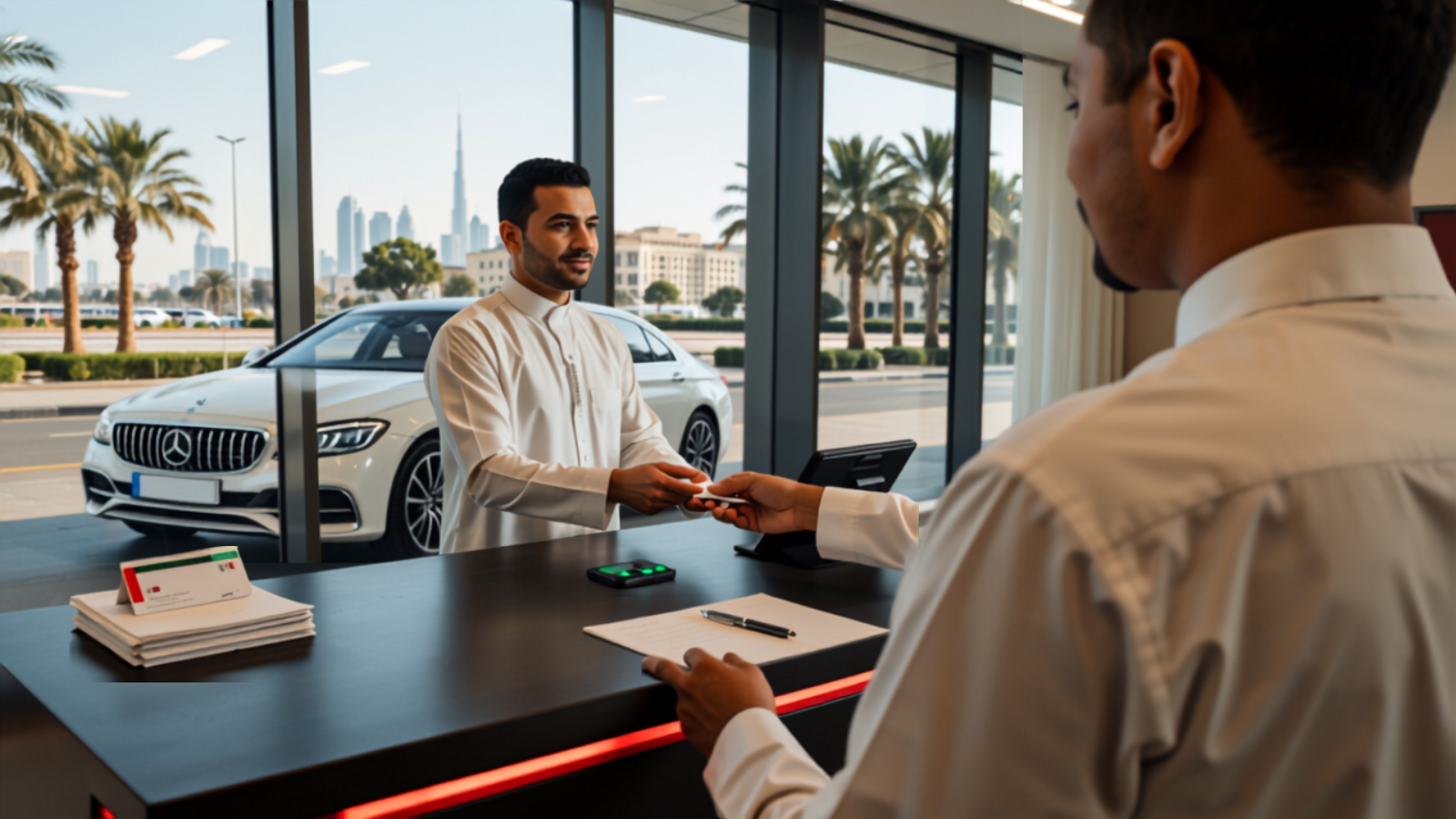
ملفّك المروري هو الحساب الواحد الذي يتعلّق به كل شيء آخر في منظومة المركبات الإماراتية — ولا يكاد أحد يشرحه حتى يعرقلهم. فلا يمكنك شراء لوحة رقم، أو المزايدة في مزاد الهيئة، أو نقل لوحة إلى زوجتك، أو التقدّم للتقسيط، أو تسجيل سيارة، بدونه. وهو ليس رخصة قيادتك، ولا هويّتك الإماراتية، ولا ملكيّتك — وإن كان رقم ملفّك المروري مطبوعاً على هذه الأخيرة. وهذا الدليل هو المرجع المبسّط الذي لم تكتبه الهيئة قط: ما الملفّ فعلاً، وكيف تفتح واحداً، وأين تجد رقمك في أقلّ من دقيقة، والمواضع الخمسة التي يكلّفك فيها ملفّ مهمَل لوحةً بهدوء.
الإجابة في 30 ثانية.
- ما هو: ملفّك الشخصي لدى الجهة المرورية في الإمارة — الحساب الذي يملك رخصتك ومركباتك ولوحاتك ومخالفاتك.
- يُسمّى أيضاً: رقم الملفّ المروري، أو رقم الرمز المروري، أو TFN.
- تكلفة الفتح: نحو 200–300 درهم، بحسب المركز ونوع الملفّ.
- أين تفتحه: مركز سعادة المتعاملين لدى الهيئة، أو معهد قيادة معتمد، أو مركز خدمة تابع للهيئة.
- أسرع طريقة لإيجاد رقمك: اقرأه من الملكية (بطاقة تسجيل المركبة)، أو راجع حسابك لدى الهيئة.
- لماذا يهمّ مشتري اللوحات: بلا ملفّ مروري لا مزايدة في المزادات، ولا ملكية لوحة، ولا نقل، ولا تقسيط.
ما يغطّيه هذا الدليل
- ما الملفّ المروري فعلاً
- ما ليس هو — الملفّ مقابل الرخصة مقابل الهوية مقابل الملكية
- كيف تجد رقم ملفّك المروري في أقلّ من دقيقة
- كيف تفتح ملفّاً مرورياً
- لماذا يصطدم مشترو اللوحات بهذا الجدار باستمرار
- الملفّات المرورية في الإمارات السبع
- الملفّات المرورية للشركات: لوحات تحت رخصة تجارية
- الرهون والحجوزات والقيود — حين يوقفك ملفّك
- نظافة الملفّ المروري: قائمة فحص من خمس دقائق
- ستّة أخطاء تكلّف الناس لوحةً
- الأسئلة الشائعة — 14 سؤالاً مُجاباً
ما الملفّ المروري فعلاً
الإجابة المباشرة: الملفّ المروري هو الحساب الشخصي الذي تفتحه لك الجهة المرورية في الإمارة، ويُدرَج تحته كل سجلّ مركبات تملكه — رخصة قيادتك، ومركباتك المسجّلة، ولوحات أرقامك، ومخالفاتك. ومعرّفه هو رقم الملفّ المروري، ويُسمّى أيضاً رقم الرمز المروري أو TFN.
والنموذج الذهني الذي يجعل كل شيء يتّضح: اعتبره حسابك المصرفي، واللوحات هي المال فيه. فاللوحة ليست مملوكة لك بشكل مجرّد أبداً — بل يملكها ملفّك المروري. وهذه الحقيقة المفردة تشرح كل قاعدة تقريباً ممّا يلي:
- اللوحات يحملها الملفّ لا الشخص. ولهذا فإن نقل لوحة بين شخصين هو نقل بين ملفّين مروريّين.
- المخالفات تلتصق بالملفّ. لا بالسيارة، ولا بالسائق وحده. ولهذا قد تعرقلك مخالفة غير مسدّدة على مركبة لم تعد تملكها.
- القيود تُطبَّق على مستوى الملفّ. فحين تضع الهيئة رهناً خلال خطّة تقسيط، تجلس العلامة على الملفّ المروري — ولهذا تُجمَّد اللوحة.
- ملفّ واحد لكل شخص في كل إمارة. فأنت لا تراكم ملفّات بشرائك مزيداً من السيارات.
وإن كانت المصطلحات هنا جديدة عليك، فإن معجم اللوحات الإماراتية لدينا يعرّف كل مصطلح ورمز واختصار في المنظومة بلغة بسيطة.
ما ليس هو — الملفّ مقابل الرخصة مقابل الهوية مقابل الملكية
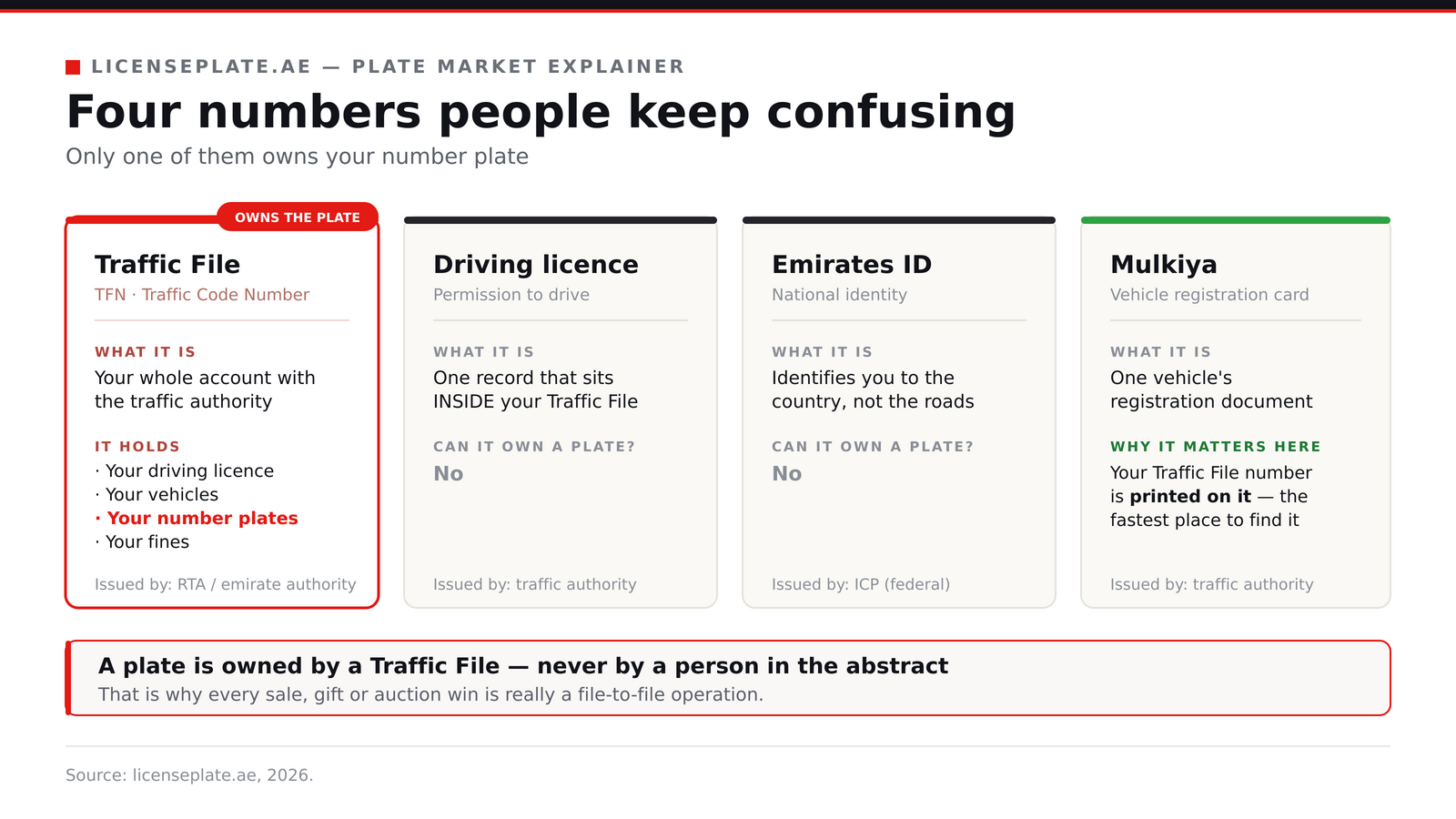
معظم الالتباس يأتي من أربع وثائق تحمل كلّها أرقاماً وتُسمّى كلّها «رقمي المروري» في لحظة ما. وهي متمايزة:
| البند | ما الذي يعرّفه | جهة الإصدار |
|---|---|---|
| الملفّ المروري | حسابك كاملاً لدى الجهة المرورية — الرخصة والمركبات واللوحات والمخالفات | الجهة المرورية في الإمارة (الهيئة في دبي) |
| رخصة القيادة | إذنك بقيادة صنف من المركبات | الجهة المرورية — وتجلس داخل ملفّك |
| الهوية الإماراتية | أنت كمقيم — هوية وطنية لا مرورية | هيئة الهوية والجنسية (اتحادية) |
| الملكية | تسجيل مركبة بعينها — وتطبع رقم ملفّك المروري | الجهة المرورية |
والخلاصة العملية: هويّتك الإماراتية تعرّفك للدولة؛ وملفّك المروري يعرّفك للطرق. فبائع اللوحة الذي يطلب «رقمك المروري» يريد رقم الملفّ المروري، لا رقم هويّتك الإماراتية ولا رقم رخصتك.
كيف تجد رقم ملفّك المروري في أقلّ من دقيقة
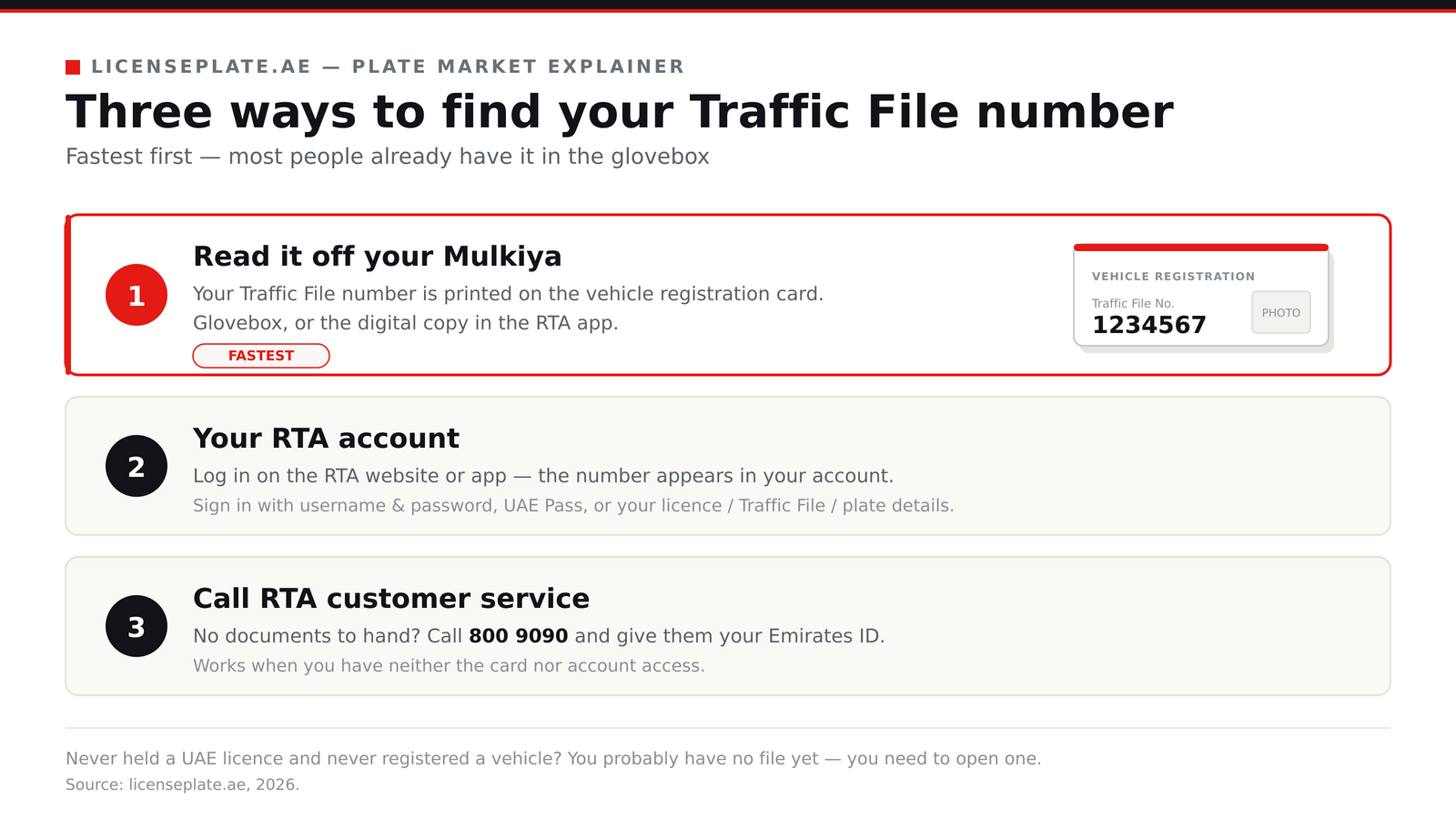
الإجابة المباشرة: أسرع طريق هو قراءته من ملكيّتك — فرقم ملفّك المروري مطبوع على بطاقة تسجيل المركبة. وإن لم تكن البطاقة بيدك، فهناك طريقان آخران.
- ملكيّتك (الأسرع). رقم الملفّ المروري مطبوع على بطاقة تسجيل المركبة. فإن كنت تملك سيارة مسجّلة، فالجواب في درج سيارتك أو في النسخة الرقمية داخل تطبيق الهيئة.
- حسابك لدى الهيئة. سجّل الدخول على موقع الهيئة أو تطبيقها — فيظهر رقم ملفّك المروري في حسابك. ويمكنك الدخول باسم مستخدم وكلمة مرور، أو بـالهوية الرقمية UAE Pass، أو ببيانات رخصة قيادتك أو ملفّك المروري أو رقم لوحتك.
- اتّصل بخدمة عملاء الهيئة. إن لم يتوفّر لك أيّهما، فاتّصل على 800 9090 وأعطهم هويّتك الإماراتية لاسترجاع الرقم.
وملاحظة توفّر عليك رحلة ضائعة: إن لم تسجّل مركبة قط ولم تحمل رخصة إماراتية قط، فالأرجح جداً أنه ليس لديك ملفّ مروري بعد — فلا رقم لتجده، وتنطبق الخطوة الثانية أدناه بدلاً من ذلك.
كيف تفتح ملفّاً مرورياً
الإجابة المباشرة: افتح ملفّاً مرورياً في مركز سعادة المتعاملين لدى الهيئة، أو معهد قيادة معتمد، أو مركز خدمة تابع للهيئة. وخصّص نحو 200–300 درهم، بحسب المركز وما إذا كان ملفّ قيادة أم ملفّ مركبة.
التسلسل:
- تأكّد أنك تحتاج ملفّاً جديداً فعلاً. افحص أولاً بالطرق الثلاث أعلاه — فالناس يفتحون نسخاً مكرّرة بانتظام لأنهم افترضوا أنه ليس لديهم ملفّ.
- اختر المكان. مركز سعادة المتعاملين لدى الهيئة، أو معهد قيادة معتمد، أو مركز خدمة تابع للهيئة. ومعاهد القيادة غالباً أيسر الطرق إن كنت تبدأ تدريب الرخصة أيضاً.
- أحضر وثائقك. الهوية الإماراتية، وجواز السفر بتأشيرة الإقامة، وصورة شخصية هي الأساس المعياري. والمتطلّبات قد تختلف بحسب المركز ونوع الملفّ، فتأكّد قبل أن تسافر.
- ادفع الرسم. توقّع نحو 200–300 درهم.
- سجّل الرقم في مكان دائم. ستحتاجه أكثر بكثير ممّا تتوقّع — في كل معاملة لوحة، وكل تسجيل مزاد، وكل نقل.
وبمجرّد وجود الملفّ، يصبح المفتاح الذي يفتح كل ما عداه. ودليلنا لـشراء لوحة رقم في دبي ينطلق من افتراض أن هذه الخطوة أُنجزت أصلاً.
لماذا يصطدم مشترو اللوحات بهذا الجدار باستمرار
هذا هو القسم الذي تتخطّاه الأدلّة العامة، وهو سبب كتابة سوق لوحات عن الملفّات المرورية أصلاً. فكل معاملة لوحة ذات معنى في الإمارات هي في الحقيقة عملية على الملفّ المروري. وخمسة أمثلة ملموسة:
| ما تريد فعله | ما هو شرط الملفّ المروري |
|---|---|
| المزايدة في مزاد لوحات لدى الهيئة | وجود ملفّ مروري مفتوح في تلك الإمارة شرط مسبق للتسجيل كمزايد — انظر شرح المزايدة لدى الهيئة |
| دفع ثمن لوحة بالتقسيط | تُوضَع علامة رهن على ملفّك المروري طوال المدّة، فتمنع أي بيع — انظر التقسيط بموجب القرار 917 |
| شراء لوحة من بائع خاص | تنتقل اللوحة من ملفّ البائع إلى ملفّك؛ ويجب أن يكون الملفّان نظيفين |
| إهداء لوحة لفرد من العائلة | نقل من ملفّ إلى ملفّ، مع إثبات القرابة — انظر إهداء اللوحات للعائلة |
| مغادرة الإمارات نهائياً | يجب تسوية ملفّك ومعالجة أمر لوحاتك — انظر دليل مغادرة الوافدين |
والنمط ثابت: الملفّ المروري النظيف المفتوح شرط مسبق، لا إجراء شكلي. والمشترون الذين يكتشفون ذلك يوم المزاد يخسرون اللوحة.
الملفّات المرورية في الإمارات السبع
مفهوم الملفّ المروري قائم في الإمارات كلّها، لكن الجهة المُصدِرة تختلف بحسب الإمارة. فجهة دبي هي الهيئة؛ وجهة أبوظبي تقع ضمن منظومة مركز النقل المتكامل وتم؛ والإمارات الشمالية تعمل عبر إدارات المرور في شرطتها.
ونتيجتان تفاجئان الناس:
- الملفّ في إمارة ليس تلقائياً ملفّاً في أخرى. فإن كنت تحمل ملفّاً في دبي وتريد شراء لوحة من أبوظبي في السوق الأولية، فستتعامل مع نظام أبوظبي — ودليل النقل عبر تم لدينا يغطّي تلك الفوارق، ودليل مزاد الإمارات يغطّي المزايدة خارج دبي.
- نقل لوحة بين الإمارات عملية عابرة للأنظمة فعلاً، لا تعديلاً في قاعدة بيانات. والآليات والقيود في دليل النقل بين الإمارات لدينا.
وإن كنت تختار الإمارة التي تشتري فيها، فإن مقارنة أسعار الإمارات السبع نقطة انطلاق أفضل — فالرقم نفسه قد يكلّف خمسة أضعاف بحسب مكان إصداره.
الملفّات المرورية للشركات: لوحات تحت رخصة تجارية
الإجابة المباشرة: الشركة تحمل ملفّها المروري الخاص، منفصلاً عن ملفّ أي فرد، واللوحات المسجّلة للمنشأة تعود إلى ذلك الملفّ المؤسّسي — لا إلى المالك شخصياً. ولأي شخص يستخدم لوحة مميّزة كأصل للعلامة، هذا التمييز يحسم من يملك الرقم فعلاً.
وما الذي يتغيّر حين يكون الملفّ مؤسّسياً:
- الرخصة التجارية تحلّ محلّ الهوية الإماراتية كوثيقة الارتكاز، ويتصرّف مفوّض بالتوقيع على الملفّ.
- عتبة تقسيط أعلى. فبموجب القرار 917 يبلغ الحدّ الأدنى للمبلغ المموّل 100,000 درهم للشخص الاعتباري، مقابل 10,000 درهم للفرد.
- نقل لوحة من الشركة إليك نقل حقيقي بين ملفّين، برسومه المعتادة — لا إعادة ترتيب داخلية.
- المخالفات والرهون تجلس على ملفّ الشركة، ما يعني أن مخالفة أسطول واحدة غير مسدّدة قد تعرقل شراء لوحة لا علاقة لها.
- وإن انتهت الرخصة، صار الملفّ مشكلة. فاللوحات التي تحملها شركة انتهت رخصتها التجارية أصعب في النقل بكثير ممّا يتوقّع معظم المالكين.
والقرار العملي — أتشتري اللوحة شخصياً أم عبر الشركة — له تبعات ضريبية وتسويقية وتبعات عند الخروج. ودليلانا عن اللوحات لأصحاب الأعمال وضريبة الشركات الإماراتية ومستثمري اللوحات يغطّيان الجانبين.
الرهون والحجوزات والقيود — حين يوقفك ملفّك
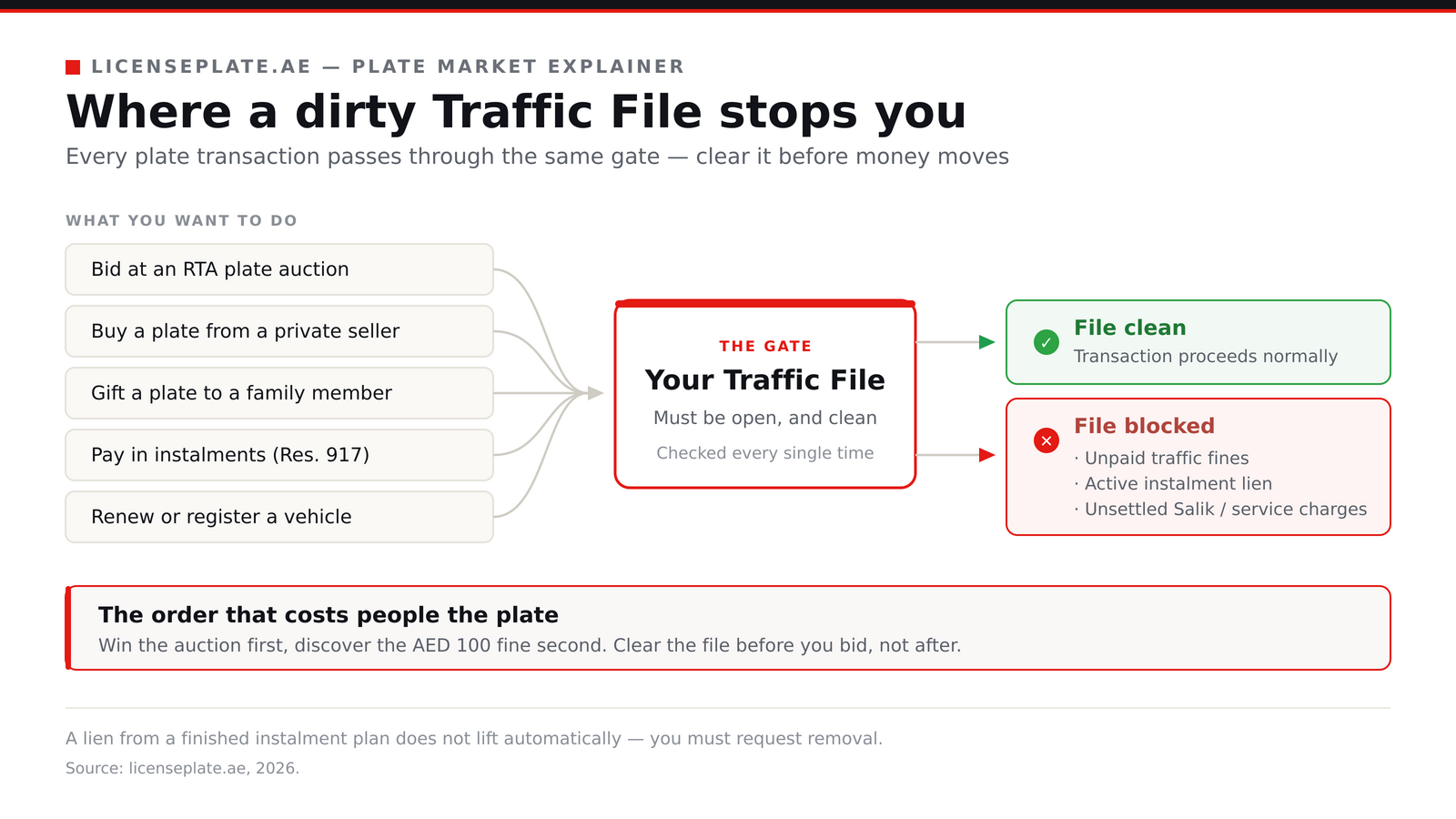
يمكن تقييد الملفّ المروري، والملفّ المقيَّد يعرقل بصمت معاملات افترضت أنها روتينية. والثلاثة التي ستقابلها فعلاً:
- المخالفات غير المسدّدة. أشيع عائق بفارق كبير. فالمخالفات المرورية المستحقّة تمنع تجديد التسجيل وإصدار اللوحات والنقل. افحص مخالفاتك برقم اللوحة عبر دليل المخالفات برقم اللوحة لدينا، وسدّدها عبر كيف تدفع المخالفات المرورية في دبي.
- رهن التقسيط. فبموجب القرار 917، تضع خطّة التقسيط المعتمدة علامة رهن تمنع التصرّف في اللوحة حتى تُصرَف الدفعة الأخيرة وتُرفَع العلامة رسمياً. والرهن لا يزول من تلقاء نفسه — عليك طلب رفعه.
- سالك أو رسوم الخدمات غير المسوّاة. فأرصدة الرسوم والخدمات المستحقّة قد تعرقل التجديد. انظر دليل سالك 2026.
والقاعدة التي تنتج عن الثلاثة: نظّف ملفّك قبل أن تلتزم بالمال، لا بعده. فتأمين المزاد لا يعنيه أن مخالفتك كانت 100 درهم فقط.
نظافة الملفّ المروري: قائمة فحص من خمس دقائق
نفّذ هذه قبل أي شراء لوحة أو تسجيل مزاد أو نقل:
- ☐ أعرف رقم ملفّي المروري وحفظته في مكان دائم
- ☐ صفر مخالفات مرورية مستحقّة على كل مركبة في ملفّي
- ☐ أرصدة سالك والخدمات مسوّاة
- ☐ تسجيلات المركبات سارية لا منتهية
- ☐ لا رهن نشط من خطّة تقسيط سابقة
- ☐ بيانات تواصلي لدى الجهة محدّثة، كي تصلني الإشعارات فعلاً
- ☐ إن كنت أشتري من بائع خاص: تحقّقت من حالة اللوحة باستقلال — انظر قائمة العناية الواجبة
ستّة أخطاء تكلّف الناس لوحةً
- المزايدة أولاً وفحص الملفّ ثانياً. تفوز بالدفعة، ثم تكتشف أن مخالفة غير مسدّدة تمنع الإصدار. رتّبها بالعكس.
- الخلط بين رقم الملفّ المروري ورقم الهوية الإماراتية. فهما معرّفان مختلفان من جهتين مختلفتين. وتسليم الخطأ منهما يهدر زيارة إلى المنضدة.
- فتح ملفّ ثانٍ بلا داعٍ. افحص بالطرق الثلاث أعلاه أولاً؛ فالنسخ المكرّرة تخلق فوضى إدارية.
- افتراض أن ملفّ دبي يعمل في كل مكان. وهو لا يعمل. فكل إمارة تدير نظامها.
- نسيان طلب رفع الرهن بعد القسط الأخير. فالعلامة لا تُرفَع تلقائياً، ولا يكتشف البائعون ذلك إلّا حين يفشل بيع بعد أسابيع.
- تجاهل مخالفات على سيارة بعتها أصلاً. فالمخالفات تلتصق بالملفّ. وبيع المركبة لا يزيلها.
الأسئلة الشائعة
ما الملفّ المروري في الإمارات؟
الملفّ المروري هو الحساب الشخصي الذي تفتحه لك الجهة المرورية في الإمارة. ويحمل رخصة قيادتك ومركباتك المسجّلة ولوحات أرقامك ومخالفاتك المرورية. ومعرّفه هو رقم الملفّ المروري، ويُسمّى أيضاً رقم الرمز المروري أو TFN.
كم يكلّف فتح ملفّ مروري في دبي؟
نحو 200 إلى 300 درهم، بحسب مركز الخدمة وما إذا كان ملفّ قيادة أم ملفّ مركبة. تأكّد من الرسم الحالي في المركز قبل الذهاب.
أين أستطيع فتح ملفّ مروري؟
في مركز سعادة المتعاملين لدى الهيئة، أو معهد قيادة معتمد، أو مركز خدمة تابع للهيئة في دبي. أما بقيّة الإمارات فتستخدم جهاتها المرورية الخاصة.
أين أجد رقم ملفّي المروري؟
هو مطبوع على ملكيّتك (بطاقة تسجيل المركبة). ويمكنك أيضاً إيجاده في حسابك على موقع الهيئة أو تطبيقها، أو بالاتّصال بخدمة عملاء الهيئة على 800 9090 ومعك هويّتك الإماراتية.
هل رقم الملفّ المروري هو نفسه رقم هويّتي الإماراتية؟
لا. فهويّتك الإماراتية تصدر اتحادياً وتعرّفك كمقيم. أما رقم ملفّك المروري فتصدره الجهة المرورية في الإمارة ويعرّف حساب مركباتك. وهما رقمان مختلفان من جهتين مختلفتين.
هل الملفّ المروري هو نفسه رخصة القيادة؟
لا. فرخصة قيادتك تجلس داخل ملفّك المروري. الملفّ هو الحساب؛ والرخصة سجلّ واحد داخله.
ما رقم الرمز المروري؟
هو اسم آخر لرقم الملفّ المروري. فرقم الملفّ المروري ورقم الرمز المروري وTFN تشير كلّها إلى المعرّف نفسه.
هل أحتاج ملفّاً مرورياً لشراء لوحة رقم؟
نعم. فاللوحات يحملها ملفّ مروري لا شخص بشكل مجرّد، لذا تحتاج ملفّاً مفتوحاً لتملك لوحة أو تشتريها أو تزايد عليها أو تنقلها.
هل أحتاج ملفّاً مرورياً للمزايدة في مزاد لوحات لدى الهيئة؟
نعم. فوجود ملفّ مروري مفتوح في الإمارة المعنية شرط مسبق للتسجيل كمزايد، وقد تمنع المخالفات المستحقّة إصدار اللوحة حتى بعد فوزك.
هل يمكن أن أملك ملفّات مرورية في أكثر من إمارة؟
نعم. فالأنظمة منفصلة، وحيازة ملفّ في إمارة لا تمنحك ملفّاً في أخرى. وشراء لوحة في إمارة مختلفة يعني عموماً التعامل مع جهة تلك الإمارة.
هل يستطيع الوافدون فتح ملفّ مروري؟
نعم. فالهوية الإماراتية السارية وتأشيرة الإقامة هما الأساس المعياري. والمتطلّبات تختلف قليلاً بحسب المركز ونوع الملفّ، فتأكّد قبل الذهاب.
لماذا ملفّي المروري محجوب؟
الأسباب الثلاثة المعتادة هي مخالفات مرورية غير مسدّدة، أو رهن نشط من خطّة تقسيط، أو سالك ورسوم خدمات غير مسوّاة. وأيّها قد يمنع التجديد أو الإصدار أو النقل.
هل يبقى الرهن على ملفّي بعد إنهاء الأقساط؟
نعم، حتى تطلب رفعه رسمياً. فعلامة الرهن لا تُرفَع تلقائياً حين يُصرَف الشيك الأخير، ولا يكتشف البائعون ذلك غالباً إلّا حين يفشل بيع لاحق.
هل تتبع المخالفات السيارة أم الملفّ المروري؟
تلتصق بالملفّ المروري. وبيع المركبة لا يزيل مخالفات سُجِّلت أصلاً على ملفّك.
الخلاصة النهائية
الملفّ المروري هو أقلّ الأشياء بريقاً وأكثرها أثراً في سوق اللوحات الإماراتية. فهو الحساب الذي يملك لوحاتك، والدفتر الذي يحمل مخالفاتك، والبوّابة التي يمرّ عبرها كل مزاد ونقل وخطّة تقسيط. عامله كبنية تحتية: اعرف رقمك، وأبقِه نظيفاً، وافحصه قبل أن يتحرّك المال — لا بعده.
وبوجود ملفّ نظيف، يبدأ الجزء الممتع. تصفّح لوحات دبي أو سوق الإمارات الكاملة، وإن كنت تحدّد كم يساوي رقم، فابدأ بـكيف تفحص القيمة الحقيقية للوحة.
حذف التعليق؟
هل أنت متأكد أنك تريد حذف هذا التعليق؟ لا يمكن التراجع عن هذا الإجراء.
حذف المقال؟
هل أنت متأكد أنك تريد حذف هذه المقالة؟ سيؤدي ذلك أيضًا إلى حذف جميع التعليقات. لا يمكن التراجع عن هذا الإجراء.