

أخذ لوحة رقمك الإماراتية إلى عُمان أو السعودية (2026): الوثائق الأربع التي يجب أن تتطابق عند الحدود
آخر تحديث: 18 أغسطس 2026
الإجابة السريعة
لقيادة سيارة بلوحة إماراتية إلى عُمان أو السعودية، يجب أن تتّفق أربعة أشياء: اللوحة على السيارة، والملكية الأصلية، ووثيقة تأمين عابرة للحدود (البطاقة البرتقالية لعُمان، ووثيقة منافذ للسعودية)، و— إن لم تكن السيارة لك ببساطة — شهادة عدم ممانعة. فتأمينك الإماراتي المعتاد لا يكفي وحده. وأشيع إخفاق مفرد هو عدم التطابق: لوحة غُيِّرت أو نُقِلت حديثاً بينما لا يزال التسجيل والتأمين يحملان الرقم القديم. وضبّاط الحدود يطابقون اللوحة ورقم الهيكل مع الوثائق، وعدم التطابق يعني أن تعود من حيث أتيت.
في كل صيف يحدث الشيء نفسه. فيخضرّ الخريف على تلال صلالة، وتمتلئ ممرّات الحجر بلوحات إماراتية، ويُعاد عدد متوقّع من تلك السيارات من الحاجز — لا لأن شيئاً كان خطأً في السائق أو التأشيرة أو المركبة، بل لأن ورقةً خالفت قطعة ألمنيوم.
وهذا خطأ مكلف بشكل خاص لقرّاء هذا الموقع، لأننا الأكثر احتمالاً لأن نكون قد غيّرنا لوحة حديثاً. فإن كنت قد اشتريت رقماً الشهر الماضي، أو نقلت لوحة مفضّلة إلى دفعية العائلة قبل الرحلة، أو تقود سيارة مموّلة أو مسجّلة لشركة أو مستعارة، فأنت تحمل بالضبط الملمح الذي ينظر إليه ضبّاط الحدود مرّتين.
ويغطّي هذا الدليل ما يجب أن تتوافق معه لوحتك، وما تضيفه كل حالة ملكية إلى الكومة، وما ينبغي إصلاحه قبل أن تقود لا عند الحاجز. وهو عن الوثائق والهوية — أما ما يغطّيه تأمينك فعلاً بعد العبور فتحدّث فيه مع شركة تأمينك.
المحتويات
- لماذا اللوحة هي الوثيقة المرجعية
- سلسلة الوثائق الأربع
- مالك السيارة يغيّر ما تحمله
- فخّ سوق اللوحات: نقل لم يلحق بعد
- تفاصيل عُمان
- تفاصيل السعودية
- المخالفات والرسوم وما يتبعك إلى الوطن
- قائمة ما قبل المغادرة
- الأسئلة الشائعة
لماذا اللوحة هي الوثيقة المرجعية
الإجابة المباشرة: عند حدود برّية خليجية، لوحة رقمك هي المفتاح الذي تُطابَق به كل وثيقة أخرى. فرقم اللوحة يعرّف المركبة في نظام الجمارك، وعلى وثيقة التأمين، وعلى بطاقة التسجيل. والضبّاط يقرؤون اللوحة ورقم الهيكل مادياً ويقارنونهما بالأوراق.
ولهذا تهمّ حالة اللوحة هنا أكثر من أي مكان آخر. فاللوحة المغبرّة أو الباهتة أو المخفيّة جزئياً بصندوق سقف أو حمّالة درّاجات مشكلة عند حدود بشكل لا تكونه على شارع الشيخ زايد، لأن إنساناً عليه أن يقرأها ويطابقها. وهي أيضاً، بشكل منفصل، مخالفة في الإمارات — انظر دليلنا لـمخالفات وغرامات لوحات الأرقام في الإمارات لطبقة الـ400 درهم وما فوقها.
ونتيجتان عمليتان تتبعان. أولاً، اغسل السيارة قبل رحلة حدودية؛ يبدو تافهاً وهو يزيل صنفاً كاملاً من التأخير. وثانياً، تأكّد أن اللوحتين مركّبتان وسليمتان قبل أن تغادر، لأن استبدال واحدة عند الحدود ليس خياراً.
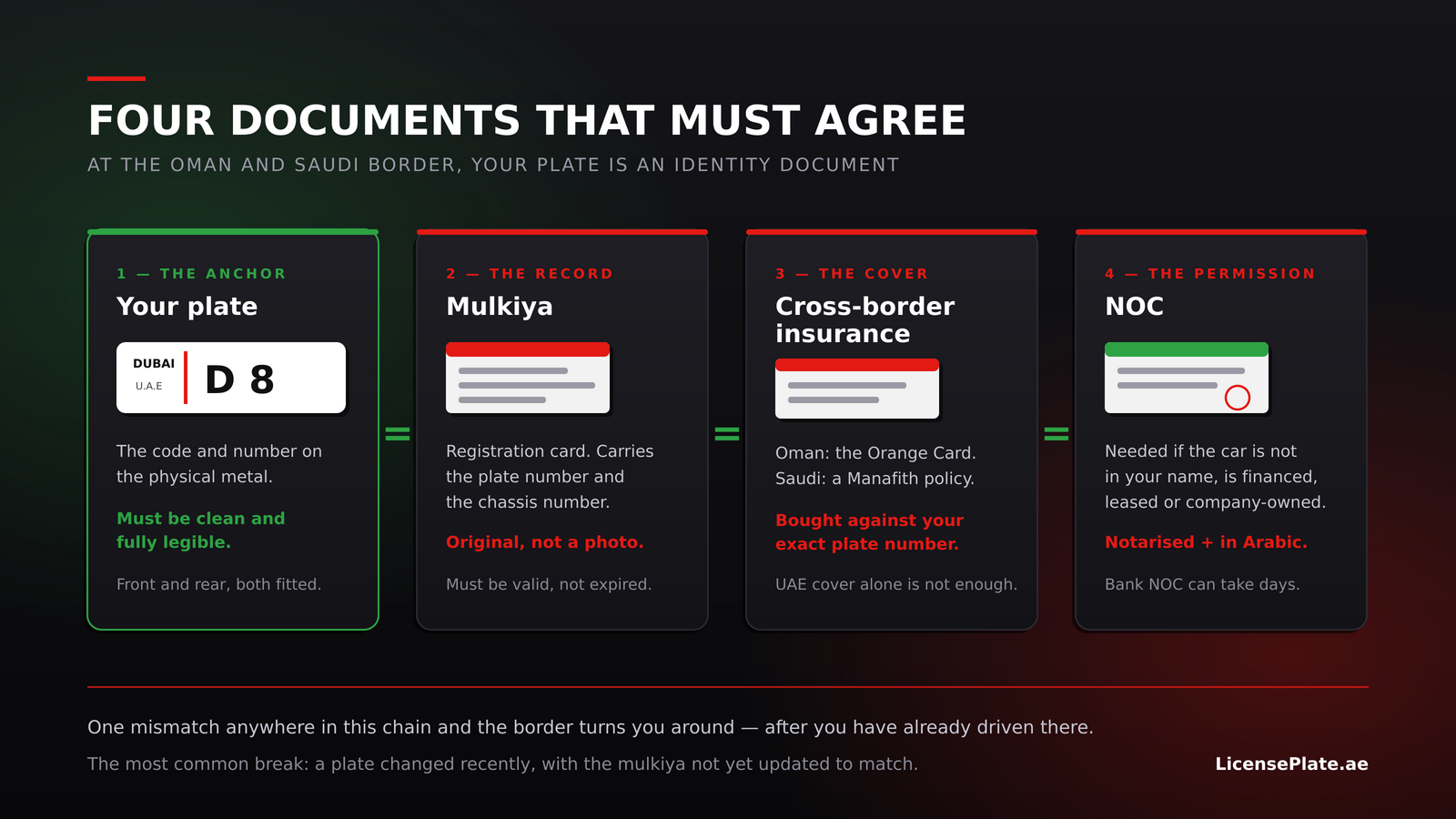
سلسلة الوثائق الأربع
1. اللوحة نفسها
أمامية وخلفية، كلتاهما مركّبة، وكلتاهما مقروءة. ويجب أن يكون الرمز والرقم مقروءين بنظرة واحدة وأن يطابقا ما هو مطبوع على بطاقة التسجيل. وإن كنت قد غيّرت نمط اللوحة حديثاً — من قصيرة إلى طويلة، أو من معيارية إلى كلاسيكية أو بعلامة — فتأكّد أن التسجيل يعكس اللوحة الموجودة حالياً على السيارة.
2. الملكية الأصلية
احمل بطاقة التسجيل الأصلية، لا صورةً لها ولا لقطة شاشة. ويجب أن تكون سارية غير منتهية. والملكية هي حيث يعيش رقم اللوحة ورقم الهيكل معاً، وهذا بالضبط سبب لجوء الضبّاط إليها. ودليل حقول الملكية لدينا يشرح ما يثبته كل مدخل.
وإن كان تسجيلك قريباً من الانتهاء، فجدّده قبل السفر لا بعده — والإجراء والمزالق المتّصلة باللوحة مغطّاة في تجديد تسجيل سيارتك في دبي.
3. التأمين العابر للحدود
وثيقة تأمين مركبتك الإماراتية المعتادة لا تمتدّ تلقائياً عبر الحدود. فبعض الوثائق الشاملة تتضمّن تغطية خليجية؛ وكثير منها لا يفعل، والتي تفعل غالباً ما تحتاج تفعيلاً.
- لعُمان: البطاقة البرتقالية — شهادة مسؤولية تجاه الغير معترف بها للسفر إلى عُمان. وإن لم تتضمّنها وثيقتك، فيمكنك شراء تغطية قصيرة الأجل من أكشاك الخدمة الذاتية عند الحدود، بأرقام مذكورة نحو 106 دراهم لأدنى مدّة من عدّة أيام.
- للسعودية: وثيقة منافذ، وهي مسؤولية إلزامية تجاه الغير للمركبات غير المسجّلة سعودياً الداخلة إلى المملكة. اشترِها عبر manafith.com.sa أو تطبيق منافذ قبل السفر.
ولاحظ بعناية ما يطلبه منافذ: تختار الإمارات كبلد المنشأ وتدخل رقم اللوحة وبلد اللوحة وصانع المركبة ولونها ونوع الهيكل ورقم الهيكل كما تظهر بالضبط على ملكيّتك. وتلك هي أطروحة هذا المقال كلّها في حقل استمارة واحد. فإن اختلفت بيانات لوحتك عن ملكيّتك، فلن تستطيع إتمام الوثيقة بشكل صحيح — والوثيقة الخاطئة أسوأ من عدمها، لأنك دفعت مقابل تغطية لا تصف سيارتك.
4. شهادة عدم الممانعة، حين لا تكون السيارة لك ببساطة
شهادة عدم الممانعة إذن مكتوب ممّن له مصلحة قانونية في المركبة غيرك: مالك أو بنك أو ربّ عمل أو شركة تأجير. وحيث تُطلَب، فالمتوقّع أن تكون موثّقة ومترجَمة إلى العربية، وأن تذكر رقم هيكل المركبة وبيانات تسجيلها إلى جانب رقم هويّتك الإماراتية.
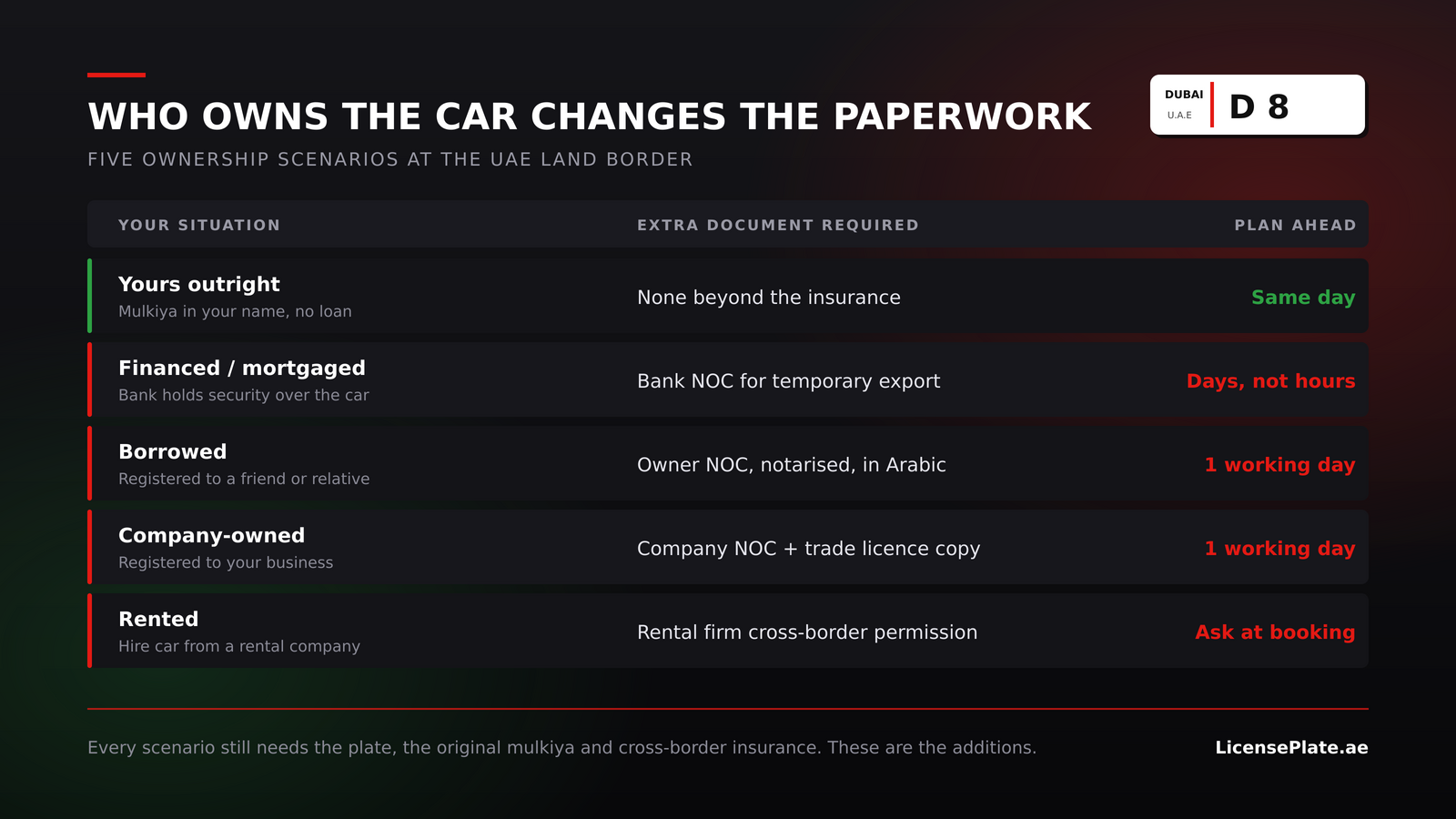
مالك السيارة يغيّر ما تحمله
مملوكة بالكامل، باسمك
الحالة البسيطة. اللوحة، والملكية الأصلية، وجواز سفر بصلاحية كافية، والهوية الإماراتية، ورخصة القيادة، والتأمين العابر للحدود. ولا حاجة إلى شهادة عدم ممانعة.
مموّلة أو مرهونة
وهذه هي التي تفسد الرحلات، لأنها لا تُصلَح في مهلة قصيرة. فحيث يحوز بنك ضماناً على المركبة، يظلّ طرفاً ذا مصلحة حتى يُسدَّد التمويل، وإخراج السيارة من الدولة تصدير مؤقّت لضمان البنك. ولذلك تصدر البنوك شهادة عدم ممانعة تجيزه.
والمتطلّبات تختلف بحسب المموّل وقد تكون شاقّة: فقد شملت شروط مذكورة تأميناً نقدياً يعادل رصيد القرض المستحقّ زائد رسم، ومعالجةً تُقاس بالأيام لا بالساعات. والتطبيق عند الحاجز ليس موحّداً تماماً — فبعض السائقين يعبرون دون أن يُسألوا — لكن السفر بدونها يعني المقامرة برحلة كاملة على أي ضابط تصادف.
وإن كنت توازن بين التمويل والشراء الكامل، فدليلنا عن تمويل لوحات الأرقام والمركبات في الإمارات يغطّي كيف يعمل الضمان على مركبة فعلاً.
مستعارة من صديق أو قريب
تحتاج شهادة عدم ممانعة موثّقة بالعربية من المالك المسجّل، تفيد بالإذن باستخدام المركبة وتحمل رقم الهيكل وبيانات التسجيل ورقم هويّتك الإماراتية. واحسب يوم عمل. ولاحظ أن صلة القرابة لا تلغي الشرط — فإن كانت الملكية باسم زوجك أو والدك، فالسيارة ليست باسمك. وإن كنت تفضّل حلّ ذلك نهائياً، فإن النقل داخل العائلة معاملة روتينية.
مسجّلة لشركة
السيارة المسجّلة لمنشأتك ليست مسجّلة لك، وإن كنت تملك المنشأة. احمل شهادة عدم ممانعة من الشركة على ورقها الرسمي، موقّعة ومختومة، مع نسخة من الرخصة التجارية. وأصحاب اللوحات المميّزة المسجّلة لشركات يصطدمون بهذا باستمرار.
مستأجرة
معظم عقود التأجير تمنع إخراج المركبة من الدولة دون إذن مكتوب، والتصريح العابر للحدود يكلّف عادةً إضافياً ويجب ترتيبه عند الحجز. والوصول إلى الحدود بسيارة مستأجرة بدونه رحلة ضائعة.
فخّ سوق اللوحات: نقل لم يلحق بعد
وإليك نمط الإخفاق الخاصّ بمن يتاجرون بالأرقام فعلاً، وسبب وجود هذا الدليل على سوق لوحات لا على مدوّنة سفر.
تشتري رقماً. وتخصّصه لسيارتك. وتُصنَع اللوحات المادية وتُركَّب. وفي ذهنك انتهى العمل — فاللوحة على السيارة وشهادة الملكية في ملفّك. ثم تقود إلى الحدود، فيقارن الضابط اللوحة ببطاقة التسجيل في درج سيارتك، وهي البطاقة السابقة، التي تُظهر الرقم السابق.
تركيب لوحة جديدة وحيازة بطاقة تسجيل محدَّثة أمران مختلفان. فمعاملة التخصيص تحدّث السجلّ؛ ثم تحتاج الملكية الحالية في السيارة معبّرةً عن ذلك السجلّ. وينطبق الأمر نفسه على وثيقة التأمين، التي حُرِّرت مقابل رقم لوحة لم يعد موجوداً على المركبة.
وقبل أي رحلة عابرة للحدود تلي تغيير لوحة، تأكّد من توافق ثلاثة أمور:
- الرقم الموجود مادياً على السيارة.
- الرقم المطبوع على بطاقة التسجيل التي تحملها.
- الرقم على وثيقة التأمين والشهادة العابرة للحدود.
فإن اختلف أي من الثلاثة، أصلحه قبل أن تقود. والتسلسل الصحيح للمعاملة الأساسية في كيف تنقل لوحة رقم في دبي وتغيير لوحة رقمك في دبي، وترتيب العمليات الأوسع مرسوم في تشريح معاملة اللوحة.
وتمييز آخر يستحقّ الذكر. لوحة التصدير ليست وثيقة سفر. فلوحات التصدير موجودة لنقل مركبة خارج الدولة نهائياً، وهي فئة مختلفة عن اللوحة الخاصة التي تقود بها في العطلة — انظر اللوحات المؤقّتة والتصدير والاختبار والتجّار. أما في رحلة برّية فأنت تسافر بتسجيلك المعتاد.
والوجهتان تختلفان بما يكفي لجعل حمل «وثائق خليجية» كفئة ذهنية واحدة خطأً:
| المتطلّب | عُمان | السعودية |
|---|---|---|
| التأمين العابر للحدود | البطاقة البرتقالية | وثيقة منافذ |
| هل تشتريه عند الحدود؟ | نعم — أكشاك خدمة ذاتية | رتّبه مسبقاً عبر المنصّة أو التطبيق |
| يجب أن تطابق اللوحة والهيكل التسجيل | يُفحَص عند المعاينة | منصوص عليه صراحةً كشرط |
| الملكية الأصلية | مطلوبة | مطلوبة، وتُقدَّم للجمارك |
| شهادة عدم ممانعة بنكية إن كانت مموّلة | متوقّعة؛ والتطبيق يختلف بين المنافذ | متوقّعة للحدود الدولية |
| مجال الارتجال عند الوصول | بعضه — فالتأمين يمكن شراؤه في الموقع | قليل — فالوثائق متوقّعة مسبقاً |
تفاصيل عُمان
عُمان هي الوجهة الأشيع بفارق كبير، ويمكن بلوغها عبر عدّة منافذ منها طريق حتّا وممرّ العين، مع إمكان الوصول إلى مسندم بشكل منفصل على طول الساحل الشمالي.
وما ينبغي تجهيزه:
- جواز السفر بهامش صلاحية مريح — وستّة أشهر هو التوقّع المعياري.
- الهوية الإماراتية ورخصة قيادة إماراتية سارية.
- الملكية الأصلية.
- البطاقة البرتقالية أو وثيقة تمتدّ إلى عُمان بشكل مثبَت. وأكشاك المنفذ تبيع تغطية قصيرة الأجل إن وصلت بدونها.
- شهادة عدم ممانعة حيث تتطلّبها حالة الملكية.
وتوقّع معاينة جمركية قصيرة للمركبة بعد الإجراءات. واحسب الوقت: ففي الأعياد وطوال موسم الخريف الصيفي تكون المنافذ مزدحمة فعلاً، والسفر مبكّراً في اليوم أسرع مادّياً من الوصول بعد الظهر.
تفاصيل السعودية
الدخول إلى السعودية أكثر اعتماداً على الوثائق وأقلّ تسامحاً مع الارتجال من عُمان.
- وثيقة منافذ — مسؤولية إلزامية تجاه الغير لكل مركبة غير مسجّلة سعودياً. اشترِها مسبقاً عبر المنصّة أو التطبيق.
- تسجيل المركبة الأصلي يُقدَّم للجمارك عند نقطة الدخول.
- رقما الهيكل واللوحة ظاهران بوضوح ومطابقان للتسجيل. وهذا منصوص عليه صراحةً كشرط، لا كاستنتاج.
- شهادة عدم ممانعة بنكية للمركبات المموّلة العابرة للحدود الدولية.
ولأن استمارة منافذ تُملأ من ملكيّتك، فاملأها والوثيقة أمامك مادياً لا من الذاكرة. فخانة مقلوبة في رقم هيكل تعني وثيقة مرفوضة.
المخالفات والرسوم وما يتبعك إلى الوطن
لوحتك هي كيف تُعرَّف في الخارج أيضاً، ولذلك نتيجتان تستحقّان التخطيط.
العقوبات المرورية المتكبَّدة في الخارج تلتصق بالمركبة، والمسائل غير المحلولة قد تعقّد عبوراً لاحقاً. لا تفترض أن مخالفة أجنبية تتبخّر عند الحدود. واحتفظ بأي أوراق تُعطى لك.
والتزاماتك الإماراتية لا تتوقّف وأنت في الخارج. فبوّابات سالك والمخالفات ومواعيد التسجيل تمضي. ويستحقّ الأمر فحص ملفّك قبل الرحلة وبعدها — ودليلنا لـفحص المخالفات المرورية الإماراتية برقم اللوحة يسرد بوّابة كل إمارة، وملفّك المروري هو حيث يقع كل ذلك.
ملاحظة عن المتطلّبات. قواعد الحدود ومنتجات التأمين والرسوم تحدّدها سلطات كل بلد والمموّلون وشركات التأجير كلٌّ على حدة، وهي تتغيّر — كما قد يختلف التطبيق بين نقاط التفتيش. عامل كل ما هنا كالوضع وقت الكتابة، وتأكّد مع شركة تأمينك أو بنكك أو شركة التأجير قبل السفر، وافحص المتطلّبات الحالية لمنفذك تحديداً.
قائمة ما قبل المغادرة
- اللوحة على السيارة — كلتاهما مركّبة ونظيفة ومقروءة وسليمة.
- الملكية الأصلية — في السيارة، سارية، وتُظهر الرقم الموجود حالياً على المركبة.
- التأمين العابر للحدود — البطاقة البرتقالية لعُمان، ومنافذ للسعودية، مشترى مقابل اللوحة والهيكل الصحيحين.
- شهادة عدم ممانعة عند الاقتضاء — من البنك أو المالك أو الشركة أو شركة التأجير. موثّقة وبالعربية حيث يُطلَب.
- جواز السفر — بهامش صلاحية مريح.
- الهوية الإماراتية ورخصة القيادة — ساريتان، ومحمولتان، ولا تنتهيان في منتصف الرحلة.
- الملفّ المروري خالٍ — لا مسائل مستحقّة قد تعقّد الرحلة.
- غيّرت لوحة حديثاً؟ — تأكّد أن اللوحة والملكية والوثيقة تُظهر الرقم نفسه.
الأسئلة الشائعة
هل أستطيع قيادة سيارتي الإماراتية إلى عُمان؟
نعم. تحتاج الملكية الأصلية، وجواز سفر ورخصة قيادة ساريين، والهوية الإماراتية، وتأميناً يغطّي عُمان (البطاقة البرتقالية)، وشهادة عدم ممانعة إن كانت السيارة مموّلة أو مستعارة أو مسجّلة لشركة أو مستأجرة.
ما البطاقة البرتقالية؟
شهادة تأمين مسؤولية تجاه الغير معترف بها لإدخال مركبة مسجّلة في الإمارات إلى عُمان. وإن لم تتضمّنها وثيقتك الحالية، فيمكن شراء تغطية قصيرة الأجل من أكشاك الحدود، بأرقام مذكورة نحو 106 دراهم لأدنى مدّة من عدّة أيام.
هل يغطّي تأمين سيارتي الإماراتي عُمان تلقائياً؟
ليس تلقائياً. فبعض الوثائق الشاملة تتضمّن تغطية خليجية وكثير منها لا يفعل. تأكّد مع شركة تأمينك قبل السفر بدل الافتراض.
ما التأمين الذي أحتاجه لدخول السعودية؟
وثيقة منافذ — مسؤولية إلزامية تجاه الغير للمركبات غير المسجّلة سعودياً الداخلة إلى المملكة، تُشترى عبر manafith.com.sa أو تطبيق منافذ.
ما البيانات التي يطلبها منافذ؟
بلد الوصول، ومدّة الوثيقة، ورقم اللوحة وبلد اللوحة وصانع المركبة ولونها ونوع الهيكل ورقم الهيكل كما تظهر بالضبط على ملكيّتك.
هل أستطيع أخذ سيارة مموّلة أو مرهونة إلى عُمان؟
عموماً فقط بشهادة عدم ممانعة من البنك المموّل، لأن البنك يحتفظ بمصلحة ضمانية حتى يُسدَّد القرض. وبعض المموّلين يشترطون تأميناً نقدياً وعدّة أيام معالجة، فرتّبها قبل الرحلة بوقت كافٍ.
هل أحتاج شهادة عدم ممانعة لقيادة سيارة شخص آخر عبر الحدود؟
نعم. وينبغي أن تكون موثّقة ومترجَمة إلى العربية، وأن تفيد بأن المالك يأذن باستخدامك المركبة، وأن تتضمّن رقم الهيكل وبيانات التسجيل ورقم هويّتك الإماراتية.
هل تحتاج سيارة فرد من العائلة شهادة عدم ممانعة أيضاً؟
نعم. فإن لم يكن التسجيل باسمك، فالسيارة ليست لك لهذه الأغراض، مهما كانت صلة القرابة.
هل أستطيع أخذ سيارة مستأجرة من الإمارات إلى عُمان؟
فقط بإذن مكتوب من شركة التأجير بالعبور، وهو يكلّف عادةً إضافياً ويجب ترتيبه عند الحجز. ومعظم العقود تمنع مغادرة الدولة خلاف ذلك.
غيّرت لوحة رقمي للتوّ. هل ما زال بإمكاني السفر؟
فقط حين تُظهر اللوحة على السيارة وبطاقة التسجيل التي تحملها ووثيقة التأمين الرقم نفسه. فاللوحة المركّبة حديثاً مع بطاقة تسجيل قديمة أشيع عدم تطابق عند الحاجز.
هل أحتاج لوحة خاصة أو لوحة تصدير للقيادة إلى الخارج؟
لا. فأنت تسافر بتسجيلك المعتاد. ولوحات التصدير لنقل مركبة خارج الدولة نهائياً وهي فئة مختلفة تماماً.
هل أحتاج حمل الملكية الأصلية أم تكفي نسخة؟
احمل الأصلية. فالصورة أو لقطة الشاشة ليست بديلاً عند حدود.
ماذا يحدث إن كانت لوحة رقمي متّسخة أو صعبة القراءة؟
على الضبّاط قراءة اللوحة مادياً ومطابقتها بوثائقك، فاللوحة المتّسخة أو الباهتة أو المحجوبة تسبّب تأخيراً. وفي الإمارات هي بشكل منفصل مخالفة مرورية بـ 400 درهم.
هل تستمرّ المخالفات الإماراتية وسالك وأنا في الخارج؟
ملفّك المروري والتزاماتك في الإمارات تستمرّ بغضّ النظر عن مكان السيارة. والعقوبات المتكبَّدة في الخارج تلتصق بالمركبة وقد تعقّد عبوراً لاحقاً.
كم يستغرق تجميع الوثائق؟
إن كانت السيارة لك بالكامل، فاليوم نفسه. وشهادة عدم الممانعة من مالك أو شركة تحتاج واقعياً يوم عمل للتوثيق والترجمة. وشهادة عدم الممانعة البنكية لسيارة مموّلة قد تستغرق عدّة أيام وقد تتطلّب تأميناً نقدياً.
الخلاصة النهائية
الحدود الخليجية هي المكان الوحيد الذي تُعامَل فيه لوحة الرقم الإماراتية بما هي قانوناً: معرّف مركبة بعينها، مرتبط بتسجيل بعينه، مؤمَّن بوثيقة بعينها. وفي كل مكان آخر اللوحة بيان عنك. أما هنا فهي ادّعاء يجب التحقّق منه.
وأكثر الناس عرضةً للوقوع ليسوا السائقين المهملين — بل من كانوا نشطين مع لوحاتهم. رقم اشتُري الشهر الماضي، ولوحة نُقِلت إلى السيارة الأفضل قبل العطلة، ومركبة لا تزال تحمل تمويلاً. كلٌّ من ذلك عادي، وكلٌّ منه يضيف حلقةً إلى السلسلة التي يجب أن تتطابق.
افحص السلسلة قبل أن تقود. فذلك يستغرق عشر دقائق في البيت ويوفّر عليك يوماً عند حاجز في الجبال.
وحين تكون جاهزاً لإضافة رقم يستحقّ أخذه في الرحلة، تصفّح أرقام اللوحات المعروضة للبيع في الإمارات أو اذهب مباشرةً إلى أرقام دبي.