

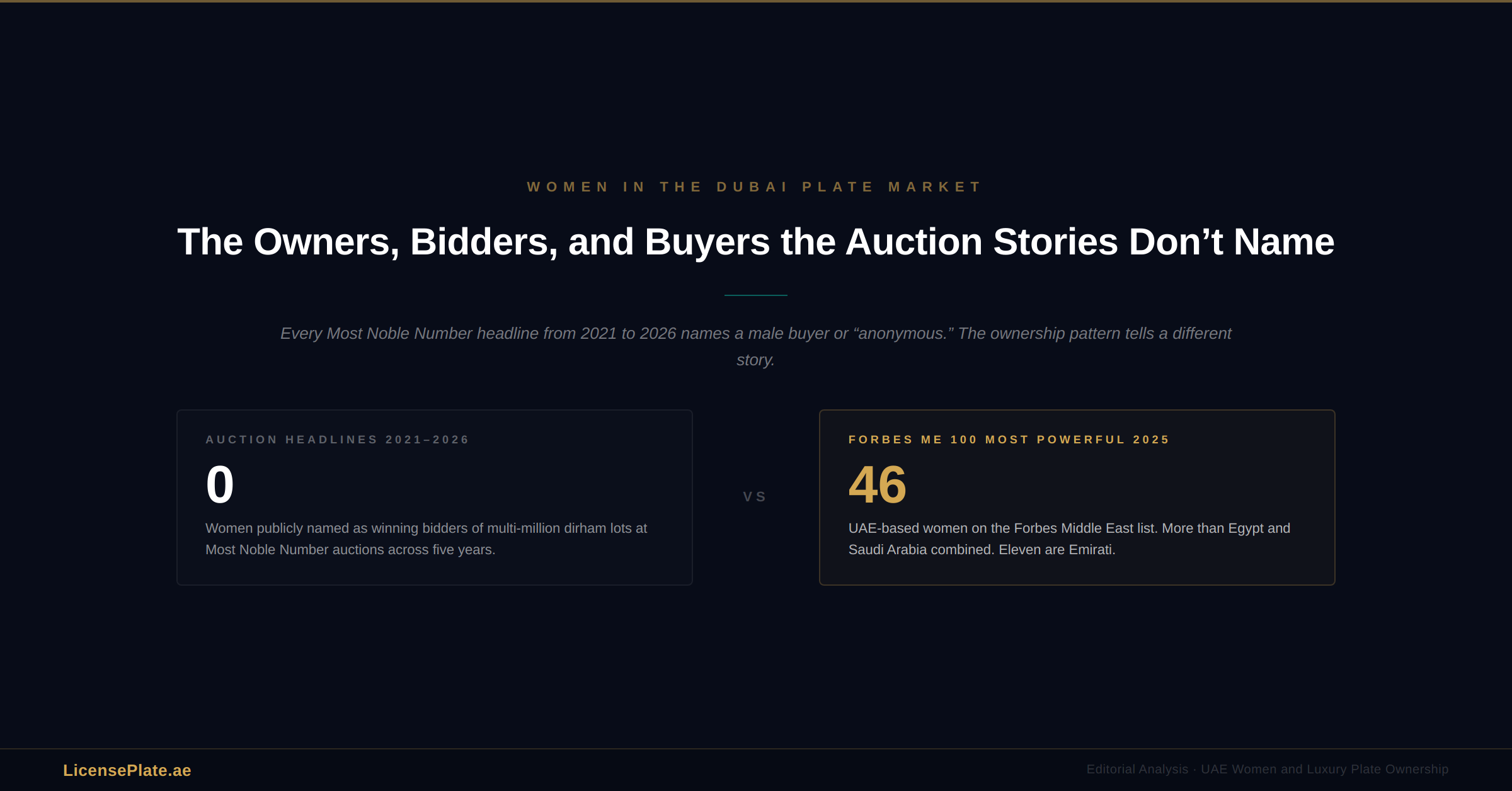
النساء في سوق لوحات دبي: المالكات والمزايدات والمشتريات اللواتي لا تذكرهنّ أخبار المزادات
بعد ظهر يوم 20 يوليو 2022، وداخل قاعة في منتجع الحبتور جراند في دبي، رفعت وكيلة عقارات صينية في الثلاثين اسمها هونغ يانغ مضرب مزايدتها وعرضت 1.7 مليون درهم على اللوحة رقم 999 من الرمز 2. كان مزاد "أنبل الأرقام" الخيري في ذروته. والكاميرات في كل مكان. والتقط فيكتور بيسا، المصوّر الأول في ذا ناشيونال، صورتها من مؤخّرة القاعة. ونُشرت الصورة صباح اليوم التالي في النسخة المطبوعة للصحيفة وعلى موقعها. وذكر التعليق اسمها. وذكرت القصة اسمها. لقد خسرت أهمّ معروض في تلك الأمسية (اللوحة رقم 2 من الرمز 2 بيعت ذلك اليوم بـ 23.3 مليون درهم)، لكنها، على حدّ ما يتيحه السجلّ الإنجليزي المتاح، آخر مزايدة امرأة في مزاد لوحات كبير في دبي ظهر اسمها في صحيفة قبل 2025.
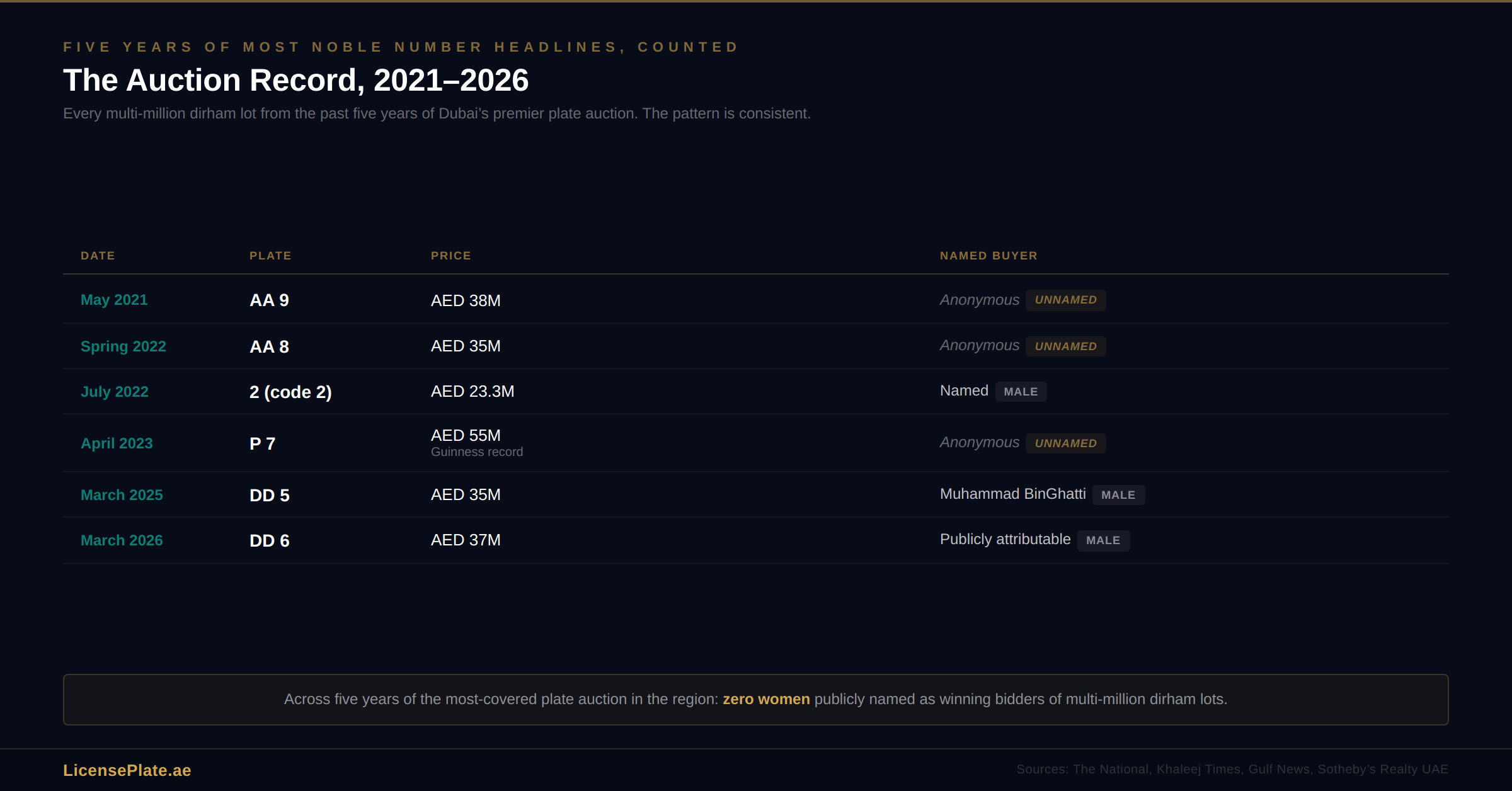
اقرأ كل عنوان لمزاد أنبل رقم نُشر بين 2021 و2026 وسيكون النمط واحداً. AA 9 تُباع بـ 38 مليون درهم في مايو 2021. المشتري "مجهول". AA 8 تُباع بـ 35 مليون درهم في 2022 في فور سيزونز جميرا. المشتري "مجهول". P 7 تُباع بـ 55 مليون درهم في أبريل 2023، وتسجّل رقماً قياسياً في موسوعة غينيس، ولا يُذكر اسم المشتري علناً في الصحافة العربية الناطقة بالإنجليزية. DD 5 تُباع بـ 35 مليون درهم في فندق أرماني يوم 15 مارس 2025. المشتري محمد بن غاطي، ذكرته الخليج تايمز، وغلف نيوز، وكل منفذ إقليمي كبير خلال 48 ساعة. DD 6 تُباع بـ 37 مليون درهم في أنبل رقم 2026. وهوية المشتري أقلّ اتّساقاً في النقل عبر المنافذ، وإن كانت قابلة للنسب علناً داخل أوساط العقارات في دبي. ولم تُذكر امرأة واحدة علناً بوصفها المزايدة الفائزة بمعروض بملايين الدراهم في مزادات أنبل رقم الخيرية عبر خمس سنوات متتالية.
والآن اقرأ الدفتر الآخر. تتصدّر الإمارات الشرق الأوسط بـ 46 امرأة على قائمة فوربس الشرق الأوسط لأقوى 100 سيدة أعمال لعام 2025. إحداهنّ عشرة إماراتيات. وتتصدّر هناء الرستماني، الرئيس التنفيذي لمجموعة بنك أبوظبي الأول، التصنيف الإقليمي للعام الثالث على التوالي، وتدير أكبر بنك في الدولة بأصول قدرها 334.8 مليار دولار. وقد ذُكرت منفصلةً على قائمة فورتشن لأقوى نساء الأعمال لعام 2025 في المرتبة 76، بوصفها الرئيسة التنفيذية الوحيدة لشركة إماراتية مدرجة. وجلست رجاء عيسى القرق قرب قمة القائمة الإقليمية معظم العقد بصفتها رئيسة مجلس الإدارة والعضو المنتدب لمجموعة عيسى صالح القرق. وتدير خديجة البستكي حي دبي للتصميم. وجاءت الإمارات الأولى إقليمياً والسابعة عالمياً في مؤشّر الأمم المتحدة للمساواة بين الجنسين 2024. والمرسوم بقانون اتحادي رقم 41 لسنة 2022 بشأن الأحوال الشخصية المدنية جعل الميراث متساوياً بين الجنسين بشكل افتراضي لغير المسلمين. وتشغل الإماراتيات مناصب عليا في الحكومة والمصارف والرعاية الصحية والإعلام والعقارات بمعدّلات تفاجئ أي مراقب من الخارج.
والفجوة بين هاتين الحقيقتين هي القصة التي يعالجها هذا المقال. النساء في دبي يملكن لوحات مميّزة. والنساء في دبي يشترين لوحات مميّزة. والنساء في دبي يرثن ويهدين وينقلن لوحات مميّزة، وهي عملية يغطّيها بالتفصيل دليلنا لميراث اللوحات في الإمارات للورثة والمالكين الحاليين. وعناوين المزادات لا تخبرك بذلك لأن صيغة المزاد لا تكافئ النسب العلني للنساء. أما السوق الثانوية الخاصة، المتاحة عبر منصات مثل إعلانات لوحات دبي لدينا، فتروي قصة مختلفة لم يدوّنها أحد بالإنجليزية. وفيما يلي، ما يُظهره السجلّ العام، وكيف تبدو السوق الخاصة فعلياً، ولماذا سيجعل العقد المقبل استمرار هذه الفجوة في التغطية مستحيلاً.
سجلّ المزادات: خمس سنوات من العناوين، معدودة
أكفأ طريقة لرؤية الفجوة هي سرد نتائج مزادات اللوحات العامة الكبرى في السنوات الخمس الماضية، وقراءة التغطية، والعدّ. وهذه ليست قائمة كاملة بكل مزاد، لكنها تلتقط شريحة المعروضات التي ولّدت تغطية إخبارية بالإنجليزية. وكل مُدخل منسوب إلى التقارير الأوّلية، وسياق أنبل رقم 2026 الكامل مبسوط في تغطيتنا المخصّصة لتلك الأمسية.
مايو 2021 — AA 9، 38 مليون درهم، أنبل الأرقام. المشتري مجهول علناً. تغطية من ذا ناشيونال، والخليج تايمز، وغلف نيوز. ويستعرض مقالنا المخصّص عن AA 9 ما هو معلوم وما هو مجهول عن الصفقة. وقد دعم إجمالي الـ 50 مليون درهم المجموعة في المزاد حملة 100 مليون وجبة. ولم تُحدَّد الهوية الجندرية.
ربيع 2022 — AA 8، 35 مليون درهم، أنبل الأرقام، فور سيزونز جميرا. المشتري مجهول علناً. ورُصدت اللوحة لاحقاً على رولز-رويس كولينان في دبي. تغطية من القسم التحريري لسوذبيز إنترناشونال ريالتي الإمارات، وغلف نيوز، والخليج تايمز. ويُذكر أن المشتري نفسه يملك أيضاً اللوحة الأولى الأغلى في تاريخ دبي. ويضع جدولنا الزمني الكامل لأغلى اللوحات المباعة على الإطلاق هذه الصفقة في سياقها. ولم تُحدَّد الهوية الجندرية.
يوليو 2022 — اللوحة 2 من الرمز 2، 23.3 مليون درهم، أنبل الأرقام. ذُكر اسم المشتري في تغطية ذا ناشيونال. رجل. وفي المزاد نفسه، ذكرت ذا ناشيونال اسم هونغ يانغ، 30 عاماً، وكيلة عقارات صينية، بوصفها مزايدة على اللوحة 999 من الرمز 2 بـ 1.7 مليون درهم (ولم تفز). وهذا أبرز ذكر علني لمزايدة امرأة في أي مزاد لهيئة الطرق والمواصلات في دبي خلال السنوات الخمس الماضية.
أبريل 2023 — P 7، 55 مليون درهم، أنبل الأرقام. رقم قياسي في موسوعة غينيس. المشتري مجهول علناً. تغطية من كل منفذ إقليمي ودولي كبير. ودعمت الصفقة وقف مليار وجبة. ولم تُحدَّد الهوية الجندرية.
15 مارس 2025 — DD 5، 35 مليون درهم، أنبل الأرقام، فندق أرماني برج خليفة. المشتري: محمد بن غاطي، رئيس مجلس إدارة بن غاطي القابضة. ذكرته ذا ناشيونال، والخليج تايمز، وغلف نيوز، وعشرات المنافذ الأخرى خلال 48 ساعة. كما فاز بـ DD 15 مقابل 9.2 مليون درهم في الأمسية نفسها. ويحلّل مقالنا عن مزاد DD 5 ودراسة حالة التسويق المؤسسي لبن غاطي الصفقة من زوايا مختلفة. رجل.
مارس 2026 — DD 6، 37 مليون درهم، أنبل الأرقام. مغطّاة في مقالنا المخصّص عن DD 6. هوية المشتري أقلّ اتّساقاً في النقل عبر المنافذ لكنها قابلة للنسب علناً. رجل.
وعبر هذه النافذة الممتدّة خمس سنوات، يبلغ عدد المزايدين الفائزين بملايين الدراهم المذكورين علناً كإناث صفراً. أما عدد المزايدات المذكورات كوصيفات أو مشاركات فحفنة. وهونغ يانغ أبرزهنّ. والنمط متّسق عبر كل منشور إنجليزي يغطّي مزادات اللوحات الإماراتية: نسب للرجال حين يوافق المشتري على ذكر اسمه، و"مجهول" حين يفضّل المشتري الخصوصية. وفئة المجهول ليست مجنّسة في التغطية نفسها، لكن الافتراض الثقافي الافتراضي في كل قصة هو أن المشتري المجهول رجل.
سجلّ الملكية: نساء الإمارات والثروة والمشاركة في الأصول
والآن اقرأ العمود الآخر. سجلّ الإمارات في المشاركة الاقتصادية للمرأة من الأقوى في دول مجلس التعاون ومن الأقوى في المنطقة الأوسع. وكل مقياس موثوق لثروة المرأة وقيادتها وتركّز ملكيتها يضع نساء الإمارات ضمن ملف مشتريات الأصول الفاخرة الجادّات.
فوربس الشرق الأوسط: أقوى 100 سيدة أعمال 2025
نشرت فوربس الشرق الأوسط تصنيفها لعام 2025 في فبراير 2025. وتصدّرت الإمارات المنطقة بـ 46 مُدخلاً على القائمة، أي أكثر من مصر (18) والسعودية (9) مجتمعتين. وإحدى عشرة من الـ 46 امرأة المقيمات في الإمارات مواطنات إماراتيات. وأنتج قطاع المصارف والخدمات المالية 25% من القائمة إجمالاً. وتصدّرت هناء الرستماني، الرئيس التنفيذي لمجموعة بنك أبوظبي الأول، التصنيف الإقليمي للعام الثالث على التوالي، وذُكرت منفصلةً على قائمة فوربس العالمية لأقوى نساء العالم 2024 في المرتبة 60. وتحت قيادتها، سجّل بنك أبوظبي الأول أرباحاً صافية قدرها 3.5 مليار دولار وأصولاً قدرها 334.8 مليار دولار في الأشهر التسعة الأولى من 2024. وهذه ليست أدواراً شرفية. إنها سلطة تشغيلية على أكبر بنك في الدولة.
وقد صُنّفت رجاء عيسى القرق ضمن الثلاثة الأوائل على قائمة فوربس الشرق الأوسط معظم العقد الماضي. وهي رئيسة مجلس الإدارة والعضو المنتدب لمجموعة عيسى صالح القرق، إحدى أقدم وأكبر التكتّلات العائلية في الدولة، بمصالح تمتدّ عبر التجزئة والمنتجات الصناعية والمشاريع المشتركة مع علامات عالمية (سيمنز، وبينيتون، وغيرها) والعقارات. وخديجة البستكي هي النائب الأول للرئيس في حي دبي للتصميم، جزء من مجموعة تيكوم، وشغلت سابقاً مناصب إدارية في المنطقة الحرة بجبل علي وموانئ دبي العالمية. ومنى المرّي هي نائبة رئيس مجلس الإمارات للتوازن بين الجنسين والمدير العام للمكتب الإعلامي لحكومة دبي.
أرقام القوى العاملة والقيادة
ينشر مجلس الإمارات للتوازن بين الجنسين، الذي تأسّس في 2015 وترأسه سمو الشيخة منال بنت محمد بن راشد آل مكتوم، الأرقام المرجعية عن المشاركة الاقتصادية للمرأة. فالنساء يشكّلن 66% من القوى العاملة في القطاع العام في الدولة، منهنّ 30% في مناصب قيادية و15% في أدوار تقنية وأكاديمية. وتشكّل النساء 50% من مقاعد المجلس الوطني الاتحادي. وأوجبت هيئة الأوراق المالية والسلع في 2021 على كل شركة مدرجة تعيين امرأة واحدة على الأقل في مجلس إدارتها، وأصدر مصرف الإمارات المركزي تعميماً في 2019 يضمن تقديم جميع البنوك والمؤسسات المالية خدماتها للنساء على أساس متكافئ. وتملك النساء واحدة من كل عشر شركات في القطاع الخاص في الدولة. ومُنحت أكثر من 44,000 رخصة تجارية للنساء بين 2018 و2022، 58% منهنّ رائدات أعمال إماراتيات. و23,000 سيدة أعمال إماراتية يدرن مشاريع تتجاوز قيمتها 50 مليار درهم.
وهذه الأرقام مهمّة لسوق اللوحات لأنها تصف بالضبط الملف الديموغرافي الذي يشتري لوحات دبي المميّزة: نساء ذوات سلطة تشغيلية، وشركات مرخّصة، ورأس مال متراكم، ومصلحة في أن يكنّ مرئيات في الإمارة. وقد التزم تعهّد القطاع الخاص بهدف التنمية المستدامة الخامس الصادر عن المجلس بأن تبلغ الشركات الموقّعة تمثيلاً نسائياً بنسبة 30% في القيادة بحلول 2025، ما يوسّع أكثر مجموعة النساء الإماراتيات في المناصب العليا اللواتي يملكن سلطة إنفاق شخصية تطابق ملف مشترية اللوحات الجادّة.
إطار الميراث
يحكم واقعان قانونيان كيفية وصول نساء الإمارات إلى ملكية الأصول. فبالنسبة للمسلمين، يقنّن قانون الأحوال الشخصية الإماراتي لسنة 2005 أحكام الميراث الشرعية. والمادة 352 صريحة: "للذكر مثل حظّ الأنثيين في الميراث." فترث الابنة نصف ما يرثه الابن. وتحصل الأرملة التي لديها أبناء على ثُمن تركة زوجها المتوفّى. وتنطبق هذه الأحكام على المسلمين بشكل افتراضي وتُحلَّل بالتفصيل في عرض التميمي وشركاه لقانون الميراث الإماراتي. أما بالنسبة لغير المسلمين، فقد غيّر المرسوم بقانون اتحادي رقم 41 لسنة 2022 بشأن الأحوال الشخصية المدنية الوضع الافتراضي. فينصّ القانون على أنه، في غياب وصية، تُوزَّع تركة المتوفّى دون تمييز بين الجنسين. ولأي مقيم غير مسلم في الدولة (إماراتي أو وافد) دون وصية، أصبح الميراث منذ 2023 متساوياً بين الجنسين بشكل افتراضي. أما بالنسبة للمسلمين، فيستمرّ الإطار الشرعي في الانطباق لكنه يُعوَّض عملياً بإمكانية هبة الأصول أثناء الحياة، وإمكانية تسجيل الأصول بأسماء أفراد الأسرة من النساء أثناء الحياة، واستخدام هياكل مكاتب العائلات التي توزّع السيطرة عبر الجنسين دون انتظار واقعة الميراث. ويستعرض دليلنا الكامل لميراث اللوحات في الإمارات التفصيل القانوني والإجراءات الإدارية.
منظور المصارف الخاصة
لا تنشر المصارف الخاصة في الإمارات (بنك أبوظبي الأول الخاص، وبنك الاستثمار التجاري، ومشرق غولد، وإتش إس بي سي برايفت بنك، وبنك الإمارات دبي الوطني للخدمات المصرفية الخاصة) تفصيلاً جندرياً لقاعدة عملائها، لكن أحاديث القطاع وأبحاث الثروة الإقليمية تضع باستمرار عميلات الثروات الكبيرة في الإمارات ضمن حصة متنامية من إجمالي فئة الثروات الفائقة والكبيرة. والنساء دون الأربعين شريحة سريعة النمو بشكل خاص، مدفوعةً بريادة الأعمال والثروة الموروثة وتدفّق المؤسِّسات الدوليات المنتقلات إلى دبي ضمن برامج الإقامة الذهبية والخضراء. ولا يمكن كتابة نظرة إلى مشهد المصارف الخاصة في الإمارات عام 2026 دون احتساب النساء كشريحة جوهرية من قاعدة العملاء، وينطبق الواقع نفسه على كل فئة أصول فاخرة جادّة — اللوحات، والساعات، والفنون، والمحافظ العقارية. أما موقع اللوحة داخل محفظة ترف متنوّعة فهو السؤال الذي تعالجه مباشرةً مقارنتنا بين اللوحات والذهب والعقار.
اجمع هذه الحقائق الأربع معاً. فنساء الإمارات يملكن سلطة تشغيلية عليا على مؤسسات تتحكّم في مئات المليارات من الدراهم من الأصول. ونساء الإمارات مساويات قانونياً للرجال بموجب إطار الميراث لمعظم السكان غير المسلمين، وهنّ مستفيدات متزايدات الأهمية ضمن الإطار الإسلامي عبر الهبة والتسجيل والهيكلة العائلية. ونساء الإمارات شريحة متنامية في دفتر كل مصرف خاص لأصحاب الثروات الكبيرة. وملف مشترية لوحة دبي المميّزة الجادّة (ثروة كبيرة، واستقرار في دبي، وذائقة جمالية، واستعداد لإنفاق سبعة أرقام على أصل واحد) يصف شريحة كبيرة من نساء الإمارات.
لماذا تخفي صيغة المزاد ملكية النساء
إذا كانت نساء الإمارات مشاركات جوهريات في اقتصاد الثروات الكبيرة، فلماذا لا يظهرن في عناوين المزادات؟ ثلاثة أسباب بنيوية، كلٌّ منها قابل للتحقّق، وكلٌّ منها يعمل في آن واحد.
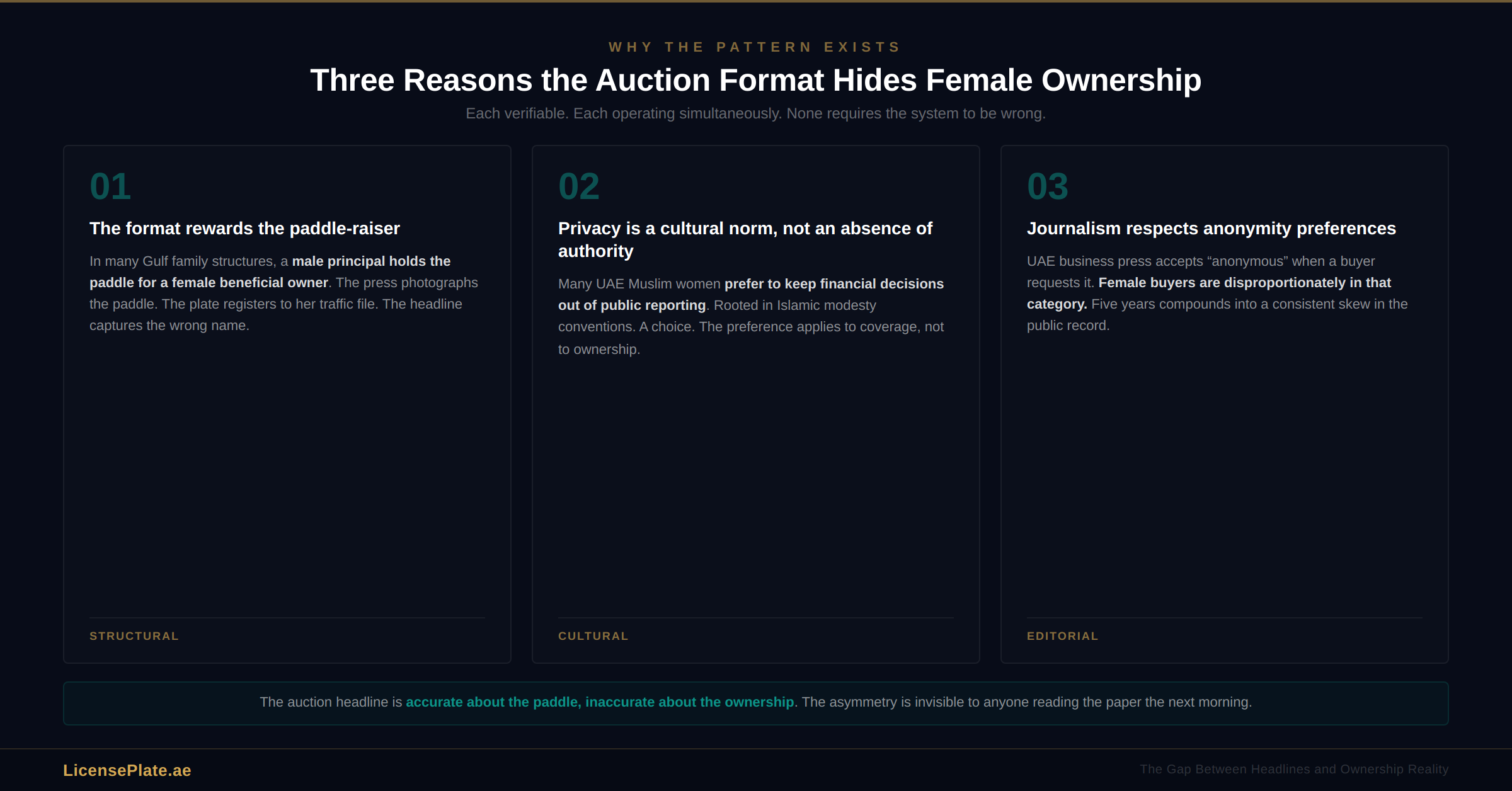
السبب الأول: صيغة المزاد تميّز رافع المضرب المذكور
يعمل مزاد أنبل رقم ومزادات هيئة الطرق والمواصلات المفتوحة بالطريقة نفسها على المستوى الميكانيكي. فالمزايد يسجّل مسبقاً لدى هيئة الطرق والمواصلات في دبي أو مزاد الإمارات، ويقدّم شيك تأمين ورسم تسجيل، ويتسلّم مضرب مزايدة يحمل رقماً، ويجلس على طاولة مرقّمة. والتواريخ والآليات المحدّدة لروزنامة مزادات الهيئة لعام 2026 مرسومة في دليلنا المخصّص لروزنامة المزادات. وحين يرتفع المضرب وتهوي المطرقة، يُربط سجلّ الصفقة بمن كان يحمل المضرب. فالصحافة تصوّر رافع المضرب. ومقدّم المزاد يعلن رافع المضرب. وكل خبر يُبنى حول رافع المضرب بوصفه الشخصية الرئيسية.
لكن رافع المضرب ليس دائماً المالك المستفيد. ففي كثير من الهياكل العائلية الخليجية، يحمل رجل رئيسي (أب، أو زوج، أو أخ، أو مدير مكتب عائلة معيَّن، أو تنفيذي كبير في الشركة) المضرب نيابةً عن سيدة رئيسية إما غير حاضرة، أو حاضرة لكنها لا تزايد بنفسها، أو حاضرة لكنها تفضّل ألّا تُصوَّر. وتُسجَّل اللوحة في الملف المروري للمالك المستفيد بعد الشراء، لا لرافع المضرب. والسجلّ العام يلتقط الاسم الخطأ. وهذا ليس نقداً للنظام. إنه ببساطة كيف تعمل المزادات في كل مكان: فهي تكافئ الشخص الموجود في القاعة، لا الشخص الذي كتب الشيك. أما البديل، أي مسار السوق الثانوية الخاصة الذي نغطّيه في مقارنتنا بين مزاد الهيئة والسوق الثانوية، فيتجاوز هذه الديناميكية بالكامل.
السبب الثاني: الخصوصية بوصفها عُرفاً ثقافياً ودينياً
تفضّل شريحة كبيرة من المسلمات في الإمارات إبقاء قراراتهنّ المالية بعيداً عن التغطية العلنية. وهذا خيار متّسق ثقافياً، متجذّر في قيم الحياء الإسلامية وفي أعراف الخصوصية العائلية التي تسبق عصر الإنترنت. إنه خيار، لا غياب سلطة. فكثير من النساء أنفسهنّ اللواتي لا يسمحن بظهور وجوههنّ أو أسمائهنّ في مقال صحفي عن شراء لوحة يوقّعن روتينياً على صفقات عقارية بتسعة أرقام، ويوجّهن تخصيص رأس مال مكاتب العائلات، ويترأّسن مجالس مؤسسات. فتفضيل الخصوصية ينطبق على التغطية العلنية للأصل، لا على الملكية نفسها.
وهذا يخلق ديناميكية محدّدة في مزادات اللوحات. سيدة رئيسية تريد لوحة. لديها رأس المال. ولديها سلطة القرار. فترسل رجلاً من العائلة أو موظفاً إلى القاعة. وتتمّ الصفقة. وتصوّر الصحافة الرجل. وتُسجَّل اللوحة باسمها. ويقول العنوان إن زوجها اشترى لوحة بـ 5 ملايين درهم. وفي الحقيقة، هي اشترتها لنفسها، والزوج كان الآلية اللوجستية للتسليم. فعنوان المزاد دقيق بشأن المضرب، وغير دقيق بشأن الملكية، وعدم التماثل غير مرئي لأي شخص يقرأ الصحيفة صباح اليوم التالي.
السبب الثالث: الأعراف التحريرية تفضّل النسب على إخفاء الهوية
تعمل الصحافة الاقتصادية الإماراتية تحت قيد أن مصادرها غالباً هم الأشخاص الذين تغطّيهم. فحين يسعد مشترٍ مثل محمد بن غاطي بذكر اسمه، يذكره العنوان. وحين يفضّل مشترٍ إخفاء هويته، تستخدم القصة "مجهول" دون إلحاح. وهذا عُرف مهني يحترم المصادر ويجعل الوصول المستقبلي ممكناً. وهو أيضاً يقلّل منهجياً من الإبلاغ عن مشاركة النساء في السوق، لأن المشتريات من النساء يقعن على نحو غير متناسب ضمن فئة مفضّلي إخفاء الهوية. فالصحفي الذي يضغط لتحديد هوية مشترية مجهولة ضدّ رغبتها يخسر القصة اليوم والمصادر غداً. أما الصحفي الذي يقبل إخفاء الهوية بهدوء فيحفظ العلاقة ويرسل القصة بكلمة "مجهول". وعبر خمس سنوات، يتراكم ذلك إلى انحياز جندري متّسق في السجلّ العام.
ما تخبرنا به السوق الثانوية الخاصة
لا تعمل السوق الثانوية (البيوع الخاصة، ومنصات الأسواق، والصفقات بوساطة الوسطاء) وفق العُرف التصويري للمزادات. فاللوحة المباعة بشكل خاص عبر منصة مثل LicensePlate.ae أو عبر تعريف وسيط متكتّم لا تتطلّب من المشترية رفع مضرب أمام الكاميرات. فالصفقة تتمّ عبر مكالمة هاتفية، أو رسائل مشفّرة، أو لقاء وسيط، أو نقل هادئ لدى الهيئة. لا صور. لا عناوين. مجرّد تغيير في الملف المروري. وقبل أي صفقة من هذا النوع، يُخضِع المشترون الجادّون اللوحة عادةً لقائمة العناية الواجبة لدينا لتأكيد الملكية، والتحقّق من المخالفات المستحقّة، والتثبّت من صلاحية الطرف البائع.
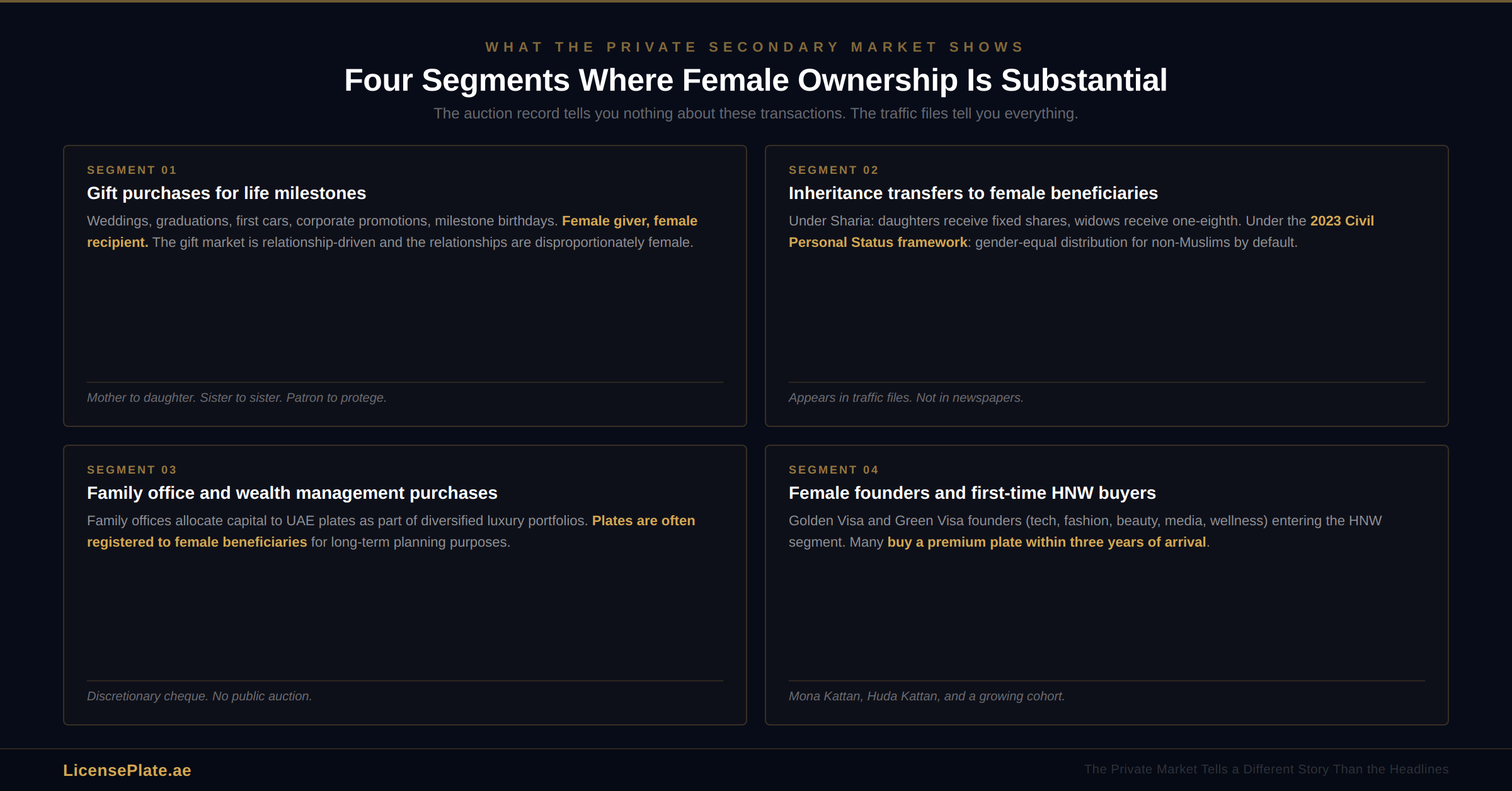
وهنا يصبح نمط ملكية النساء مرئياً لأي منتبه. فأربع شرائح محدّدة من السوق الثانوية تهيمن عليها المشتريات من النساء، أو تُظهر على الأقل مشاركة نسائية بمعدّلات أعلى بكثير ممّا يوحي به سجلّ المزادات.
الشريحة الأولى: شراء الهدايا لمحطّات الحياة
شراء اللوحات كهدايا للأعراس والتخرّج والسيارات الأولى والترقيات المؤسسية وأعياد الميلاد المفصلية يميل بشدّة نحو واهبة أنثى ومتلقّية أنثى. أمّ تشتري لابنتها لوحة برقمها المحظوظ ليوم زفافها. ومؤسِّسة تشتري لوحة لتنفيذية عند ترقيتها إلى الرئاسة التنفيذية. وجدّة تشتري لوحة لحفيدتها في عيد ميلادها الحادي والعشرين. ويغطّي دليلنا المخصّص للوحات كهدايا الطيف الكامل. فسوق الهدايا مدفوعة بالعلاقات بأغلبية ساحقة، والعلاقات التي تدفعها نسائية على نحو غير متناسب.
الشريحة الثانية: نقل الميراث عبر المستفيدات
حين يتوفّى مالك في الإمارات، تنتقل اللوحة عبر إجراءات الميراث الموثّقة في مقالنا المخصّص. فبموجب الشريعة، تحصل البنات والأرامل على أنصبة مقرّرة (نصف نصيب الابن للبنات، والثُّمن للأرامل ذوات الأبناء). وبموجب إطار الأحوال الشخصية المدنية لعام 2023 لغير المسلمين، يكون التوزيع متساوياً بين الجنسين افتراضياً. وفي كلتا الحالتين، تنتقل شريحة جوهرية من اللوحات الموروثة إلى مستفيدات. ويسجّل الآن كلٌّ من مركز وصايا مركز دبي المالي العالمي ودائرة القضاء بأبوظبي وصايا غير المسلمين التي يمكنها تجاوز التوزيع الشرعي الافتراضي. وتلك اللوحات لا تظهر في عناوين المزادات. بل تظهر في عمليات نقل الملفات المرورية. وعبر خمس سنوات، يكون الحجم التراكمي للوحات التي ورثتها نساء في دبي رقماً معتبراً. لكنه ببساطة ليس رقماً تغطّيه الصحافة.
الشريحة الثالثة: مشتريات مكاتب العائلات وإدارة الثروات التقديرية
يخصّص عدد متزايد من مكاتب العائلات المفردة والمتعدّدة في الإمارات رأس مال للوحات الإماراتية كجزء من محافظ أصول فاخرة متنوّعة. وحين يخصّص مكتب عائلة 5 ملايين درهم لشراء لوحة، يُعطى التكليف عادةً من الشخص الرئيسي (رجلاً كان أو امرأة)، ويُنفَّذ الصفقة مدير مكتب العائلة (عادةً، وليس دائماً، رجل)، وتُسجَّل اللوحة لمستفيد محدّد داخل العائلة (غالباً امرأة، حين يفضّل التخطيط طويل الأجل للعائلة تركيز الأصول لدى النساء لأغراض الهبة أو التركة). وهيكلة الثروة لأصحاب الثروات الكبيرة في الإمارات بعد الإقامة الذهبية تشمل بشكل متزايد المستفيدات كأهداف تخطيط صريحة. والصفقة لا ترى مزاداً علنياً أبداً. إنها ببساطة شراء في السوق الثانوية بشيك مكتب عائلة.
الشريحة الرابعة: المؤسِّسات والمشتريات لأول مرة من أصحاب الثروات الكبيرة
اجتذبت برامج الإقامة الذهبية والخضراء في دبي مجموعة كبيرة من المؤسِّسات الدوليات (في التقنية والأزياء والتجميل والإعلام والعافية) اللواتي ينتقلن إلى دبي ويدخلن شريحة الثروات الكبيرة خلال سنوات قليلة من تأسيس عملياتهنّ محلياً. ومنى قطّان مؤسِّسة كيالي مثال بارز مشار إليه في تغطية فوربس الشرق الأوسط لعام 2025. وهدى قطّان مؤسِّسة هدى بيوتي مثال آخر. وكثير من هؤلاء النساء يشترين لوحات مميّزة خلال سنواتهنّ الثلاث الأولى في دبي، مدفوعات بالدلالة الثقافية وبالواقع العملي أن اللوحة المميّزة علامة على الاستقرار في دبي. وبالنسبة للمشتريات غير الإماراتيات تحديداً، يستعرض دليلنا الكامل لأهلية الوافدين والشراء التفاصيل الإدارية. وتتمّ هذه الصفقات في معظمها عبر السوق الثانوية. ونادراً ما تظهر في عناوين المزادات لأن المؤسِّسات المعنيات لم يقتنين اللوحة في مزاد.
وعبر هذه الشرائح الأربع، يكون الحجم التراكمي للوحات دبي المملوكة لنساء جوهرياً. ولا يلتقطه أي رقم متاح علناً، جزئياً لأن هيئة الطرق والمواصلات لا تنشر بيانات ملكية مفصّلة جندرياً، وجزئياً لأن كثيراً من اللوحات مسجّلة لكيانات مؤسسية أو مكاتب عائلات لا لأفراد. لكن أي وسيط متمرّس يعمل في سوق لوحات دبي يمكنه تأكيد أن النساء شريحة جوهرية ومتنامية من قاعدة المشترين.
الدلالة الثقافية للوحة داخل محفظة المرأة الإماراتية
ولماذا يهمّ أيٌّ من هذا ثقافياً؟ الإجابة تأخذ المقال إلى ما بعد إحصاءات النوع الاجتماعي نحو المعنى الأعمق لملكية اللوحة في الإمارات. فبالنسبة لامرأة إماراتية تشتري لوحة مميّزة، يحمل الشراء طبقات من الدلالة لا يلتقطها التأطير الاستثماري المباشر.
اللوحة كإعلان وصول
اللوحة أحادية الرقم أو قليلة الأرقام في رمز مرموق هي إعلان مرئي وعلني ويومي عن الاستقرار في دبي. فبخلاف المنزل (غير المرئي لمن لم يُدعَ)، أو الرصيد المصرفي (غير المرئي لمن ليس على الحساب)، أو الدور الوظيفي (غير المرئي لمن هو خارج القطاع)، تُركَّب اللوحة على مقدّمة المركبة ومؤخّرتها ويراها كل عامل ركن، وكل نافذة خدمة ستاربكس، وكل حارس أمن في تلال الإمارات، وكل صورة للسيارة في أي سياق. وبالنسبة لامرأة بنت شيئاً في دبي، فإن اللوحة هي أكفأ سجلّ علني مفرد لذلك الإنجاز تقدّمه الدولة. ويبسط دليلنا الكامل للوحات دبي للمشترين والبائعين والجامعين التسلسل الهرمي الكامل للرموز وما يشير إليه كلٌّ منها.
اللوحة كعملة هدايا
داخل الهياكل العائلية الإماراتية، تعمل اللوحات كفئة هدايا محدّدة ليست حميمية أكثر من اللازم (كالمجوهرات) ولا شخصية أقلّ من اللازم (كالنقد) ولا تجارية أكثر من اللازم (كالساعة). فاللوحة هدية تقول "أنا أعرف من أنتِ، وأعرف ما تعنيه هذه المدينة لكِ، وأنا أستثمر في حضوركِ هنا." أمّ تهدي لوحة لابنتها، وأخت تهدي لأختها، وراعية تهدي لمتدرّبتها: هذه أنماط متكرّرة في اقتصادات الهدايا الإماراتية وهي تنتج ملكية نسائية للوحات بمعدّلات لا يلتقطها سجلّ المزادات أبداً. والاختيار العددي للرقم بعينه (انظر دليلنا الثقافي لدلالات أرقام اللوحات في الإمارات) يجعل الهدية شخصية بطريقة لا تضاهيها أي سلعة فاخرة أخرى.
اللوحة كعلامة ثروة تحفظ الخصوصية
وهذه هي الدقّة التي يغفلها معظم الغرباء. فاللوحة أصل فاخر يوصل الثروة علناً مع الحفاظ على ملف ثروة المالكة الفعلي خاصاً. فأي شخص يرى لوحة برمز DD على رينج روفر يعرف أن المالكة تملك رأس مال. ولا أحد ممّن يراها يعرف ما إذا كانت المالكة تملك 5 ملايين درهم أو 500 مليون درهم من الأصول السائلة إلى جانب ذلك. وبالنسبة لنساء الإمارات اللواتي يقدّرن الاعتراف العلني بالاستقرار والحماية الخاصة لميزانيتهنّ الفعلية معاً، فإن اللوحة حلّ أنيق على نحو غير معتاد. فالمحفظة العقارية شبه علنية عبر دائرة الأراضي والأملاك في دبي. والحيازة التجارية شبه علنية عبر دائرة التنمية الاقتصادية. أما اللوحة فعلنية على مستوى الوجود وخاصة على مستوى المقدار. ونسبة الإشارة إلى الضجيج تصبّ في مصلحة المالكة. وللحصول على صورة كاملة لما يكلّفه الاحتفاظ باللوحة على مدى عام بعد إتمام الشراء، يفصّل دليل تكلفة الملكية كل رسم متكرّر.
لماذا سيجعل العقد المقبل استمرار فجوة الظهور هذه مستحيلاً
ثلاث قوى تتقارب لتغيير السجلّ العام. ولا تتطلّب أيٌّ منها ثورة ثقافية. وكلّها جارية بالفعل.
القوة الأولى: الانتقال بين الأجيال
تقبع شريحة جوهرية من ملكية لوحات الإمارات المميّزة حالياً لدى جيل أول من المشترين اقتنوا لوحاتهم بين 1995 و2015. وذلك الجيل الآن في الخمسينيات والستينيات والسبعينيات من العمر. وعلى مدى الخمسة عشر عاماً المقبلة، سينتقل جزء معتبر من تلك اللوحات عبر الميراث إلى جيل ثانٍ يضمّ بنات وحفيدات وبنات إخوة. وإجراءات الميراث إدارية، ومرئية في الملفات المرورية، ولا تتطلّب نسباً علنياً، لكن التحوّل الديموغرافي حقيقي. وبحلول 2040، ستكون القاعدة القائمة من لوحات دبي المميّزة نسائية على نحو معتبر أكثر ممّا هي عليه في 2026. وقد تبقى عناوين المزادات مائلة نحو الرجال. أما واقع الملكية فلا.
القوة الثانية: صعود السيدة الرئيسية المذكورة بالاسم
هناء الرستماني تدير بنك أبوظبي الأول. ورجاء القرق تدير أحد أقدم تكتّلات الدولة. ومنى قطّان تدير كيالي. وهدى قطّان تدير هدى بيوتي. وخديجة البستكي تدير حي دبي للتصميم. ومنى المرّي تدير إعلام دبي. هؤلاء النساء مذكورات بالاسم في قوائم فوربس الشرق الأوسط، ومقتبسات في ملفات بلومبرغ وفاينانشال تايمز، ومصوّرات في فعاليات أعمال علنية بانتظام. والمساحة الثقافية لمالكة أصول فاخرة مذكورة علناً في الدولة أوسع اليوم ممّا كانت عليه في أي وقت مضى. وجوائز التعهّد التي أطلقها مجلس التوازن بين الجنسين في 2025 تكرّم فعلياً الشركات الخاصة التي تبلغ تمثيلاً نسائياً بنسبة 30% في القيادة، ما يسرّع التطبيع الثقافي للظهور النسائي في المناصب العليا. وعلى مدى السنوات العشر المقبلة، ستقوم واحدة على الأقل من هؤلاء النساء (وعلى الأرجح عدة) بشراء لوحة مميّزة بذكر اسمها في مزاد علني، إما كاقتناء شخصي أو كهدية. وحين يحدث ذلك، تتغيّر العناوين إلى الأبد.
القوة الثالثة: التحوّل نحو المنصات
لم يعد المزاد اللعبة الوحيدة. فمنصات السوق الثانوية تنفّذ الآن حصة متنامية من إجمالي حجم لوحات دبي. وتنتج صفقات المنصات آثاراً بيانية خاصة بها: من عرض، ومن شاهد، ومن زايد، ومن اشترى. وبمرور الوقت، ستكشف هذه البيانات التوزيع الجندري للسوق بطريقة لن يفعلها سجلّ المزادات أبداً. وليس لدى الأسواق حافز بنيوي للتقليل من الإبلاغ عن مشاركة النساء. فالمنصة القادرة على توثيق أن النساء شريحة جوهرية من قاعدة مشتريها بمصداقية تملك أصلاً تسويقياً وتحريرياً لا تملكه أي دار مزادات حالياً. والتحوّل من التغطية التي يقودها المزاد إلى التغطية التي تقودها المنصة سينتج أول صورة صادقة لمن يملك فعلاً لوحات دبي. والصورة ستضمّ كثيراً من النساء.
إلى المرأة التي تقرأ هذا وتفكّر في شراء لوحتها الأولى
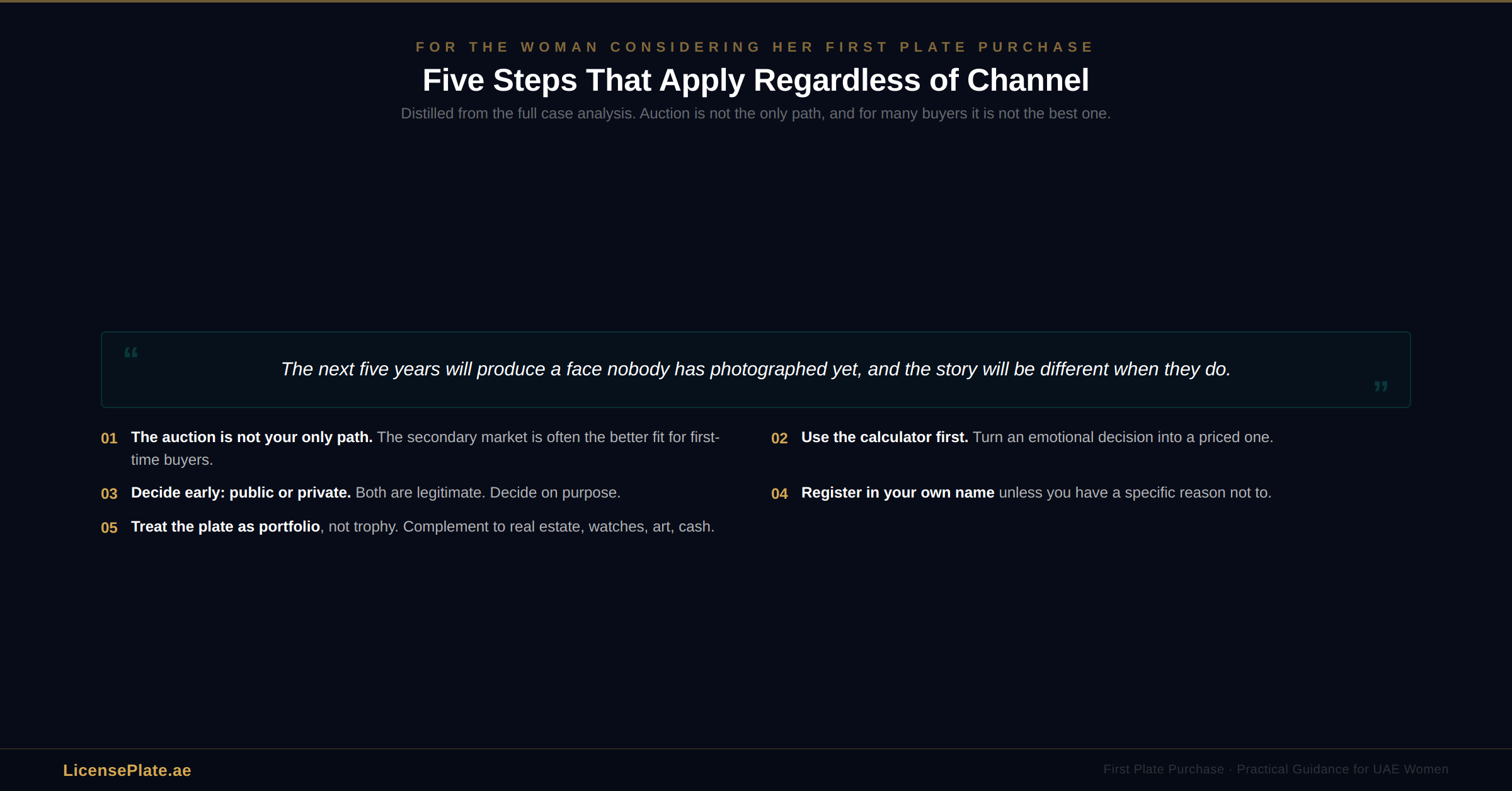
إذا كنتِ امرأة مقيمة في الإمارات، إماراتية أو وافدة، وتفكّرين في أول عملية شراء جادّة للوحة، فإليكِ الإرشاد العملي المستخلَص من التحليل أعلاه.
1. المزاد ليس مسارك الوحيد، وبالنسبة لكثير من النساء ليس المسار الأفضل. فمزادات الهيئة المفتوحة وفعاليات أنبل رقم الخيرية مسارح علنية تناسب ملفات مشترين بعينها (أشخاص يستمتعون بتجربة المزايدة، وأشخاص يريدون الارتباط الخيري، وأشخاص يريدون أن يُروا). وإذا لم يصفكِ أيٌّ من هذين، فالسوق الثانوية شبه مؤكّد أنها الأنسب. ومنصات مثل LicensePlate.ae تتيح لكِ تصفّح إعلانات موثّقة، ورؤية مقارنات تاريخية، والتعامل بخصوصية. ويستعرض تفصيلنا لمفاضلات مزاد الهيئة مقابل السوق الثانوية أي بيئة تناسب أي ملف مشترٍ.
2. استخدمي الحاسبة قبل أي شيء آخر. تمنحكِ حاسبة اللوحات على LicensePlate.ae تقييماً افتتاحياً قابلاً للدفاع عنه لأي رمز وتركيبة أرقام. وهذه أنفع خطوة تحضيرية مفردة يمكن لأي مشترٍ لأول مرة القيام بها، بغضّ النظر عن النوع. فهي تحوّل قراراً عاطفياً إلى قرار مسعَّر.
3. قرّري مبكراً ما إذا كان شراؤكِ سيكون علنياً أم خاصاً. فشراء لوحة في دبي يمكن أن يكون علنياً كالفوز بمعروض في مزاد فندق أرماني أمام الكاميرات، أو خاصاً كنقل في السوق الثانوية يُنجَز في بعد ظهر واحد عبر تطبيق دبي درايف. وكلا الخيارين مشروع. والاختيار يشكّل كيف تدخل اللوحة حياتكِ وكيف تظهر في السجلّ العام. قرّري عن قصد، لا بشكل افتراضي.
4. سجّلي باسمكِ ما لم يكن لديكِ سبب محدّد لعدم ذلك. ينبغي أن يكون الوضع الافتراضي لأي مشترية لوحة لأول مرة في الدولة هو التسجيل باسمها، في ملفها المروري، ببطاقة هويتها الإماراتية. وهذا أبسط ترتيب إدارياً وهو الذي يحفظ أقصى مرونة للقرارات المستقبلية (البيع، أو الهبة، أو الاحتفاظ، أو النقل). أما الترتيبات المشتركة أو بالوكالة فتُدخِل تعقيداً نادراً ما يجدي وأحياناً يسبّب مشكلات عند الخروج. ويستعرض دليل أهلية الوافدين والشراء التفاصيل الإدارية لأي مقيم غير إماراتي.
5. فكّري في اللوحة كجزء من محفظة طويلة الأجل، لا كجائزة قائمة بذاتها. يعامل التحليل في دليلنا للوحات الإماراتية كاستثمار اللوحات كمكوّن داخل محفظة أصول فاخرة متنوّعة. وبالنسبة لمشترية من أصحاب الثروات الكبيرة تبني ميزانية شخصية طويلة الأجل، تقع اللوحة إلى جانب العقار والمجوهرات والساعات والفنون والنقد. وهي ليست بديلاً عن أيٍّ من هذه. إنها أصل مكمّل يقدّم خصائص محدّدة (سيولة عند سبعة أرقام، وظهور علني دائم إن رُغب فيه، ومنفعة استخدام يومي) لا تقدّمها المكوّنات الأخرى. وإذا كنتِ تبنين محفظة لوحات فعلياً لا تقومين بعملية شراء واحدة، فإن إعلانات السوق هي حيث يظهر المعروض المستمر.
الأسئلة الشائعة
س: هل يمكن للنساء شراء لوحات سيارات في دبي والإمارات؟
نعم، دون قيد. فأي مقيم في الدولة يحمل بطاقة هوية إماراتية سارية وملفاً مرورياً والقدرة على الدفع يمكنه شراء لوحة عبر أي قناة (مزاد الهيئة، أو السوق الثانوية، أو البيع الخاص، أو المنصات). والنوع الاجتماعي ليس عاملاً في الأهلية على أي مستوى من سوق اللوحات الإماراتية. ويوجب تعميم مصرف الإمارات المركزي لعام 2019 صراحةً على البنوك والمؤسسات المالية تقديم خدماتها للنساء على أساس متكافئ.
س: لماذا لا نرى نساءً يفزن بمزادات لوحات دبي الكبرى؟
النمط مدفوع بثلاثة عوامل تعمل في آن واحد: صيغة المزاد تكافئ رافع المضرب المذكور لا المالك المستفيد (وفي كثير من الهياكل العائلية الخليجية، يحمل رجل من العائلة المضرب نيابةً عن سيدة رئيسية)؛ والخصوصية عُرف ثقافي وديني لكثير من المسلمات في الدولة ويفضّلن إبقاء مشترياتهنّ من الأصول بعيداً عن التغطية العلنية؛ والصحافة الاقتصادية الإماراتية تحترم تفضيلات إخفاء الهوية، ما يقلّل منهجياً من الإبلاغ عن مشاركة النساء. فعناوين المزادات لا تعكس نمط الملكية الكامن.
س: من هي وكيلة العقارات الصينية المذكورة في تغطية ذا ناشيونال لمزاد 2022؟
هونغ يانغ، وكانت في الثلاثين آنذاك، ذكرتها ذا ناشيونال في تغطيتها في يوليو 2022 لمزاد أنبل الأرقام الخيري في دبي. وقد زايدت بـ 1.7 مليون درهم على اللوحة رقم 999 من الرمز 2. ولم تفز بالمعروض. وتبقى واحدة من قلّة قليلة من المزايدات المذكورات علناً من صحيفة عربية كبرى ناطقة بالإنجليزية في سياق مزادات لوحات دبي خلال السنوات الخمس الماضية.
س: كيف يعامل قانون الميراث الإماراتي المستفيدات اللواتي يتلقّين لوحة سيارة؟
بالنسبة للمسلمين، يطبّق قانون الأحوال الشخصية الإماراتي لسنة 2005 أحكام الميراث الشرعية. وتنصّ المادة 352 على أن "للذكر مثل حظّ الأنثيين في الميراث." فترث الابنة نصف ما يرثه الابن. وتحصل الأرملة التي لديها أبناء على ثُمن تركة زوجها المتوفّى. أما بالنسبة لغير المسلمين، فقد غيّر المرسوم بقانون اتحادي رقم 41 لسنة 2022 بشأن الأحوال الشخصية المدنية ذلك: ففي غياب وصية، تُوزَّع التركة دون تمييز بين الجنسين. وينتج كلا الإطارين عمليات نقل جوهرية للوحات إلى مستفيدات، وإن كان ذلك وفق أحكام مختلفة. ويمكن للمقيمين غير المسلمين تسجيل وصايا عبر مركز وصايا مركز دبي المالي العالمي أو دائرة القضاء بأبوظبي لتجاوز التوزيع الشرعي الافتراضي.
س: من هنّ بعض النساء الإماراتيات المذكورات بالاسم اللواتي يطابق ملف ثروتهنّ مشترية لوحة مميّزة؟
هناء الرستماني (الرئيس التنفيذي لمجموعة بنك أبوظبي الأول، والأولى على قائمة فوربس الشرق الأوسط لأقوى 100 سيدة أعمال لعام 2025 للعام الثالث على التوالي، والرئيسة التنفيذية الوحيدة لشركة إماراتية مدرجة على قائمة فورتشن لأقوى نساء الأعمال 2025 في المرتبة 76)، ورجاء عيسى القرق (رئيسة مجلس الإدارة والعضو المنتدب لمجموعة عيسى صالح القرق)، وخديجة البستكي (النائب الأول للرئيس في حي دبي للتصميم)، ومنى المرّي (نائبة رئيس مجلس الإمارات للتوازن بين الجنسين)، ومنى قطّان (مؤسِّسة كيالي)، وهدى قطّان (مؤسِّسة هدى بيوتي) جميعهنّ مذكورات علناً في تصنيفات فوربس الشرق الأوسط والتغطية الاقتصادية الدولية. ولم تُحدَّد أيٌّ منهنّ علناً كمشترية للوحة مميّزة في مزاد كبير. وليس الغرض من هذا المقال الإيحاء بأن أياً من هؤلاء النساء تملك لوحات مميّزة؛ الغرض هو أن الملف الديموغرافي لمشتري لوحات الإمارات الجادّين يضمّ كثيراً من النساء أمثالهنّ.
س: ما نسبة النساء بين مشتري لوحات دبي؟
لا يلتقط ذلك بدقّة أي رقم متاح علناً. فهيئة الطرق والمواصلات لا تنشر بيانات ملكية مفصّلة جندرياً. وكثير من اللوحات مسجّلة لكيانات مؤسسية أو مكاتب عائلات لا تكشف الملكية المستفيدة. والصورة الاتجاهية المتاحة للوسطاء المتمرّسين العاملين في سوق لوحات دبي هي أن النساء شريحة جوهرية ومتنامية من قاعدة المشترين، خصوصاً في شرائح الهدايا والميراث وإدارة الثروات، وإن كانت الحصة المرئية علناً عبر عناوين المزادات تقارب الصفر.
س: هل شراء لوحة سيارة كهدية لامرأة مقبول ثقافياً في الإمارات؟
نعم، وعلى نطاق واسع. فإهداء اللوحات نمط متكرّر في الهياكل العائلية والتجارية الإماراتية، يمتدّ عبر الأعراس والتخرّج والسيارات الأولى والترقيات المؤسسية وأعياد الميلاد المفصلية. والاختيار العددي للرقم بعينه يحمل غالباً دلالة خاصة. وبالنسبة لامرأة تتلقّى الهدية، تُعامَل اللوحة غالباً كأصل مدى الحياة لا كشراء نفعي.
س: هل ينبغي للمرأة الإماراتية تسجيل لوحة جديدة باسمها أم باسم أحد أفراد الأسرة؟
ينبغي أن يكون الوضع الافتراضي لأي مشترية لوحة لأول مرة في الدولة هو التسجيل باسمها، في ملفها المروري، ببطاقة هويتها الإماراتية. وهذا أبسط ترتيب إدارياً وهو الذي يحفظ أقصى مرونة للقرارات المستقبلية. أما الترتيبات المشتركة أو بالوكالة فتُدخِل تعقيداً نادراً ما يجدي وأحياناً يسبّب مشكلات عند الخروج. وقد تبرّر أوضاع بعينها (هياكل مكاتب العائلات، والتخطيط لحماية الأصول، واعتبارات الميراث العابر للحدود) ترتيبات مختلفة، لكن تلك تتطلّب مشورة من مستشار ثروات مؤهّل في الدولة وينبغي ألّا تكون الوضع الافتراضي.
س: هل توجد مزادات لوحات مخصّصة للنساء أو وسيطات لوحات في الإمارات؟
لا توجد مزادات لوحات مخصّصة للنساء في الدولة وقت كتابة هذا المقال. وفعاليات المزادات الكبرى (أنبل الأرقام، ومزادات الهيئة المفتوحة) مفتوحة للجنسين وتعمل وفق الأحكام نفسها لجميع المزايدين. وتعمل عدة وسيطات أو شركات وساطة أسّستها نساء في مجال الأصول الفاخرة والمقتنيات في دبي، وبعضهنّ يتعاملن باللوحات كجزء من محافظ ترف أوسع. ومنصات السوق الثانوية مثل LicensePlate.ae مفتوحة للجنسين بحكم تصميمها.
س: ما أنفع خطوة تحضيرية مفردة لامرأة تفكّر في شراء لوحتها الأولى؟
استخدمي حاسبة اللوحات على LicensePlate.ae قبل أي شيء آخر. فهي تمنحكِ تقييماً افتتاحياً قابلاً للدفاع عنه لأي رمز وتركيبة أرقام، ما يحوّل قراراً عاطفياً إلى قرار مسعَّر. وهذه أنفع خطوة تحضيرية مفردة يمكن لأي مشترٍ لأول مرة القيام بها، بغضّ النظر عن النوع. وثاني أنفع خطوة: تصفّحي الإعلانات النشطة في السوق لترَي كيف يبدو المعروض الحالي فعلاً عند نقاط سعرية مختلفة. وثالثاً: اقرئي دليل تكلفة الملكية لفهم الرسوم المتكرّرة الصغيرة المرتبطة بالاحتفاظ بلوحة عبر السنوات.
خاطرة أخيرة، بالعودة إلى الحبتور جراند في 2022
لم تفز هونغ يانغ باللوحة 999 بعد ظهر ذلك اليوم في يوليو 2022. بل فاز بها شخص آخر. وذكرت تغطية ذا ناشيونال الفائز، ووصفت المعروض، ومضت إلى القصة التالية. ونُشرت صورتها في الصحيفة لأنها كانت مشهداً غير معتاد بما يكفي في مزاد لوحات كبير في دبي ليكون مثيراً تحريرياً: شابة صينية، وكيلة عقارات لا مليارديرة، تزايد بنحو مليوني درهم على لوحة في فعالية خيرية يحضرها في معظمها رجال بالكنادير والبدلات. وطرافة الصورة نفسها هي المقصود.
وفي 2035، لن تكون صورة شابة تزايد في مزاد لوحات في دبي غير معتادة تحريرياً. بل ستكون إطاراً واحداً بين عشرات، والمرأة المعنية سيكون احتمال كونها مزايدة فائزة أكبر من كونها وصيفة. والانتقال من 2022 إلى 2035 سيحدث بهدوء، في الملفات المرورية، وفي صفقات الأسواق، وفي تبادلات الهدايا العائلية، وفي الانتقال الجيلي البطيء للثروة من الآباء إلى البنات ومن الأمهات إلى البنات. وسيحدث سواء لحقت به عناوين المزادات أم لا. وستلحق العناوين في نهاية المطاف، لأن العناوين تتبع الشيك، والشيك يوقّعه بالفعل طيف من الأيدي أوسع ممّا تعكسه الصفحة الأولى.
النساء في سوق لوحات دبي لسن فئة ناشئة. إنهنّ فئة قائمة، محسوبة جزئياً في الملفات المرورية وبالكاد محسوبة في الصحف. والغرض من هذا المقال ببساطة هو ملاحظة أنهنّ هناك، وأنهنّ كنّ هناك لمدة أطول ممّا يعترف به السجلّ العام، وأن العقد المقبل سيتطلّب عدسة تحريرية مختلفة لتغطية السوق بصدق. هونغ يانغ هي وجه السنوات الخمس الماضية. والسنوات الخمس المقبلة ستنتج وجهاً لم يصوّره أحد بعد، وستكون القصة مختلفة حين يفعلون.