

مخالفات وغرامات لوحات الأرقام في الإمارات 2026: من 400 درهم إلى حجز 90 يوماً وستّة أشهر حبساً
آخر تحديث: 15 أغسطس 2026
الإجابة السريعة
تقع مخالفات لوحات الأرقام في الإمارات في ثلاث طبقات منفصلة، ومعظم التغطية تخلط بينها. فاللوحة التي هي مجرّد متّسخة أو باهتة أو محجوبة مخالفة مرورية بـ 400 درهم. أما القيادة بلا لوحة إطلاقاً فمخالفة مرورية أثقل بكثير: 3,000 درهم و23 نقطة سوداء وحجز المركبة 90 يوماً. لكن تزوير اللوحة أو تغييرها أو نقلها ليس مخالفة مرورية أصلاً — بل جريمة بموجب المادة 34 من المرسوم بقانون اتحادي رقم (14) لسنة 2024، عقوبتها الحبس حتى ستّة أشهر و/أو غرامة من 20,000 إلى 100,000 درهم. والفاصل بين الطبقة الأولى والثالثة هو القصد: فالأوساخ إهمال، والمفكّ جريمة.
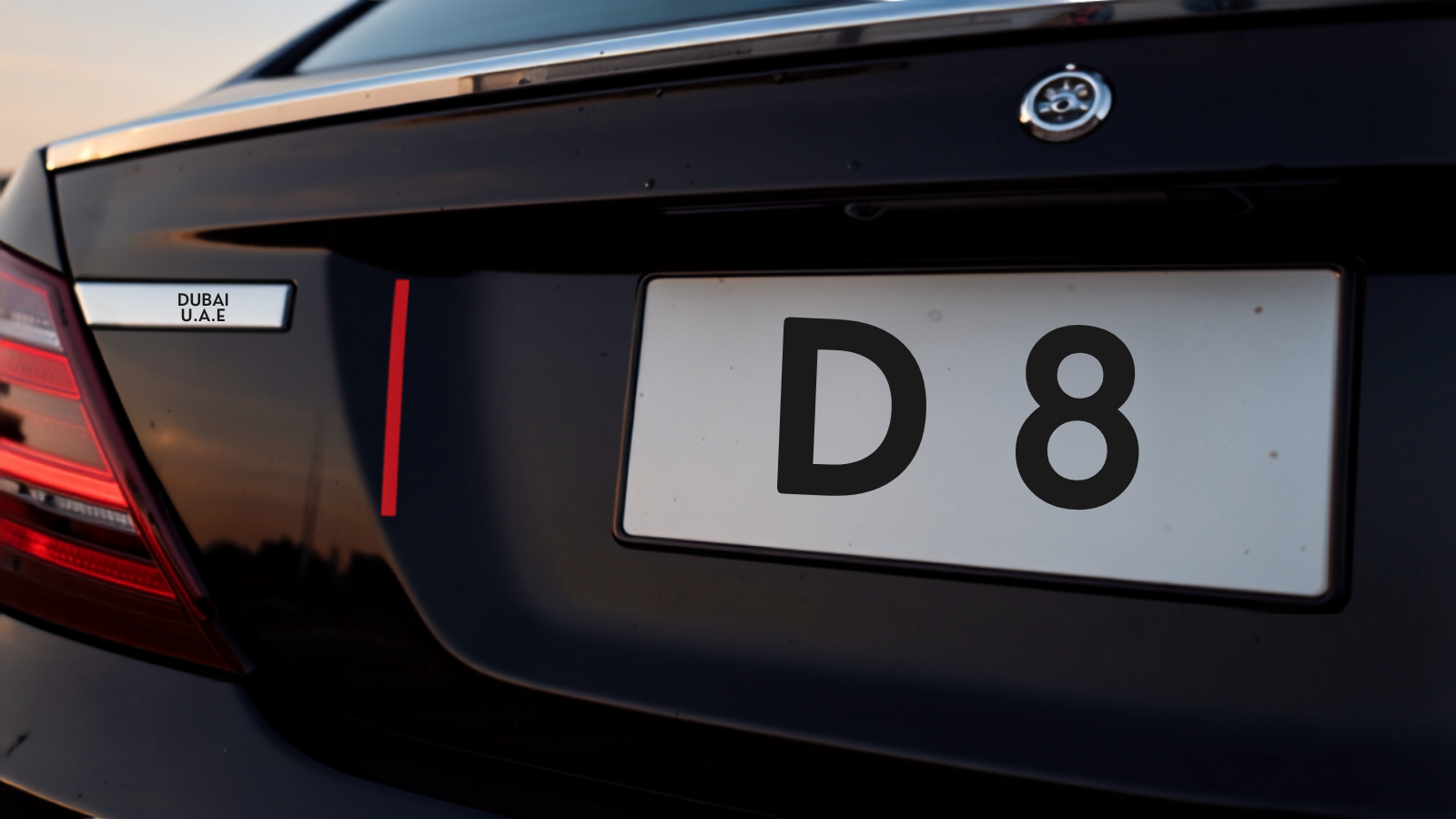
ثمّة نقطة عمياء غريبة في طريقة حديث سوق اللوحات الإماراتية عن القانون. فنكتب بلا نهاية عن كم تساوي اللوحة ولا نكاد نكتب شيئاً عن ثمن الخطأ فيها. والخطأ فيها سهل بشكل مذهل: حمّالة درّاجات، أو غطاء مظلّل يُشترى من كشك في مركز تسوّق، أو أصيل يُقضى في فكّ رقمك المفضّل من إحدى سيّارتيك وتركيبه على الأخرى.
وتلك الأخيرة هي الفخّ. تبدو نقل ملكيّتك الخاصة بين مركبتيك الخاصتين. وبموجب المادة 34 من قانون المرور الاتحادي، هي فعل إجرامي ما لم توافق عليه جهة الترخيص أولاً.
ويعرض هذا الدليل كل عقوبة تتّصل باللوحات في الإمارات، مرتّبةً بالشدّة، بالأرقام الدقيقة والمصدر القانوني لكل منها. ويغطّي أيضاً ما يحدث فعلاً لمركبة محجوزة وكم يكلّف استردادها. وإن أردت قواعد الإطارات والحوامل ومعدّات التركيب تحديداً، فذلك موضوع منفصل نغطّيه في قواعد إطارات وحوامل وتركيب اللوحات في الإمارات.
المحتويات
- طبقات عقوبات اللوحات الثلاث في لمحة
- الطبقة 1: مخالفة اللوحة المحجوبة بـ 400 درهم
- الطبقة 2: بلا لوحة إطلاقاً — 3,000 درهم و23 نقطة و90 يوماً
- الطبقة 3: المادة 34، حيث تصبح مخالفة اللوحة جريمة
- المخالفة التي يرتكبها مالكو اللوحات العاديون فعلاً
- استرداد مركبة محجوزة: الإجراء والتكاليف
- المناطق الرمادية التي يخطئ فيها الناس باستمرار
- ماذا يعني هذا إن كنت تشتري اللوحات وتبيعها
- قائمة الامتثال في دقيقتين
- الأسئلة الشائعة
طبقات عقوبات اللوحات الثلاث في لمحة
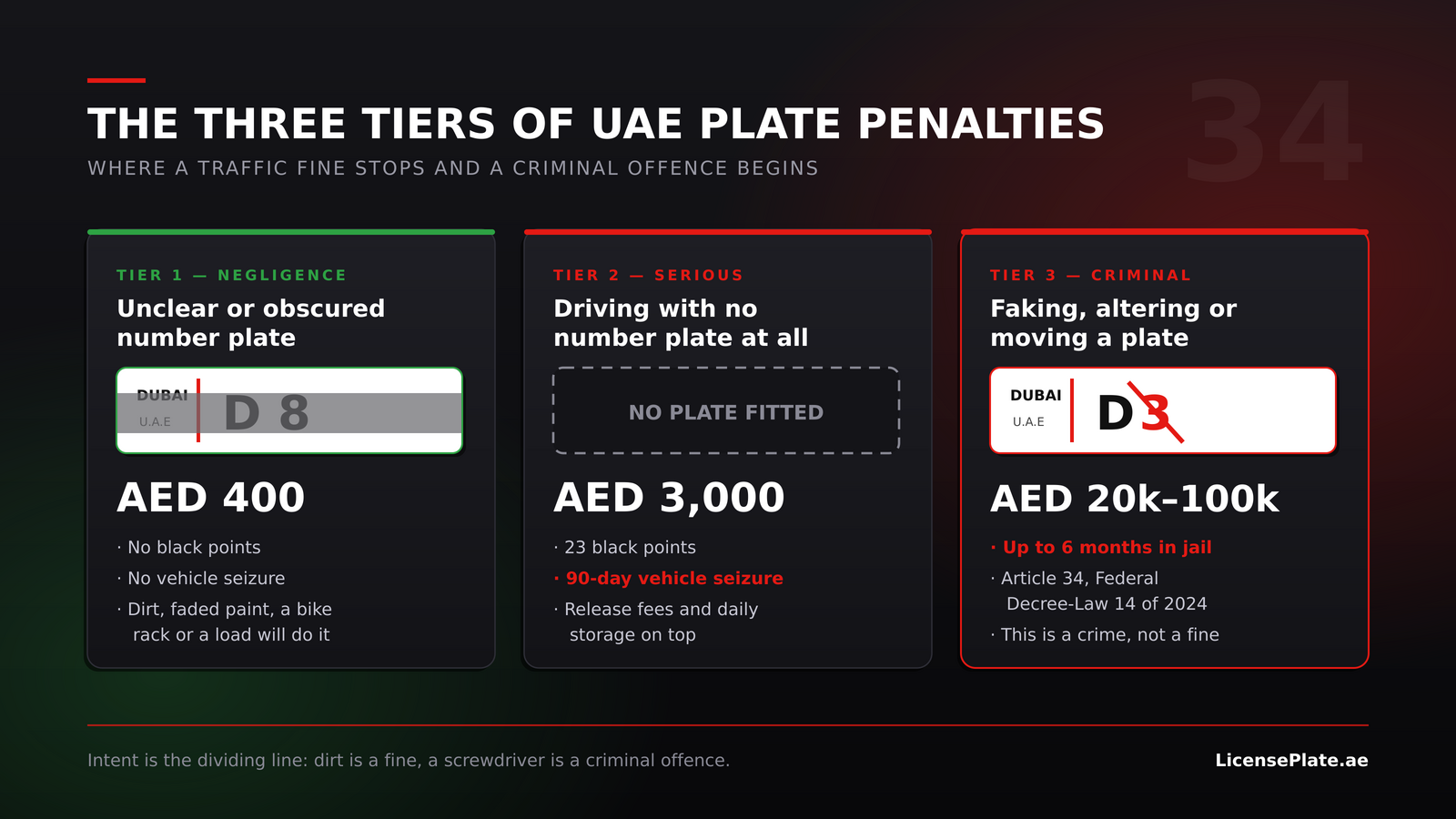
كل مقال تقريباً ستقرؤه في هذا الموضوع يمزج مخالفة بـ 400 درهم بعنوان بـ 20,000 درهم، لأن كليهما يتضمّن كلمتَي «لوحة رقم». وهما محكومان بنصوص مختلفة ويحملان عواقب مختلفة تماماً.
| الطبقة | السلوك | العقوبة | حجز المركبة؟ | سجلّ جنائي؟ |
|---|---|---|---|---|
| 1 — إهمال | لوحة غير واضحة أو باهتة أو متّسخة أو محجوبة عن الرؤية | 400 درهم | لا | لا |
| 2 — جسيمة | القيادة بلا لوحة رقم مركّبة | 3,000 درهم + 23 نقطة سوداء | نعم — 90 يوماً | لا |
| 3 — جنائية | التزوير أو التغيير أو نقل اللوحة دون موافقة | 20,000–100,000 درهم و/أو الحبس حتى 6 أشهر | عادةً، إضافةً إلى ضبط الأدلّة | نعم |
احتفظ بفكرة واحدة وأنت تقرأ البقيّة: الطبقات يفصلها القصد لا الضرر. فقد تكون اللوحة غير مقروءة تماماً من الأوساخ فتكلّفك 400 درهم. واللوحة نفسها، إن جُعِلت غير مقروءة عمداً، تنقلك نحو المادة 34.
الطبقة 1: مخالفة اللوحة المحجوبة بـ 400 درهم
الإجابة المباشرة: القيادة بلوحة رقم غير واضحة أو باهتة أو محجوبة تحمل غرامة 400 درهم في الإمارات، بلا نقاط سوداء وبلا حجز للمركبة. وتستند أجهزة الشرطة إلى المادة 27(ب) من قانون المرور الاتحادي عند تحريرها.
وهذه المخالفة التي لا يكاد أحد يفكّر فيها، وهي التي سيرتكبها معظم السائقين فعلاً. فيجب أن تكون لوحتك ظاهرة ومقروءة بالكامل في كل الأوقات — لا موجودة فحسب. والمسبّبات الشائعة:
- الأوساخ وغبار الصحراء. فبعد عاصفة رملية أو أسبوع من الركن في الخارج، قد تصبح اللوحة غير مقروءة للكاميرا فعلاً.
- البهتان. شمس الإمارات تُتلِف طلاء اللوحات. واللوحة التي فقدت تباينها لوحة غير واضحة، وإن لم يُفعَل بها شيء.
- حمّالات الدرّاجات والأمتعة. فالحمّالة الخلفية التي تعبر اللوحة من أكثر الأسباب المذكورة.
- الأحمال والمعدّات المقطورة. أي شيء ناتئ من الخلف يقطع خطّ رؤية الكاميرا.
- الأغطية والدروع. أغطية اللوحات المظلّلة أو العاكسة أو «المضادّة للكاميرات» التي تُباع كإكسسوارات. وهذه هي الخطيرة، لأنها تدعو إلى حجّة القصد.
والأربعة الأولى إهمال عادي وتُعامَل كذلك. أما الخامس فحيث يخطو السائقون دون وعي نحو نصّ أثقل بكثير، لأن تركيب جهاز مصمّم لتعطيل كاميرا ليس كعدم غسل سيارتك. ونعود إلى ذلك في المناطق الرمادية.
والدفاع العملي غير برّاق: اغسل اللوحة، واستبدلها حين تبهت، وحرّك حمّالة الدرّاجة. وإن كانت لوحتك متضرّرة مادياً لا متّسخة، فاستبدالها معاملة روتينية لدى الهيئة مغطّاة في دليل تكاليف ورسوم لوحات دبي لدينا، وإن اختفت كلّياً فاتّبع دليل استرداد اللوحة المفقودة أو المسروقة بدل القيادة بدونها.
الطبقة 2: بلا لوحة إطلاقاً — 3,000 درهم و23 نقطة و90 يوماً
الإجابة المباشرة: قيادة مركبة بلا لوحة رقم مركّبة تحمل غرامة 3,000 درهم و23 نقطة سوداء وحجز المركبة 90 يوماً. وهي من أشدّ البنود في جدول المخالفات المرورية الإماراتي كلّه.
وحجم القفزة عن الطبقة الأولى هو المقصد. فـ400 درهم تصير 3,000 — لكن المال أهون ما فيها.
ماذا تعني 23 نقطة سوداء فعلاً
تتراكم النقاط السوداء على ملفّك المروري، والسائقون الذين يبلغون 24 نقطة متراكمة يواجهون سحب الرخصة. فمخالفة واحدة بلا لوحة عند 23 نقطة تتركك على بعد نقطة واحدة من تلك العتبة من حادثة واحدة. وعملياً قد تنهي هذه المخالفة قيادتك مدّةً وإن كنت، بالمعنى الضيّق، مفتقداً قطعة ألمنيوم فقط.
ماذا يحدث للمركبة
تُحجَز السيارة 90 يوماً. وخلال تلك المدّة تقبع في ساحة شرطة وتتراكم عليها رسوم تخزين، ولا تستطيع استخدامها ولا بيعها ولا نقلها. ويستمرّ التأمين سارياً. وإن كانت المركبة مموّلة، فأقساطك لا تتوقّف لأن السيارة خلف سياج.
والسيناريوهات التي تنتج هذه المخالفة عادية لا شرّيرة عادةً: سيارة اشتُريت حديثاً وقُيدَت إلى المنزل قبل إصدار اللوحات؛ أو لوحة سقطت على الطريق السريع وواصل السائق القيادة؛ أو لوحات نُزِعت لأعمال الهيكل أو إعادة الطلاء وحُرِّكت السيارة «مسافة قصيرة فقط». ولا شيء من ذلك دفاع.
وإن كنت بين لوحتين لأنك تشتري رقماً أو تغيّره أو تنقله، فالمسار القانوني هو إتمام المعاملة قبل أن تتحرّك السيارة. ودليلانا عن تغيير لوحة دبي وتجديد تسجيلك يغطّيان التسلسل الذي يُبقي المركبة قانونية طوال الوقت.
الطبقة 3: المادة 34، حيث تصبح مخالفة اللوحة جريمة
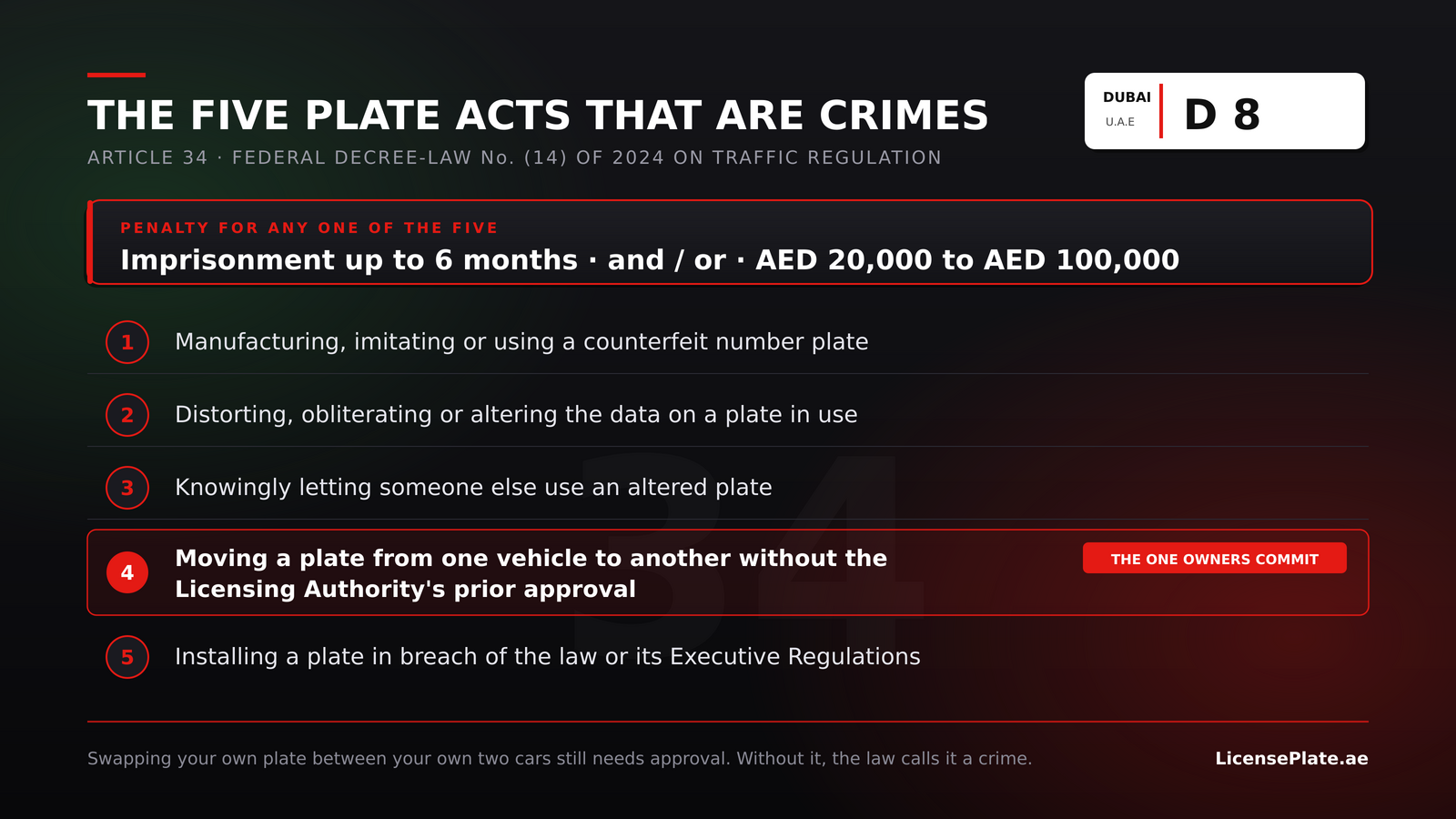
الإجابة المباشرة: المادة 34 من المرسوم بقانون اتحادي رقم (14) لسنة 2024 في شأن تنظيم المرور تجعل خمسة أفعال متّصلة باللوحات جرائم، عقوبة كلٍّ منها الحبس حتى ستّة أشهر و/أو غرامة لا تقلّ عن 20,000 درهم ولا تزيد على 100,000 درهم. وقد دخل القانون حيّز النفاذ في مارس 2025.
وهذه ليست مخالفة مرورية تسدّدها على تطبيق. إنها نصّ جنائي، والأفعال الخمسة التي يغطّيها هي:
- تصنيع لوحة مركبة مزوّرة أو تقليدها أو استعمالها. صنع مزوّرة، أو القيادة بواحدة صنعها غيرك.
- تشويه بيانات لوحة المركبة أو طمسها أو تغييرها أثناء استعمالها. ثني خانة، أو الطلاء فوق رمز، أو كشط رمز.
- السماح للغير باستعمال لوحة مركبة مع العلم بطمسها أو تشويهها أو تغييرها. إعارة السيارة، أو اللوحة، مع العلم.
- نقل لوحة مركبة من مركبة إلى أخرى دون موافقة مسبقة من جهة الترخيص.
- تركيب لوحة مركبة أو تسهيل تركيبها بالمخالفة للمرسوم بقانون ولائحته التنفيذية.
اقرأ البند الثاني بتمعّن، لأنه يلتقط سلوكاً لا يزال بعض السائقين يعاملونه كحيلة ذكية: تغيير رمز مادياً بحيث تسيء الكاميرا قراءته — ثني الرقم 3 ليشبه 8، أو لصق شريط على خانة، أو وضع طبقة تشوّه الرقم من زاوية. والقانون لا يشترط أنك نجحت في التهرّب من شيء. فتغيير البيانات أثناء استعمال اللوحة هو المخالفة.
والبند الخامس هو النصّ الجامع، ولهذا فإن «ركّبتها بشكل مختلف قليلاً فقط» ليس موقفاً آمناً. فالتركيب المخالف للائحة التنفيذية معدود بذاته.
المخالفة التي يرتكبها مالكو اللوحات العاديون فعلاً
البنود الأول والثاني والثالث أشياء لن يفعلها معظم القرّاء أبداً. أما البند الرابع فمختلف، لأنه يصف شيئاً يعتقد مالكو اللوحات أنهم مخوّلون بفعله.
السيناريو: تملك رقماً جيّداً. وتملك سيارتين أيضاً. وتريد الرقم على سيارة عطلة نهاية الأسبوع بضعة أشهر، ثم إعادته إلى سيارتك اليومية. فتفكّه وتبدّله. ولم تحتل على أحد، فأنت تملك المركبتين وتملك الرقم كلّياً.
وبموجب المادة 34(4) ذلك فعل إجرامي، لأن الموافقة — لا الملكية — هي ما يجعل النقل مشروعاً. فرقم اللوحة مسجّل مقابل مركبة بعينها في النظام المروري. ونقله معاملة ترخيصية، وعلى جهة الترخيص أن توافق قبل أن يتحرّك المعدن.
ويهمّ هذا هائلاً في سوق كسوقنا، حيث يملك الناس فعلاً أرقاماً باستقلال عن السيارات. والتمييز الذي ينبغي استيعابه هو الذي عرضناه في دليلنا لشراء اللوحات بسعر ثابت: شهادة الملكية تثبت أن الرقم لك كأصل، بينما يسجّل تسجيل المركبة أي سيارة هو مخصَّص لها حالياً. وامتلاك الأصل لا يخوّلك إعادة تخصيصه بنفسك.
والمسار القانوني مباشر وزهيد — وهو معاملة التخصيص نفسها الموصوفة في كيف تنقل لوحة رقم في دبي، ومساراتها المكافئة في إهداء لوحة لفرد من العائلة ونقل لوحة بين الإمارات. وتكلّف المعاملة جزءاً يسيراً من الحدّ الأدنى لغرامة المادة 34. ولا يوجد سيناريو يكون فيه فعلها بنفسك هو الخيار الاقتصادي.
استرداد مركبة محجوزة: الإجراء والتكاليف
إن حُجِزت مركبة، فالإفراج تسلسل، وكل خطوة تفتح التالية.
- أمضِ مدّة الحجز. وهي 90 يوماً لمخالفة عدم وجود لوحة. والمدّة غير قابلة للتفاوض، وإن كانت بعض الإمارات تتيح شراء ما تبقّى منها (أدناه).
- سوِّ كل مخالفة على الملفّ المروري. لا المخالفة التي سبّبت الحجز فحسب — بل الملفّ كلّه يجب أن يُسوّى.
- ادفع رسوم الإفراج والتخزين. فالتخزين اليومي يقع عادةً في حدود 20–50 درهماً في اليوم بحسب نوع المركبة، وتفرض دبي نحو 50 درهماً في اليوم للمركبات المتروكة بعد انتهاء مدّة الحجز.
- قدّم الوثائق. رخصة القيادة، وتسجيل المركبة، وإثبات الهوية.
- استلم المركبة. فالإفراج يتبع الدفع والتحقّق من الوثائق.
بديل الحجز الذكي
تقدّم عدّة إمارات الآن خدمة «الحجز الذكي»، التي تتيح للمركبة البقاء في مقرّك تحت المراقبة بدل ساحة الشرطة، أو تتيح لك سداد الأيام المتبقّية. وفي دبي قد تُحتسَب نحو 100 درهم عن كل يوم حجز متبقٍّ للمركبة الخفيفة بدل إتمام المدّة فعلياً. وتشغّل الشارقة نظاماً مماثلاً برسم يومي إضافةً إلى رسم يومي صغير لجهاز المراقبة، واستحدثت رأس الخيمة خيار الحجز المنزلي في يناير 2025.
والأهلية تشترط عموماً أن تكون كل المخالفات على الملفّ المروري مسدّدة أصلاً. وهي آلية نافعة فعلاً، ويستحقّ الأمر معرفتها قبل أن تقبل 90 يوماً دون سؤال.
ملاحظة عن الأرقام. مبالغ الغرامات ومدد الحجز ورسوم الإفراج يحدّدها الجدول الاتحادي وجهة الشرطة في كل إمارة، وتُراجَع من حين لآخر. عامل الأرقام هنا كالوضع وقت الكتابة وتأكّد من المبلغ الحالي على بوّابة شرطة إمارتك قبل أن تتصرّف. ودليلنا لـفحص المخالفات المرورية الإماراتية برقم اللوحة يسرد كل بوّابة.
المناطق الرمادية التي يخطئ فيها الناس باستمرار
أغطية اللوحات والأفلام «المضادّة للكاميرات»
تُباع علناً ويُفترَض على نطاق واسع أنها تحتلّ منطقة قانونية رمادية. وهي لا تفعل. فالغطاء الذي يحجب اللوحة مخالفة من الطبقة الأولى كحدّ أدنى، والغطاء المصمّم والمركَّب لتشويه قراءة الرقم يخاطر بأن يوصَف بموجب المادة 34 لا كمخالفة بـ 400 درهم، لأن الغرض هو التهرّب. وتوفّر الإكسسوار للبيع ليس دفاعاً.
الإطارات والحوامل
الإطارات الزخرفية قانونية من حيث المبدأ وغير قانونية عملياً في اللحظة التي تتداخل فيها مع أي جزء من بيانات اللوحة، بما فيه اسم الإمارة أو الرمز. والقواعد التفصيلية — الخلوصات، والمواد المسموحة، وما يُسمَح للتجّار بتركيبه — في دليلنا المخصّص للإطارات والحوامل وقواعد التركيب.
لوحة واحدة أم اثنتان
السيارات تشترط لوحتين أمامية وخلفية. أما الدرّاجات النارية الخاصة فتحمل لوحة خلفية فقط — لكن درّاجات التوصيل والدرّاجات التجارية باتت ملزَمة بعرض لوحتين أمامية وخلفية منذ 1 نوفمبر 2025، وهو تغيير لم يجرِه كثير من السائقين بعد. والوضع الكامل في دليل لوحات الدرّاجات النارية في الإمارات.
لوحات التجارة والتصدير والاختبار
لوحات التجارة الحمراء ولوحات التصدير مشروعة فقط في الظروف الضيّقة التي صدرت من أجلها. واستخدام لوحة تاجر للقيادة الشخصية إساءة استعمال للوحة، لا تفصيلاً شكلياً. انظر اللوحات المؤقّتة والتصدير والاختبار والتجّار.
لوحة تخصّ مركبة أخرى
قيادة سيارة تحمل لوحة مخصّصة لمركبة مختلفة هي سيناريو المادة 34 النموذجي، ويستحقّ القول صراحةً لأنه يُفعَل أحياناً بلا اكتراث — مثلاً أثناء انتظار لوحات سيارة جديدة، باستخدام طقم السيارة القديمة. وذلك ليس حلاً مؤقّتاً. إنه البند الرابع.
ماذا يعني هذا إن كنت تشتري اللوحات وتبيعها
كل ناشط في سوق اللوحات يحمل انكشافين محدّدين لا يحملهما سائق عادي.
الأول هو التوقيت. فبين الاتّفاق على بيع وإتمام التخصيص، توجد نافذة يكون فيها الرقم تعاقدياً لشخص وإدارياً لآخر. ويجب ألّا يتحرّك المعدن خلال تلك النافذة. أتمم المعاملة، ثم ركّب اللوحة — لا العكس أبداً. وتشريح معاملة اللوحة لدينا يمرّ بك على الترتيب الصحيح.
والثاني هو المصدر. فإن اشتريت طقم لوحات مادياً من بائع خاص وتبيّن أنه مغيَّر أو مزوَّر، فإن «اشتريته بحسن نيّة» موقف أضعف بكثير من ألّا تكون حائزاً له. اشترِ أرقاماً لا معدناً — فالرقم يُنقَل عبر النظام واللوحات تُصنَّع جديدة. وتحقّق قبل أن يتحرّك المال باستخدام قائمة العناية الواجبة لدينا، واقرأ دليل احتيال اللوحات لتعرف كيف يعمل الطرف المزوَّر من السوق.
والنسخة الآمنة من هذه السوق مملّة بالتصميم: رقم مسجّل، وشهادة ملكية، وتخصيص معتمد، ولوحات تنتجها الجهة. وكل ما في المادة 34 يصف اختصاراً يلتفّ على واحد من تلك الأربعة.
قائمة الامتثال في دقيقتين
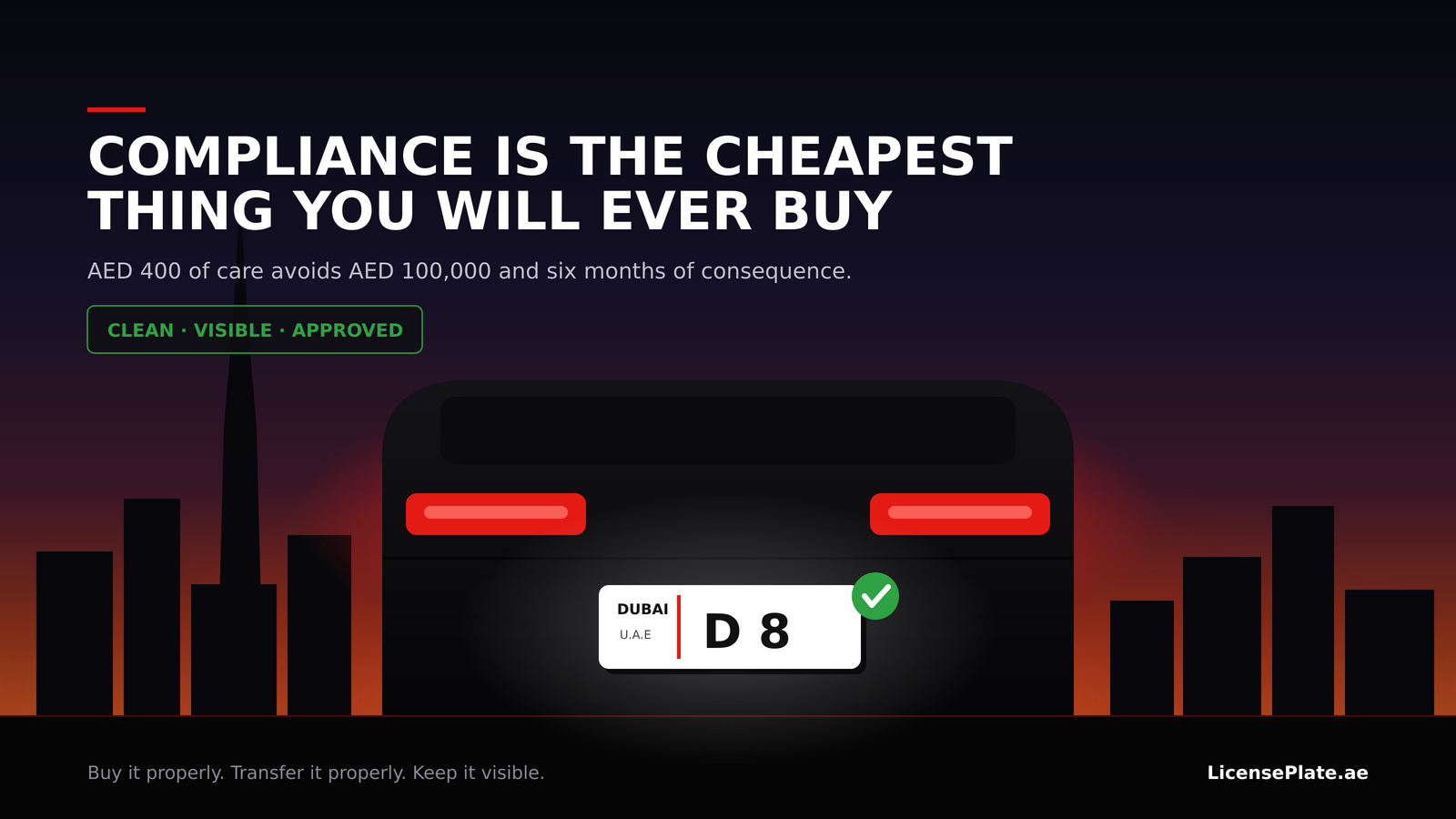
- هل تستطيع كاميرا قراءتها؟ امشِ خلف السيارة. فإن كان غبار أو حمّالة أو حمل يقطع خطّ الرؤية، فأصلحه الآن.
- هل التباين لا يزال جيّداً؟ فاللوحة الباهتة مخالفة تنتظر الوقوع. والاستبدال معاملة روتينية منخفضة التكلفة.
- هل يغطّيها شيء؟ أزل الأغطية المظلّلة والأفلام والدروع. كلّها خطر بلا فائدة.
- هل يلمس الإطار البيانات؟ إن تداخل مع اسم الإمارة أو الرمز أو أي خانة، فانزعه.
- هل اللوحتان مركّبتان، أمامية وخلفية؟ السيارات دائماً. ودرّاجات التوصيل منذ نوفمبر 2025.
- هل تطابق اللوحة على السيارة التسجيل؟ إن كنت قد نقلت رقماً بين مركبتين، فتأكّد أن التخصيص كان معتمداً.
- هل الملفّ المروري خالٍ؟ فالمخالفات غير المسدّدة تمنع الإفراج والتجديد والنقل. افحصه دورياً.
الأسئلة الشائعة
ما غرامة اللوحة المتّسخة أو غير الواضحة في الإمارات؟
400 درهم. وتستند أجهزة الشرطة في الإمارات إلى المادة 27(ب) من قانون المرور الاتحادي. ولا نقاط سوداء ولا حجز للمركبة في هذه المخالفة.
ما عقوبة القيادة بلا لوحة رقم في الإمارات؟
3,000 درهم و23 نقطة سوداء وحجز المركبة 90 يوماً. وهي من أثقل البنود في جدول المخالفات المرورية.
هل تغطية لوحة رقمك غير قانونية في الإمارات؟
نعم. فالغطاء الذي يحجب اللوحة مخالفة بـ 400 درهم كحدّ أدنى، والغطاء المصمّم لتشويه قراءة الكاميرا للرقم يخاطر بأن يُعامَل بموجب المادة 34 كمسألة جنائية لا كمخالفة مرورية.
هل أستطيع نقل لوحة رقمي بين سيّارتيّ؟
ليس بنفسك. فالمادة 34(4) من المرسوم بقانون اتحادي 14 لسنة 2024 تجعل نقل لوحة من مركبة إلى أخرى دون موافقة مسبقة من جهة الترخيص جريمة. وامتلاكك الرقم والمركبتين معاً لا يغيّر ذلك. افعلها كمعاملة تخصيص معتمدة بدلاً من ذلك.
ما عقوبة اللوحة المزوّرة أو المغيَّرة في الإمارات؟
بموجب المادة 34، الحبس حتى ستّة أشهر و/أو غرامة لا تقلّ عن 20,000 درهم ولا تزيد على 100,000 درهم.
كم نقطة سوداء تحمل مخالفة لوحة الرقم؟
القيادة بلا لوحة تحمل 23 نقطة سوداء. أما اللوحة غير الواضحة أو المحجوبة فلا تحمل نقاطاً. والسائقون الذين يبلغون 24 نقطة متراكمة يواجهون سحب الرخصة.
كم مدّة حجز المركبة في مخالفة لوحة؟
90 يوماً للقيادة بلا لوحة رقم. وبعض الإمارات تتيح سداد الأيام المتبقّية عبر نظام الحجز الذكي بدل إتمام المدّة كاملةً.
كم يكلّف الإفراج عن سيارة محجوزة في الإمارات؟
عليك تسوية كل مخالفة على الملفّ المروري، ثم دفع رسوم الإفراج والتخزين. والتخزين اليومي يقع عادةً نحو 20–50 درهماً بحسب نوع المركبة، وتفرض دبي نحو 50 درهماً في اليوم للمركبات المتروكة بعد انتهاء مدّة الحجز.
ما الحجز الذكي؟
نظام يتيح حجز المركبة في مقرّك تحت المراقبة، أو يتيح لك دفع أيام الحجز المتبقّية بدل قضائها. وفي دبي قد تُحتسَب نحو 100 درهم عن كل يوم متبقٍّ للمركبة الخفيفة. ويشترط عموماً سداد كل المخالفات على الملفّ.
متى دخل قانون المرور الإماراتي الجديد حيّز النفاذ؟
دخل المرسوم بقانون اتحادي رقم (14) لسنة 2024 في شأن تنظيم المرور حيّز النفاذ في مارس 2025 ولا يزال القانون الحاكم.
هل إطارات لوحات الأرقام قانونية في الإمارات؟
الإطار مقبول فقط إن لم يتداخل مع أي جزء من بيانات اللوحة — بما فيه اسم الإمارة والرمز وكل خانة. وفي اللحظة التي يغطّي فيها بيانات، يصبح مخالفة.
هل تحتاج الدرّاجات النارية لوحة أمامية في الإمارات؟
الدرّاجات النارية الخاصة تعرض لوحة خلفية فقط. أما درّاجات التوصيل والدرّاجات التجارية فباتت ملزَمة بعرض لوحتين أمامية وخلفية منذ 1 نوفمبر 2025.
هل القيادة بلوحات سيارة أخرى مخالفة جسيمة؟
نعم — فهي تقع تحت المادة 34، الطبقة الجنائية، لا جدول المخالفات المرورية. واستخدام لوحات سيارة قديمة أثناء انتظار الجديدة لا يُعامَل كإجراء مؤقّت.
هل تُقيَّد مخالفة اللوحة في سجلّي الجنائي؟
الطبقتان الأولى والثانية مخالفات مرورية تُقيَّد على ملفّك المروري. أما مخالفات المادة 34 فمسائل جنائية وتُعالَج تبعاً لذلك.
أين أفحص إن كانت عليّ مخالفة تتّصل باللوحة؟
عبر بوّابة شرطة إمارتك أو القنوات الموحّدة. ودليلنا لفحص المخالفات المرورية الإماراتية برقم اللوحة يسرد كلاً منها.
الخلاصة النهائية
تعامل الإمارات لوحة الرقم كوثيقة هوية للمركبة، وتسعّر المخالفات تبعاً لذلك. فإن أخفقت في إبقائها مقروءة فقد كنت مهملاً: 400 درهم. وإن قدت بلا واحدة فقد أزلت هوية المركبة: 3,000 درهم و23 نقطة وثلاثة أشهر بلا سيارتك. وإن غيّرتها أو زوّرتها أو نقلتها بلا إذن فقد تدخّلت في الهوية نفسها — وهناك يتوقّف الملفّ المروري وتبدأ المادة 34.
ولسوق مبنيّة على امتلاك الأرقام لا السيارات، فإن أثمن جملة في هذا المقال هي التي تفاجئ الناس أكثر: قد تملك الرقم وتملك السيارتين ومع ذلك لا يُسمَح لك بنقل اللوحة بنفسك. فالموافقة هي ما يجعلها مشروعة، وهي لا تكلّف شيئاً يُذكَر.
اشترِ الرقم كما ينبغي، وانقله كما ينبغي، وأبقِه نظيفاً وظاهراً. وحين تكون جاهزاً لإضافة واحد، تصفّح أرقام اللوحات المعروضة للبيع في الإمارات أو اذهب مباشرةً إلى أرقام دبي.
حذف التعليق؟
هل أنت متأكد أنك تريد حذف هذا التعليق؟ لا يمكن التراجع عن هذا الإجراء.
حذف المقال؟
هل أنت متأكد أنك تريد حذف هذه المقالة؟ سيؤدي ذلك أيضًا إلى حذف جميع التعليقات. لا يمكن التراجع عن هذا الإجراء.