

الملكية مشروحة (2026): كل حقل على بطاقة تسجيل مركبتك الإماراتية — وماذا تثبت فعلاً عن لوحتك
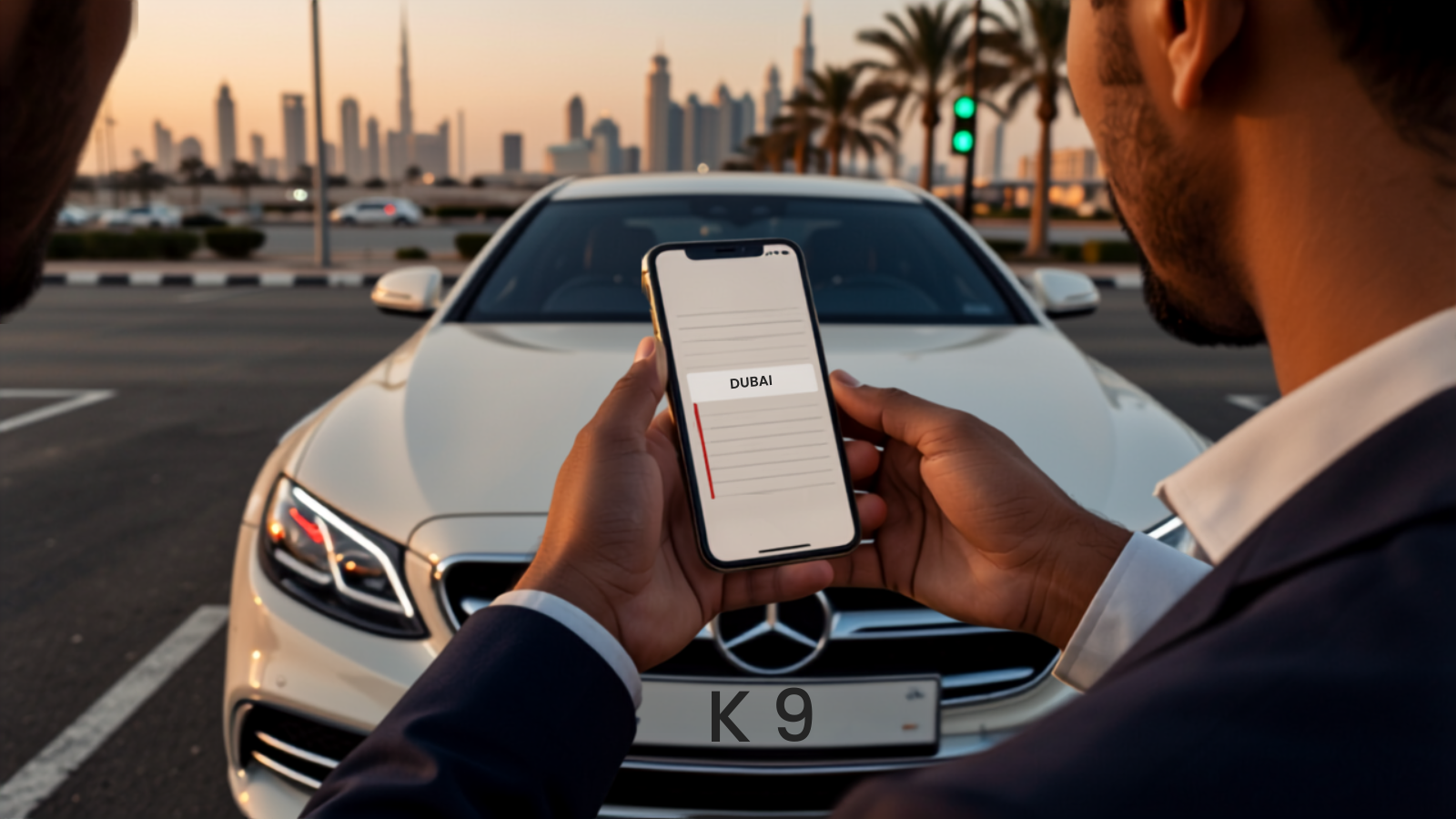
ملكيّتك هي الوثيقة الوحيدة التي تثبت ورقياً أي لوحة مركّبة على أي سيارة وأي ملفّ مروري يملك الاثنين — ومعظم المالكين لم يقرؤوا فيها أبعد من تاريخ الانتهاء. وتلك عادة مكلفة. فرقم الهيكل عليها هو ما يكشف لك سيارة مستوردة. ورقم اللوحة عليها هو ما يفحصه المشتري قبل أن يدفع لك. ورقم الملفّ المروري عليها هو ما يُطلَب منك في كل منضدة لدى الهيئة. وهذا الدليل يفكّك كل حقل، ويشرح الملكية الرقمية، ويغطّي إجراء البطاقة المفقودة، و— وهو الجزء الذي لا يغطّيه أي دليل آخر — يبيّن ما تثبته الملكية وما لا تثبته عن ملكية لوحة رقمك.
الإجابة في 30 ثانية.
- ما هي: بطاقة تسجيل المركبة الصادرة عن الجهة المرورية في إمارتك — إثبات أن السيارة مسجّلة قانونياً.
- ماذا تحمل: اسم المالك، ورقم اللوحة، ورقم الهيكل، ورقم المحرّك، وسريان التأمين، وانتهاء التسجيل — ورقم ملفّك المروري.
- النسخة الرقمية: الملكية الإلكترونية، متاحة في تطبيقات الهيئة وشرطة دبي ووزارة الداخلية.
- إن فقدتها: بلّغ عن الفقدان، واحصل على محضر شرطة أو شهادة فقدان، ثم تقدّم ببدل فاقد — ويُصدَر عادةً رقمياً في اليوم نفسه.
- تصحيح بشأن اللوحة: الملكية تُظهر أي لوحة مركّبة على السيارة. وهي ليست سند ملكية للوحة — فالملكية تقع لدى الملفّ المروري.
ما يغطّيه هذا الدليل
- ما الملكية فعلاً
- كل حقل على البطاقة، مفكَّكاً
- الملصقات والأختام وميزات الأمان
- الملكية الإلكترونية: الرقمية مقابل الورقية
- ما تثبته الملكية عن لوحتك — وما لا تثبته
- استخدام الملكية عند شراء سيارة مستعملة أو لوحة
- البيع: ما تسلّمه وما تحتفظ به
- فقدت أو سُرقت أو تلفت: كيف تحصل على بدل
- الانتهاء والتجديد والغرامة التي تتراكم
- ستّة أخطاء في الملكية تكلّف مالاً
- الأسئلة الشائعة — 14 سؤالاً مُجاباً
ما الملكية فعلاً
الإجابة المباشرة: الملكية هي بطاقة تسجيل المركبة الصادرة عن جهة مرورية إماراتية، وهي الإثبات الرسمي بأن مركبة بعينها مسجّلة ومؤمَّنة ومسموح لها بالطريق قانونياً. وكلمة «ملكية» تعني الحيازة، وهنا يبدأ معظم الالتباس بشأن اللوحات — والمزيد عن ذلك أدناه.
وثلاثة أمور تفعلها في آن واحد:
- تربط سيارة بشخص. فاسم المالك المسجّل يقع على البطاقة.
- تربط سيارة بلوحة. فرقم اللوحة المركّبة حالياً على تلك المركبة مطبوع عليها.
- تربط الاثنين بملفّ مروري. فرقم ملفّك المروري يظهر على البطاقة — وهذا بالضبط ما يجعلها أسرع مكان لإيجاد ذلك الرقم حين تطلبه منك منضدة الهيئة.
والنقطة الثالثة هي التي تستحقّ الاستيعاب. وإن لم يكن واضحاً لك كيف يجلس الملفّ المروري فوق كل شيء آخر، فاقرأ شرح الملفّ المروري لدينا أولاً — فالوثيقتان لا تكتسبان معنى إلّا معاً.
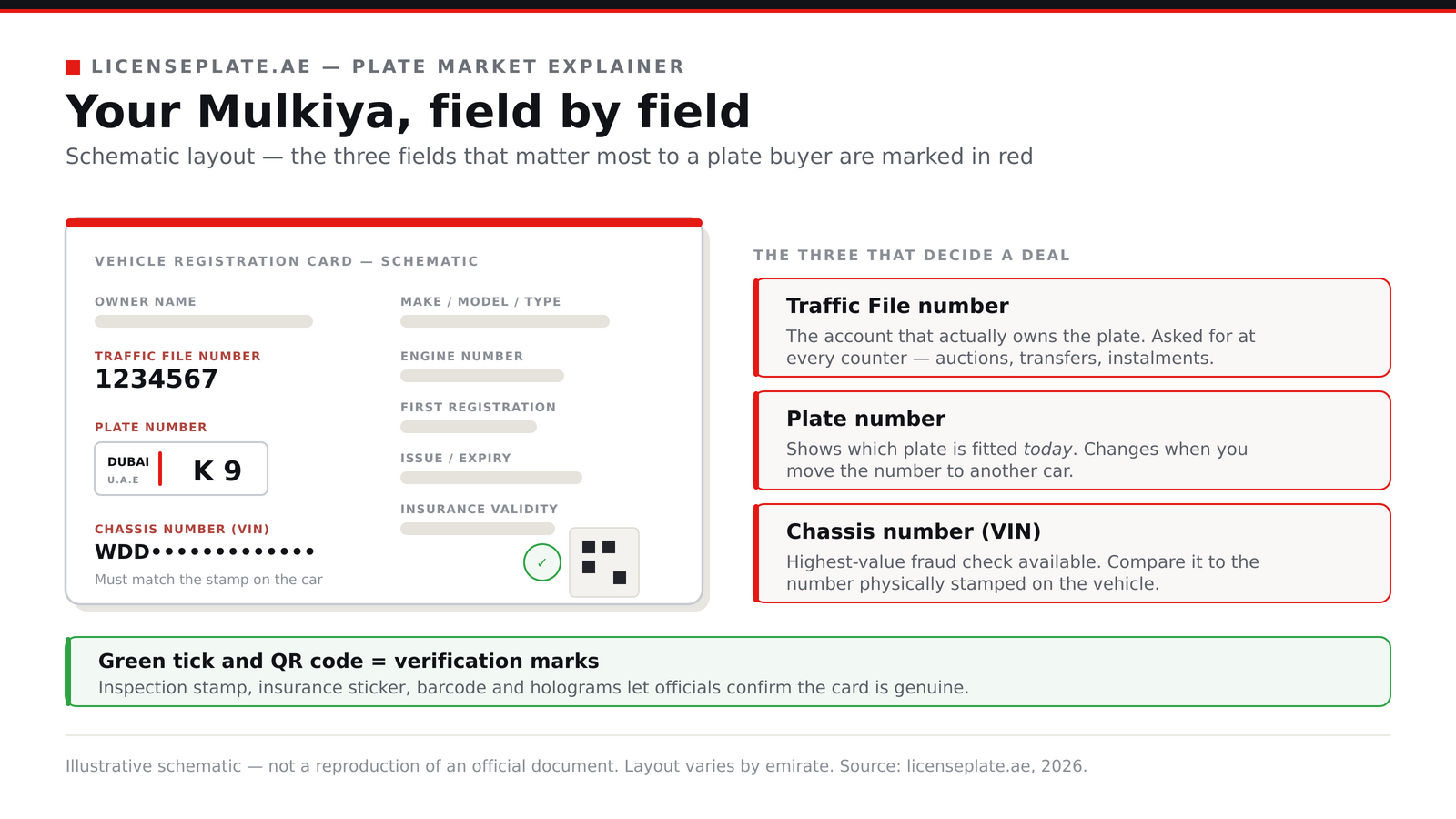
كل حقل على البطاقة، مفكَّكاً
البطاقة كثيفة ولا شيء عليها للزينة. وإليك ما يخدمه كل حقل فعلاً، ومن سيطلبه منك.
| الحقل | ماذا يعني | لماذا يهمّ |
|---|---|---|
| اسم المالك | المالك المسجّل للمركبة | أول ما يطابقه مشتري السيارة المستعملة بهويّتك الإماراتية |
| رقم الملفّ المروري | الحساب الذي يحمل رخصتك ومركباتك ولوحاتك | مطلوب لكل معاملة لدى الهيئة — المزادات والنقل والتقسيط |
| رقم اللوحة | اللوحة المركّبة حالياً على هذه المركبة | يتغيّر حين تنقل لوحة إلى سيارة أخرى |
| رقم الهيكل | هوية السيارة الفريدة المكوّنة من 17 رمزاً | يُستخدَم للتأمين وفحوص الشرطة وكشف السيارات المستوردة |
| رقم المحرّك | معرّف محفور على كتلة المحرّك | للتأكّد أن سيارة مستعملة لم يُستبدَل محرّكها دون إفصاح |
| الصانع والطراز والنوع | الشركة المصنّعة والطراز وفئة الهيكل | يجب أن تطابق السيارة أمامك — وعدم التطابق راية حمراء |
| تاريخ الإصدار | متى جُدِّد التسجيل آخر مرّة | يخبرك أين أنت في الدورة السنوية |
| تاريخ الانتهاء | متى يجب أن تجدّد — عادةً بعد سنة | القيادة بعده تعرّضك لغرامات ومشكلات تأمين |
| تاريخ التسجيل الأول | متى سُجِّلت السيارة أول مرّة في الإمارات | الفجوة مقابل سنة الطراز تشير غالباً إلى استيراد |
| سريان التأمين | انتهاء الوثيقة المرتبطة بالتسجيل | التجديد يفشل إن كان قد انقضى |
| تاريخ الفحص القادم | متى يحين فحص المركبة التالي | خطّط له قبل التجديد لا في يومه |
وأنفع فحص متقاطع للمشتري: رقم الهيكل على البطاقة يجب أن يطابق رقم الهيكل المحفور مادياً على السيارة. فإن اختلفا، أوقف المعاملة.
الملصقات والأختام وميزات الأمان
وراء الحقول المطبوعة، تحمل البطاقة علامات تحقّق:
- ملصق التأمين — يؤكّد ارتباط وثيقة سارية بالتسجيل.
- ختم الفحص الفنّي — يُوضَع بعد اجتياز المركبة فحصها السنوي.
- الباركود / رمز الاستجابة السريعة — يتيح لأنظمة الهيئة وتطبيقات الشرطة التحقّق من البطاقة فوراً.
- رموز الألوان والصور المجسّمة الأمنية — ميزات مضادّة للتزوير، بعضها لا يظهر إلّا تحت الأشعّة فوق البنفسجية.
والأخيرتان تهمّان أكثر ممّا تبدوان. فبطاقة التسجيل المزوّرة إحدى آليات الاحتيال في المركبات واللوحات، وميزات الأمان هي السبب في أن على المشتري التحقّق عبر القنوات الرسمية بدل الوثوق بصورة تُرسَل على واتساب. ودليل احتيال اللوحات لدينا يغطّي كيف تجري هذه العمليات فعلاً.
الملكية الإلكترونية: الرقمية مقابل الورقية
الإجابة المباشرة: تصدر الإمارات الآن بطاقة تسجيل رقمية — الملكية الإلكترونية — يمكن الوصول إليها عبر تطبيق الهيئة وتطبيق شرطة دبي وتطبيق وزارة الداخلية، ويمكن أن تصلح إثباتاً للتسجيل. ولا تزال البطاقة الورقية قابلة للطباعة إن أردت واحدة.
| الملكية الإلكترونية (رقمية) | البطاقة المطبوعة | |
|---|---|---|
| أين تعيش | تطبيق الهيئة، وتطبيق شرطة دبي، وتطبيق وزارة الداخلية | درج سيارتك أو محفظتك |
| قابلة للفقدان | لا | نعم — والبدل يتطلّب محضر شرطة |
| محدَّثة دائماً | نعم — تعكس السجلّ الحيّ | محدَّثة بقدر آخر طباعة فقط |
| تعمل ببطارية فارغة | لا | نعم |
ونصيحة عملية: استخدم النسخة الرقمية يومياً واحتفظ بنسخة مطبوعة في السيارة كخيار احتياطي. فالسجلّ الرقمي هو المرجع؛ والنسخة الورقية تأمين ضدّ هاتف فارغ في اللحظة الخطأ.
ما تثبته الملكية عن لوحتك — وما لا تثبته
هذا هو القسم الذي يتخطّاه كل دليل آخر للملكية، وهو الذي يكلّف مشتري اللوحات مالاً حقيقياً.
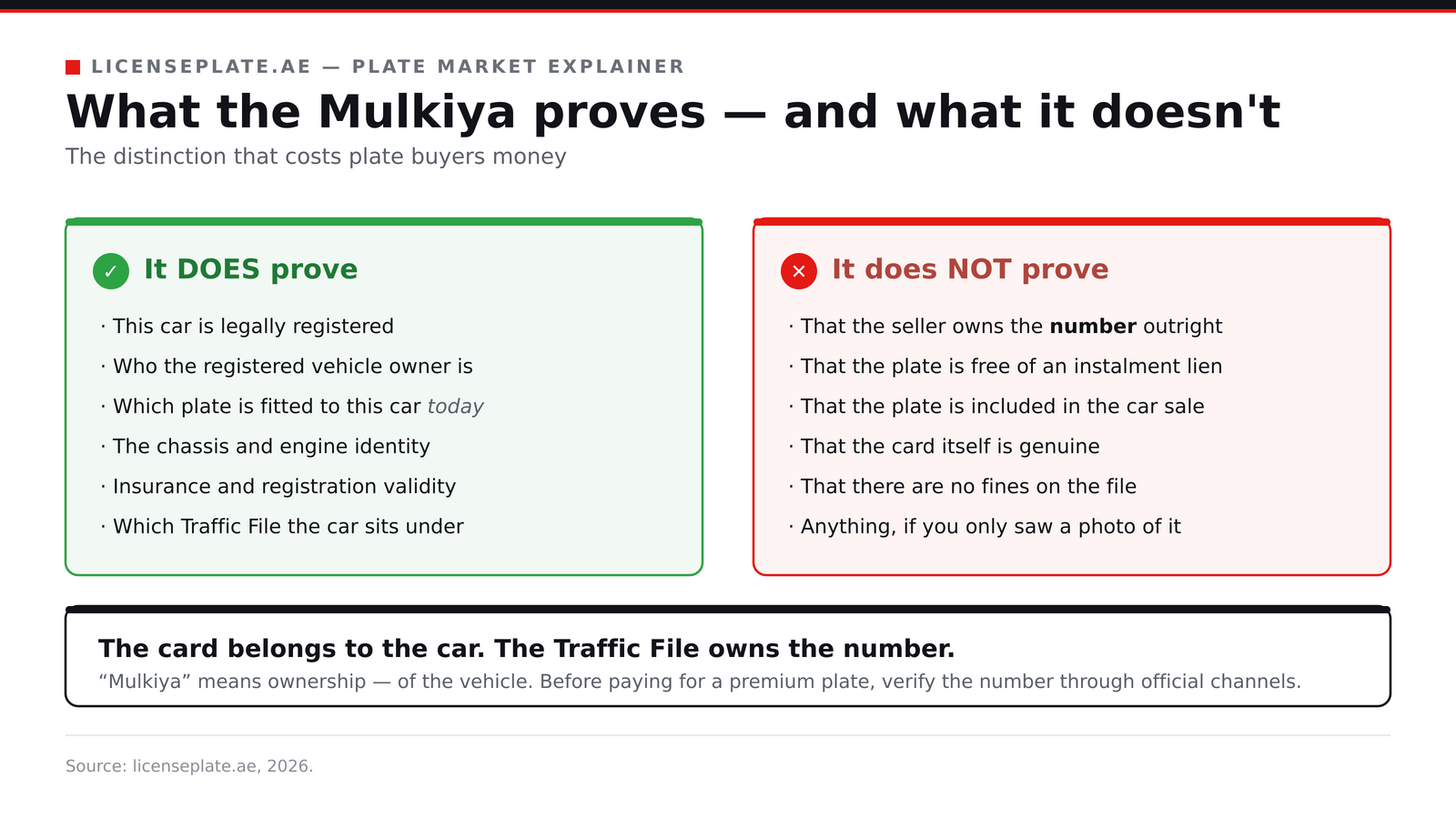
الإجابة المباشرة: الملكية تثبت أي لوحة مركّبة حالياً على مركبة بعينها. وهي ليست سند ملكية للوحة نفسها. فملكية اللوحة تقع لدى الملفّ المروري، لا لدى بطاقة التسجيل.
ولماذا التمييز ليس نظرياً:
- كلمة «ملكية» تعني حيازة — للمركبة، لا للرقم. والبائعون يقدّمون البطاقة أحياناً وكأنها تثبت امتلاكهم اللوحة كلّياً. وهي تثبت أن اللوحة مركّبة على تلك السيارة تحت ذلك الملفّ.
- نقل لوحة إلى سيارة أخرى يغيّر الملكية، لا مالك اللوحة. فاللوحة تبقى مع ملفّك المروري؛ وتُصدَر بطاقة جديدة تُظهر الاقتران الجديد.
- الرهن لا يظهر كتغيّر في ملكية اللوحة. فإن كان البائع قد اشترى اللوحة بـخطّة تقسيط من الهيئة، فلا يمكن نقل اللوحة قانونياً حتى يُرفَع الرهن — والبطاقة التي بيدك لن تخبرك بذلك.
- بيع السيارة لا يبيع اللوحة تلقائياً. فمعظم البائعين يحتفظون بالرقم ويسلّمون السيارة بلوحة أخرى. ودليلنا عن ماذا يحدث للوحتك حين تبيع سيارتك يغطّي الآليات.
القاعدة التي تخرج بها: الملكية دليل قوي على السيارة ودليل جزئي فقط على اللوحة. وقبل أن تدفع مقابل رقم مميّز، تحقّق من حالته عبر القنوات الرسمية باستخدام قائمة العناية الواجبة لدينا.
استخدام الملكية عند شراء سيارة مستعملة أو لوحة
عامل البطاقة كقائمة فحص لا كإجراء شكلي. فالمرور عليها بالترتيب يستغرق دقيقتين ويلتقط معظم المشكلات:
- اسم المالك مقابل هوية البائع الإماراتية. إن لم يتطابقا، فأنت تتعامل مع وكيل — أثبت التفويض قبل أي شيء آخر.
- رقم الهيكل مقابل الحفر المادي على السيارة. أعلى فحص قيمةً في القائمة.
- رقم المحرّك. عدم التطابق يوحي باستبدال محرّك دون إفصاح.
- تاريخ التسجيل الأول مقابل سنة الطراز. فجوة ذات دلالة تشير غالباً إلى مركبة مستوردة، وهو ما يؤثّر في القيمة وإعادة البيع.
- انتهاء التسجيل وسريان التأمين. فالبطاقة المنتهية تعني تكاليف تقع عليك فور الشراء.
- رقم اللوحة. أكّد كتابةً ما إذا كان الرقم مشمولاً في البيع أم محتفَظاً به لدى البائع. وافترض أنه محتفَظ به ما لم يُذكَر خلاف ذلك.
- التحقّق المستقلّ. لا تعتمد أبداً على صورة بطاقة. تحقّق عبر القنوات الرسمية — انظر مسار التحقّق قبل الشراء لدينا.
البيع: ما تسلّمه وما تحتفظ به
الإجابة المباشرة: المشتري يحتاج نقل سجلّ المركبة إلى اسمه؛ وأنت تحتفظ بالرقم إن كنت تنوي الاحتفاظ به — ويجب الاتّفاق على ذلك قبل أن تتغيّر يد السيارة، لا على المنضدة.
وتسلسل جانب البائع الذي يتجنّب الخلافات:
- احسم مسألة اللوحة أولاً. هل الرقم مشمول في السعر، أم تحتفظ به وتنقل السيارة بلوحة أخرى؟ ضعها في الاتّفاق المكتوب. فهذا أشيع نزاع مفرد في بيع السيارات الخاصة في الإمارات.
- سوِّ مخالفاتك قبل الإعلان. فالمخالفات تجلس على ملفّك المروري وستعرقل النقل في اليوم نفسه. وتسويتها بعدها تعني موعداً ثانياً ومشترياً منزعجاً.
- لا تسلّم البطاقة الورقية مبكّراً. فالملكية تُنقَل كجزء من الإجراء الرسمي، لا تُسلَّم في موقف سيارات كعربون أو بادرة حسن نيّة.
- لا ترسل أبداً صورة غير محجوبة للبطاقة إلى غريب. فهي تحمل اسمك ورقم ملفّك المروري ورقم الهيكل ورقم اللوحة — كل ما تحتاجه محاولة انتحال. شاركها فقط حين يمضي البيع فعلاً، ويفضَّل على المنضدة.
- تأكّد من انتقال السجلّ. فالبيع يكتمل حين يصبح التسجيل باسم المشتري — لا حين يصل المال. وحتى ذلك الحين، قد تقع المخالفات على ملفّك.
وإن كنت تحتفظ برقم مميّز لبيعه منفصلاً، فدليلنا عن بيع لوحة رقم في الإمارات يغطّي التسعير والإغلاق، ويمكنك عرضها مباشرةً على سوق licenseplate.ae.
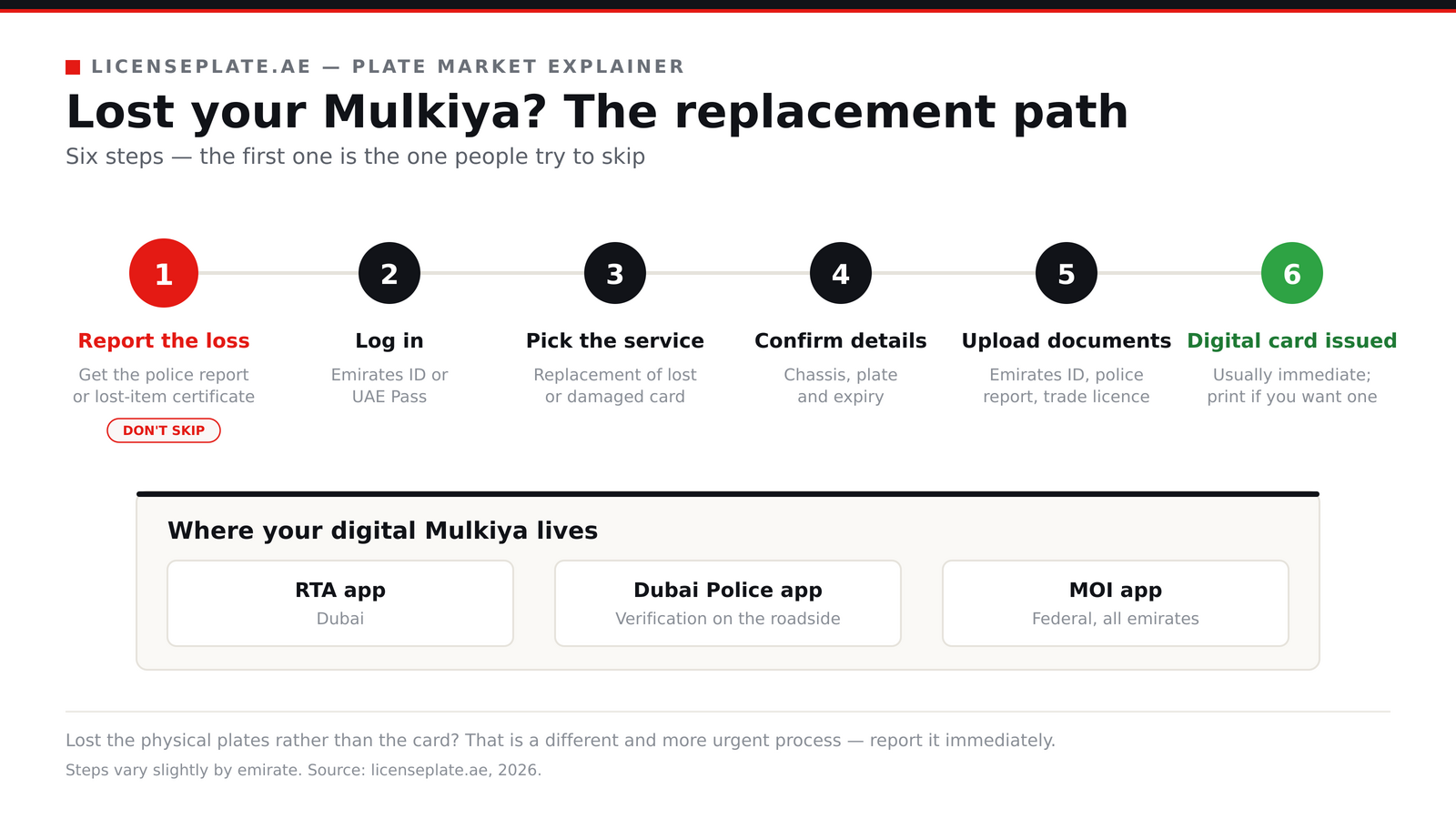
فقدت أو سُرقت أو تلفت: كيف تحصل على بدل
الإجابة المباشرة: بلّغ عن الفقدان واحصل على محضر شرطة أو شهادة فقدان، ثم تقدّم ببدل فاقد — وفي معظم الحالات تُصدَر ملكية رقمية فوراً.
- بلّغ عن الفقدان. احصل على محضر الشرطة أو شهادة الفقدان. وهذه هي الخطوة التي يحاول الناس تخطّيها؛ والطلب يحتاجها.
- سجّل الدخول بالهوية الإماراتية أو الهوية الرقمية. فالهوية الرقمية تطابق شخصيّتك مع السجلّات الحكومية تلقائياً.
- اختر خدمة البدل لبطاقة تسجيل مركبة مفقودة أو تالفة.
- أكّد بيانات المركبة على الشاشة — رقم الهيكل واللوحة وتاريخ الانتهاء.
- ارفع الوثائق. الهوية الإماراتية ومحضر الشرطة؛ والرخصة التجارية أيضاً إن كانت المركبة مسجّلة لشركة.
- استلم البطاقة الرقمية، واطلب نسخة مطبوعة إن أردت واحدة ورقية.
وإن كانت اللوحات نفسها مفقودة لا البطاقة فحسب، فذلك إجراء مختلف وأكثر إلحاحاً — انظر دليل استرداد اللوحة المفقودة أو المسروقة خلال 24 ساعة لدينا.
الانتهاء والتجديد والغرامة التي تتراكم
يسري التسجيل عادةً سنةً واحدة. ويتطلّب التجديد وثيقة تأمين سارية، وفحصاً فنّياً ناجحاً للمركبات المؤهّلة، وسجلّ مخالفات نظيفاً — بوّابة الملفّ المروري نفسها التي تحكم كل شيء آخر.
وأمران يستحقّان التخطيط لهما:
- القيادة بتسجيل منتهٍ خطر غرامة، وهي تتراكم. فكلّما طالت المدّة ساء الموقف، وتصبح نزاعات التأمين أرجح بعد حادث.
- المخالفات المستحقّة تمنع التجديد كلّياً. افحصها برقم اللوحة أولاً — ودليل المخالفات برقم اللوحة لدينا يغطّي كل إمارة.
ولشرح التجديد كاملاً، بما فيه المزالق الخاصة باللوحة، انظر كيف تجدّد تسجيل سيارتك في دبي.
ستّة أخطاء في الملكية تكلّف مالاً
- قراءة تاريخ الانتهاء وحده. فحقول الهيكل والمحرّك والتسجيل الأول هي حيث تختبئ المفاجآت المكلفة.
- معاملة البطاقة كإثبات لملكية اللوحة. فهي تثبت الاقتران لا السند. تحقّق من اللوحة منفصلةً.
- قبول صورة ملكية كتحقّق. فالبطاقات قابلة للتزوير؛ والتحقّق الرسمي ليس كذلك.
- افتراض أن اللوحة تأتي مع السيارة. وهي لا تأتي عادةً. ضعها كتابةً.
- تخطّي محضر الشرطة حين تُفقَد البطاقة. فطلب البدل يشترطه، والاختصار يكلّفك رحلة ثانية.
- ترك التأمين ينتهي قبل التجديد بأيام. فالتجديد يفشل ببساطة، وتقطع الطريق مرّتين.
الأسئلة الشائعة
ما الملكية في الإمارات؟
الملكية هي بطاقة تسجيل المركبة الصادرة عن جهة مرورية إماراتية. وهي تثبت أن المركبة مسجّلة قانونياً وتحمل اسم المالك ورقم اللوحة ورقم الهيكل ورقم المحرّك وسريان التأمين وانتهاء التسجيل ورقم ملفّك المروري.
ما المعلومات الموجودة على الملكية؟
اسم المالك، ورقم الملفّ المروري، ورقم اللوحة، ورقم الهيكل، ورقم المحرّك، والصانع والطراز، وتاريخا الإصدار والانتهاء، وتاريخ التسجيل الأول، وسريان التأمين، وتاريخ الفحص القادم، إضافةً إلى ملصقات التحقّق والباركود أو رمز الاستجابة السريعة.
هل رقم ملفّي المروري على ملكيّتي؟
نعم. رقم الملفّ المروري مطبوع على بطاقة تسجيل المركبة، ما يجعل الملكية أسرع مكان لإيجاده.
ما الملكية الإلكترونية؟
الملكية الإلكترونية هي النسخة الرقمية من بطاقة التسجيل، متاحة عبر تطبيق الهيئة وتطبيق شرطة دبي وتطبيق وزارة الداخلية. وهي تعكس السجلّ الحيّ ويمكن أن تصلح إثباتاً للتسجيل.
هل تثبت الملكية أنني أملك لوحة رقمي؟
لا. فهي تثبت أي لوحة مركّبة حالياً على تلك المركبة. وملكية اللوحة تقع لدى ملفّك المروري، فالملكية وحدها ليست سند ملكية للرقم.
ماذا أفعل إن فقدت ملكيّتي؟
بلّغ عن الفقدان واحصل على محضر شرطة أو شهادة فقدان، ثم تقدّم ببدل فاقد بهويّتك الإماراتية أو هويّتك الرقمية. وتُصدَر بطاقة رقمية عادةً على الفور، ويمكنك طلب نسخة مطبوعة.
هل أحتاج محضر شرطة لاستبدال ملكية مفقودة؟
نعم. فمحضر الشرطة أو شهادة الفقدان مطلوب قبل إتمام طلب البدل.
كيف أعرف إن كانت سيارة مستعملة مستوردة؟
قارن تاريخ التسجيل الأول على الملكية بسنة طراز المركبة. فالفجوة ذات الدلالة تشير غالباً إلى أن السيارة استُورِدت بدل أن تُباع أول مرّة في الإمارات.
فيمَ يُستخدَم رقم الهيكل؟
رقم الهيكل هو المعرّف الفريد للمركبة. ويُستخدَم للتأمين وفحوص الشرطة والتحقّق. وتأكّد دائماً أنه يطابق الرقم المحفور مادياً على السيارة.
كم مدّة صلاحية الملكية؟
يسري التسجيل عادةً سنةً من تاريخ الإصدار، وبعدها يجب تجديده بتأمين ساري وفحص ناجح عند اللزوم وبلا مخالفات مستحقّة.
هل أستطيع القيادة بالملكية الرقمية وحدها؟
يمكن أن تصلح النسخة الرقمية إثباتاً للتسجيل. ولا يزال كثير من المالكين يحتفظون بنسخة مطبوعة في المركبة كخيار احتياطي عند فراغ بطارية الهاتف.
هل يتغيّر رقم اللوحة على ملكيّتي إن نقلت اللوحة إلى سيارة أخرى؟
نعم. فنقل لوحة إلى مركبة مختلفة ينتج سجلّ تسجيل جديداً يُظهر الاقتران الجديد. أما اللوحة نفسها فتبقى محمولةً بملفّك المروري.
هل أستطيع تجديد تسجيلي مع وجود مخالفات مستحقّة؟
لا. فالمخالفات المستحقّة تمنع التجديد. سوِّها أولاً، ثم جدّد.
هل الملكية نفسها في كل إمارة؟
المفهوم والحقول الأساسية ثابتة في الإمارات كلّها، لكن الجهة المُصدِرة وتصميم البطاقة بالضبط يختلفان بحسب الإمارة — الهيئة في دبي، والجهة المعنية في غيرها.
الخلاصة النهائية
الملكية بطاقة صغيرة تؤدّي عملاً كثيراً: تربط سيارة بشخص، ولوحة بسيارة، والاثنين بملفّ مروري. اقرأها كما ينبغي فتصبح أسرع فحص احتيال متاح لمشتري سيارة مستعملة أو لوحة. واقرأ تاريخ الانتهاء وحده فتصبح الوثيقة التي تمرّر المشكلة.
والتمييز الوحيد الذي تخرج به: الملكية تخبرك أي لوحة على السيارة اليوم؛ وملفّك المروري هو من يملك الرقم فعلاً. وحين يكون المال الحقيقي على المحكّ، تحقّق من اللوحة منفصلةً.
جاهز للتسوّق؟ تصفّح لوحات دبي أو سوق الإمارات الكاملة، وافحص كم يساوي رقم عبر دليل التقييم لدينا.
عن حقل الجهة المرتهنة: حين يُسجَّل بنك على ملكيّتك، فذلك العبء مقيّد على المركبة — لا على رقم لوحتك، الذي يجلس على شهادة ملكية خاصة به. وما يعنيه ذلك عملياً مغطّى في لوحات الأرقام على سيارة مموّلة في الإمارات.
حذف التعليق؟
هل أنت متأكد أنك تريد حذف هذا التعليق؟ لا يمكن التراجع عن هذا الإجراء.
حذف المقال؟
هل أنت متأكد أنك تريد حذف هذه المقالة؟ سيؤدي ذلك أيضًا إلى حذف جميع التعليقات. لا يمكن التراجع عن هذا الإجراء.