

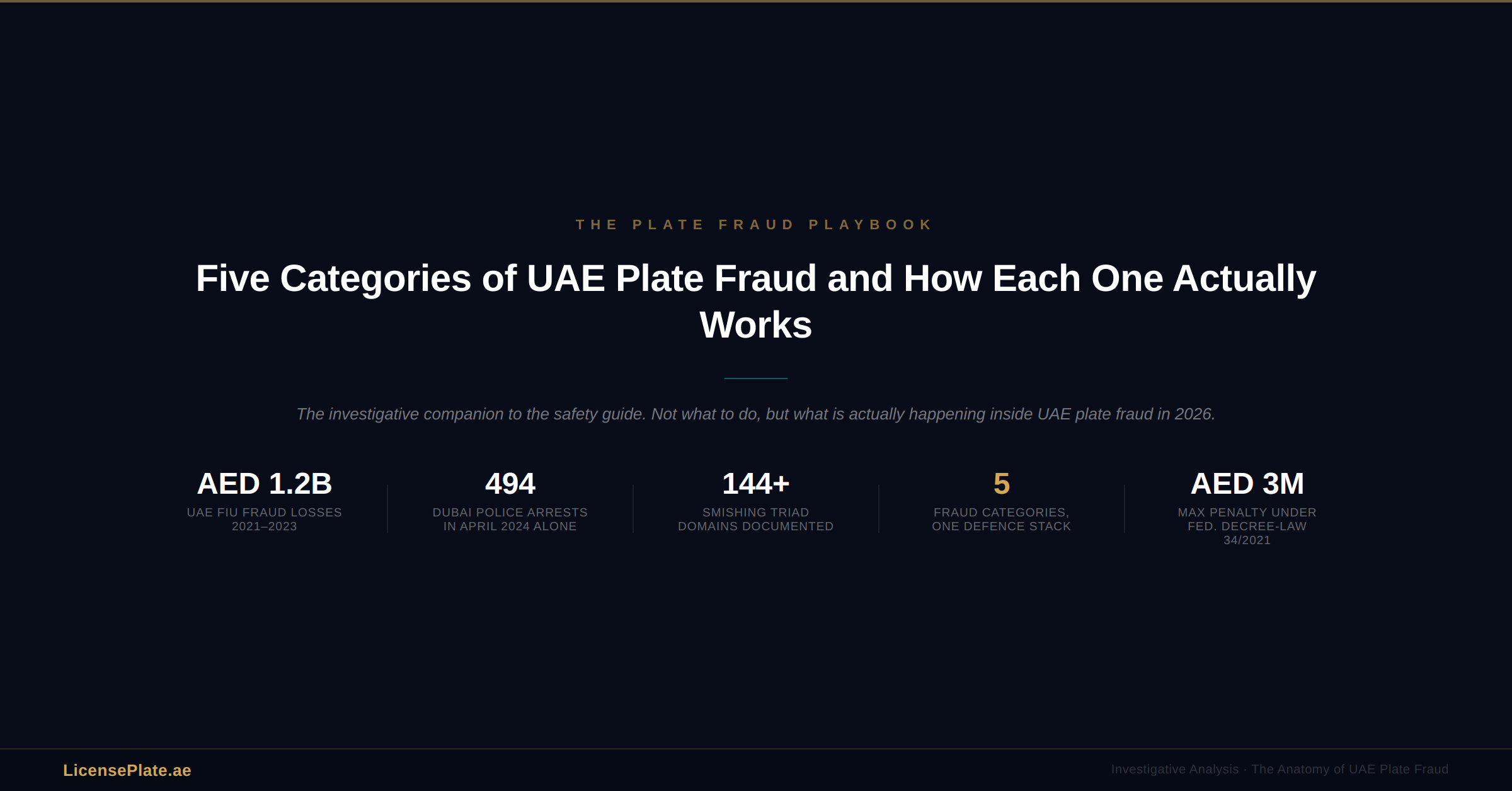
دليل الاحتيال في اللوحات: خمس فئات للاحتيال على لوحات الإمارات وكيف تعمل كل واحدة فعلياً
في 5 أغسطس 2024، أصدرت شرطة أبوظبي تنبيهاً عاماً قرأه معظم المقيمين في الإمارات وأومأوا برؤوسهم ومرّروا الشاشة. وقد حذّر التنبيه الجمهور من نمط احتيالي بعينه: حسابات وهمية على مواقع التواصل تعرض لوحات أبوظبي المميّزة بأسعار أدنى بكثير من نطاق المزادات الفعلي، مع استدراج الضحايا لدفع تأمينات ضخمة عبر روابط تؤدّي إلى مواقع مقنعة لكنها ملفّقة بالكامل. وسمّت الشرطة النمط، ونشرت التحذير على قنواتها الرسمية، ونشرت غلف نيوز الخبر صباح اليوم التالي. وخلال أسبوع، كانت الحسابات المشار إليها في التنبيه قد أُزيلت. وخلال شهر، كانت حسابات مطابقة وظيفياً قد ظهرت مكانها. وخلال ستة أشهر، تكرّرت الدورة ثلاث مرات أخرى.
هكذا يعمل الاحتيال على اللوحات في الإمارات عام 2026. ليس بشكل درامي. ولا عبر فاعلين غامضين في غرف خلفية. بل عبر حسابات تواصل اجتماعي تبدو احترافية، وإعلانات تبدو معقولة، وأسعار موثوقة بما يكفي لتوليد رسائل لكنها مغرية بما يكفي لتوليد حركة، وطلبات دفع تبدو تماماً كطلبات دفع الوسطاء الشرعيين. والحجم حقيقي: فقد أبلغت وحدة المعلومات المالية في الإمارات عن 1.2 مليار درهم من إجمالي خسائر الاحتيال بين 2021 و2023، مع الإشارة إلى التصيّد الصوتي والإلكتروني والنصّي بوصفها الفئات المهيمنة. وفي أبريل 2024 وحده، اعتقلت شرطة دبي 494 فرداً عبر 406 قضايا احتيال منفصلة. والاحتيال على اللوحات شريحة صغيرة من ذلك الإجمالي، لكنه حقيقي ومتنامٍ وغير مرئي إلى حدّ بعيد للمشترين العابرين حتى يقع لهم.
هذا المقال هو الرفيق الاستقصائي لدليل السلامة من نصب اللوحات الموجود لدينا. فدليل السلامة يخبرك ما تفعله لتبقى آمناً. أما هذا المقال فيخبرك ما يحدث فعلياً من الناحية الآلية حين يقع الاحتيال، وهذا سؤال مختلف. فإذا فهمت كيف تعمل فئات الاحتيال الخمس على لوحات الإمارات على المستوى البنيوي، تكفّ عن التعامل مع الاحتيال كتهديد واحد غير متمايز وتبدأ بالتعامل معه كخمسة تهديدات محدّدة بخمسة إجراءات مضادّة محدّدة. كما تكفّ عن الحماية من الفئة التي لا تكاد تحدث (اللوحات المادية المزوّرة، التي تسقط أمام أنظمة التعرّف الآلي على اللوحات وبوابات سالك خلال ساعات) وتبدأ بالحماية من الفئة التي تحدث فعلاً (تحريف بيانات التسجيل، وهو غير مرئي دون عناية واجبة محدّدة).
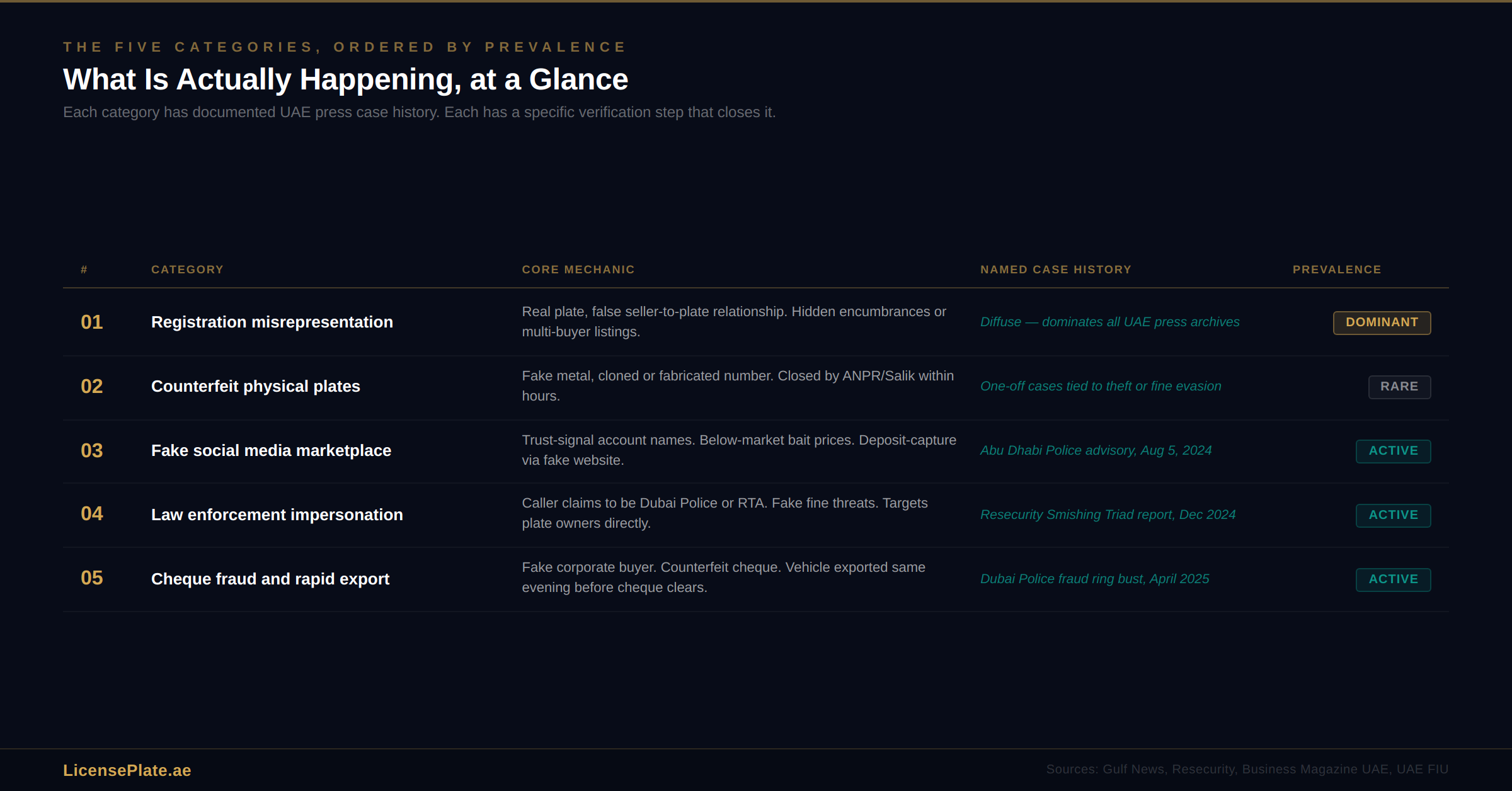
وفيما يلي الفئات الخمس بترتيب الانتشار. ولكل فئة، نصف الآليات، وتاريخ الحالات المسمّاة، وخطوات التحقّق التي توقفها، وقناة الإبلاغ التي تستخدمها إذا وقع لك ذلك بالفعل. وسير عمل تحقّق كامل قبل الصفقة مبسوط في قائمة العناية الواجبة الكاملة للوحات لدينا، وكل ناقل احتيال هنا يُغلق في النهاية بالطريقة نفسها: لا تدفع حتى يُفحَص الملف المروري لدى الهيئة مقابل بطاقة الهوية الإماراتية للبائع أمامك.
حجم الاحتيال على لوحات الإمارات في 2026، بوضوح
قبل الفئات، الأرقام التي تحدّد المشكلة. وتأتي هذه الأرقام من مصادر حكومية إماراتية أوّلية وتقارير أمن سيبراني راسخة، وهي تضع السياق لكل ما يلي.
1.2 مليار درهم (326 مليون دولار) إجمالي خسائر الاحتيال المسجّلة لدى وحدة المعلومات المالية في الإمارات بين 2021 و2023، مع تحديد التصيّد الإلكتروني والنصّي والصوتي كنواقل مهيمنة. وهذا الإجمالي عبر كل فئات الاحتيال، لا خاصاً باللوحات، لكن الاحتيال على اللوحات يستخدم البنية الهجومية نفسها التي يستخدمها الباقي.
494 اعتقالاً عبر 406 قضايا نفّذتها شرطة دبي في أبريل 2024 وحده، تغطّي مشهد الاحتيال الكامل. واعتقالات الاحتيال على اللوحات مدرجة ضمن هذا الرقم لكنها غير مفصح عنها منفصلةً. ونمط الإجراءات الإنفاذية شهري، لا لمرة واحدة.
أكثر من 144 نطاقاً حدّدتها شركة Resecurity في ديسمبر 2024 بوصفها بنية تحتية لحملة "ثلاثي التصيّد النصّي" التي تنتحل صفة شرطة دبي. والبنية نفسها يُعاد استخدامها عبر فئات الاحتيال على المستهلكين في الدولة، بما فيها عمليات النصب المجاورة للوحات.
109 ملايين درهم تحقّقت في مزاد واحد للهيئة في ديسمبر 2025 عبر 90 لوحة. هذه هي السوق الشرعية. وهي تحدّد أيضاً حجم الشيكات التي يحاول الاحتيال على اللوحات إعادة توجيهها. فحين تحرّك أمسية مزاد واحدة 100 مليون درهم من رأس مال قابل للتحقّق، لا يحتاج الاحتيال الذي يحاول اعتراض التدفّقات المجاورة إلى أن يكون كبيراً ليكون ضارّاً.
غرامات تصل إلى 3 ملايين درهم بالإضافة إلى الإبعاد للأجانب المدانين بجرائم إلكترونية بموجب المرسوم بقانون اتحادي رقم 34 لسنة 2021 بشأن مكافحة الشائعات والجرائم الإلكترونية. وإطار العقوبات حقيقي. والإنفاذ نشط. والسقف القانوني مرتفع بما يكفي لردع معظم المشغّلين المنظّمين ولتوفير استرداد ذي معنى في الحالات التي يمكن فيها تحديد الجناة وتتبّعهم.
الخلاصة: يعمل الاحتيال على اللوحات في الإمارات داخل بيئة إنفاذ جيدة الموارد بعقوبات جادّة، لكن الإنفاذ يُفعَّل بعد وقوع الفعل. والوقاية مسؤولية القارئ، والوقاية تتطلّب فهم الفئات الخمس أدناه.
الفكرة الجوهرية: احتيال التسجيل، لا اللوحات المقلّدة
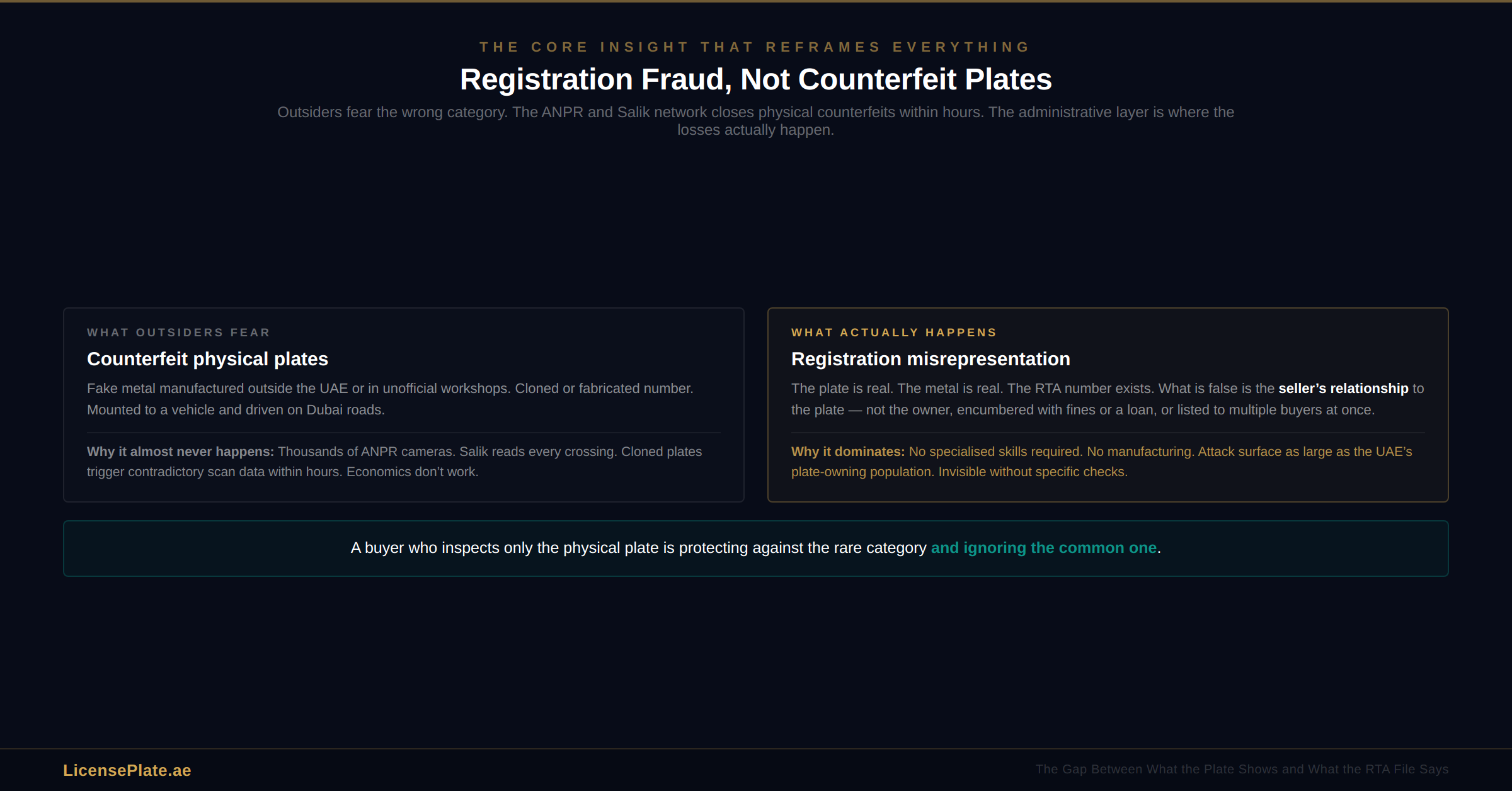
وإليك قطعة التحليل التي تفصل هذا المقال عن كل مقال سلامة عن لوحات الإمارات كُتب حتى اليوم. فالفئة التي يخشاها الغرباء والمشترون لأول مرة أكثر من غيرها — أن يصنع أحدهم لوحة مادية مزيّفة ويبيعها على أنها حقيقية — هي الفئة التي لا تكاد تحدث بأي حجم يُذكر. والسبب بنيوي. فالإمارات تملك واحدة من أكثف شبكات التعرّف الآلي على لوحات المركبات في العالم. ودبي وحدها تشغّل آلاف كاميرات التعرّف الآلي عبر شبكة طرقها. وبوابات سالك تقرأ اللوحات عند كل عبور. وكل مركبة مسجّلة لدى الهيئة تُمسَح عشرات المرات يومياً. واللوحة المادية المقلّدة التي لا تطابق ملفاً مرورياً حقيقياً ستولّد تناقضات خلال ساعات وتطلق تحقيقاً شرطياً خلال أيام. واقتصاديات تصنيع ونقل اللوحات المقلّدة في ولاية قضائية بهذا المستوى من التحقّق الآني من اللوحات لا تنجح.
أما الاحتيال الذي يحدث فعلاً فهو احتيال التسجيل، أي الطبقة الإدارية حيث يُحرَّف سجلّ الملكية، أو حالة المخالفات، أو حالة الرهن، أو علامة الحجز على لوحة بين المشتري والبائع. فاللوحة حقيقية. والمعدن حقيقي. والرقم عليها موجود في الملف المروري لدى الهيئة. وما هو زائف هو العلاقة بين البائع واللوحة. فالبائع لا يملكها. أو يملكها لكنها مثقلة (مخالفات غير مدفوعة، أو قرض عليها، أو علامة حجز بأمر محكمة). أو يملكها خالصة لكنه يبيعها لعدة مشترين في آن واحد ويخطّط لنقلها لمن يدفع أولاً بينما يحتفظ بتأمينات الآخرين. وكل هذه النواقل تستغلّ الفجوة بين ما تُظهره اللوحة المادية (لوحة إماراتية شرعية) وما يقوله الملف المروري فعلاً (مثقلة، أو متنازع عليها، أو ليست ملكاً للبائع كي يبيعها).
والمشتري الذي يفحص اللوحة المادية فقط ويوافق على الدفع يحمي نفسه من الفئة النادرة ويتجاهل الشائعة. أما المشتري الذي يفحص اللوحة عبر الملف المروري لدى الهيئة، ويقابلها ببطاقة الهوية الإماراتية للبائع، ويؤكّد خلوّها من أي أعباء قبل تحويل المال، فيحمي نفسه من الفئة التي تهمّ فعلاً. وسير عمل التحقّق ليس اختيارياً. إنه الدفاع الكامل ضد أكثر من 80% من الاحتيال على لوحات الإمارات. ويستعرض كلٌّ من دليل النقل بين الإمارات ودليل بيع السيارة آليات التحقّق لدى الهيئة بتفصيل تشغيلي كامل.
الفئة الأولى: تحريف بيانات التسجيل (الناقل الأكثر شيوعاً)
كيف تعمل آلياً
يعرض بائع لوحة عبر موقع إعلانات مبوّبة، أو مجموعة واتساب، أو حساب تواصل اجتماعي. واللوحة موجودة. ورقم اللوحة حقيقي. وبطاقة الهوية الإماراتية للبائع حقيقية. وما هو زائف واحد من ثلاثة أمور. أولاً، اللوحة ليست في الملف المروري للبائع — بل تعود لفرد من العائلة، أو زوج سابق، أو شريك في نزاع تجاري، ولا يملك البائع صلاحية نقلها. ثانياً، اللوحة في الملف المروري للبائع لكنها مثقلة — سالك غير مدفوع، أو مخالفات شرطة دبي مستحقّة من مركبات سابقة، أو قرض بنكي على اللوحة، أو علامة حجز بأمر محكمة تمنع النقل حتى التسوية. ثالثاً، اللوحة خالصة لكن البائع عرضها على ثلاث منصات في آن واحد ويخطّط لنقلها لأسرع مشترٍ يدفع بينما يستوعب تأمينات الآخرين.
لماذا هي الفئة الأكثر شيوعاً
تهيمن هذه الفئة لأنها لا تتطلّب مهارات متخصّصة، ولا تصنيع تقليد، ولا هندسة اجتماعية تتجاوز إعلاناً موثوقاً. فالبائع لديه لوحة حقيقية في مكان ما ضمن دائرته العائلية أو التجارية. فيعرضها. ويأخذ التأمينات. ثم إما ينقل (تاركاً مشترياً واحداً يحمل لوحة أقلّ قيمة ممّا توقّع بسبب أعباء خفية) أو يختفي (تاركاً عدة مشترين يتنازعون على مجمّع تأمينات). ومساحة الهجوم بحجم السكان المالكين للوحات في الدولة تماماً، وهم بالملايين. وتغذّي هذه الفئة مباشرةً عدة من الأخطاء العشرة المكلفة التي يرتكبها مشترو اللوحات لأول مرة، لأن المشترين لأول مرة هم الشريحة الأقلّ ميلاً لطلب التحقّق من الملف المروري قبل الدفع.
كيف تكتشفها
ثلاث خطوات تحقّق توقف هذه الفئة بالكامل. افحص اللوحة عبر تطبيق دبي درايف باستخدام الهوية الرقمية UAE Pass. وتأكّد من أن بطاقة الهوية الإماراتية للشخص الذي ينقل اللوحة تطابق الاسم في الملف المروري. وتحقّق من المخالفات المستحقّة أو علامات الأعباء قبل دفع المبلغ الكامل. والبائع الذي يرفض أياً من هذه الخطوات الثلاث يعرّف نفسه وظيفياً بأنه خطر احتيال. فالبائعون الشرعيون يرحّبون بالتحقّق لأن التحقّق يُتمّ الصفقة. وتستعرض قائمة العناية الواجبة قبل الصفقة لدينا التسلسل بالضبط.
سبل الانتصاف القانونية
يقع تحريف بيانات التسجيل تحت المرسوم بقانون اتحادي رقم 34 لسنة 2021 بشأن مكافحة الشائعات والجرائم الإلكترونية إذا كان الإعلان رقمياً، وتحت قانون العقوبات الإماراتي للصفقات الحضورية. وتشمل العقوبات غرامات تصل إلى 3 ملايين درهم، وللأجانب، الإبعاد كعقوبة إضافية. أبلغ عبر منصة الجرائم الإلكترونية لشرطة دبي (ecrime.ae) للحوادث الواقعة في دبي، أو عبر خدمة الجرائم الإلكترونية لوزارة الداخلية (www.moi.gov.ae) للحوادث العابرة لحدود الإمارات.
الفئة الثانية: اللوحات المادية المقلّدة (الفئة التي نادراً ما تحدث)
كيف تعمل آلياً
تُصنَّع لوحة مادية خارج الدولة أو عبر ورشة محلية غير رسمية. وتحمل اللوحة رقماً ورمزاً يطابقان إما ملفاً مرورياً إماراتياً حقيقياً (استنساخ) أو يكونان ملفّقين بالكامل (تزوير). وتُركَّب اللوحة مادياً على مركبة. وتُقاد المركبة على طرق الدولة.
لماذا هي نادرة عملياً
تلتقط بنية التعرّف الآلي على اللوحات وسالك اللوحات المستنسخة والمزوّرة بسرعة. فاللوحة المستنسخة تنتج بيانات مسح متناقضة (اللوحة نفسها مسجّلة في موقعين مستحيلين فيزيائياً)، ما يرفع علامة للتحقيق. واللوحة المزوّرة برقم ملفّق لا تنتج أي مطابقة في الملف المروري، ما يرفع علامة عند أول قراءة لبوابة رسوم. وقد أدّى تطبيق شرطة دبي لتخزين الأدلة القائم على البلوك تشين في 2025 إلى إحكام سلسلة الأدلة الرقمية أكثر، ما يجعل قضايا اللوحات المستنسخة أو المزوّرة أسهل في التحقيق وأصعب على المتّهمين في الطعن. والاقتصاديات لا تصلح لعمليات مستدامة. ومعظم قضايا اللوحات المقلّدة في أرشيف الصحافة الإماراتية تتعلّق بحوادث فردية مرتبطة بسرقة مركبات أو التهرّب من مخالفات بعينها، لا باحتيال منظّم على مشتري اللوحات.
لماذا لا تزال تهمّ المشترين
لا تزال تهمّ لأن المشتري الفرد الذي تُقدَّم له لوحة مادية لا يستطيع أن يميّز بالنظر ما إذا كانت اللوحة تطابق الملف المروري الذي يدّعيه البائع. والدفاع مطابق للفئة الأولى: تحقّق من اللوحة في النظام الرسمي، وأكّد هوية الملف المروري، وارفض قبول اللوحة المادية كدليل على الملكية. فاللوحة التي لا يمكن التحقّق منها رقمياً ليست لوحة ينبغي أن تدفع مقابلها، مهما بدا المعدن حقيقياً.
سبل الانتصاف القانونية
يقع تصنيع اللوحات المقلّدة واستخدامها تحت أحكام التزوير وانتحال الصفة في قانون العقوبات الإماراتي، بعقوبات قد تشمل السجن. وإذا تلقّى مشترٍ لوحة مقلّدة عبر صفقة، فإن قناة الإبلاغ الأساسية هي مركز مكافحة الاحتيال التابع للإدارة العامة للتحرّيات والمباحث الجنائية في شرطة دبي، الذي عالج قضية شبكة الاحتيال في أبريل 2025 المتعلّقة بالشيكات المزوّرة والتصدير السريع للمركبات. وللحوادث خارج دبي، أبلغ عبر بوابة الجرائم الإلكترونية لوزارة الداخلية أو عبر خدمة أمان لشرطة أبوظبي (8002626).
الفئة الثالثة: أسواق التواصل الاجتماعي الوهمية (الفئة التي سمّتها شرطة أبوظبي في 2024)
كيف تعمل آلياً
يُنشأ حساب على إنستغرام أو تيك توك أو فيسبوك أو واتساب بهوية بصرية تبدو احترافية. ويتضمّن اسم الحساب إشارات ثقة ("لوحات دبي الرسمية"، و"أرقام أبوظبي المميّزة"، وأسماء تحاكي وسطاء شرعيين). وينشر الحساب إعلانات بصور حقيقية للوحات حقيقية مأخوذة من تغطية مزادات شرعية أو من منصات أخرى. وتُحدَّد الأسعار بشكل موثوق دون السوق — ليست منخفضة بما يجعلها غير معقولة، لكنها مغرية بما يكفي لتوليد استفسارات. وحين يتفاعل مشترٍ، يوجّهه الحساب إلى موقع إلكتروني (يُستضاف غالباً على نطاق مسجّل حديثاً يحاكي عنواناً حكومياً أو عنوان وسيط) لدفع تأمين أو المبلغ كاملاً. ويقبل الموقع الدفعة. واللوحة غير موجودة. ويُعطَّل الحساب. ويختفي الموقع خلال 48 ساعة. والمشتري الذي يفحص اللوحة المعروضة أولاً عبر التحقّق من أسعار لوحات دبي لدينا سيرى الفجوة بين سعر الطُّعم والنطاق السوقي الفعلي فوراً.
قضية شرطة أبوظبي
هذا هو النمط بالضبط الذي حذّرت منه شرطة أبوظبي في أغسطس 2024، مسمّيةً لوحات أبوظبي المميّزة كطُعم محدّد والتأمينات الضخمة كآلية تحصيل محدّدة. وللمشترين في أبوظبي تحديداً، يغطّي دليلنا الكامل للوحات أبوظبي مسار التحقّق الشرعي عبر منصة تم وقواعد دائرة البلديات والنقل في سبتمبر 2025 التي تشترط شهادات ملكية واضحة للوحات المميّزة. وقد أصدر مجلس الأمن السيبراني لحكومة الإمارات تحذيرات موازية بشأن عمليات التصيّد التي تستخدم عروضاً مبالغاً فيها وصفقات وهمية كطُعم. وتتداخل البنية التحتية لهذه الفئة مباشرةً مع عملية "ثلاثي التصيّد النصّي" التي وثّقتها Resecurity في ديسمبر 2024، والتي استخدمت أكثر من 144 نطاقاً قصير العمر لانتحال صفة شرطة دبي لدفع مخالفات وهمية. والبنية نفسها للفاعلين قابلة لإعادة الاستخدام في متغيّرات خاصة باللوحات.
كيف تكتشفها
أربع علامات، واحدة منها كافية. أولاً، الحساب لديه أقلّ من ستة أشهر من تاريخ النشر أو نموّ متابعين عالي السرعة لا يتّسق مع عمل شرعي. ثانياً، الحساب يوجّه المشترين خارج المنصة إلى موقع للدفع بدلاً من استخدام ضمان موثّق أو إجراءات نقل لدى الهيئة. ثالثاً، نطاق الموقع مسجّل حديثاً (وعمليات البحث في WHOIS مجانية). رابعاً، البائع يطلب تأميناً قبل أي خطوة تحقّق تشمل نظام الهيئة. فالوسطاء والمنصات الحقيقية يُتمّون التحقّق من اللوحة قبل الدفع، لا بعده. وإذا كان يُطلب منك الدفع أولاً والتحقّق لاحقاً، فأنت في الفئة الثالثة. والفحص المتقاطع عبر دليلنا للتحقّق من قيمة أي لوحة إلكترونياً سيُظهر النطاق السعري الحقيقي للوحة المعنية خلال دقائق.
سبل الانتصاف القانونية
تقع هذه الفئة بوضوح تحت المرسوم بقانون اتحادي رقم 34 لسنة 2021 لأن الاحتيال يقع بالكامل في الفضاء الرقمي. أبلغ عبر بوابة الجرائم الإلكترونية لشرطة دبي مع أدلة كاملة (لقطات شاشة للحساب والإعلان والموقع ومعاملة الدفع). وأدرج بيانات WHOIS للنطاق إن استطعت الوصول إليها. ويعمل مركز مكافحة الاحتيال في شرطة دبي ووحدة الجرائم الإلكترونية في وزارة الداخلية بتنسيق نشط. ومدد الاسترداد للاحتيال واسع النطاق تتراوح بين شهرين وثلاثة أشهر وفقاً للممارسة القانونية للجرائم الإلكترونية في الدولة، لكن أرقام القضايا حقيقية والمسار نشط.
الفئة الرابعة: انتحال صفة إنفاذ القانون والتصيّد الصوتي بمخالفات وهمية
كيف تعمل آلياً
هذه ليست تحديداً عملية احتيال على مشتري لوحة، لكنها تستهدف مالكي اللوحات وتستخدم نظام تسجيل اللوحات كوسيلة ضغط. فيعرّف متّصل نفسه بأنه ضابط في شرطة دبي، أو مفتّش في الهيئة، أو ممثّل لوزارة الداخلية. ويدّعي أن على الضحية مخالفات مرورية مستحقّة، أو سالك غير مدفوع، أو لوحة مسجّلة رُفعت عليها علامة للتحقيق. ويطالب بالدفع الفوري إلى حساب مصرفي محدّد أو بوابة إلكترونية مرتبطة، تحت تهديد حجز المركبة، أو سحب الرخصة، أو منع السفر. والضحية، في مواجهة تهديد يبدو رسمياً ضد أصول يملكها فعلاً، يدفع. ثم يختفي المتّصل.
القضية الموثّقة
تقرير Resecurity في ديسمبر 2024 عن "ثلاثي التصيّد النصّي" يتضمّن نصاً كاملاً لإحدى تلك المكالمات. تحدّث المحتال بلكنة هندية على خلفية ضجيج مركز اتصال نموذجي. وعرّف نفسه بأنه مفتّش. وأوعز للضحية بمراجعة صندوق بريد على الهاتف حيث أرسل رقم ملف تحقيق ملفّق. وهدّد بسحب الرخصة وحجز المركبة. وقد أثبتت Resecurity أن الأدوات كان يعرضها فاعل تهديد ناطق بالصينية على تيليغرام، بأعضاء تشغيليين من إندونيسيا وفيتنام وولايات قضائية أخرى. وتستخدم البنية التحتية نطاقات عامة رخيصة مسجّلة بكميات كبيرة. وقد لاحظت تغطية مجلة Infosecurity للحملة نفسها ارتفاعاً مرصوداً في النشاط الاحتيالي حول اليوم الوطني للإمارات (عيد الاتحاد، 2-3 ديسمبر).
كيف تكتشفها
شرطة دبي والهيئة ووزارة الداخلية لا تطلب الدفع عبر الهاتف أبداً. نقطة. فأي متّصل يدّعي السلطة ويطالب بدفع فوري يمارس احتيال الفئة الرابعة مهما كان النصّ مقنعاً. فجهات الإنفاذ الحقيقية في الدولة تتواصل عبر قنوات رسمية: تطبيق شرطة دبي، وتطبيق وزارة الداخلية، ورسائل نصية مسجّلة من رموز قصيرة، أو خطابات ورقية. والمخالفات الحقيقية يمكن للمواطن التحقّق منها بنفسه عبر تطبيق دبي درايف أو بوابة الخدمات الإلكترونية لوزارة الداخلية. وإذا اشتبهت في أن مخالفة حقيقية، أغلق الخط، وافتح التطبيق الرسمي، وتحقّق بنفسك. فإن كانت المخالفة موجودة، يمكنك دفعها عبر التطبيق. وإن لم تكن موجودة، تكون قد هزمت الاحتيال للتوّ.
سبل الانتصاف القانونية
ينتظم انتحال صفة إنفاذ القانون في المرسوم بقانون اتحادي رقم 34 لسنة 2021 بأشدّ العقوبات في إطار الجرائم الإلكترونية في الدولة، لأن انتحال صفة سلطة حكومية يُعامَل كظرف مشدّد. أبلغ فوراً عبر بوابة الجرائم الإلكترونية لشرطة دبي (ecrime.ae) أو خدمة أمان على 8002626. ولا تتفاعل مع المتّصل. ولا تحاول استدراجه. أغلق الخط، واحفظ لقطات شاشة لأي رسالة نصية أو بريد إلكتروني، وأبلغ خلال 24 ساعة لأفضل تتبّع للقضية.
الفئة الخامسة: احتيال الشيكات والتصدير السريع (قضية شرطة دبي في أبريل 2025)
كيف تعمل آلياً
تعكس هذه الفئة نمط الاحتيال على المشتري. فهنا البائع هو الضحية والمحتال هو المشتري. يتواصل مشترٍ مع بائع (عادةً إعلان سيارة ولوحة على سوق إلكترونية معروفة) ويبدي اهتماماً بمركبة متميّزة تتضمّن لوحة مميّزة. ويقدّم المشتري نفسه بوصفه ممثلاً لشركة محترمة. ويتمّ الدفع بشيك مزوّر. ويكتمل نقل الملكية. ويستخدم المشتري وثائق الملكية المسجّلة حديثاً لتصدير المركبة إلى الخارج في المساء نفسه. وحين يحاول البائع صرف الشيك خلال نافذة المقاصة المعتادة من يومي عمل إلى ثلاثة، يرتدّ الشيك. وبحلول تلك اللحظة تكون المركبة في الطريق بالفعل، خارج الولاية القضائية للدولة، ويكون التسجيل الجديد قد فُصل إدارياً. أما اللوحة، إن كانت مميّزة، فقد تكون نُقلت عن المركبة قبل التصدير. وملف الهدف لهذه الفئة يميل نحو السيارات واللوحات التي تنتقل بأسعار متميّزة، وهي الشريحة التي تشترك في نطاق اقتصادي مع معروضات مزاد أنبل رقم 2026، وإن كانت محاولات الاحتيال هذه تقع في السوق الخاصة لا في المزاد العلني.
قضية شبكة شرطة دبي
فكّكت شرطة دبي هذه العملية بالضبط في أبريل 2025. وقد وثّقت تغطية Business Magazine UAE الآليات: اتصل أحد المشتبه بهم بالبائعين متظاهراً بأنه وكيل مشتريات لشركة، وتظاهر ثانٍ بأنه ممثّل الشركة لإتمام النقل، وقُدّمت شيكات مزوّرة، وصُدّرت المركبات في المساء نفسه، ولم يكتشف الضحايا الاحتيال إلا حين ارتدّت الشيكات. وحقّق مركز مكافحة الاحتيال في الإدارة العامة للتحرّيات والمباحث الجنائية وفُكّكت الشبكة. وترسي القضية النمط: هذه عملية احترافية تستهدف الإعلانات المتميّزة وتتطلّب إجراءات مضادّة احترافية من البائعين.
كيف تكتشفها (بصفتك بائعاً)
العلامات محدّدة. أولاً، أي مشترٍ يصرّ على إتمام النقل قبل مقاصة الشيك يمارس احتيال الفئة الخامسة، مهما بدت الاعتمادات المؤسسية موثوقة. ثانياً، أي مشترٍ يطلب وثائق تصدير فورية في اليوم نفسه يمارس احتيال الفئة الخامسة. ثالثاً، أي مشترٍ يرفض استخدام الحوالات المصرفية المعتمدة أو التحويل المصرفي المباشر ويصرّ على شيك شخصي أو شيك شركة يمارس احتيال الفئة الخامسة. والدفاع بسيط: لا تنقل الملكية حتى تتمّ مقاصة الدفعة. والتحويل المصرفي مع تأكيد الاستلام هو الآلية الأكثر أماناً. ولا تُقبل الحوالة المصرفية المعتمدة أو الشيك المصرفي المعتمد إلا عند التسليم، وبعد التأكد منهما لدى البنك المُصدِر. أما الشيكات الشخصية وشيكات الشركات من كيانات غير موثّقة فليست وسيلة دفع مقبولة لمركبات تحمل لوحات مميّزة.
سبل الانتصاف القانونية
ينتظم احتيال الشيكات في كلٍّ من المرسوم بقانون اتحادي رقم 34 لسنة 2021 (للعناصر الرقمية في العملية، بما فيها انتحال الصفة والوثائق الملفّقة) وقانون المعاملات التجارية الإماراتي (للشيك المرتدّ نفسه). والتصدير السريع يعقّد الاسترداد لأن المركبة خارج الولاية القضائية للدولة، لكن مركز مكافحة الاحتيال في شرطة دبي ينسّق مع الإنتربول في القضايا العابرة للحدود ولديه معدّلات نجاح موثّقة في عمليات مماثلة. قدّم الشكوى فوراً — فالساعات الـ 24 الأولى بعد الاكتشاف هي الأثمن للتتبّع.
حزمة التحقّق التي توقف الفئات الخمس جميعها
تُغلَق كل فئة من الفئات الخمس بخطوة تحقّق محدّدة. ومجتمعةً، تشكّل الخطوات الخمس سير عمل واحداً قبل الصفقة يمكن للمشتري أو البائع تنفيذه في نحو خمس عشرة دقيقة ويزيل الغالبية الساحقة من مخاطر الاحتيال. وسير العمل هذا هو قائمة العناية الواجبة الكاملة لدينا في صيغة مضغوطة.
الخطوة 1: افحص اللوحة في نظام الهيئة الرسمي. استخدم تطبيق دبي درايف عبر الهوية الرقمية UAE Pass، أو زُر مركز سعادة المتعاملين في أم رمول أو البرشاء أو ديرة. وتأكّد من وجود اللوحة في الملف المروري لدى الهيئة. وتأكّد من اسم المالك المسجّل. وللوحات أبوظبي، استخدم منصة تم (tamm.abudhabi). ولبقية الإمارات، استخدم بوابة وزارة الداخلية أو إدارة المرور في الإمارة المعنية.
الخطوة 2: قابِل بطاقة الهوية الإماراتية. يجب أن يطابق الاسم في سجلّ الهيئة الاسم في بطاقة الهوية الإماراتية للبائع. وإن لم يتطابق، لا يمكن للصفقة أن تمضي قانونياً مهما قدّم البائع من أوراق. فالأزواج والشركاء وأفراد الأسرة يدّعون أحياناً صلاحية النقل نيابةً عن المالك المسجّل؛ تعامل مع هذه الادّعاءات كعلامات حمراء واشترط حضور المالك الفعلي للنقل.
الخطوة 3: تحقّق من الأعباء. سالك غير المدفوع، ومخالفات شرطة دبي المستحقّة، والقروض البنكية على اللوحة، وعلامات الحجز بأمر محكمة، كلّها تمنع النقل وكلّها تنتقل إلى المالك الجديد إن لم تُسوَّ قبل الشراء. ويجب على البائع تسوية كل عبء قبل النقل. ولا تدفع شيئاً — ولا وديعة — حتى تُسوَّى الأعباء بالكامل ويمكن إتمام الدفع والنقل معاً.
الخطوة 4: تحقّق من قناة البيع نفسها. منصة مثل LicensePlate.ae أو وسيط برخصة تجارية إماراتية قابلة للتحقّق يعمل تحت إشراف دائرة التنمية الاقتصادية ويكون مسؤولاً بطرق لا تتوفّر في حسابات إنستغرام ومجموعات واتساب. تحقّق من رقم الرخصة التجارية. وتأكّد من وجود الشركة. وإذا كانت الصفقة بين شخصين، فاشترط لقاءات حضورية في مركز تابع للهيئة لإتمام النقل نفسه. ولأي لوحة يبدو سعرها المطلوب غير منطقي في أي من الاتجاهين، افحصها عبر حاسبة اللوحات على LicensePlate.ae لترسيخ التفاوض في نطاق تقييم قابل للدفاع عنه قبل أن تلتزم.
الخطوة 5: استخدم دفعاً قابلاً للتتبّع. التحويل المصرفي مع تأكيد الاستلام، أو مدفوعات المنصات الموثّقة عبر UAE Pass، أو الحوالات المصرفية المعتمدة المؤكَّدة لدى البنك المُصدِر عند التسليم — ولا شيء قبله. أما الشيكات الشخصية، وشيكات الشركات من كيانات غير موثّقة، والعملات المشفّرة، والتحويلات النقدية التي تتجاوز 55,000 درهم (وهي التي تُفعّل الإبلاغ عن غسل الأموال في الدولة بموجب المرسوم بقانون اتحادي رقم 20 لسنة 2018) فينبغي رفضها جميعاً. فالدفع القابل للتتبّع دفاع ضد الاحتيال وحماية قانونية في آن.
وتنفيذ الخطوات الخمس جميعها يستغرق خمس عشرة دقيقة لصفقة نموذجية، ويستغرق أطول فقط حين تكون اللوحة عالية القيمة بما يبرّر فحوصاً إضافية. والدقائق الخمس عشرة هي أفضل استثمار مفرد يمكن لأي مشترٍ أو بائع لوحة في الدولة القيام به.
الشهادات المزوّرة وطلبات الوديعة. أكثر بداية شائعة هي شهادة بصيغة PDF ونسخة من هوية إماراتية وطلب وديعة. ويشرح دليلنا التحقق من شهادة هيئة الطرق والمواصلات قبل تحريك أي مبلغ، مع لقطات شاشة لكل خطوة.
الإطار القانوني والإبلاغي الكامل
إذا وقع الاحتيال بالفعل، فالإطار القانوني في الدولة نشط، والعقوبات جوهرية، وقنوات الإبلاغ متاحة. اعرفها مسبقاً حتى لا تضطرّ للبحث عنها في حالة ذعر.
القانون الحاكم
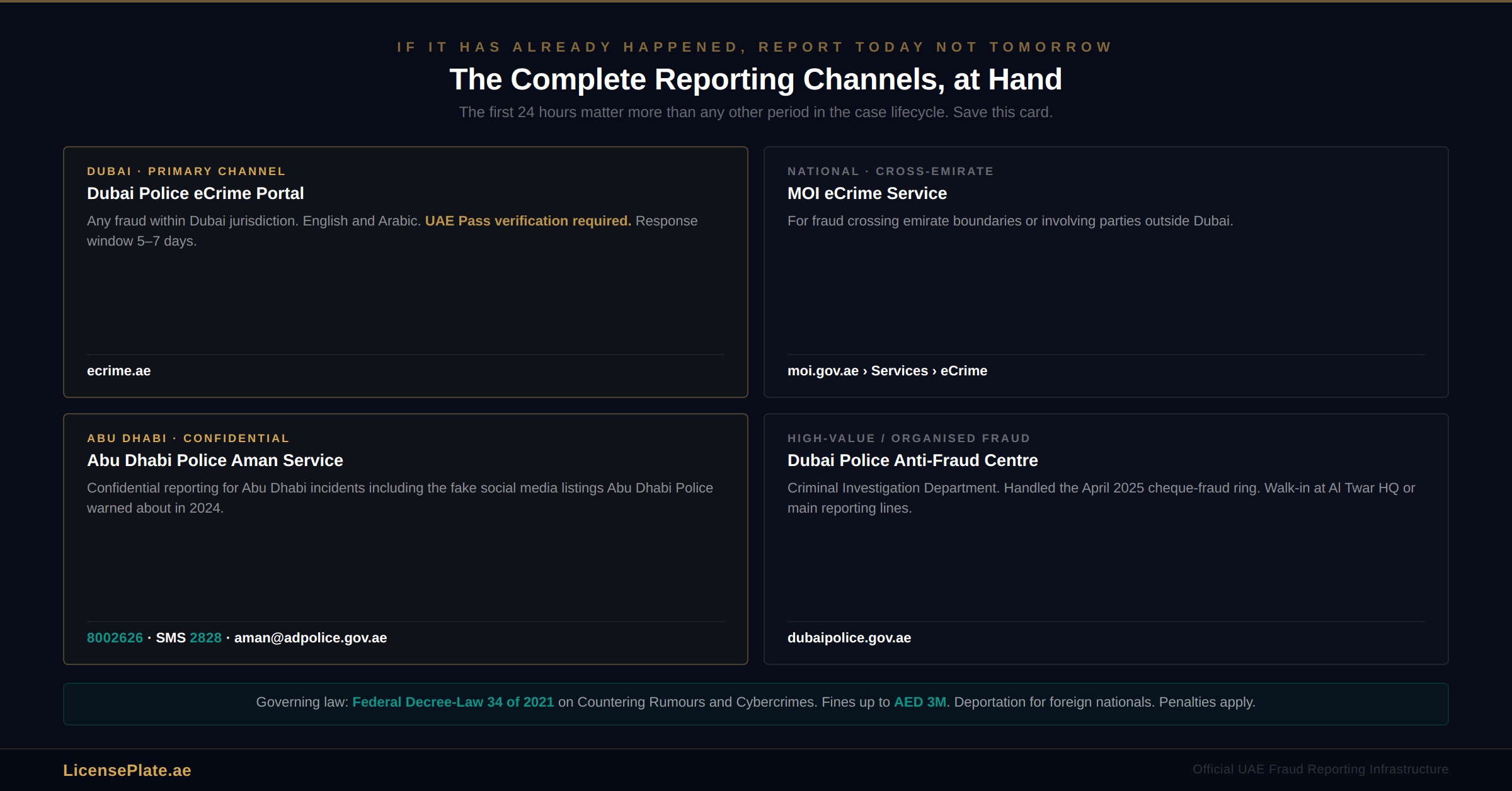
المرسوم بقانون اتحادي رقم 34 لسنة 2021 بشأن مكافحة الشائعات والجرائم الإلكترونية هو الأداة الأساسية لأي احتيال على اللوحات يقع في الفضاء الرقمي (وهو معظمه). وتشمل العقوبات غرامات تصل إلى 3 ملايين درهم، والسجن للفئات الجسيمة، و— للأجانب — الإبعاد كعقوبة إضافية. ويغطّي القانون الاحتيال، وسرقة الهوية، وانتحال صفة السلطة، والتصيّد الإلكتروني والنصّي والصوتي. وللاحتيال الحضوري، ينطبق قانون العقوبات الإماراتي بعقوبات موازية. ويضيف قانون المعاملات التجارية الإماراتي الإطار المحدّد لاحتيال الشيكات ضمن الفئة الخامسة.
قنوات الإبلاغ
بوابة الجرائم الإلكترونية لشرطة دبي (ecrime.ae). القناة الأساسية لأي احتيال ضمن اختصاص دبي. تقبل الشكاوى بالإنجليزية والعربية. وتتطلّب التحقّق عبر UAE Pass. ونافذة الاستجابة من 5 إلى 7 أيام.
خدمة الجرائم الإلكترونية لوزارة الداخلية (www.moi.gov.ae). القناة الوطنية للاحتيال العابر للإمارات أو الذي يشمل أطرافاً خارج دبي. التحقّق نفسه عبر UAE Pass، ونافذة الاستجابة نفسها من 5 إلى 7 أيام.
خدمة أمان لشرطة أبوظبي. اتصل على 8002626، أو أرسل رسالة نصية إلى 2828، أو راسل aman@adpolice.gov.ae. وهي قناة الإبلاغ السرّية للحوادث الواقعة في أبوظبي، بما فيها الفئة المحدّدة لإعلانات اللوحات الوهمية على مواقع التواصل.
مركز مكافحة الاحتيال، الإدارة العامة للتحرّيات والمباحث الجنائية في شرطة دبي. للقضايا عالية القيمة وشبكات الاحتيال المنظّمة. وهي الوحدة التي عالجت قضية احتيال الشيكات في أبريل 2025. ويمكن الوصول إليها عبر خطوط الإبلاغ الرئيسية لشرطة دبي وعبر الحضور المباشر إلى مقرّ شرطة دبي في الطوار.
مجلس الأمن السيبراني لحكومة الإمارات. ينشر تنبيهات عامة مستمرّة عن أنماط الاحتيال النشطة. تابعه للإنذار المبكر بالحملات والتكتيكات الجديدة.
الأدلة الواجب حفظها
لأي بلاغ، تتطلّب إجراءات الإبلاغ عن الجرائم الإلكترونية في الدولة أدلة محدّدة يجهّزها الضحية المستعدّ جيداً. لقطات شاشة لكل إعلان ورسالة وموقع. واسم البائع المزعوم، ورقم هاتفه، وتفاصيل هويته الإماراتية، وحساباته على مواقع التواصل. وكشوف حسابات مصرفية تُظهر المعاملة المحاولة أو المكتملة. وبيانات WHOIS لأي موقع معني. وأي تسجيلات صوتية لمكالمات هاتفية (يسمح القانون الإماراتي بتسجيل المكالمات التي تكون طرفاً فيها لأغراض الإثبات). وأرقام مرجعية للقضايا من أي تفاعلات سابقة مع المحتال. وكلما كانت حزمة الأدلة أكمل عند التقديم، كانت معالجة القضية أسرع.
الأسئلة الشائعة
س: ما النوع الأكثر شيوعاً من الاحتيال على لوحات الإمارات في 2026؟
تحريف بيانات التسجيل، حيث تكون اللوحة حقيقية لكن علاقة البائع بها زائفة. فقد لا يملك البائع اللوحة، أو قد تكون مثقلة بمخالفات غير مدفوعة أو قرض بنكي، أو قد يعرضها البائع على عدة مشترين في آن واحد. والتحقّق عبر الملف المروري لدى الهيئة مقابل بطاقة الهوية الإماراتية للبائع يوقف هذه الفئة بالكامل.
س: هل اللوحات الإماراتية المادية المزوّرة خطر حقيقي؟
نادرة عملياً. فبنية التعرّف الآلي على اللوحات وسالك في الدولة تلتقط اللوحات المستنسخة والمزوّرة خلال ساعات لأن اللوحة إما تنتج بيانات مسح متناقضة أو لا تنتج أي مطابقة في الملف المروري إطلاقاً. واقتصاديات تصنيع اللوحات المقلّدة لا تنجح في ولاية قضائية بتحقّق آني من اللوحات. والدفاع من جانب المشتري مطابق لاحتيال التسجيل في الفئة الأولى: تحقّق من اللوحة في نظام الهيئة الرسمي قبل الدفع.
س: ممّ حذّرت شرطة أبوظبي في أغسطس 2024؟
أصدرت شرطة أبوظبي تنبيهاً عاماً في 5 أغسطس 2024، تحذّر فيه من حسابات وهمية على مواقع التواصل تعرض لوحات أبوظبي المميّزة بأسعار دون نطاق المزادات الفعلي. وكان الضحايا يُوجَّهون إلى مواقع وهمية لدفع تأمينات مقابل لوحات غير موجودة. وقد تكرّر النمط عدة مرات منذ التنبيه الأصلي، مع حلول حسابات وهمية جديدة محلّ التي تُزال. ويمكن للقرّاء غير الملمّين بمعنى "مميّزة" في سياق أبوظبي الرجوع إلى دليلنا البصري لرموز لوحات الإمارات لرؤية شكل اللوحات المتميّزة الأصلية، وإلى دليلنا الكامل للوحات دبي للتفصيل المكافئ لسوق دبي.
س: ما هو "ثلاثي التصيّد النصّي" وهل يستهدف مالكي اللوحات؟
"ثلاثي التصيّد النصّي" عملية احتيال عابرة للحدود وثّقتها شركة الأمن السيبراني Resecurity في ديسمبر 2024. وتستخدم أكثر من 144 نطاقاً قصير العمر لانتحال صفة شرطة دبي وانتزاع مدفوعات مقابل مخالفات مرورية وهمية. وتستهدف أي شخص لديه رقم هاتف إماراتي، وهو ما يشمل معظم مالكي اللوحات. وتديرها جهات ناطقة بالصينية على تيليغرام بأعضاء تشغيليين في عدة دول. وقد وُثّقت مجموعة الأدوات وبنية الإبلاغ معروفة.
س: ما أقصى عقوبة للاحتيال على اللوحات في الإمارات؟
بموجب المرسوم بقانون اتحادي رقم 34 لسنة 2021، يمكن أن تصل الغرامات إلى 3 ملايين درهم بالإضافة إلى السجن للفئات الجسيمة. ويواجه الأجانب المدانون بموجب القانون عادةً الإبعاد كعقوبة إضافية. والاحتيال الحضوري المشمول بقانون العقوبات الإماراتي قد يحمل عقوبات موازية. ويضيف احتيال الشيكات (الفئة الخامسة) أحكاماً محدّدة بموجب قانون المعاملات التجارية الإماراتي. وسقف العقوبات مرتفع بما يجعل العمليات المنظّمة تأخذ الإنفاذ الإماراتي على محمل الجدّ.
س: كيف أبلّغ عن احتيال على لوحة في الإمارات إذا وقع لي بالفعل؟
للحوادث الواقعة في دبي، استخدم بوابة الجرائم الإلكترونية لشرطة دبي (ecrime.ae) مع التحقّق عبر UAE Pass. وللحوادث العابرة للإمارات، استخدم خدمة الجرائم الإلكترونية لوزارة الداخلية عبر www.moi.gov.ae. ولحوادث أبوظبي تحديداً، اتصل بخدمة أمان على 8002626، أو أرسل رسالة نصية إلى 2828، أو راسل aman@adpolice.gov.ae. ونوافذ الاستجابة من 5 إلى 7 أيام. وللاحتيال عالي القيمة أو المنظّم، صعّد مباشرةً إلى مركز مكافحة الاحتيال في الإدارة العامة للتحرّيات والمباحث الجنائية في شرطة دبي.
س: هل يمكنني استرداد الأموال المفقودة في الاحتيال على اللوحات في الإمارات؟
الاسترداد ممكن وموثّق. فقضية شبكة احتيال الشيكات لدى شرطة دبي في أبريل 2025 أسفرت عن اعتقالات وملاحقة قضائية. والعامل الحاسم هو سرعة الإبلاغ — فالساعات الـ 24 الأولى بعد الاكتشاف هي الأثمن للتتبّع. وإذا انتقلت الأموال عبر بنك إماراتي، يكون التتبّع أسرع. وإذا شملت المعاملة عملات مشفّرة أو حسابات خارجية، تمتدّ المدد وقد يلزم التنسيق مع الإنتربول. ومدد الاسترداد للاحتيال واسع النطاق تتراوح عادةً بين شهرين وثلاثة أشهر.
س: هل الشراء من حسابات مواقع التواصل آمن أبداً للوحات الإمارات؟
يمكن أن تكون مواقع التواصل نقطة الدخول للعثور على إعلان، لكن الصفقة نفسها يجب أن تنتقل خارج المنصة إلى إجراءات موثّقة لدى الهيئة. فالبائع الشرعي الذي وُجد عبر إنستغرام أو واتساب سيرحّب بلقاء حضوري في مركز سعادة المتعاملين، وسيُظهر بطاقة هويته الإماراتية، وسيسمح بفحص تحقّق قبل الدفع عبر تطبيق دبي درايف. أما البائع الذي يصرّ على إتمام الصفقة بالكامل داخل المنصة الاجتماعية أو على موقع مرتبط منفصل فيمارس إحدى فئات الاحتيال الخمس. فالمنصة ليست الخطر. غياب التحقّق لدى الهيئة هو الخطر.
س: هل يزيل استخدام منصة مثل LicensePlate.ae خطر الاحتيال؟
يقلّله بشكل جوهري بوضع الصفقة داخل إطار تجاري مرخّص من دائرة التنمية الاقتصادية بدلاً من إطار غير رسمي بين شخصين. فالمنصة تتحقّق من الإعلانات، وتعمل بموجب القانون التجاري الإماراتي، وتوفّر آليات ضمان أو معاملات موثّقة. وتبقى مسؤوليات المشتري في التحقّق قبل الصفقة (الخطوات 1 إلى 5 من حزمة التحقّق أعلاه)، لكن مساءلة المنصة تضيف طبقة لا يستطيع بائعو إنستغرام وواتساب توفيرها. وتستعرض مقارنتنا بين مزاد الهيئة والسوق الثانوية اختيار القناة بالكامل.
س: ماذا ينبغي للبائع فعله للحماية من احتيال الشيكات في الفئة الخامسة؟
لا تنقل الملكية أبداً حتى تتمّ مقاصة الدفعة. والتحويل المصرفي مع تأكيد الاستلام هو الآلية الأكثر أماناً. ولا تُقبل الحوالات المصرفية المعتمدة أو الشيكات المصرفية المعتمدة من بنوك إماراتية معروفة إلا عند التسليم، وبعد التأكد منها لدى البنك المُصدِر. أما الشيكات الشخصية وشيكات الشركات من كيانات غير موثّقة فليست وسيلة دفع مقبولة لمركبات تحمل لوحات مميّزة. وأي مشترٍ يصرّ على إتمام النقل قبل مقاصة الشيك أو يطلب وثائق تصدير فورية في اليوم نفسه يمارس احتيال الفئة الخامسة. وسير عمل التحقّق واحد سواء كنت تشتري أو تبيع: استخدم دفعاً قابلاً للتتبّع، وتحقّق من الهوية، ونفّذ فحوص الهيئة، ولا تنقل إلا حين تتأكّد الدفعة.
خاطرة أخيرة، بالعودة إلى تنبيه أغسطس 2024
نشرت شرطة أبوظبي تحذيرها في أغسطس 2024 وعادت الحسابات الوهمية خلال شهر. هذه هي الحالة الدائمة للاحتيال على لوحات الإمارات في 2026. فالإنفاذ حقيقي. والعقوبات شديدة. وقنوات الإبلاغ نشطة ومزوّدة بالكوادر. ومع ذلك يعود الاحتيال، لأن اقتصاديات إنشاء حساب إنستغرام وهمي وتشغيله 48 ساعة قبل تعطيله منخفضة بما يكفي ليواصل المشغّلون الأفراد المحاولة. والدفاع المتين الوحيد هو عادة التحقّق لدى المشتري نفسه.
والخبر السار: عادة التحقّق بسيطة. افحص اللوحة في نظام الهيئة. وقابِل بطاقة الهوية الإماراتية. وتحقّق من الأعباء. واستخدم قناة موثّقة. وادفع بوسائل قابلة للتتبّع. خمس خطوات، وخمس عشرة دقيقة، والغالبية الساحقة من الاحتيال مُغلقة. والفئات الخمس أعلاه تفسّر تقريباً كل حالة موثّقة في أرشيف الصحافة الإماراتية من 2021 حتى 2026، وكل واحدة منها تسقط حين تُنفَّذ الحزمة ذات الخطوات الخمس. فصفقة اللوحة المنفَّذة بشكل صحيح واحدة من أكثر مشتريات الأصول الفاخرة أماناً في الدولة. أما صفقة اللوحة المنفَّذة دون تحقّق فمن أكثرها انكشافاً. والفارق بين هاتين النتيجتين ربع ساعة من الانتباه قبل أن تحوّل المال.
إذا كنت على وشك إجراء صفقة وأثار هذا المقال لديك قلقاً، فنفّذ حزمة التحقّق قبل أن تمضي. وإذا كنت قد أجريت الصفقة بالفعل والعلامات أعلاه تصف ما حدث لك، فأبلغ بوابة الجرائم الإلكترونية لشرطة دبي أو خدمة أمان اليوم، لا غداً. فالساعات الـ 24 الأولى تهمّ أكثر من أي فترة أخرى في دورة حياة القضية. وللقرّاء الجدد كلياً على ملكية اللوحات في الإمارات، يستعرض دليل أهلية الوافدين والشراء الأساسيات الإدارية التي تقوم عليها كل صفقة آمنة، وتُظهر إعلانات لوحات دبي لدينا كيف تبدو سوق موثّقة وخاضعة للمساءلة عملياً.