

مقارنة أسعار اللوحات في الإمارات السبع: أين يكلّف الرقم نفسه 5 أضعاف (ولماذا)
7 مايو 2026
دبي
فريق LicensePlate.ae
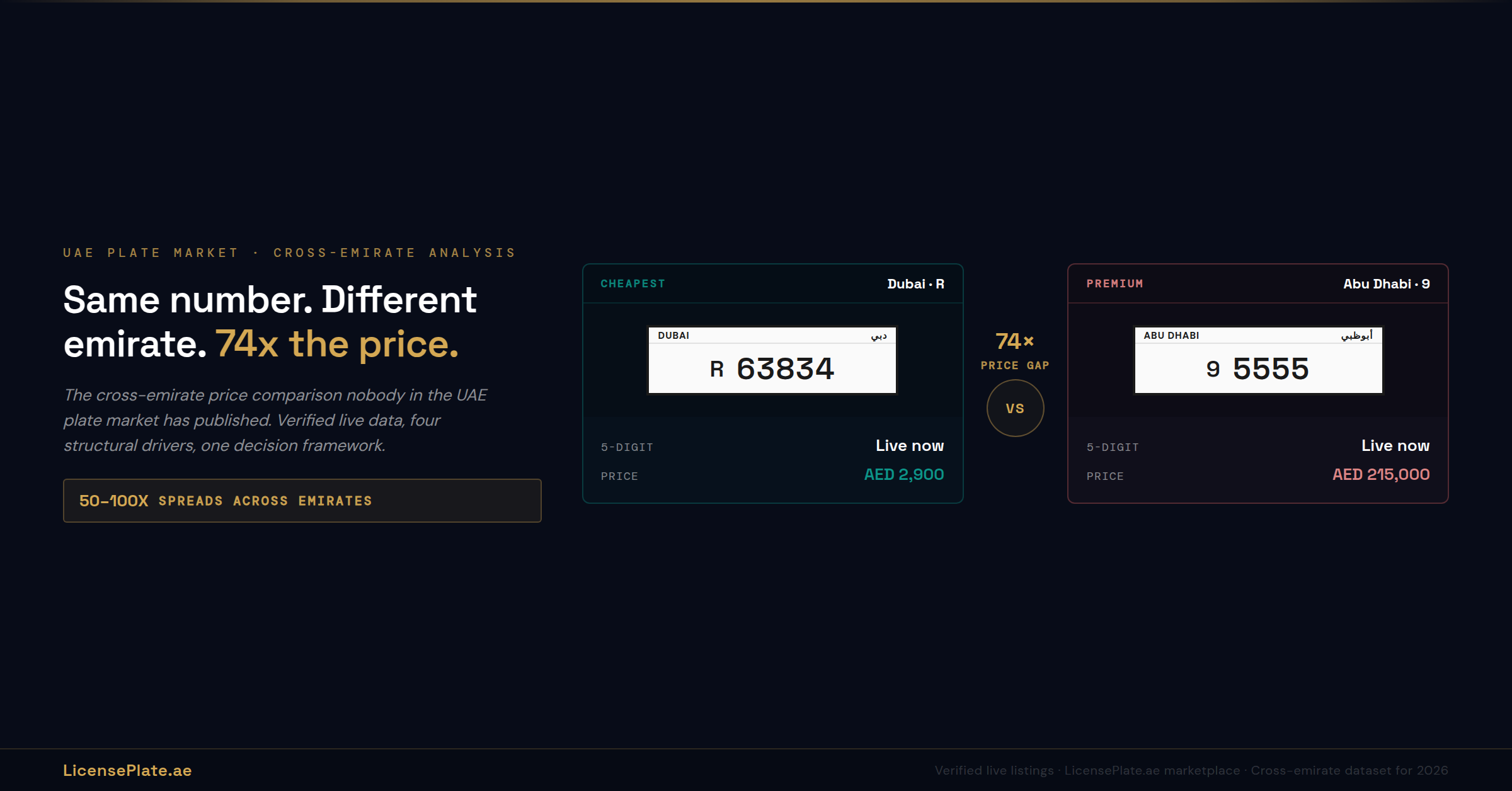
افتح إعلانين على LicensePlate.ae الآن. انظر إلى لوحة دبي، رمز R، خمسة أرقام: 2,900 درهم. وانظر إلى لوحة أبوظبي، فئة 9، خمسة أرقام أيضاً بنمط متكرّر: 215,000 درهم. عدد الأرقام نفسه. والدولة نفسها. والتسجيل المكافئ للهيئة نفسه. إمارة مختلفة. أربعة وسبعون ضعف السعر.
هذه هي الحقيقة البنيوية التي لا يشرحها أي محتوى تقريباً عن شراء اللوحات. ففروق الأسعار بين الإمارات في سوق اللوحات الإماراتي ليست تباينات صغيرة. إنها فروق تصل إلى 50 و100 ضعف تحرّكها الكثافة السكانية وهيبة الرمز ومنحنيات العرض وعمق السوق الثانوية. ومشتري اللوحة الذي يعامل الإمارات السبع كشرائح أسعار قابلة للتبادل يفوّت القرار الحقيقي. أما مشتري اللوحة الذي يفهم الفروق وما يحرّكها فيمكنه شراء لوحة تكلّف 90% أقل من مكافئتها في دبي وتلبّي مع ذلك معظم المتطلّبات العملية التي جاءت به إلى السوق أصلاً.
وتنشر هذه القطعة مجموعة البيانات المقارنة للمرة الأولى. كل إمارة. وكل عدد أرقام. وتسعير حيّ موثّق من سوق LicensePlate.ae. والمحرّكات البنيوية الأربعة وراء الفروق. وإطار القرار العملي لاختيار لوحة أي إمارة تناسب أي مشترٍ.
والتأطير الصادق أولاً. مقارنات الأسعار بين الإمارات ليست مقارنة متكافئة. فلوحة دبي تحمل إشارات مكانة خاصة بدبي لا تحملها لوحة عجمان، بغضّ النظر عن تكوين الأرقام. ولوحة أبوظبي من الفئة 1 تجلس على قمّة سوق اللوحات العالمي بطرق لا تستطيع أي إمارة أخرى تكرارها. وهذه العلاوات الثقافية حقيقية ومستمرّة. لكن حين تفهمها، يمكنك أن تقرّر ما إذا كنت تدفع مقابل العلاوة الثقافية أم يجري تحميلك إيّاها. وهذا التمييز هو موضوع هذه القطعة.
أولاً، الفارق البنيوي: رموز الحروف مقابل الفئات المرقّمة
ستّ من الإمارات السبع تستخدم رموز الحروف (من A إلى Z). أما أبوظبي فتشغّل نظاماً مختلفاً جوهرياً: فئات مرقّمة مطبوعة بالأحمر على اللوحة نفسها، تمتدّ من 1 إلى 22 إضافةً إلى الفئة التذكارية 50 التي صدرت لليوبيل الذهبي للإمارات. وبحسب مقال فئات لوحات أبوظبي من 1 إلى 50 القائم، فإن لوحات الفئة 1 هي الأرفع هيبةً في الدولة وأنتجت أغلى لوحة رقم بيعت على وجه الأرض (اللوحة رقم 1، بيعت بـ 52.2 مليون درهم عام 2008).
وهذا يعني أن المقارنة بين الإمارات تتطلّب طبقة ترجمة. فلوحة دبي برمز A ولوحة أبوظبي من الفئة 1 متقاربتان تقريباً من حيث الهيبة لكنهما متمايزتان تشغيلياً. ولوحة دبي برمز Z ولوحة أبوظبي من الفئة 22 تجلسان في مواضع ذيلية متشابهة داخل تسلسليهما لكنهما تتداولان في نطاقات أسعار مختلفة تماماً. والقطعة أدناه تعرض البيانات مع أخذ ترجمة الهيبة في الحسبان.
أما الإمارات الخمس الأخرى (الشارقة، وعجمان، ورأس الخيمة، والفجيرة، وأم القيوين) فتستخدم رموز حروف على نمط دبي لكن بنطاقات رموز أصغر. والشارقة تعمل بفئات ذات بادئة رقمية (1، و2، و3). وعجمان والإمارات الشمالية تستخدم رموز الحروف من A إلى Z، عموماً بشرائح متميّزة أصغر وأرضيات أسعار أدنى من دبي أو أبوظبي.
مصفوفة الأسعار بين الإمارات: إعلانات حيّة موثّقة
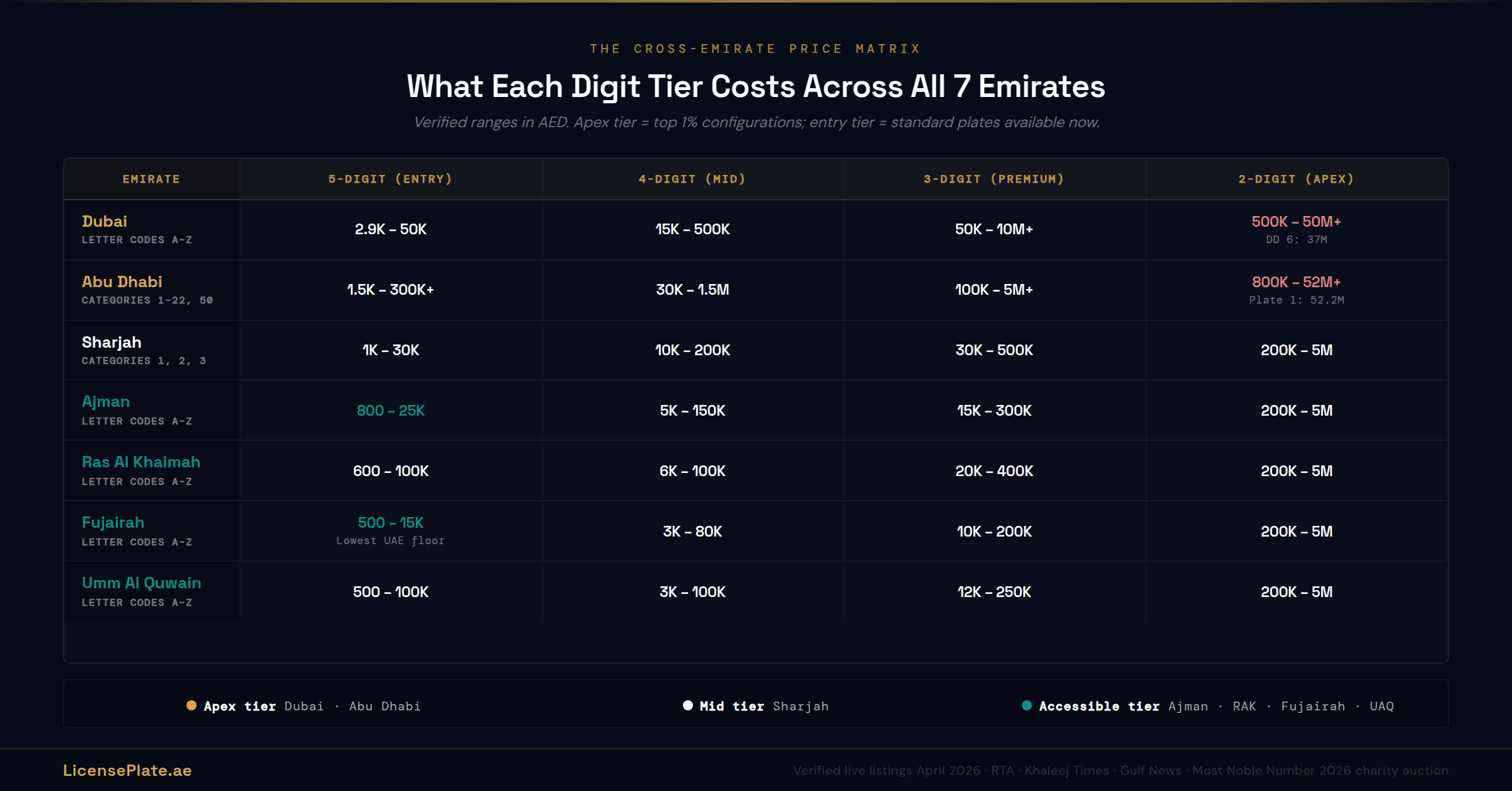
أدناه مصفوفة الأسعار بين الإمارات كما رُصدت على سوق LicensePlate.ae، مستمدّة من الإعلانات الحيّة الحالية حتى تاريخ النشر. وكل الأرقام بالدرهم الإماراتي.
اللوحات ذات الخمسة أرقام (شريحة الدخول)
دبي: نطاق من 2,900 إلى 50,000 درهم. وتشمل إعلانات الدخول الحيّة دبي R 63834 بـ 2,900 درهم، ودبي Q 86875 بـ 2,900 درهم، ودبي K 60167 بـ 2,900 درهم. والطرف الأدنى من هذا النطاق يمثّل أكثر لوحات دبي المتاحة قابليةً للوصول؛ والطرف الأعلى يعكس الرموز المميّزة (H، وM، وN) عند شريحة الخمسة أرقام.
أبوظبي: نطاق من 1,500 إلى أكثر من 300,000 درهم. ولوحات أبوظبي ذات الخمسة أرقام بأنماط متكرّرة تجلس عند علاوات قصوى. مثال إعلان حيّ: أبوظبي 9 5555@ بـ 215,000 درهم. أما لوحات أبوظبي القياسية ذات الخمسة أرقام دون دلالة نمطية فتتداول في نطاقات أدنى.
الشارقة: نطاق من 1,000 إلى 30,000 درهم. وتستخدم الشارقة ثلاث بادئات فئوية (1، و2، و3). ولوحات الشارقة ذات الخمسة أرقام تحمل علاوات ملموسة عند طرف الأنماط. مثال إعلان حيّ: الشارقة 3 7262 بـ 22,500 درهم.
عجمان: نطاق من 800 إلى 25,000 درهم. ولوحات عجمان تُعدّ على نطاق واسع من الأقلّ كلفةً في الإمارات بحسب تقارير السوق الإماراتية. مثال إعلان حيّ: عجمان B 6078 بـ 13,500 درهم (أربعة أرقام، شريحة مميّزة داخل عجمان).
رأس الخيمة: نطاق من 600 إلى 100,000 درهم. ولوحات رأس الخيمة تكتسب اهتماماً مع تسارع الاستثمار الدولي في الإمارة قبيل افتتاح Wynn Al Marjan Island. وتمتدّ الإعلانات الحيّة من 6,100 إلى 75,000 درهم للتكوينات الرباعية بحسب إعلانات رأس الخيمة على LicensePlate.ae. أما لوحات رأس الخيمة القياسية ذات الخمسة أرقام فتتداول دون 5,000 درهم بكثير.
الفجيرة: نطاق من 500 إلى 15,000 درهم. وللفجيرة أقلّ عدد سكّان في الإمارات وبالتالي أدنى أرضية سعرية للوحات. ولوحات الفجيرة القياسية ذات الخمسة أرقام تتداول كثيراً بين 1,500 و3,000 درهم.
أم القيوين: نطاق من 500 إلى 100,000 درهم. ولأم القيوين أصغر عدد سكّان وبنيوياً أدنى تسعير أساسي، لكن تكوينات مميّزة بعينها تحمل علاوات مفاجئة. مثال إعلان حيّ: أم القيوين M 3300 بـ 60,500 درهم (لوحة نمطية رباعية).
اللوحات ذات الأربعة أرقام (الشريحة الوسطى)
دبي: نطاق من 15,000 إلى أكثر من 500,000 درهم. ولوحات دبي الرباعية المميّزة تجلس بثبات في الستّة أرقام. أما اللوحات الرباعية متوسّطة النمط فتتداول في نطاق 15,000 إلى 50,000 درهم.
أبوظبي: نطاق من 30,000 إلى 1,500,000 درهم. مثال إعلان حيّ: أبوظبي 20 7020 بـ 153,000 درهم (لوحة نمطية رباعية). والطرف الأعلى المتطرّف يمثّل لوحات الفئات من 1 إلى 5 بقيمة نمطية كبيرة.
الشارقة: نطاق من 10,000 إلى 200,000 درهم. والسوق الثانوية في الشارقة أقلّ عمقاً من دبي أو أبوظبي، ما يعني أن التسعير يحمل تبايناً أكبر.
عجمان: نطاق من 5,000 إلى 150,000 درهم. ولوحات عجمان الرباعية ذات الأنماط القويّة يمكن أن تحمل علاوات مفاجئة حين يكون النمط ذا دلالة ثقافية.
رأس الخيمة: نطاق من 6,000 إلى 100,000 درهم. وتُظهر الإعلانات الحيّة لوحات رأس الخيمة الرباعية من 6,100 درهم (رأس الخيمة، أربعة أرقام بـ 6,100 درهم) حتى 75,000 درهم.
الفجيرة: نطاق من 3,000 إلى 80,000 درهم. أدنى أرضية سعرية رباعية في الإمارات.
أم القيوين: نطاق من 3,000 إلى 100,000 درهم. ولوحات أم القيوين النمطية قد تتجاوز التوقّعات: فأم القيوين M 3300 بـ 60,500 درهم تعكس الرمز 'M' مقترناً بنمط الزوج المتكرّر 3300.
اللوحات ذات الثلاثة أرقام (الشريحة المميّزة)
دبي: نطاق من 50,000 إلى أكثر من 10,000,000 درهم. وبحسب تحليل Shory للوحات دبي الثلاثية، تبدأ لوحات دبي الثلاثية من مستوى الدخول عند بضع مئات الآلاف من الدراهم. أما اللوحات الثلاثية المميّزة ذات الدلالة الثقافية (777، و786، و911) فتطلب الملايين. وBB 777 أُنجزت بـ 6 ملايين درهم عام 2025.
أبوظبي: نطاق من 100,000 إلى أكثر من 5,000,000 درهم. ولوحات أبوظبي الثلاثية من الفئات الرفيعة تحمل علاوات مقارنة بدبي لكن بأرضية تسعيرية أعلى بسبب ديناميكيات ندرة نظام الفئات.
الشارقة: نطاق من 30,000 إلى 500,000 درهم. ولوحات الشارقة الثلاثية لها عمق سوق ثانوية أصغر، ما ينتج فرصاً (منافسة أقلّ على المشترين) ومخاطر (سيولة أقلّ للبائعين) في آن.
عجمان: نطاق من 15,000 إلى 300,000 درهم. ولوحات عجمان الثلاثية تُعدّ على نطاق واسع أكثر الشرائح الثلاثية قابليةً للوصول في الإمارات.
رأس الخيمة: نطاق من 20,000 إلى 400,000 درهم. ولوحات رأس الخيمة الثلاثية المميّزة ارتفعت قيمتها بشكل ملحوظ مع نموّ الحضور الدولي لرأس الخيمة.
الفجيرة: نطاق من 10,000 إلى 200,000 درهم. أدنى أرضية سعرية ثلاثية في الإمارات.
أم القيوين: نطاق من 12,000 إلى 250,000 درهم. ولوحات أم القيوين الثلاثية ذات الأنماط القويّة تتفوّق بانتظام على نظيراتها في الفجيرة.
اللوحات ذات الرقمين (شريحة القمّة)
هنا تنضغط الفروق بين الإمارات. فاللوحة ذات الرقمين من أي إمارة تحمل هيبة أصيلة بسبب ندرة العرض. وتبقى الفروق ملموسة لكن الإمارات المميّزة لا تهيمن بالمضاعف نفسه الذي تهيمن به في أعداد الأرقام الأعلى.
دبي: نطاق من 500,000 إلى أكثر من 50,000,000 درهم. وبحسب مقال الأرقام القياسية، أُنجزت دبي BB 12 بـ 9.66 مليون درهم في مزاد القاعة الـ 120 في ديسمبر 2025. وأُنجزت دبي DD 6 بـ 37 مليون درهم في مزاد أنبل رقم 2026.
أبوظبي: نطاق من 800,000 إلى أكثر من 52,000,000 درهم. فأغلى لوحة في العالم (لوحة أبوظبي 1) بيعت بـ 52.2 مليون درهم عام 2008. ولوحة أبوظبي 2 أُنجزت بـ 23.3 مليون درهم.
الشارقة/عجمان/رأس الخيمة/الفجيرة/أم القيوين: نطاق من 200,000 إلى 5,000,000 درهم. والإمارات الشمالية والشارقة تنتج صفقات لوحات ثنائية الأرقام بأسعار أدنى بشكل ملموس من دبي أو أبوظبي، لكن ندرة العرض تضمن بقاء الأسعار في ستّة أو سبعة أرقام لمعظم التكوينات ذات الدلالة النمطية.
المحرّكات البنيوية الأربعة وراء فروق الأسعار
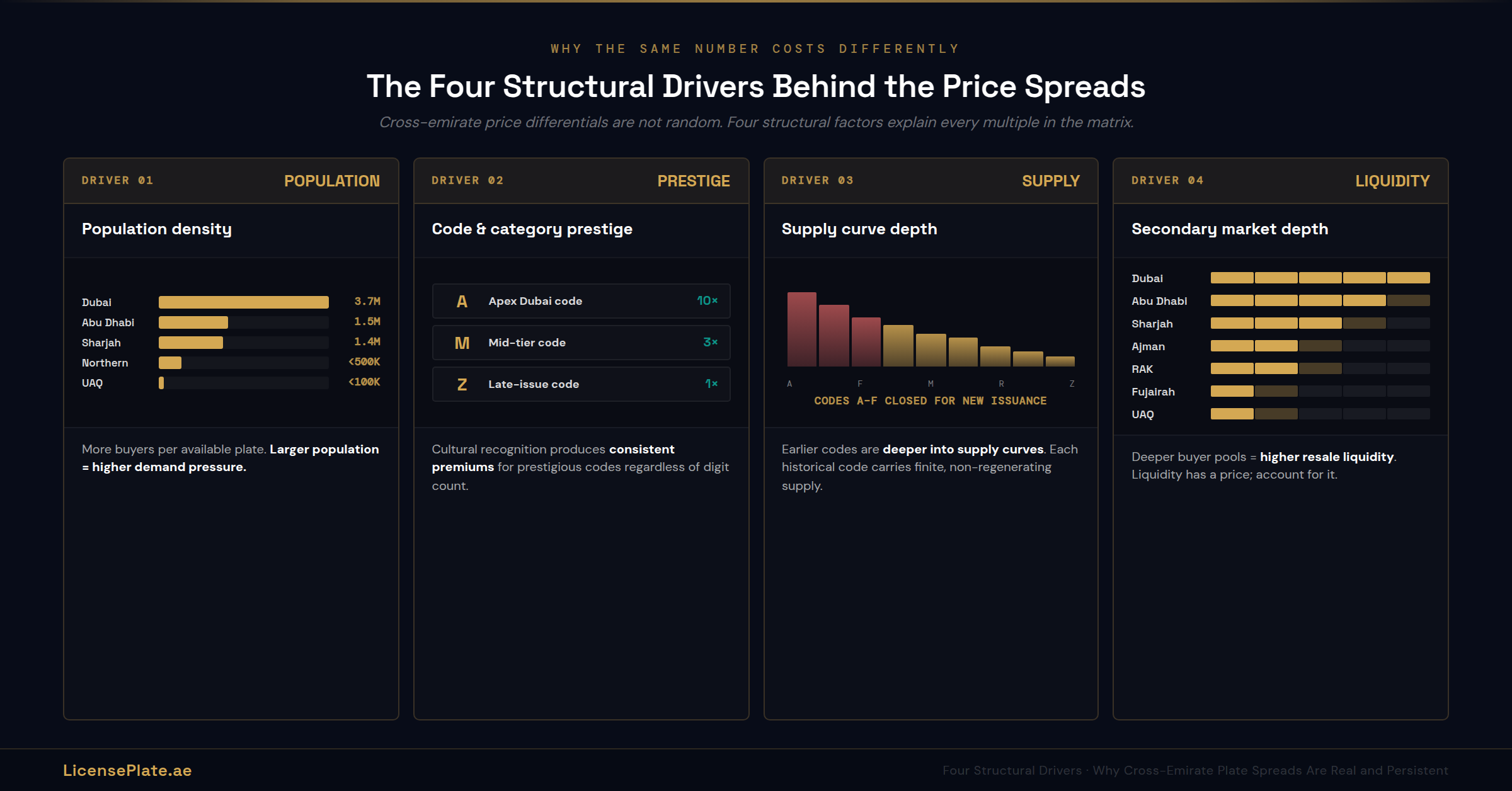
فروق الأسعار أعلاه ليست عشوائية. فأربعة عوامل بنيوية تفسّر لماذا تتداول لوحة دبي بمضاعفات مكافئتها في عجمان، ولماذا تكون تلك المضاعفات أكبر عند أعداد أرقام بعينها وأصغر عند غيرها.
المحرّك الأول: الكثافة السكانية
لدبي (عدد سكّان يقارب 3.7 مليون بحسب التقارير الحديثة) وأبوظبي (عدد سكّان يقارب 1.5 مليون) تعدادات قيادة أكبر بكثير من الإمارات الشمالية. وعدد سكّان الشارقة يقارب 1.4 مليون. أما عجمان ورأس الخيمة والفجيرة وأم القيوين فلكلٍّ منها أقلّ من 500,000 نسمة (وأم القيوين تحديداً دون 100,000). وتعدادات القيادة الأكبر تعني مشترين متنافسين أكثر لكل لوحة مميّزة متاحة، ما يدفع الأسعار للأعلى. والتعدادات الأصغر تعني منافسة أقلّ بين المشترين على العرض نفسه، ما يدفع الأسعار للأسفل.
وهذا هو المحرّك المهيمن على الفروق بين الإمارات عند شريحتَي الخمسة والأربعة أرقام، حيث يكون العرض وفيراً لكن الطلب يختلف بمرتبة قدرية عبر الإمارات.
المحرّك الثاني: هيبة الرمز والفئة
بحسب دليل لوحات دبي المرجعي ومقال فئات أبوظبي، تحمل رموز وفئات بعينها هيبة أصيلة مستقلّة عن عدد الأرقام. فرمز دبي A أرفع هيبةً من رمز دبي Z. وفئة أبوظبي 1 أرفع هيبةً من الفئة 22. والاعتراف الثقافي بهذه التسلسلات الهرمية متطوّر في سوق اللوحات الإماراتي وينتج علاوات ثابتة للرموز الرفيعة بغضّ النظر عن تكوين الأرقام الأساسي.
وهذا المحرّك يفسّر التباين داخل الإمارة الواحدة أكثر ممّا يفسّر التباين بين الإمارات، لكنه يتفاعل مع المقارنة بين الإمارات: فلوحة دبي برمز A وخمسة أرقام أثمن بشكل ملموس من لوحة دبي برمز Z وخمسة أرقام، والفارق داخل دبي غالباً ما يتجاوز الفارق بين رمز دبي Z ولوحة عجمان مكافئة بخمسة أرقام.
المحرّك الثالث: منحنى العرض والإصدار التاريخي
تُصدر هيئة الطرق والمواصلات في دبي اللوحات منذ 1973 وتقدّمت عبر الرموز A، وB، وC، وD، وE، وF (المغلقة الآن أمام الإصدار الجديد)، ثم إلى G، وH، وI، وJ، وK، وM، وN، وO، وP، وQ، وR، وS، وT، وU، وV، وW، وX، وY، وZ، إضافةً إلى الرموز الثنائية AA، وBB، وCC، وDD. ولكل رمز تاريخي عرض محدود لا يتجدّد حين ينفد. وبحسب دليل الرموز القائم، فإن الرموز الأقدم أعمق في منحنيات عرضها من الرموز الأحدث، ما يعني أن الرموز الأقدم أرفع هيبةً وأقلّ عرضاً متاحاً.
ونظام فئات أبوظبي يتبع منطقاً مشابهاً: فأرقام الفئات الأدنى (من 1 إلى 5) أعمق في تاريخ إصدارها وتحمل علاوات هيبة وندرة عرض معاً. أما الإمارات الشمالية، وقد أصدرت لوحات بأحجام أصغر بكثير عبر تاريخها، فلديها انضغاط أقلّ في منحنى العرض عند أي مستوى رمز.
المحرّك الرابع: عمق السوق الثانوية
لدبي وأبوظبي أسواق ثانوية عميقة بمشترين نشطين وشبكات وسطاء راسخة وأسواق إلكترونية مثل LicensePlate.ae وتدفّق صفقات مستمرّ. أما الإمارات الشمالية فلديها أسواق ثانوية أقلّ عمقاً، ما ينتج أثرين: أرضيات أسعار أدنى (منافسة أقلّ) واحتكاك صفقات أعلى (سيولة أقلّ). وبالنسبة للمشترين، هذا يعني أن القرار بين إمارة وأخرى لا يشمل السعر الحالي فحسب بل سيولة الخروج. فلوحة دبي بـ 50,000 درهم قد يسهل بيعها أكثر من لوحة الفجيرة بـ 5,000 درهم، رغم أن لوحة الفجيرة تمثّل التزاماً رأسمالياً أصغر.
وهذا المحرّك يهمّ أكثر ما يهمّ المشترين الذين يرون لوحتهم أصلاً قابلاً للنقل لا اقتناءً دائماً. أما مشترو الاستخدام الشخصي طويل الأمد دون نيّة إعادة بيع فعمق السوق الثانوية أقلّ أهميةً لقرارهم.
في أي إمارة ينبغي أن تشتري فعلاً؟
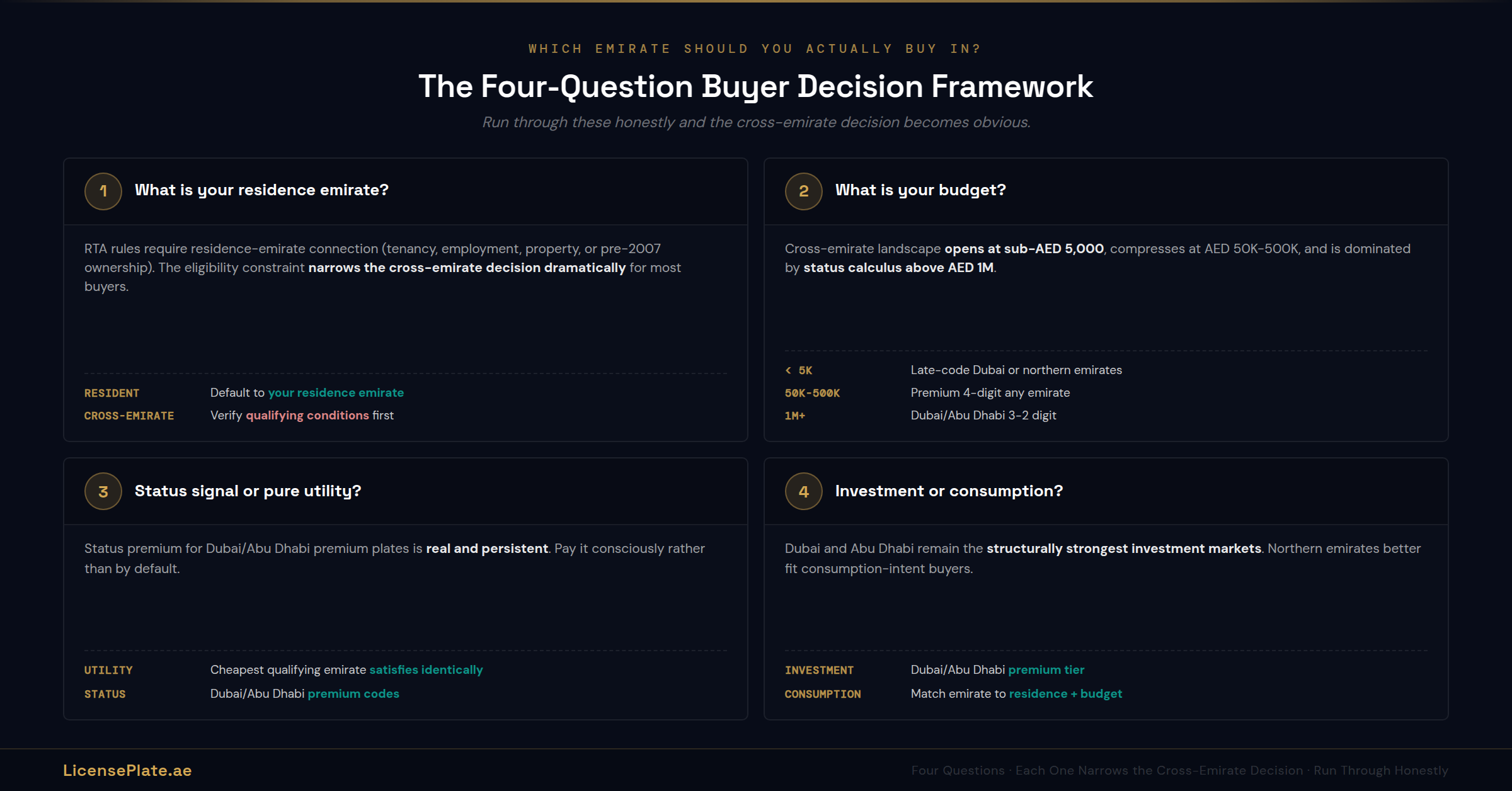
القرار بين الإمارات يتلخّص في أربعة أسئلة للمشتري. اعبرها بصدق وتصبح الإجابة بديهية.
السؤال الأول: ما إمارة إقامتك؟
بحسب قواعد الهيئة المنشورة والمؤكَّدة في مقال التكاليف والرسوم، لا يمكنك عموماً تسجيل لوحة من إمارة على مركبة في إمارة أخرى دون شروط تأهيل محدّدة (عقد إيجار، أو خطاب عمل من فرع شركة في إمارة اللوحة، أو ملكية عقار، أو ملكية لوحة سابقة لعام 2007). وبالنسبة لمعظم المشترين، هذا يعني أن إمارة إقامتك هي إمارة لوحتك الافتراضية. وملكية لوحة من إمارة أخرى تتطلّب استيفاء شروط الأهلية المحدّدة لكل إمارة.
عملياً: مقيم في دبي يستطيع عادةً تسجيل لوحة دبي دون مشكلة. أما مقيم في دبي يريد لوحة الشارقة فعليه إثبات صلات مؤهِّلة بالشارقة (عمل، أو عقار، إلخ). وقيد الأهلية هذا يضيّق القرار بين الإمارات بشكل كبير لمعظم المشترين.
السؤال الثاني: ما ميزانيتك؟
إن كانت ميزانيتك دون 5,000 درهم، ينفتح المشهد بين الإمارات. فاللوحات القياسية ذات الخمسة أرقام في الفجيرة ورأس الخيمة وعجمان وأم القيوين تتداول ضمن هذا النطاق بأريحية. ولوحات دبي القياسية ذات الخمسة أرقام من الرموز المتأخّرة (R، وQ، وK، وP) تتداول أيضاً في هذا النطاق بحسب الإعلانات الحيّة الموثّقة أعلاه. ويصبح القرار مسألة تفضيل رمز أو فئة وخروج عند إعادة البيع، لا قدرة مالية خام.
وإن كانت ميزانيتك بين 50,000 و500,000 درهم، ينضغط المشهد بين الإمارات. فبإمكانك شراء لوحة رباعية مميّزة من أي إمارة عند الطرف الأدنى من هذا النطاق، أو لوحة ثلاثية متوسّطة الشريحة من إمارة أصغر. ولوحات دبي وأبوظبي الرباعية ذات الرموز الرفيعة ستهيمن على هذا النطاق.
وإن تجاوزت ميزانيتك مليون درهم، فأنت في نطاق الثلاثة أرقام والرقمين عبر كل الإمارات. والقرار بين الإمارات عند هذه الشريحة تهيمن عليه حسابات المكانة لا مراجحة السعر.
السؤال الثالث: إشارة مكانة أم منفعة صرفة؟
إن كانت اللوحة للمنفعة (معرّف مركبة دون نيّة إشارة أوسع)، فأي لوحة بأدنى سعر من أي إمارة مؤهَّلة تلبّي المتطلّب. والمشترون في هذه الفئة مبالغ في تموضعهم داخل القرار بين الإمارات: فقد يدفعون 50,000 درهم للوحة دبي بينما تخدمهم لوحة دبي بـ 3,000 درهم من رمز متأخّر أو لوحة فجيرة بـ 2,000 درهم بشكل مطابق.
وإن كانت اللوحة للمكانة، فبحسب مقال اقتصاد تصوير اللوحات، يهمّ التسلسل الهرمي بين الإمارات. فلوحات دبي وأبوظبي المميّزة تحمل إشارات مكانة لا تحملها الإمارات الشمالية. والعلاوة على الهيبة بين الإمارات حقيقية ومستمرّة. ادفعها بوعي لا بشكل افتراضي.
السؤال الرابع: استثمار أم استهلاك؟
بحسب دليل الاستثمار، أظهرت اللوحات المميّزة ارتفاعاً سنوياً من 10 إلى 20% في شرائح مختارة عبر فترات متعدّدة السنوات. وملفّ الارتفاع يختلف جوهرياً بحسب الإمارة: فلوحات دبي وأبوظبي المميّزة لها أعمق سجلّات ارتفاع تاريخية وأنشط الأسواق الثانوية. أما لوحات الإمارات الشمالية فارتفاعها أقلّ توثيقاً لكن منافسة المشترين عليها أقلّ أيضاً، ما يعني أن سعر الدخول أدنى.
وللمشترين بنيّة الاستثمار: تبقى دبي وأبوظبي أقوى الأسواق الاستثمارية بنيوياً. وللمشترين بنيّة الاستهلاك (تريد اللوحة لنفسك دون نيّة إعادة بيع): قد تكون الإمارات الأرخص أنسب إن سمحت الأهلية.
ملفّات سريعة: شخصية سوق اللوحات في كل إمارة
دبي: أعمق سوق ثانوية، وأعلى اعتراف ثقافي، وأنشط المزادات (قاعة الهيئة والإلكترونية)، وأوسع نطاق تسعير متاح (من لوحات دخول بـ 2,900 درهم إلى مزادات قمّة تتجاوز 50 مليون درهم). الإمارة الافتراضية لمعظم مشتري ومستثمري اللوحات المميّزة.
أبوظبي: نظام الفئات المرقّمة يخلق تسلسل هيبة مختلفاً عن رموز حروف دبي. وتحمل الرقم القياسي العالمي لأغلى لوحة بيعت على الإطلاق (اللوحة 1 بـ 52.2 مليون درهم عام 2008). ومزادات أنبل رقم الخيرية في دبي وأبوظبي أنتجت تاريخياً أسعار العناوين القصوى.
الشارقة: نظام من ثلاث فئات (1، و2، و3). وسوق ثانوية أصغر من دبي أو أبوظبي. واللوحات تحمل هيبة ثقافية أقلّ لكنها تتداول بأسعار أدنى بشكل ملموس لتكوينات أرقام مكافئة. مناسبة للمشترين المقيمين في الشارقة دون نيّة إشارة مكانة.
عجمان: من أكثر إمارات اللوحات قابليةً للوصول في الدولة بحسب تقارير سوق متعدّدة. نظام رموز حروف من A إلى Z. وعمق سوق ثانوية محدود جداً ينتج فرصةً (أسعار دخول منخفضة) وقيداً (سيولة إعادة بيع محدودة) معاً.
رأس الخيمة: تكتسب اهتماماً مع نموّ ملفّ التطوير الدولي لرأس الخيمة (افتتاح Wynn Al Marjan Island، والاستثمار في البنية التحتية). ولوحات رأس الخيمة قد تستفيد من قصّة ارتفاع الإمارة الأوسع خلال السنوات القليلة القادمة إن تحقّقت الفرضية الاستثمارية.
الفجيرة: أدنى أرضية سعرية للوحات في الإمارات بسبب صغر عدد السكّان. ولوحات الفجيرة القياسية ذات الخمسة أرقام تتداول بين 500 و3,000 درهم. نقطة البداية الأقلّ كلفةً لأي مشتري لوحة إماراتية.
أم القيوين: أصغر عدد سكّان في الإمارات (دون 100,000). وبنيوياً أدنى تسعير أساسي لكن تكوينات مميّزة بعينها (من طراز M 3300) تحمل علاوات مفاجئة. وسوق ثانوية محدودة.
التسجيل بين الإمارات: ما المسموح فعلاً
بحسب بوابة حجز الأرقام لدى وزارة الداخلية والمؤكَّد في مقال التكاليف والرسوم، فإن تسجيل اللوحات بين الإمارات مقيَّد بقواعد أهلية تختلف بحسب الإمارة.
رسوم الحجز تختلف مادياً بحسب الإمارة: حجز أبوظبي لسنة واحدة يكلّف 2,000 درهم. وحجز دبي لسنة واحدة يكلّف 80 درهماً. والشارقة لسنة واحدة تكلّف 500 درهم. وعجمان لسنة واحدة تكلّف 400 درهم. ورأس الخيمة لسنة واحدة تكلّف 240 درهماً. والفجيرة لسنة واحدة تكلّف 120 درهماً. وأم القيوين لسنة واحدة تكلّف 120 درهماً. وهذه الفروق تعكس التموضع التنظيمي وضغط الطلب في كل إمارة.
رسوم المعرفة والابتكار: بحسب دليل خدمات وزارة الداخلية، تفرض دبي 10 دراهم معرفة و10 دراهم ابتكار (20 درهماً إجمالاً) على صفقات اللوحات. وتفرض الإمارات الأخرى مبالغ متفاوتة. وهذه الرسوم صغيرة نسبةً إلى أسعار اللوحات لكنها تهمّ في الصفقات الحسّاسة للرسوم عند شريحة الدخول.
الأهلية للملكية بين الإمارات: تتطلّب عموماً إثبات صلة بإمارة التسجيل (إيجار، أو عمل، أو عقار، أو ملكية لوحة سابقة لعام 2007). وتختلف شروط التأهيل المحدّدة بحسب الإمارة. ويغطّي مقال أهلية الوافدين أطر الأهلية بالتفصيل.
التركيب على مركبة: إن اشتريت لوحة في إمارة كأصل صرف (دون تركيبها على مركبة)، فلا تنطبق قيود أهلية. وشهادة ملكية اللوحة لك بغضّ النظر عن الإقامة. أما تركيب اللوحة على مركبة فهو الخطوة التي تُفعِّل فحص أهلية الإقامة.
ستّة أخطاء يرتكبها المشترون في المقارنة بين الإمارات
الخطأ الأول: معاملة لوحات كل الإمارات كأنها متبادلة. ليست كذلك. فلوحة دبي تحمل إشارات مكانة خاصة بدبي؛ ولوحة الفجيرة لا تحملها. والمشترون الذين يعاملون الاستبدال بين الإمارات كمراجحة بلا كلفة يفوّتون العلاوة الثقافية التي قد يريدون فعلاً دفعها.
الخطأ الثاني: تجاهل قيود إمارة الإقامة. معظم المشترين لا يستطيعون تسجيل لوحة من غير إمارة إقامتهم دون استيفاء شروط تأهيل محدّدة. والبحث عن أرخص إمارة بينما لا تستطيع التسجيل فيها جهد ضائع.
الخطأ الثالث: مقارنة أسعار القمّة بدل الأسعار النمطية. عناوين الأخبار تُبرز مزادات بـ 37 مليوناً و52.2 مليون درهم. لكن معظم صفقات اللوحات في أي إمارة تحدث بين 2,000 و200,000 درهم. ومقارنة الإمارات بمزاداتها العنوانية تشوّه المقارنة العملية.
الخطأ الرابع: تجاهل عمق السوق الثانوية. لوحة الفجيرة بـ 5,000 درهم قد تكون أرخص في الاقتناء لكن أصعب في إعادة البيع من لوحة دبي بـ 15,000 درهم. وللسيولة ثمن؛ احسبه.
الخطأ الخامس: المقارنة عبر أعداد أرقام غير مناسبة. لوحة دبي الرباعية ولوحة عجمان الرباعية متقاربتان تقريباً. أما لوحة دبي الخماسية ولوحة عجمان الثلاثية فلا. تأكّد أن المقارنة بين الإمارات تثبّت عدد الأرقام قبل استخلاص النتائج.
الخطأ السادس: نسيان فروق رسوم الحجز. رسم حجز أبوظبي لسنة واحدة البالغ 2,000 درهم أعلى 25 ضعفاً من رسم دبي البالغ 80 درهماً. وللمشترين الذين يحجزون لوحات أثناء إتمام شراء المركبات، يهمّ فارق رسم الحجز عند الهامش وينبغي إدراجه في مقارنة التكلفة بين الإمارات.
الأسئلة الشائعة
س: أي إمارة إماراتية لديها أرخص اللوحات؟
الفجيرة عموماً لديها أدنى أرضية سعرية للوحات بسبب صغر عدد سكّانها ومحدودية عمق سوقها الثانوية. ولوحات الفجيرة القياسية ذات الخمسة أرقام تتداول بين 500 و3,000 درهم. ولأم القيوين تسعير أساسي مماثل. وعجمان تُعدّ على نطاق واسع أكثر إمارات اللوحات قابليةً للوصول بين الأسواق الأكثر سكّاناً بحسب تقارير سوق متعدّدة.
س: لماذا يُسعَّر الرقم نفسه بفروق كبيرة بين الإمارات؟
أربعة محرّكات بنيوية: الكثافة السكانية (سكّان أكثر يعني مشترين أكثر يعني أسعاراً أعلى)، وهيبة الرمز والفئة (رمز دبي A أرفع هيبةً من اللوحات ذات الرموز المتأخّرة بغضّ النظر عن عدد الأرقام)، ومنحنى العرض والإصدار التاريخي (الرموز الأقدم لديها عرض متاح أقلّ)، وعمق السوق الثانوية (لدبي وأبوظبي تجمّعات مشترين أعمق من الإمارات الشمالية).
س: هل يمكنني تسجيل لوحة عجمان على مركبة في دبي؟
عموماً لا، دون استيفاء شروط تأهيل محدّدة. فتسجيل اللوحات بين الإمارات يتطلّب إثبات صلة بإمارة اللوحة (عقد إيجار، أو خطاب عمل، أو ملكية عقار، أو ملكية لوحة سابقة لعام 2007). وقيد الأهلية كبير وينبغي التحقّق منه قبل أي شراء بين الإمارات.
س: ما الفارق البنيوي بين لوحات دبي وأبوظبي؟
دبي تستخدم رموز حروف من A إلى Z إضافةً إلى رموز ثنائية الحرف (AA، وBB، وCC، وDD). وأبوظبي تستخدم فئات مرقّمة من 1 إلى 22 إضافةً إلى الفئة التذكارية 50 التي صدرت لليوبيل الذهبي للإمارات. والنظامان يتطلّبان ترجمة عند مقارنة شرائح الهيبة بين الإمارات.
س: أين أجد أرخص لوحة إماراتية شرعية الآن؟
تشمل الإعلانات الحيّة الحالية على LicensePlate.ae لوحات دون 5,000 درهم في دبي (الرموز R، وQ، وK، وP بين 2,900 و4,500 درهم)، وفي رأس الخيمة (لوحات رباعية من 6,100 درهم)، وتكوينات قياسية بخمسة أرقام عبر الفجيرة وعجمان وأم القيوين بأسعار دخول متفاوتة. تصفّح السوق حسب الإمارة لمعرفة المتاح حالياً.
س: هل يستحقّ الأمر دفع مبلغ أكبر للوحة دبي مقابل لوحة عجمان؟
يعتمد على النيّة. فلإشارة المكانة في ثقافة الأعمال أو المجتمع في دبي، تحمل لوحات دبي المميّزة هيبة معترفاً بها لا تحملها لوحات عجمان. وللمنفعة الصرفة (معرّف مركبة)، الاثنتان متكافئتان وظيفياً. ولنيّة الاستثمار، لدبي السوق الثانوية الأعمق وسجلّ الارتفاع الأقوى. طابق اختيار الإمارة مع النيّة.
س: أي إمارة لديها أعلى رسم حجز؟
أبوظبي بـ 2,000 درهم للحجز لسنة واحدة. ودبي الأرخص بـ 80 درهماً لسنة واحدة. والفارق يعكس التموضع التنظيمي وضغط الطلب في كل إمارة. وللمشترين الذين يحجزون لوحات أثناء إتمام شراء المركبات، يهمّ هذا الفارق عند الهامش.
س: هل لوحات الشارقة استثمار جيّد؟
لوحات الشارقة لها سوق ثانوية أصغر من دبي أو أبوظبي، ما ينتج أسعار دخول أدنى لكن سيولة خروج أدنى أيضاً. ويمكن أن تكون استثماراً جيّداً للمشترين المقيمين في الشارقة ولديهم صبر على دورات إعادة بيع أبطأ. وهي أقلّ سيولة من لوحات دبي أو أبوظبي المميّزة وينبغي تحجيمها تبعاً لذلك داخل المحفظة.
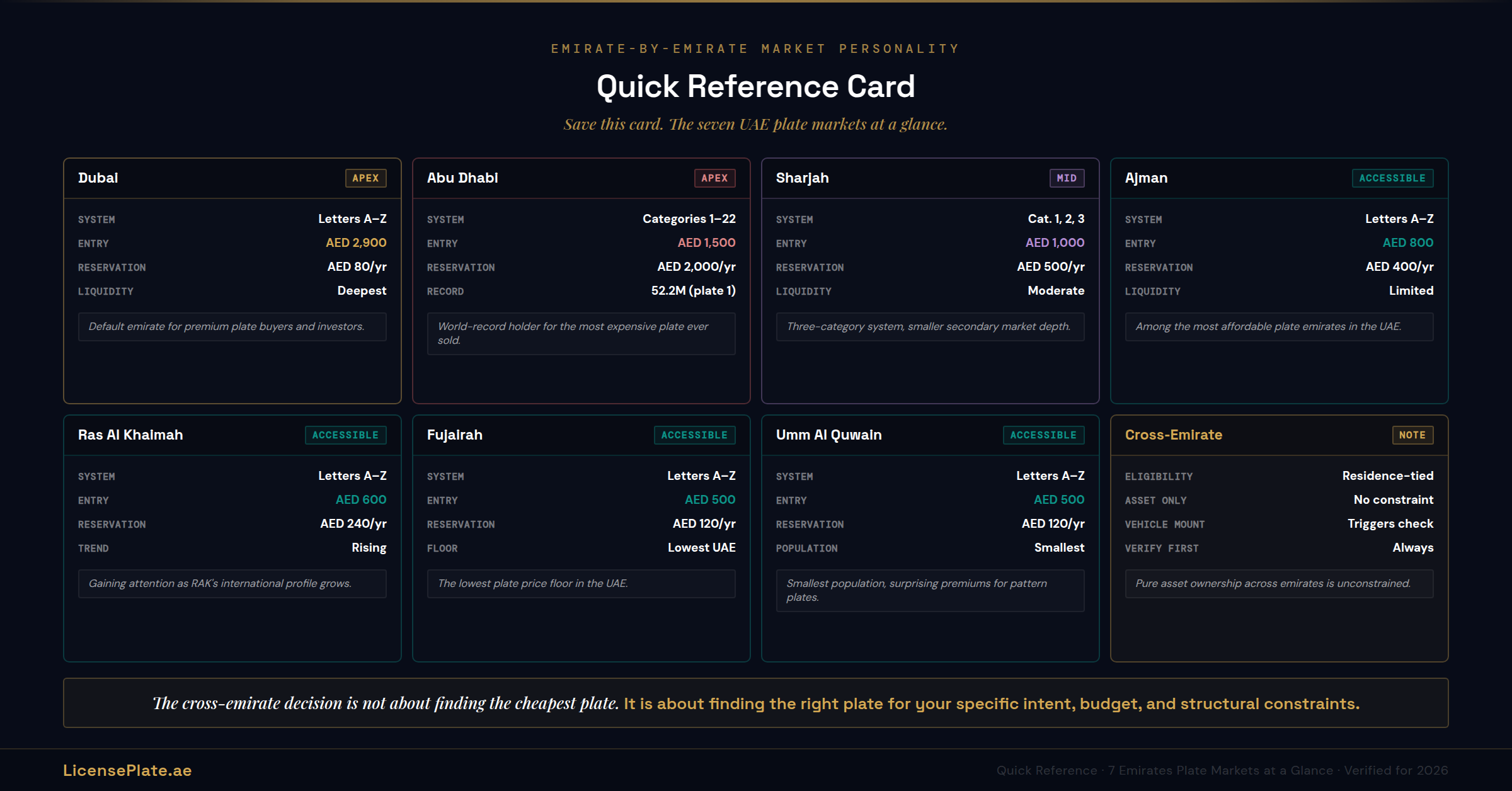
تتلخّص مقارنة الإمارات السبع في صورة بنيوية نظيفة بمجرّد أن ترى البيانات جنباً إلى جنب. فدبي وأبوظبي تجلسان على القمّة بأسواق ثانوية عميقة واعتراف ثقافي متطوّر وصفقات مزادات قمّة. والشارقة تشغل الشريحة العليا الوسطى. وعجمان ورأس الخيمة والفجيرة وأم القيوين تشكّل الطرف المتاح من السوق بأرضيات أسعار أدنى بشكل ملموس وأسواق ثانوية أصغر وكثافة إشارات مكانة أقلّ.
ولا شيء من هذا حكم قيمة. فلوحة فجيرة مسجّلة لسائق مقيم في الفجيرة يريد معرّف مركبة دون إنفاق 50,000 درهم على إشارة اجتماعية قرار سليم. ولوحة دبي من شريحة BB مسجّلة لرائد أعمال إماراتي يتفاعل بانتظام مع عملاء من أصحاب الثروات الكبيرة قرار سليم أيضاً. فالإمارات تخدم شرائح مختلفة من السوق نفسها، وفروق الأسعار تعكس تلك الاختلافات البنيوية بصدق.
وللخطوات العملية التالية: استخدم الحاسبة لترسيخ نطاق قيمة أي لوحة بعينها، وتصفّح إعلانات دبي، وإعلانات أبوظبي، وإعلانات الشارقة، وإعلانات عجمان، وإعلانات رأس الخيمة، وإعلانات الفجيرة، أو إعلانات أم القيوين حسب الإمارة، وتحقّق من أهلية إمارة إقامتك قبل الالتزام، وطبّق إطار القرار رباعي الأسئلة أعلاه. فالقرار بين الإمارات ليس عن إيجاد أرخص لوحة. إنه عن إيجاد اللوحة الصحيحة لنيّتك وميزانيتك وقيودك البنيوية تحديداً. والآن لديك البيانات لفعل ذلك.
حذف التعليق؟
هل أنت متأكد أنك تريد حذف هذا التعليق؟ لا يمكن التراجع عن هذا الإجراء.
حذف المقال؟
هل أنت متأكد أنك تريد حذف هذه المقالة؟ سيؤدي ذلك أيضًا إلى حذف جميع التعليقات. لا يمكن التراجع عن هذا الإجراء.