

تجّار لوحات الأرقام المرخّصون في دبي (2026): ما حامل التصريح، وما يحظره القانون، وكيف تشتري بأمان
آخر تحديث: 19 أغسطس 2026
الإجابة السريعة
في دبي، الاتّجار بلوحات أرقام المركبات نشاط مرخّص، لا نشاط مفتوح. فبموجب قرار المجلس التنفيذي رقم (31) لسنة 2011، لا يجوز لأحد مزاولة النشاط ما لم يحمل كليهما: تصريحاً من وكالة الترخيص التابعة للهيئة ورخصةً من دائرة التنمية الاقتصادية. وذلك الشخص هو حامل التصريح. والتصريح مدّته سنة واحدة قابلة للتجديد، ولا يجوز إعارته لأحد، ويحمل قائمة محدّدة من المحظورات — منها حظر صريح على بيع رقم اللوحة نفسه لأكثر من شخص. والمخالفات تجلب غرامات من 1,000 إلى 10,000 درهم، تتضاعف عند التكرار خلال سنة حتى سقف 30,000 درهم، إضافةً إلى الإيقاف أو الاستبعاد من المزادات أو إلغاء التصريح.
اسأل معظم المشترين كيف يفحصون لوحة رقم قبل الدفع فسيصفون فحص اللوحة: هل الرقم نظيف، هل هو متاح فعلاً، هل الشهادة موجودة. ولا يكاد أحد يفحص الشخص.
وذلك الاختلال غريب، لأن دبي نظّمت الطرف المقابل بهدوء منذ 2011. فتجارة اللوحات ليست ساحة مفتوحة يزاولها كل من يملك هاتفاً وحساباً على إنستغرام. بل هي نشاط بتصريح، له جهة إصدار، وتجديد سنوي، وجدول محظورات، وجدول غرامات. ومعظم من يشترون أرقاماً بستّة أرقام لم يسمعوا بأي من ذلك قط.
ويعرض هذا الدليل ما يشترطه القانون فعلاً من تاجر لوحات في دبي، وما يحظره عليه، وكم تكلّفه المخالفة، و— الجزء العملي — كيف تميّز حامل تصريح من غريب قبل أن يتحرّك مالك. وهو يكمّل قائمة العناية الواجبة لدينا لا يستبدلها: فتلك تتحقّق من الرقم، وهذه تتحقّق من الشخص الذي يبيعه.
المحتويات
- ما حامل التصريح فعلاً
- الورقتان اللتان يحملهما كل تاجر قانوني
- الأشياء السبعة التي يحظرها القانون على التاجر
- كم تكلّفه المخالفة
- حامل التصريح مقابل البائع الخاص مقابل السوق
- كيف تتحقّق من تاجر قبل أن تدفع
- ما يفعله التاجر الجيّد لك بحقّ
- الرايات الحمراء
- ماذا تفعل إن أساء إليك تاجر
- الأسئلة الشائعة
ما حامل التصريح فعلاً
الإجابة المباشرة: حامل التصريح شخص مرخّص بموجب قرار المجلس التنفيذي رقم (31) لسنة 2011 لمزاولة نشاط الاتّجار بلوحات أرقام المركبات في إمارة دبي. ويعرّف القرار النشاط صراحةً بأنه «الاتّجار بلوحات أرقام المركبات»، والتصريح بأنه «الوثيقة الرسمية الصادرة عن الوكالة التي تخوّل الشخص مزاولة النشاط»، وحامل التصريح بأنه «الشخص الذي يزاول النشاط».
و«الوكالة» هنا تعني وكالة الترخيص التابعة للهيئة. فالتصريح إذاً تصدره الجهة نفسها التي تدير تسجيل اللوحات والمزادات — أي أن المنظّم يرى مباشرةً من يتاجرون في فئة الأصول التابعة له.
وهذا المصطلح ليس معلومة هامشية. فهو يظهر في تشريعات اللوحات في دبي كلّها كفئة قانونية متمايزة بحقوق مختلفة عن فرد عادي من الجمهور. ومثالان غطّيناهما في مواضع أخرى:
- بموجب القرار الإداري رقم (916) لسنة 2021، يجوز بيع اللوحات بـالبيع المباشر أو المزاد، وكلتا القناتين مفتوحة لـ«الجمهور أو حاملي التصاريح» — انظر دليلنا لـالشراء بسعر ثابت دون مزاد.
- والقرار نفسه يحدّ الشخص العادي بـستّة أرقام لوحات شبه مميّزة في السنة. أما حاملو التصاريح فـلا يخضعون لذلك القيد — وهذا بالضبط سبب تدفّق الحجم الجادّ في هذه السوق عبر التجّار المرخّصين لا عبر هواة الجمع الأفراد.
وثمّة أيضاً فئة المزاد المحدود المقصورة على حاملي التصاريح والأشخاص المستوفين لشروط مقرّرة. وبعبارة أخرى، جزء من السوق غير مفتوح لك بنيوياً كمشترٍ فرد، والتاجر هو طريقك إليه. وتلك هي الوظيفة الاقتصادية المشروعة للتجارة.
الورقتان اللتان يحملهما كل تاجر قانوني
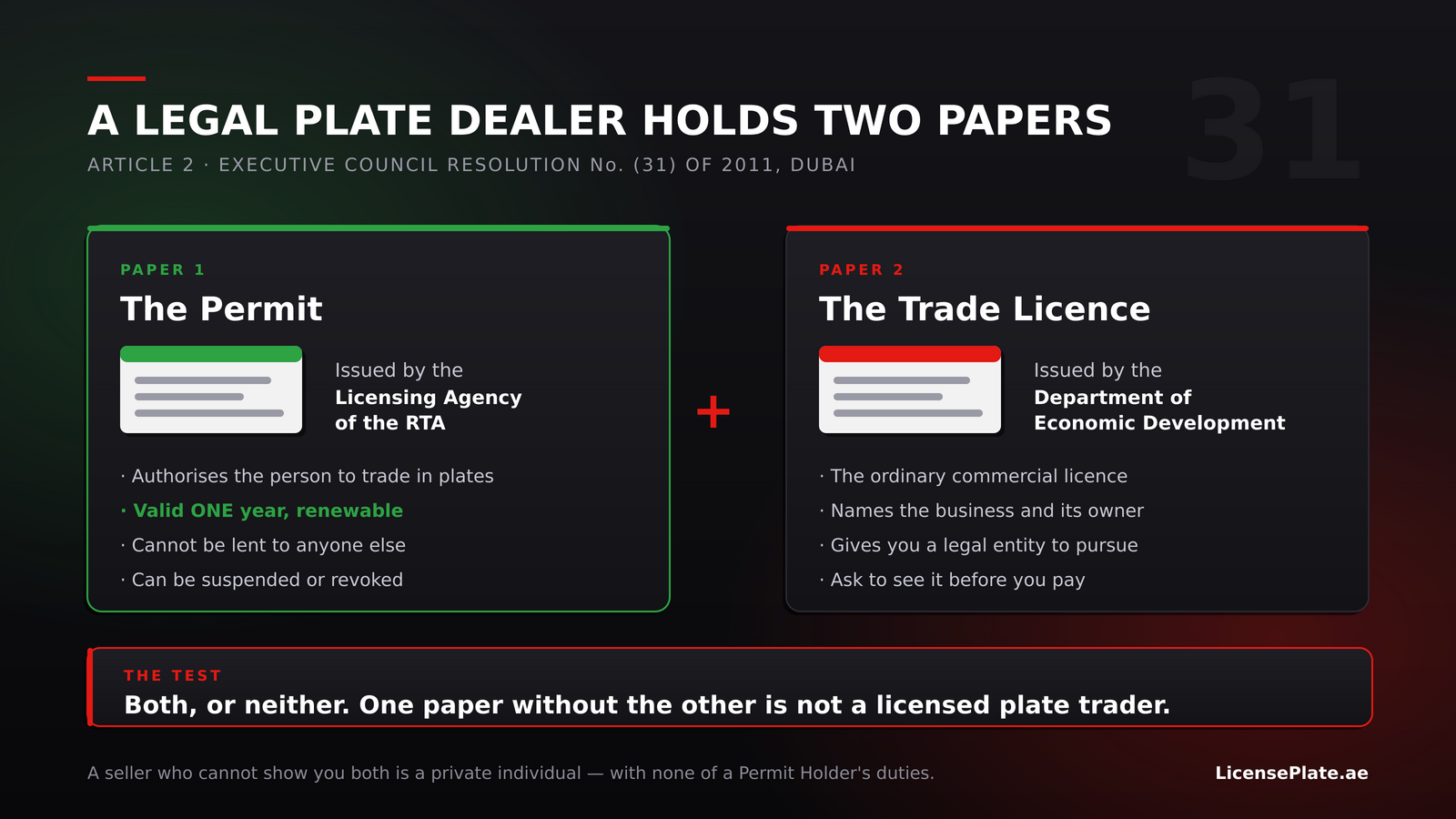
المادة 2(أ) لا لبس فيها: «لا يجوز لأي شخص مزاولة النشاط في الإمارة ما لم يحصل ذلك الشخص على تصريح من الوكالة ورخصة من دائرة التنمية الاقتصادية.»
الورقة 1 — تصريح الهيئة
وهو التصريح الخاصّ باللوحات. وتحدّد المادة 2(ب) عمره: «يكون التصريح صالحاً لمدّة سنة (1) واحدة قابلة للتجديد لمدّة مماثلة.» أما الشروط التفصيلية فيحدّدها رئيس مجلس الإدارة منفصلاً، ما يعني إمكان تشديدها دون قرار جديد.
وثلاث نتائج تهمّ المشتري. فالتصريح سنوي، ومن ثمّ قد ينقضي — فالتاجر الذي كان مرخّصاً حين تعاملت معه آخر مرّة قد لا يكون كذلك اليوم. وهو شخصي، وإعارته لغيره محظورة صراحةً. وهو قابل للإلغاء، وهذا هو سبب قيمته كإشارة ثقة أصلاً.
الورقة 2 — الرخصة التجارية من دائرة التنمية الاقتصادية
وهذه الرخصة التجارية العادية التي تحملها أي منشأة في دبي. وتهمّ هنا لسبب عادي لكنه حاسم: فهي تنشئ كياناً قانونياً باسم ومالك وعنوان. فإن ساءت معاملة، فالشركة المرخّصة شيء تستطيع ملاحقته. أما فرد برقم هاتف فأصعب بكثير.
والاختبار العملي بسيط، وهو الذي يتخطّاه معظم المشترين: اطلب رؤيتهما، قبل أن يتحرّك أي مال. فحامل التصريح الحقيقي لن يستاء. أما من يراوغ فقد أخبرك بما تحتاج معرفته.
الأشياء السبعة التي يحظرها القانون على التاجر
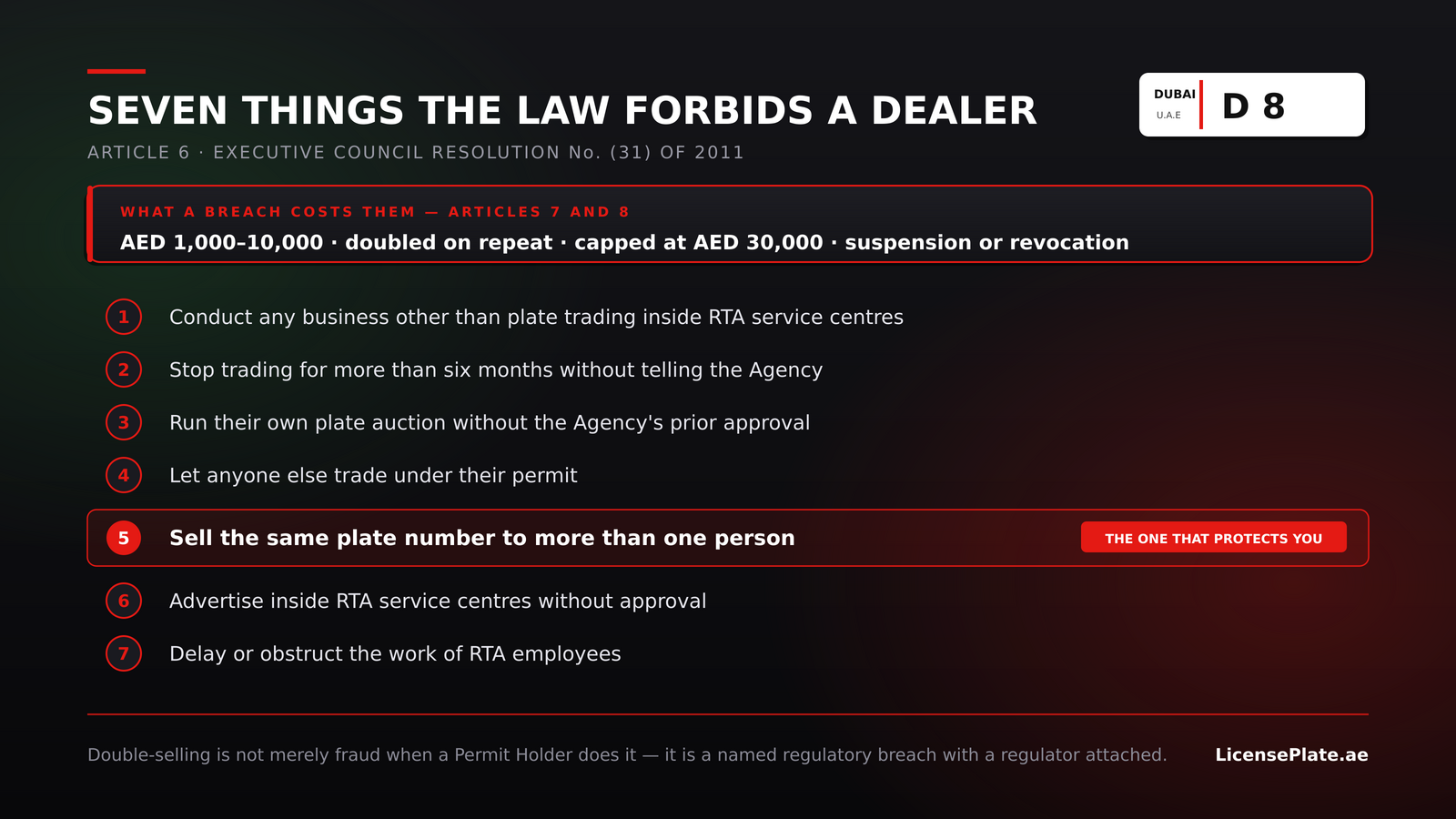
تلزم المادة 6 حاملي التصاريح بالتقيّد بشروط الوكالة، وتحدّد سلوكاً يجب ألّا يأتوه. فعلى حامل التصريح ألّا:
- يزاول أي نشاط غير النشاط المصرَّح به داخل مراكز خدمة الوكالة. فلا يجوز تشغيل أعمال جانبية داخل مقارّ الهيئة.
- يتوقّف أو يكفّ عن مزاولة النشاط لأكثر من ستّة (6) أشهر دون إخطار الوكالة. فالتوقّف يجب الإفصاح عنه.
- ينظّم مزادات لوحات أرقام مركبات دون الحصول على موافقة الوكالة المسبقة. فـ«المزاد» الخاص الذي يديره تاجر بلا موافقة ليس مزاداً منظَّماً.
- يسمح للغير باستخدام التصريح دون موافقة مسبقة. فالتصريح ليس امتيازاً تجارياً.
- يبيع لوحة رقم المركبة نفسها لأكثر من شخص (1) واحد.
- يعلن عن النشاط في مراكز خدمة الوكالة دون موافقة مسبقة.
- يعرقل أو يؤخّر عمل موظّفي الهيئة.
لماذا الخامس هو الذي يهمّك
البيع المزدوج — أخذ المال من مشتريين مقابل الرقم نفسه — هو أشدّ ما قد يصيب مشتري لوحة ضرراً، لأن الطرفين يعتقدان أنهما يملكان أصلاً لا يستطيع تسجيله إلّا واحد منهما.
وفي بيع خاص غير منظَّم، تلك مسألة احتيال مدني وجنائي، وعلاجك يمرّ عبر الإجراءات العادية الموصوفة في دليل احتيال اللوحات لدينا. أما حين يفعلها حامل تصريح، فهي إضافةً إلى ذلك مخالفة تنظيمية مسمّاة للرخصة التي تجيز له الاتّجار أصلاً. والوكالة لا تحتاج انتظار محكمة لتتحرّك على التصريح.
وذلك هو السبب الملموس والعملي لتفضيل طرف مقابل مرخّص. لا لأن التجّار المرخّصين أرفع أخلاقاً، بل لأن لديهم شيئاً محدّداً يخسرونه لا يملكه غريب.
كم تكلّفه المخالفة
تحدّد المادة 7 الأثر المالي: فمن يرتكب مخالفة مدرجة «يُعاقَب بالغرامة المبيّنة قرين تلك المخالفة»، و«عند تكرار المخالفة نفسها خلال سنة (1) واحدة… تُضاعَف قيمة الغرامة، على ألّا تتجاوز الغرامة ثلاثين ألف درهم (30,000 درهم).»
ومستويات الغرامات المذكورة لهذه المخالفات تتراوح من 1,000 إلى 10,000 درهم، مع آلية المضاعفة وسقف الـ30,000 درهم أعلاه.
والمادة 8 هي الجزء ذو الأنياب الحقيقية، لأن المال نادراً ما يكون الرادع لعمل من هذا النوع. فللوكالة أن:
- توقف التصريح (مذكور بما يصل إلى شهرين)؛
- توقف إجراءات التصرّف — أي أن تمنعهم من إتمام المعاملات؛
- تستبعدهم من المزادات؛
- تلغي التصريح كلّياً.
والاستبعاد من المزادات عقوبة تكاد تكون وجودية لتاجر لوحات، لأن المزادات هي حيث يُقتنى المخزون. وبموجب المادة 9، يجوز لحامل التصريح تقديم تظلّم كتابي خلال 30 يوماً، تبتّ فيه لجنة خلال 15 يوماً، وقرارها نهائي.
ملاحظة عن النطاق. قرار المجلس التنفيذي رقم (31) لسنة 2011 تشريع خاصّ بدبي ويحكم الاتّجار في إمارة دبي. أما بقيّة الإمارات فتنظّم أسواقها بنفسها والمتطلّبات تختلف. كما أن جداول الغرامات وشروط التصاريح تُحدَّد إدارياً وقد تُراجَع — عامل الأرقام هنا كالوضع وقت الكتابة وتأكّد من المتطلّبات الحالية لدى الهيئة.
حامل التصريح مقابل البائع الخاص مقابل السوق
كل نوع من الأطراف المقابلة يغيّر ما يحميك، وكم يكلّفك، وأي مخزون تستطيع بلوغه.
| حامل تصريح مرخّص | بائع خاص | إعلان في سوق | |
|---|---|---|---|
| خاضع لجهة تنظيمية مسمّاة | نعم — وكالة الترخيص التابعة للهيئة | لا | قواعد المنصّة، لا منظّم لوحات |
| لديه ما يخسره إن أساء التصرّف | التصريح والوصول إلى المزادات والرخصة | لا شيء بنيوي | الحساب والسمعة |
| الحصّة السنوية للوحات شبه المميّزة | معفى | ستّ في السنة | بحسب البائع |
| الوصول إلى المزادات المحدودة | نعم | لا | لا |
| السعر المعتاد | تجزئة — فالهامش دخله | الأكثر قابليةً للتفاوض | بين الاثنين |
| الأنسب لـ | القيمة العالية، أو رقم بعينه يصعب توفيره | المشترون الواثقون من عنايتهم الواجبة | مقارنة أوسع نطاق من الأسعار المطلوبة الحقيقية |
والخلاصة الصادقة: التاجر المرخّص يكلّف أكثر ويزيل مخاطر أكثر. فلرقم من خمس خانات ببضعة آلاف من الدراهم، قد لا تستحقّ تلك المقايضة الدفع. أما لرقم قصير بستّة أو سبعة أرقام، فتستحقّ عادةً. ومقارنتنا بين المزاد والبيع الخاص والسوق تعالج الجانب السعري بالتفصيل.
كيف تتحقّق من تاجر قبل أن تدفع
- اطلب تصريح الهيئة. تحقّق أنه باسم الشخص أو الشركة التي تتعامل معها، وتحقّق من تاريخ انتهائه. فمدّته سنة.
- اطلب الرخصة التجارية من دائرة التنمية الاقتصادية. أكّد أن الاسم التجاري يطابق التصريح والحساب البنكي المطلوب الدفع إليه.
- تحقّق من تطابق الأسماء الثلاثة. فالتصريح والرخصة التجارية والمستفيد ينبغي أن يكونوا الكيان نفسه. وعدم التطابق بين المنشأة المرخّصة والحساب الذي يستلم المال هو الهيكل الكلاسيكي للمشكلة.
- تأكّد من الهيئة إن كان المبلغ كبيراً. فالوكالة تصدر التصاريح؛ وهي المرجع في سريان أي منها.
- وثّق المعاملة كتابةً. الرقم، والرمز، والسعر، وما هو مشمول، ومن يتحمّل رسوم النقل.
- تحقّق من اللوحة نفسها باستقلال. فالتاجر المرخّص لا يلغي الحاجة إلى فحص الرقم — نفّذ قائمة العناية الواجبة ومسار التحقّق قبل الشراء في كل الأحوال.
- أتمم النقل كما ينبغي. فالملكية تنتقل عبر النظام لا بمصافحة — انظر كيف تنقل لوحة رقم في دبي وتشريح معاملة اللوحة كاملاً.
ما يفعله التاجر الجيّد لك بحقّ
ويجدر الإنصاف للتجارة، لأن الوسيط المنظَّم يُصوَّر غالباً كتكلفة محضة.
التوفير. يستطيع التاجر بلوغ مخزون لا تستطيعه، بما فيه المزادات المحدودة المغلقة أمام الجمهور والأرقام التي يحتفظ بها مالكون بهدوء ولا يعلنون عنها.
هامش الحصّة. ولأن حاملي التصاريح معفَون من سقف اللوحات الستّ السنوي، فبإمكانهم حيازة وتحريك حجم لا يستطيعه مشترٍ فرد بنيوياً.
معرفة السعر. فالتاجر الذي يتعامل أسبوعياً لديه معلومات أفضل عمّا يُحسَم به رمز ونمط خانات بعينهما من أي دليل منشور — بما فيه دليلنا. استخدم دليل الأسعار لدينا لتصل مطّلعاً، ثم عامل رقمه كرأي ثانٍ لا كنصّ مقدّس.
إدارة الإجراءات. فالنقل والتوقيت والأوراق روتين عنده ومناسبة عابرة عندك.
وما لا يفعله التاجر هو إعفاؤك من مسؤولية فحص الرقم، أو تخويلك تخطّي التفاوض. ودليل التفاوض لدينا ينطبق على البائعين المرخّصين بقدر ما ينطبق على الأفراد — بل أكثر ربما، لأن سعر التاجر المطلوب يتضمّن هامشاً بحكم التعريف.
الرايات الحمراء
- لا يستطيع أو لا يريد إظهار تصريح ورخصة تجارية. أكبر إشارة مفردة.
- طلب الدفع إلى حساب شخصي بينما يُفترَض أنك تشتري من شركة.
- الضغط للدفع قبل التحقّق من الرقم. فالإلحاح أقدم أسلوب موجود.
- «مزاد» يديره التاجر بنفسه. فتنظيم مزادات لوحات دون موافقة الوكالة المسبقة محظور صراحةً.
- الاتّجار بتصريح شخص آخر. محظور صراحةً كذلك — فإن كان التصريح باسم شخص مختلف، فانصرف.
- لا سجلّ مكتوب لما تشتريه وبأي سعر.
- التمنّع عن إتمام النقل عبر القنوات الرسمية.
ولفهرس الأساليب الأوسع المستخدَمة ضدّ مشتري اللوحات، انظر كيف تتجنّب عمليات احتيال لوحات الأرقام في الإمارات.
ماذا تفعل إن أساء إليك تاجر
وسبب أهمّية كل هذا أنه يمنحك مساراً ثانياً لا وجود له في مواجهة بائع خاص.
- احفظ الأدلّة. المراسلات المكتوبة، والإعلان، والإيصالات، وسجلّات التحويل، ونسخ التصريح والرخصة إن حصلت عليها.
- أثِر الأمر مع التاجر كتابةً. فالمنشأة المرخّصة بتصريح قابل للتجديد لديها حافز قوي لحلّ الأمور بهدوء.
- بلّغ وكالة الترخيص التابعة للهيئة. فالوكالة تصدر التصريح وتلغيه وتنفّذ المادة 6. والشكوى التنظيمية مسار متمايز عن الدعوى المدنية.
- بلّغ الشرطة عن أي سلوك جنائي. فاللوحات المزوّرة أو المغيَّرة وبعض عمليات نقل اللوحات مسائل جنائية — انظر دليلنا لـمخالفات وغرامات لوحات الأرقام في الإمارات.
- لاحق الدعوى المدنية منفصلةً. فالإجراء التنظيمي يعاقب التاجر؛ ولا يعيد إليك مالك تلقائياً.
قائمة الصفحة الواحدة
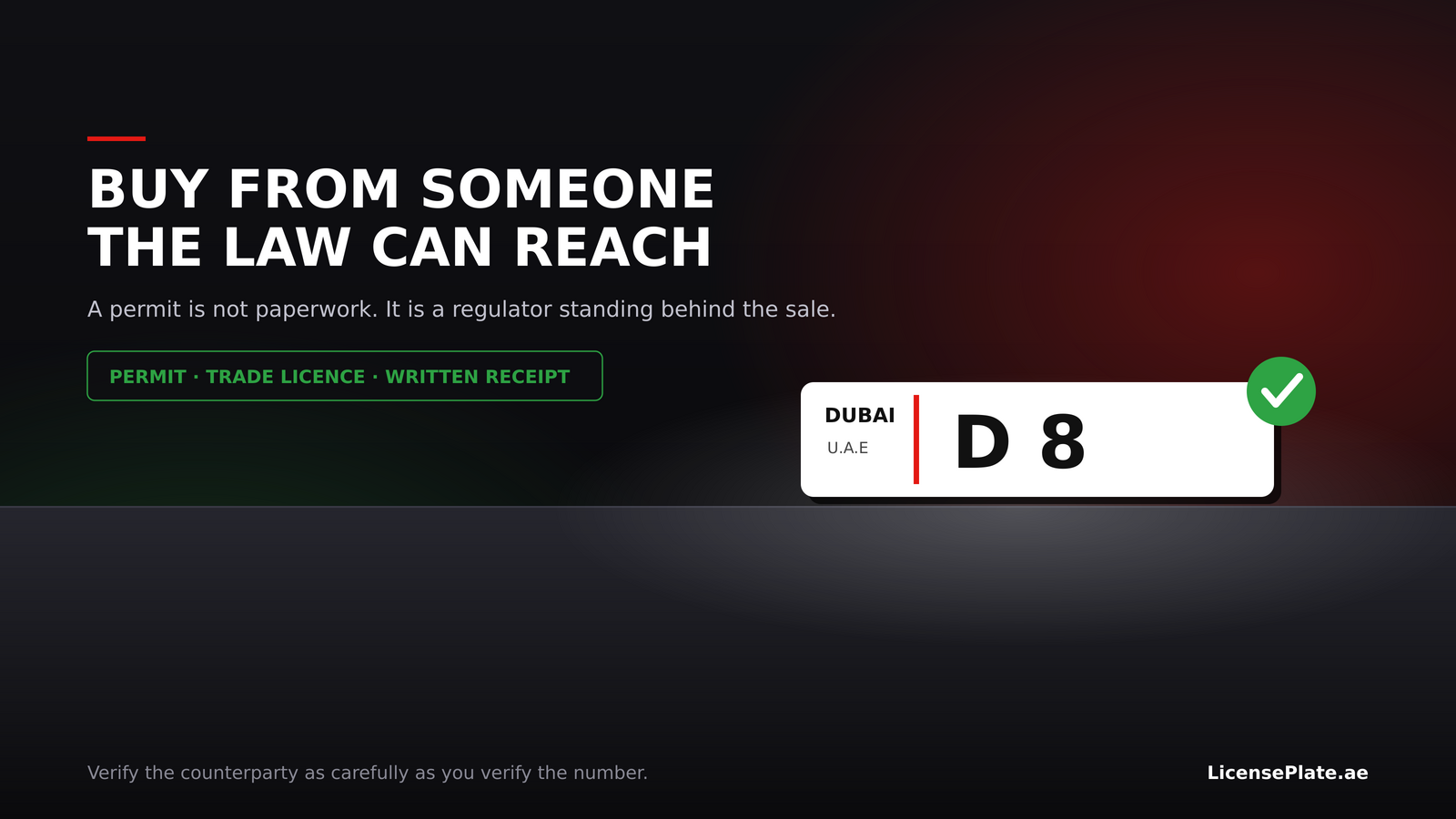
- تصريح الهيئة مرئي، باسم التاجر، وغير منتهٍ.
- الرخصة التجارية مرئية ومطابقة للتصريح.
- حساب المستفيد يطابق الكيان المرخّص.
- الرقم موثَّق باستقلال.
- السعر والرمز والرقم وتقسيم الرسوم متّفق عليها كتابةً.
- النقل أُتمّ عبر القنوات الرسمية لا بالثقة.
- شهادة الملكية صادرة ومفحوصة باسمك.
الأسئلة الشائعة
ما حامل التصريح في سوق اللوحات في دبي؟
شخص مخوَّل بموجب قرار المجلس التنفيذي رقم (31) لسنة 2011 لمزاولة نشاط الاتّجار بلوحات أرقام المركبات في دبي. ويصدر التصريح عن وكالة الترخيص التابعة للهيئة.
هل يحتاج تجّار لوحات الأرقام في دبي رخصة؟
نعم. تشترط المادة 2 تصريحاً من وكالة الترخيص التابعة للهيئة ورخصةً من دائرة التنمية الاقتصادية معاً. وواحدة دون الأخرى لا تكفي.
كم مدّة صلاحية تصريح الاتّجار باللوحات؟
سنة واحدة، قابلة للتجديد لمدّة مماثلة.
هل يجوز لتاجر أن يدع غيره يستخدم تصريحه؟
لا. فالسماح للغير باستخدام التصريح دون موافقة الوكالة المسبقة محظور صراحةً بموجب المادة 6.
هل بيع التاجر اللوحة نفسها لشخصين غير قانوني؟
نعم. تحظر المادة 6 صراحةً بيع لوحة رقم المركبة نفسها لأكثر من شخص. وبالنسبة إلى حامل تصريح، هذه مخالفة تنظيمية فوق أي مسؤولية مدنية أو جنائية.
ما عقوبات تاجر اللوحات الذي يخالف القواعد؟
غرامات مذكورة من 1,000 إلى 10,000 درهم، تتضاعف عند تكرار المخالفة نفسها خلال سنة وبسقف 30,000 درهم، إضافةً إلى احتمال إيقاف التصريح، وإيقاف المعاملات، والاستبعاد من المزادات، أو الإلغاء.
هل تستطيع الهيئة منع تاجر من المزايدة في المزادات؟
نعم. فالاستبعاد من المزادات أحد التدابير المتاحة للوكالة بموجب المادة 8.
هل يستطيع تاجر إدارة مزاد لوحات خاص به؟
ليس دون موافقة الوكالة المسبقة. فتنظيم مزادات لوحات بدونها محظور.
كيف أفحص ما إذا كان تاجر لوحات مرخّصاً؟
اطلب رؤية تصريح الهيئة والرخصة التجارية من دائرة التنمية الاقتصادية، وأكّد الأسماء وتاريخ الانتهاء، وتحقّق أن المستفيد يطابق الكيان المرخّص، وتأكّد من الهيئة حين يبرّر المبلغ ذلك.
هل الشراء من تاجر مرخّص أأمن من بائع خاص؟
يضيف طبقة. فحامل التصريح لديه رخصة قابلة للتجديد والإلغاء ووصول إلى المزادات يخسرها، وهو خاضع لمنظّم. وتلك رافعة لا تملكها في مواجهة فرد — وإن كان عليك التحقّق من الرقم بنفسك في كل الأحوال.
هل يدفع التجّار أكثر أم أقلّ من الجمهور في المزاد؟
يستطيع التجّار بلوغ المزادات المحدودة المغلقة أمام الجمهور وهم معفَون من سقف اللوحات الستّ السنوي على الأرقام شبه المميّزة، ما يتيح لهم العمل بحجم لا يستطيعه المشترون الأفراد.
هل التجّار أغلى من الشراء الخاص؟
عموماً نعم، لأن هامشهم هو دخلهم. فأنت تدفع مقابل التوفير وإدارة الإجراءات وطرف مقابل منظَّم.
هل ينطبق هذا في أبوظبي وبقيّة الإمارات؟
لا. فالقرار 31 لسنة 2011 تشريع خاصّ بدبي. وبقيّة الإمارات تنظّم أسواق اللوحات لديها منفصلةً والمتطلّبات تختلف.
هل يستطيع تاجر أن يتوقّف عن الاتّجار ويختفي ببساطة؟
الكفّ عن النشاط لأكثر من ستّة أشهر دون إخطار الوكالة هو بذاته فعل محظور بموجب المادة 6.
ماذا أفعل إن أساء إليّ تاجر مرخّص؟
احفظ الأدلّة، وأثِر الأمر كتابةً، وتقدّم بشكوى إلى وكالة الترخيص التابعة للهيئة، وبلّغ الشرطة عن أي سلوك جنائي، ولاحق أي دعوى مدنية منفصلةً.
الخلاصة النهائية
قرّرت دبي، منذ 2011، أن الاتّجار بلوحات الأرقام مهمّ بما يكفي لترخيصه. فسمّت النشاط، وعيّنت وكالة الترخيص التابعة للهيئة منظّماً، واشترطت رخصة ثانية من دائرة التنمية الاقتصادية، ووضعت ساعة سنة واحدة على التصريح، وسردت سبعة أشياء لا يجوز للتاجر فعلها، وربطت بها غرامات وإيقافاً وإلغاءً.
ولا يكاد شيء من ذلك يظهر في طريقة شراء اللوحات وبيعها فعلاً، لأن المشترين يركّزون كلّياً على الرقم. والاختلال هو الفرصة: طرح سؤالين — هل لي أن أرى تصريحك، وهل لي أن أرى رخصتك التجارية — ينقلك إلى فئة مخاطر مختلفة تماماً، ولا يكلّف شيئاً.
تحقّق من الرقم. ثم تحقّق من الشخص الذي يبيعه.
وحين تفضّل رؤية الأسعار المطلوبة الحقيقية عبر السوق كلّها أولاً، تصفّح أرقام اللوحات المعروضة للبيع في الإمارات أو اذهب مباشرةً إلى أرقام دبي.