

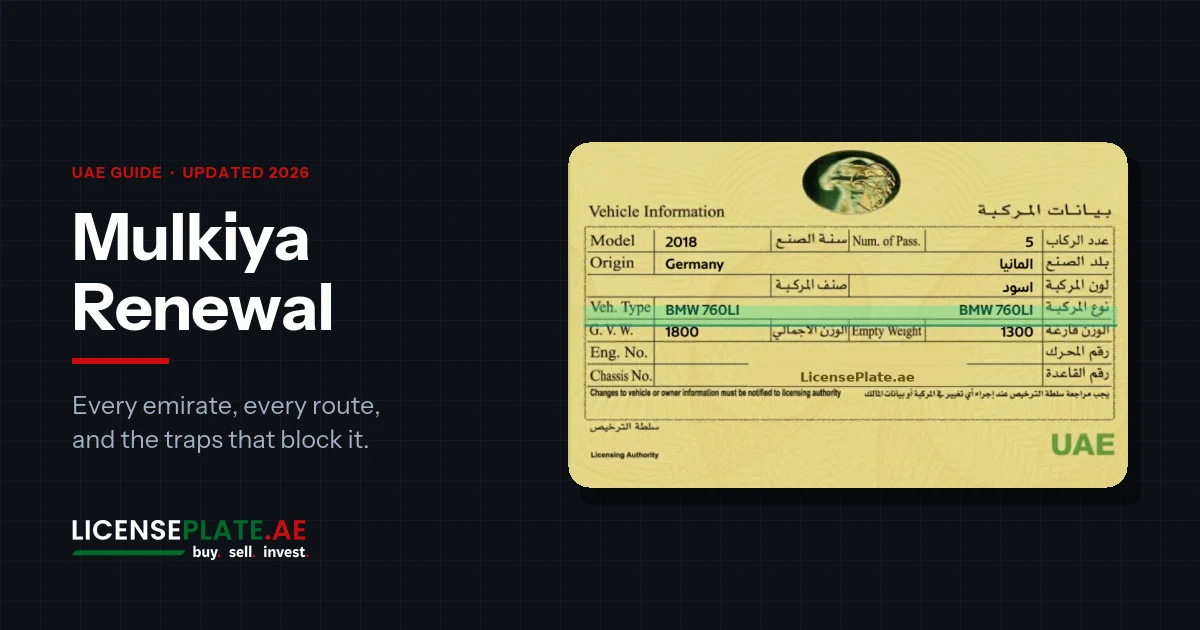
كيف تجدّد تسجيل سيارتك في دبي (2026) — وفي كل إمارة أخرى
تجديد ملكيتك في دبي يستغرق نحو خمس عشرة دقيقة إلكترونياً، وفي معظم السنوات هو بهذه البساطة فعلاً: سدّد مخالفاتك، وتأكّد أن تأمينك مرتبط، وادفع الرسم، وانتهيت. والتجديد نفسه ليس حيث يعلق الناس. إنهم يعلقون في الأشياء المرتبطة بالتجديد، ولعدد مفاجئ من الناس، الشيء المرتبط هو لوحة الرقم. لوحة في منتصف نقل. أو لوحة قصدوا الاحتفاظ بها من سيارة يبيعونها. أو لوحة خلف مخالفة تجمّد الملفّ كلّه. أو لوحة تالفة ترسب في الفحص بهدوء.
وهذا الدليل ينجز شرح التجديد المعياري كما ينبغي، بالرسوم الموثّقة لعام 2026، ومهلة السماح، وقاعدة الفحص، وطرق التجديد الثلاث. ثم ينجز الجزء الذي لا يكلّف أي دليل تجديد آخر نفسه به: ما الذي تفعله لوحتك فعلاً خلال كل هذا، وكيف تمنع لوحة ثمينة من أن تصبح سبب تعثّر تجديدك. وإن كانت لوحتك تساوي أكثر من خطأ تقريب، فذلك الجزء الثاني هو ما يهمّ.
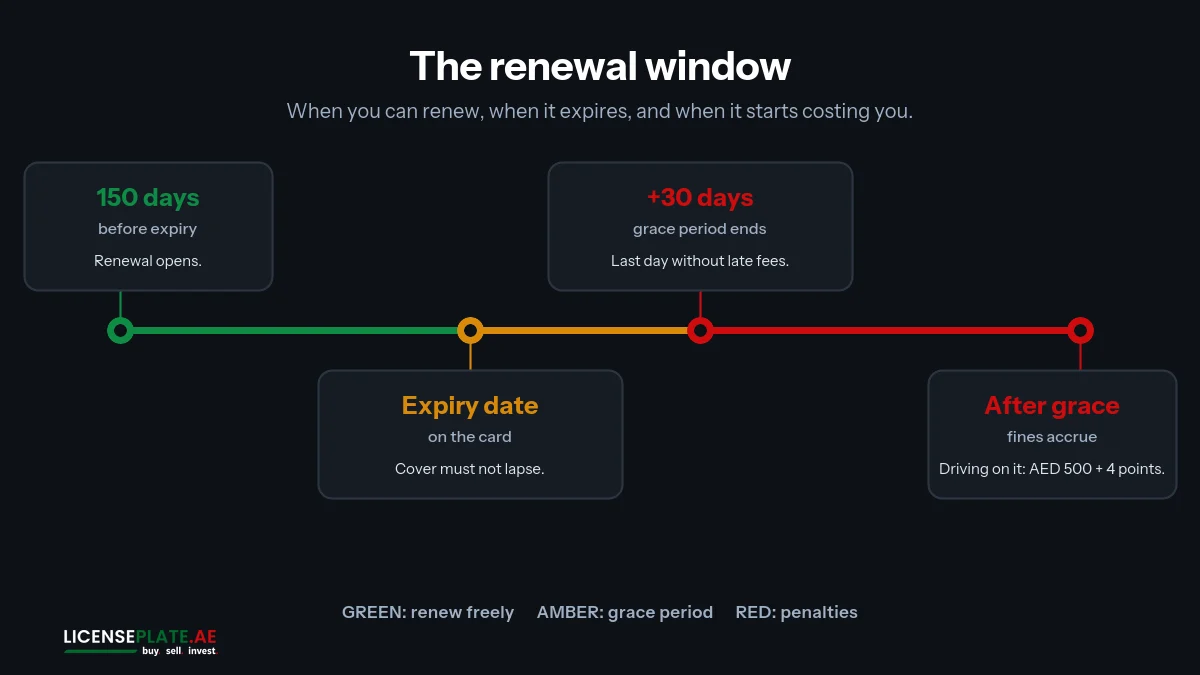
الإجابة السريعة: لتجديد تسجيل سيارتك في دبي، سدّد كل المخالفات المرورية ومستحقّات سالك، وتأكّد أن تأمين مركبتك ساري ومرتبط بالهيئة، واجتز فحصاً فنّياً إن كانت السيارة أقدم من ثلاث سنوات، ثم أتمم التجديد عبر تطبيق Dubai Drive، أو rta.ae، أو كشك ذكي، أو مركز فحص معتمد. والكلفة المعيارية للمركبة الخفيفة نحو 350 إلى 420 درهماً شاملةً، إضافةً إلى نحو 150 إلى 170 درهماً للفحص. ويمكنك التجديد قبل 150 يوماً من الانتهاء، وهناك مهلة سماح 30 يوماً بعد الانتهاء قبل تطبيق الغرامات. ولوحتك الحالية تبقى معك خلال التجديد.
الخلاصة السريعة
خمسة أمور تعرفها قبل التجديد
• التجديد سنوي والبطاقة سارية اثني عشر شهراً. يمكنك التجديد قبل 150 يوماً من الانتهاء، ولديك مهلة سماح 30 يوماً بعده.
• في الإمارات نظامان للتجديد لا سبعة. دبي تجدّد عبر هيئة الطرق والمواصلات، وبقية الإمارات عبر بوابة المركبات EVG أو تطبيق وزارة الداخلية، وأبوظبي عبر TAMM أيضاً.
• ثلاثة أمور تحجب التجديد دائماً: غرامات أو رسوم سالك غير مسدّدة، وتأمين ناقص أو غير مربوط إلكترونياً، وفحص فني راسب أو غير منجز.
• الفحص يبدأ من السنة الرابعة. المركبة الأحدث من ثلاث سنوات معفاة، وشهادة الفحص صالحة 30 يوماً فقط بعد إصدارها.
• اللوحة هي الجزء الذي يتعثّر. لوحة في منتصف نقل، أو لوحة نويت الاحتفاظ بها من سيارة تبيعها، أو لوحة تالفة — كلّ منها يعطّل تجديداً روتينياً.
محتويات الصفحة
التجديد نفسه: ما هو ومتى تنجزه · ما تحتاجه قبل أن تبدأ · طرق التجديد الثلاث · ما يكلّفه فعلاً · التجديد خارج دبي: في أي نظام أنت · التجديد حسب الإمارة: الجهة والبوابة وما الذي يتغيّر · مسار EVG خطوة بخطوة · أين تدخل لوحتك في هذا · لماذا تُحجب التجديدات، وكيف تفكّ الحجب · أخطاء شائعة يرتكبها الناس عند التجديد · الأسئلة الشائعة
التجديد نفسه: ما هو ومتى تنجزه
تسجيل المركبة في دبي، الملكية، ساري لسنة واحدة ويجب تجديده كل اثني عشر شهراً. والقيادة بملكية منتهية تعرّضك لغرامة 500 درهم، وأربع نقاط سوداء، واحتمال حجز المركبة سبعة أيام بموجب قانون المرور الاتحادي. كما ينقضي تأمينك فعلياً لحظة انتهاء التسجيل بعد مهلة السماح، ما ينقل بهدوء كلفة أي حادث بأكملها إليك. وهذه التركيبة هي لماذا لا يكون التجديد اختيارياً ولا يستحقّ التأخير.
يمكنك التجديد مبكّراً. تتيح الهيئة التجديد قبل 150 يوماً من تاريخ الانتهاء. ولا عقوبة على التجديد المبكّر ولا جانب سلبي، فإن كنت مسافراً أو تريد ببساطة شطبه من قائمتك، فإنجازه مسبقاً هو الحركة الأنظف.
هناك مهلة سماح، لكن افهم ما تغطّيه وما لا تغطّيه. بعد الانتهاء تحصل على مهلة سماح 30 يوماً يمكنك خلالها التجديد دون رسوم تأخير، ومعظم وثائق التأمين مكتوبة لـ 13 شهراً تحديداً لتغطية هذه النافذة. وما لا تفعله مهلة السماح هو جعل الاستمرار في القيادة قانونياً إلى أجل غير مسمّى. فتفويت الثلاثين يوماً يبدأ تراكم رسم تأخير على التسجيل نفسه. وهذا رسم مختلف عن غرامة القيادة البالغة 500 درهم المذكورة أعلاه، وكثيراً ما يُخلط بينهما على الإنترنت — راجع الجدول على بوابة الهيئة بدل الاعتماد على رقم منشور في مقال، وإن انقضت الملكية لأكثر من سنة توقّف التجديد عن كونه مهمّة إلكترونية بسيطة وصار عملية حضورية في مركز رئيسي للهيئة، وأحياناً بتسجيل موسوم للإلغاء.
ما تحتاجه قبل أن تبدأ
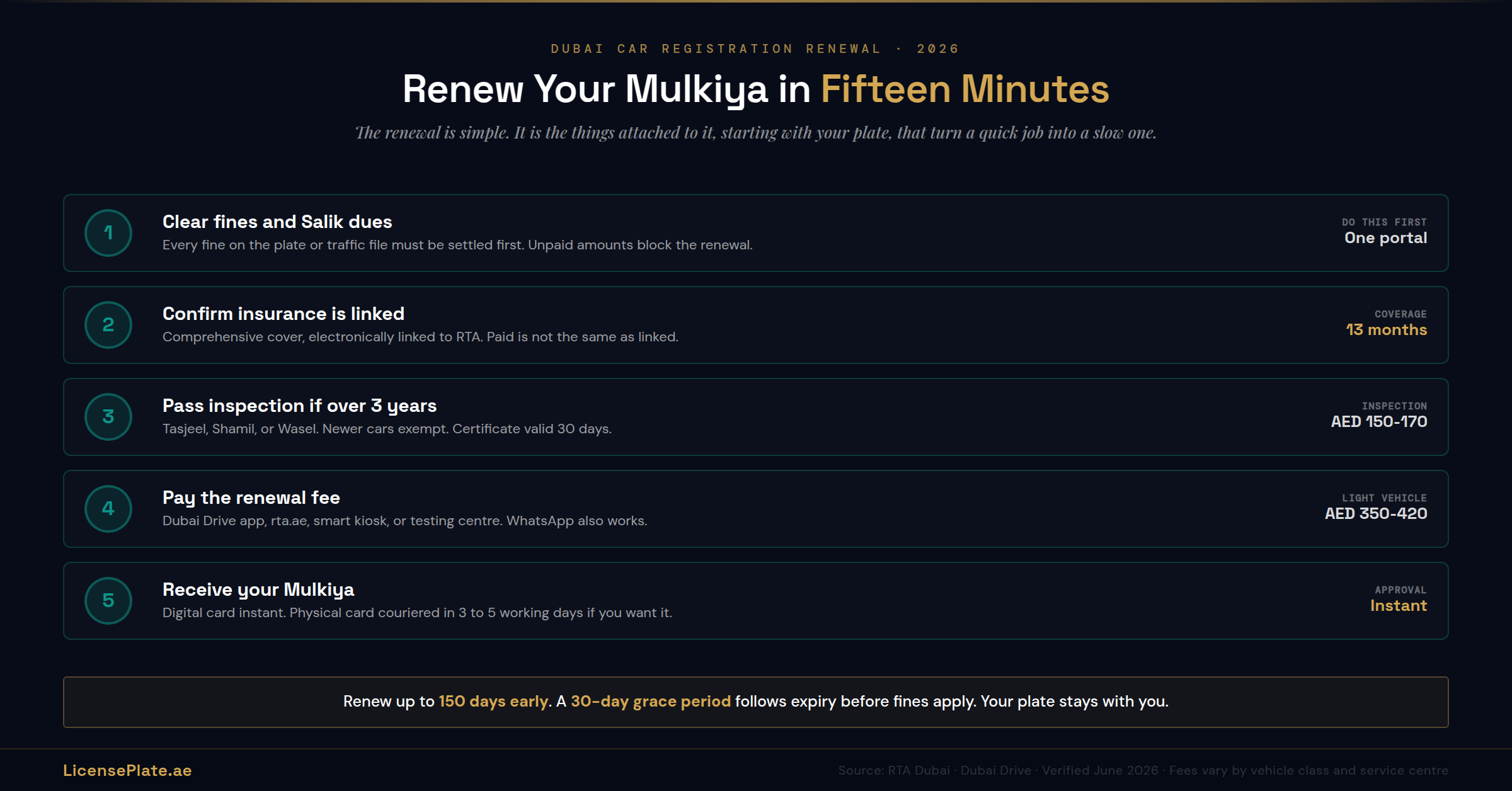
جهّز هذه ويجري التجديد دون انقطاع. وفوّت واحداً فيرتدّك النظام في منتصف الطريق.
تأمين مركبة ساري، ومرتبط بالهيئة. هذا هو العائق الصامت الأشيع. فالهيئة تشترط تغطية شاملة، مكتوبة عادةً لـ 13 شهراً لتجسير نافذة التجديد، ويجب أن تكون مرتبطة إلكترونياً بنظام الهيئة. وإن تجدّد تأمينك ولم يتحدّث الربط، أخفق التجديد برسالة خطأ غير مفيدة. تأكّد أن الربط حيّ قبل أن تبدأ، لا بعد أن يرفضك النظام.
فحص فنّي مجتاز، إن كانت السيارة أقدم من ثلاث سنوات. فالمركبات الأقدم من ثلاث سنوات تحتاج فحص صلاحية للطريق في مركز معتمد مثل تسجيل أو شامل أو واصل قبل التجديد. والسيارات الأحدث معفاة. وشهادة الفحص سارية 30 يوماً، فلا تحصل عليها مبكّراً جداً قبل التجديد. والفحص يكلّف نحو 150 إلى 170 درهماً لمركبة خفيفة.
مخالفات ومستحقّات سالك مسدّدة. كل مخالفة مرورية مستحقّة، ورسم سالك، وغرامة مواقف بلدية مرتبطة بلوحتك أو ملفّك المروري يجب تسويتها أولاً. والنظام يفحص مقابل اللوحة ورقم الملفّ، وأي مبلغ غير مسدّد يمنع التجديد تماماً. ويغطّي دليل فحص المخالفات المرورية الإماراتية كيفية إيجاد وتسديد كل مخالفة عبر الإمارات السبع من بوابة واحدة، وهي الخطوة التي تنجزها قبل أن تفتح صفحة التجديد أصلاً.
الهوية الإماراتية والملكية الحالية. وثائق هوية ومركبة معيارية. وإن كان أحد يجدّد نيابةً عنك أثناء سفرك، فيحتاج هذه إضافةً إلى التفويض المطلوب.
طرق التجديد الثلاث
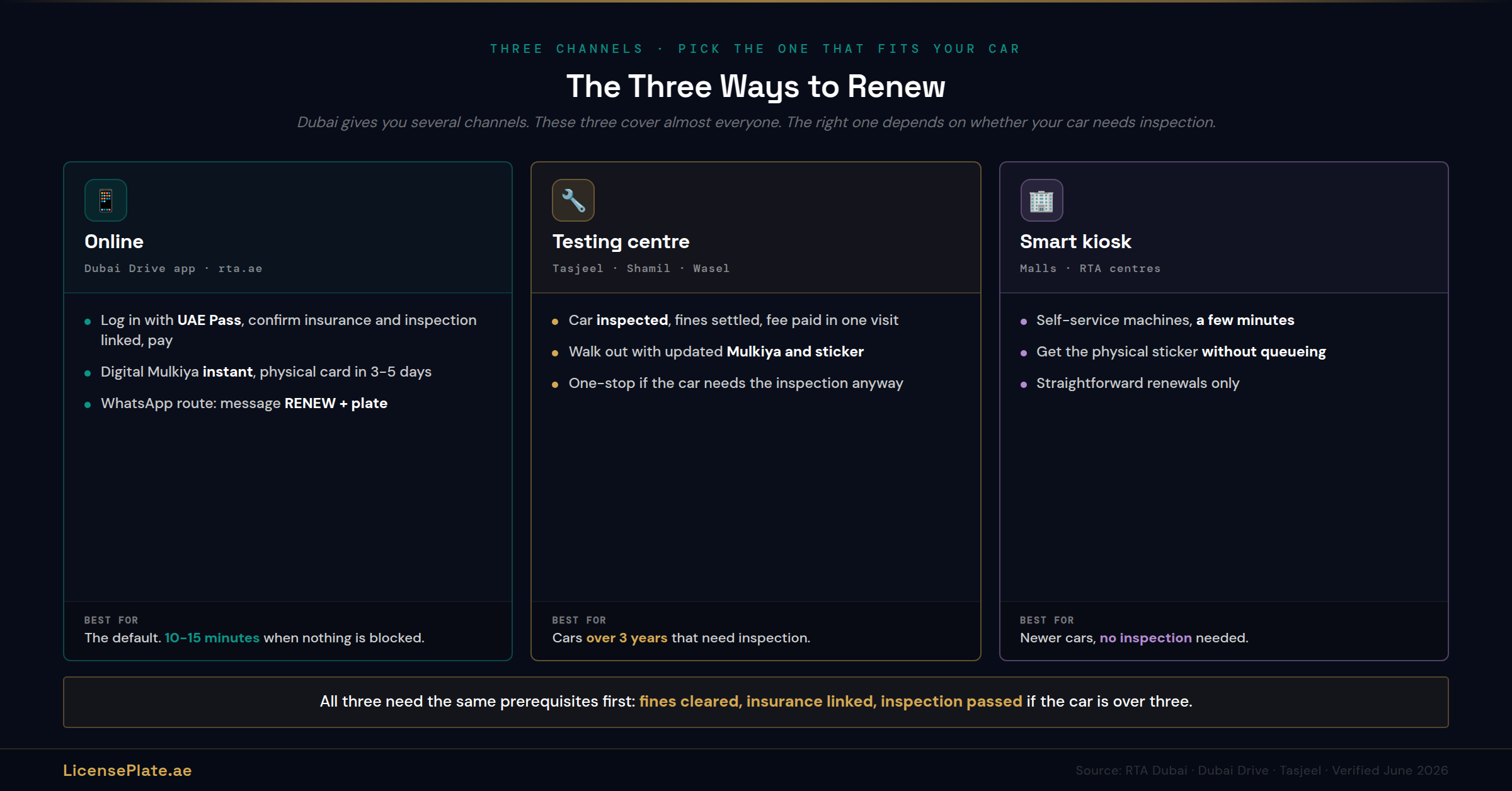
تمنحك دبي عدة قنوات. وثلاث تغطّي الجميع تقريباً.
إلكترونياً، عبر Dubai Drive أو rta.ae
الخيار الافتراضي لمعظم الناس. سجّل الدخول بالهوية الرقمية UAE Pass أو بحسابك لدى الهيئة، وافتح خدمات ترخيص المركبات، واختر تجديد التسجيل، وتأكّد أن التأمين والفحص مرتبطان، وادفع الرسم. والموافقة فورية عملياً وتحصل على ملكية رقمية على الفور، والبطاقة المادية تُشحن خلال ثلاثة إلى خمسة أيام عمل إن أردتها. وهناك مسار عبر واتساب أيضاً: أرسل RENEW متبوعاً برقم لوحتك إلى رقم خدمة الهيئة، وسيرشدك. ومن البداية إلى النهاية، التجديد الإلكتروني مهمّة من عشر إلى خمس عشرة دقيقة حين لا يكون شيء محجوباً.
في مركز فحص معتمد
إن كانت سيارتك تحتاج فحصاً، فهذا هو خيار المحطّة الواحدة. اذهب إلى مركز تسجيل أو شامل أو واصل، وتُفحص السيارة، وتسوّي أي مخالفات أو مستحقّات سالك في الموقع، وتدفع رسم التجديد، وتخرج بالملكية المحدَّثة وملصق تسجيل جديد. وللسيارة الأقدم من ثلاث سنوات التي تحتاج الفحص على أي حال، إنجاز كل شيء في زيارة واحدة غالباً أسرع من تقسيم الفحص والتجديد الإلكتروني إلى مهمّتين.
الكشك الذكي
أكشاك الخدمة الذاتية في المولات ومراكز الهيئة تتولّى التجديدات المباشرة في دقائق قليلة. والأفضل حين لا تحتاج سيارتك فحصاً وتريد فقط الملصق المادي دون الوقوف في طابور عند طاولة.
ما يكلّفه فعلاً
الرقم العنواني الذي يتذكّره الناس نحو 350 درهماً، لكن الرقم الشامل يعتمد على المركبة وعلى ما إذا كان الفحص مطلوباً. وإليك التفصيل الصادق لمركبة خصوصية خفيفة في 2026.
رسم التجديد: نحو 350 إلى 420 درهماً شاملةً لمركبة خصوصية خفيفة، تغطّي رسم التسجيل إضافةً إلى رسوم الإصدار والمعرفة والابتكار المعيارية لدى الهيئة.
الفحص: نحو 150 إلى 170 درهماً لمركبة خفيفة أقدم من ثلاث سنوات. والسيارات الأحدث تتخطّاه.
المركبات الثقيلة والدرّاجات النارية: جداول مختلفة. فالمركبات الثقيلة أعلى، شائعاً من 400 إلى 650 درهماً إضافةً إلى رسم فحص أكبر. والدرّاجات النارية أدنى عادةً.
استبدال اللوحة، إن لزم: اللوحة التالفة أو المفقودة تُستبدل بنحو 35 درهماً للوحة القصيرة و50 درهماً للطويلة، إضافةً إلى 20 درهماً رسم الابتكار. وهذا يهمّ عند التجديد لأن اللوحة التالفة يمكن أن تعطّل العملية، وهو الجسر إلى الجزء من هذا الدليل الذي يعني مالكي اللوحات فعلاً. وهيكل الرسوم الرسمي الكامل عبر كل خدمات اللوحات موضّح في دليل تكاليف ورسوم لوحات دبي.
التجديد خارج دبي: في أي نظام أنت
يعمل تجديد تسجيل المركبات في الإمارات على نظامين اثنين، لا سبعة. فدبي تخدمها هيئة الطرق والمواصلات وحدها، أما الإمارات الست الأخرى فتخدمها بوابة المركبات الاتحادية Emirates Vehicle Gate، الذراع الإلكترونية لوزارة الداخلية، مع إمكانية الوصول إلى أبوظبي عبر TAMM أيضاً. وما يحدّد أيّهما يخصّك حقيقة واحدة: أين سُجّلت المركبة، لا أين تسكن ولا أين تقف حين تجدّد. وتلخّص الحكومة الاتحادية القنوات على البوابة الرسمية لدولة الإمارات.
وهذا التمييز أهمّ ممّا يبدو. فمقيم في دبي تحمل سيارته لوحة شارقة لا يجدّد لدى الهيئة، ولن يجد المركبة مدرجة في تطبيق دبي درايف أصلاً. البطاقة في درج السيارة تعطيك الجواب: مكان الإصدار المطبوع عليها هو الجهة التي تجدّد لديها. وإن لم تكن واثقاً ممّا تنظر إليه، كل حقل في الملكية مشروح هنا.
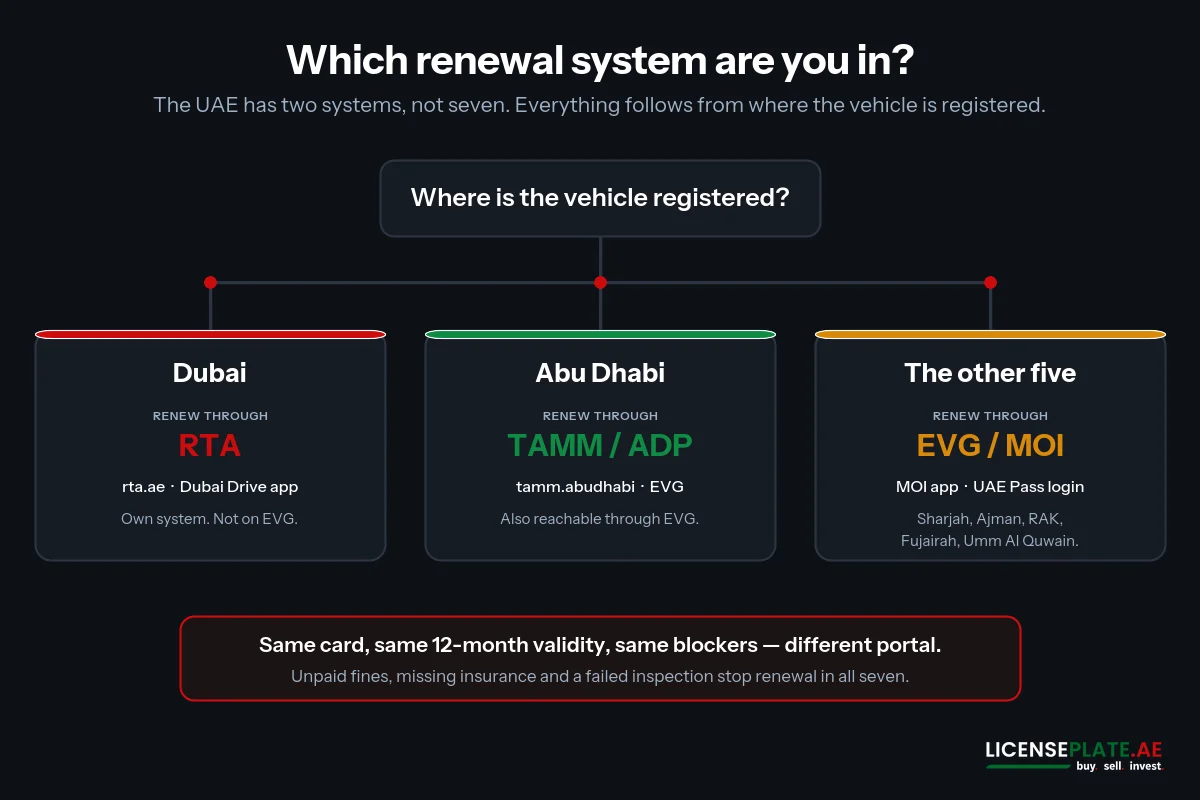
الخلاصة: البطاقة وسريان الاثني عشر شهراً وقاعدة الفحص وأسباب الحجب واحدة في كل مكان. البوابة وحدها تتغيّر.
لا يتغيّر شيء في مركبتك حين تعبر حدود إمارة. الشيء الوحيد الذي يتغيّر هو الموقع الذي سيعترف بوجود لوحتك.
التجديد حسب الإمارة: الجهة والبوابة وما الذي يتغيّر
التجديد حسب الإمارة مسألة توجيه لا مسألة قواعد. والجدول أدناه هو الخريطة كاملة: الجهة التي تملك ملفّك، والبوابة التي ستتلقّى دفعتك، وما إذا كانت تلك الإمارة على بوابة EVG. ودبي هي الاستثناء الوحيد في الدولة — لها نظامها الخاص وليست على EVG.
خريطة التوجيه
أين تجدّد كل إمارة
الفحص الفني مطلوب من السنة الرابعة في الإمارات السبع جميعها.
| الإمارة | الجهة | البوابة / التطبيق | على EVG؟ |
|---|---|---|---|
| دبي | هيئة الطرق والمواصلات | rta.ae · تطبيق دبي درايف | لا |
| أبوظبي | شرطة أبوظبي عبر TAMM | tamm.abudhabi · EVG | نعم |
| الشارقة | وزارة الداخلية | EVG · تطبيق MOI | نعم |
| عجمان | وزارة الداخلية | EVG · تطبيق MOI | نعم |
| رأس الخيمة | وزارة الداخلية | EVG · تطبيق MOI | نعم |
| الفجيرة | وزارة الداخلية | EVG · تطبيق MOI | نعم |
| أم القيوين | وزارة الداخلية | EVG · تطبيق MOI | نعم |
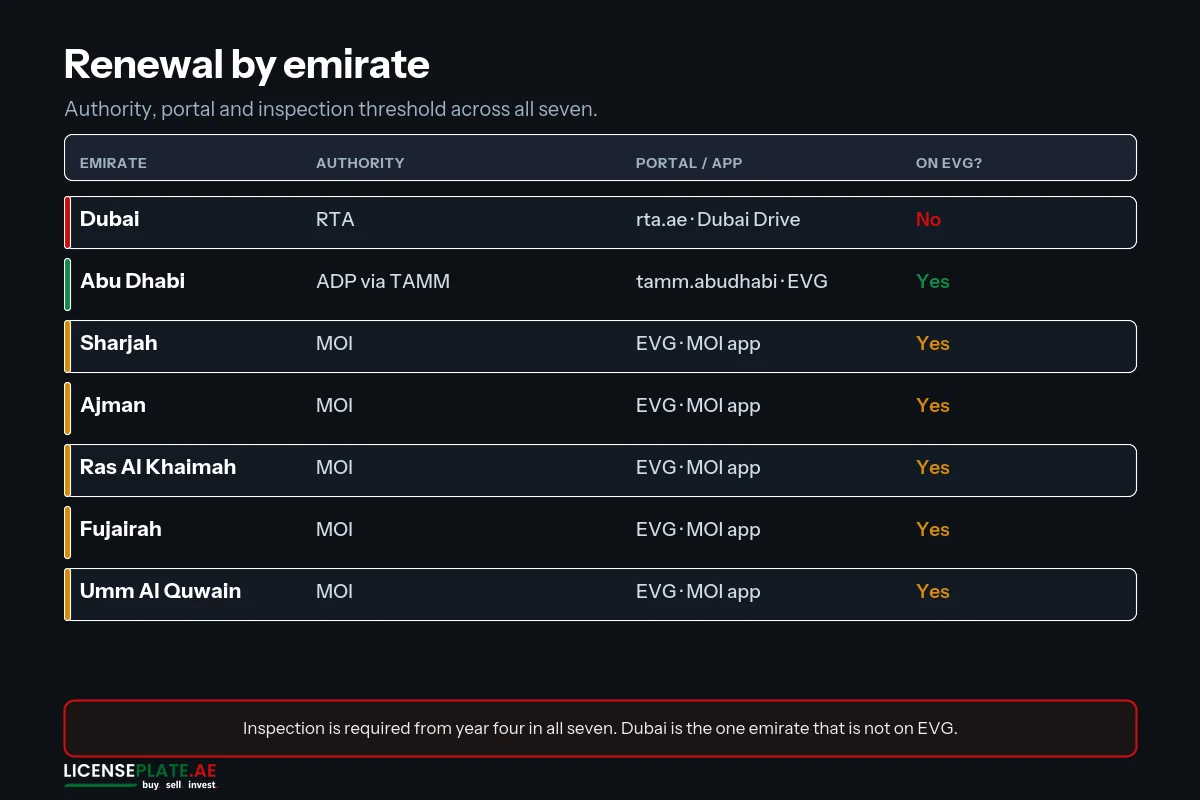
مدخلان يستحقّان ملاحظة. أبوظبي لها بابان: TAMM منصّة الإمارة نفسها وهي الأكثر استخداماً بين المقيمين، وEVG تصل إلى الملف ذاته اتحادياً، وكلاهما يُنجز التجديد. وإن كنت تنقل لوحة لا تجدّدها، فـقواعد النقل في أبوظبي تختلف مرة أخرى. والإمارات الشمالية الخمس — الشارقة وعجمان ورأس الخيمة والفجيرة وأم القيوين — متطابقة عملياً: البوابة ذاتها، والمستندات ذاتها، والتسلسل ذاته.
مسار EVG خطوة بخطوة
بوابة المركبات Emirates Vehicle Gate هي المنصّة الإلكترونية للمركبات لدى وزارة الداخلية، وهي المكان الذي تجدّد فيه ست إمارات من أصل سبع. والتسلسل أدناه يستغرق نحو عشر دقائق حين تكون الأوراق جاهزة، ويتوقّف عند الخطوة الثانية حين لا تكون.
- سدّد كل غرامة أولاً. الغرامات المرورية ورسوم سالك ومخالفات المواقف المرتبطة باللوحة أو بـملفّك المروري يجب تسويتها قبل أن يسمح النظام ببدء التجديد. وهذه هي الخطوة التي تُنهي معظم المحاولات. ويُظهر الاستعلام عن رصيد سالك برقم اللوحة بسرعة إن كانت هناك رحلات غير مدفوعة على وشك أن تتحول إلى مخالفات.
- جدّد التأمين وتأكّد من ربطه إلكترونياً. وثيقة في بريدك ليست وثيقة في النظام. يجب أن تكون مسجّلة على المركبة بسريان لا يقلّ عن اثني عشر شهراً؛ ومعظم شركات التأمين تكتبها لـ13 شهراً تحديداً لتغطية مهلة السماح.
- اجتز الفحص الفني إن كانت المركبة في سنتها الرابعة أو أقدم. والشهادة قصيرة الأجل، فاحجز الفحص قرب موعد التجديد لا قبله بأشهر.
- سجّل الدخول بالهوية الرقمية UAE Pass على بوابة EVG أو في تطبيق MOI. فقد صارت UAE Pass المسار الأساسي للدخول، ما يعني أن الحساب يجب أن يكون موثّقاً قبل أن تبدأ لا في منتصف العملية.
- اختر المركبة وطابق البيانات المعروضة مع البطاقة — رقم اللوحة ورقم الشاسيه واسم المالك. أي اختلاف هنا إشارة لا خطأ مطبعي، ويستحقّ التوقّف.
- ادفع ونزّل البطاقة الجديدة. تُصدر الملكية الرقمية فوراً وتُقبل عند التوقيف المروري، والبطاقة المطبوعة تتبع إن طلبتها.
الخلاصة: الترتيب ليس اختيارياً. الغرامات، ثم التأمين، ثم الفحص، ثم الدفع — كل خطوة مشروطة بسابقتها، والبوابة لن تخبرك أي بوابة رسبت فيها.
أين تدخل لوحتك في هذا
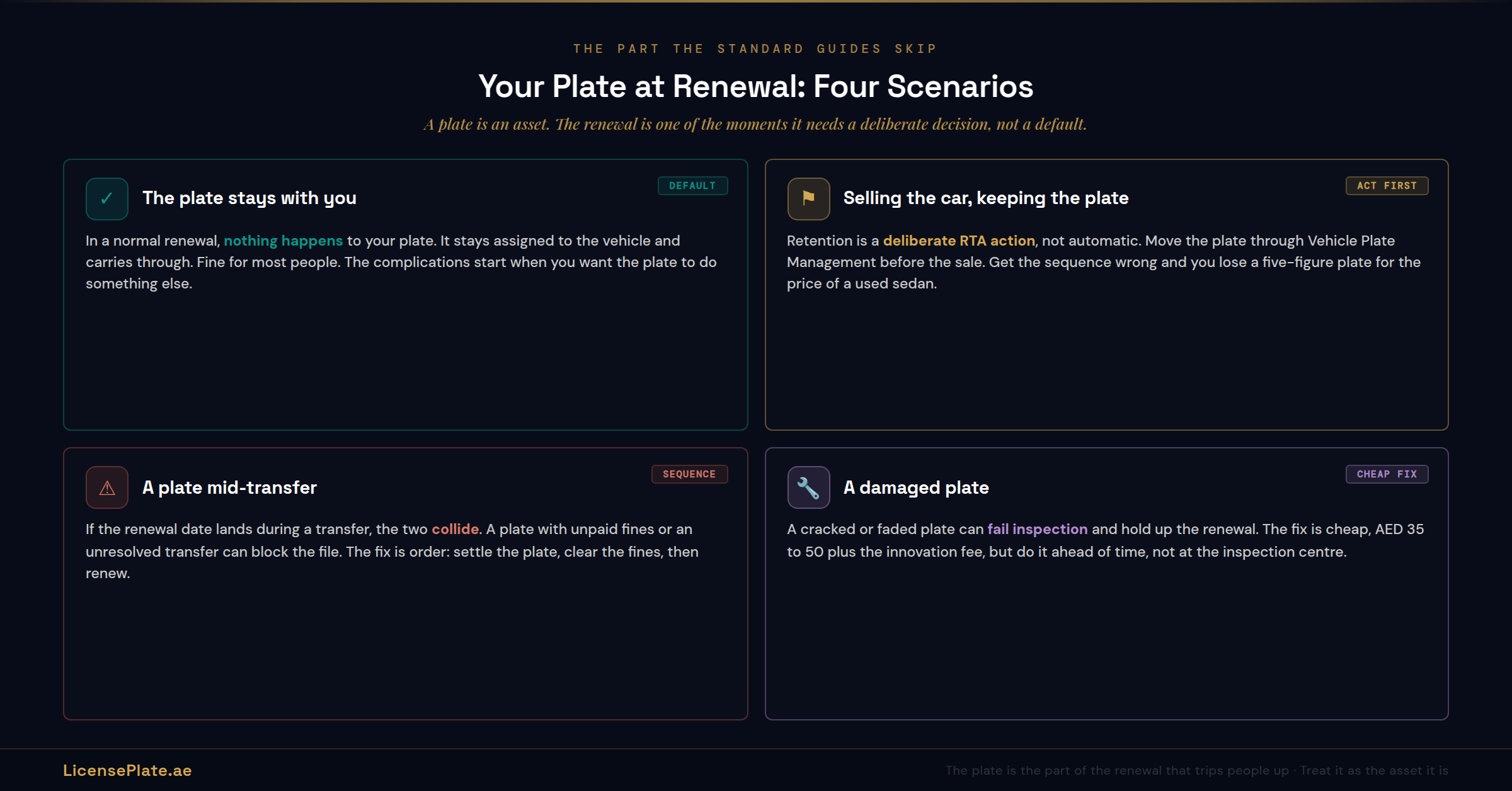
هذا هو الجزء الذي تتخطّاه أدلّة التجديد في مدوّنات التأمين، لأنها تفترض أن لوحتك ملصق معياري لا يفكّر فيه أحد. فإن كنت تملك لوحة بقيمة حقيقية، أو كنت في منتصف شراء أو بيع أو نقل واحدة، فالتجديد هو بالضبط حيث تسبّب اللوحة مشكلات. وأربعة سيناريوهات تغطّي معظمها.
لوحتك تبقى معك، وهو ما تريده عادةً
في التجديد العادي، لا يحدث شيء للوحتك. تبقى مخصّصة لمركبتك وتستمرّ. وهذا هو الافتراضي وهو مناسب لمعظم الناس. والتعقيدات تبدأ حين تريد للوحة أن تفعل شيئاً غير البقاء مكانها.
بيع السيارة مع الاحتفاظ باللوحة
إن كانت لوحتك تساوي أكثر من السيارة، وهي كذلك لكثير من مالكي اللوحات المميّزة، فأنت لا تريدها أن ترحل على المركبة حين تبيع. والاحتفاظ باللوحة إجراء متعمَّد لدى الهيئة، لا إجراء تلقائي. تنقل اللوحة عبر خدمة إدارة لوحات المركبات لدى الهيئة كي تُحتفظ أو يُعاد تخصيصها بشكل سليم في النظام المروري، بدل تسليمها مادياً للمشتري مع السيارة. وأخطئ في التسلسل وقد تخسر لوحة بخمسة أرقام لغريب بسعر سيدان مستعملة. ويشرح دليل تغيير وإدارة اللوحة سير عمل إدارة لوحات المركبات خطوة بخطوة، ويغطّي دليل بيع اللوحة كيفية عرضها وإغلاق الصفقة بمجرّد الاحتفاظ بها. أنجز الاحتفاظ قبل إتمام بيع السيارة، لا بعده.
لوحة في منتصف نقل حين يحين موعد التجديد
إن كنت تشتري أو تبيع لوحة عبر نقل وحلّ تاريخ تجديد التسجيل في منتصفه، تصطدم العمليتان. فاللوحة الخاضعة لنقل نشط، أو اللوحة ذات المخالفات غير المسدّدة، لا يمكنها التحرّك بنظافة، والتسجيل المرتبط بسؤال ملكية غير محلول قد يُحجب. والحلّ هو التسلسل: سوِّ صفقة اللوحة أولاً، وسدّد كل مخالفة عليها، ثم جدّد. وتغطّي قائمة التحقّق قبل الشراء تأكيد أن اللوحة نظيفة وقابلة للنقل قبل تحرّك المال، وهو ما يمنع اصطدام النقل بالتجديد أصلاً.
لوحة تالفة ترسب في الفحص
اللوحة التالفة مادياً أو الباهتة أو غير المطابقة يمكن أن تعطّل الفحص وبالتالي التجديد. والحلّ رخيص، من 35 إلى 50 درهماً إضافةً إلى رسم الابتكار بحسب ما إذا كنت تستخدم لوحة قصيرة أو طويلة، لكن يجب إنجازه قبل اكتمال التجديد. وإن تلقّت لوحتك ضربة، فاستبدلها قبل التجديد بدل اكتشاف المشكلة في مركز الفحص.
والخيط المشترك عبر الأربعة: اللوحة أصل، والأصول تحتاج إدارة في اللحظات نفسها التي يفترض فيها العمل الإداري الروتيني أنها ستعتني بنفسها. والتجديد إحدى تلك اللحظات.
لماذا تُحجب التجديدات، وكيف تفكّ الحجب
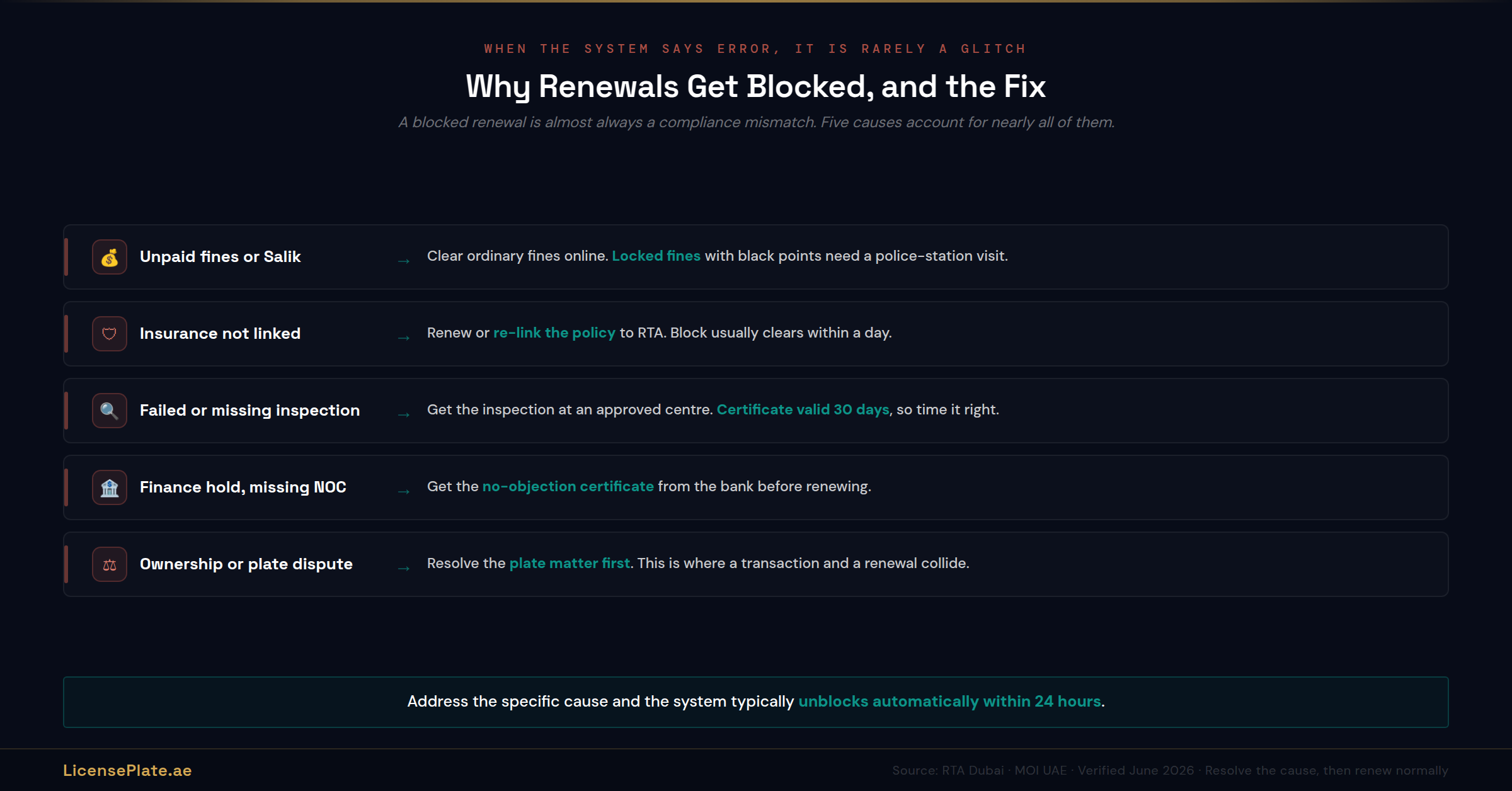
حين يُظهر النظام خطأً أو يرفض المتابعة، فهو تقريباً ليس عطلاً أبداً. إنه عدم تطابق في الالتزام، والسبب عادةً أحد هذه:
مخالفات أو مستحقّات سالك غير مسدّدة. الحجب الأشيع. فكل مخالفة مرتبطة باللوحة أو الملفّ المروري يجب تسديدها. وبعض المخالفات الجسيمة تحمل نقاطاً سوداء وتوسم كمقفلة، ما يعني أن النظام يعرض إشعاراً بزيارة مركز شرطة لحلّها قبل أن يُفكّ حجب الملفّ. سدّد المخالفات العادية إلكترونياً؛ وتولَّ المقفلة حضورياً.
تأمين غير مرتبط أو منتهٍ. إن انقضت الوثيقة أو لم يتحدّث الربط الإلكتروني بالهيئة، أخفق التجديد. جدّد التأمين أو أعد ربطه ويُفكّ الحجب عادةً خلال يوم.
فحص راسب أو مفقود. السيارة الأقدم من ثلاث سنوات دون شهادة فحص سارية لا يمكنها التجديد. أنجز الفحص، وتذكّر أن الشهادة صالحة 30 يوماً فقط.
حجز تمويلي أو خطاب عدم ممانعة مفقود. السيارة التي لا تزال ممولة قد تحتاج شهادة عدم ممانعة من البنك قبل تجديد التسجيل. رتّب الشهادة مع الممول.
نزاعات الملكية أو اللوحة. سؤال ملكية غير محلول، بما فيه لوحة تحت نقل متنازع عليه، يمكن أن يجمّد الملفّ. وهذا هو السيناريو الذي تصطدم فيه صفقة اللوحة بالتجديد، والحلّ هو حسم مسألة اللوحة أولاً.
وبمجرّد معالجة السبب المحدّد، يفكّ النظام الحجب تلقائياً عادةً خلال 24 ساعة، ويمكنك إتمام التجديد بشكل طبيعي.
أخطاء شائعة يرتكبها الناس عند التجديد
تركه حتى أسبوع الانتهاء. يمكنك التجديد قبل 150 يوماً. والانتظار حتى الأيام الأخيرة يعني أن أي حجب مفاجئ، أو وثيقة تأمين غير مرتبطة، أو مخالفة نسيتها، أو فحص راسب، يتحوّل إلى سباق مع الساعة. جدّد بهامش.
افتراض أن التأمين مرتبط لأنه مدفوع. دفع التأمين وربطه إلكترونياً بالهيئة شيئان مختلفان. تأكّد من الربط، لا من الدفع فقط.
بيع السيارة واللوحة لا تزال عليها. أغلى خطأ مرتبط بالتجديد لمالك لوحة. فإن كانت للوحة قيمة، احتفظ بها عبر الهيئة قبل إتمام البيع. لا تدع لوحة ثمينة ترحل على سيارة مباعة افتراضياً أبداً.
إنجاز الفحص مبكّراً جداً. شهادة الفحص سارية 30 يوماً. أنجزه قبل ثلاثة أشهر وستدفع مقابله مرّتين.
تجاهل لوحة تالفة حتى الفحص. اللوحة المتشقّقة أو الباهتة يمكن أن ترسب في الفحص. استبدلها مسبقاً ببضعة دراهم بدل خسارة يوم عليها في المركز.
القيادة خلال مهلة السماح كأنها مجانية إلى الأبد. مهلة السماح البالغة 30 يوماً للتجديد دون رسم تأخير، لا رخصة للاستمرار في القيادة بتسجيل منقضٍ. وبعدها تتراكم الغرامات ويتعقّد التأمين.
الأسئلة الشائعة
كم يكلّف تجديد تسجيل السيارة في دبي في 2026؟
لمركبة خصوصية خفيفة، نحو 350 إلى 420 درهماً شاملةً، تغطّي رسم التسجيل إضافةً إلى رسوم الإصدار والمعرفة والابتكار لدى الهيئة. أضف نحو 150 إلى 170 درهماً للفحص إن كانت السيارة أقدم من ثلاث سنوات. والمركبات الثقيلة والدرّاجات النارية تتبع جداول مختلفة، والثقيلة أعلى.
كم يمكنني التجديد مبكّراً، وهل هناك مهلة سماح؟
يمكنك التجديد قبل 150 يوماً من الانتهاء دون عقوبة. وبعد الانتهاء هناك مهلة سماح 30 يوماً يمكنك خلالها التجديد دون رسوم تأخير، ومعظم وثائق التأمين مكتوبة لـ 13 شهراً لتغطيتها. وبعد الثلاثين يوماً تصبح متأخراً، وهنا يُخلط بين رسمين منفصلين: رسم تأخير يتراكم على التسجيل نفسه، وغرامة ثابتة قدرها 500 درهم مع أربع نقاط سوداء على قيادة مركبة انتهى تسجيلها، وقد يصاحبها حجز المركبة. وهما ليسا الرسم ذاته. راجع جدول رسوم التأخير الحالي على بوابة هيئة الطرق والمواصلات قبل أن تضع ميزانيتك.
هل يمكنني التجديد دون تسديد مخالفاتي أولاً؟
لا. فكل مخالفة مرورية مستحقّة، ورسم سالك، وغرامة مواقف مرتبطة بلوحتك أو ملفّك المروري يجب تسديدها قبل أن يمضي التجديد. والمخالفات العادية تُسدَّد إلكترونياً؛ وبعض المخالفات الجسيمة مقفلة وتحتاج زيارة مركز شرطة لحلّها.
هل أحتاج فحص مركبة للتجديد؟
فقط إن كانت سيارتك أقدم من ثلاث سنوات. والمركبات الأحدث معفاة. والفحص يجري في مركز معتمد مثل تسجيل أو شامل أو واصل، والشهادة سارية 30 يوماً، فلا تحصل عليها مبكّراً جداً.
ماذا يحدث للوحة رقمي عند التجديد؟
في التجديد المعياري، لا شيء. تبقى اللوحة مخصّصة لمركبتك وتستمرّ. ولا تصبح اللوحة عاملاً إلا إن كنت تحتفظ بها من سيارة تبيعها، أو تنقلها، أو تستبدل تالفة، وعندها يحتاج إجراء اللوحة معالجةً عبر خدمة إدارة لوحات المركبات لدى الهيئة إلى جانب التجديد أو قبله.
أبيع سيارتي لكن أريد الاحتفاظ بلوحتي. ماذا أفعل عند التجديد؟
احتفظ باللوحة عبر خدمة إدارة لوحات المركبات لدى الهيئة قبل إتمام بيع السيارة، كي تُحجز بشكل سليم في النظام المروري بدل تسليمها مع المركبة. أنجز هذا أولاً. فاللوحة الثمينة المتروكة على سيارة مباعة افتراضياً قد تُفقد للمشتري.
لماذا تجديد تسجيلي محجوب؟
عادةً أحد هذه: مخالفات أو مستحقّات سالك غير مسدّدة، أو تأمين منتهٍ أو غير مرتبط إلكترونياً، أو فحص مفقود أو راسب، أو حجز تمويلي يحتاج شهادة عدم ممانعة من البنك، أو نزاع ملكية أو لوحة. عالج السبب المحدّد ويفكّ النظام الحجب عادةً خلال 24 ساعة.
هل يمكن لشخص آخر تجديد تسجيلي نيابةً عنّي؟
نعم. يمكن لشخص آخر التجديد نيابةً عنك إن كانت لديه الوثائق المطلوبة، بما فيها هويتك الإماراتية، والملكية، والتفويض اللازم. وينطبق هذا على التجديد الإلكتروني والحضوري معاً وهو مفيد حين تكون مسافراً.
ماذا يحدث إن كان تسجيلي منتهياً منذ أكثر من سنة؟
يتوقّف التجديد عن كونه مهمّة إلكترونية بسيطة. فقد توسم المركبة بتسجيل ملغى، وستحتاج عموماً إتمام العملية حضورياً في مركز خدمة رئيسي للهيئة بدل إلكترونياً. جدّد خلال السنة لتبقيه بسيطاً.
تجديد التسجيل في دبي مهمّة من خمس عشرة دقيقة ملفوفة حول أشياء قليلة يمكن أن تحوّلها بهدوء إلى مهمّة متعدّدة الأيام. أبقِ تأمينك مرتبطاً، وسدّد مخالفاتك قبل أن تبدأ، وأنجز الفحص إن كانت السيارة أقدم من ثلاث سنوات، وجدّد بهامش بدل أسبوع الانتهاء. افعل ذلك ويكون التجديد بالبساطة التي ينبغي أن يكون عليها بالضبط.
سيارتي مسجّلة في الشارقة لكنني أسكن في دبي. أين أجدّد؟
تجدّد لدى الشارقة، عبر بوابة EVG أو تطبيق وزارة الداخلية. فالتسجيل يتبع إمارة إصدار المركبة لا عنوان سكنك، وسيارة مسجّلة في الشارقة لن تظهر في تطبيق دبي درايف أصلاً. ومكان الإصدار المطبوع على ملكيتك هو الجهة التي تملك الملف.
هل التجديد في أبوظبي مثل دبي؟
المتطلبات ذاتها — تسديد الغرامات، وتأمين ساري ومربوط، وفحص من السنة الرابعة — لكن البوابة مختلفة. تجديدات أبوظبي تمرّ عبر TAMM أو EVG بدل هيئة الطرق والمواصلات. والرسم الأساسي لمركبة خصوصية خفيفة متقارب، والمركبات الثقيلة أعلى.
ما هي EVG، وهل أحتاج حساب UAE Pass؟
بوابة المركبات Emirates Vehicle Gate هي منصّة وزارة الداخلية الاتحادية للمركبات، وتغطّي كل إمارة عدا دبي. وقد صارت UAE Pass مسار الدخول الأساسي، فالجواب العملي نعم — جهّز الحساب قبل أن تبدأ لا في منتصف التجديد.
هل يغيّر التجديد في إمارة أخرى رقم لوحتي؟
لا. التجديد لا يعيد تخصيص لوحة في أي إمارة. تبقى اللوحة مع المركبة ما لم تحتفظ بها أو تنقلها أو تستبدلها عمداً عبر الجهة المختصّة. وإن كنت تحتفظ بلوحة ذات قيمة بيعية حقيقية، فمن المفيد معرفة الكلفة السنوية للاحتفاظ بها قبل موسم التجديد.
البائع يقول إن الملكية «لدى البنك» أو قيد التجديد. هل أقلق؟
عاملها كإشارة توقّف حتى ترى البطاقة. فالبائع الذي لا يستطيع إبراز ملكية تطابق اللوحة ورقم الشاسيه واسمه هو النمط الأكثر ثباتاً في احتيال اللوحات على هذا السوق. وفي حالات الاحتيال التي أزلناها هذا العام، وصف مشترٍ أحد الإعلانات المبلَّغ عنها بهذه العبارة تحديداً — شهادة لم تصمد أمام السجل. ودليل احتيال اللوحات يعرض كيف تعمل الأنماط الأخرى.
والقطعة الوحيدة التي تتركها الأدلّة المعيارية خارجاً هي اللوحة، ولأي شخص يملك لوحة تساوي مالاً حقيقياً، هي القطعة التي تستحقّ أكبر انتباه. فاللوحة التي تحتفظ بها أو تنقلها أو تستبدلها لا تعتني بنفسها خلال التجديد. إنها أصل، والتجديد إحدى اللحظات المتكرّرة التي يحتاج فيها ذلك الأصل قراراً متعمَّداً بدل افتراضي. فإن كانت للوحتك قيمة، عامل التجديد كنقطة تفتيش: تأكّد أن اللوحة حيث تريدها، وبالحالة التي تريدها، قبل أن تنقر. وتخبرك حاسبة قيمة اللوحات كم تساوي تلك اللوحة، ويغطّي دليل إدارة اللوحات الاحتفاظ بها أو نقلها، وتغطّي قائمة التحقّق إبقاء النقل نظيفاً.
وللصورة الأوسع عن امتلاك اللوحات وشرائها وبيعها في دبي، يغطّي دليل لوحات دبي الكامل المشهد كاملاً من جانبَي الصفقة. جدّد السيارة في وقتها، وأبقِ اللوحة، الجزء الذي ترتفع قيمته فعلاً، حيث تريدها بالضبط.
عن هذا الدليل
يكتبه ويحدّثه فريق التحرير في LicensePlate.ae
ندير سوق لوحات المركبات في الإمارات، ما يعني أننا نرى مشكلات التسجيل من جهة الصفقة: تجديدات محجوبة بسبب لوحة في منتصف نقل، وبائعون لا يستطيعون إبراز بطاقة مطابقة، ومشترون يكتشفون الحجز عند الكاونتر. يُحدَّث هذا الدليل مقابل بوابات هيئة الطرق والمواصلات وTAMM وEVG كلما تغيّرت الإجراءات أو الرسوم.