

لوحات الأرقام في مزاد الإمارات: كيف يعمل التأمين والمزايدة والتسجيل فعلاً (دليل 2026)
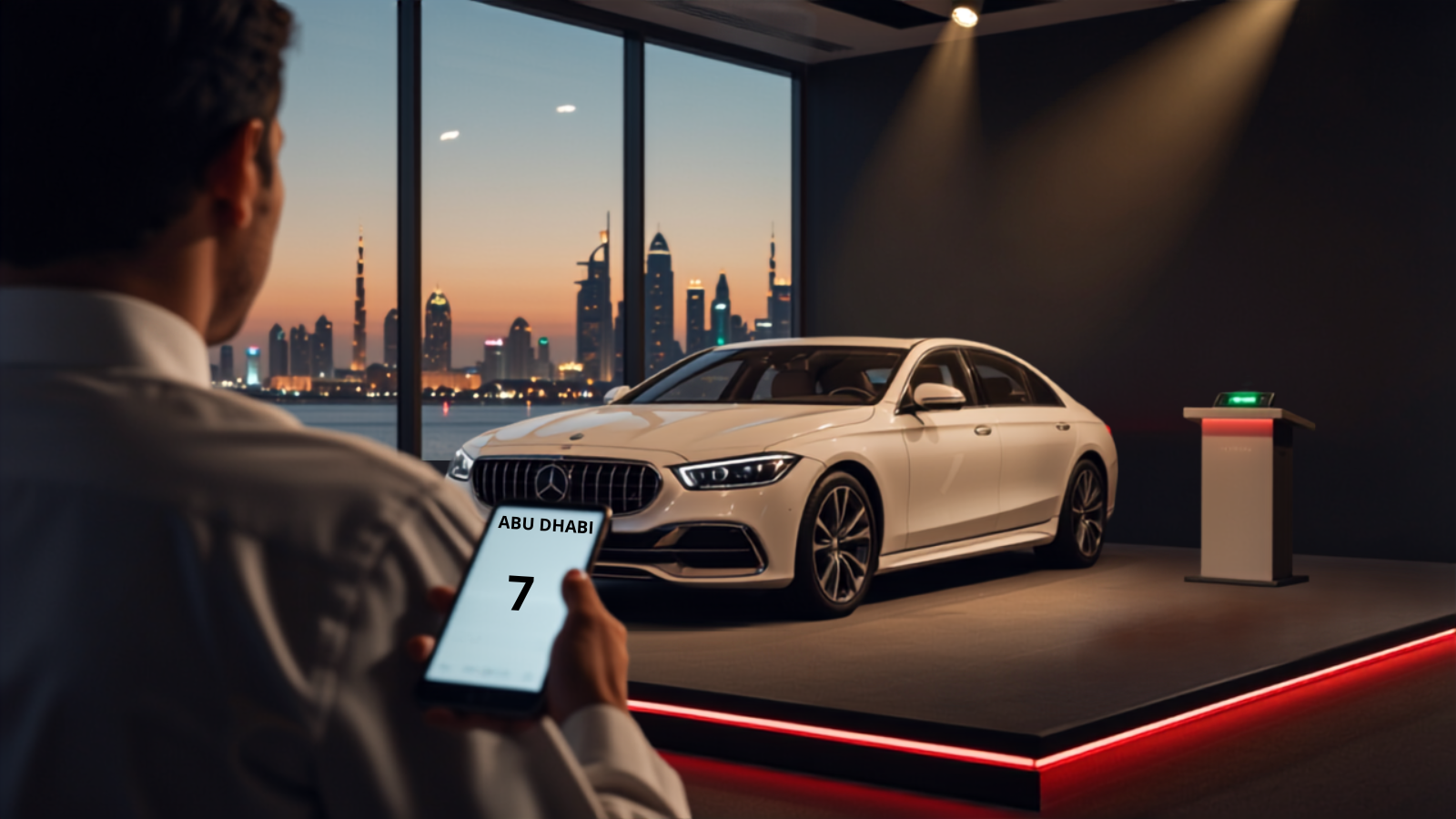
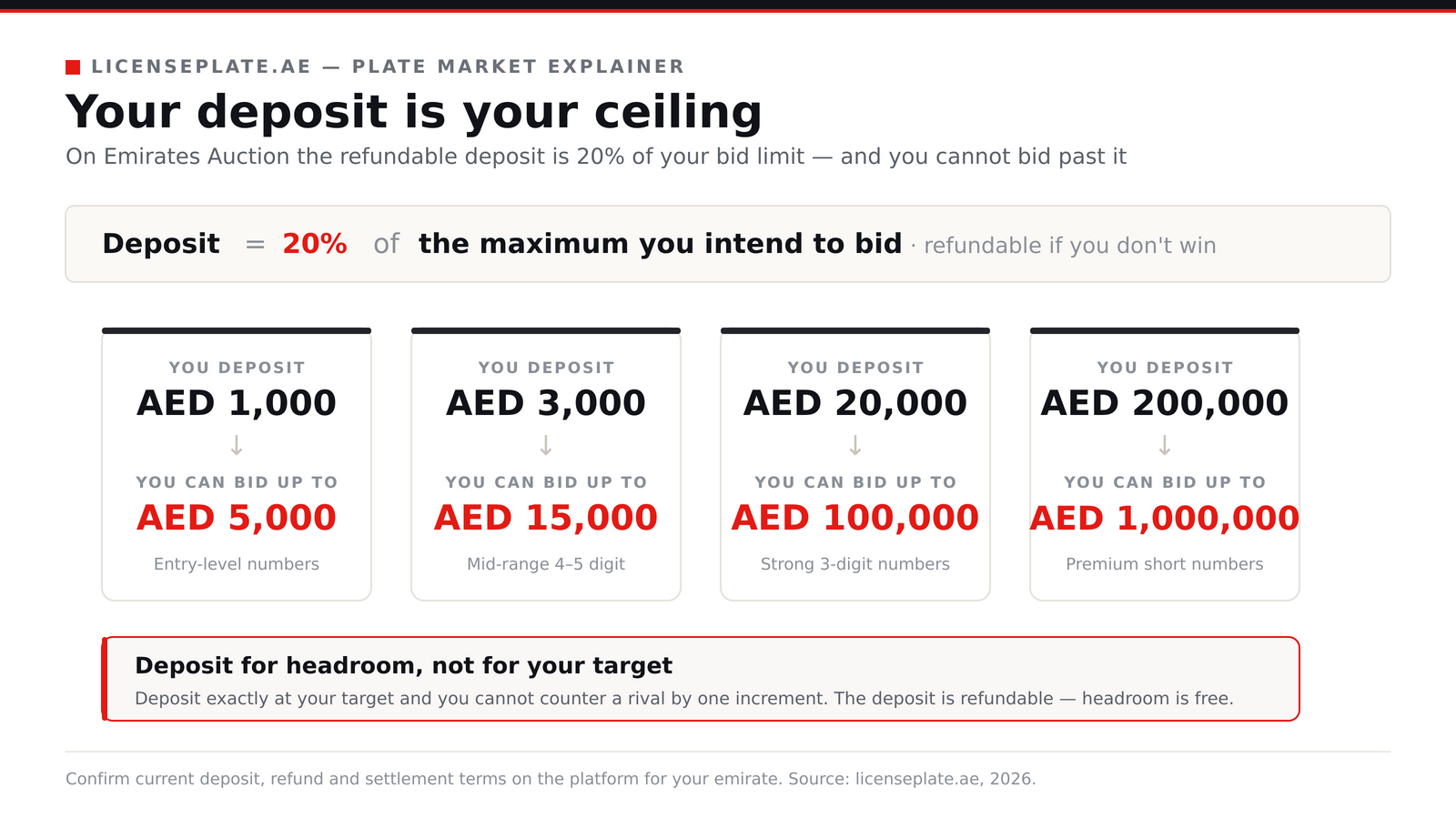
مزاد الإمارات هو المنصّة التي تجري عليها فعلياً معظم مزادات لوحات الأرقام الرسمية في الدولة — وأكبر سبب مفرد يخسر به المزايدون لأول مرّة لوحةً كان بإمكانهم الفوز بها هو سوء فهمهم لقاعدة التأمين. فتأمينك ليس رسم دخول. إنه 20% من أقصى مبلغ تنوي المزايدة به، وهو يقيّد بصمت السقف المسموح لك ببلوغه. احضر وقد أودعت 3,000 درهم ولن تستطيع المزايدة فوق 15,000 درهم، مهما كان الرصيد في حسابك. وهذا الدليل يغطّي المنصّة من أوّلها إلى آخرها: كيف يعمل التسجيل، وكيف تحدّد حسابات التأمين سقفك بالضبط، وأي الإمارات تشغّلها، وكيف تختلف عن إجراء هيئة الطرق في دبي، وكيف تتجنّب الأخطاء التي تنهي المزادات مبكّراً.
الإجابة في 30 ثانية.
- ما هي: منصّة المزادات الرسمية التي تدير بيع لوحات الأرقام لأبوظبي ومعظم الإمارات الشمالية.
- من يستطيع المزايدة: أي شخص عمره 18 عاماً فأكثر لديه حساب مسجّل.
- تأمين الضمان: مسترَدّ، ويساوي 20% من حدّ المزايدة الذي تريده — فـ3,000 درهم تفتح سقف 15,000 درهم.
- كيف تدفعه: ببطاقة ائتمان إلكترونياً، أو تحويل بنكي، أو شيك في أحد فروع مزاد الإمارات.
- أين تزايد: الموقع الإلكتروني أو تطبيق iOS/أندرويد — التسجيل والتأمين والمزايدة كلّها تعمل داخل التطبيق.
- دبي مختلفة: الهيئة تدير إجراءها الخاص — انظر شرحنا المخصّص للمزايدة لدى الهيئة.
ما يغطّيه هذا الدليل
- ما مزاد الإمارات فعلاً
- أي الإمارات يدير لها مزادات اللوحات
- قاعدة التأمين 20% — الجزء الذي يخطئ فيه الجميع
- خطوة بخطوة: سجّل، وأودع، وزايد
- مزاد الإمارات مقابل إجراء الهيئة في دبي
- ماذا يحدث حين تفوز
- استرداد تأمينك
- هل مزاد الإمارات موثوق؟
- ما بعد المزايدة الفائزة: تكاليف ينبغي تخصيصها
- استراتيجية مزايدة تنجح فعلاً
- سبعة أخطاء تكلّف الناس اللوحة
- الأسئلة الشائعة — 14 سؤالاً مُجاباً
ما مزاد الإمارات فعلاً
الإجابة المباشرة: مزاد الإمارات هو مشغّل المزادات الرسمي وراء حصّة كبيرة من مبيعات لوحات المركبات الحكومية في الدولة، إلى جانب مزادات المركبات وأرقام الهواتف وأصول حكومية أخرى. ولمشتري اللوحات، يعمل كباب أمامي للسوق الأولية — المكان الذي تطرح فيه الجهة المُصدِرة الأرقام بدل إعادة بيعها بين المالكين الأفراد.
وأمران يجعلانه مهمّاً بنيوياً لأي جادّ في اللوحات الإماراتية:
- إنه قناة سوق أولية. فالأرقام المباعة هنا تأتي من مخزون الجهة نفسها. وتلك معاملة مختلفة عن شراء لوحة قائمة من مالكها الحالي في السوق الثانوية.
- إنه متعدّد الإمارات. فبدل التعامل مع عدّة أنظمة إمارات منفصلة، يصل المزايدون إلى مزادات لوحات أبوظبي والإمارات الشمالية بحساب واحد.
وإن كنت توازن بين الشراء الأولي والثانوي عموماً، فمقارنتنا بين المزاد والسوق الثانوية تعرض أين تقع القيمة فعلاً لكل نوع من المشترين.
أي الإمارات يدير لها مزادات اللوحات
ينشر مزاد الإمارات أقساماً مخصّصة لمزادات اللوحات وأسئلة شائعة لعدّة إمارات. والتغطية التي تهمّ مشتري اللوحات:
| الإمارة | مزادات اللوحات عبر مزاد الإمارات | دليلنا للإمارة |
|---|---|---|
| أبوظبي | نعم — قسم مخصّص لمزاد اللوحات | لوحات أبوظبي |
| رأس الخيمة | نعم | لوحات رأس الخيمة |
| الفجيرة | نعم | لوحات الفجيرة |
| عجمان | نعم | لوحات عجمان |
| أم القيوين | نعم | لوحات أم القيوين |
| دبي | الهيئة تدير إجراء مزادها الخاص | شرح المزايدة لدى الهيئة |
وهذا هو السبب العملي لأهمّية المنصّة: إن أردت رقماً من الإمارات الشمالية أو أبوظبي من السوق الأولية، فهذا هو الطريق. وإن أردت رقماً من دبي تحديداً، فأنت في أرض الهيئة بدلاً من ذلك — إجراء مختلف فعلاً بآليات تأمين ورسوم مختلفة.
قاعدة التأمين 20% — الجزء الذي يخطئ فيه الجميع
الإجابة المباشرة: تأمين الضمان مسترَدّ ويساوي 20% من حدّ المزايدة الأقصى الذي تريده. فتأمينك يحدّد سقفك — ولا يمكنك المزايدة فوق الحدّ الذي يشتريه لك.
أمثلة محسوبة، لأن هنا يقع المزايدون:
| التأمين الذي تودعه (درهم) | حدّ المزايدة الذي يفتحه (درهم) | مناسب لـ |
|---|---|---|
| 1,000 | 5,000 | أرقام الإمارات الشمالية عند مستوى الدخول |
| 3,000 | 15,000 | الأرقام المتوسّطة من أربع وخمس خانات |
| 20,000 | 100,000 | الأرقام الثلاثية القوية والأنماط المرغوبة |
| 200,000 | 1,000,000 | الأرقام القصيرة المميّزة |
وثلاث نتائج تستحقّ استيعابها قبل يوم المزاد:
- اضبط حدّك فوق هدفك لا عنده. فإن توقّعت أن تُحسَم لوحة عند نحو 40,000 درهم وأودعت 8,000 درهم بالضبط، فلن يبقى لك مجال للردّ على منافس يزيد درجة واحدة. ابنِ هامشاً بوعي.
- التأمين مسترَدّ، فالهامش رخيص. أنت لا تنفق التأمين بإيداع المزيد — بل تفتح مرونةً تستردّها إن لم تفز.
- توقيت الدفع هو القيد الحقيقي. فمدفوعات البطاقة تُقيَّد سريعاً؛ أما التحويلات البنكية وشيكات الفروع فلا. وزيادة حدّك قبل ساعة من إغلاق الدفعة ليست واقعية إن كنت تعتمد على تحويل.
ونموذج «التأمين كسقف» مختلف جوهرياً عن رسم تسجيل بسيط، ولهذا يصرّ دليل التفاوض على اللوحات لدينا على تحديد رقم انسحابك قبل إيداع التأمين، لا أثناء المزايدة.
خطوة بخطوة: سجّل، وأودع، وزايد
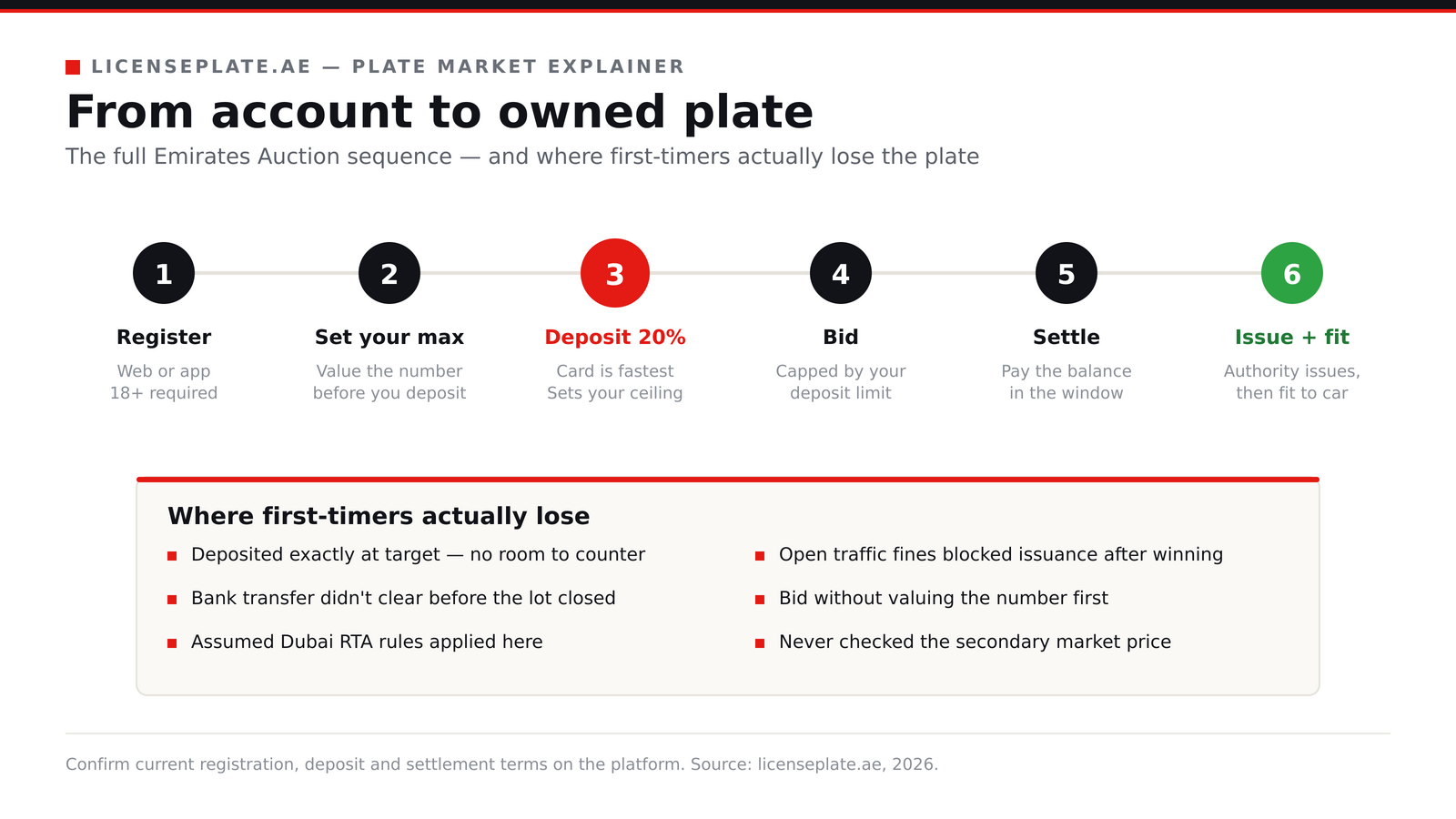
- تأكّد من أهليّتك. يجب أن يكون عمرك 18 عاماً على الأقلّ للتسجيل والمزايدة.
- أنشئ حسابك. سجّل على الموقع أو عبر تطبيق مزاد الإمارات لـiOS أو أندرويد، مستكملاً بياناتك الشخصية.
- حدّد حدّك الأقصى الحقيقي. افعل ذلك قبل الإيداع. وابحث في أرقام مماثلة أولاً — فـإطار تقييم اللوحات لدينا يعطيك رقماً قابلاً للدفاع عنه بدل إحساس.
- أودع تأمين الضمان بنسبة 20% من ذلك الحدّ. ادفع ببطاقة ائتمان إلكترونياً، أو بتحويل بنكي، أو بشيك يُسلَّم في أحد فروع مزاد الإمارات. والبطاقة أسرعها.
- اعثر على دفعتك. تصفّح قسم مزاد اللوحات للإمارة واختر قائمة مختصرة بالأرقام التي تريدها.
- زايد. استخدم زرّ «زايد الآن» بجانب اللوحة. ومزايداتك مقيّدة بالحدّ الذي فتحه تأمينك.
- راقب حتى الإغلاق. الدفعات التنافسية تتحرّك سريعاً في النهاية. قرّر مسبقاً هل ستلاحق فوق رقمك — والجواب الصادق ينبغي أن يكون لا عادةً.
- سوِّ وسجّل إن فزت. ادفع الرصيد داخل النافذة التي تعلنها المنصّة، ثم أتمم إصدار اللوحة لدى الجهة المرورية المعنية.
مزاد الإمارات مقابل إجراء الهيئة في دبي
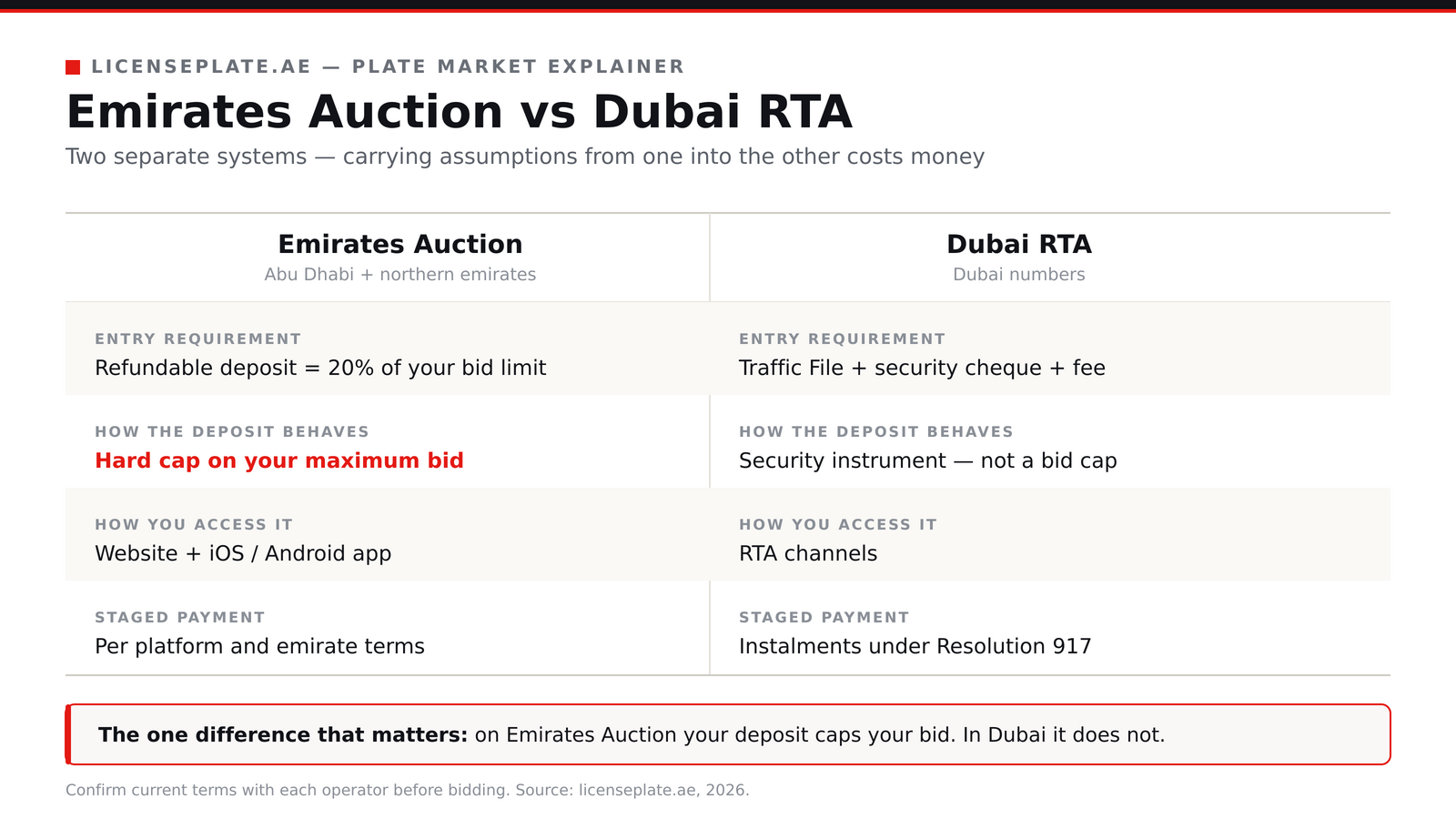
يُخلَط بين الاثنين بانتظام. وهما نظامان منفصلان بآليات مختلفة، واستخدام النموذج الذهني الخطأ يكلّف الناس مالاً.
| مزاد الإمارات | مزادات الهيئة في دبي | |
|---|---|---|
| التغطية | أبوظبي + الإمارات الشمالية | أرقام دبي |
| متطلّب الدخول | تأمين مسترَدّ = 20% من حدّ مزايدتك | ملفّ مروري وشيك ضمان ورسم مشاركة |
| سلوك التأمين | يقيّد مزايدتك القصوى مباشرةً | أداة ضمان، لا سقف مزايدة |
| الوصول | الموقع والتطبيق | قنوات الهيئة — انظر شرحنا |
| الدفع المرحلي | بحسب شروط المنصّة والإمارة | التقسيط متاح بموجب القرار 917 |
والفارق الأبرز: في مزاد الإمارات تأمينك هو سقفك؛ وفي دبي ملفّك المروري وشيك الضمان أدوات بوّابة لا تقيّد مزايدتك بالطريقة نفسها. فإن كنت تزايد في دبي تحديداً، فاتّبع شرحنا للمبتدئين لدى الهيئة وتقويم مزادات 2026 بدلاً من ذلك.
ماذا يحدث حين تفوز
الفوز بالدفعة ليس نهاية المعاملة. فثلاثة أمور تتبع، والتسلسل مهمّ:
- التسوية. تدفع رصيد المزايدة الفائزة داخل النافذة المعلنة. ويُخصَم تأمينك أو يُفرَج عنه بحسب شروط المنصّة.
- الإصدار لدى الجهة المرورية. يصبح الرقم لك رسمياً عبر جهة الإمارة المعنية. والمخالفات المستحقّة على ملفّك قد تعطّل ذلك — سوِّها مسبقاً.
- التركيب على مركبة. تُسجَّل اللوحة بعدها مقابل مركبة باسمك. وإن لم تكن تملك السيارة بعد، فاقرأ كيف تحجز لوحة قبل شراء السيارة.
وإن أردت لاحقاً نقل الرقم إلى مركبة أو مالك آخر، فالآليات في دليل النقل بين الإمارات لدينا.
استرداد تأمينك
تأمين الضمان مسترَدّ — وتلك أكثر حقيقة مطمئنة عن المنصّة وأقلّها فهماً. فإن سجّلت وأودعت وزايدت وخسرت، فأنت لست خاسراً للتأمين نفسه.
إرشادات عملية:
- الاسترداد يتبع مسار الدفع. فالمال المعاد إلى بطاقة يتصرّف بشكل مختلف عن المعاد مقابل تحويل بنكي أو شيك — احسب وقت المعالجة تبعاً لذلك.
- لا تعامل التأمين كمال للإنفاق. إنه ضمان. وإيداع المزيد لرفع سقفك ليس كالالتزام بإنفاق المزيد.
- تأكّد من الشروط الحالية قبل الاعتماد عليها. فقواعد التأمين والاسترداد والتسوية تحدّدها المنصّة وقد تتغيّر؛ راجع الأسئلة الشائعة الحيّة للإمارة التي تزايد فيها.
هل مزاد الإمارات موثوق؟
الإجابة المباشرة: نعم — إنه مشغّل مزادات رسمي راسخ يتولّى بيع الأصول الحكومية واللوحات، لا وسيط إعادة بيع خاصاً أو لوحة إعلانات مبوّبة. وهذا التمييز يهمّ في فئة يكون فيها الاحتيال خطراً قائماً.
ما تحميك منه الرسمية وما لا تحميك منه:
- تحمي مصدر الرقم. فاللوحات المباعة عبر القناة الرسمية تأتي من الجهة المُصدِرة، فأنت لا تشتري رقماً بتاريخ ملكية متنازع عليه.
- لا تحميك من الدفع الزائد. فالمنصّة الرسمية تظلّ تدير مزادات تنافسية. وانضباط السعر مسؤوليتك وحدك.
- لا تحميك خارج المنصّة. فأشيع عمليات احتيال اللوحات تتضمّن من ينتحل صفة مزاد أو وكيل أو بائع خارج النظام الرسمي ويطلب تحويلاً. وإن عرضت عليك رسالة أو مكالمة أو حساب اجتماعي لوحةً مضمونة أو اختصاراً يلتفّ على التأمين، فعاملها كاحتيال حتى يثبت العكس.
مرّر كل تواصل من خارج المنصّة عبر دليل احتيال اللوحات لدينا، الذي يفصّل فئات الاحتيال الخمس في الإمارات وكيف تعمل كل واحدة بالضبط.
ما بعد المزايدة الفائزة: تكاليف ينبغي تخصيصها
سعر المطرقة ليس إجماليك. فالمزايدون الذين يخصّصون ميزانية للمزايدة وحدها تفاجئهم التسوية. خطّط لما يلي، بالترتيب:
- رصيد المزايدة الفائزة. مستحقّ داخل النافذة التي تعلنها المنصّة، مع خصم تأمينك أو الإفراج عنه بحسب شروطها.
- رسوم إصدار اللوحة والتسجيل التي تفرضها الجهة المرورية المعنية حين يُصدَر الرقم لك رسمياً.
- تكاليف تسجيل المركبة إن كانت اللوحة ستذهب إلى سيارة تسجّلها أو تجدّدها أيضاً. وتكلفة امتلاك لوحة سنوياً لدينا تغطّي الجانب المتكرّر.
- رسوم النقل إن انتقل الرقم لاحقاً إلى مركبة أو مالك آخر.
- اعتبارات ما بين الإمارات إن كنت تنوي نقل رقم من أبوظبي أو الإمارات الشمالية إلى مكان آخر — والآليات والقيود في دليل النقل بين الإمارات لدينا.
وانضباط مفيد: حدّد أقصى إنفاق إجمالي لك أولاً، واطرح الرسوم اللاحقة، ودع ما يتبقّى يكون سقف مزايدتك. ومعظم الناس يفعلون ذلك بالمقلوب ويكتشفون الفجوة بعدما فازوا فعلاً.
استراتيجية مزايدة تنجح فعلاً
ديناميكيات المزاد تكافئ الاستعداد وتعاقب الاندفاع. وما ينجح باستمرار:
- قيّم الرقم قبل أن ترى المزايدة. ارتكز على مبيعات مماثلة، لا على أعلى مزايدة حالية. ابدأ بـكيف تفحص قيمة لوحة.
- أودع من أجل الهامش، وزايد إلى رقمك. فتأمين مسترَدّ أكبر لا يكلّفك شيئاً لكنه يمنحك خيار الردّ.
- افهم ما يجعل الرقم سائلاً. فالأرقام قليلة الرموز والخانات المرغوبة عريضاً تُعاد بيعها بسهولة أكبر بكثير — والمنطق في دليل اللوحات ثلاثية التكرار ودليل علم الأعداد.
- قارن بالسوق الثانوية أولاً. فقد يكون رقم مماثل معروضاً أصلاً للشراء الفوري بلا حرب مزايدة — تصفّح السوق قبل أن تلتزم.
- راقب عدّة دفعات قبل المزايدة على واحدة. فمشاهدة إغلاقين أو ثلاثة تعلّمك سلوك الدرجات أفضل من أي دليل.
سبعة أخطاء تكلّف الناس اللوحة
- الإيداع عند هدفك بالضبط. تفقد القدرة على الردّ بدرجة واحدة. ابنِ هامشاً دائماً.
- الاعتماد على تحويل بنكي قرب موعد المزاد. فقد لا يُقيَّد قبل إغلاق الدفعة. استخدم بطاقة إن كنت قريباً من الموعد النهائي.
- افتراض سريان قواعد دبي. نظام مختلف ومنطق تأمين مختلف. لا تنقل افتراضاتك عبرهما.
- تجاهل المخالفات المفتوحة. فقد تعرقل الإصدار بعدما فزت ودفعت فعلاً.
- المزايدة دون تقييم الرقم. قاعات المزاد تخلق إلحاحاً؛ والرقم المحدّد سلفاً هو الدفاع الوحيد.
- إغفال السوق الثانوية. فأحياناً يتوفّر رقم بالجودة نفسها فوراً وبلا منافسة.
- عدم التحقّق من أي شيء خارج المنصّة الرسمية. فإن عرض عليك أحد لوحة «مضمونة» خارج المنصّة، فطبّق قائمة تجنّب الاحتيال وإجراء التحقّق لدينا بلا استثناء.
الأسئلة الشائعة
ما مزاد الإمارات؟
مزاد الإمارات منصّة المزادات الرسمية التي تدير بيع لوحات الأرقام لأبوظبي ومعظم الإمارات الشمالية، إلى جانب مزادات المركبات والأصول الحكومية الأخرى. وهو قناة سوق أولية — إذ تأتي الأرقام من الجهة المُصدِرة لا من وسطاء إعادة بيع خاصّين.
كم يبلغ تأمين الضمان؟
التأمين هو 20% من حدّ المزايدة الذي تريده. فللمزايدة حتى 15,000 درهم تودع 3,000 درهم. والتأمين مسترَدّ.
هل تأمين مزاد الإمارات مسترَدّ؟
نعم. تأمين الضمان مسترَدّ. فإن زايدت ولم تفز، فالتأمين نفسه غير مفقود — وتوقيت الاسترداد يعتمد على طريقة دفعك له.
كيف أدفع تأمين الضمان؟
ببطاقة ائتمان إلكترونياً عبر الموقع أو التطبيق، أو بتحويل بنكي إلى حساب الشركة، أو بشيك يُسلَّم في أحد فروع مزاد الإمارات. والبطاقة أسرع الخيارات.
هل أستطيع المزايدة فوق ما يسمح به تأميني؟
لا. تأمينك يحدّد حدّ مزايدتك — ولا يمكنك المزايدة إلّا حتى السقف الذي يفتحه. وللارتفاع أكثر، عليك زيادة تأمينك قبل إغلاق الدفعة.
كم يجب أن يكون عمري للمزايدة؟
يجب أن يكون عمرك 18 عاماً فأكثر لتسجيل حساب وتقديم مزايدات.
هل يوجد تطبيق لمزاد الإمارات؟
نعم. للمنصّة تطبيقان لـiOS وأندرويد يتيحان لك التسجيل ودفع التأمين وتقديم المزايدات من هاتفك.
هل يبيع مزاد الإمارات لوحات دبي؟
هيئة الطرق والمواصلات في دبي تدير إجراء مزاد اللوحات الخاص بها. ولأرقام دبي، اتّبع مسار الهيئة — وشرحنا للمبتدئين يغطّيه خطوةً بخطوة.
لوحات أي الإمارات أستطيع المزايدة عليها؟
تنشر المنصّة أقساماً مخصّصة لمزادات اللوحات لأبوظبي ورأس الخيمة والفجيرة وعجمان وأم القيوين، من بين غيرها.
هل يستطيع الوافدون المزايدة في مزاد الإمارات؟
التسجيل مفتوح للأفراد من عمر 18 عاماً فأكثر الذين يستوفون متطلّبات الحساب والتأمين. تأكّد من قواعد الأهلية والوثائق الحالية على المنصّة للإمارة التي تزايد فيها.
ماذا يحدث بعدما أفوز بلوحة؟
تسوّي الرصيد داخل النافذة المعلنة، ثم تُتمّ الإصدار لدى الجهة المرورية المعنية، وأخيراً تسجّل اللوحة مقابل مركبة باسمك.
هل يمكنني دفع ثمن لوحة مزاد بالتقسيط؟
شروط التقسيط تعتمد على المنصّة والإمارة. وفي دبي، تشغّل الهيئة نظام تقسيط رسمياً بموجب القرار الإداري 917 لسنة 2021 — دفعة أولى 25% وحتى 24 شهراً.
هل الشراء في المزاد أرخص من السوق الثانوية؟
ليس تلقائياً. فالمزادات تنافسية وقد تتجاوز أسعار السوق الثانوية للأرقام المرغوبة، بينما تتيح السوق الثانوية ملكية فورية بلا حرب مزايدة. قارن الاثنين قبل أن تلتزم.
ما الفرق بين التأمين ورسم المشاركة؟
في مزاد الإمارات يحدّد التأمين المسترَدّ سقف مزايدتك. أما إجراء الهيئة في دبي فيستخدم ملفّاً مرورياً وشيك ضمان ورسم مشاركة غير مسترَدّ — والأدوات ليست متكافئة.
الخلاصة النهائية
مزاد الإمارات هو بوّابة السوق الأولية للوحات أبوظبي والإمارات الشمالية، ويعمل بقاعدة واحدة تحسم معظم النتائج: تأمينك المسترَدّ هو 20% من حدّ مزايدتك، وذلك الحدّ سقف صارم. والمزايدون الذين يستوعبون ذلك — فيودعون من أجل الهامش، ويقيّمون الرقم مسبقاً، ويعاملون التأمين ضماناً لا مالاً للإنفاق — يتفوّقون باستمرار على من يسجّلون قبل ساعة من إغلاق الدفعة.
وكل ما عدا ذلك انضباط. اعرف رقمك قبل بدء المزايدة، ولا تنقل قواعد دبي إلى مزاد في أبوظبي، وافحص دائماً ما إذا كانت السوق الثانوية تملك أصلاً ما تريده بسعر تستطيع دفعه اليوم ببساطة. تصفّح لوحات دبي أو سوق الإمارات الكاملة للمقارنة قبل أن تزايد.
حذف التعليق؟
هل أنت متأكد أنك تريد حذف هذا التعليق؟ لا يمكن التراجع عن هذا الإجراء.
حذف المقال؟
هل أنت متأكد أنك تريد حذف هذه المقالة؟ سيؤدي ذلك أيضًا إلى حذف جميع التعليقات. لا يمكن التراجع عن هذا الإجراء.