

لماذا لا تُباع لوحة رقمي؟ الأسباب التسعة لتعثّر الإعلانات في الإمارات — وكيف تعالج كلّاً منها
آخر تحديث: 21 أغسطس 2026
الإجابة السريعة
لوحة الرقم التي لا تُباع أخفقت في واحدة من ثلاث مراحل، ولكلٍّ منها استجابة معاكسة. فـغياب الاستفسارات تماماً مشكلة سعر دائماً تقريباً — إذ يفلتر المشترون بالميزانية، فاللوحة المبالغ في سعرها لا تُعرَض أصلاً على من كانوا سيشترونها. واستفسارات بلا عروض مشكلة ثقة: فشيء ما في إثبات الملكية أو سرعة استجابتك أو إجراء النقل أوقفهم. وعروض بلا إغلاق مشكلة ارتكاز — فالسوق أخبرتك بالقيمة أصلاً وأنت لا تزال تقيس مقابل ما دفعته أو مقابل عنوان مزاد. حدّد أي مرحلة تعلق فيها قبل أن تغيّر أي شيء، لأن خفض السعر حين تكون المشكلة الحقيقية ثقةً يبيع ببساطة لوحةً جيّدة بثمن بخس.
كل بائع يتواصل معنا تقريباً بشأن إعلان متعثّر يبدأ بالطريقة نفسها: الرقم جيّد، والسوق ساخنة، ولا بدّ أن خطأً ما في المنصّة أو الموسم أو المشترين.
وأحياناً يكون ذلك صحيحاً. لكن الأكثر بكثير أن الإعلان يروي قصّةً دقيقة جداً عمّا هو خطأ، والبائع لم يقرأها. فسواء لم يراسلك أحد، أو راسلك الناس ثم اختفوا، أو وصلت عروض ولم تتحوّل قط، فتلك النتائج الثلاث لها ثلاثة أسباب مختلفة تماماً — وتطبيق العلاج الخاطئ على الحالة الخاطئة هو كيف تجلس لوحة قابلة للبيع دون لمس لسنة.
وهذا الدليل هو التشخيص. ويستخدم بيانات الأسعار المطلوبة من سوقنا لبيان أين تقع الأسعار فعلاً، وهو صادق بشأن الحالات التي يكون الجواب فيها أن تتوقّف عن محاولة البيع الآن.
المحتويات
- شخّص بالعَرَض لا بالتخمين
- المرحلة الأولى: لا أحد يتواصل معك
- المرحلة الثانية: استفسارات تصمت
- المرحلة الثالثة: عروض لا تُغلَق قط
- النادر والقابل للبيع ليسا الشيء نفسه
- حين يكون الجواب الصحيح أن تتوقّف عن البيع
- قائمة إعادة العرض
- الأسئلة الشائعة
شخّص بالعَرَض لا بالتخمين
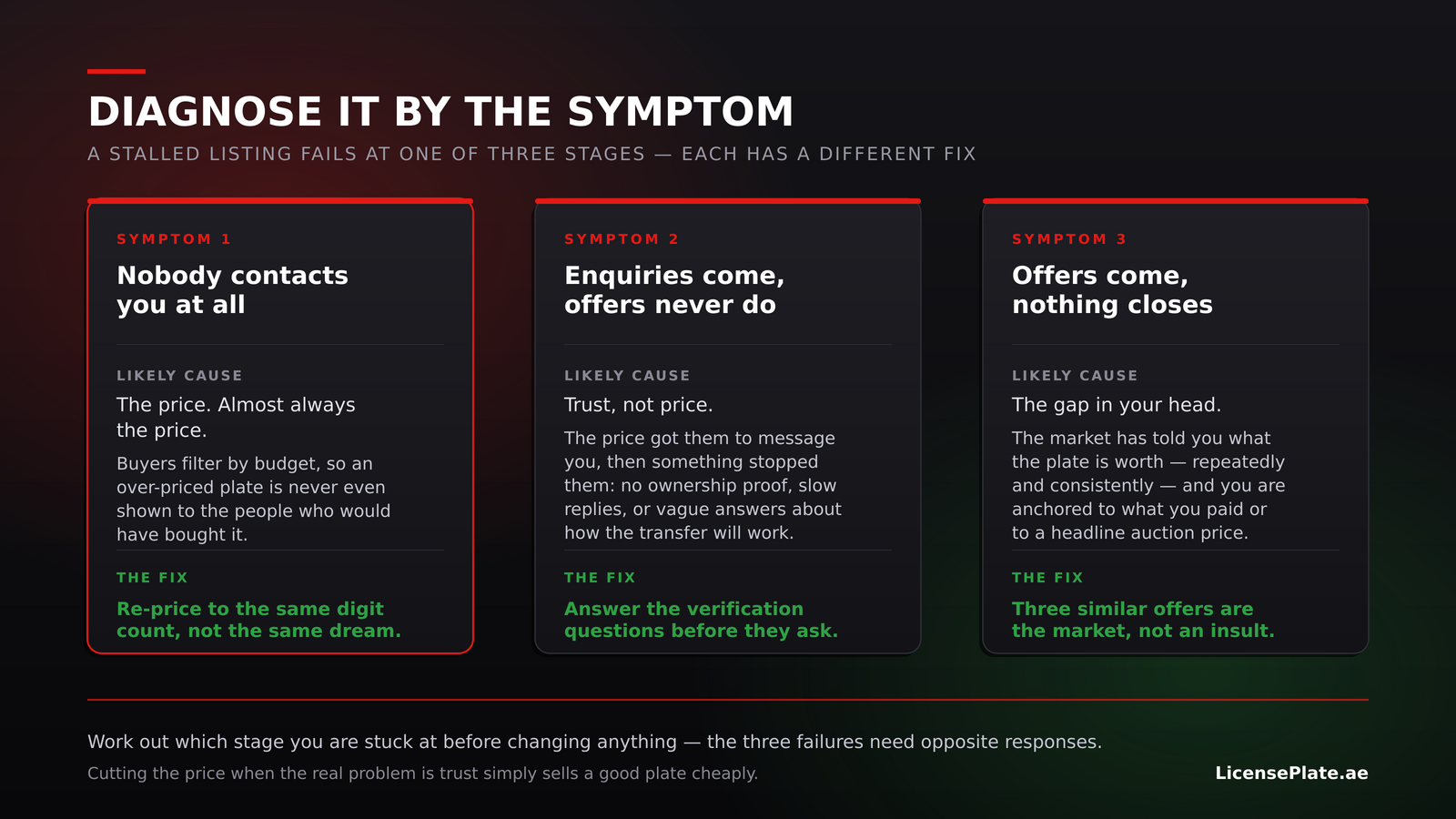
الإجابة المباشرة: قبل تغيير أي شيء، حدّد في أي من المراحل الثلاث يموت إعلانك.
- لا تواصل إطلاقاً ← السعر يفلترك خارج نتائج البحث.
- تواصل ثم صمت ← المشتري فقد الثقة، لا الاهتمام.
- عروض ترفضها باستمرار ← السوق سعّرتها وأنت تخالفها.
ويهمّ هذا لأن الاستجابة الغريزية للثلاث واحدة — خفض السعر — وهي صحيحة للأولى فقط. فاخفض السعر في مشكلة ثقة ولن تكون قد حللت شيئاً بينما تتخلّى عن مال. واخفضه في مشكلة ارتكاز وستظلّ ترفض العروض، لكن أدنى.
المرحلة الأولى: لا أحد يتواصل معك
السبب 1: سعّرت مقابل عدد خانات خاطئ
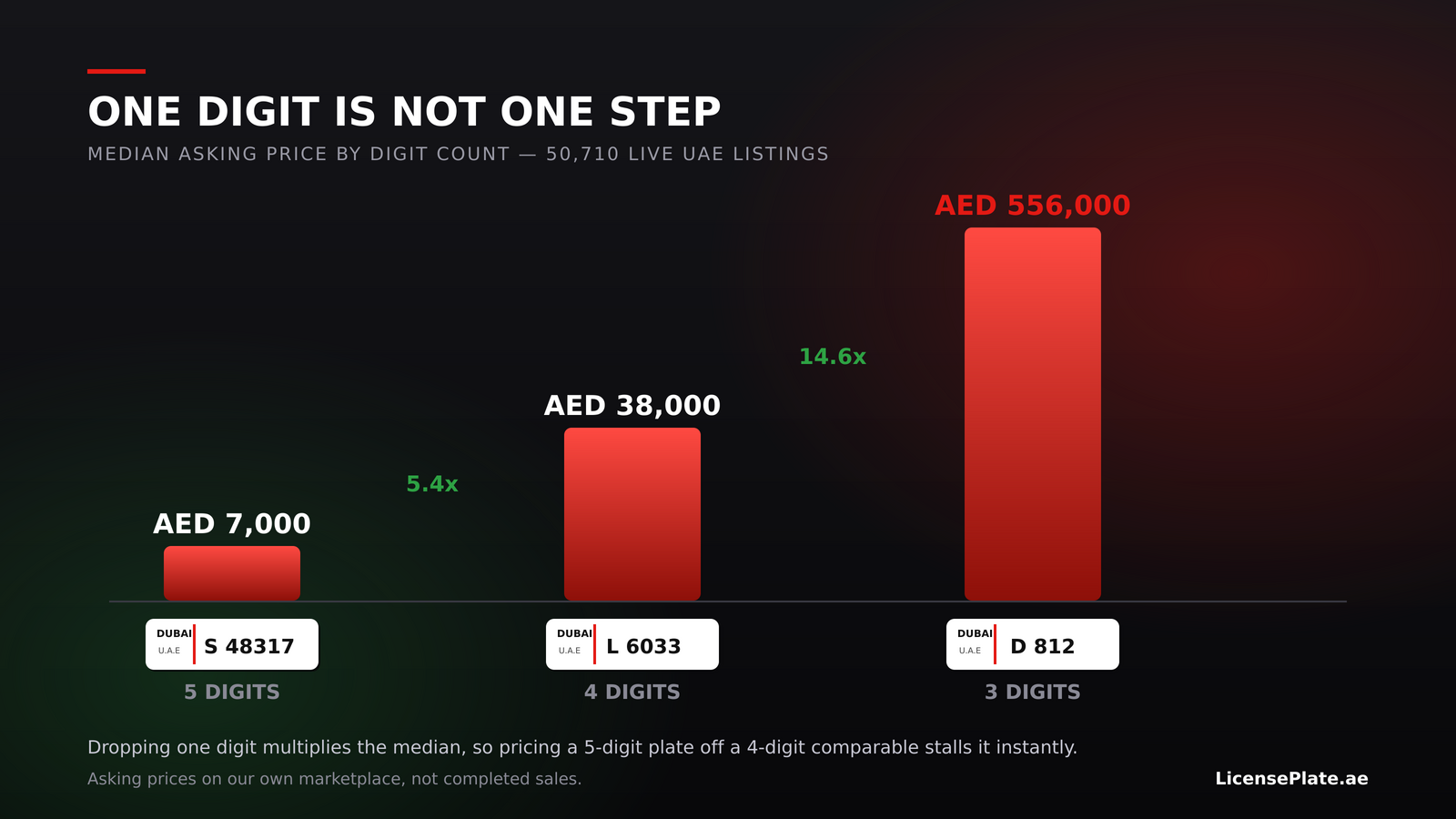
حين حلّلنا 50,710 إعلاناً حيّاً على سوقنا، كان السعر الوسيط المطلوب 7,000 درهم للوحة من خمس خانات، و38,000 درهم لأربع، و556,000 درهم لثلاث.
اقرأ تلك الفجوات بتمعّن. فالانتقال من خمس خانات إلى أربع يضاعف الوسيط أكثر من خمس مرّات. ومن أربع إلى ثلاث يضاعفه مجدّداً نحو أربع عشرة مرّة. وحذف خانة واحدة ليس درجةً على سلّم — بل سوق مختلفة.
وأشيع خطأ تسعير مفرد ينتج مباشرةً: فالبائع يرى لوحة من أربع خانات على رمز مشابه معروضة بـ 40,000 درهم، فيستنتج أن رقمه الخماسي على الرمز نفسه ينبغي أن يجلب «ثلاثين ربّما»، فيسعّر بنحو خمسة أضعاف وسيط فئته. فلا يتواصل معه أحد، فيستنتج أن السوق بطيئة.
العلاج: سعّر مقابل لوحات بعدد الخانات نفسه أولاً، ثم عدّل للرمز والنمط. ودليل الأسعار بحسب الرمز وعدد الخانات وإطار التقييم لدينا يعملان بذلك الترتيب لهذا السبب.
السبب 2: أنت مرتكز على ما دفعته
ما دفعته حقيقة عن ماضيك، لا عن لوحتك. فإن اشتريت في ذروة شعبية رمز، أو اشتريت من تاجر بسعر التجزئة، فسعر شرائك احتوى أصلاً هامشاً لن يدفعه المشتري التالي مرّةً أخرى.
وهذا أصعبها عاطفياً، لأن رفض البيع دون التكلفة يبدو انضباطاً. وهو ليس كذلك — بل قرار بالاحتفاظ، وينبغي اتّخاذه بوعي (انظر متى تتوقّف عن البيع) لا تنكّره في هيئة استراتيجية تسعير.
السبب 3: أنت مرتكز على عنوان صحفي
كل بضعة أسابيع تُباع لوحة في مزاد برقم يتصدّر الأخبار. وتلك تركيبات استثنائية اشتراها مزايدون استثنائيون، غالباً في سياق خيري. وهي لا تخبرك شيئاً تقريباً عن رقم عادي.
وحجم التفاوت يسهل الاستهانة به. ففي الدراسة نفسها، 46.8% من كل الإعلانات الحيّة طلبت أقلّ من 10,000 درهم، و0.4% فقط طلبت أكثر من مليون درهم. والعناوين تأتي كلّها من ذلك الجزء العلوي من واحد بالمئة. والإعلان الوسيط في دبي يطلب 8,500 درهم.
العلاج: توقّف عن استخدام الأرقام القياسية في المزادات كمقارنات. وإن أردت فحص عقل، فإن تحليلنا لكيفية ارتفاع قيمة اللوحات فعلاً يغطّي لماذا لا ترفع الأسعار القياسية الأرقام العادية.
المرحلة الثانية: استفسارات تصمت
إن كان الناس يراسلونك ثم يختفون، فسعرك يعمل. وشيء آخر لا يعمل.
السبب 4: المشتري لا يستطيع التحقّق ممّا تبيعه
اللوحة أصل غير مادي يُنقَل عبر نظام رسمي. والمشتري الذي يتخلّى عن مال حقيقي يريد أن يعرف أنك تملك الرقم فعلاً، وأنه خالٍ من الأعباء، وأن النقل سينجح. فإن لم يعالج إعلانك وردودك ذلك، ينصرف المشتري الحذر — والمشترون الحذرون هم أصحاب المال.
العلاج: أجب عن أسئلة التحقّق قبل أن تُطرَح. اذكر صراحةً أن الرقم مسجّل باسمك، وأنك تحمل شهادة الملكية، وكيف سيُتمّ النقل. وقائمة العناية الواجبة لدينا مكتوبة للمشترين — اقرأها كبائع واستبق كل بند فيها.
السبب 5: أنت بطيء أو يصعب الوصول إليك
مشترو اللوحات كثيراً ما يكونون في وسط أمر مقيَّد بوقت: سيارة جديدة، أو تجديد تسجيل، أو هدية بموعد. والردّ الذي يصل بعد يومين يصل بعدما اشتروا شيئاً آخر.
العلاج: تأكّد أن بيانات التواصل في إعلانك محدَّثة ومراقَبة. يبدو هذا تافهاً. وهو مسؤول عن حصّة معتبرة من الإعلانات الميّتة.
السبب 6: الإعلان لا يعطيهم ما ينظرون إليه
المشترون يختارون بين بدائل متطابقة بصرياً. فالإعلان بصورة واضحة للرقم الفعلي ووصف حقيقي وموقف معلن من الرسوم يُقرَأ كبائع جادّ. والذي بلا شيء من ذلك يُقرَأ كشخص قد لا يردّ.
العلاج: أظهر الرقم بوضوح واذكر ما هو مشمول. ومقالنا عن كيف يؤثّر عرض اللوحة في إعادة البيع يغطّي لماذا يحرّك هذا الميزان أكثر ممّا يتوقّع البائعون.
المرحلة الثالثة: عروض لا تُغلَق قط
السبب 7: تعامل حكم السوق كإهانة
إن عرض عليك ثلاثة مشترين مستقلّين الرقم نفسه تقريباً، فذلك الرقم ليس عرضاً بخساً. بل هو سعر السوق، مكتشَفاً. فعرض منخفض واحد ضوضاء؛ وثلاثة عروض متّسقة بيانات.
والنسخة غير المريحة: السوق قيّمت لوحتك الآن أدقّ ممّا قيّمتها أنت، وكل شهر تقضيه في رفضها تكلفة احتفاظ.
السبب 8: تتفاوض ضدّ نفسك
إخفاقات شائعة: رفض ذكر رقم، أو التحرّك بزيادات ضئيلة تشير إلى وجود مجال أكبر بكثير، أو تقديم تنازل كبير بلا طلب في اللحظة التي يتردّد فيها المشتري. وكلٌّ منها يطيل الإجراء ويخفض الرقم النهائي.
العلاج: حدّد أرضيّتك قبل أن تنخرط، ثم تفاوض بخطوات منظّمة. ودليل التفاوض لدينا يغطّي الآليات.
السبب 9: تبيع في الأسبوع الخطأ
الانتباه في هذه السوق يتحرّك مع تقويم المزادات. ففي فترة الأربعة إلى الستّة أسابيع التي تسبق مزاداً كبيراً للهيئة، يراقب المشترون قائمة الدفعات لا الإعلانات الخاصة، وتقلّ الاستفسارات. وذلك أثر تقويمي، لا حكم على لوحتك — والأسابيع التي تلي مزاداً، حين يظلّ لدى المزايدين الخاسرين ميزانية وبلا رقم، من أفضل نوافذ الظهور.
العلاج: اقرأ متى تشتري ومتى تبيع قبل أن تستنتج أن أسبوعين هادئين يعنيان أن سعرك خاطئ.
النادر والقابل للبيع ليسا الشيء نفسه
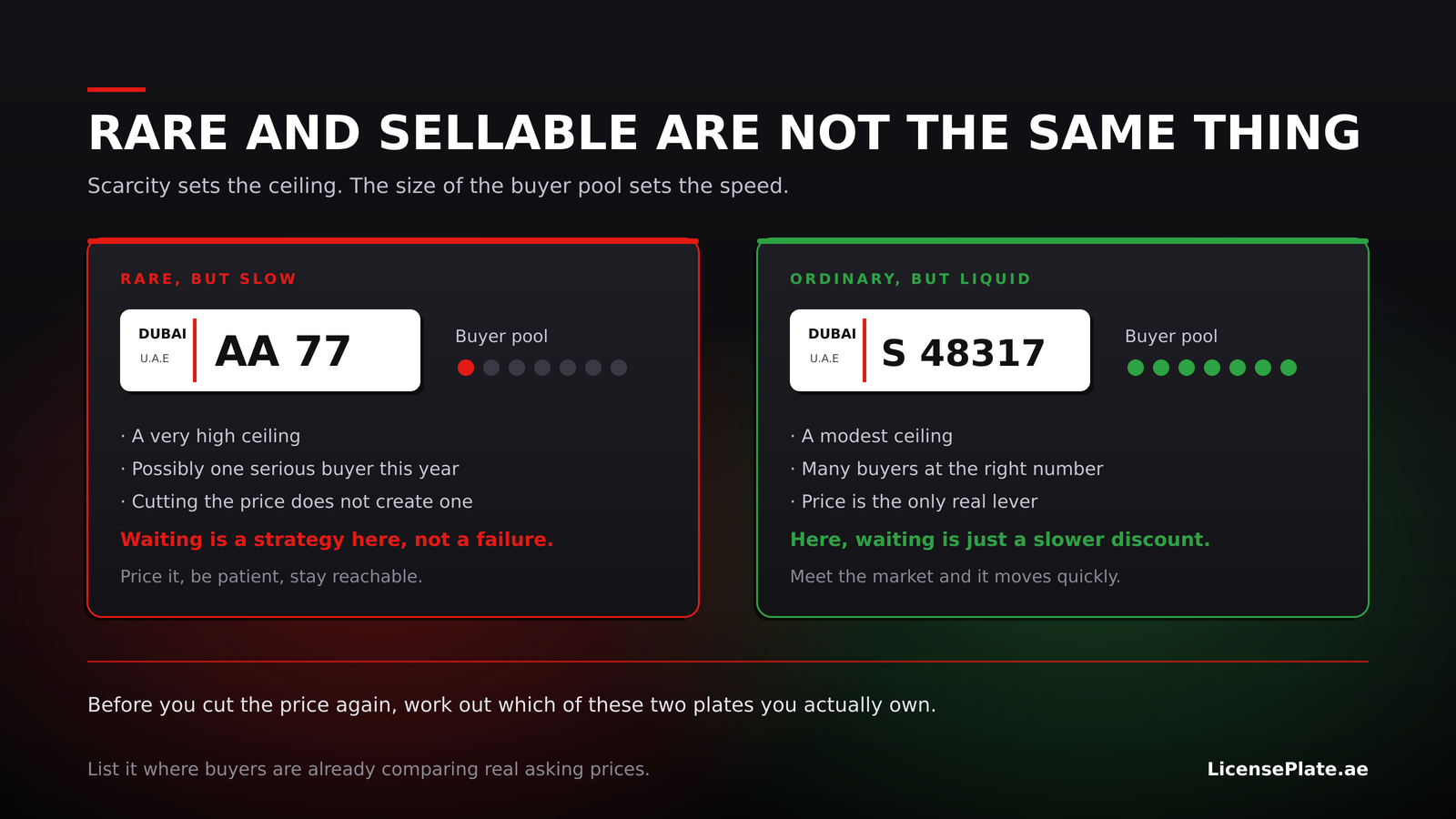
وهذا هو التمييز الذي يحلّ معظم الالتباس، ولا يكاد أحد يذكره صراحةً.
الندرة تحدّد إلى أي مدى يعلو السعر. والسيولة تحدّد بأي سرعة تحقّقه. وهما ليستا الخاصية نفسها، وقد يسجّل رقم غير معتاد علامةً عالية في الأولى ومنخفضة في الثانية.
فاللوحة المميّزة جداً قد يكون سقفها بالملايين وقاعدة مشتريها الواقعية حفنة أشخاص حول العالم، ربّما واحد منهم يبحث هذه السنة. ولا شيء تفعله بالسعر يخلق مقتنياً ثانياً. وخفضه يعني فقط أنك حين يصل المشتري الوحيد ستبيع بأقلّ ممّا كان بإمكانك.
أما الرقم العادي من خمس خانات فسقفه متواضع ومشتروه المحتملون بالمئات. وهنا يكون السعر فعلاً الرافعة الوحيدة ذات المعنى، والتصلّب مجرّد خصم أبطأ، لأن تكاليف الاحتفاظ تتراكم بينما لا ترتفع قيمة الرقم.
فالسؤال العملي ليس «هل لوحتي جيّدة؟» بل «كم شخصاً يريد واقعياً هذا الرقم بعينه، وهل واحد منهم يتسوّق الآن؟» فإن كان الجواب الصادق «قلّة جداً»، فالصبر هو الاستراتيجية الصحيحة والإعلان المتعثّر ليس إخفاقاً. وإن كان الجواب «كثيرون»، ومع ذلك لا تُباع، فأنت عائد إلى المرحلة الأولى — السعر.
حين يكون الجواب الصحيح أن تتوقّف عن البيع
ليست كل لوحة ينبغي أن تكون في السوق، والدليل الصادق عليه قول ذلك.
- سترفض سعر السوق لو عُرِض عليك. إذاً أنت لست بائعاً. اسحب الإعلان بدل ترك إعلان بائت يتعلّم المشترون تخطّيه.
- لا ضغط وقت عليك والرقم نادر فعلاً. فالانتظار استراتيجية مشروعة حين تكون قاعدة المشترين ضئيلة.
- أنت في فترة ما قبل مزاد كبير وفي دفعاته رقم مماثل. انتظر حتى يعود الانتباه.
- الرقم ملتصق بشيء لست مستعدّاً للتخلّي عنه. فاللوحة التي تحمل سنة ميلاد أو دلالة عائلية ليست أصلاً مالياً محضاً. وذلك سبب مشروع للاحتفاظ بها.
وما ليس سبباً جيّداً للاحتفاظ: الاعتقاد بأن مزاداً قياسياً رفع قيمة رقم لا صلة له به.
قائمة إعادة العرض
- حدّد المرحلة. لا تواصل، أو تواصل ثم صمت، أو عروض مرفوضة.
- افحص سعرك مقابل عدد الخانات نفسه، لا مقابل لوحة بخانات أقلّ.
- قارن بالأسعار المطلوبة الحيّة، لا بعناوين المزادات، ولا بما دفعته.
- أجب مسبقاً عن التحقّق. الملكية، والشهادة، وإجراء النقل، ومن يدفع الرسوم.
- أصلح بيانات تواصلك والتزم بالردّ في اليوم نفسه.
- أظهر الرقم بوضوح واذكر ما هو مشمول.
- حدّد أرضيّتك سرّاً قبل أن تتفاوض مع أحد.
- افحص التقويم قبل أن تستنتج أن فترة هدوء ذنبك.
- قرّر بصدق ما إذا كنت بائعاً بسعر السوق. فإن لم تكن، فاسحب بدل أن تنجرف.
وإن كنت تعيد بناء الإعلان من الصفر، فإن دليل البيع الكامل لدينا يغطّي التسعير والعرض والإغلاق من أوّله إلى آخره، وحاسبة قيمة اللوحات تعطيك تقديراً أولياً.
الأسئلة الشائعة
لماذا لا تُباع لوحة رقمي؟
غالباً لأن السعر المطلوب أعلى من اللازم لعدد خاناتها، فالمشترون الذين يفلترون بالميزانية لا يرونها أصلاً. وإن وصلت استفسارات ثم توقّفت، فالسبب عادةً ثقة لا سعر. وإن وصلت عروض ورفضتها، فالسبب ارتكاز.
كيف أعرف إن كانت لوحتي مبالغاً في سعرها؟
قارنها بالأسعار المطلوبة الحيّة لعدد الخانات نفسه. فعبر 50,710 إعلان على سوقنا كان الوسيط 7,000 درهم لخمس خانات، و38,000 لأربع، و556,000 لثلاث.
هل من الطبيعي ألّا أتلقّى استفسارات إطلاقاً؟
لا. فغياب التواصل تماماً على مدى فترة ممتدّة أوضح إشارة ممكنة إلى أن السعر يفلترك خارج بحث المشترين.
ثلاثة مشترين عرضوا مبالغ متقاربة. هل ذلك عرض بخس؟
لا — بل هو سعر السوق يُكتشَف. فعرض منخفض واحد ضوضاء؛ وثلاثة عروض متّسقة بيانات.
هل أستمرّ في خفض السعر فحسب؟
فقط إن كان عَرَضك غياب التواصل تماماً. فإن كان المشترون يراسلونك ثم يصمتون، فالمشكلة ثقة وخفض السعر يتخلّى عن مال دون إصلاح شيء.
ما السعر الوسيط المطلوب للوحة رقم إماراتية؟
في دراستنا للإعلانات الحيّة، طلبت 46.8% أقلّ من 10,000 درهم و0.4% فقط أكثر من مليون درهم. والإعلان الوسيط في دبي طلب 8,500 درهم.
لماذا يراسلني المشترون ثم يختفون؟
عادةً لأنهم لم يستطيعوا الاطمئنان إلى أنك تملك الرقم وأن النقل سيكون مباشراً، أو لأنك ردّيت متأخّراً.
هل تُباع اللوحة النادرة دائماً بسعر أعلى؟
الندرة تحدّد السقف لا السرعة. فالرقم النادر جداً قد تكون قاعدة مشتريه ضئيلة ويستغرق وقتاً طويلاً للبيع، بينما الرقم العادي بمشترين محتملين كثر يتحرّك سريعاً بالسعر المناسب.
هل أخفض سعر لوحة نادرة جداً لا تُباع؟
عادةً لا. فخفض السعر لا يخلق مقتنياً ثانياً. وإن كانت قاعدة المشترين ضئيلة فعلاً، فالصبر هو الاستراتيجية.
هل يؤثّر تقويم المزادات في المبيعات الخاصة؟
نعم. ففي الأربعة إلى الستّة أسابيع قبل مزاد كبير، ينتقل الانتباه إلى قائمة الدفعات وتقلّ الاستفسارات الخاصة. والأسابيع التالية للمزاد أفضل غالباً.
هل أسعّر لوحتي بناءً على ما دفعته؟
لا. فسعر شرائك حقيقة عن ماضيك. وإن دفعت سعر التجزئة أو اشتريت في ذروة، فذلك الهامش لن يُدفَع مرّتين.
هل ترفع الأرقام القياسية في المزادات قيمة لوحتي؟
لا. فالأرقام القياسية تُحدَّد على تركيبات استثنائية بمزايدين استثنائيين. وهي تميل إلى رفع توقّعات البائعين لا الأسعار المتحقّقة.
كم ينبغي أن تستغرق لوحة لتُباع؟
لا يوجد رقم علني موثوق، لأن المبيعات الخاصة المكتملة لا تُنشَر كبيانات سوق. وما نستطيع قوله أن الأسعار المطلوبة مرئية وقابلة للمقارنة، وهناك يتباعد الإعلان المتعثّر عادةً.
هل أسحب إعلاني إن كنت لن أقبل سعر السوق؟
نعم. فإن كنت سترفض السعر السائد، فأنت محتفِظ لا بائع، والإعلان البائت يدرّب المشترين على تخطّيه.
ما أسرع علاج مفرد لإعلان متعثّر؟
أعد تسعيره مقابل لوحات بعدد الخانات نفسه. فذلك يحلّ أشيع سبب ولا يكلّف شيئاً لتجربته.
الخلاصة النهائية
الإعلان المتعثّر للوحة مشكلة تشخيصية لا لغز. فالسوق تخبرك أصلاً أين يخفق — وما عليك إلّا أن تقرأ في أي مرحلة يموت. فالصمت يعني السعر. والاهتمام الذي يتبخّر يعني الثقة. والعروض التي ترفضها باستمرار تعني أن التقييم تقييمك لا تقييم السوق.
وتحت ذلك كلّه يقع التمييز الذي لا يذكره معظم البائعين قط: النادر والقابل للبيع خاصّيتان مختلفتان. فالندرة تحدّد إلى أي مدى يعلو رقمك. وعدد من يريدون واقعياً تلك التركيبة بعينها يحدّد بأي سرعة تصل. ومعرفة أيّهما يصف لوحتك تخبرك هل تعيد التسعير أم تنتظر ببساطة.
وحين تكون جاهزاً لرؤية ما تطلبه الأرقام المماثلة فعلاً، تصفّح أرقام اللوحات المعروضة للبيع في الإمارات أو حصر البحث في أرقام دبي.