

رحلة مشتري لوحة دبي لأول مرّة: من الفضول إلى امتلاك لوحتك الأولى
قبل ستّة أشهر، رأيت رينج روفر بلوحة دبي رباعية عند إشارة مرور على شارع الشيخ زايد وتساءلت كيف سيكون الشعور بقيادة سيارة بلوحة تُقرأ نظيفة وقصيرة. وقبل ثلاثة أشهر، ذكر صديق على العشاء أنه اقتنى لوحة خماسية برمز R بـ 4,500 درهم وأن العملية كانت أسهل ممّا توقّع. والأسبوع الماضي، كتبت أخيراً 'كيف أشتري لوحة رقم في دبي' في جوجل واكتشفت سوقاً بصفقات قياسية بلغت 55 مليون درهم، وستّة أنواع لوحات، وسبعة رموز إمارات، وإطاراً تنظيمياً يبدو مرهباً من الخارج. فأغلقت التبويب. وعدت إليه الليلة.
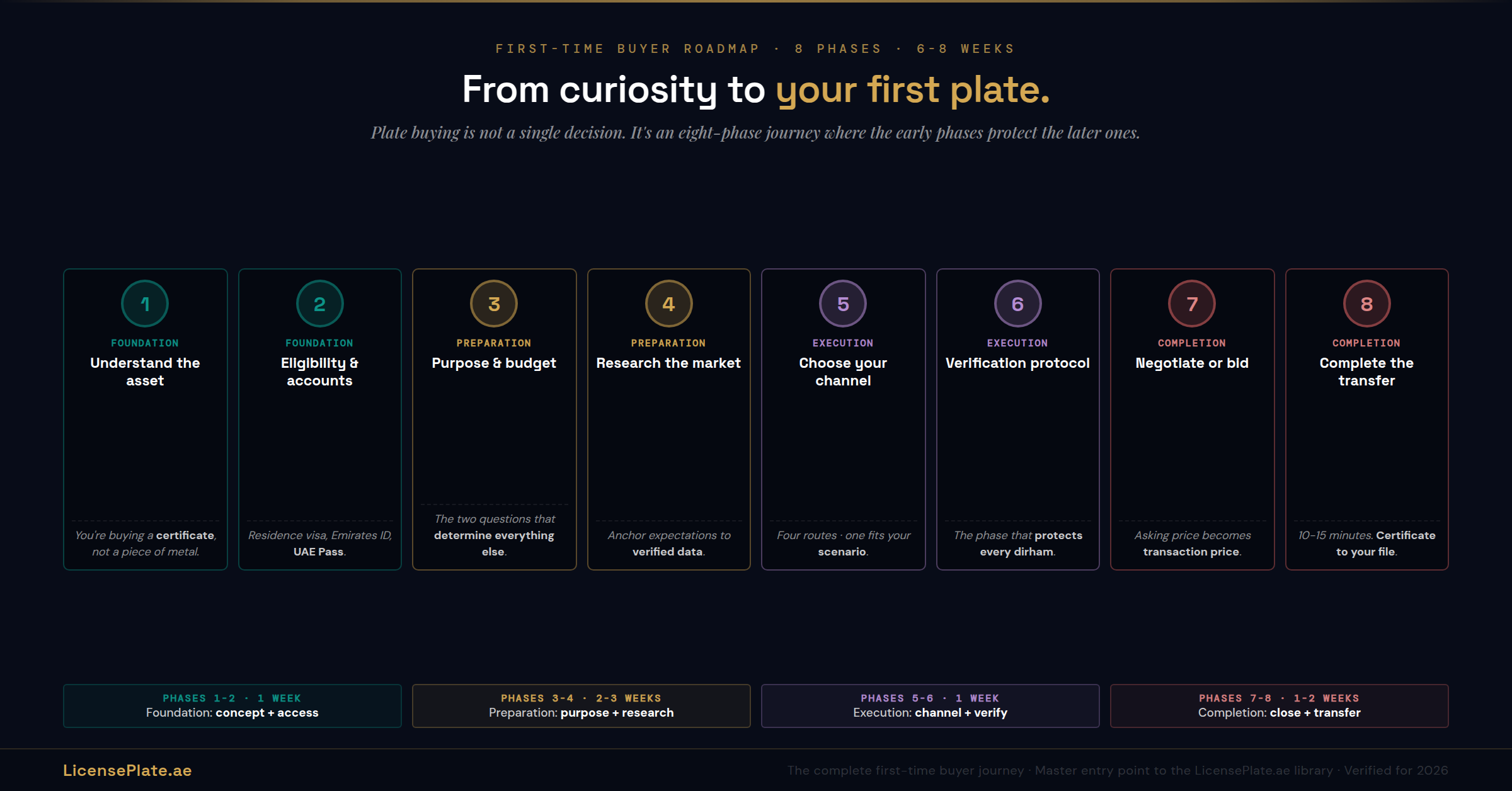
أهلاً بك. الرهبة طبيعية. فللسوق منحنى تعلّم، لكنه ليس بحدّة ما تُظهره مزادات العناوين. فكل مالك لوحة في دبي بدأ تماماً حيث أنت الآن: يعرف أنه يريد شيئاً، ولا يعرف الطريق إليه. والخبر الجيّد أن الطريق موثّق جيّداً. والأفضل أنه بالنسبة للمشترين لأول مرّة، تجري الرحلة في ثماني مراحل يمكن التنبّؤ بها. اقرأها بالترتيب، وأنجز العمل في كل مرحلة، وستكون لوحتك الأولى في ملفّك المروري خلال ستّة إلى ثمانية أسابيع. أما تخطّي المراحل فيجعلك أحد أولئك الذين تبدأ قصّة لوحتهم الأولى بعبارة 'ليتني كنت أعرف'.
وتنشر هذه القطعة الرحلة الكاملة بثماني مراحل لمشتري لوحات دبي لأول مرّة. لكل مرحلة عملها الخاص، وقرارها الخاص، وقطعتها الخاصة في مكتبة LicensePlate.ae التي تغطّي التفاصيل التشغيلية بعمق. عامل هذا المقال كالخريطة الرئيسية. وكل مرحلة ترتبط بالتعمّق حين تحتاجه. وبنهايتها ستعرف بالضبط أين أنت في الرحلة، وكيف تبدو المرحلة التالية، وماذا تفعل حين تصل إليها.
المرحلة 01 افهم ما الذي تشتريه فعلاً
قبل أي شراء، الأساس المفاهيمي
أول ما ينبغي استيعابه هو ما تكونه لوحة دبي فعلاً، قانوناً. فأنت لا تشتري قطعة معدن. أنت تشتري أصلاً قانونياً اسمه شهادة ملكية رقم اللوحة، مسجّلة بهويتك الإماراتية وتقيم داخل ملفّك المروري لدى الهيئة. واللوحة المادية التي تُثبَّت على سيارتك هي التمثيل المرئي؛ أما الشهادة فهي ما تملكه فعلاً. ويغطّي مقال تشريح صفقة اللوحة آليات عمل الملكية في نظام الهيئة.
ولماذا يهمّ هذا التمييز: لأنه يغيّر كيف تفكّر في كل قرار لاحق. فإن عاملت اللوحة كقطعة معدن، ركّزت على الأشياء الخاطئة (أي نمط، وأي لون شعار). وإن عاملتها كأصل قانوني، ركّزت على الأشياء الصحيحة (أي رمز حرف، وأي عدد أرقام، وأي نمط، وما إمكانية إعادة البيع). ويحوي معجم LicensePlate.ae المفردات الكاملة إن كان أي مصطلح في هذه القطعة غير مألوف.
حصيلة المرحلة 1: تستطيع الإجابة عن سؤال 'ما الذي أوشك على شرائه' بـ: 'شهادة ملكية رقم لوحة مسجّلة بهويتي الإماراتية، برمز حرف وتركيبة أرقام محدّدة تحدّد قيمتها السوقية.' وإن لم تستطع الإجابة بعد، فاقرأ مقال التشريح والمعجم قبل الانتقال إلى المرحلة 2.
المرحلة 02 أكّد أهليّتك وجهّز حساباتك
الشرطان المسبقان قبل أي صفقة لوحة
قبل أن تستطيع شراء أي لوحة دبي عبر أي قناة، تحتاج شيئين. أولاً، الأهلية. وثانياً، إعداد الحسابات. وكلاهما مباشر إن كانت إقامتك سليمة؛ وكلاهما عائق إن لم تكن.
الأهلية
تعرّف الهيئة المشترين المؤهّلين بأنهم المواطنون والمقيمون والدبلوماسيون. ويغطّي دليل أهلية الوافدين الإطار الكامل بالتفصيل. وعملياً، تحتاج تأشيرة إقامة إماراتية سارية، وهوية إماراتية صالحة، وملفّاً مرورياً في دبي (يُنشأ تلقائياً حين تسجّل مركبة في دبي أو تتقدّم لرخصة قيادة في دبي). وإن كانت تأشيرة إقامتك صادرة في إمارة أخرى، فلا يمكنك تسجيل اللوحة على مركبة في دبي ما لم تكن لديك وثائق دبي إضافية: عقد إيجار، أو ملكية عقار، أو صفة مستثمر، أو عمل في شركة لها فرع في دبي.
وحاملو تأشيرات السياحة لا يستطيعون شراء لوحات دبي. ويفنّد مقال خرافات اللوحات المفهوم الخاطئ المستمرّ بأن الزوّار في إجازة يمكنهم اقتناء لوحة كتذكار. لا يستطيعون. ففحص الأهلية بنيوي.
إعداد الحسابات
حسابان يمنحانك كل ما تحتاجه. الهوية الرقمية UAE Pass (الهوية الرقمية الموحّدة المستخدمة عبر الخدمات الحكومية الإماراتية) وحساب لدى الهيئة (يرتبط تلقائياً بملفّك المروري بمجرّد تسجيل الدخول بالهوية الرقمية). حمّل تطبيق UAE Pass، وأكمل التحقّق مرّة واحدة، وستتمكّن من الدخول إلى أي خدمة لدى الهيئة عبر المصادقة البيومترية على هاتفك. والإعداد يستغرق نحو خمس عشرة دقيقة إن كانت هويتك الإماراتية سارية؛ وأطول إن احتجت تجديدها أولاً.
حصيلة المرحلة 2: أكّدت الأهلية، وجهّزت الهوية الرقمية UAE Pass، ودخلت بوابة الهيئة، وتستطيع رؤية ملفّك المروري. وإن عرقلك أي شيء في هذه المرحلة (تأشيرة صادرة في إمارة أخرى، أو هوية إماراتية منتهية، أو إخفاق التحقّق في UAE Pass)، فحلّه قبل المضيّ. فمشتريات اللوحات دون الأهلية الأساسية لا تكتمل في نظام الهيئة بغضّ النظر عن القناة المستخدمة.
المرحلة 03 حدّد غرضك وميزانيتك
السؤالان اللذان يحدّدان كل شيء آخر
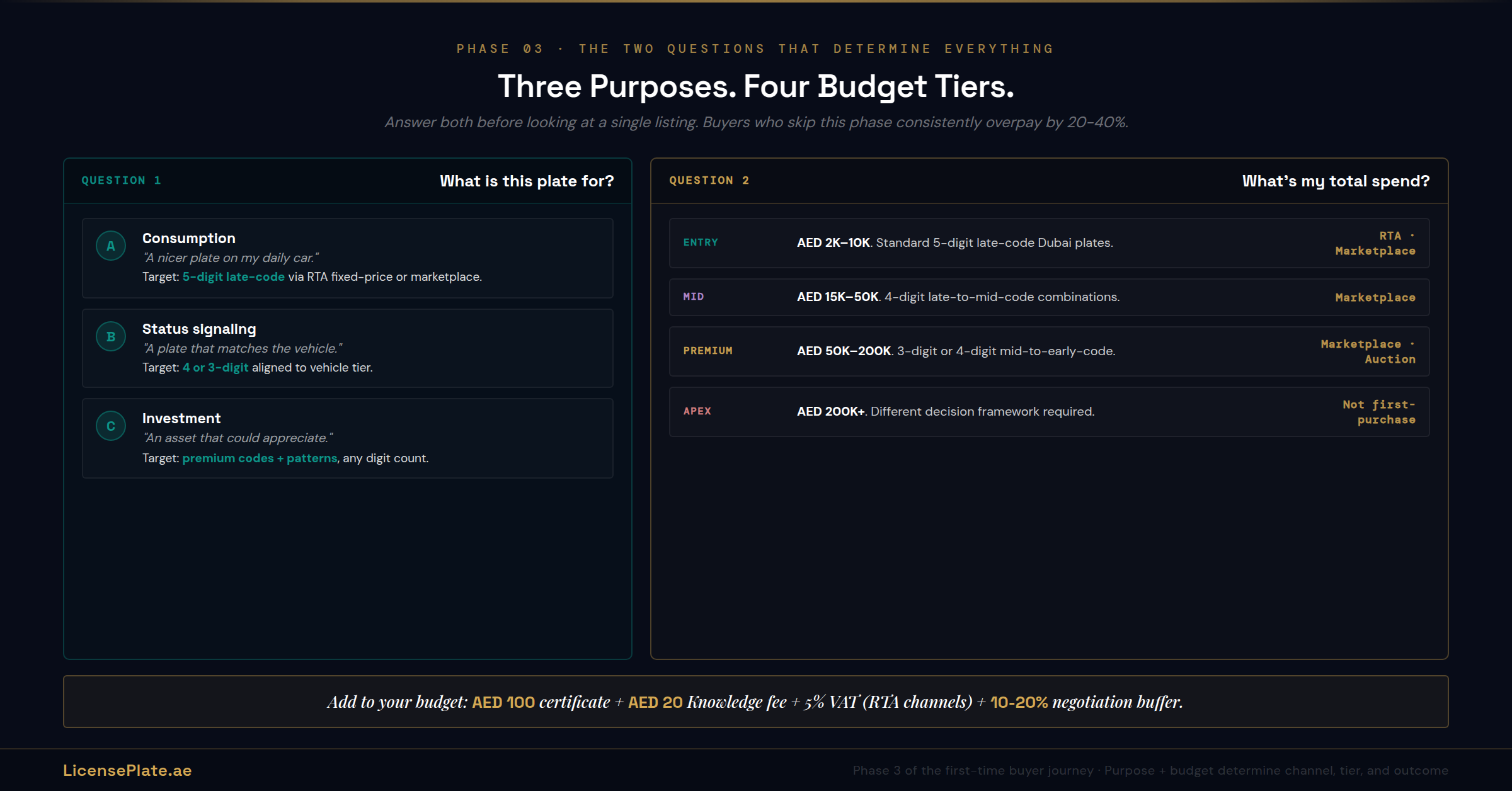
على كل مشترٍ لأول مرّة أن يجيب عن سؤالين قبل النظر إلى إعلان واحد: ما الغرض من هذه اللوحة، وما حدّي الرأسمالي الفعلي. والسؤالان يبدوان بديهيين؛ وكلاهما يُجاب عنه خطأً باستمرار.
سؤال الغرض
توجد ثلاثة أغراض صادقة لمشتري اللوحات لأول مرّة. الاستهلاك ('أريد لوحة أجمل على سيارتي اليومية'). وإشارة المكانة ('أريد لوحة تطابق المركبة التي اشتريتها للتوّ'). والاستثمار ('أريد أصلاً قد ترتفع قيمته'). ومعظم المشترين لأول مرّة يريدون مزيجاً من الثلاثة، وهذا مقبول. والمهمّ أن تكون صريحاً مع نفسك، لأن الغرض يحدّد القناة والشريحة.
فمشترو الاستهلاك ينبغي أن يستهدفوا لوحات خماسية من رموز متأخّرة (بين 2,000 و8,000 درهم)، تُشترى عبر السوق للاختيار أو عبر الشراء الفوري بسعر ثابت من الهيئة للسرعة. ومشترو المكانة ينبغي أن يستهدفوا لوحات رباعية أو ثلاثية متوائمة مع شريحة سعر المركبة (بين 15,000 و200,000 درهم)، تُشترى عبر السوق أو مزاد الهيئة. ومشترو الاستثمار ينبغي أن يستهدفوا الرموز والأنماط المميّزة بغضّ النظر عن عدد الأرقام، بالرجوع إلى دليل الاستثمار للإطار الكامل.
سؤال الميزانية
قرّر أقصى إنفاق إجمالي قبل النظر إلى الإعلانات، لا بعده. والحساب بسيط: السعر السوقي للوحة، إضافةً إلى 100 درهم رسم شهادة الملكية لدى الهيئة، إضافةً إلى 20 درهماً رسم المعرفة والابتكار، إضافةً إلى 5% ضريبة قيمة مضافة على المشتريات عبر قناة الهيئة (المبيعات الثانوية الخاصة معفاة من الضريبة)، إضافةً إلى أي هامش تفاوضي (من 10 إلى 20% فوق هدفك لترك مساحة). ويحوي مقال التكاليف والرسوم التفصيل الكامل للرسوم عبر كل سيناريو.
وشرائح الميزانية الشائعة للمشترين لأول مرّة: الدخول (من 2,000 إلى 10,000 درهم، مستهدفةً لوحات خماسية قياسية من رموز متأخّرة)، والوسطى (من 15,000 إلى 50,000 درهم، مستهدفةً لوحات رباعية من رموز متأخّرة إلى متوسّطة)، والمميّزة (من 50,000 إلى 200,000 درهم، مستهدفةً لوحات ثلاثية أو رباعية من رموز متوسّطة إلى مبكّرة)، والقمّة (فوق 200,000 درهم، وتتطلّب أطر قرار مختلفة وليست عادةً نطاق الشراء الأول).
حصيلة المرحلة 3: دوّنت (حرفياً، على ورق أو في تطبيق ملاحظات) غرضك من الشراء وأقصى إنفاق إجمالي شاملاً الرسوم والضريبة. وينبغي أن تبدو الأرقام مريحة لا طموحة. فاللوحات الأولى التي تمدّ ميزانيتك تتحوّل إلى ندم خلال أشهر حين تحلّ تكاليف تجديد التسجيل والتأمين والتكاليف المستمرّة.
المرحلة 04 ابحث في السوق
ثبّت توقّعاتك على بيانات موثّقة
مع تحديد الغرض والميزانية، تبدأ الآن البحث. ومعظم المشترين لأول مرّة يتخطّون هذه المرحلة ويدفعون من 20 إلى 40% فوق السوق لأنه ليس لديهم مراجع يردّون بها على أسعار الطلب. ومرحلة البحث تستغرق عطلة أسبوع وتوفّر آلاف الدراهم.
ثلاثة مصادر للدراسة
المصدر الأول: مقال التحقّق من أسعار اللوحات. يغطّي ما يكلّفه كل رمز وعدد أرقام فعلاً في السوق الحالية، بنطاقات موثّقة من مزادات الهيئة والإعلانات النشطة في السوق. اقرأه مرّة للمشهد التسعيري العام، ثم مرّة أخرى وهدفك المحدّد في ذهنك.
المصدر الثاني: دليل رموز اللوحات من A إلى Z. يغطّي شرائح هيبة الحروف (القمّة من A إلى D، والتراث من E إلى K، والوسطى من L إلى N، والمتأخّرة من P إلى Z، والخاصة من AA إلى EE). وفهم نظام الشرائح يخبرك أي الرموز في متناول ميزانيتك. فلوحة رباعية برمز A محادثة بملايين الدراهم؛ ولوحة رباعية برمز R محادثة بعشرين ألف درهم. عدد الأرقام نفسه، وسوقان مختلفتان جداً.
المصدر الثالث: إعلانات سوق LicensePlate.ae. تصفّح أسعار الطلب الحالية ضمن شريحة ميزانيتك. وانتبه إلى كم لوحة مشابهة معروضة (إشارة العرض) وكيف يبدو الفارق بين أسعار الطلب (إشارة مساحة التفاوض). وتدرج المنصّة أكثر من 100,000 إعلان نشط، وهي أعمق إشارة عرض متاحة في أي مكان في سوق اللوحات الإماراتي.
استخدم الحاسبة كطبقة تحقّق
تشغّل حاسبة قيمة اللوحات على LicensePlate.ae منهجية التقييم نفسها التي يستخدمها المحترفون، مرتكزةً على أكثر من 100,000 صفقة موثّقة ومحدَّثة كل ساعة. وحين تجد إعلاناً يعجبك، مرّر اللوحة عبر الحاسبة. فإن وقع سعر الطلب ضمن النطاق المتوسّط إلى الأعلى للحاسبة، كان الإعلان بسعر السوق العادل. وإن وقع فوق النطاق الأعلى، فلديك قوّة تفاوضية. وإن وقع دون النطاق الأدنى، فعامل الإعلان بشكّ إضافي (شرعي، لكن تحقّق أنه ليس احتيالاً). ويعلّم إطار التقييم الذاتي أسلوب المدخلات الأربعة والمعدّلات الثلاثة لتطوير حدسك الخاص.
حصيلة المرحلة 4: تستطيع تسمية ثلاث لوحات محدّدة في السوق تناسب غرضك وميزانيتك، بنطاقات قيمة موثّقة لكل منها. وتعرف كيف يبدو سعر السوق العادل لشريحتك المستهدفة. ولم تعد تخمّن.
المرحلة 05 اختر قناة الشراء
أربعة مسارات، واحد يناسب سيناريوك تحديداً
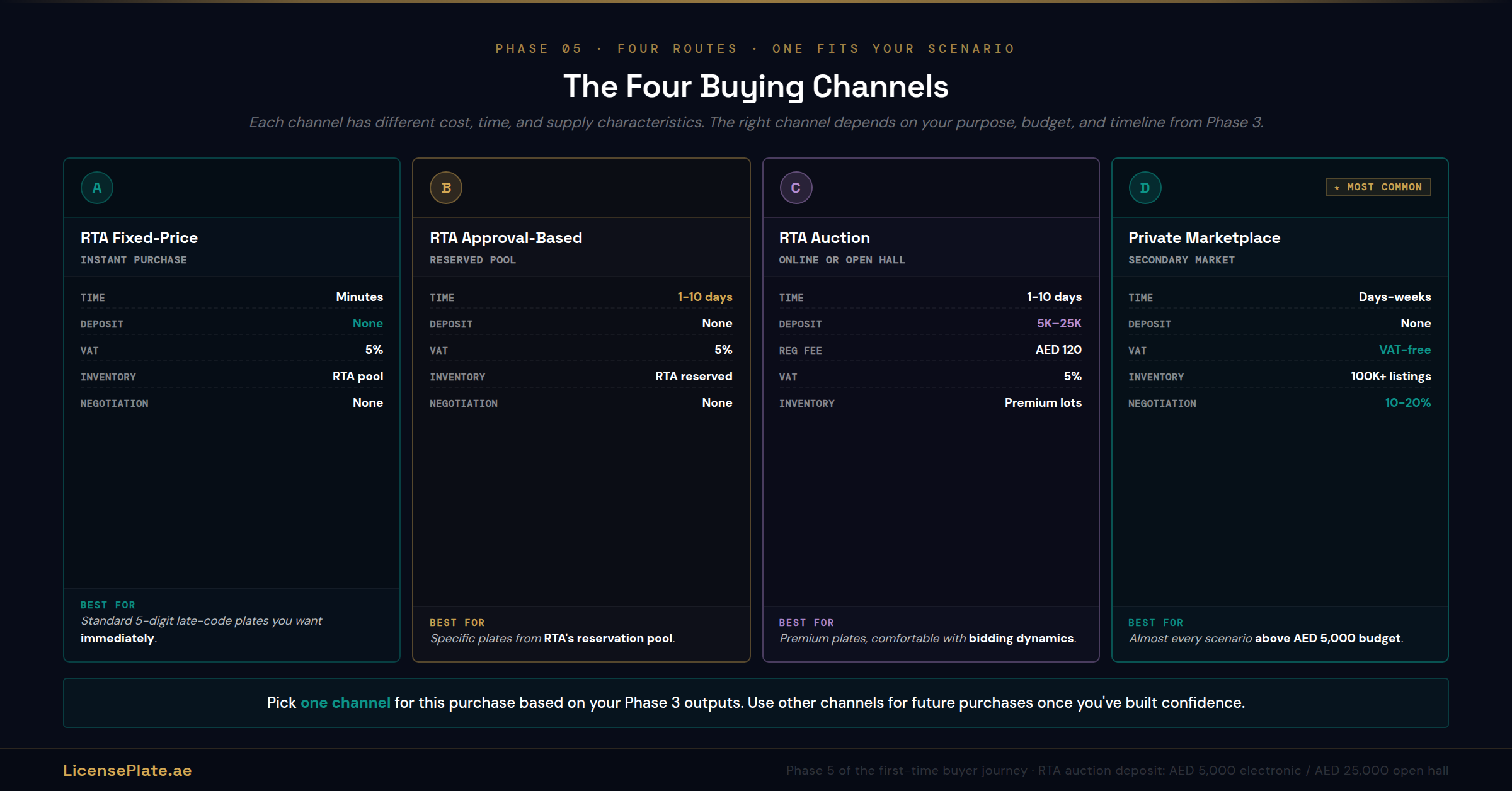
لدبي أربع قنوات شرعية لشراء لوحة. ولكل قناة آليات مختلفة، وأعباء كلفة مختلفة، وتوقيت مختلف، وخصائص عرض مختلفة. والقناة الصحيحة تعتمد على غرضك وميزانيتك وجدولك الزمني.
القناة أ: الشراء الفوري بسعر ثابت من الهيئة
سجّل الدخول إلى الهيئة عبر UAE Pass، وتصفّح اللوحات المتاحة في قسم 'شراء رقم لوحة جديد'، واختر واحدة، وادفع، واستقبل شهادة الملكية برسالة نصية. ويشرح دليل الشراء في دبي لدى الهيئة الخطوات التشغيلية الكاملة. الأنسب لـ: اللوحات الخماسية القياسية من رموز متأخّرة التي تريدها فوراً. زمن الإغلاق: دقائق إلى ساعات. المخزون: اللوحات القياسية المتاحة لدى الهيئة بأسعار ثابتة.
القناة ب: الشراء المبني على الموافقة من الهيئة
بوابة الهيئة نفسها، لكن للوحات التي تتطلّب موافقة (عادةً التركيبات الأكثر رغبةً). تقدّم الطلب، وتراجعه الهيئة خلال ما يصل إلى 10 أيام عمل، ثم تدفع إن ووفق عليه. الأنسب لـ: لوحات محدّدة تريدها من مخزون حجوزات الهيئة. زمن الإغلاق: من يوم إلى 10 أيام عمل.
القناة ج: مزاد الهيئة
صيغتان. مزادات إلكترونية شهرية، بشيك تأمين قدره 5,000 درهم ورسم تسجيل غير مسترد قدره 120 درهماً. ومزادات قاعة مفتوحة فصلية في أماكن مثل جراند حياة دبي وهيلتون الحبتور سيتي، بشيك تأمين قدره 25,000 درهم ورسم تسجيل قدره 120 درهماً. ويتتبّع تقويم مزادات الهيئة 2026 كل تاريخ وكل نتيجة. الأنسب لـ: اللوحات المميّزة والمشترين المرتاحين لديناميكيات المزايدة. وليس القناة الطبيعية للشراء الأول لمعظم المبتدئين.
القناة د: السوق الثانوية الخاصة (السوق الإلكترونية)
القناة الأشيع للمشترين المميّزين لأول مرّة. تصفّح الإعلانات على LicensePlate.ae (بوساطة وكيل للخصوصية)، حيث تُوثَّق الإعلانات ولا تُعرض هويّتك علناً. وتفاوض مع البائع. وبمجرّد الاتفاق، يبدأ الطرفان عملية نقل ملكية اللوحة لدى الهيئة. ويشرح دليل الشراء على LicensePlate.ae سير العمل الخاص بالسوق.
الأنسب لـ: كل سيناريو تقريباً فوق ميزانية 5,000 درهم. فالاختيار أعمق، ومساحة التفاوض حقيقية (فجوة نمطية من 10 إلى 20% بين أسعار الطلب وأسعار الصفقات)، والقناة معفاة من الضريبة للمبيعات الخاصة بين الأفراد.
ملاحظة: معظم المشترين ذوي الخبرة يستخدمون قنوات متعدّدة لأغراض مختلفة. لوحات شريحة الدخول عبر الشراء الفوري من الهيئة. واللوحات الوسطى والمميّزة عبر السوق. ولوحات القمّة عبر المزادات. وكمشترٍ لأول مرّة، اختر قناة واحدة لهذا الشراء بناءً على غرضك وميزانيتك. ويمكنك استخدام قنوات أخرى لمشتريات مستقبلية بمجرّد بناء الثقة.
حصيلة المرحلة 5: اخترت القناة التي تناسب هذا الشراء تحديداً. وراجعت القطعة الإجرائية لتلك القناة. وتعرف كيف تبدو الخطوات التالية تشغيلياً.
المرحلة 06 شغّل بروتوكول التحقّق
قبل أي دفع، وقبل أي التزام
هذه هي المرحلة التي تفصل المشترين الذين يتمّون صفقات نظيفة عن المشترين الذين يدفعون من 4,500 إلى 9,000 درهم مخالفات غير مفصح عنها، أو ينتهون بلوحات مقيَّدة لا تُنقل، أو في حالات نادرة يخسرون أموالهم كلّها للاحتيال. والتحقّق غير قابل للتفاوض. والعمل يستغرق عشر دقائق لكل لوحة ويحمي كل درهم توشك على إنفاقه.
بروتوكول التحقّق بأربعة مسارات
ينشر سير عمل فحص لوحة دبي بروتوكول التحقّق الكامل قبل الشراء. أربعة مسارات بالتسلسل الصحيح:
المسار الأول: استعلام المركبات لدى الهيئة. أكّد أن اللوحة مسجّلة ونشطة وخالية من الرهون أو القيود. والاستعلام الأساسي يعيد معلومات مالك مقنَّعة؛ أما الإفصاح الكامل المشروط بالموافقة فيتطلّب أن يشارك البائع رمزاً نصياً ترسله له الهيئة.
المسار الثاني: فحص المخالفات المزدوج. مخالفات الهيئة (المواقف، والتزام المركبة) ومخالفات شرطة دبي (مخالفات الحركة، والسرعة) تعمل على أنظمة مختلفة. شغّل الاثنين. واحسب الإجمالي غير المسدّد. وقرّر: أن تشترط على البائع تسديد المخالفات قبل النقل، أو أن تتفاوض على خفض سعر الشراء بمقدارها، أو أن تنسحب.
المسار الثالث: الفحص بين الإمارات. بوابة EVG.ae والبوابة الاتحادية لوزارة الداخلية تلتقطان التزامات تفوّتها فحوص دبي وحدها. ومهمّ خصوصاً للوحات ذات تاريخ قيادة عبر إمارات متعدّدة.
المسار الرابع: بروتوكول ما قبل الصفقة. ادمج ما سبق في تسلسل من خمس خطوات ينتهي بقرار أخضر أو أصفر أو أحمر. الأخضر يمضي، والأصفر يمضي بشروط مكتوبة، والأحمر ينسحب.
حمايات إضافية
تغطّي قائمة العناية الواجبة للتحقّق قائمة العناية الواجبة الكاملة من 10 نقاط. ويغطّي دليل الاحتيال فئات احتيال اللوحات الخمس في الإمارات، وهو مفيد للتعرّف على أنماط البائعين المشبوهين. ويغطّي دليل السلامة من عمليات النصب ما تفعله إن شعرت أن شيئاً ما ليس على ما يرام.
حصيلة المرحلة 6: شغّلت التحقّق على لوحتك المختارة، والنتيجة خضراء (أو صفراء بشروط مكتوبة مستوفاة)، وأنت واثق أن اللوحة هي ما يدّعيه البائع. وإن كانت النتيجة حمراء، فانسحبت وعدت إلى المرحلة 4 لإيجاد لوحة أخرى. وهذه أيضاً حصيلة ناجحة للمرحلة 6.
المرحلة 07 تفاوض أو زايد
المحادثة التي تحوّل سعر الطلب إلى سعر الصفقة
إن اخترت السوق أو القناة الثانوية الخاصة، فهناك محادثة تفاوض بينك وبين البائع. وإن اخترت مزاد الهيئة، فهناك قرار مزايدة. وكلتا المرحلتين تحوّلان القيمة السوقية الموثّقة من المرحلة 4 إلى سعر الصفقة النهائي. وكلتاهما حيث يدفع المشترون لأول مرّة أكثر من اللازم غالباً لأنهم لم يستعدّوا.
للتفاوض في السوق والصفقات الخاصة
ينشر دليل التفاوض الإطار الكامل لمفاوضات اللوحات. وثلاثة مبادئ للمشترين لأول مرّة تحديداً:
أولاً، ارتكز على بيانات موثّقة لا على مشاعر. فلديك مخرجات الحاسبة، والإعلانات المقارنة من المرحلة 4، وميزانيتك الثابتة. وهذه مراسيك. والبائع سيبدأ على الأرجح فوق السوق؛ وأنت تردّ بأرقام مرتكزة على الحاسبة، لا بردّ فعلك العاطفي على سعر الطلب.
ثانياً، اقبل أن مساحة تفاوض من 10 إلى 20% معيارية. فأسعار الطلب في الأسواق مضخّمة عمداً لترك مساحة. وعرض أول عند سعر الطلب ناقص 15% معقول. وعرض أول عند ناقص 30% جريء لكنه مثمر غالباً. أما عرض أول بسعر الطلب كما هو فيخبر البائع أنك لا تعرف السوق.
ثالثاً، الاستعداد للانسحاب هو أقوى ما لديك. فإن كان لديك ثلاث لوحات في قائمتك المختصرة (كما ينبغي من المرحلة 4)، أمكنك الانسحاب من أيّها دون ذعر. والبائعون يشعرون بالفارق بين المشتري الذي يجب أن يحصل على هذه اللوحة تحديداً والمشتري الذي لديه بدائل.
للمزايدة في مزاد الهيئة
تغطّي قطعة تقويم المزادات استراتيجية المزايدة بعمق. وقاعدة المشتري لأول مرّة: حدّد أقصى مزايدة لك قبل بدء المزاد ودوّنها. فديناميكيات قاعة المزاد تنتج ظاهرة اسمها حمّى حرب المزايدة حيث تُتجاوز الحدود القصوى العقلانية بنسبة 20 إلى 50% في خضمّ اللحظة. والحدّ الأقصى المكتوب هو حمايتك من نفسك.
حصيلة المرحلة 7: اتّفقت على سعر صفقة مع البائع (السوق)، أو ربحت المزاد عند حدّك الأقصى المكتوب أو دونه (مزاد الهيئة). والرقم ثابت. وأنت جاهز للنقل.
المرحلة 08 أتمم النقل
محادثة العشر إلى الخمس عشرة دقيقة التي تجعل اللوحة لك قانوناً
المرحلة الأخيرة هي النقل التشغيلي عبر الهيئة. وهذه هي المرحلة التي تجعل اللوحة لك قانوناً بإصدار شهادة ملكية رقم اللوحة في ملفّك المروري. والآليات تعتمد على القناة.
لعمليات النقل عبر السوق أو الصفقات الخاصة
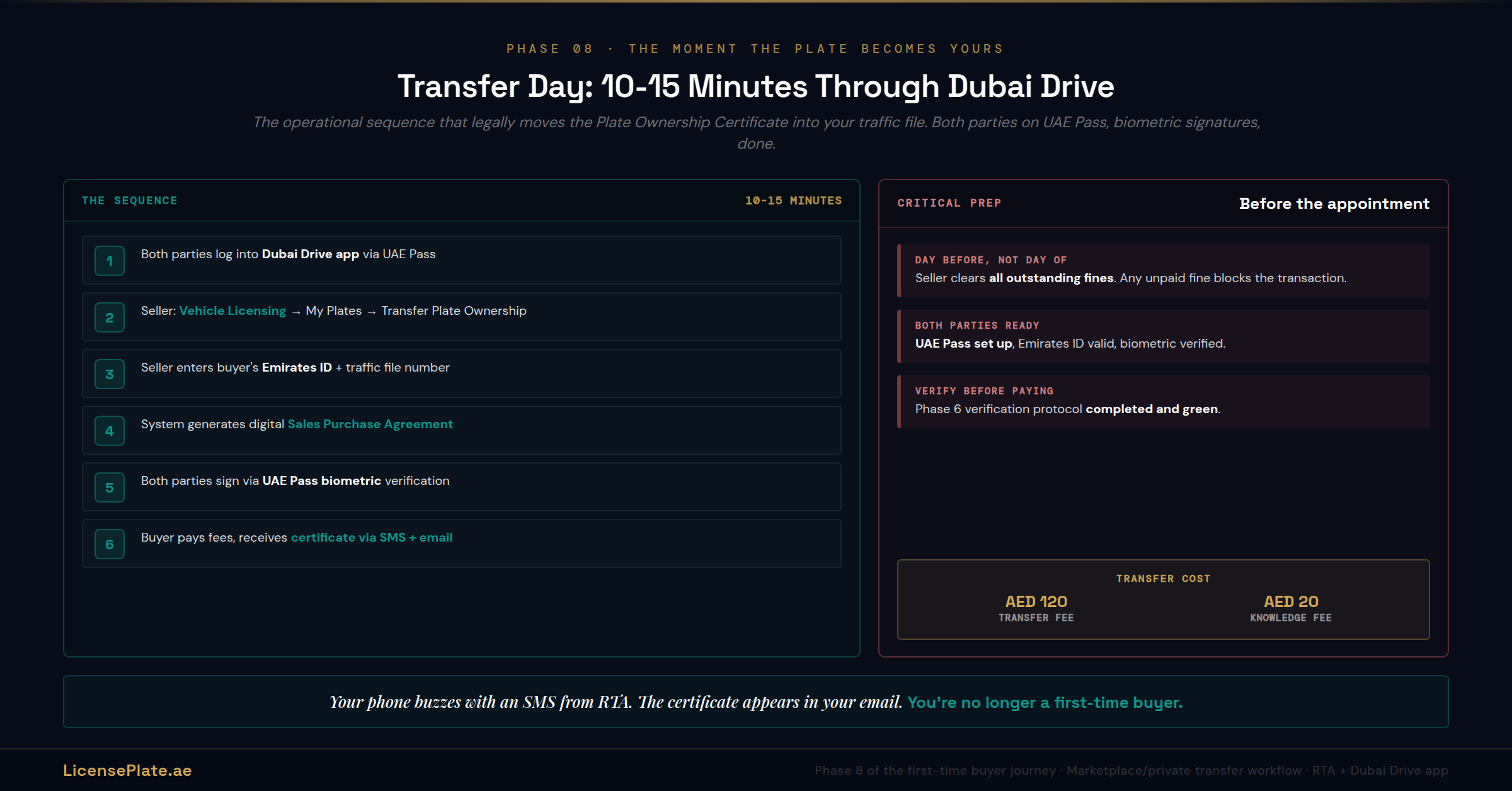
أسرع مسار عبر تطبيق Dubai Drive. يسجّل المشتري والبائع الدخول عبر UAE Pass. وينتقل البائع إلى خدمات ترخيص المركبات ← لوحاتي ← نقل ملكية اللوحة ويدخل رقم الهوية الإماراتية للمشتري ورقم ملفّه المروري. ويولّد النظام اتفاقية بيع وشراء رقمية. ويوقّع الطرفان عبر التحقّق البيومتري في UAE Pass. ويدفع المشتري 120 درهماً إضافةً إلى 20 درهماً رسم المعرفة والابتكار. ويستقبل المشتري شهادة النقل بالبريد الإلكتروني والرسائل النصية. الزمن الإجمالي: من 10 إلى 15 دقيقة إن كانت كل المخالفات مسدّدة وكان لدى الطرفين حساب UAE Pass. ويغطّي دليل تغيير لوحة دبي كل الحالات الطرفية بما فيها المركبات المموّلة، والهويات المنتهية، وسيناريوهات الوكالة القانونية.
لمشتريات الهيئة بسعر ثابت أو بموافقة
يشرح دليل الشراء في دبي لدى الهيئة سير عمل النقل الكامل للمشتريات عبر قناة الهيئة. وتصدر الشهادة تلقائياً من النظام بعد تسوية الدفع. ولا حاجة لتوقيع طرف مقابل.
للفوز في مزاد الهيئة
يدفع المزايدون الفائزون المبلغ الكامل خلال 10 أيام عمل. والنقد مقبول للمبالغ حتى 50,000 درهم؛ والشيكات المصدّقة أو الدفع ببطاقة الائتمان للمبالغ الأعلى. وتصدر الشهادة عبر الهيئة بعد تسوية الدفع.
ملاحظة: خطوة حاسمة من جانب البائع تحتاج أن يكملها قبل النقل: تسديد كل المخالفات المستحقّة على ملفّه المروري. ليس أثناء النقل. بل قبله. فأي مخالفة مستحقّة على ملفّ البائع تمنع الصفقة. ومعظم تأخّرات النقل لدى المشترين لأول مرّة تعود إلى هذا. أصرّ على أن يسدّد البائع المخالفات في اليوم السابق للموعد، لا في صباحه.
حصيلة المرحلة 8: يرنّ هاتفك برسالة نصية من الهيئة. وتظهر شهادة النقل في بريدك الإلكتروني. واللوحة مسجّلة بهويتك الإماراتية. وأتممت أول شراء لوحة دبي.
سبعة أخطاء يرتكبها المشترون لأول مرّة عبر الرحلة
الخطأ الأول: تخطّي المرحلة 1 كلّياً. معاملة اللوحة كقطعة معدن بدل أصل قانوني. يقود إلى قرارات شريحة خاطئة في كل مرحلة لاحقة. اقرأ مقال التشريح قبل أي شيء آخر.
الخطأ الثاني: البدء من المرحلة 5 (اختيار القناة) دون إنجاز المرحلتين 3 و4. فالمشترون الذين يقفزون إلى 'أين أشتري' قبل تحديد الغرض والميزانية وبحث السوق يدفعون باستمرار من 20 إلى 40% أكثر. والمراحل الأبكر تبدو كتحضير، لكنها العمل الذي ينتج نتائج جيّدة.
الخطأ الثالث: مدّ الميزانية للوصول إلى شريحة فوق ما هو مريح. تتحوّل اللوحة إلى ندم خلال أشهر. والتأمين وتجديد التسجيل والتكاليف المستمرّة تتراكم. ابقَ داخل شريحة الميزانية التي تناسبك فيها اللوحة طبيعياً.
الخطأ الرابع: تخطّي تحقّق المرحلة 6. أغلى خطأ مفرد في الرحلة. فالمشترون الذين لا يشغّلون بروتوكول التحقّق يرثون في المتوسّط من 4,500 إلى 9,000 درهم مخالفات غير مفصح عنها، وأحياناً أكثر بكثير. وعشر دقائق من العمل توفّر أخطاء بأربعة أرقام.
الخطأ الخامس: الارتكاز على سعر الطلب بدل القيمة السوقية الموثّقة. فالمشترون لأول مرّة يعاملون سعر الطلب كحقيقة. إنه موقف انطلاق. وبحث المرحلة 4 والتحقّق بالحاسبة يمنحانك القيمة السوقية الفعلية، وهي ما تتفاوض منه.
الخطأ السادس: الوثوق بوسيط يرفض العمل عبر الهيئة. فكل صفقة لوحة دبي شرعية تكتمل عبر عملية نقل ملكية اللوحة لدى الهيئة. وأي وسيط يقترح بدائل ('سأنقل المعدن فقط'، 'سننجز الأوراق لاحقاً'، 'صفقة نقدية خارج الدفاتر') يقترح احتيالاً. انسحب.
الخطأ السابع: الشراء في لحظة ذعر بدل الشراء حين تكون جاهزاً. فالشراء بدافع الخوف من فوات الفرصة بعد رؤية مزاد عنواني يخلق قرارات متسرّعة. ومعظم اللوحات المتاحة اليوم ستكون متاحة الشهر المقبل. والرحلة تستغرق ستّة إلى ثمانية أسابيع لسبب. احترم الجدول الزمني.
الأسئلة الشائعة
س: كم تستغرق رحلة المشتري لأول مرّة كاملةً؟
من ستّة إلى ثمانية أسابيع لمعظم المشترين لأول مرّة، من البحث الأوّلي حتى تسجيل اللوحة في الملفّ المروري. المرحلتان 1 و2 (الأساس والأهلية والإعداد): أسبوع. والمرحلتان 3 و4 (الغرض والميزانية وبحث السوق): أسبوعان إلى ثلاثة. والمرحلتان 5 و6 (اختيار القناة والتحقّق): أسبوع. والمرحلتان 7 و8 (التفاوض والنقل): أسبوع إلى أسبوعين. والمشترون الذين يستعجلون المراحل المبكّرة يندمون باستمرار. فالجدول الزمني للرحلة هو الحماية.
س: هل يمكنني فعل كل هذا إن كنت وافداً بتأشيرة عمل عادية؟
نعم. ويغطّي دليل أهلية الوافدين الإطار بالتفصيل. فأي تأشيرة إقامة إماراتية سارية إضافةً إلى هوية إماراتية صالحة إضافةً إلى ملفّ مروري في دبي تؤهّلك. ولا تحتاج إقامة ذهبية. ولا تحتاج أن تكون مقيماً طويل الأمد. ولا تحتاج وثائق إضافية تتجاوز حزمة الإقامة المعيارية. ويمثّل الوافدون نحو 88.5% من سكّان الإمارات والنسبة نفسها من مشتري اللوحات في السوق.
س: ما الحدّ الأدنى المطلق للوحة أولى يمكنني شراؤها؟
تبدأ لوحات دبي الخماسية القياسية من رموز متأخّرة من 2,000 إلى 3,000 درهم في السوق الثانوية ونحو 105 دراهم كلفة إجمالية عبر الشراء الفوري بسعر ثابت من الهيئة (سعر اللوحة إضافةً إلى الرسوم المعيارية). وأدنى نقطة دخول هي أي لوحة قياسية يتيحها نظام الهيئة في اللحظة التي تكمل فيها مسار الشراء.
س: هل ينبغي أن تكون لوحتي الأولى استثماراً أم تفضيلاً شخصياً؟
الاثنان معاً مقبولان إن كنت صريحاً مع نفسك. فمشترو الاستثمار الخالص ينبغي أن يقرأوا دليل الاستثمار وإطار بناء المحفظة قبل أي شراء أول. ومشترو التفضيل الخالص ينبغي أن يحسّنوا للوحة التي تروق لهم فعلاً ضمن الميزانية. والمشترون المختلطون (معظم المشترين لأول مرّة) ينبغي أن يعاملوا التفضيل الشخصي كالمحرّك الأساسي وأن يعاملوا الارتفاع كمكافأة لا كأساس للقرار.
س: ماذا لو انتهت لوحتي الأولى بقيمة أقلّ ممّا دفعت؟
إن كنت قد حسّنت للتفضيل الشخصي، فهذا يهمّ أقلّ لأن اللوحة تؤدّي وظيفتها (تستمتع بها، وتمثّلك، وتجلس على سيارتك). وإن كنت قد حسّنت للاستثمار، فهذه هي المخاطرة التي قبلتها بدخول السوق. ويغطّي مقال خرافات اللوحات المفهوم الخاطئ بأن كل لوحات دبي ترتفع قيمتها. لا ترتفع. فالأنماط الخاصة بالشرائح ترتفع؛ أما اللوحات الخماسية السائبة من رموز متأخّرة فمستقرّة عادةً أو منخفضة قليلاً عبر فترات احتفاظ متعدّدة السنوات. أدِر التوقّع.
س: هل يمكنني استخدام لوحتي الأولى على مركبة مختلفة لاحقاً؟
نعم. فتخصيصات اللوحة للمركبة مرنة بحسب إدارة لوحات المركبات لدى الهيئة. بدّل لوحتك المميّزة إلى سيارة جديدة حين تغيّر المركبات. ويشرح دليل تغيير اللوحة الآليات التشغيلية. وملكية لوحتك تقيم في ملفّك المروري وتتبعك عبر المركبات ما دمت تحمل الشهادة.
س: ماذا لو وجدت لوحة أحبّها معروضة في إمارة أخرى؟
يمكنك شراؤها. فالصفقات بين الإمارات تعمل، مع الاعتبار الإضافي بأن اللوحة تبقى مسجّلة في نظام تلك الإمارة ما لم تنقلها إلى دبي (وهو ممكن أحياناً وغير ممكن أحياناً، بحسب قواعد كل إمارة). ويغطّي مقال مقارنة الإمارات السبع الإطار بين الإمارات. وبالنسبة لمعظم المشترين لأول مرّة، البقاء داخل الإمارة التي تعيش فيها يبقي الصفقة أبسط.
س: ماذا لو كشف تحقّق المرحلة 6 مشكلات وأنا أحبّ اللوحة رغم ذلك؟
انسحب أو أصرّ على شروط الضوء الأصفر مكتوبةً قبل أي دفع. فمرحلة التحقّق موجودة تحديداً لإظهار المشكلات قبل تحرّك المال. والمشترون الذين يمضون رغم نتائج تحقّق صفراء أو حمراء يندمون باستمرار. فاللوحة التي 'تبدو صحيحة' لا تستحقّ المشكلة بأربعة أو خمسة أرقام التي توشك على وراثتها. وهناك لوحات أخرى.
المراحل الثماني ليست قائمة تحقّق للاستعجال بها. إنها تسلسل للاستيعاب. فالمشترون الذين يستوعبون التسلسل ينتهون بلوحات أولى يفخرون بها، بأسعار تعكس القيمة السوقية الفعلية، عبر صفقات تُغلق بنظافة. والمشترون الذين يتخطّون المراحل ينتهون بلوحات أولى غير متأكّدين منها، بأسعار يشكّون أنها كانت مضخّمة، عبر صفقات أظهرت مشكلات لم يتوقّعوها.
والعمل محمَّل في المقدّمة عن قصد. فالمراحل من 1 إلى 4 (الأساس والأهلية والغرض والبحث) هي الجزء الأكبر من الجهد الذهني وتكاد لا تتضمّن أي إنفاق رأسمالي. والمراحل من 5 إلى 8 (القناة والتحقّق والتفاوض والنقل) هي حيث يتحرّك المال، لكن إن كانت المراحل من 1 إلى 4 متينة، فالمراحل من 5 إلى 8 تنفيذ في معظمها لقرارات اتّخذتها بالفعل. والرحلة تنجح لأن المراحل المبكّرة تحمي المتأخّرة.
وحين تكمل المرحلة 8 وتحطّ الشهادة في بريدك الإلكتروني، لن تعود مشترياً لأول مرّة. ستكون مالك لوحة دبي يعرف كيف تعمل السوق، ويعرف كم تساوي لوحته، ويعرف كيف تبدو الصفقة النظيفة. واللوحة التالية، حين تكون جاهزاً، أسهل. وتغطّي مكتبة LicensePlate.ae كل موضوع متقدّم ستصادفه من هناك: بناء المحفظة الاستثمارية، وإعادة تخصيص اللوحة للمركبة، والتخطيط للميراث، واستراتيجيات اللوحات المملوكة للشركات، والاعتبارات بين الإمارات. لكن تلك محادثة مستقبلية. أما الآن، فمهمّتك هي الرحلة. ثماني مراحل. ستّة إلى ثمانية أسابيع. لوحة واحدة. لنبدأ بالمرحلة 1.