

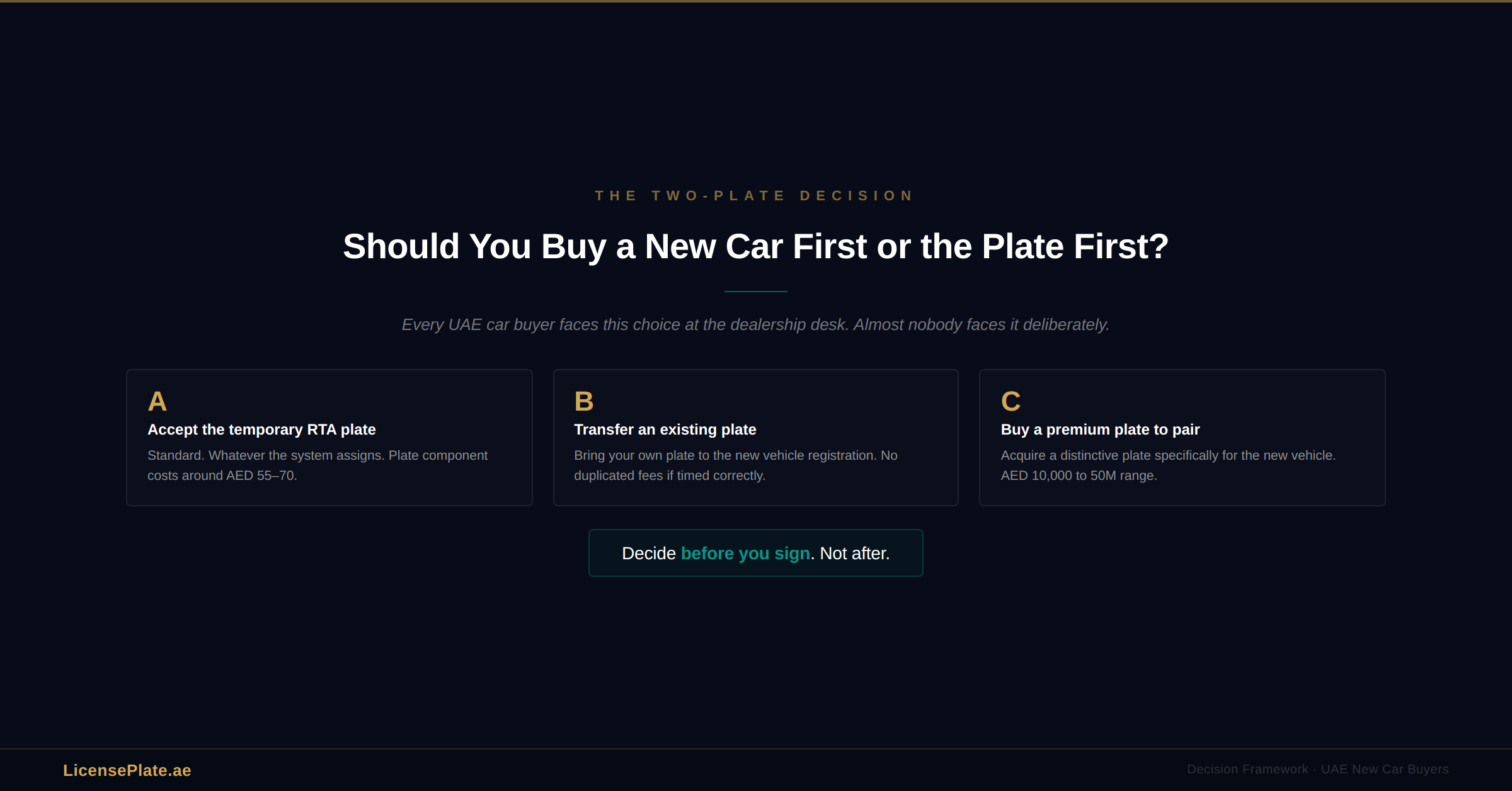
هل تشتري السيارة أولاً أم اللوحة؟ قرار اللوحتين الذي يخطئ فيه كل مشترٍ في الإمارات
بعد ظهر يوم سبت، نحو الساعة الثالثة، داخل صالة عرض الحبتور للسيارات على شارع الشيخ زايد. زوجان في منتصف الثلاثينيات أنهيا للتوّ تجربة قيادة بي إم دبليو X7 موديل 2026. وعادا إلى مكتب المبيعات. والأوراق أمامهما. وشروط التمويل مُتفق عليها. وقُدّم عرض التأمين. وكل شيء جاهز للتوقيع. ويمرّر مدير المبيعات استمارة التسجيل عبر الطاولة ويطرح آخر سؤال في اليوم. "وماذا عن اللوحة؟ يمكننا التسجيل باللوحة المؤقّتة الاعتيادية اليوم، أو إن أردتما اختيار شيء ما، يمكننا حجز السيارة لبضعة أيام."
يتبادل الزوجان نظرة. لم يفكّرا في هذا. فهما في تسعة أعشار الطريق نحو شراء مركبة بقيمة 580,000 درهم ولم يقضيا خمس دقائق في التفكير في قطعة المعدن المستطيلة التي ستُثبَّت على مقدّمتها ومؤخّرتها طوال سنوات امتلاكهما لها. فيفعلان ما يفعله كل مشترٍ سيارة في الإمارات تقريباً في هذه اللحظة. يهزّان كتفيهما. "لنأخذ الاعتيادية الآن، يمكننا دائماً تغييرها لاحقاً." فيوقّعان الاستمارة. وتُسجَّل السيارة بلوحة عشوائية خصّصتها الهيئة. ويقودان إلى المنزل.
وبعد ستة أشهر، تذكر الزوجة في فطور متأخّر أن صديقة لها اشترت مؤخّراً لوحة تحمل سنة ميلاد زوجها كهدية ذكرى زواج. فيبدأ الزوجان بالنظر في خيارات اللوحات. ويدركان أن لوحة قليلة الأرقام في رمز مرغوب ستتناغم فعلاً بشكل جميل مع الـ X7. فيبدآن بتسعير واحدة. وبعد أسابيع قليلة، يُتمّان صفقة شراء بـ 85,000 درهم عبر وسيط. ثم يتّصلان بالهيئة لنقلها إلى مركبتهما. وتلك هي اللحظة التي يكتشفان فيها أن اتخاذ هذا القرار متأخّراً ستة أشهر، بدلاً من بعد ظهر ذلك السبت لدى الوكيل، قد كلّفهما نحو 500 درهم في رسوم إصدار وشهادة ملكية مكرّرة، ونصف يوم من وقتهما، والكفاءة النظيفة لموعد واحد كان يمكن أن يحظيا بها لو كان مدير المبيعات قد تلقّى تفاصيل اللوحة من المرة الأولى.
هذا المقال هو القطعة التي لا يكتبها أحد لأنها تحدث في محادثة عند مكتب مبيعات لدى وكيل لا في معاملة رسمية. فكل مشترٍ سيارة في الإمارات يواجه قرار اللوحتين. ولا أحد تقريباً يواجهه عن قصد. وفيما يلي، البنية الفعلية للقرار، والرسوم المرتبطة بكل مسار، وتبعيات التوقيت التي تهمّ، والسؤال المحدّد الوحيد الذي يحدّد ما ينبغي أن تفعله.
المسارات الثلاثة، مسمّاة بوضوح
لا توجد سوى ثلاثة خيارات. فكل مشترٍ في الإمارات يشتري أي مركبة، جديدة أو مستعملة، من وكيل أو من فرد، لأول مرة أو للمرة الخامسة، يختار واحداً من هذه الثلاثة عند نقطة التسجيل. ومعرفة أي ثلاثة تختار بينها هي أول وضوح لا يحصل عليه معظم المشترين أبداً.
المسار A: قبول اللوحة المؤقّتة الصادرة عن الهيئة
يسجّل الوكيل المركبة باستخدام أي لوحة تالية متاحة يخصّصها نظام الهيئة. لا اختيار للرمز أو الأرقام. وتظهر اللوحة تلقائياً كجزء من حزمة التسجيل الاعتيادية. وللمركبة الخفيفة الجديدة، تتراوح رسوم التسجيل لدى الهيئة بين 350 و700 درهم بحسب فئة المركبة، بالإضافة إلى رسم إنتاج اللوحة الاعتيادي (35 درهماً للوحات القصيرة، و50 درهماً للوحات الطويلة)، بالإضافة إلى 20 درهماً رسم المعرفة والابتكار، بالإضافة إلى أي رسوم فحص وتأمين. ويبلغ إجمالي المدفوع لمركبة خفيفة نموذجية نحو 400 إلى 500 درهم عند شبّاك الوكيل، ويمثّل مكوّن اللوحة نحو 55 إلى 70 درهماً من ذلك. وهذا هو الوضع الافتراضي. وهو ما يحدث حين لا يعطي المشتري فريق المبيعات أي تعليمات أخرى.
المسار B: نقل لوحة قائمة إلى المركبة الجديدة
المشتري يملك لوحة بالفعل، إما من سيارة سابقة يحتفظ بلوحتها، أو لأنه اشترى لوحة مؤخّراً عبر منصة سوق ثانوية أو مزاد. فيسجّل الوكيل المركبة الجديدة بتلك اللوحة بدلاً من لوحة مخصّصة عشوائياً. وآلياً، يتطلّب ذلك أن تكون شهادة ملكية اللوحة في الملف المروري للمشتري قبل موعد التسجيل، وأن تكون اللوحة مطابقة (أو يُعاد تخصيصها) لحزمة تسجيل المركبة الجديدة. وهيكل التكلفة مشابه للمسار A على مستوى تسجيل المركبة، لكن دون رسم إصدار لوحة إضافي لأن اللوحة موجودة بالفعل في النظام. والتعقيد الحاسم هو التوقيت: يجب أن تكون اللوحة خالصة (لا مخالفات، ولا أعباء)، وباسم المشتري، وجاهزة للاقتران بالمركبة الجديدة يوم التسجيل. ويغطّي دليلنا عمّا يحدث للوحتك عند بيع السيارة عكس هذه العملية ويشرح آليات الاحتفاظ باللوحة لدى الهيئة بالتفصيل.
المسار C: شراء لوحة مميّزة لتقترن بالمركبة الجديدة
يقتني المشتري عمداً لوحة مميّزة (أحادية الرقم، أو قليلة الأرقام، أو ذات نمط متكرّر، أو برمز مرموق) خصيصاً لتقترن بالمركبة الجديدة. ويمكن أن يتمّ الاقتناء عبر روزنامة مزادات الهيئة (إذا كان لدى المشتري وقت وصبر لدورة المزاد)، أو عبر السوق الثانوية من خلال منصة مثل LicensePlate.ae، أو عبر تعريف وسيط للوحات خارج السوق. وتتراوح الأسعار من 5,000 درهم للوحات المميّزة للمبتدئين إلى 50 مليون درهم لأعلى المعروضات في مزادات أنبل رقم. وتمنح حاسبة اللوحات على LicensePlate.ae نطاق تقييم قابلاً للدفاع عنه لأي رمز وتركيبة أرقام، ويوثّق مقال التحقّق من أسعار لوحات دبي ما يكلّفه فعلياً كل رمز وعدد أرقام ونمط في 2026.
ومعظم المقالات التي تتناول هذا الموضوع تعامل المسارات A وB وC كقرارات متكافئة تقريباً بنقاط سعرية مختلفة. وهي ليست كذلك. إنها قرارات بتبعيات توقيت مختلفة، ومسارات أوراق مختلفة، وعواقب مختلفة بعد خمس سنوات حين تُعاد المركبة للبيع. والإطار أدناه يفصل القرار بحسب ما يقود الإجابة الصحيحة فعلاً.
سؤال التوقيت الذي يحدّد كل شيء
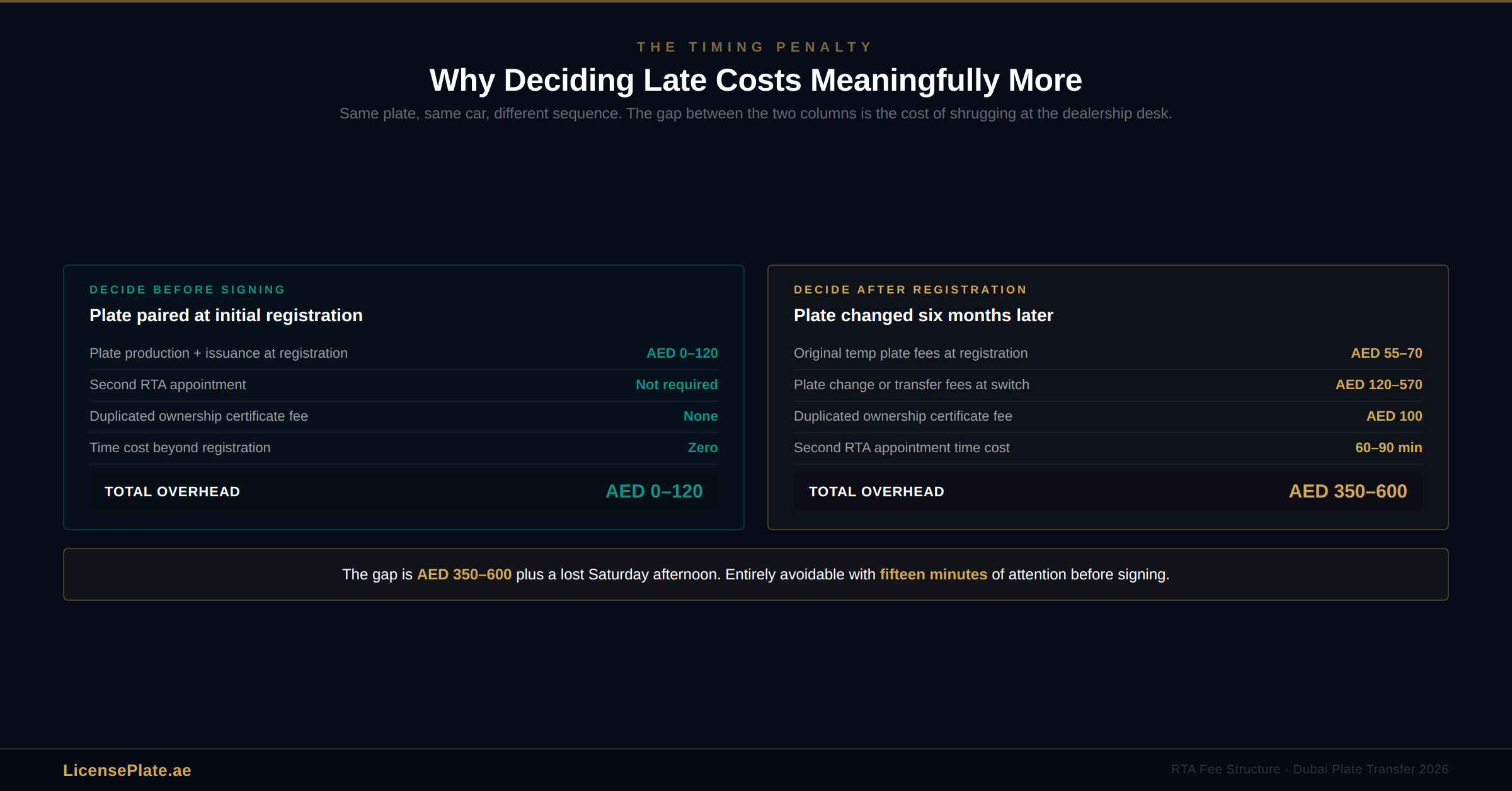
وإليك السؤال الوحيد الذي يحسم المقال بأكمله. فقبل تسجيل السيارة، تكون المسارات الثلاثة كلّها مفتوحة. وبعد تسجيلها، يكون المسار A قد حدث بالفعل افتراضياً، ويصبح التحوّل إلى المسار B أو C معاملة ثانية، برسوم ثانية، وزيارة ثانية للهيئة، ويوم ثانٍ من الأوراق. وهذا مصدر غرامة الـ 500 إلى 600 درهم التي تكبّدها الزوجان في الحبتور للسيارات حين قرّرا متأخّرين ستة أشهر.
والآليات المحدّدة: نقل لوحة دبي يحمل رسم نقل أساسياً قدره 120 درهماً (100 درهم شهادة ملكية اللوحة + 20 درهماً رسم المعرفة والابتكار)، وتغيير رقم اللوحة على مركبة قائمة يحمل إجمالاً من 105 إلى 570 درهماً بحسب نوع اللوحة (رسم الإنتاج من 35 إلى 500 درهم بالإضافة إلى 50 درهماً لإصدار ملكية جديدة بالإضافة إلى 20 درهماً للمعرفة والابتكار). فإذا سلكت المسار A لدى الوكيل ثم انتقلت إلى B أو C لاحقاً، تدفع رسوم اللوحة الأصلية عند التسجيل ورسوم النقل/التغيير في الزيارة الثانية. ويتفاوت إجمالي الرسوم المكرّرة بحسب نوع اللوحة لكنه يتراوح عادةً بين 350 و600 درهم. ليس كارثياً كرقم مطلق، لكنه قابل للتجنّب تماماً باتخاذ القرار قبل خمس عشرة دقيقة في بعد ظهر السبت الأصلي.
وإلى جانب الرسوم، توجد تكلفة زمنية يقلّل معظم المشترين من قيمتها. فموعد ثانٍ لدى الهيئة بعد التسجيل الأوّلي يعني رحلة عودة إلى مركز سعادة المتعاملين في أم رمول أو البرشاء أو ديرة. وحتى مع حجز موعد، فذلك عادةً من 60 إلى 90 دقيقة من يومك. وإذا تضمّن نقل اللوحة تسوية أي عبء (مخالفة مستحقّة، أو رصيد سالك، أو إيقاف تسجيل على المركبة المستقبِلة)، فقد يصبح رحلتين في يومين مختلفين. وكفاءة الموعد الواحد الناتجة عن اتخاذ القرار لدى الوكيل هي الميزة الأكثر بخساً في التقدير لاتخاذ قرار اللوحة قبل توقيع عقد السيارة.
وثمّة أيضاً تكلفة ثالثة لا تظهر إلا عند إعادة البيع. فحين تبيع المركبة في نهاية المطاف، تصبح اللوحة التي اخترتها جزءاً من هوية المركبة في كل إعلان مبوّب، وكل انطباع أول لمشترٍ، وكل صورة تظهر في مواد التسويق. فاللوحة العشوائية المخصّصة من الهيئة لا توصل شيئاً. أما اللوحة المختارة بعناية فتوصل قصدية وغالباً تضيف من 3 إلى 8% إلى القيمة المتصوَّرة للمركبة عند العرض. ويستكشف مقالنا عمّا يحدث للوحتك عند بيع سيارتك ديناميكيات إعادة البيع بالتفصيل، لكن الخلاصة المختصرة: قرار اللوحة المتخذ عند نقطة الشراء يؤثّر في سعر البيع بعد خمس سنوات بطرق لا يفكّر فيها المشتري عند مكتب الوكيل أبداً تقريباً.
إطار القرار المبني على الميزانية
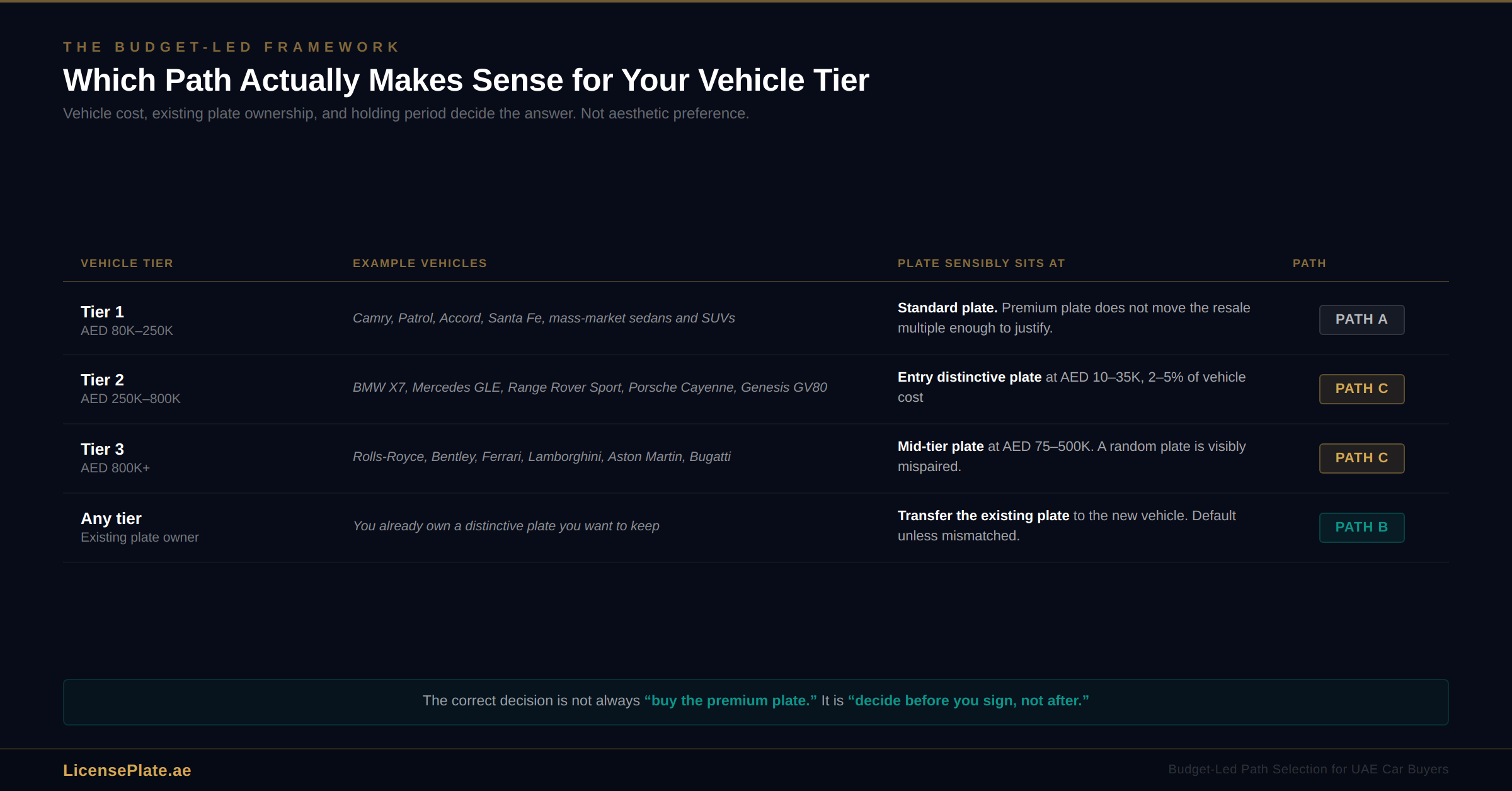
يعتمد المسار الصحيح لأي مشترٍ بعينه على ثلاثة متغيّرات: الميزانية الحالية، وفترة الاحتفاظ المقصودة بالمركبة، وما إذا كان المشتري يملك بالفعل لوحة تستحقّ الاحتفاظ بها. وتشغيل تلك المتغيّرات الثلاثة مقابل المسارات الثلاثة ينتج مصفوفة قرار تجيب عن السؤال لكل ملف مشترٍ واقعي تقريباً.
شريحة الميزانية 1: مركبة اعتيادية (من 80,000 إلى 250,000 درهم)، بلا لوحة قائمة
بالنسبة لمشترٍ يشتري تويوتا كامري، أو نيسان باترول، أو هوندا أكورد، أو هيونداي سانتا في، أو أي مركبة واسعة الانتشار في هذه الشريحة، ولا يملك حالياً لوحة مميّزة، يكون المسار A (قبول اللوحة الاعتيادية من الهيئة) هو الإجابة الصحيحة في معظم الأحوال. فملف إعادة بيع المركبة في هذه الشريحة تقوده المسافة المقطوعة والحالة وسجلّ الصيانة واستهلاك سنة الصنع. واللوحة المميّزة لا تغيّر مضاعف إعادة البيع لكامري عمرها خمس سنوات بشكل ذي معنى. وتكلفة المسار C (من 5,000 إلى 50,000 درهم للوحة مميّزة للمبتدئين) تمثّل 5 إلى 20% من إجمالي قيمة المركبة، وهو تخصيص غير مريح لرأس المال لمركبة واسعة الانتشار. ادّخر قرار اللوحة لدورة الترقية.
شريحة الميزانية 2: مركبة متميّزة (من 250,000 إلى 800,000 درهم)، بلا لوحة قائمة
هذه هي الشريحة التي يهمّ فيها القرار فعلاً. فبي إم دبليو X7 موديل 2026، أو مرسيدس GLE، أو رينج روفر سبورت، أو بورشه كايين، أو جينيسيس GV80 مقترنة بلوحة مختارة بتأنٍّ تبدو وتُباع أفضل بشكل ملموس من المركبة نفسها مقترنةً بلوحة عشوائية من الهيئة. والحساب: لوحة مميّزة للمبتدئين (تركيبة ثلاثية الأرقام نظيفة في رمز أقلّ طلباً مثلاً) بسعر من 10,000 إلى 35,000 درهم تمثّل 2 إلى 5% من تكلفة المركبة، ويوثّق دليلنا للوحات الإماراتية كاستثمار النمط الذي تحافظ فيه اللوحة المميّزة المختارة جيداً على قيمتها أو ترتفع بينما تستهلك المركبة قيمتها. وعند إعادة البيع، يمكن فصل اللوحة والاحتفاظ بها (المسار B معكوساً) فلا تكون تكلفة اقتنائها خسارة غارقة. وبالنسبة للمشترين في هذه الشريحة، يكون المسار C لدى الوكيل هو الإجابة الصحيحة قياساً في معظم الحالات، ما دام المشتري يستخدم حاسبة اللوحات لترسيخ الشراء في نطاق تقييم قابل للدفاع عنه.
شريحة الميزانية 3: مركبة فاخرة (أكثر من 800,000 درهم)، بلا لوحة قائمة
في هذه الشريحة، اللوحة ليست ترفاً إضافياً. فرولز-رويس غوست، أو بنتلي بنتايغا، أو مرسيدس الفئة S، أو رينج روفر SV، أو لامبورغيني أوروس، أو فيراري بوروسانغي بلوحة عشوائية من الهيئة تبدو غير متناغمة بشكل ظاهر. فالإشارة الثقافية لفئة المركبة والإشارة الثقافية للوحة يُفترض أن تتطابقا، وحين لا تتطابقان يلاحظ كل مراقب. والاقتناء الصحيح يقع في نطاق 75,000 إلى 500,000 درهم للوحة مميّزة من الشريحة المتوسطة (تركيبة قوية من رقمين أو ثلاثة في رمز مرغوب)، أي 5 إلى 20% من تكلفة المركبة. ولهؤلاء المشترين، يكون الاقتناء عبر السوق الثانوية قبل التسجيل والاقتران يوم التسليم هو المعيار. ويستعرض مقارنتنا بين مزاد الهيئة والسوق الثانوية اختيار القناة.
اختصار اللوحة القائمة
إذا كنت تملك لوحة بالفعل، من سيارة سابقة تستبدلها، أو لوحة اشتريتها كأصل، أو لوحة ورثتها أو تلقّيتها كهدية، فالمسار B هو الافتراضي. انقل اللوحة القائمة إلى المركبة الجديدة عند التسجيل. لا رسوم مكرّرة، ولا موعد ثانٍ، ولا وقت ضائع. والسبب الوحيد للانحراف هو أن تكون اللوحة القائمة غير متناغمة بشكل ظاهر مع المركبة الجديدة (لوحة اعتيادية من أربعة أرقام على بوغاتي شيرون، أو لوحة فاخرة على تويوتا يارِس، كلتاهما تبدو خاطئة لأسباب مختلفة)، وعندئذٍ يكون المسار C لاقتناء لوحة أفضل تناغماً والاحتفاظ بالقائمة كأصل أو بيعها عبر السوق هو المسار الأفضل.
4. المحادثة الدقيقة التي ينبغي إجراؤها مع مدير المبيعات
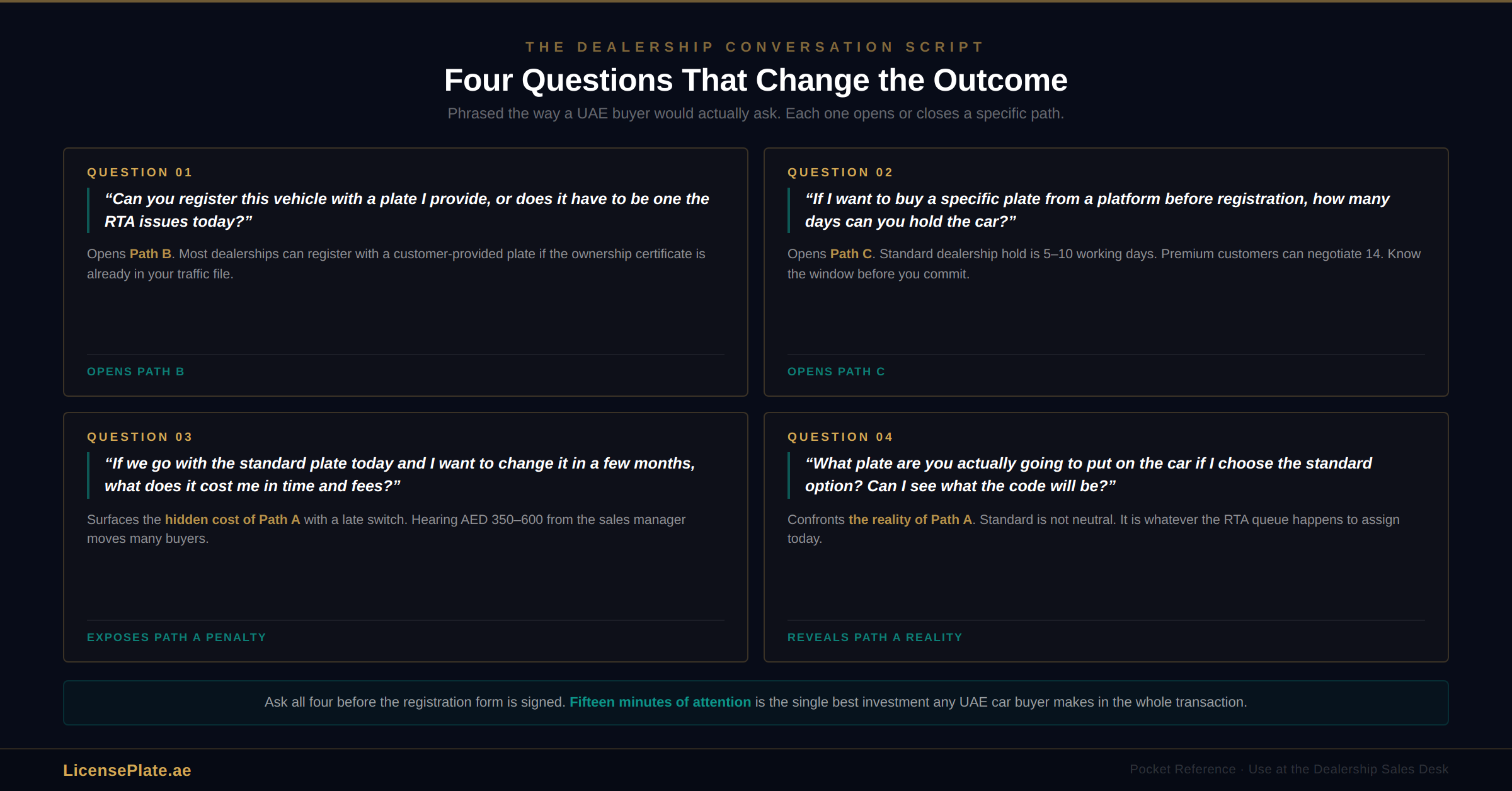
يخسر معظم المشترين قرار اللوحة لدى الوكيل لأنهم لا يعرفون ما يسألون عنه، وفريق المبيعات، وهذا منطقي تماماً، يلجأ افتراضياً إلى مسار المقاومة الأقلّ (المسار A، لأنه الأسرع). وفيما يلي المحادثة المحدّدة التي تغيّر النتيجة، مصوغة بالطريقة التي سيقولها بها المشتري فعلاً.
السؤال 1: "قبل أن نُنهي التسجيل، أريد مناقشة اللوحة. هل يمكنكم تسجيل هذه المركبة بلوحة أوفّرها أنا، أم يجب أن تكون لوحة تصدرها الهيئة اليوم؟"
ما تفعله هنا: فتح المسار B كخيار. فمعظم الوكلاء يستطيعون تسجيل مركبة بلوحة يوفّرها العميل ما دامت شهادة ملكية اللوحة في الملف المروري للعميل قبل موعد التسجيل. فإذا كنت تملك لوحة بالفعل، أحضر الشهادة. وإذا كنت تخطّط لشراء واحدة، سيحجز الوكيل التسجيل عادةً لبضعة أيام حتى تُتمّ اقتناء اللوحة.
السؤال 2: "إذا أردت شراء لوحة بعينها من منصة أو وسيط قبل التسجيل، كم يوماً يمكنكم حجز السيارة؟"
ما تفعله هنا: فتح المسار C. فالوكيل الجيّد سيحجز مركبة من 5 إلى 10 أيام عمل للسماح بإتمام شراء لوحة عبر منصة سوق ثانوية أو وسيط. وبعضهم يحجز حتى 14 يوماً للعملاء المميّزين. والحجوزات الأطول غير معتادة وتتطلّب عادةً تأميناً مؤكّداً. ومعرفة نافذة الحجز تحدّد الحدّ الأعلى العملي للوقت المتاح لك لاتخاذ قرار المسار C.
السؤال 3: "إذا مضينا باللوحة الاعتيادية اليوم وأردت تغييرها بعد بضعة أشهر، فما الإجراءات وكم تكلّفني وقتاً ورسوماً؟"
ما تفعله هنا: إظهار التكلفة الخفية للمسار A مع تحوّل متأخّر. فمدير المبيعات سيشرح عادةً نمط الرسوم المكرّرة من 350 إلى 600 درهم واشتراط موعد ثانٍ. وسماع ذلك من الوكيل، في صالة العرض، قبل التوقيع، هو ما ينقل كثيراً من المشترين من "يمكننا دائماً تغييرها لاحقاً" إلى "لنقرّر الآن."
السؤال 4: "ما اللوحة التي ستضعونها فعلاً على السيارة إن اخترت الخيار الاعتيادي؟ هل يمكنني رؤية ما سيكون عليه الرمز؟"
ما تفعله هنا: مواجهة واقع المسار A. فاللوحة العشوائية من طابور الهيئة عشوائية فعلاً. وقد تكون تركيبة خماسية منسيّة في الرمز N، أو قد تكون شيئاً غير مستساغ جمالياً بشكل فعلي. ورؤية اللوحة الفعلية التي ستصدرها الهيئة تغيّر القرار بنفسها أحياناً. فالمشترون الذين كانوا سعداء بـ"الاعتيادية" غالباً ما يعيدون النظر حين تُعرض عليهم اللوحة العشوائية المحدّدة التي هم على وشك تركيبها على مركبة بقيمة 600,000 درهم للسنوات الخمس المقبلة.
عواقب كل مسار على مدى خمس سنوات
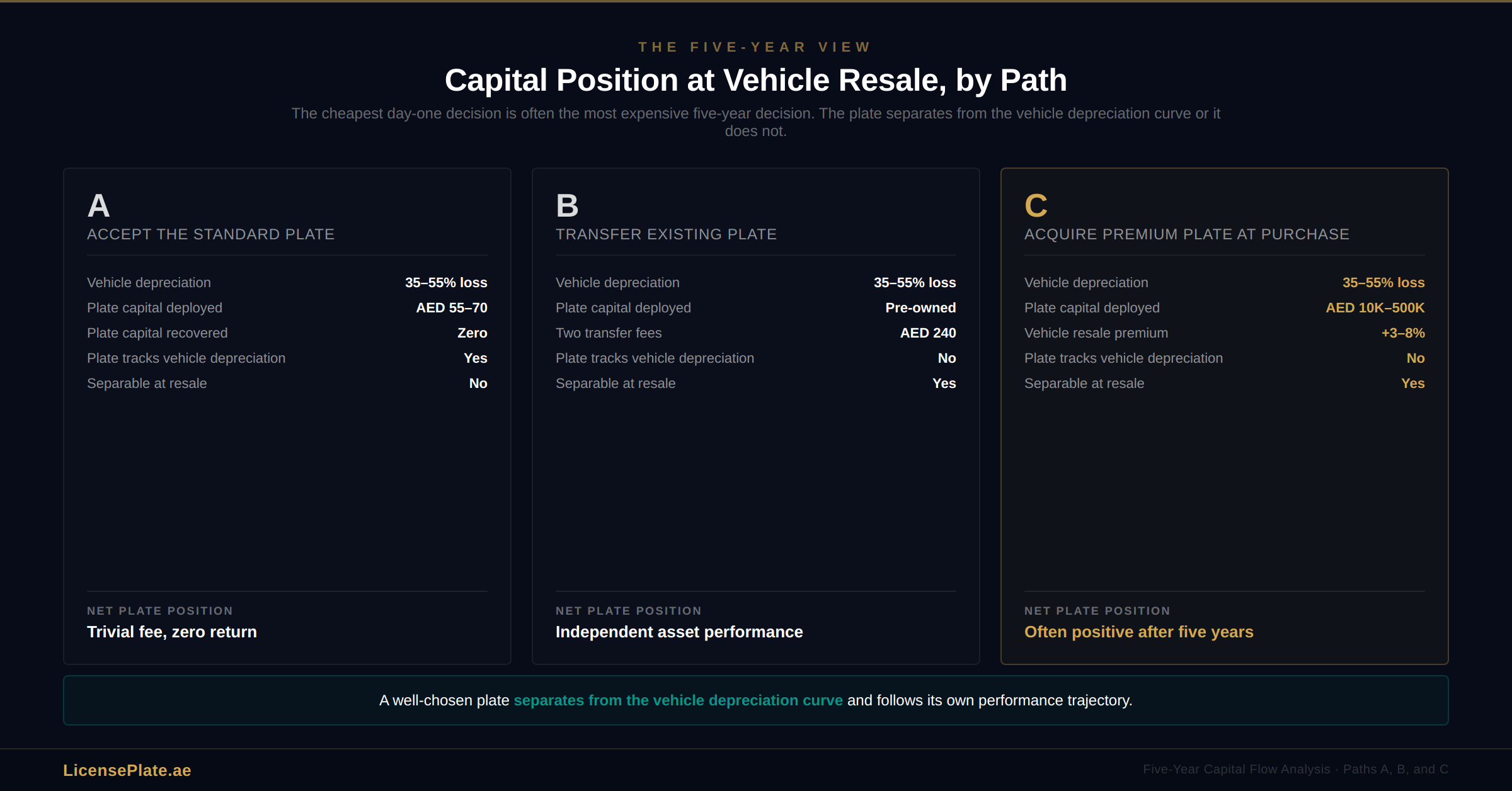
لاتخاذ القرار بشكل سليم لدى الوكيل، عليك التفكير في المركبة واللوحة معاً على مدى فترة الاحتفاظ الكاملة، لا عند لحظة الشراء فقط. والأرقام أدناه تقديرات اتجاهية مبنية على أنماط إعادة بيع اللوحات والمركبات المرصودة في الإمارات، ويوثّق مقال اللوحات الإماراتية مقابل الذهب مقابل العقار بيانات الأداء الكامنة.
المسار A على مدى خمس سنوات
تستهلك المركبة قيمتها على منحنى استهلاك إماراتي معياري (خسارة 35 إلى 55% من القيمة على مدى خمس سنوات، بحسب العلامة والطراز). ولا تسهم اللوحة بشيء في معادلة إعادة البيع لأنها لم تكن خياراً أصلاً. فقد جاءت مع السيارة وتغادر مع السيارة عند البيع. إجمالي رأس المال الموظَّف المتعلّق باللوحة: من 55 إلى 70 درهماً من رسوم الإنتاج والإصدار عند التسجيل. وإجمالي رأس المال المسترد المتعلّق باللوحة: صفر، لأن اللوحة تبقى مع المركبة وتنتقل إلى المالك التالي.
المسار B على مدى خمس سنوات (لوحة قائمة منقولة إلى مركبة جديدة)
تستهلك المركبة قيمتها بشكل طبيعي. أما اللوحة، التي كنت تملكها قبل المركبة الجديدة، فتحافظ على قيمتها أو ترتفع بمعزل عن المركبة. وفي نهاية خمس سنوات، تبيع المركبة بلوحة بديلة اعتيادية (بنقل لوحتك المميّزة عن المركبة إلى سيارتك التالية، أو بالاحتفاظ بها كأصل، أو ببيعها منفصلةً عبر السوق). فاللوحة لا تُحبَس أبداً في منحنى استهلاك المركبة. وإجمالي صافي رأس المال المتعلّق باللوحة على مدى خمس سنوات: ارتفاع قيمة اللوحة ناقص الرسوم المكرّرة لعمليتَي نقل (نقل إليها ونقل عنها) بنحو 240 درهماً. وللوحة ترتفع قيمتها 10 إلى 30% على مدى خمس سنوات، يغطّي صافي المكسب رسوم النقل مرات عدة بسهولة.
المسار C على مدى خمس سنوات (لوحة مميّزة مقتناة عند الشراء)
تستهلك المركبة قيمتها بشكل طبيعي. أما اللوحة المميّزة، المقتناة حديثاً عند نقطة شراء السيارة، فإما تحافظ على قيمتها أو ترتفع أو تنخفض بناءً على الرمز ونمط الأرقام تحديداً وعلى ديناميكيات السوق الأوسع. ويوثّق دليل الاستثمار لدينا أن اللوحات المميّزة المختارة جيداً طابقت أو تفوّقت تاريخياً على عوائد العقار الإماراتي على فترات احتفاظ من خمس سنوات. وعند إعادة بيع المركبة، يمكن الاحتفاظ باللوحة (نقلها إلى المركبة التالية، أو إبقاؤها كأصل، أو بيعها منفصلةً) أو بيعها مع المركبة كصفقة حزمة، وهو ما يحقّق غالباً 3 إلى 8% فوق بيع مماثل بلوحة اعتيادية. وإجمالي صافي رأس المال المتعلّق باللوحة: سعر شراء من 10,000 إلى 500,000 درهم عند الاقتناء، وارتفاع أو انخفاض قيمة اللوحة على مدى خمس سنوات، ناقص نحو 240 درهماً في رسمَي نقل. وللوحة اشتُريت بتأنٍّ باستخدام حاسبة اللوحات ومقال التحقّق من الأسعار كمرتكزات تقييم، يكون الوضع الصافي بعد خمس سنوات إيجابياً في كثير من الأحيان.
الخلاصة: المسار A هو أرخص قرار في اليوم الأول وغالباً أغلى قرار على مدى خمس سنوات. والمسار B هو أرخص قرار على مدى خمس سنوات حين تملك لوحة قائمة. والمسار C التزام رأسمالي حقيقي لكنه يفصل اللوحة عن منحنى استهلاك المركبة ويتيح لها اتّباع مسار أدائها المستقل.
حالات خاصة تستحقّ المعرفة
شراء سيارة جديدة أثناء الانتقال بين الإمارات
إذا كنت مشترياً إقامتك صادرة من الشارقة أو عجمان أو رأس الخيمة أو أم القيوين أو الفجيرة لكنك تشتري مركبة من وكيل في دبي، فعليك معرفة ما إذا كان بإمكانك تسجيل المركبة في دبي أصلاً. والإجابة أحياناً نعم وأحياناً لا، بحسب تفاصيل إقامتك وارتباطاتك الأخرى بدبي. ويغطّي دليل النقل بين الإمارات القواعد الإدارية. وفي معظم الحالات، تطابق إمارة اللوحة مع إمارة التسجيل يبسّط القرار؛ أما تسجيلات اللوحة والسيارة غير المتطابقة بين الإمارات فتُدخِل تعقيدات نادراً ما تبرّر الجهد.
شراء سيارة تحمل لوحة مرفقة بالفعل
إذا كنت تشتري سيارة مستعملة وتأتي مركبة البائع بلوحة مميّزة، فالإجراء الافتراضي لدى الهيئة هو بقاء اللوحة مع البائع (فاللوحة أصل منفصل عن المركبة). وإذا أراد المشتري أن تنتقل اللوحة مع السيارة، فعلى البائع الموافقة إما على إدراج اللوحة في سعر البيع أو بيعها منفصلةً. والتفاوض على إدراج اللوحة صراحةً في اتفاقية البيع يمنع الالتباس عند موعد النقل. وتغطّي قائمة العناية الواجبة لدينا خطوات التحقّق المحدّدة، وللمشترين الراغبين في فهم المزالق الشائعة، تُظهر الأخطاء العشرة المكلفة التي يرتكبها مشترو اللوحات لأول مرة عدة أخطاء تنطبق على هذا السيناريو بالضبط.
إهداء سيارة جديدة مع لوحة كجزء من الهدية
بالنسبة للمشترين الذين يشترون سيارة جديدة كهدية (لزوج، أو والد، أو ابن، أو متخرّج)، فإن اقتران لوحة ذات معنى بالمركبة يرتقي بالهدية بشكل كبير. ويستعرض مقالنا عن اللوحات كهدايا الاعتبارات الثقافية والعملية. والنصيحة التكتيكية المحدّدة لهذا السيناريو هي اقتناء اللوحة أولاً (باسم متلقّي الهدية، باستخدام بطاقة هويته الإماراتية)، ثم ترتيب شراء المركبة وتسجيلها واللوحة في مكانها منذ اليوم الأول. فالمسار C المطبَّق عمداً من البداية ينتج تجربة هدية لا يمكن للوحة ملحقة متأخّراً أن تضاهيها.
مركبة فاخرة بلوحة اشتُريت في مزاد قبل أسابيع أو أشهر
بالنسبة للمشترين على مستوى مزاد أنبل رقم أو الذين يقتنون لوحات من الطراز الأول عبر مزادات الهيئة العلنية، غالباً ما يسبق شراء اللوحة شراء المركبة بأسابيع أو أشهر، لأن توقيت المزاد ليس تحت سيطرة المشتري. وفي هذه الحالات، تقبع اللوحة في الملف المروري للمشتري كأصل حتى تصبح المركبة جاهزة. وهذه نسخة الشريحة المتميّزة من المسار C وهي تنتج أنظف تجربة شراء ممكنة: اللوحة جاهزة، والمركبة جاهزة، وموعد التسجيل يقرنهما في زيارة واحدة.
الأسئلة الشائعة
س: هل شراء لوحة قبل تسجيل سيارة جديدة في دبي أرخص أم بعده؟
قبله. فإذا اقتنيت لوحة وكانت في ملفك المروري عند تسجيل المركبة الجديدة، تُخصَّص اللوحة للسيارة كجزء من موعد التسجيل الاعتيادي دون تكلفة إضافية تتجاوز رسوم تسجيل المركبة المعتادة. أما إذا سجّلت السيارة أولاً بلوحة مؤقّتة ثم غيّرتها إلى لوحة مختلفة لاحقاً، فتدفع رسوم اللوحة الأوّلية (من 55 إلى 70 درهماً) عند التسجيل بالإضافة إلى مجموعة ثانية من رسوم النقل أو التغيير (من 120 إلى 570 درهماً بحسب نوع اللوحة) في الموعد الثاني. والتكلفة المكرّرة قابلة للتجنّب باتخاذ القرار قبل توقيع عقد السيارة.
س: كم تكلفة نقل لوحة إماراتية إلى سيارة جديدة؟
رسم نقل لوحة دبي الأساسي هو 120 درهماً (100 درهم شهادة ملكية اللوحة + 20 درهماً رسم المعرفة والابتكار). وتغيير رقم اللوحة على مركبة قائمة يتراوح إجمالاً بين 105 و570 درهماً بحسب نوع اللوحة (رسم الإنتاج + 50 درهماً لإصدار ملكية جديدة + 20 درهماً للمعرفة والابتكار). والتفصيل الكامل في دليلنا المخصّص لتكاليف ورسوم لوحات دبي.
س: هل يمكن للوكيل حجز سيارة جديدة بينما أقتني لوحة بعينها؟
نعم، معظم الوكلاء في الإمارات سيحجزون مركبة من 5 إلى 10 أيام عمل للسماح بإتمام شراء لوحة. وبعضهم سيحجز حتى 14 يوماً للعملاء المميّزين، والحجوزات الأطول ممكنة بتأمين مؤكّد. واستعداد الوكيل للحجز يعتمد على ضغط المخزون وعلاقة العميل، لذا إذا أردت المضيّ في المسار C، فأكّد نافذة الحجز عند نقطة التفاوض لا عند نقطة التسجيل.
س: هل تسجيل سيارة جديدة بلوحة مميّزة يزيد قيمتها عند إعادة البيع؟
تشير الأدلة من السوق الثانوية في الإمارات إلى أن اللوحة المميّزة المختارة بعناية تضيف 3 إلى 8% إلى القيمة المتصوَّرة لإعادة بيع المركبة المقترنة بها عند العرض، وتقترن بزمن بيع أسرع. ويعتمد المقدار الدقيق على فئة المركبة، وشريحة اللوحة، ومدى التناغم بينهما. وتُظهر المركبات الفاخرة أكبر أثر؛ وتُظهر السيدان واسعة الانتشار أصغره. ويمكن أيضاً فصل اللوحة عن المركبة عند إعادة البيع والاحتفاظ بها أو بيعها منفصلةً، فلا تُحبَس تكلفة اقتنائها في منحنى استهلاك المركبة.
س: هل ينبغي أن أحتفظ بلوحتي القديمة عند بيع سيارتي القديمة وشراء جديدة؟
في معظم الحالات، نعم. فالاحتفاظ باللوحة بسيط إدارياً (تبقى شهادة ملكية اللوحة في ملفك المروري بينما تنتقل ملكية المركبة إلى المشتري بلوحة مختلفة مخصّصة)، ويكلّف 120 درهماً أساساً، ويحفظ أصلاً دفعت ثمنه بالفعل. أما الافتراض المعاكس، وهو ترك اللوحة تنتقل مع المركبة إلى المالك الجديد، فلا يكون منطقياً إلا إذا كانت اللوحة غير مثيرة للاهتمام أو إذا كنت قد قرّرت بالفعل الانتقال إلى لوحة مختلفة للمركبة الجديدة. ويغطّي دليلنا عمّا يحدث للوحتك عند بيع سيارتك الآليات المحدّدة.
س: ماذا لو سجّلت السيارة الجديدة باللوحة الاعتيادية بالفعل وأنا نادم الآن؟
لا يزال بإمكانك الانتقال إلى المسار B أو C بموعد ثانٍ لدى الهيئة. والتكلفة من 120 إلى 570 درهماً في رسوم إضافية بحسب المسار، بالإضافة إلى 60 إلى 90 دقيقة من وقتك في مركز سعادة المتعاملين. وليست نهاية العالم. فتكلفة التحوّل مؤلمة فقط بالمقارنة مع القرار المجاني الذي كان بإمكانك اتخاذه لدى الوكيل في يوم التسجيل الأصلي. ومعظم المشترين الذين يتحوّلون لاحقاً يذكرون أن التحوّل كان يستحقّ الرسم مقابل اللوحة التي أرادوها فعلاً.
س: كم تستغرق عملية نقل اللوحة لدى الهيئة؟
النقل نفسه سريع بمجرد حضور الطرفين واكتمال الأوراق، عادةً من 15 إلى 30 دقيقة في مركز سعادة المتعاملين، أو أسرع عبر تطبيق دبي درايف للنقل الرقمي. وتأتي التأخيرات من مستندات ناقصة، أو مخالفات مستحقّة على اللوحة أو على المركبة المستقبِلة، أو عدم تطابق بين الاسم في شهادة ملكية اللوحة والاسم في تسجيل المركبة. وتنفيذ سير عمل التحقّق على اللوحة قبل الموعد يمنع الغالبية العظمى من هذه التأخيرات.
س: هل يمكنني شراء لوحة من LicensePlate.ae قبل وصول سيارتي الجديدة؟
نعم. فاقتناء اللوحة واقتناء المركبة معاملتان مستقلّتان. يمكنك إتمام شراء لوحة عبر سوقنا اليوم والاحتفاظ باللوحة في ملفك المروري حتى تصبح المركبة جاهزة للتسجيل، وعندئذٍ تقرنهما في موعد واحد لدى الهيئة. وهذا هو النهج المعياري للمشترين الذين يسلكون المسار C بمهلة عدة أسابيع. راجع إعلانات لوحات دبي لدينا للاطّلاع على المعروض الحالي.
س: هل يختلف قرار اللوحة في أبوظبي عن دبي؟
المبادئ متطابقة لكن الآليات المحدّدة لدى الهيئة أو دائرة البلديات والنقل تختلف قليلاً بين الإمارتين. فأبوظبي تستخدم منصة تم لمعاملات اللوحات بينما تستخدم دبي الهيئة وتطبيق دبي درايف. ويغطّي دليلنا للوحات أبوظبي الإجراءات الإدارية الخاصة بأبوظبي. أما إطار الميزانية ومنطق التوقيت فينتقلان مباشرةً عبر الإمارات.
س: ماذا يحدث إذا اشتريت لوحة لكنني لا أستطيع تحمّل سيارة في الشريحة المطابقة بعد؟
هذه استراتيجية صحيحة. فيمكن الاحتفاظ باللوحات كأصول في ملفك المروري دون تركيبها على أي مركبة. وكثير من المشترين في الإمارات يقتنون لوحات مميّزة خلال نوافذ سوقية مواتية ويحتفظون بها شهوراً أو سنوات قبل اقترانها بمركبة. ويغطّي مقالنا عن اللوحات الإماراتية كاستثمار نهج المحفظة. وقيمة اللوحة تستمرّ بمعزل عن توقيت شرائك للمركبة.
خاطرة أخيرة، بالعودة إلى الحبتور للسيارات
الزوجان اللذان هزّا كتفيهما وقالا "يمكننا دائماً تغييرها لاحقاً" لم يرتكبا خطأً فادحاً. بل ارتكبا خطأً صغيراً وقابلاً للإصلاح وشائعاً كلّفهما نحو 500 درهم وبعد ظهر سبت بعد ستة أشهر في مركز الهيئة بالبرشاء. وفي سياق شراء مركبة بقيمة 580,000 درهم، الفارق تافه. لكن التكلفة التراكمية عبر سوق السيارات في الإمارات، حيث يتخذ عشرات الآلاف من المشترين هذا الخيار نفسه كل شهر، جوهرية، وقابلة للتجنّب تماماً. فكل واحد من أولئك المشترين كان سيتخذ قراراً مقصوداً لو أن مدير المبيعات طرح السؤال الصحيح بالطريقة الصحيحة، وكل واحد منهم كان سيغادر أكثر رضاً عن الاقتران النهائي بين السيارة واللوحة ممّا هو عن تخصيص عشوائي من الهيئة.
وإطار القرار الصحيح ليس معقّداً. قرّر قبل أن توقّع. واسأل عن نافذة الحجز. واستخدم حاسبة LicensePlate.ae لترسيخ ميزانيتك. واستخدم مقال التحقّق من أسعار لوحات دبي ودليل تكلفة الملكية لاستشراف الصورة الرأسمالية الكاملة لخمس سنوات. واختر المسار A أو B أو C عن قصد لا بشكل افتراضي. فخمس عشرة دقيقة من الانتباه قبل توقيع عقد السيارة هي أنفع استثمار مفرد يقوم به أي مشترٍ سيارة في الإمارات في المعاملة بأكملها، ولا أحد تقريباً يقوم به. كن الاستثناء.
وإذا كنت تقرأ هذا قبل موعدك لدى الوكيل، فأفضل خطوة تالية هي النظر في ما يحتويه مشهد اللوحات فعلاً قبل أن تذهب. فـإعلانات لوحات دبي لدينا تُظهر المعروض الحيّ عبر كل شريحة ميزانية. اقضِ عشر دقائق في التصفّح. قد تكتشف أن اللوحة التي ستقرنها بسيارتك الجديدة أقلّ كلفة ممّا ظننت، أو أكثر انتقائية ممّا ظننت. وفي كلتا الحالتين، تصل إلى الوكيل بقرار مستنير لا بهزّة كتفين، وينتهي بعد ظهر السبت بالسيارة التي أردتها واللوحة التي اخترتها.