

تصميم لوحات الشارقة الجديد: ما الذي تغيّر، وما على المالكين فعله، وماذا يعني ذلك للأسعار
يوم الأربعاء 26 فبراير 2025، وقف اللواء عبد الله مبارك بن عامر، القائد العام لشرطة الشارقة، في فعالية صحفية وكشف عن شيء ما كان معظم المقيمين في الإمارات ليعتبروه خبراً: تصميم جديد للوحات تسجيل المركبات في إمارة الشارقة. فاللوحة المادية نفسها بدت مختلفة. والخطوط أكثر حدّة. والتخطيط متوائم مع الهوية البصرية المحدَّثة لحكومة الشارقة. وبالنسبة لمعظم الـ 1.8 مليون نسمة الذين يعيشون في الإمارة، كان ردّ الفعل هزّة كتفين. فاللوحة لوحة.
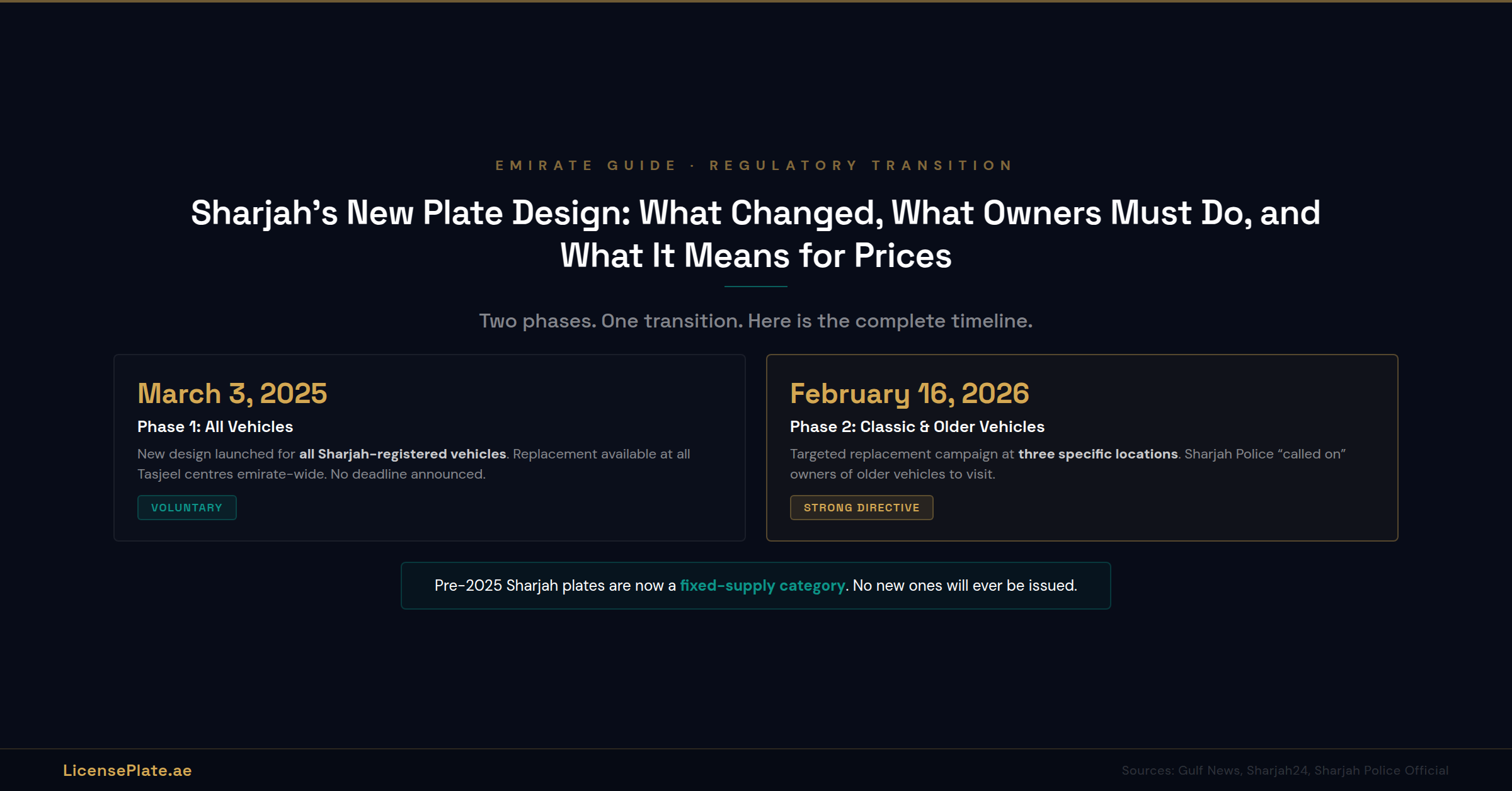
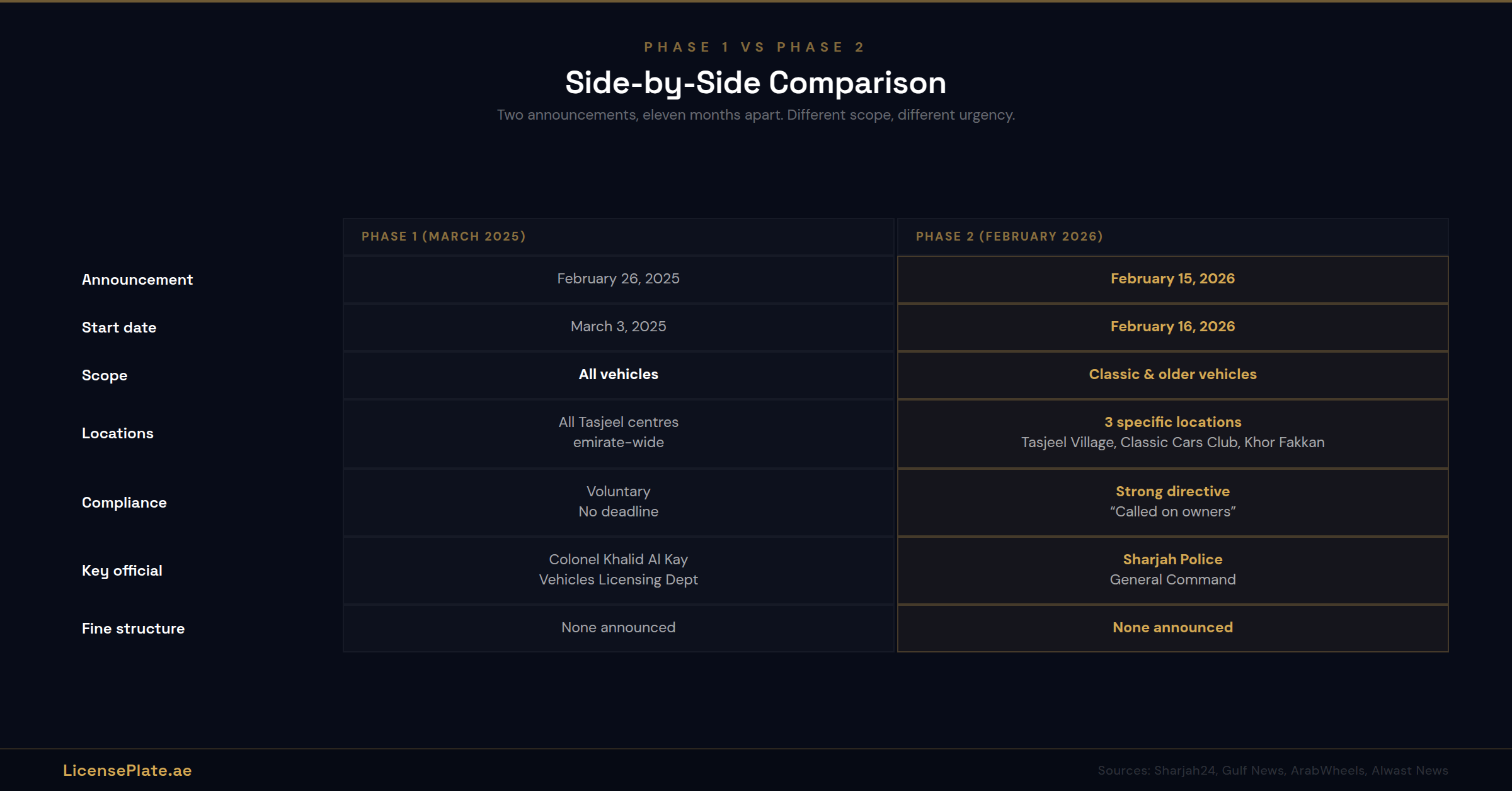
وبعد أحد عشر شهراً، في 15 فبراير 2026، أعلنت شرطة الشارقة المرحلة الثانية: اعتباراً من 16 فبراير 2026، ستُستبدل لوحات المركبات الكلاسيكية والقديمة بالتصميم الجديد في ثلاثة مواقع معتمدة محدّدة في أنحاء الإمارة. وقد ضيّق هذا الإعلان الثاني النطاق من "جميع المركبات" إلى حملة موجّهة للوحات القديمة، وكان الإعلان الذي حوّل تحديثاً شكلياً إلى حدث تشغيلي بتبعات على السوق الثانوية.
ويغطّي هذا المقال مرحلتَي انتقال تصميم لوحات الشارقة بالكامل. ويشرح بالضبط ما الذي تغيّر في التصميم الجديد، ومن عليه التصرّف (ومن لا)، والمواقع والمستندات المحدّدة المطلوبة للاستبدال، وتكلفة الانتقال، والسؤال الذي لم يتناوله أي منشور إماراتي آخر: ما إذا كانت لوحات الشارقة السابقة لعام 2026، وهي الآن فئة ذات معروض ثابت، يمكن أن تكتسب علاوة لدى الجامعين كما فعلت صيغ اللوحات المتوقّفة في أسواق أخرى. ويستند التحليل إلى دليل سوق لوحات الشارقة الكامل المنشور في مكتبتنا، ومصادر حكومية موثّقة، ونظرة مقارنة إلى انتقالات صيغ اللوحات الثلاثة في المملكة المتحدة منذ 1963.
الجدول الزمني للمرحلتين: ماذا حدث ومتى
المرحلة الأولى: الإطلاق (من 26 فبراير إلى 3 مارس 2025)
في 26 فبراير 2025، أطلقت شرطة الشارقة رسمياً التصميم الجديد للوحات التسجيل في فعالية صحفية. وأكّد العقيد خالد محمد الكاي، رئيس قسم ترخيص المركبات والسائقين، أن التصميم الجديد "مستوحى من الهوية البصرية لحكومة الشارقة" ويعكس "رؤية صاحب السموّ الشيخ الدكتور سلطان بن محمد القاسمي، عضو المجلس الأعلى حاكم الشارقة."
وبدأ الاستبدال يوم الاثنين 3 مارس 2025. وكانت المرحلة الأولى واسعة: إذ يمكن لجميع مالكي المركبات في الشارقة زيارة أي مركز خدمات تسجيل في أنحاء الإمارة لاستبدال لوحاتهم الحالية بالتصميم الجديد. وكانت اللغة دعوية، لا إلزامية. ووصفتها تقارير الشارقة 24 بأنها فرصة لـ"استبدال" اللوحات القديمة، وشدّد العقيد الكاي على أن التغيير "جزء من الجهود المستمرّة لتعزيز الخدمات." ولم يُرفق أي موعد نهائي. ولم يُعلَن عن أي هيكل غرامات لعدم الامتثال. وكانت رسالة المرحلة الأولى: هذه هي اللوحة الجديدة، تعال واحصل عليها حين تكون مستعداً.
المرحلة الثانية: حملة المركبات الكلاسيكية والقديمة (16 فبراير 2026)
وبعد أحد عشر شهراً من الإطلاق الأوّلي، أعلنت شرطة الشارقة حملة أكثر استهدافاً. فاعتباراً من 16 فبراير 2026، ستُستبدل لوحات "المركبات الكلاسيكية والقديمة" بالتصميم الجديد. وضاق النطاق. وسيُنفَّذ الاستبدال في ثلاثة مواقع معتمدة محدّدة، لا في كل مركز تسجيل. وتحوّلت اللغة من "يمكنك القدوم لاستبدال لوحتك" إلى "دعت الجهة مالكي المركبات القديمة إلى زيارة أحد المواقع المخصّصة."
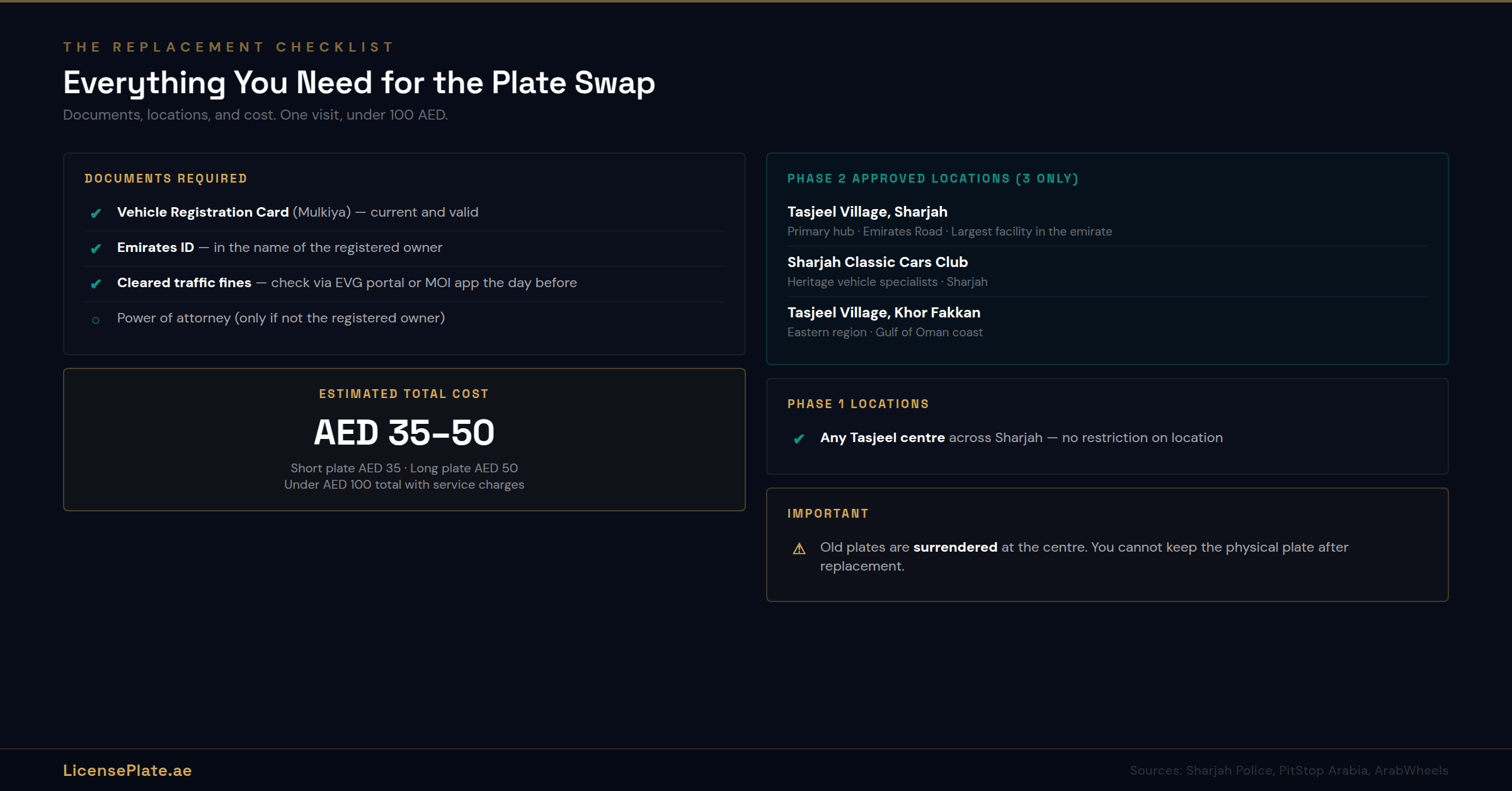
ومواقع الاستبدال الثلاثة المعتمدة للمرحلة الثانية هي:
1. قرية تسجيل، الشارقة. المركز الرئيسي لخدمات تسجيل المركبات وفحصها في الإمارة، ويقع على شارع الإمارات. وهو أكبر منشأة لخدمات المركبات في الشارقة.
2. نادي الشارقة للسيارات الكلاسيكية، الشارقة. موقع متخصّص يخدم هواة المركبات التراثية ومالكيها. وإدراج هذا المكان يشير إلى أن حملة المرحلة الثانية تستهدف تحديداً شريحة السيارات الكلاسيكية.
3. قرية تسجيل، خورفكان. لخدمة المقيمين ومالكي المركبات في المنطقة الشرقية من الإمارة، على ساحل خليج عُمان.
وقد غطّت حملة المرحلة الثانية غلف نيوز، وأراب ويلز، وأخبار الوسط، وأكّد كلٌّ منها تاريخ البدء في 16 فبراير والمواقع الثلاثة المخصّصة. ووصفتها الوسط بأنها "حملة تشغيلية واسعة النطاق" تهدف إلى "تعزيز الهوية البصرية للوحات التسجيل داخل الإمارة."
وللمشترين والبائعين الذين يقيّمون إعلانات لوحات الشارقة، يغطّي دليل لوحات الشارقة لدينا نظام الرموز الكامل وشرائح الأسعار وآليات النقل في الإمارة.
ما الذي تغيّر فعلاً في التصميم الجديد
يتضمّن التصميم الجديد للوحات تسجيل الشارقة عدة تحديثات على الصيغة السابقة لعام 2025. واستناداً إلى البيانات الصحفية الرسمية من شرطة الشارقة وتقارير عدة وسائل إعلام إماراتية، تشمل التغييرات المؤكّدة:
خطوط محدَّثة. تستخدم اللوحات الجديدة خطاً أعرض وأكثر حداثة بوضوح أفضل في الحروف. وذكرت أراب ويلز أن التصميم يتضمّن "عناصر فنية وحروفاً محسّنة لضمان وضوح رؤية أفضل." والأثر العملي هو تحسّن القراءة عند السرعة وعن بُعد، وهو ما يهمّ أنظمة التعرّف الآلي على لوحات المركبات المنتشرة عبر شبكة طرق الشارقة. ويشرح دليلنا البصري كيفية قراءة أي لوحة إماراتية، بما فيها صيغة الشارقة.
هوية بصرية متوائمة. أصبح تصميم اللوحة الآن مطابقاً للمعايير البصرية الرسمية لحكومة الشارقة. وهذه ليست لمسة تجميلية لاحقة. فالهوية البصرية لحكومة الشارقة حُدّثت ضمن برنامج تحديث أوسع، ولوحة التسجيل من أكثر المستندات الحكومية ظهوراً في التداول اليومي. ومواءمة اللوحة مع الهوية المحدَّثة عملية بناء علامة على مستوى الإمارة.
ميزات أمنية معزّزة. تفيد عدة مصادر، منها القلم للطباعة، بأن التصميم الجديد يتضمّن رموز استجابة سريعة وعناصر هولوغرافية. وتتيح هذه الميزات لجهات إنفاذ القانون مسح اللوحة والتحقّق من أصالتها رقمياً، ما يضيف طبقة حماية من التقليد. وللمشترين القلقين من الاحتيال على اللوحات، يغطّي دليل الاحتيال في اللوحات لدينا فئات الاحتيال الخمس التي تؤثّر في السوق الإماراتية وكيفية التحقّق من أي لوحة قبل الشراء.
مواد صديقة للبيئة. تُصنَّع اللوحات الجديدة من مواد توصف بأنها تلبّي "المعايير البيئية العالمية." والدلالة العملية لمالكي اللوحات هي تحسّن المتانة ومقاومة الطقس مقارنةً بمخزون اللوحات الأقدم، وهو ما يهمّ في حرارة الخليج ورطوبته.
ولأي مالك لوحة في الشارقة يقيّم ما إذا كان سيحتفظ بلوحته السابقة للانتقال أو يبيعها، توفّر حاسبة اللوحات القيمة المقدّرة الحالية، ويغطّي دليل كيفية البيع آليات العرض والإغلاق في السوق الثانوية.
ما على المالكين فعله: إجراءات الاستبدال
من عليه التصرّف
تشمل المرحلة الأولى (من مارس 2025 فصاعداً) جميع المركبات المسجّلة في الشارقة. ويمكن لأي مالك مركبة استبدال لوحته القديمة بالتصميم الجديد في أي مركز تسجيل في الشارقة. وحتى أبريل 2026، يبقى ذلك طوعياً. ولم يُنشر أي موعد نهائي رسمي للامتثال الإلزامي، ولم يُعلَن عن أي هيكل غرامات لمواصلة عرض لوحة سابقة لعام 2025. وللمقيمين الوافدين غير المتأكّدين من أهلية حيازة لوحات الشارقة، يغطّي دليل شراء الوافدين لدينا المتطلّبات الإدارية عبر كل الإمارات.
وتستهدف المرحلة الثانية (من فبراير 2026 فصاعداً) تحديداً المركبات الكلاسيكية والقديمة. فإذا كانت مركبتك تندرج في هذه الفئة، فقد دعتك شرطة الشارقة صراحةً إلى زيارة أحد المواقع الثلاثة المخصّصة لاستبدال لوحتك. واللغة أقوى من المرحلة الأولى لكنها لا تزال مصوغة كتوجيه لا كاشتراط قانوني بعقوبات إنفاذية.
والإرشاد العملي: إذا كنت تملك مركبة مسجّلة في الشارقة صُنعت قبل 2020 أو تحمل لوحة عمرها أكثر من عشر سنوات، فتعامل مع المرحلة الثانية على أنها تنطبق عليك. فشرطة الشارقة لم تنشر تاريخ قطع دقيقاً لـ"المركبات القديمة"، لذا فإن التصرّف وفق التفسير المتحفّظ هو المسار الأقلّ خطراً. أما بالنسبة للمركبات المشتراة جديدة في 2025 أو 2026، فيُصدَر تصميم اللوحة الجديد تلقائياً عند نقطة التسجيل.
ما ينبغي إحضاره
استناداً إلى تقارير أراب ويلز ووثائق إجراءات تسجيل المعيارية، فإن المستندات المطلوبة لاستبدال اللوحة هي:
1. بطاقة تسجيل المركبة (الملكية). ملكيتك الحالية السارية التي تُظهر التسجيل في الشارقة.
2. بطاقة هوية إماراتية سارية. هوية مالك المركبة المسجّل. وإذا لم تكن المالك المسجّل، فستحتاج إلى وكالة موقّعة أو خطاب تفويض بالتوقيع.
3. تسديد المخالفات المرورية. تأكّد من تسديد جميع المخالفات المستحقّة على ملفك المروري في الشارقة قبل موعدك. فأي مخالفة مستحقّة ستوقف معاملة استبدال اللوحة. تحقّق عبر بوابة الخدمات، أو تطبيق وزارة الداخلية، أو تطبيق شرطة الشارقة. وافعل ذلك في اليوم السابق لزيارتك، لا في صباحها. ويغطّي دليل تكلفة الملكية لدينا هيكل الرسوم الكامل بما فيه إجراءات التحقّق من المخالفات.
كم تكلّف
لم تنشر شرطة الشارقة رسماً منفصلاً لمرة واحدة خاصاً باستبدال اللوحة في إطار انتقال التصميم. واستناداً إلى هيكل رسوم لوحات الشارقة المعياري، فإن رسم إصدار اللوحة المعياري في الشارقة هو 35 درهماً للوحة القصيرة و50 درهماً للوحة الطويلة. أما الاستبدال المرتبط بالتسجيل (حيث تُستبدل اللوحة كجزء من تجديد تسجيل أو خدمة مركبة) فقد يُدمج ضمن رسم التسجيل المعياري البالغ 400 درهم.
وإذا كنت تستبدل اللوحة خارج دورة تجديد التسجيل، فالتكلفة المتوقّعة في نطاق 35 إلى 50 درهماً للوحة المادية، بالإضافة إلى أي رسوم خدمة سارية في مركز التسجيل. والإجمالي المدفوع لاستبدال لوحة مباشر يقلّ عادةً عن 100 درهم. وللاطّلاع على تفصيل تكاليف الشارقة الكامل بما فيه رسوم التسجيل والنقل والتجديد، راجع دليل الشارقة لدينا.
السؤال الذي لا يطرحه أحد غيرنا: هل تكتسب لوحات الشارقة السابقة لعام 2026 علاوة لدى الجامعين؟
هذا هو القسم من المقال الذي لم يكتبه أي منشور إماراتي آخر يغطّي انتقال لوحات الشارقة، لأنه يتطلّب النظر إلى ما وراء التفاصيل التشغيلية نحو التبعات البنيوية على السوق.
والفرضية مباشرة. فبمجرد توقّف تصميم لوحة، لا تُصدر لوحات جديدة بذلك التصميم. ويصبح معروض اللوحات القائمة بالصيغة القديمة ثابتاً. والمعروض الثابت، في أي سوق أصول، هو الشرط المسبق للتسعير بعلاوة. والسؤال هو ما إذا كان ذلك الشرط وحده كافياً، أم أن عوامل إضافية يجب أن تتوافق.
السابقة البريطانية: ثلاثة انتقالات صيغ، وثلاث علاوات للجامعين
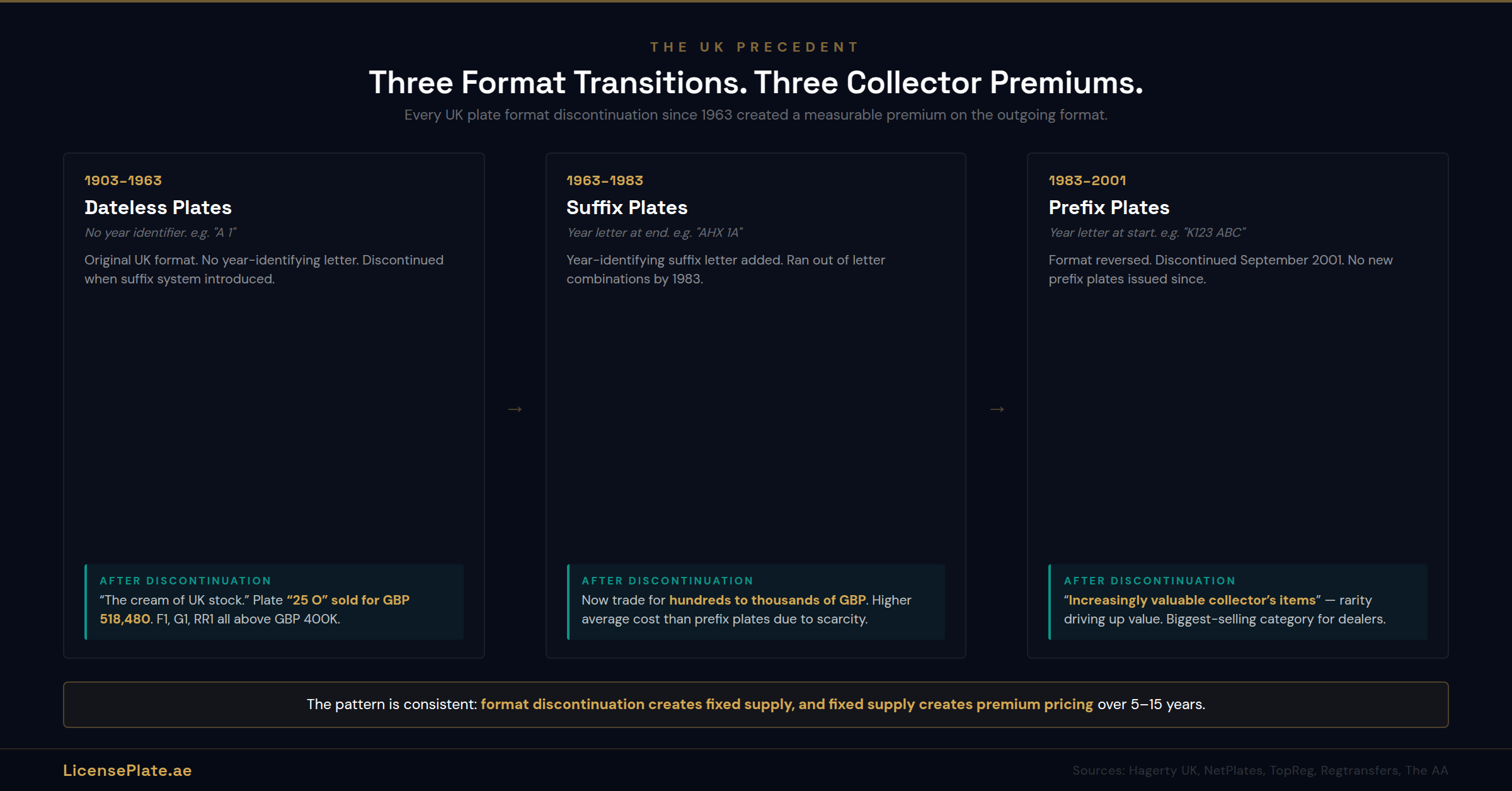
سوق اللوحات في المملكة المتحدة هي دراسة الحالة الأكثر توثيقاً لما يحدث عند توقّف صيغة لوحة. فقد شهدت المملكة المتحدة ثلاثة انتقالات صيغ منذ 1963، وخلق كلٌّ منها علاوة قابلة للقياس لدى الجامعين على الصيغة المنتهية.
الانتقال الأول: من غير المؤرّخة إلى اللاحقة (1963). صيغة التسجيل البريطانية الأصلية، المستخدمة منذ 1903، لم تكن تحمل حرفاً يحدّد السنة. وأصبحت هذه اللوحات "غير المؤرّخة" فئة مغلقة عند إدخال نظام الحرف اللاحق في 1963. واليوم، اللوحات غير المؤرّخة، وفقاً لـHagerty UK، هي "خلاصة المخزون البريطاني" و"خيار أساسي لمشاهير ونجوم بارزين جداً." وقد بيعت اللوحة "25 O" في 2014 بمبلغ 518,480 جنيهاً إسترلينياً. وبيعت "X1" و"G1" و"RR1" و"F1" جميعها بأكثر من 400,000 جنيه إسترليني.
الانتقال الثاني: من اللاحقة إلى السابقة (1983). عندما نفدت تركيبات حروف نظام اللاحقة، عُكست الصيغة، فوُضع الحرف المحدّد للسنة في البداية. ويفيد المتخصّصون في اللوحات البريطانية بأن لوحات الحرف السابق، الصادرة من 1983 إلى 2001، أصبحت الآن "مطلوبة بشدّة" بين الجامعين. وتُوصف بأنها "مقتنيات متزايدة القيمة" وتشير إلى أنه "بما أنه لا تُصدر لوحات جديدة بنمط الحرف السابق، فإن ندرتها ترفع قيمتها."
الانتقال الثالث: من السابقة إلى الصيغة الحالية (2001). أُدخلت الصيغة البريطانية الحالية ذات السبعة رموز في سبتمبر 2001. وتوثّق سجلّات الترخيص البريطانية أن نظام الحرف السابق انتهى برمز السنة "Y" في أغسطس 2001، وبعده لم تُصدر أي لوحات بالحرف السابق. وقد صُمّمت الصيغة الحالية لتدوم 50 عاماً على الأقل. وأصبحت لوحات الحرف السابق من حقبة 1983-2001 منذ ذلك الحين الفئة الأكثر مبيعاً لدى تجّار اللوحات الشخصية.
والنمط عبر الانتقالات الثلاثة متّسق: فحين تتوقّف صيغة، تصبح اللوحات القائمة بتلك الصيغة فئة ذات معروض ثابت، وتمنحها سوق الجامعين علاوة تنمو بمرور الوقت. والعلاوة ليست فورية. بل تتطوّر على مدى 5 إلى 15 عاماً مع تزايد ندرة الصيغة القديمة في التداول اليومي.
كيف ينطبق ذلك على الشارقة
انتقال الشارقة ليس تغيير صيغة بالمعنى البريطاني. فرقم اللوحة نفسه (حرف الرمز وتركيبة الأرقام) يبقى كما هو. وما تغيّر هو التصميم المادي: الخطوط، والميزات الأمنية، وعناصر الهوية البصرية. والسؤال هو ما إذا كان انتقال التصميم المادي يخلق ديناميكية الجامعين نفسها التي يخلقها انتقال الصيغة.
والإجابة الصادقة: على الأرجح ليس بالدرجة نفسها، لكن الاتجاه واحد. وإليك السبب.
لوحات الشارقة السابقة لعام 2025، بمجرد اكتمال برنامج الاستبدال، لن تعود موجودة في الإصدار الجديد. فكل لوحة تصدر من مارس 2025 فصاعداً تحمل التصميم الجديد. ومع خردة المركبات القديمة أو بيعها خارج الشارقة أو إعادة ترقيمها طوعاً، ينخفض عدد اللوحات بالتصميم السابق لعام 2025 في التداول بشكل دائم. فالمعروض يتقلّص. ولا ينمو.
وبالنسبة لجامعي اللوحات الإماراتية تحديداً، خصوصاً من يقدّرون الهوية التاريخية لتراث لوحات كل إمارة، تمثّل لوحة شارقة سابقة لعام 2025 بالصيغة القديمة قطعة من التاريخ البصري للإمارة لن تُصنَّع مرة أخرى. وما إذا كان ذلك يُترجم إلى علاوة سعرية قابلة للقياس يعتمد على ثلاثة عوامل يحلّلها مقال عوائد الاستثمار لدينا بالتفصيل: عمق طلب المشترين على تلك الفئة تحديداً، ومعدّل تراجع المعروض، وما إذا كانت اللوحات السابقة للانتقال ستكتسب هوية معترفاً بها كـ"قابلة للجمع".
وتوفّر فئة لوحات دبي الكلاسيكية مقارنة محلية. فيوثّق دليلنا للوحات دبي الكلاسيكية كيف تحقّق لوحات دبي بالصيغة الكلاسيكية علاوات على وجه الدقة لأن الصيغة لم تعد تُصدر والمعروض ثابت بشكل دائم. ولوحات الشارقة السابقة لعام 2025 ليست بعد في الفئة نفسها، لكن الظروف البنيوية (تصميم متوقّف، ومعروض ثابت، وعدد متراجع في التداول) متناظرة.
النصيحة العملية لمالكي لوحات الشارقة اليوم
إذا كنت تملك لوحة شارقة برقم له قيمة في السوق الثانوية (عدد أرقام قليل، أو نمط مرغوب، أو حرف رمز مبكر)، فلا تتعجّل استبدال اللوحة المادية بالتصميم الجديد ما لم يقتضِ الامتثال ذلك. فالرقم نفسه قابل للنقل بغضّ النظر عن تصميم اللوحة المادية، وبالتالي فقيمة الرقم غير متأثّرة. لكن اللوحة المادية بالصيغة القديمة، بمجرد استبدالها، تُسلَّم. ولا يمكنك استعادتها.
وإذا كنت تملك لوحة شارقة وظيفية بحتة (خماسية الأرقام، ورمز متأخّر، وبلا قيمة في السوق الثانوية)، فاستبدلها متى شئت. فالتصميم الجديد يقدّم وضوح رؤية وميزات أمنية ومتانة أفضل. ولا يوجد جانب استثماري سلبي في ترقية لوحة لا قيمة جامعين لها في أي من صيغتَي التصميم.
ولأي شخص يقيّم شراء لوحة شارقة الآن، راجع إعلانات الشارقة على منصّتنا، وافحص الرقم عبر حاسبة اللوحات، واقرأ مقال الأخطاء العشرة المكلفة قبل الالتزام برأس المال. فانتقال التصميم لا يغيّر أساسيات تقييم لوحات الشارقة. بل يضيف عاملاً واحداً إضافياً، وهو زاوية ندرة التصميم المادي، قد يهمّ على الهامش للجامعين خلال العقد المقبل.
كيف يقارَن انتقال الشارقة بدبي وأبوظبي
الشارقة ليست أول إمارة في الدولة تحدّث تصميم لوحاتها، ولن تكون الأخيرة. والمقارنة مع دبي وأبوظبي مهمّة لأن المشترين والمستثمرين يقيّمون اللوحات عبر الإمارات بشكل متزايد، وانتقال التصميم يثير السؤال عمّا إذا كانت إمارات أخرى ستتبع بتحديثاتها الخاصة.
فتصميم لوحات دبي بقي متّسقاً إلى حدّ بعيد لأكثر من عقد، مع تحديثات إنتاجية تدريجية (مواد عاكسة، وطباعة محسّنة) لا تغييرات تصميم شاملة. ويغطّي دليل لوحات دبي نظام الرموز والصيغ الكامل. ولم تعلن دبي عن انتقال تصميم يعادل برنامج الشارقة 2025/2026.
وتستخدم أبوظبي إطار تصميم مختلفاً يُدار عبر منصة تم وشرطة أبوظبي، بفئات لوحات خاصة بها تشمل اللوحات الخضراء البيئية المطروحة للمركبات الصديقة للبيئة. ويوثّق دليل أبوظبي لدينا النظام الكامل. ولم تعلن أبوظبي عن إصلاح تصميم مماثل.
وشهدت رأس الخيمة نمواً كبيراً في سوق لوحاتها مدفوعاً بأثر جزيرة المرجان مع Wynn، لكن التصميم المادي للوحة بقي دون تغيير. وينطبق الأمر نفسه على عجمان والفجيرة وأم القيوين.
والشارقة هي، حتى أبريل 2026، الإمارة الوحيدة في الدولة التي نفّذت انتقال تصميم لوحات كاملاً بطرح على مرحلتين. وهذا يجعل تجربة الشارقة نموذجاً محتملاً لكيفية تعامل إمارات أخرى مع التحديثات المستقبلية. وبالنسبة لدليل نقل اللوحات بين الإمارات، فإن انتقال التصميم لا يؤثّر في القدرة على نقل لوحة شارقة إلى مركبة مسجّلة في إمارة أخرى. فعملية النقل تستخدم رقم اللوحة، لا اللوحة المادية.
الأسئلة الشائعة
س: هل استبدال لوحة الشارقة إلزامي؟
حتى أبريل 2026، لم تنشر شرطة الشارقة أي موعد نهائي إلزامي صريح أو هيكل غرامات للمرحلة الأولى (جميع المركبات). أما المرحلة الثانية (المركبات الكلاسيكية والقديمة) فتستخدم لغة أقوى، إذ "تدعو" شرطة الشارقة المالكين صراحةً إلى زيارة المواقع المخصّصة للاستبدال. والإرشاد العملي: تعامل مع المرحلة الثانية كتوجيه قوي وخطّط لاستبدال لوحتك خلال زيارة تجديد التسجيل أو خدمة المركبة التالية إذا كانت مركبتك تندرج في الفئة الأقدم. وتابع إعلانات شرطة الشارقة لأي موعد امتثال إلزامي مستقبلي.
س: كم يكلّف استبدال لوحة الشارقة؟
رسم إصدار اللوحة المعياري في الشارقة هو 35 درهماً للوحة القصيرة و50 درهماً للوحة الطويلة. وإذا تمّ الاستبدال كجزء من تجديد التسجيل، فقد تُدمج التكلفة ضمن رسم التسجيل المعياري البالغ 400 درهم. توقّع إجمالاً مدفوعاً يقلّ عن 100 درهم لاستبدال لوحة فقط بشكل مباشر في مركز تسجيل.
س: أين يمكنني استبدال لوحة الشارقة الخاصة بي؟
المرحلة الأولى (جميع المركبات): أي مركز خدمات تسجيل في أنحاء الشارقة. المرحلة الثانية (المركبات الكلاسيكية والقديمة): ثلاثة مواقع محدّدة فقط: قرية تسجيل في الشارقة (شارع الإمارات)، ونادي الشارقة للسيارات الكلاسيكية، وقرية تسجيل في خورفكان. أحضر الملكية وبطاقة الهوية الإماراتية وتأكّد من تسديد جميع المخالفات قبل زيارتك.
س: ما المستندات التي أحتاجها لاستبدال اللوحة؟
بطاقة تسجيل المركبة (الملكية)، وبطاقة هوية إماراتية سارية باسم المالك المسجّل، وملف مروري خالٍ من أي مخالفات مستحقّة. وإذا لم تكن المالك المسجّل، أحضر وكالة أو خطاب تفويض بالتوقيع.
س: هل يؤثّر تصميم اللوحة الجديد في قيمة لوحتي؟
رقم اللوحة نفسه (حرف الرمز وتركيبة الأرقام) غير متأثّر بتغيير التصميم المادي. فلوحة شارقة أحادية الرقم بحرف الرمز A تساوي المبلغ نفسه بغضّ النظر عمّا إذا كانت تحمل التصميم المادي القديم أو الجديد. وما يتغيّر هو قابلية اللوحة المادية نفسها للجمع بالصيغة القديمة، وقد تكتسب علاوة متواضعة لدى الجامعين بمرور الوقت مع تزايد ندرة الصيغة القديمة في التداول.
س: هل يمكنني الاحتفاظ بلوحة الشارقة القديمة كتذكار؟
استناداً إلى إجراءات استبدال اللوحات المعيارية في الإمارات، تُسلَّم اللوحات القديمة إلى مركز التسجيل عند إصدار اللوحة الجديدة. ولا تحتفظ باللوحة المادية. وإذا أردت الحفاظ على اللوحة بالصيغة القديمة، فستحتاج إلى تصويرها قبل الاستبدال. ويبقى رقم اللوحة مسجّلاً في ملفك المروري بغضّ النظر عن اللوحة المادية.
س: هل ستتبع إمارات أخرى في الدولة بإعادة تصميم لوحاتها؟
لم تعلن أي إمارة أخرى عن انتقال تصميم مماثل حتى أبريل 2026. فدبي وأبوظبي ورأس الخيمة وعجمان والفجيرة وأم القيوين حافظت جميعها على تصاميم لوحاتها الحالية. وقد يكون نهج الشارقة ذو المرحلتين نموذجاً إذا قرّرت إمارات أخرى تحديث لوحاتها مستقبلاً.
س: هل يؤثّر استبدال اللوحة في تأميني أو تسجيلي؟
لا. فاستبدال اللوحة تبديل مادي للوحة نفسها. ويبقى رقم تسجيلك وملكيتك ووثيقة تأمينك وملفك المروري دون تغيير. والشيء الوحيد الذي يتغيّر هو مظهر اللوحة على مركبتك. ولا يلزم إجراء أي تحديثات على تأمينك.
س: أعيش في دبي لكن سيارتي تحمل لوحات الشارقة. هل أنا معنيّ؟
نعم، إذا كانت مركبتك مسجّلة في الشارقة. فبرنامج استبدال اللوحات ينطبق على جميع المركبات المسجّلة في الشارقة بغضّ النظر عن مكان إقامة المالك. وإذا كنت تعيش في دبي لكنك تقود مركبة تحمل لوحة شارقة، فستحتاج إلى زيارة مركز تسجيل في الشارقة (لا مركز هيئة الطرق والمواصلات في دبي) للاستبدال.
س: ماذا لو كنت أشتري لوحة شارقة في السوق الثانوية الآن؟
انتقال التصميم لا يؤثّر في مشتريات اللوحات في السوق الثانوية. فرقم اللوحة هو ما تشتريه، لا اللوحة المادية. وعند إتمام النقل، ستصدر لوحة مادية جديدة بالتصميم الحالي (الجديد). تحقّق من حالة أي لوحة قبل الشراء باستخدام قائمة العناية الواجبة لدينا، وتصفّح إعلانات الشارقة الحالية في سوقنا.
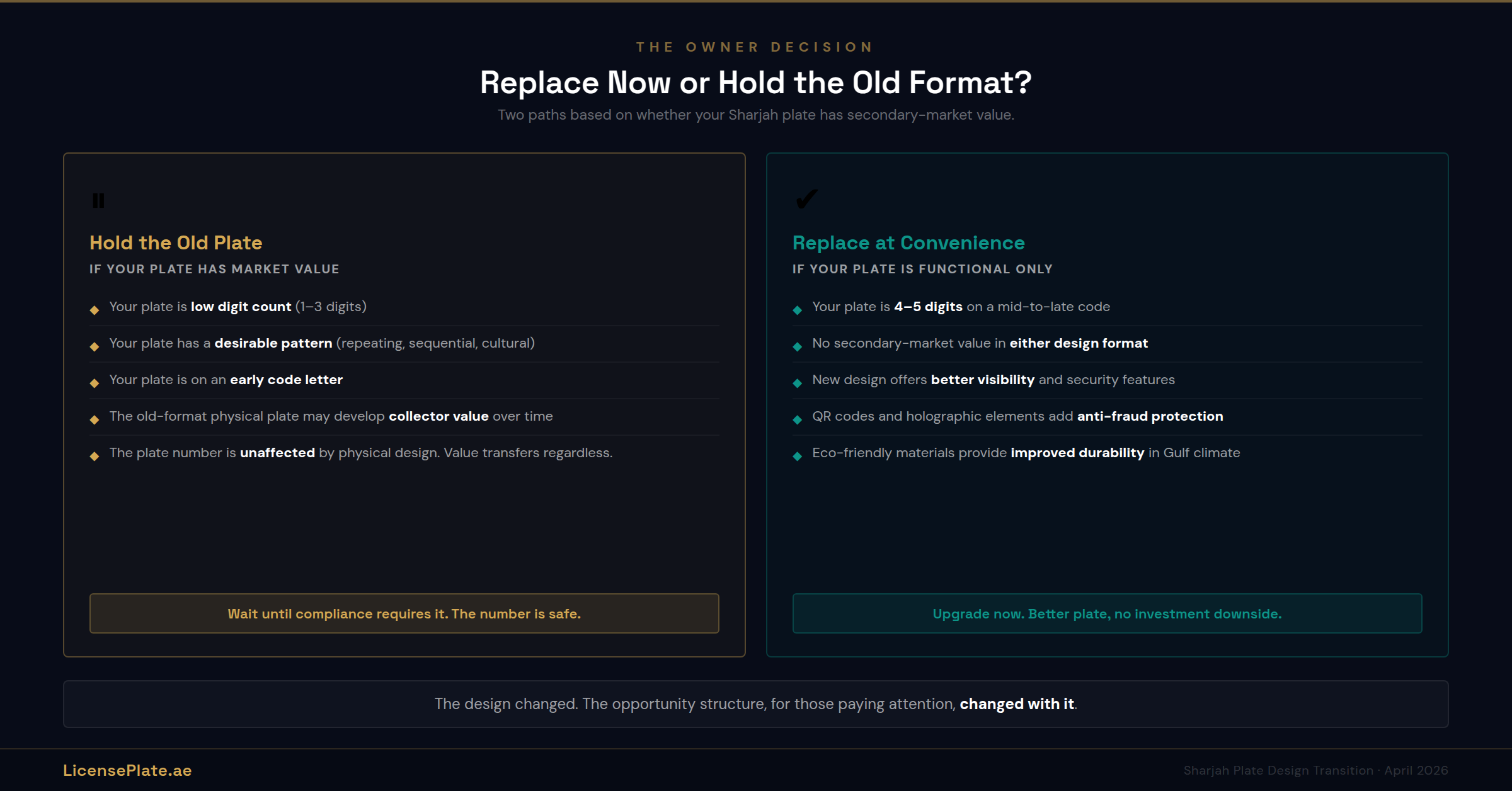
انتقال تصميم لوحات الشارقة هو نوع الأحداث التشغيلية التي يستوعبها معظم المقيمين في 30 ثانية ثم ينسونها. أما بالنسبة للسوق الثانوية، فهو شيء أكبر قليلاً. فكل انتقال صيغة لوحة، في أي مكان في العالم، يخلق فئة جديدة من اللوحات لن تُصنَّع مرة أخرى أبداً. وعلاوة الجامعين على تلك الفئة ليست فورية، وليست مضمونة. لكن الظروف البنيوية التي تنتجها (معروض ثابت، وتداول متراجع، وقيمة هوية تاريخية) قائمة الآن للوحات الشارقة السابقة لعام 2025.
إذا كنت تملك لوحة شارقة، فراجع الحاسبة لترى أين يقع رقمك في السوق الحالية. وإذا كنت تشتري، فتصفّح إعلانات الشارقة واقرأ دليل الشارقة الكامل قبل اتخاذ قرار. وإذا كنت تبيع، فيغطّي دليل البيع لدينا التسعير والعرض والتفاوض خطوة بخطوة. التصميم تغيّر. وبنية الفرصة، لمن ينتبه، تغيّرت معه.