

لوحات سيارات الشارقة: الدليل الكامل 2026 للرموز والأسعار وعمليات النقل ولماذا الإمارة الثالثة هي السرّ الأفضل حفظاً في السوق
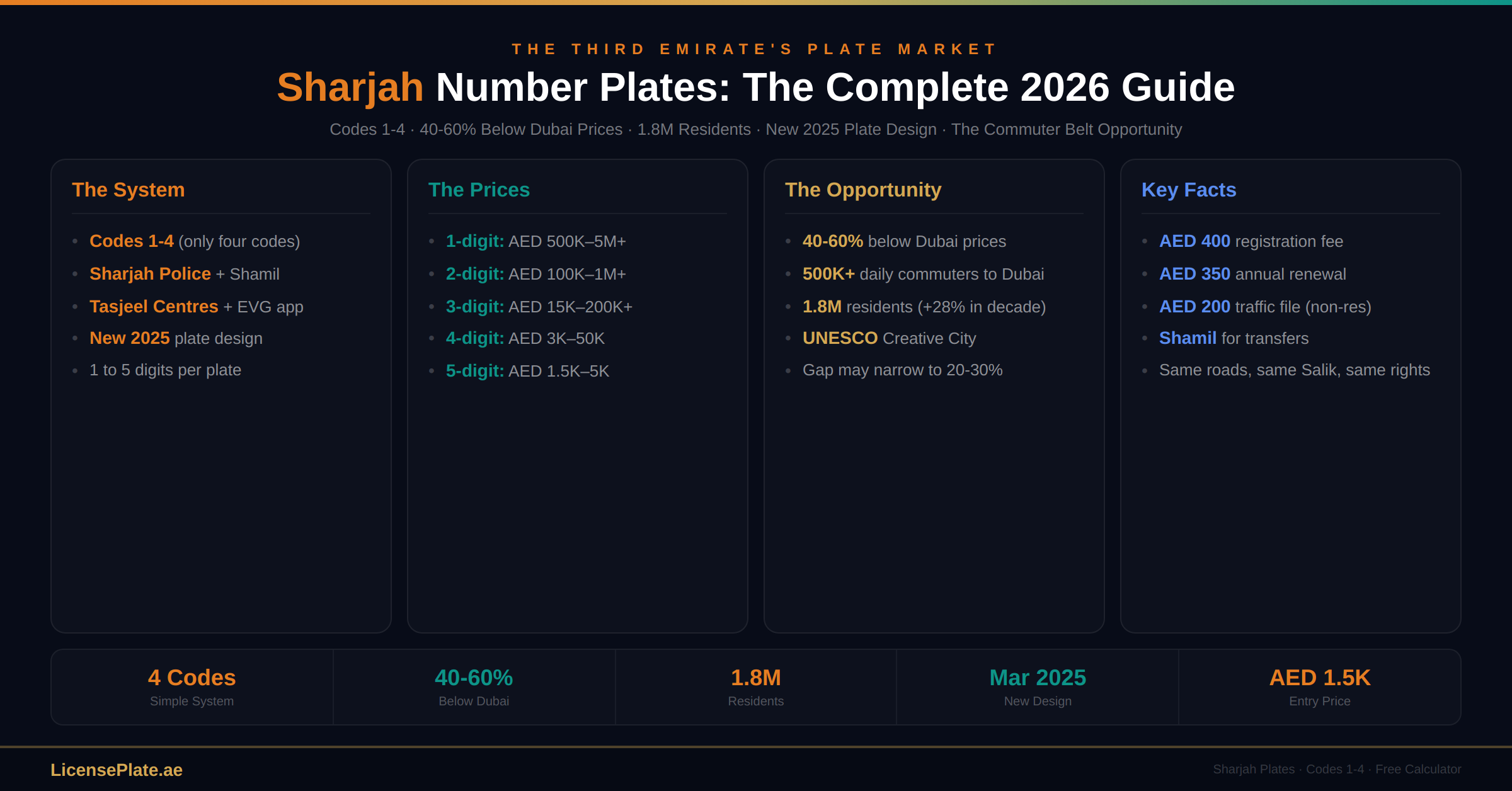
كل صباح، يقود ما بين 500,000 و600,000 شخص من الشارقة إلى دبي. فيعبرون الحدود على شارع الاتحاد، وشارع الإمارات، وشارع الشيخ محمد بن زايد، مكوّنين واحداً من أكثف أحزمة التنقّل في الشرق الأوسط. وتحمل سياراتهم لوحات الشارقة. ومكاتبهم في دبي. وإيجارهم أرخص بنسبة 30 إلى 50% ممّا سيدفعونه عبر الحدود. ولوحاتهم، وهي تجلس على الطرق نفسها كلوحات دبي A ودبي D، تكلّف أقل بنسبة 40 إلى 60% عند كل عدد أرقام.
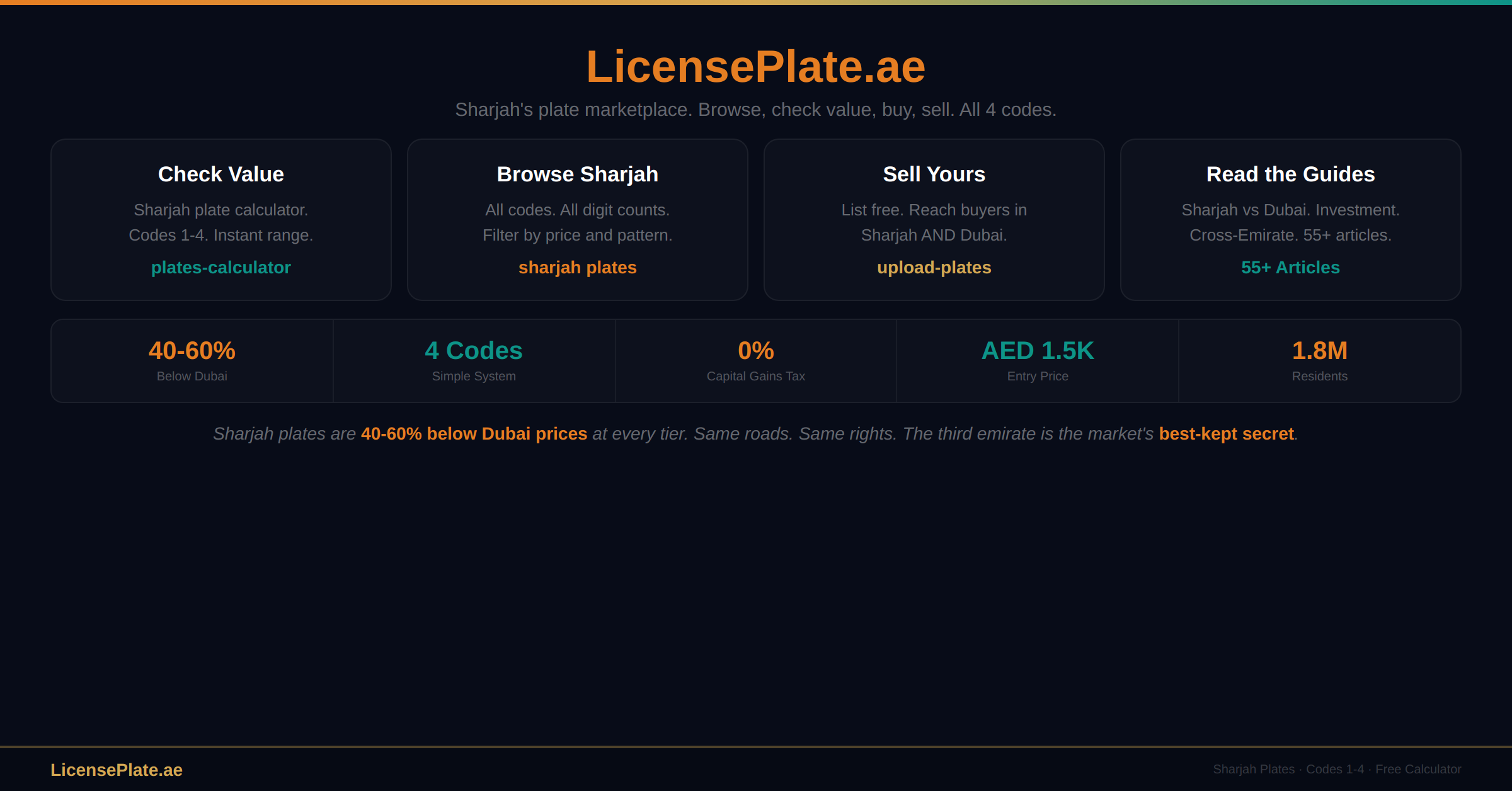
الشارقة هي ثالث أكبر إمارة من حيث السكان (أكثر من 1.8 مليون)، والعاصمة الثقافية للإمارات (موطن أكثر من 20 متحفاً والإمارة الوحيدة المصنّفة مدينة إبداعية للتصميم من اليونسكو)، وأكثر ممرّات نقل اللوحات بين الإمارات نشاطاً في البلاد. ومع ذلك ليس لها دليل مخصّص في أي مكان على الإنترنت. فكل مورد لوحات يركّز على دبي أولاً، وأبوظبي ثانياً، ويعامل الشارقة كحاشية. وهذا الدليل يغيّر ذلك.
سواء كنت تعيش في الشارقة وتريد فهم ما تساويه لوحتك، أو تنظر إلى لوحات الشارقة كدخول أكثر تيسّراً إلى سوق لوحات الإمارات، أو كنت مستثمراً يراقب الفجوة بين تسعير الشارقة ودبي، فهذا هو المورد القاطع. فهو يغطّي كيف يعمل نظام رموز الشارقة، وما تكلّفه اللوحات عند كل طبقة، وكيف تشتري وتبيع عبر شرطة الشارقة وشامل، وكيف تنقل بين الملّاك أو عبر الإمارات، وكيف يغيّر تصميم اللوحة الجديد 2025 المشهد، ولماذا يخلق حزام التنقّل الشارقة-دبي فرصة لم يسعّرها السوق.
كيف يعمل نظام لوحات الشارقة
تستخدم لوحات الشارقة نظام رموز رقمي بالرموز من 1 إلى 4، متبوعاً بما يصل إلى خمسة أرقام. وتعرض اللوحة "الشارقة" باللغتين العربية والإنجليزية (الموضع العلوي على اللوحات المربّعة، والجانب الأيسر على اللوحات المستطيلة). وعلى عكس رموز دبي الـ 26+ من حرف واحد أو فئات أبوظبي الـ 50، فإن نظام الشارقة مضغوط: مجرّد أربعة رموز تغطّي مجموعة اللوحات بأكملها.
الرمز 1 هو الأبكر والأكثر رقياً. والرمز 4 هو الأحدث والأكثر شيوعاً. ويتّبع التسلسل الهرمي للتسعير المنطق نفسه كل إمارة أخرى: أرقام الرموز الأدنى تشير إلى إصدار أبكر، ومعروض أصغر، وعلاوات أعلى. فلوحة من 3 أرقام على الرمز 1 تكلّف أكثر بكثير من الرقم نفسه من 3 أرقام على الرمز 3 أو الرمز 4.
في 3 مارس 2025، أطلقت شرطة الشارقة لوحات مركبات جديدة بتصميم عصري وجودة محسّنة، كما أفادت خليج تايمز. وتحسّن اللوحات الجديدة الوضوح والمتانة، وتستخدم مواد محدّثة لمكافحة التزوير، وهي جزء من مبادرة استدامة وتحديث أوسع على مستوى الإمارة. وسينتقل حاملو اللوحات الحاليون إلى التصميم الجديد خلال تجديدهم أو نقلهم التالي.
وتأتي لوحات الشارقة بنوعَي خلفية: أبيض (المركبات الخاصة، الأكثر شيوعاً) وبرتقالي (فئات معيّنة). ولا توجد لوحات بشريط أحمر في الشارقة؛ فذلك النظام خاص بأبوظبي.
أسعار لوحات سيارات الشارقة: ما تكلّفه كل طبقة فعلاً
لوحات الشارقة أرخص باستمرار بنسبة 40 إلى 60% من مثيلاتها في دبي عند كل عدد أرقام وطبقة رمز. وتوجد هذه الفجوة السعرية بسبب علاوة علامة دبي التجارية (الوجاهة الاجتماعية للوحة دبي)، لا بسبب أي فرق جوهري في جودة اللوحة أو الحقوق القانونية أو الوظيفة. فكلتا اللوحتين تعملان على الطرق نفسها، وبوابات سالك نفسها، وعدّادات المواقف نفسها. وتقارن حاسبة اللوحات لوحات الشارقة بمجموعة بيانات الإمارات الكاملة.
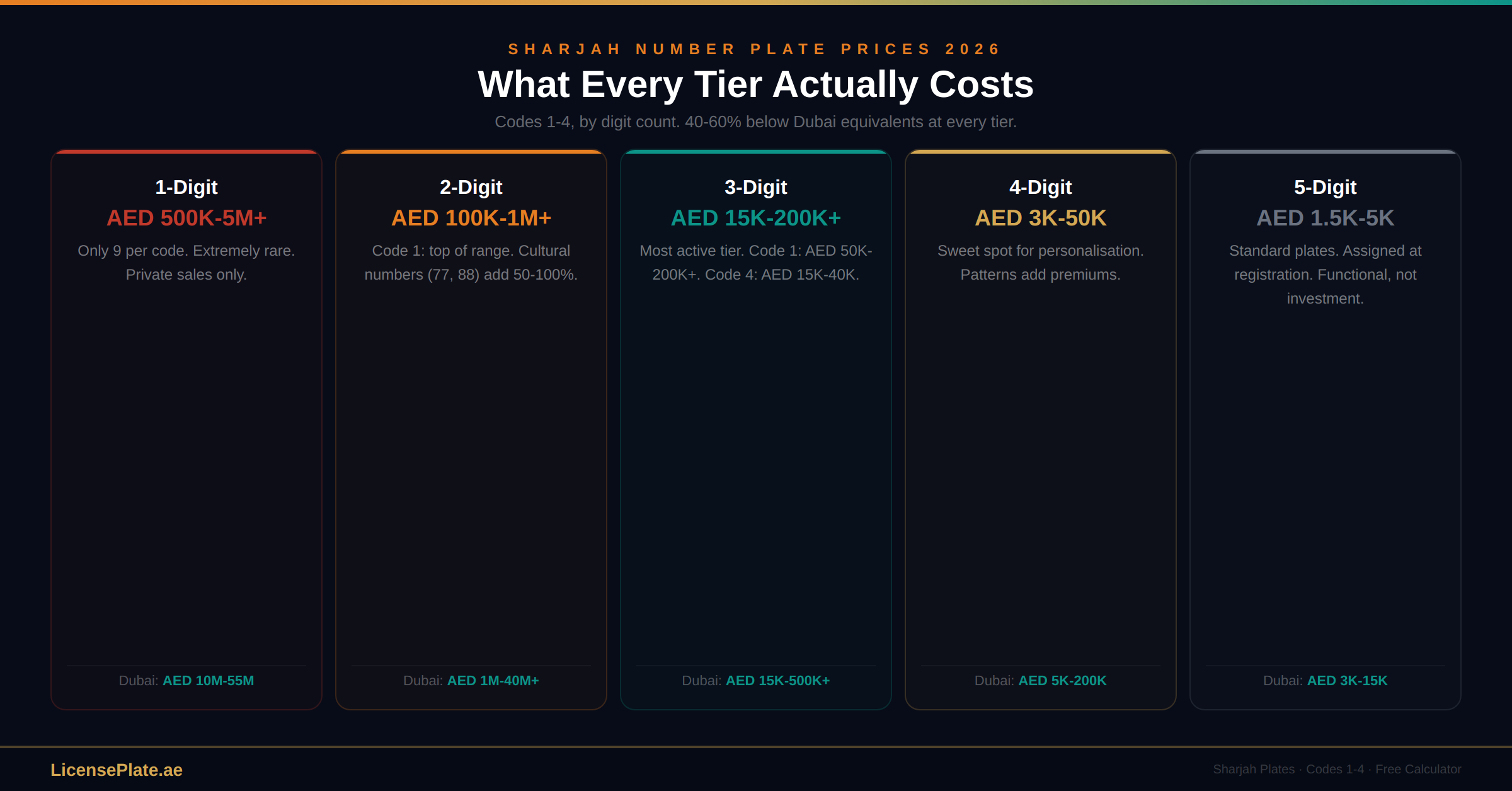
اللوحات ذات الرقم الواحد (من 1 إلى 9): من 500,000 إلى أكثر من 5 ملايين درهم. واللوحات ذات الرقم الواحد في الشارقة نادرة جداً. فتظهر حصراً تقريباً عبر المبيعات الخاصة أو المزادات البارزة. واللوحة ذات الرقم الواحد على الرمز 1 تحقّق أعلى العلاوات. واللوحات المماثلة ذات الرقم الواحد في دبي تُباع بـ 10 ملايين إلى 55 مليون درهم، ما يجعل لوحات الشارقة ذات الرقم الواحد جزءاً بسيطاً من السعر لندرة متطابقة وظيفياً (تسع فقط لكل رمز في أي إمارة).
اللوحات ذات الرقمين (من 10 إلى 99): من 100,000 إلى أكثر من مليون درهم. واللوحات ذات الرقمين في الشارقة تجذب هواة الجمع الراغبين في هيبة الأرقام القليلة دون تسعير دبي. ولوحات الرمز 1 ذات الرقمين تقع في قمّة هذا النطاق. ولوحات الرمز 3 والرمز 4 ذات الرقمين أكثر تيسّراً، وتبدأ نحو 100,000 إلى 200,000 درهم. والأرقام الثقافية (77، 88، 99) تحمل علاوات إضافية من 50 إلى 100% فوق المعدّل الأساسي. ويرسم دليل دلالات الأرقام كل رقم ذي دلالة ثقافية عبر التقاليد العربية والصينية وجنوب آسيا.
اللوحات ذات الثلاثة أرقام (من 100 إلى 999): من 15,000 إلى أكثر من 200,000 درهم. وهذه أكثر طبقة نشاطاً في سوق الشارقة. فتتراوح اللوحات ذات الثلاثة أرقام على الرمز 1 من 50,000 إلى 200,000 درهم أو أكثر للأرقام ذات النمط أو الثقافية. وعلى الرمز 3 والرمز 4، تبدأ من 15,000 إلى 40,000 درهم للأرقام غير ذات النمط. والأرقام المتكرّرة (777، 888) تحمل علاوات من 200 إلى 300% فوق الأساس. ولوحة شارقة 4 500 مدرجة حالياً على LicensePlate.ae بـ 990,000 درهم، موضوعة في طبقة الاستثمار المميّزة.
اللوحات ذات الأربعة أرقام (من 1000 إلى 9999): من 3,000 إلى 50,000 درهم. واللوحات ذات الأربعة أرقام هي النقطة المثالية للمشترين الراغبين في لوحة شارقة شخصية دون التزام من خمسة أرقام. والأرقام ذات النمط (1234، 7777، 2026) تحمل علاوات معتدلة. والأرقام العشوائية من أربعة أرقام على الرمز 3 أو الرمز 4 تبدأ من 3,000 إلى 6,000 درهم. وعلى الرمز 1، توقّع 8,000 إلى 20,000 درهم للتركيبات غير ذات النمط.
اللوحات ذات الخمسة أرقام (من 10000 إلى 99999): من 1,500 إلى 5,000 درهم. واللوحات ذات الخمسة أرقام هي الأكثر شيوعاً والأكثر تيسّراً في الشارقة. وتُخصَّص أثناء تسجيل المركبة القياسي في مراكز تسجيل. وفي السوق الثانوي على LicensePlate.ae، تبدأ لوحات الشارقة من خمسة أرقام من نحو 1,500 درهم. وهذه لوحات وظيفية، لا أصول استثمارية. وتوثّق مقارنة اللوحات مقابل الذهب مقابل العقارات لماذا ينبغي معاملة اللوحات القياسية ذات الخمسة أرقام عبر جميع الإمارات كمشتريات نفعية، لا أصول مرتفعة القيمة.
كيف تشتري لوحة سيارة الشارقة
توجد ثلاث قنوات لشراء لوحة سيارة الشارقة، كل منها تناسب ملف مشترٍ ونقطة سعر مختلفة.
القناة 1: شرطة الشارقة ومراكز تسجيل (اللوحات القياسية)
عندما تسجّل مركبة جديدة في الشارقة، تتلقّى لوحة عبر شبكة مراكز تسجيل. والمراكز موزّعة عبر الإمارة (القائمة الكاملة على موقع شرطة الشارقة). ويمكنك أيضاً التسجيل إلكترونياً عبر موقع أو تطبيق بوابة مرور الإمارات (EVG). ورسم التسجيل 400 درهم للسيارات الجديدة. والتجديد السنوي 350 درهماً. وتُخصَّص اللوحات القياسية من خمسة أرقام كجزء من عملية التسجيل برسوم حكومية أساسية. وإذا أردت رقماً محدّداً متاحاً، يمكنك طلبه عبر موقع وزارة الداخلية للأرقام المميّزة.
القناة 2: مزاد الإمارات ووزارة الداخلية (اللوحات المميّزة)
بالنسبة للوحات الشارقة المميّزة (عدد أرقام قليل، أرقام ثقافية، تركيبات ذات نمط)، القناة الرسمية هي عبر نظام الأرقام المميّزة لوزارة الداخلية. ويمكنك التقدّم لملكية لوحة مميّزة عبر موقع وزارة الداخلية. ويعرض مزاد الإمارات أيضاً دورياً لوحات الشارقة إلى جانب لوحات دبي وأبوظبي في فعالياته المباشرة والإلكترونية. ويشرح دليل المزاد مقابل السوق الثانوي المقايضات بين قناتَي المزاد والشراء الخاص.
القناة 3: السوق الثانوي (جميع أنواع اللوحات)
يدرج السوق الثانوي على LicensePlate.ae لوحات الشارقة عبر جميع الرموز وأعداد الأرقام. ويمكنك التصفية حسب رقم الرمز، وعدد الأرقام، ونطاق السعر، ونوع النمط. والأسعار المطلوبة تحمل عادةً مجال تفاوض بنسبة 10 إلى 20%. استخدم حاسبة اللوحات لمقارنة أي قائمة قبل التفاوض. ويغطّي دليل التحقّق عملية العناية الواجبة المكوّنة من 10 نقاط لأي عملية شراء خاصة، ويوثّق دليل الاحتيال أنماط الاحتيال التي ينبغي الحذر منها.
كيف تنقل لوحة الشارقة
تُعالَج عمليات نقل لوحات الشارقة عبر جهة شامل المرورية (للشارقة والإمارات الشمالية) أو في مراكز إدارة مرور شرطة الشارقة. ويحتاج كل من المشتري والبائع إلى: هوية إماراتية (أصلية)، وبطاقة تسجيل المركبة (الملكية)، وتسوية جميع المخالفات غير المسدّدة. ورسم النقل نحو 100 إلى 200 درهم. ويمكن للمشترين من خارج الإمارة فتح ملف مروري في الشارقة (200 درهم) للحصول على لوحة شارقة دون إعادة تسجيل مركبتهم في الشارقة.
وإذا أردت نقل لوحة شارقة إلى مركبة مسجّلة في إمارة أخرى (أو العكس)، يغطّي دليل النقل بين الإمارات العملية الكاملة، بما في ذلك المسارين (النقل المباشر داخل الإمارة نفسها مقابل إجراء التصدير-الاستيراد بين الإمارات) والتكاليف المتضمَّنة (عادةً 650 إلى 760 درهماً إجمالاً لعملية النقل الكاملة بين الإمارات).
إعادة تصميم اللوحة في مارس 2025: ما الذي تغيّر
في 3 مارس 2025، أطلقت شرطة الشارقة لوحات مركبات جديدة عبر الإمارة. وكانت إعادة التصميم أهمّ تحديث لجماليات لوحات الشارقة منذ سنوات، وتشير إلى التزام الإمارة بالتحديث إلى جانب دبي وأبوظبي.
ما الذي تغيّر: تصميم عصري بوضوح بصري محسّن. وجودة مواد محسّنة لمتانة أفضل ومقاومة للطقس. وميزات محدّثة لمكافحة التزوير باستخدام تقنيات إنتاج متقدّمة. ووضوح محسّن لإنفاذ القانون وأنظمة الرسوم/الكاميرات الآلية. وجزء من مبادرة استدامة أوسع في الشارقة. وينتقل حاملو اللوحات الحاليون إلى التصميم الجديد خلال تجديدهم أو نقلهم التالي، لذا فكلا التصميمين القديم والجديد على الطرق حالياً.
ولإعادة التصميم تبعات عملية على السوق الثانوي. فمشترو لوحات الشارقة اليوم يتلقّون التصميم العصري المحدّث، الذي يحمل جاذبية بصرية أنضر قليلاً مقارنةً بالصيغة الأقدم. وبالنسبة لهواة الجمع، قد تطوّر اللوحات الأقدم قبل 2025 علاوة "تراثية" بمرور الوقت، بشكل مشابه لكيفية حمل لوحات دبي الكلاسيكية علاوات لتصميمها التاريخي.
الشارقة مقابل دبي: الفروق الثمانية التي يحتاج كل مشترٍ إلى فهمها
تتشارك الشارقة ودبي حدوداً وحزام تنقّل ونصف مليون عبور يومي. لكن سوقَي لوحاتهما يعملان بشكل مختلف عبر ثمانية أبعاد:
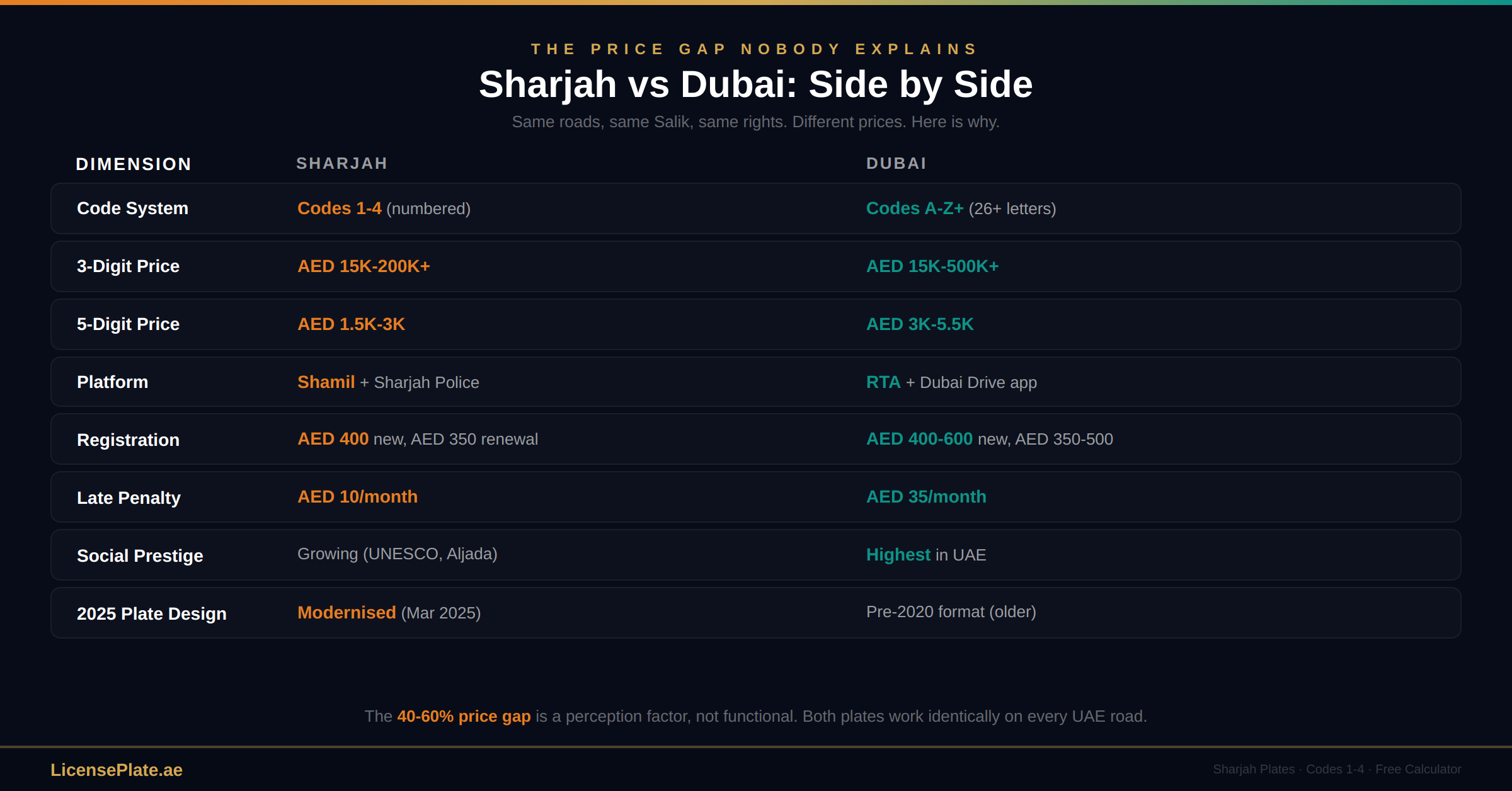
1. نظام الرموز. تستخدم دبي 26+ رمز حرف واحد (من A إلى Z) إضافةً إلى الحروف المزدوجة (AA، BB، CC، DD). وتستخدم الشارقة مجرّد أربعة رموز رقمية (من 1 إلى 4). ويشرح دليل الرموز من A إلى Z تسلسل دبي الهرمي.
2. الفجوة السعرية. لوحات الشارقة تكلّف أقل بنسبة 40 إلى 60% من مثيلاتها في دبي عند كل عدد أرقام. فلوحة من 3 أرقام تكلّف 80,000 إلى 200,000 درهم على الرمز D في دبي تكلّف 30,000 إلى 80,000 درهم على الرمز 1 في الشارقة. ولوحة من 5 أرقام تكلّف 3,000 إلى 5,500 درهم في دبي تكلّف 1,500 إلى 3,000 درهم في الشارقة.
3. المنصة. تستخدم دبي هيئة الطرق وتطبيق Dubai Drive. وتستخدم الشارقة شرطة الشارقة، ومراكز تسجيل، وجهة شامل المرورية، وموقع/تطبيق بوابة مرور الإمارات (EVG). ولا يمكنك نقل لوحة شارقة عبر تطبيق Dubai Drive.
4. تكلفة التسجيل. تسجيل الشارقة الجديد: 400 درهم. التجديد السنوي: 350 درهماً. تسجيل دبي الجديد: يتفاوت حسب نوع المركبة لكن عادةً 400 إلى 600 درهم. التجديد السنوي: 350 إلى 500 درهم. عقوبة التجديد المتأخّر: تفرض الشارقة 10 دراهم/شهر (معيار وزارة الداخلية). وتفرض دبي 35 درهماً/شهر. ويوثّق دليل الرسوم هيكل تكلفة دبي الكامل.
5. نظام المزادات. تدير هيئة الطرق في دبي مزاداتها الفصلية الخاصة (جراند حياة، إلكترونية). ولا تدير الشارقة مزادات لوحات خاصة بها بالحجم نفسه. وتتوفّر لوحات الشارقة المميّزة عبر نظام وزارة الداخلية وأحياناً عبر فعاليات مزاد الإمارات. والسوق الثانوي هو القناة الأساسية للوحات الشارقة المميّزة.
6. الهيبة الاجتماعية. هذا هو الفيل في الغرفة. فلوحات دبي تحمل وجاهة اجتماعية لا تضاهيها لوحات الشارقة. وفي ثقافة الإمارات الواعية بالمكانة، لوحة دبي A من 3 أرقام تشير إلى طبقة اجتماعية مختلفة عن لوحة الشارقة 1 من 3 أرقام، حتى لو عملت كلتا اللوحتين بشكل متطابق على كل طريق في البلاد. وهذه العلاوة الاجتماعية هي السبب الأساسي للفجوة السعرية 40 إلى 60%. وهي حقيقية، لكنها أيضاً بالضبط نوع فجوة الإدراك التي تخلق فرصة لمستثمري القيمة.
7. ديناميكيات حزام التنقّل. يُقدَّر أن 500,000 إلى 600,000 من سكان الشارقة يتنقّلون إلى دبي يومياً. وكثير منهم يحملون لوحات الشارقة لكنهم يقضون 80% من وقت قيادتهم على طرق دبي. ويشتري بعض سكان الشارقة لوحات دبي لأسباب اجتماعية بحتة. ويحتفظ آخرون بلوحات الشارقة لأن وفورات التكلفة كبيرة: الفرق بين لوحة الشارقة الرمز 1 من 3 أرقام بـ 60,000 درهم ولوحة دبي الرمز D من 3 أرقام بـ 150,000 درهم هو 90,000 درهم تبقى في جيب المشتري.
8. تصميم اللوحة البديل. إعادة تصميم الشارقة في مارس 2025 تعني أن لوحات الشارقة الجديدة تبدو عصرية وحادّة. ولوحات دبي الأقدم (تصاميم ما قبل 2020) متقادمة بصرياً بالمقارنة. وضاقت فجوة التصميم.
فرصة حزام التنقّل: لماذا قد تكون لوحات الشارقة مقوَّمة بأقل من قيمتها
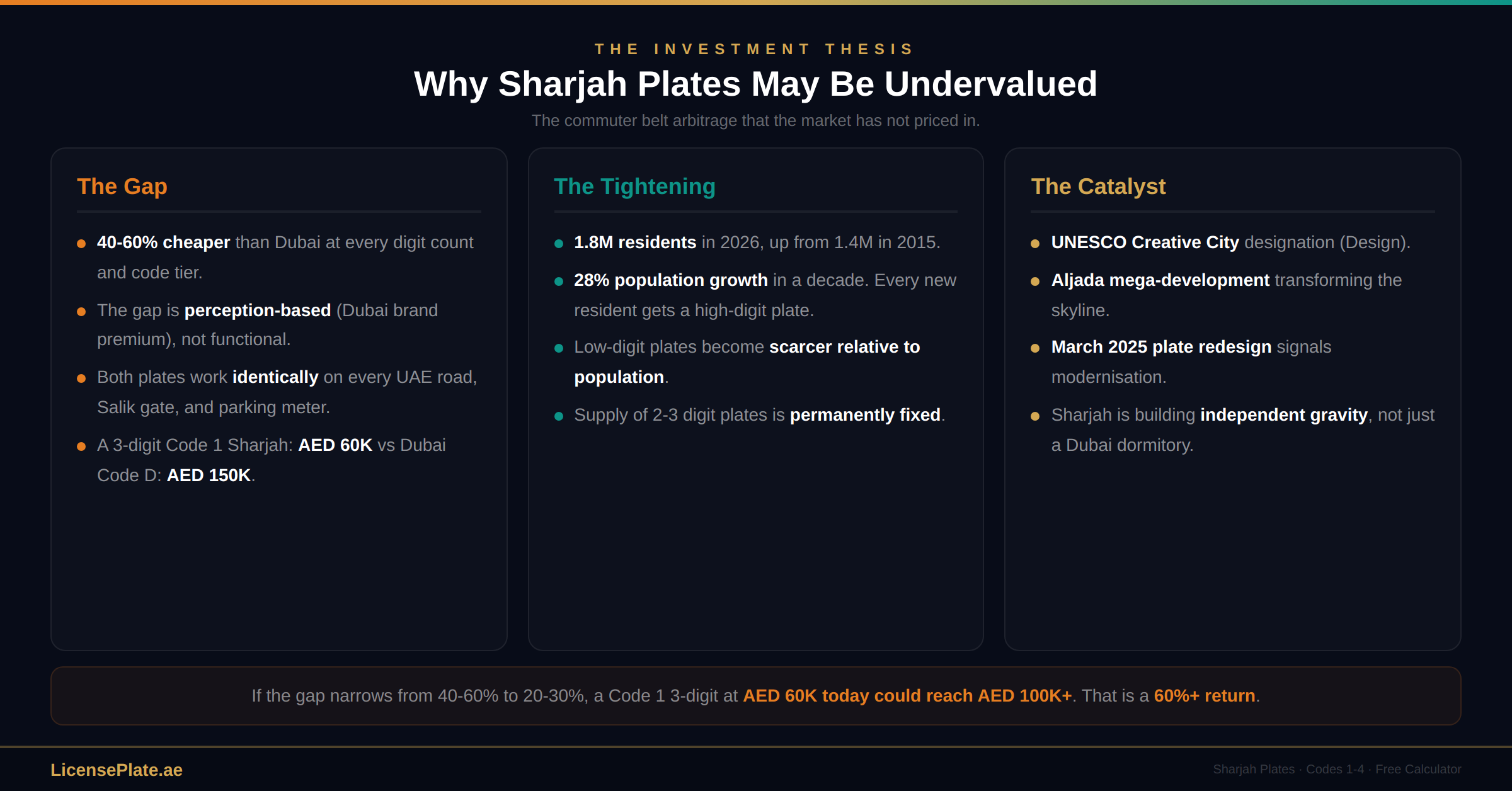
إليك الأطروحة. لوحات الشارقة مسعّرة أدنى بنسبة 40 إلى 60% من مثيلاتها في دبي عند كل طبقة. والسبب هو علاوة علامة دبي التجارية، وهي عامل اجتماعي/إدراكي، لا وظيفي. فكلتا اللوحتين متطابقتان قانونياً على كل طريق إماراتي. وكلتاهما تحملان الحقوق نفسها. وكلتاهما تستخدمان بوابات سالك وأنظمة المواقف نفسها. والفرق الوحيد هو ما يظنّه الآخرون عند رؤية اللوحة.
لكن تأمّل: سكان الشارقة ينمون أسرع من معروض لوحاتها في الطرف ذي الأرقام القليلة. فالإمارة لديها 1.8 مليون مقيم، ارتفاعاً من 1.4 مليون في 2015. أي نمو سكاني بنسبة 28% في عقد. وكل مقيم جديد يسجّل سيارة يحصل على لوحة ذات أرقام كثيرة، بينما تصبح اللوحات القائمة ذات الأرقام القليلة أندر مقارنةً بالسكان المتزايدين. وديناميكيات العرض والطلب للوحات الشارقة من رقمين و3 أرقام تتضيّق.
وفي الوقت نفسه، تستثمر الشارقة بكثافة في هويتها الخاصة: تصنيف مدينة إبداعية من اليونسكو، وتطوير الجادة الضخم، وتوسيع منطقة المدينة الجامعية، وتحديث نظام لوحاتها (إعادة تصميم مارس 2025). وهذه إشارات إمارة تبني جاذبية ثقافية واقتصادية مستقلّة، لا مجرّد خدمة كمهجع لمتنقّلي دبي.
وسؤال الاستثمار ليس ما إذا كانت لوحات الشارقة ستضاهي أسعار دبي (على الأرجح لن تفعل، لأن علاوة علامة دبي التجارية هيكلية). بل السؤال هو ما إذا كانت الفجوة الحالية 40 إلى 60% واسعة جداً. فإذا ضيّقت هوية الشارقة المتنامية ومعروضها المتضيّق الفجوة إلى 20 إلى 30%، فإن لوحة شارقة الرمز 1 من 3 أرقام مشتراة اليوم بـ 60,000 درهم يمكن أن ترتفع إلى 100,000 درهم أو أكثر، ممثّلةً عائداً يزيد عن 60%. ويغطّي دليل الاستثمار الأطروحة الأوسع حول ارتفاع قيمة اللوحات، وتؤطّر مقارنة اللوحات مقابل الذهب مقابل العقارات اللوحات ضمن مشهد الأصول البديلة.
كيف تبيع لوحة سيارة الشارقة
يتّبع بيع لوحة الشارقة المسارات الثلاثة نفسها كأي لوحة إماراتية، مكيّفة لبنية الشارقة التحتية المحدّدة.
الإدراج في السوق الثانوي. ارفع لوحتك إلى LicensePlate.ae مجاناً. حدّد سعرك المطلوب باستخدام حاسبة اللوحات كمقياس. وقرب الشارقة من دبي يعني أن قائمتك تصل إلى كل من سكان الشارقة ومجموعة مشتري دبي الضخمة (كثير من سكان دبي ينظرون إلى لوحات الشارقة كبدائل ميسورة). ويغطّي دليل البائع طريقة التسعير من ثلاث خطوات.
البيع الخاص مع النقل عبر شامل. اتّفق على سعر، والتقِ في مركز إدارة مرور الشارقة، وقدّم الهويات الإماراتية، وسوِّ أي مخالفات، وادفع رسم النقل (100 إلى 200 درهم)، وتنتقل اللوحة. ويجب حضور الطرفين. وتستغرق العملية 30 إلى 60 دقيقة إذا كانت الأوراق سليمة.
البيع بين الإمارات. بيع لوحة شارقة لمشترٍ في إمارة أخرى يتطلّب عملية النقل بين الإمارات. ويفتح المشتري ملفاً مرورياً في الشارقة (200 درهم) إذا لم يكن لديه واحد، ثم يكمل النقل القياسي. ويغطّي دليل النقل بين الإمارات الخطوات الكاملة.
الأسئلة الشائعة
س: كيف يعمل نظام رموز لوحات الشارقة؟
تستخدم الشارقة الرموز الرقمية من 1 إلى 4، متبوعةً بما يصل إلى خمسة أرقام. والرمز 1 هو الأبكر والأغلى. والرمز 4 هو الأحدث والأكثر تيسّراً. وهذا أبسط من رموز دبي الـ 26+ من حرف واحد أو فئات أبوظبي الـ 50.
س: كم تكلّف لوحة سيارة الشارقة؟
اللوحات ذات الخمسة أرقام تبدأ من 1,500 درهم. الأربعة أرقام من 3,000 درهم. الثلاثة أرقام من 15,000 درهم. الرقمين من 100,000 درهم. الرقم الواحد من 500,000 درهم. وتعتمد جميع الأسعار على رقم الرمز والنمط. استخدم حاسبة اللوحات لنطاق دقيق لأي تركيبة محدّدة.
س: لماذا لوحات الشارقة أرخص من لوحات دبي؟
علاوة علامة دبي التجارية. فلوحات دبي تحمل وجاهة اجتماعية لا تضاهيها لوحات الشارقة. والفجوة السعرية 40-60% عامل إدراكي، لا وظيفي. فكلتا اللوحتين تعملان بشكل متطابق على كل طريق إماراتي وبوابة سالك وعدّاد مواقف.
س: كيف أنقل لوحة الشارقة إلى مالك جديد؟
عبر جهة شامل المرورية أو مراكز إدارة مرور شرطة الشارقة. ويحتاج كل من المشتري والبائع إلى هوية إماراتية، ومخالفات مسوّاة، والملكية. رسم النقل: 100-200 درهم. العملية: 30-60 دقيقة.
س: هل يمكنني استخدام لوحة شارقة على طرق دبي؟
نعم. جميع لوحات الإمارات سارية على جميع الطرق في الإمارات السبع جميعها. ويُقدَّر أن 500,000-600,000 من سكان الشارقة يتنقّلون إلى دبي يومياً على لوحات الشارقة.
س: ما الذي تغيّر مع إعادة تصميم لوحة الشارقة في مارس 2025؟
أطلقت شرطة الشارقة لوحات جديدة بتصميم عصري، وجودة محسّنة، ووضوح محسّن، وميزات محدّثة لمكافحة التزوير، ومتانة أفضل. وينتقل الحاملون الحاليون خلال تجديدهم أو نقلهم التالي.
س: هل لوحة الشارقة استثمار جيّد؟
اللوحات ذات الثلاثة أرقام في الشارقة على الرموز المبكرة (1 و2) لها خصائص استثمارية: معروض محدود، وسكان متزايدون (أكثر من 1.8 مليون)، وفجوة سعرية 40-60% مقارنةً بدبي قد تضيق مع بناء الشارقة جاذبية اقتصادية وثقافية مستقلّة. ويغطّي دليل الاستثمار الأطروحة الكاملة.
س: كم تكلّف تسجيل سيارة في الشارقة؟
التسجيل الجديد: 400 درهم. التجديد السنوي: 350 درهماً. عقوبة التجديد المتأخّر: 10 دراهم/شهر. استبدال اللوحة: 200 درهم.
س: أين يمكنني فحص قيمة لوحة الشارقة الخاصة بي؟
تدعم حاسبة اللوحات على LicensePlate.ae لوحات الشارقة. أدخل رقم رمزك وأرقام لوحتك للحصول على نطاق سعر مستنير بالسوق بدرجة ثقة، مستمدّ من أكثر من 100,000 نقطة بيانات على مستوى الإمارات.
س: هل يمكنني شراء لوحة شارقة إذا كنت أعيش في دبي؟
نعم. افتح ملفاً مرورياً في الشارقة (200 درهم) للحصول على اللوحة. ولست بحاجة إلى إعادة تسجيل مركبتك في الشارقة. ويغطّي دليل النقل بين الإمارات العملية الكاملة.