

مزاد هيئة الطرق مقابل السوق الثانوي: أين ينبغي أن تشتري لوحة سيارتك فعلاً؟
26 مارس 2026
دبي
فريق LicensePlate.ae
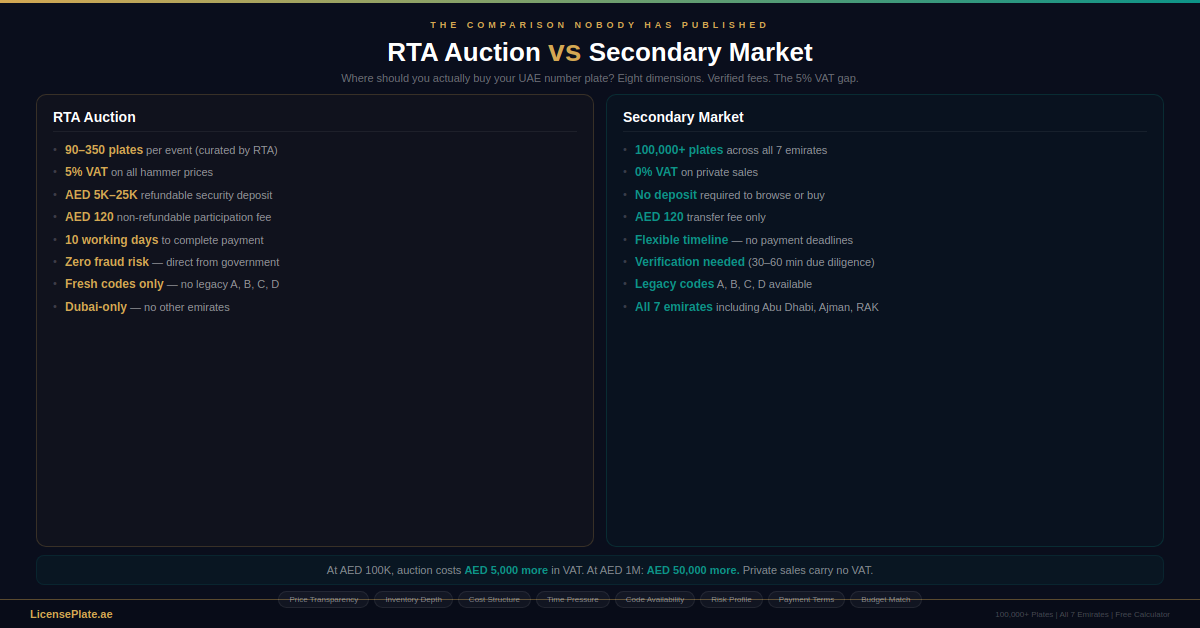
كلاهما مشروع. كلاهما قانوني. لكن هياكل التكلفة مختلفة، والمخزون مختلف، وملف المخاطر مختلف، وضغط الوقت مختلف. فإذا دخلت القناة الخاطئة لحالتك، إما تدفع أكثر من اللازم، أو تفوّت ما أردت، أو كليهما.
يضع هذا المقال بينهما وجهاً لوجه عبر ثمانية أبعاد. ليست نظرة عامة غامضة. بل مقارنة منظّمة بهياكل رسوم موثّقة، وبيانات مزادات حقيقية، وإطار قرار مرتبط بسبع طبقات ميزانية.
رقم واحد ينبغي تذكّره قبل أن نبدأ: تفرض مزادات هيئة الطرق 5% ضريبة قيمة مضافة على كل لوحة تُباع. والمبيعات الخاصة بين الأفراد في السوق الثانوي لا تفعل. فعلى لوحة بـ 100,000 درهم، هذا 5,000 درهم تحتفظ بها بالشراء من السوق الثانوي. وعلى لوحة بـ 1,000,000 درهم، هو 50,000 درهم. وتلك الحقيقة الواحدة تعيد تشكيل الاقتصاديات عند كل طبقة سعرية، ولم ينشر أحد في سوق لوحات الإمارات هذه المقارنة.
"المشاركة في المزاد تخضع لـ 5% ضريبة قيمة مضافة. ويجب على كل مزايد الاحتفاظ بملف مروري في دبي وتقديم شيك تأمين قدره 5,000 درهم مستحقّ الدفع لهيئة الطرق ودفع رسم اشتراك غير قابل للاسترداد قدره 120 درهماً."
— خليج تايمز، 8 فبراير 2025 (تقرير عن المزاد الإلكتروني الـ 78 لهيئة الطرق)
1. شفافية السعر
مزاد هيئة الطرق
كل عرض مرئي. فتعمل المزادات الإلكترونية لمدة 5 إلى 7 أيام على موقع هيئة الطرق، ويمكنك مشاهدة العروض تتحدّث في الوقت الفعلي. وتحدث المزادات العلنية في القاعة في جراند حياة دبي في فترة بعد ظهر واحدة، تبدأ الساعة 4:30 مساءً، مع مناد يعلن العروض مباشرة. وسعر المطرقة هو سعر تصفية السوق. فتعرف كم كان أحدهم مستعدّاً للدفع لأنك شاهدت 90 جولة من المزايدة التنافسية. وتحدّد هيئة الطرق العروض الابتدائية: منخفضة تصل إلى 1,000 درهم للوحات ذات 5 أرقام و240,000 درهم أو أكثر لتركيبات الثلاثة أرقام المميّزة على الرموز المبكرة.
وتمتدّ الشفافية إلى النتائج. فأُبلِغ علناً عن المزاد الـ 120 في ديسمبر 2025 بمبلغ 109 ملايين درهم إجمالاً من 90 لوحة. وسجّل المزاد العلني الـ 118 في أبريل 2025 رقماً قياسياً تاريخياً قدره 100 مليون درهم. وحقّقت DD 5 مبلغ 35 مليون درهم في فعالية أنبل الأرقام الخيرية في فبراير 2025. ولا شيء من هذه البيانات مخفي. فهي في غلف نيوز، وخليج تايمز، وبيانات هيئة الطرق الصحفية.
السوق الثانوي
يحدّد البائعون سعرهم المطلوب. وقد يكون ذلك السعر فوق القيمة السوقية أو عندها أو دونها. ولا توجد مزايدة مباشرة. بل رقم مدرج ومحادثة. ومعظم اللوحات في السوق الثانوي تحمل مجال تفاوض بنسبة 10 إلى 20% بين السعر المطلوب المدرج وسعر الإغلاق الفعلي. ويبدأ المشترون المتمرّسون بعرض أدنى بنسبة 15 إلى 20% من السعر المطلوب ويستقرّون في مكان ما في المنتصف.
والأداة التي تخلق الشفافية في السوق الثانوي هي حاسبة اللوحات. مرّر أي لوحة عبرها قبل التعامل مع بائع. فهي تمنحك تقديراً سوقياً بناءً على أكثر من 100,000 نقطة بيانات، والطلب الخاص بالإمارة، وطبقة الرمز، وعدد الأرقام، وتحليل النمط. ويشرح إطار فحص القيمة المتغيّرات الخمسة وراء كل تقييم. فإذا كان السعر المطلوب أعلى بنسبة 30% من تقدير الحاسبة، فأنت إما تنظر إلى قائمة مبالغ في تسعيرها أو لوحة ذات دلالة ثقافية تقلّل الخوارزمية من وزنها (تحقّق من دليل دلالات الأرقام).
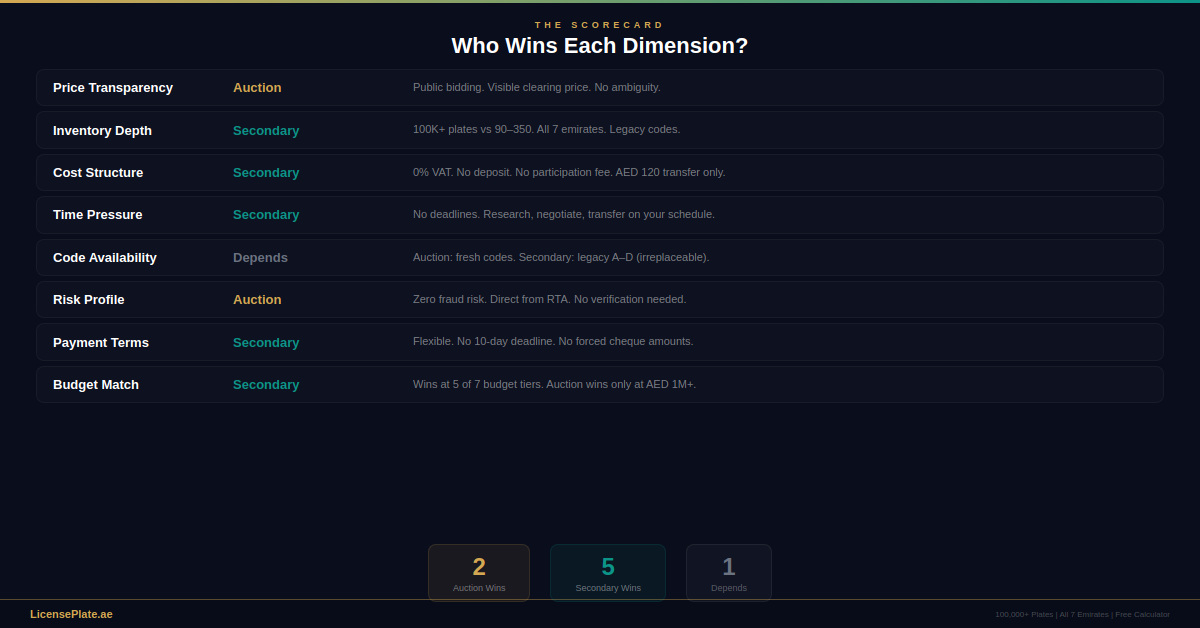
الحكم: المزاد يفوز في الشفافية. فترى بالضبط ما يكون السوق مستعدّاً لدفعه، في الوقت الفعلي، دون غموض. والسوق الثانوي يفوز في قابلية التفاوض. فيمكنك خفض السعر بالحديث. والحاسبة هي الجسر الذي يمنحك الشفافية في السوق الثانوي.
2. المخزون المتاح
مزاد هيئة الطرق
90 لوحة في مزاد علني نموذجي في القاعة. وحتى 300 إلى 350 في المزادات الإلكترونية. وتنسّق هيئة الطرق كل فعالية بمزيج محدّد: فعرض المزاد الإلكتروني الـ 78 في فبراير 2025 الرموز A وB وH وI وJ وK وL وM وN وO وP وQ وR وS وT وU وV وW وX وY وZ، إضافةً إلى رمز الدرّاجات النارية 2. وعرض المزاد الإلكتروني الـ 81 في 2026 مبلغ 300 لوحة عبر رموز مماثلة. لكن هنا القيد: تقرّر هيئة الطرق ما الذي يدخل السوق الأولي ومتى. فإذا لم يكن الرقم المحدّد الذي تريده على قائمة المزاد، فلا يمكنك المزايدة عليه. تنتظر الفعالية التالية وتأمل أن يظهر.
وتتفاوت وتيرة المزادات. ففي 2025، عقدت هيئة الطرق نحو 8 إلى 10 فعاليات (علنية في القاعة إضافةً إلى إلكترونية)، زائد سلسلة أنبل الأرقام الخيرية التي يديرها مزاد الإمارات. وهذا نحو فعالية كل 4 إلى 6 أسابيع. وبين الفعاليات، يكون السوق الأولي مغلقاً.
السوق الثانوي
أكثر من 100,000 لوحة مدرجة على LicensePlate.ae وحدها، تغطّي الإمارات السبع جميعها. أضف منصّات السوق الثانوية الأخرى ومخزونات التجّار الخواصّ، ويحتوي السوق الثانوي على العمق الكامل لسوق لوحات الإمارات. ويشمل ذلك الرموز التراثية A وB وC وD التي صدرت في الثمانينيات والتسعينيات ولن تظهر في مزاد لهيئة الطرق مجدّداً أبداً. ويشمل فئات أبوظبي من 1 إلى 50. ويشمل لوحات الشارقة وعجمان ورأس الخيمة والفجيرة وأم القيوين.
ويشرح دليل الرموز من A إلى Z لماذا تحمل الرموز المبكرة علاوات تراثية. فالرمز A كان أول حرف يُصدَر. وتلاه الرمز B. وهذه اللوحات في أيدٍ خاصة منذ عقود. فإذا أردت دبي A 786 أو D 25، فالسوق الثانوي هو قناتك الوحيدة. نقطة.
الحكم: السوق الثانوي يفوز بشكل حاسم. أكثر من 100,000 لوحة عبر 7 إمارات مقابل 90 إلى 350 في فعالية مزاد واحدة. فإذا أردت رقماً محدّداً، أو رمزاً تراثياً، أو لوحة خارج دبي، فالسوق الثانوي هو الخيار الوحيد.
3. هيكل التكلفة: فجوة الـ 5% ضريبة القيمة المضافة
هذا هو البُعد الذي يغيّر كل شيء عند نقاط الأسعار الأعلى والذي لم يقارنه أحد آخر بطريقة منظّمة.
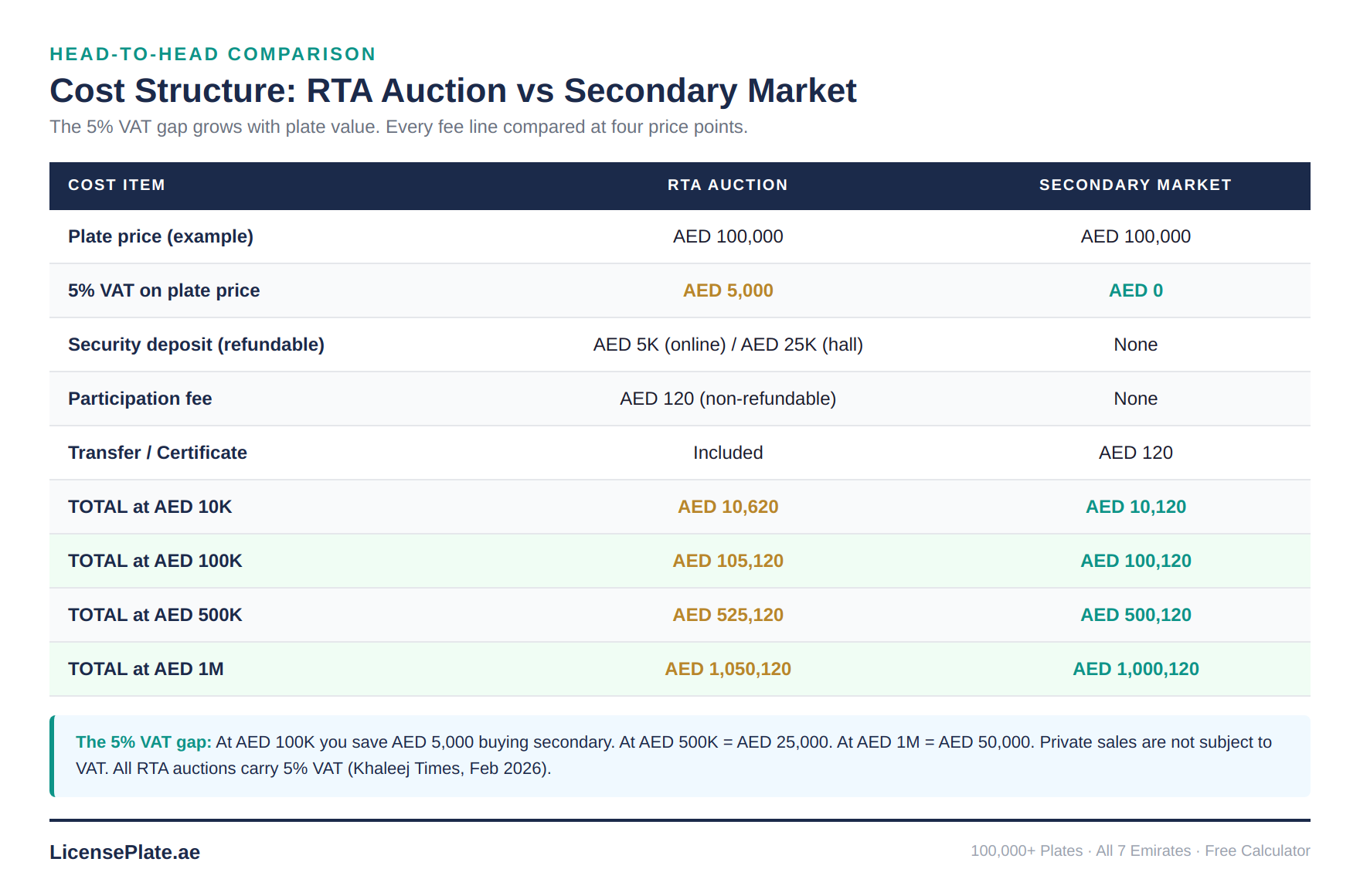
كل لوحة في مزاد هيئة الطرق تخضع لـ 5% ضريبة قيمة مضافة. وهذا مؤكّد من خليج تايمز (فبراير 2026)، وغلف نيوز (أكتوبر 2025)، وموقع هيئة الطرق الرسمي. وتُطبَّق ضريبة القيمة المضافة على سعر المطرقة، لا على التأمين أو الرسوم. فعلى لوحة بـ 10,000 درهم، ضريبة القيمة المضافة 500 درهم. وعلى 100,000 درهم، هي 5,000 درهم. وعلى 1,000,000 درهم، هي 50,000 درهم.
والمبيعات الخاصة بين الأفراد في السوق الثانوي غير خاضعة لضريبة القيمة المضافة بموجب قانون الضرائب الإماراتي. والتكلفة الوحيدة هي رسم نقل الملكية البالغ 120 درهماً (100 درهم شهادة + 20 درهماً رسم المعرفة والابتكار). ولا يوجد تأمين. ولا يوجد رسم مشاركة. ويوثّق دليل الرسوم كل بند رسوم لهيئة الطرق.
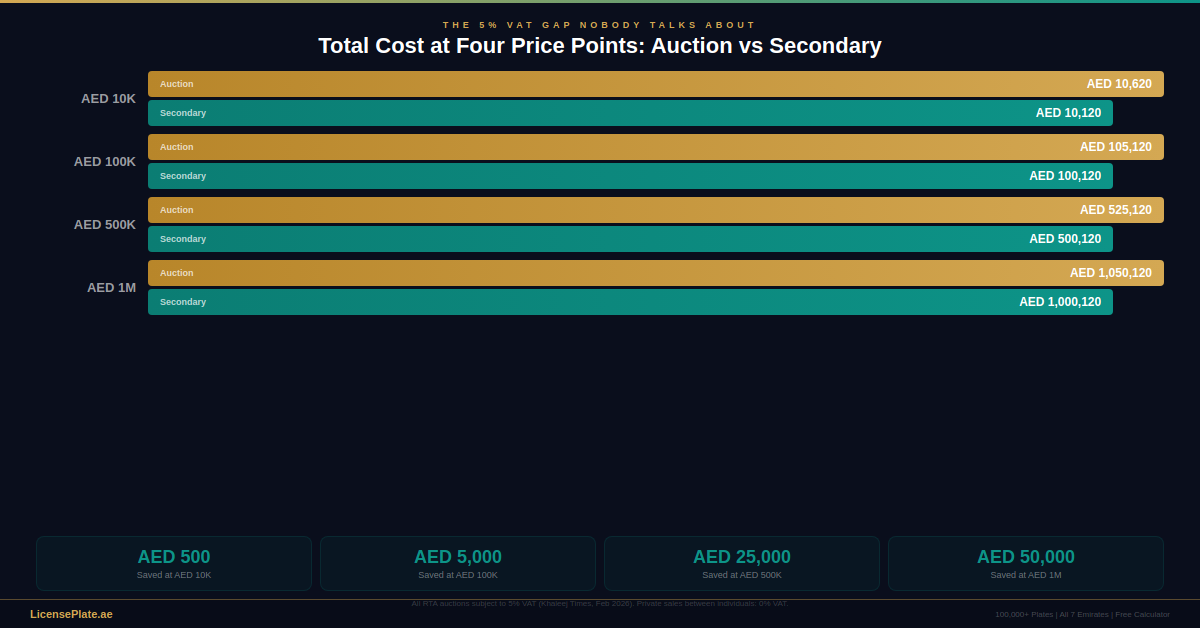
عند 10,000 درهم، فرق التكلفة الإجمالي نحو 500 إلى 620 درهماً. ضئيل. وعند 100,000 درهم، هو 5,000 درهم. ملحوظ. وعند 500,000 درهم، هو 25,000 درهم. وهذا يشتري لوحة من 4 أرقام في إمارة شمالية. وعند 1,000,000 درهم، هو 50,000 درهم. وهذا تكلفة سيارة لا بأس بها. فكلما ارتفعت قيمة اللوحة، وفّر عليك السوق الثانوي أكثر.
تفصيل تكاليف جانب المزاد: سعر اللوحة + 5% ضريبة قيمة مضافة + 5,000 درهم تأمين قابل للاسترداد (مزاد إلكتروني) أو 25,000 درهم (قاعة علنية) + 120 درهماً رسم مشاركة غير قابل للاسترداد. الدفع خلال 10 أيام عمل. نقد حتى 50,000 درهم، وشيك مدير أو بطاقة ائتمان فوق ذلك.
تفصيل تكاليف الجانب الثانوي: سعر اللوحة (قابل للتفاوض) + 120 درهماً رسم نقل. هذا كل شيء. لا
ضريبة قيمة مضافة، لا تأمين، لا رسم مشاركة، لا موعد نهائي للدفع.
الحكم: السوق الثانوي يفوز في التكلفة عند كل طبقة سعرية. والفجوة متناسبة مع قيمة اللوحة.
4. ضغط الوقت
مزاد هيئة الطرق
مواعيد نهائية صارمة. فتُفتَح المزادات الإلكترونية لمدة 5 إلى 7 أيام. ويُفتَح التسجيل قبل أسبوع من المزايدة. فإذا فوّتّ نافذة التسجيل، فأنت خارج. وتحدث المزادات العلنية في القاعة في فترة بعد ظهر واحدة. فإذا لم تكن في جراند حياة دبي بحلول الساعة 4:30 مساءً في اليوم، فتخسر الفرصة. ويجب على المزايدين الفائزين إتمام الدفع خلال 10 أيام عمل. لا تمديدات.
وتيرة المزادات: نحو كل 4 إلى 6 أسابيع. وبين الفعاليات، يكون السوق الأولي مغلقاً. فإذا أردت لوحة اليوم والمزاد التالي بعد خمسة أسابيع، فأنت تنتظر أو تذهب إلى السوق الثانوي. ويتتبّع تقويم المزادات كل تاريخ وقائمة لوحات ونافذة تسجيل.
السوق الثانوي
صفر ضغط وقت. فلوحة مدرجة اليوم قد تظلّ متاحة الشهر المقبل. تبحث يوم الاثنين، وتتحقّق من الحاسبة يوم الثلاثاء، وتتفاوض يوم الأربعاء، وتنقل يوم الخميس. أو تنتظر ثلاثة أسابيع بينما تفكّر في الأمر. ويعدّل البائعون أحياناً سعرهم المطلوب نزولاً بعد بقاء لوحة أكثر من 30 يوماً دون اهتمام، ما يمنح المشترين الصبورين نفوذ تفاوض إضافياً.
الجانب الآخر: اللوحات عالية الطلب (3 أرقام على الرموز المبكرة، والأرقام الثقافية مثل 786 أو 777) يمكن أن تُباع خلال ساعات من إدراجها. فإذا رأيت لوحة تريدها بسعر عادل، فالتردّد يعني خسارتها.
الحكم: السوق الثانوي يفوز في المرونة. والمزاد يفوز في الطاقة التنافسية. فإذا كنت تزدهر تحت الضغط وتريد إصداراً جديداً لحظة دخوله السوق، فالمزاد. وإذا أردت التحكّم في الجدول الزمني، فالسوق الثانوي.
5. توافر الأرقام والرموز
مزاد هيئة الطرق
لوحات جديدة على الرموز الحالية والحديثة. فتطرح هيئة الطرق أرقاماً جديدة في السوق الأولي في كل مزاد. فإذا كان رمز جديد يُطرَح، فالمزاد هو أول مكان يظهر فيه. وتُعرَض الرموز من H إلى Z بشكل شائع. وتظهر رموز الحرفين (AA، BB، CC، DD) في فعاليات أنبل الأرقام المميّزة. لكن هذه أرقام مطروحة حديثاً. فليس لها تاريخ ملكية، ولا مقارِنات في السوق الثانوي، ولا سجلّ حافل.
السوق الثانوي
المكان الوحيد لإيجاد لوحات الرموز التراثية A وB وC وD. فقد صدرت هذه الرموز عندما كان عدد سكان دبي دون 500,000. والمعروض ثابت بشكل دائم. ولن يُنشَأ المزيد أبداً. وكل عام، يُستوعَب المزيد من هذه اللوحات من قبل هواة الجمع طويلي الأمد ويظهر عدد أقل في السوق المفتوح. ويوثّق دليل الأسعار كيف تحمل لوحات الرموز المبكرة علاوات من 3 إلى 5 أضعاف على أعداد الأرقام المكافئة على الرموز اللاحقة. فلوحة من 3 أرقام على الرمز A قد تكلّف 200,000 درهم. واللوحة نفسها من 3 أرقام على الرمز X قد تكلّف 40,000 درهم. فالرمز يهمّ بقدر عدد الأرقام.
ويغطّي السوق الثانوي أيضاً لوحات من الإمارات السبع جميعها. فئات أبوظبي، ورموز الشارقة، وعجمان (من 500 درهم)، والفجيرة (من 300 درهم)، ورأس الخيمة، وأم القيوين. ومزادات هيئة الطرق لدبي فقط.
الحكم: المزاد للإصدارات الجديدة على الرموز الجديدة. والسوق الثانوي للرموز التراثية، والأرقام المحدّدة، واللوحات من أي إمارة غير دبي.
6. ملف المخاطر
مزاد هيئة الطرق
صفر مخاطر احتيال. فتتعامل مباشرةً مع هيئة الطرق والمواصلات التابعة لحكومة دبي. وتُنقَل اللوحة إلى ملفّك المروري عند الدفع. فلا بائع مزيّف، ولا لوحة وهمية، ولا احتيال عربون، ولا مخاطر انتحال. تسجّل بهويتك الإماراتية، وتزايد، وتدفع، وتملك. إنها أأمن طريقة للحصول على لوحة في الإمارات. وتحذير شرطة أبوظبي في أغسطس 2024 بشأن حسابات وسائل تواصل اجتماعي مزيّفة تعرض لوحات دون السوق لا ينطبق على مزادات هيئة الطرق لأنه لا يوجد وسيط.
السوق الثانوي
يتطلّب عناية واجبة. فتشرح قائمة التحقّق العملية المكوّنة من 10 نقاط: تأكيد الملكية عبر تطبيق Dubai Drive، والتحقّق من أن الهوية الإماراتية للبائع تطابق تسجيل اللوحة، وفحص المخالفات غير المسدّدة عبر بوابة EVG، وتأكيد أن اللوحة ليست مجمّدة أو تحت نزاع قانوني. ويوثّق دليل الاحتيال أنماطاً محدّدة: شهادات ملكية مزيّفة، ومطالبات بعربون قبل التحقّق، ولوحات وهمية مدرجة على منصّات متعدّدة في آنٍ واحد.
وأفادت وحدة المعلومات المالية في الإمارات بخسائر احتيال قدرها 1.2 مليار درهم عبر الإمارات بين 2021 و2023. واعتقلت شرطة دبي 494 شخصاً في 406 قضايا احتيال في أبريل 2024 وحده. وسوق اللوحات ليس محصّناً من هذه الاتجاهات الأوسع. لكن الخطر قابل للإدارة. فعملية تحقّق تستغرق 30 إلى 60 دقيقة تقلّله إلى ما يقارب الصفر. وتكلفة عدم التحقّق قد تكون آلاف الدراهم. وتكلفة التحقّق ساعة من وقتك.
الحكم: المزاد يفوز في الأمان. لا حاجة للتحقّق. والسوق الثانوي آمن مع العناية الواجبة، لكن العناية الواجبة مسؤوليتك.
7. شروط الدفع
مزاد هيئة الطرق
صارمة. الدفع الكامل خلال 10 أيام عمل. يُقبل النقد حتى 50,000 درهم. وشيك مدير أو بطاقة ائتمان للمبالغ فوق 50,000 درهم. وتأمين الضمان البالغ 5,000 درهم أو 25,000 درهم مستحقّ عند التسجيل قبل أن تتمكّن من المزايدة. ورسم المشاركة البالغ 120 درهماً غير قابل للاسترداد بغضّ النظر عن فوزك. وإذا فشلت في الدفع خلال نافذة الـ 10 أيام، تخسر التأمين واللوحة.
السوق الثانوي
مرنة. يتّفق المشتري والبائع على الشروط بشكل خاص. ويحدث الدفع عادةً عند أو قرب نقطة النقل الرسمي عبر تطبيق Dubai Drive (120 درهماً). ولا يوجد تأمين مفروض حكومياً، ولا جدول زمني إجباري، ولا عقوبة لأخذ بضعة أيام لترتيب الأموال. ويقبل بعض بائعي اللوحات عالية القيمة ترتيبات تقسيط. ويقبل بعضهم العملات المشفّرة للوحات فوق 100,000 درهم (تحقّق من الشرعية والوثائق بشكل مستقلّ). والمرونة بين الطرفين.
الحكم: السوق الثانوي يفوز في المرونة. والمزاد يفوز في اليقين المنظّم (تعرف بالضبط ما هو مستحقّ ومتى).
8. من يفوز عند كل مستوى ميزانية
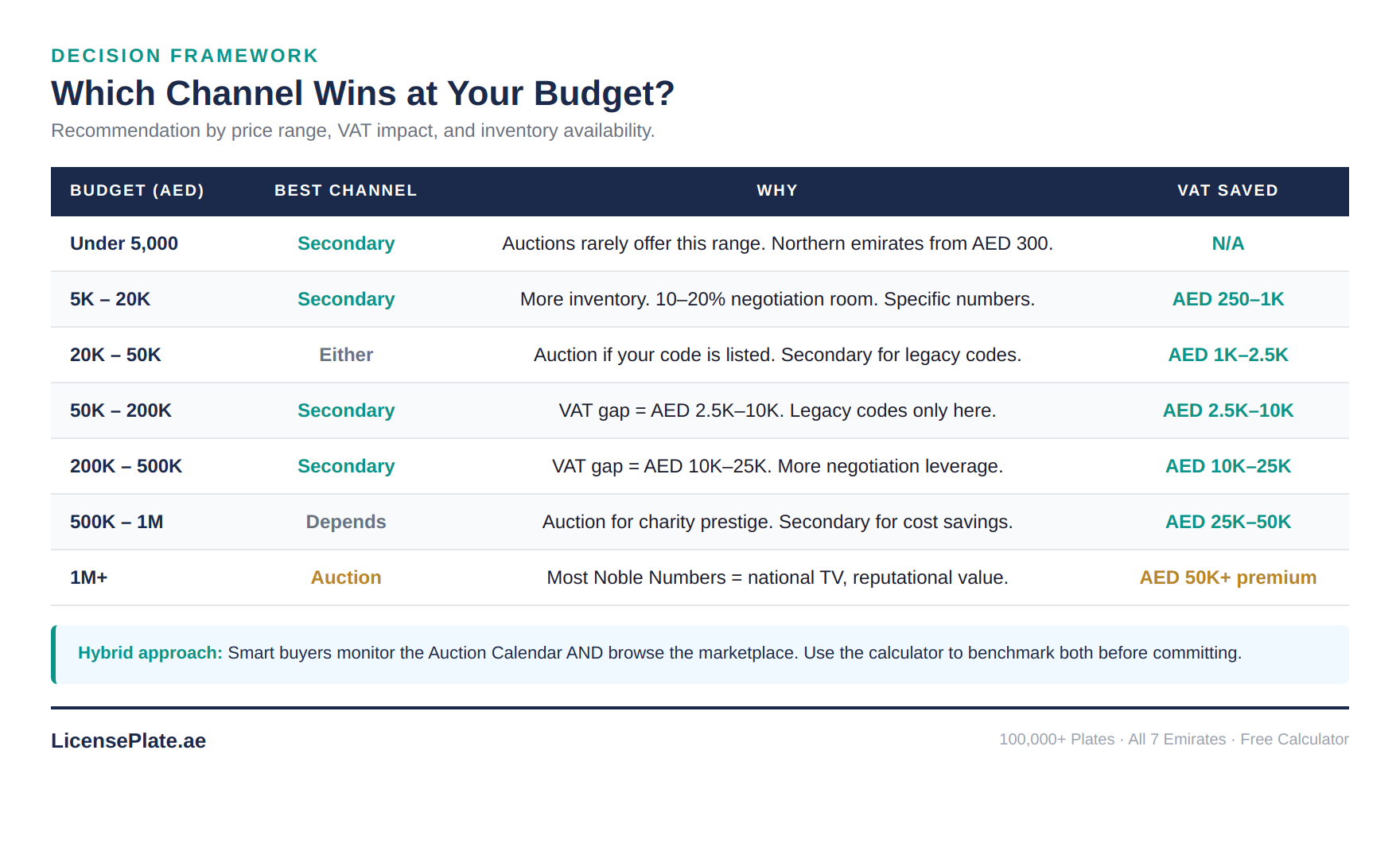
يربط الجدول سبع طبقات ميزانية بالقناة الموصى بها مع المبرّر ووفورات ضريبة القيمة المضافة الدقيقة. الملخّص:
دون 5,000 درهم: السوق الثانوي. فمزادات هيئة الطرق لا تعرض لوحات في هذا النطاق. ولوحات الإمارات الشمالية تبدأ من 300 درهم في السوق.
5,000 إلى 20,000 درهم: السوق الثانوي. مخزون أكثر، ومجال تفاوض، وأرقام محدّدة متاحة.
20,000 إلى 50,000 درهم: أي منهما. المزاد إذا كان رمزك مدرجاً والفعالية هذا الأسبوع. والسوق الثانوي للرموز التراثية والأرقام المحدّدة.
50,000 إلى 200,000 درهم: السوق الثانوي. فجوة الـ 5% ضريبة قيمة مضافة تبلغ 2,500 إلى 10,000 درهم. والرموز التراثية غير متاحة في المزاد.
200,000 إلى 500,000 درهم: السوق الثانوي. فجوة ضريبة القيمة المضافة 10,000 إلى 25,000 درهم. ونفوذ تفاوض أكبر.
500,000 إلى 1,000,000 درهم: يعتمد. المزاد لهيبة الأعمال الخيرية والتقدير العلني (يُعلَن الاسم على التلفزيون الوطني). والسوق الثانوي لوفورات التكلفة.
1,000,000 درهم فأكثر: المزاد للهيبة (فعاليات أنبل الأرقام تحمل قيمة سمعة لا يمكن تكرارها في بيع خاص). اقبل علاوة ضريبة القيمة المضافة كتكلفة للعمل الخيري العلني.
9. النهج الهجين: استخدم كليهما
أذكى المشترين لا يختارون قناة واحدة. بل يستخدمون كليهما. فيراقبون تقويم المزادات للفعاليات القادمة ويراجعون قائمة اللوحات عند فتح التسجيل. فإذا ظهر رمزهم وعدد أرقامهم المفضّل، يزايدون. وإن لم يظهر، أو إذا كان المزاد بعد أسابيع، يبحثون في السوق الثانوي على LicensePlate.ae.
ويستخدمون أيضاً السوق الثانوي كمقياس تسعير للمزايدة في المزاد. فإذا كانت دبي X 999 مدرجة بـ 80,000 درهم في السوق، فالمزايدة فوق 76,000 درهم في المزاد (80,000 درهم ناقص 5% ضريبة قيمة مضافة) تعني الدفع أكثر من اللازم مقارنةً بما هو متاح بالفعل. وتمنحهم الحاسبة التقدير السوقي قبل دخول أي قناة.
إطار القرار من خمس خطوات:
1. تحقّق من تقويم المزادات للفعالية التالية وراجع قائمة اللوحات.
2. ابحث في LicensePlate.ae عن رقمك المفضّل عبر الإمارات السبع جميعها.
3. مرّر كلا الخيارين عبر الحاسبة لمقارنة القيمة.
4. احسب فجوة الـ 5% ضريبة القيمة المضافة إذا اقترب سعر المزاد من سعر السوق الثانوي.
5. اختر القناة التي تمنحك اللوحة التي تريدها، بالسعر المنطقي، على الجدول الزمني الذي تحتاجه.
10. ثلاثة أخطاء يرتكبها المشترون عند اختيار قناة
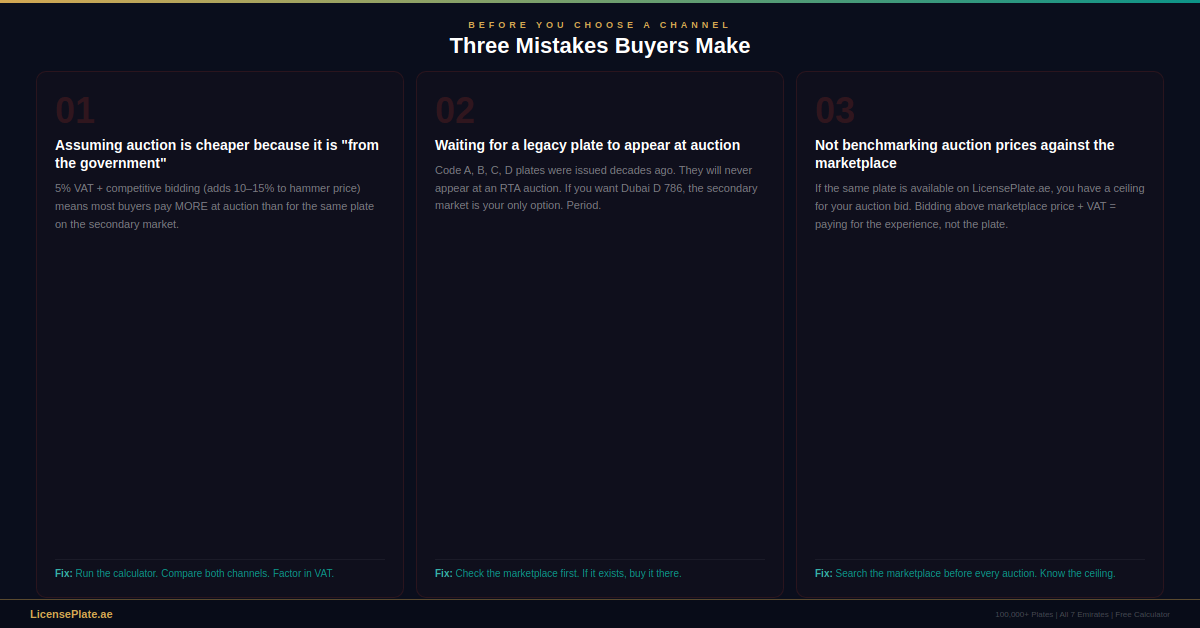
1. افتراض أن المزاد دائماً أرخص لأنه "مباشر من الحكومة". المزاد مباشر، لكنه ليس أرخص. فالـ 5% ضريبة القيمة المضافة، ورسم المشاركة، وديناميكية المزايدة التنافسية (حمّى المزاد تضيف 10 إلى 15% إلى أسعار المطرقة) تعني أن معظم المشترين يدفعون أكثر في المزاد ممّا سيدفعونه للوحة نفسها في السوق الثانوي. فالحكومة لا تقدّم خصومات. بل تعظّم الإيرادات.
2. انتظار ظهور لوحة محدّدة في المزاد بينما هي متاحة بالفعل في السوق الثانوي. فإذا أردت دبي D 786، فلن تظهر أبداً في المزاد. فقد صدرت منذ عقود. وانتظار هيئة الطرق لعرضها هو انتظار لشيء لا يمكن أن يحدث. تحقّق من السوق أولاً.
3. عدم مقارنة قائمة لوحات المزاد بأسعار السوق الثانوي قبل المزايدة. فإذا كانت اللوحة نفسها (أو مماثلة) متاحة في السوق، فلديك سقف لعرض المزاد الخاص بك. والمزايدة فوق سعر السوق زائد ضريبة القيمة المضافة تعني أنك تدفع علاوة مقابل تجربة المزاد بدلاً من اللوحة نفسها. وهذا لا بأس به إذا كنت تريد التجربة. لكنه مكلف إذا كنت تريد اللوحة فقط.
الأسئلة الشائعة
س: هل تفرض مزادات هيئة الطرق ضريبة قيمة مضافة؟
نعم. جميع مزادات لوحات هيئة الطرق تخضع لـ 5% ضريبة قيمة مضافة على سعر المطرقة. مؤكّد من خليج تايمز (فبراير 2026)، وغلف نيوز (أكتوبر 2025)، وموقع هيئة الطرق الرسمي. والمبيعات الخاصة في السوق الثانوي بين الأفراد لا تخضع لضريبة القيمة المضافة.
س: كم يبلغ تأمين مزاد هيئة الطرق؟
شيك تأمين قدره 5,000 درهم للمزادات الإلكترونية. و25,000 درهم للمزادات العلنية في القاعة في جراند حياة دبي. وكلاهما قابل للاسترداد إذا اتّبعت قواعد المزاد. زائد 120 درهماً رسم مشاركة غير قابل للاسترداد.
س: هل يمكنني شراء لوحات من إمارات أخرى في مزاد هيئة الطرق؟
لا. مزادات هيئة الطرق تعرض فقط لوحات مسجّلة في دبي. ولأبوظبي أو الشارقة أو عجمان أو رأس الخيمة أو الفجيرة أو أم القيوين، السوق الثانوي هو الخيار الوحيد.
س: كم عدد اللوحات المتاحة في كل مزاد؟
90 لوحة في المزادات العلنية في القاعة، وحتى 300 إلى 350 في المزادات الإلكترونية. وتنشر هيئة الطرق قائمة اللوحات الكاملة قبل فتح التسجيل.
س: هل السوق الثانوي آمن؟
نعم، مع التحقّق السليم. استخدم تطبيق Dubai Drive لتأكيد الملكية، وافحص المخالفات عبر بوابة EVG، واتّبع قائمة التحقّق المكوّنة من 10 نقاط. وينخفض الخطر إلى ما يقارب الصفر مع 30 إلى 60 دقيقة من العناية الواجبة.
س: كم من الوقت لديّ للدفع بعد الفوز بمزاد؟
10 أيام عمل. نقد حتى 50,000 درهم. وشيك مدير أو بطاقة ائتمان فوق ذلك.
س: هل يمكنني إيجاد لوحات الرموز التراثية A أو B في المزاد؟
لا. صدرت الرموز المبكرة منذ عقود وهي في أيدٍ خاصة. ولن تظهر أبداً في مزاد لهيئة الطرق. والسوق الثانوي هو المصدر الوحيد.
س: أي قناة أرخص؟
السوق الثانوي عند كل طبقة سعرية بسبب فجوة الـ 5% ضريبة القيمة المضافة. فعند 100 ألف درهم، إجمالي المزاد 105,120 درهماً مقابل 100,120 درهماً في السوق الثانوي. وتتّسع الفجوة مع قيمة اللوحة.
س: ماذا لو أردت بيع لوحة اشتريتها في المزاد؟
تبيعها في السوق الثانوي. وتُنقَل اللوحة عبر تطبيق Dubai Drive مقابل 120 درهماً. ويغطّي دليل البائع التسعير والتوقيت واستراتيجية المنصة.
س: هل يمكن للمقيمين استخدام كلتا القناتين؟
نعم. أي مقيم في الإمارات يحمل هوية إماراتية وملفاً مرورياً في دبي يمكنه المزايدة في المزاد والشراء في السوق الثانوي. ويغطّي دليل المقيمين الأهلية الكاملة.
حذف التعليق؟
هل أنت متأكد أنك تريد حذف هذا التعليق؟ لا يمكن التراجع عن هذا الإجراء.
حذف المقال؟
هل أنت متأكد أنك تريد حذف هذه المقالة؟ سيؤدي ذلك أيضًا إلى حذف جميع التعليقات. لا يمكن التراجع عن هذا الإجراء.