

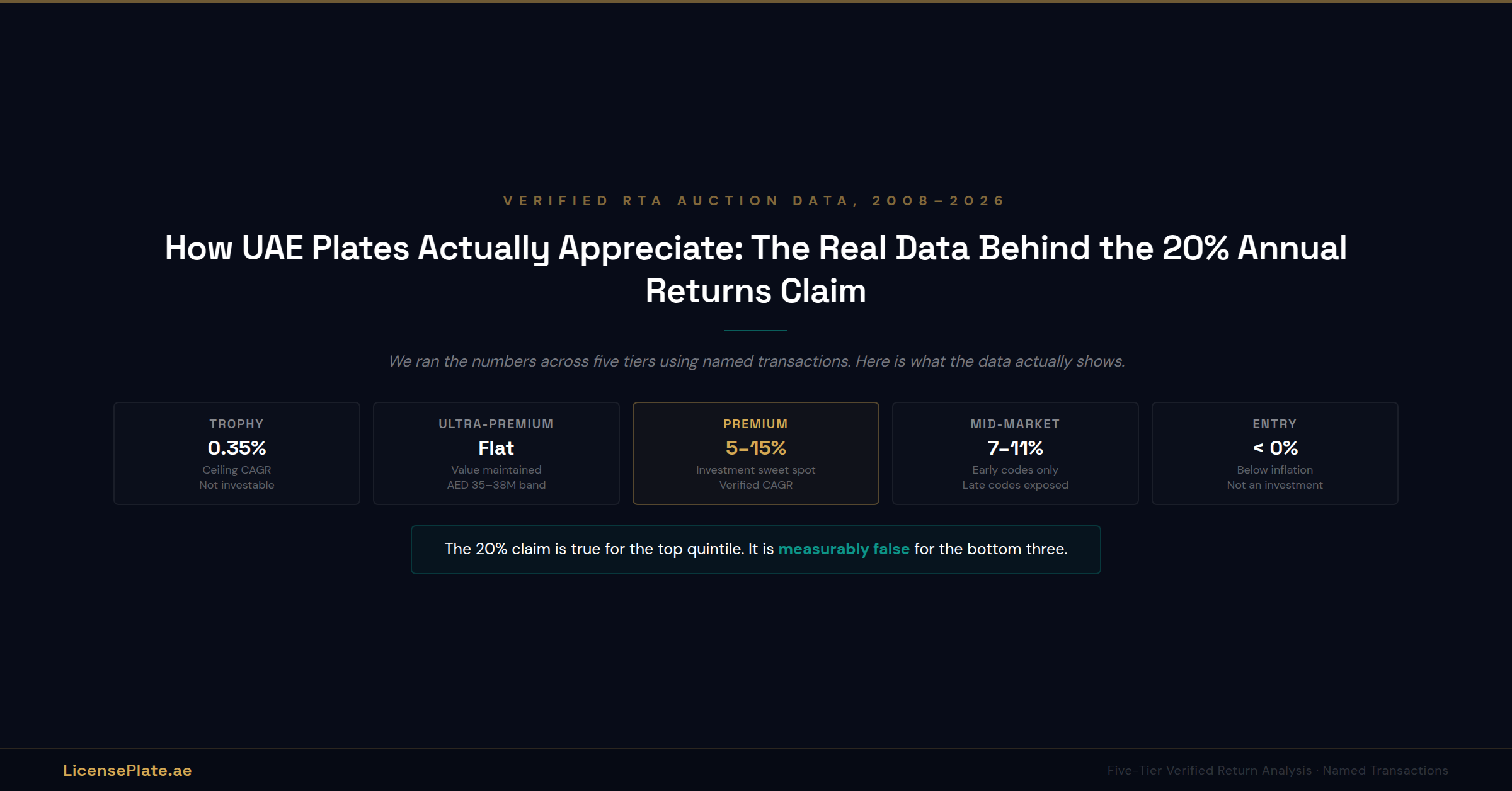
كيف ترتفع قيمة اللوحات الإماراتية فعلاً: البيانات الحقيقية وراء ادّعاء العائد السنوي بنسبة 20%
في 19 أبريل 2023، دفع مزايد مجهول في مزاد "أنبل الأرقام" الخيري في دبي 55 مليون درهم مقابل لوحة تسجيل واحدة: لوحة دبي P7. وسجّلت الصفقة رقماً قياسياً في موسوعة غينيس كأغلى لوحة تسجيل مركبة تُباع على الإطلاق. ونقلتها رويترز، وغطّتها بلومبرغ، واستشهدت بها فاينانشال تايمز، وتداولتها كل نشرة أصول فاخرة تغطّي الخليج. وخلال 48 ساعة، بدأت إحصائية تتداول في أحاديث الوسطاء والعروض الاستثمارية والمواد التسويقية للمنصات ولا تزال تتكرّر منذ ذلك الحين: اللوحات الإماراتية تحقّق عوائد سنوية بنسبة 20% أو أكثر.
وتلك الإحصائية ليست خاطئة تماماً. إنها ناقصة. فهي تصف أداء شريحة فرعية بعينها من اللوحات الإماراتية على مدى فترة بعينها، وتُقدَّم كما لو كانت تصف السوق بأكملها. وما يعادلها هو الاستشهاد بحقائب هيرميس بيركين في المزادات وادّعاء أن كل الحقائب ترتفع قيمتها 14% سنوياً. البيركين ترتفع. ومعظم الحقائب لا ترتفع. والتمييز مهمّ لأنه يحدّد أين ينبغي للمشتري تخصيص رأس ماله وأين لا ينبغي.
ويفعل هذا المقال ما لم يفعله أي منشور إنجليزي عن اللوحات الإماراتية حتى اليوم. فهو يأخذ بيانات مزادات هيئة الطرق والمواصلات الموثّقة من 2008 حتى أوائل 2026، وينظّمها وفق الشرائح الخمس التي تشكّل السوق فعلاً، ويحسب العوائد المرصودة داخل كل شريحة، ويعدّلها لتكاليف الاحتفاظ باستخدام بيانات دليل التكلفة السنوية للملكية لدينا، ويقارن النتيجة بثلاثة مقاييس تقليدية: العقار الإماراتي (مؤشّر أسعار عقارات دبي)، والذهب مسعّراً بالدرهم، ومؤشّر S&P 500 محوّلاً إلى الدرهم. والنتيجة فرضية استثمارية خاصة بكل شريحة يمكن لمشترٍ مطّلع أن يتصرّف بناءً عليها، ولمستشار ثروات أن يستشهد بها، ولصحفي أن يشير إليها بثقة. وكل رقم أدناه منسوب إلى مزاد مسمّى، أو تقرير صحفي مؤرّخ، أو مجموعة بيانات حكومية قابلة للتحقّق.
مجموعة البيانات الموثّقة: صفقات مسمّاة من 2008 إلى 2026
قبل التحليل، البيانات. فكل صفقة أدناه منسوبة إلى سجلّ مزاد لدى الهيئة، أو فعالية أنبل الأرقام، أو تقرير صحفي من الخليج تايمز، أو غلف نيوز، أو دبي آي 103.8، أو سوذبيز إنترناشونال ريالتي. وتُستثنى صفقات السوق الثانوية الخاصة لأنه لا يمكن التحقّق منها بشكل مستقل. هذه هي مجموعة بيانات السجلّ العام، وهي مجموعة البيانات الوحيدة التي ينبغي لأي مستثمر جادّ استخدامها كمرجع.
شريحة الجوائز: اللوحات أحادية الرقم
أبوظبي "1": 52.2 مليون درهم (2008). اشتراها سعيد عبد الغفار خوري في صفقة مزاد الإمارات واسعة التغطية التي احتفظت بالرقم القياسي في موسوعة غينيس 15 عاماً. ولم يُعَد بيع اللوحة علناً، فلا يمكن حساب معدّل نمو سنوي مركّب من زوج صفقات. وكأصل، احتُفظ بها 18 عاماً وتبقى الصفقة المرجعية الأيقونية في أبوظبي.
دبي P7: 55 مليون درهم (أبريل 2023). حاملة الرقم القياسي الحالي في موسوعة غينيس. مزايد مجهول في مزاد أنبل الأرقام الخيري. ويُعتقد أن المشتري نفسه يملك أيضاً AA8 (اشتُريت في 2022 بـ 35 مليون درهم). ولا توجد صفقة علنية سابقة للوحة P7، فلا يمكن حساب عائد من زوج. وما ترسيه الصفقة هو سعر التصفية لقمة السوق المطلقة في 2023: 55 مليون درهم للوحة أحادية الرقم على رمز من الشريحة المتوسطة.
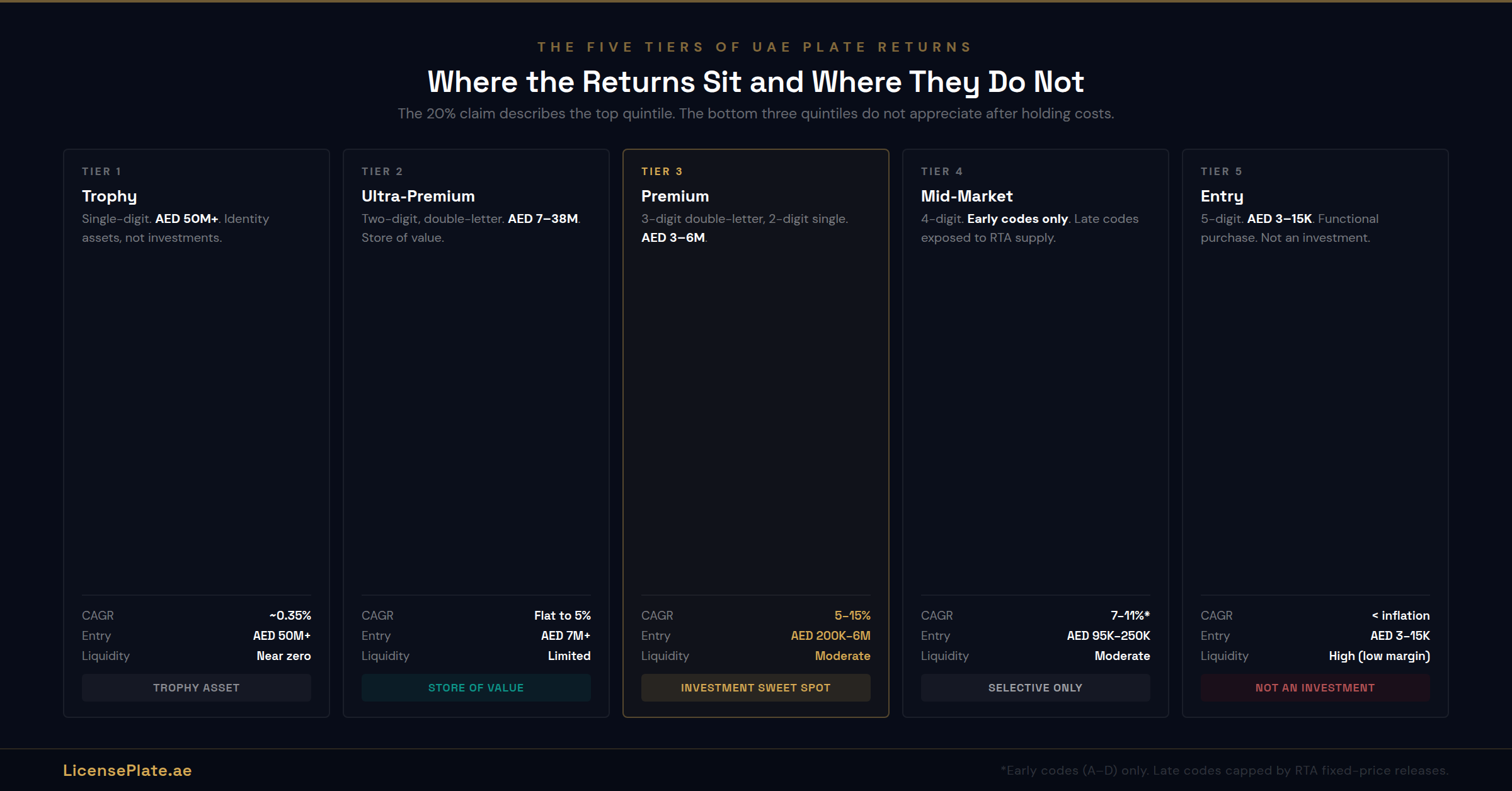
النمط المرصود في شريحة الجوائز: ارتفع الرقم القياسي التاريخي من 52.2 مليون درهم في 2008 إلى 55 مليون درهم في 2023، أي زيادة اسمية بنسبة 5.4% على مدى 15 عاماً. ويقابل ذلك معدّل نمو سنوي مركّب يبلغ نحو 0.35% على الرقم القياسي نفسه. وهذا ليس العائد على لوحة بعينها؛ إنه حركة السقف. والسقف مهمّ لأنه يرسّخ إطار التقييم لكل شريحة تحته. فحين ارتفع السقف من 52 مليون درهم إلى 55 مليون درهم، تحرّك هيكل الشرائح بأكمله صعوداً. ويوثّق مقالنا عن الأرقام القياسية التاريخية التسلسل الزمني الكامل.
الشريحة فائقة التميّز: اللوحات ذات الرقمين على الرموز الثنائية الحرف
هذه هي الشريحة التي تكون فيها البيانات الموثّقة أغنى ما تكون والتي يكون فيها ادّعاء "العوائد السنوية 20%" قابلاً للاختبار مباشرةً، لأن سلسلة مزادات أنبل الأرقام توفّر صفقات مسمّاة متعدّدة عبر سنوات متعدّدة على عائلة الرمز نفسها.
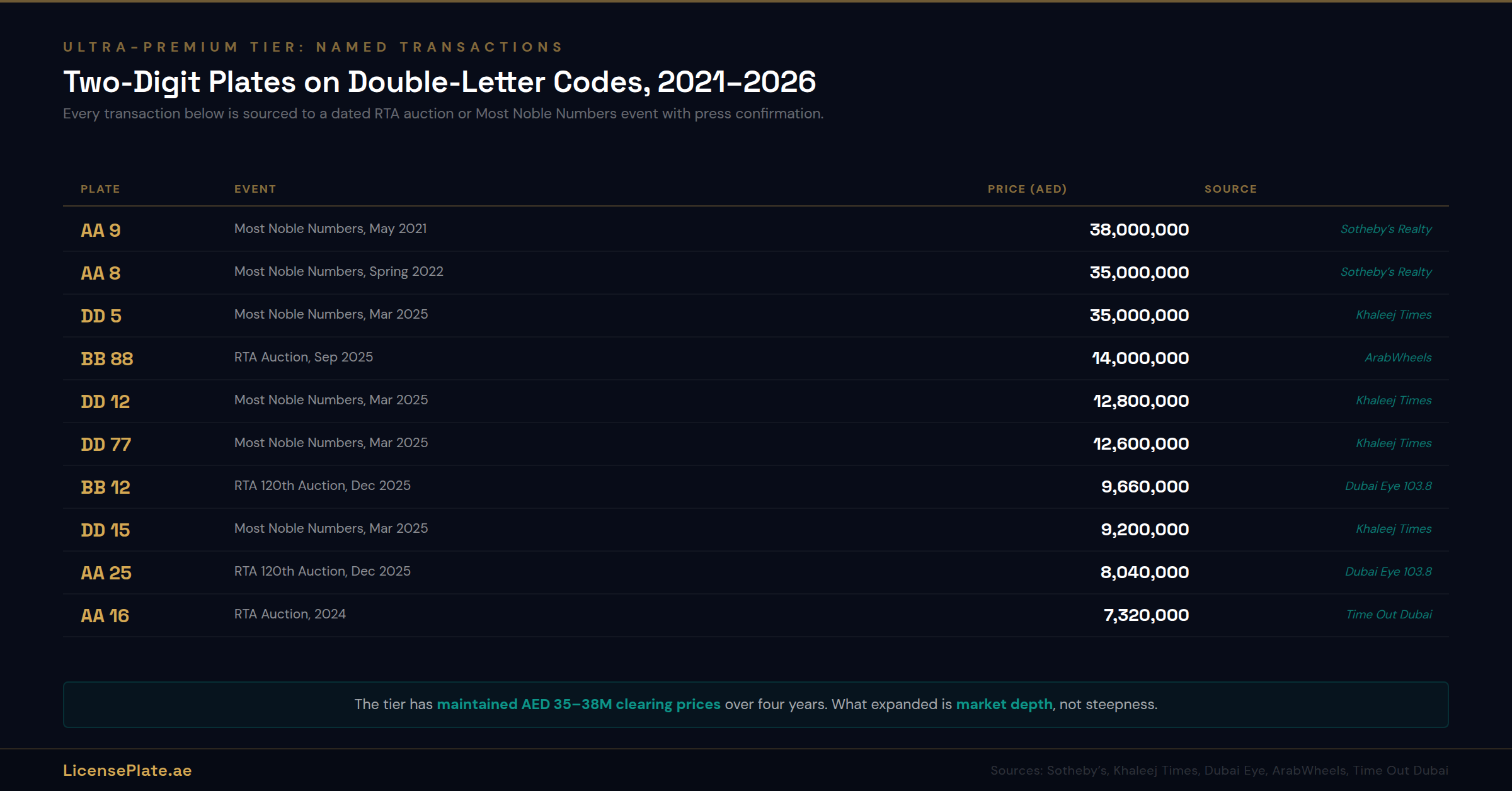
AA9: 38 مليون درهم (مايو 2021). مزاد أنبل الأرقام الخيري، دعماً لحملة 100 مليون وجبة. محسن مجهول.
AA8: 35 مليون درهم (ربيع 2022). مزاد أنبل الأرقام، ضمن حملة مليار وجبة. مزايد مجهول، تبيّن لاحقاً أنه المشتري نفسه الذي اقتنى P7 فيما بعد.
DD5: 35 مليون درهم (15 مارس 2025). أنبل الأرقام في فندق أرماني، برج خليفة. اشتراها محمد بن غاطي، رئيس مجلس إدارة بن غاطي القابضة. وحقّقت الفعالية نفسها
DD12 بـ 12.8 مليون درهم، وDD77 بـ 12.6 مليون درهم، وDD15 بـ 9.2 مليون درهم، وDD24 بـ 6.3 مليون درهم.
BB88: 14 مليون درهم (سبتمبر 2025). مزاد الهيئة. الدلالة الثقافية لنمط الثمانية المزدوجة (اللانهاية، والازدهار في علم الأعداد في شرق آسيا، والحظ في التقاليد الخليجية).
BB12: 9.66 مليون درهم (27 ديسمبر 2025). المزاد المفتوح الـ 120 للهيئة، وهو أعلى مزاد إيراداً في تاريخ الهيئة بـ 109 ملايين درهم من 90 لوحة. كما حقّقت AA25 مبلغ 8.04 مليون درهم، وBB30 مبلغ 6.74 مليون درهم، وCC100 مبلغ 4.21 مليون درهم في الفعالية نفسها.
AA16: 7.32 مليون درهم (2024). أكّدتها تقارير تايم آوت دبي وRemitly عن فعاليات مزادات الهيئة اللاحقة.
النمط المرصود في الشريحة فائقة التميّز: تُظهر سلسلة أنبل الأرقام المسار التالي للوحات المماثلة ذات الرقمين على الرموز الثنائية الحرف. حقّقت AA9 مبلغ 38 مليون درهم في 2021. وحقّقت DD5 مبلغ 35 مليون درهم في 2025 (بعد أربع سنوات، بعائلة رمز مختلفة لكن بعدد الأرقام نفسه وصيغة المزاد نفسها). وهاتان ليستا اللوحة نفسها، فلا يمكن حساب معدّل نمو سنوي مركّب مباشر، لكن النمط يُظهر أن شريحة الرقمين على الرموز الثنائية الحرف حافظت على أسعار تصفية بين 35 و38 مليون درهم على مدى أربع سنوات، وهو ما يتّسق مع الحفاظ على القيمة الاسمية لا مع ارتفاع سنوي بنسبة 20% كما يوحي الادّعاء التسويقي. أما ما اتّسع بوضوح فهو عمق السوق: فقد حقّقت فعالية أنبل الأرقام في مارس 2025 خمس لوحات من سلسلة DD بإجمالي 75.9 مليون درهم من لوحات الهيئة وحدها، بينما كانت الفعاليات الأسبق تحقّق عادةً لوحة أو لوحتين بارزتين. السوق أوسع، لا أشدّ انحداراً بالضرورة.
وللمشترين في هذه الشريحة، تتابع روزنامة المزادات لدينا كل فعالية قادمة، وتوفّر حاسبة اللوحات إطار التقييم.
الشريحة المتميّزة: اللوحات ثلاثية الأرقام على الرموز الثنائية الحرف واللوحات ذات الرقمين على الرموز أحادية الحرف
هذه هي الشريحة التي يبدأ فيها ادّعاء "درجة الاستثمار" بالصمود بشكل أكثر اتّساقاً، لأن حجم المزادات مرتفع بما يكفي لإنتاج صفقات مماثلة متكرّرة.
AA707: 3.31 مليون درهم (أبريل 2025، المزاد الـ 118 للهيئة). أكّدته تقارير Shory.
AA222: 3.3 مليون درهم (أبريل 2025، المزاد الـ 118 للهيئة). الفعالية نفسها التي شهدت AA707، ما يؤكّد أن اللوحات المتميّزة ثلاثية الأرقام على رمز AA تُصفّى باستمرار فوق 3 ملايين درهم.
BB777: 6 ملايين درهم (سبتمبر 2025، المزاد الـ 119 للهيئة). ويحقّق نمط السبعة الثلاثية علاوة ثقافية متجذّرة في دلالات أرقام اللوحات في الإمارات ترفعه كثيراً فوق خط الأساس لثلاثة أرقام على AA.
AA999: 4.05 مليون درهم (2024، مزاد الهيئة). أكّدتها تايم آوت دبي.
CC100: 4.21 مليون درهم (ديسمبر 2025، المزاد الـ 120 للهيئة). لوحة ثلاثية الأرقام على رمز CC، ما يُظهر أن العلاوة تمتدّ إلى ما بعد AA لتشمل رموزاً ثنائية الحرف مبكرة أخرى.
Y 31: 6.27 مليون درهم (أبريل 2025، المزاد الـ 118 للهيئة). لوحة ذات رقمين على رمز أحادي الحرف، ما يبرهن أن عدد الأرقام يفوق مكانة الرمز في تسلسل الأسعار.
النمط المرصود: اللوحات ثلاثية الأرقام على رمزَي AA وBB تُصفّى باستمرار بين 3 و6 ملايين درهم في مزادات 2024-2025. ويوثّق مقال التحقّق من الأسعار التسلسل الكامل: فعلى الرموز الثنائية الحرف، تقع اللوحات ثلاثية الأرقام في نطاق 2 إلى 6 ملايين درهم، بينما تنخفض على الرموز أحادية الحرف إلى 200,000 إلى 800,000 درهم، وتنخفض أكثر على الرموز المتأخّرة (من V إلى Z) إلى 20,000 إلى 80,000 درهم. فالرمز هو المضاعِف. وعدد الأرقام يحدّد الشريحة. ويشرح دليلنا البصري كيفية قراءة أي لوحة إماراتية في 30 ثانية، بما في ذلك معاني حروف الرموز.
الشريحة المتوسطة: اللوحات رباعية الأرقام
هذه هي الشريحة التي يتباعد فيها التحليل الصادق أشدّ ما يكون عن الادّعاء التسويقي. فاللوحات رباعية الأرقام هي الفئة الأوسع من حيث الحجم، وسلوك أسعارها تقوده في المقام الأول قرارات المعروض لدى الهيئة لا ديناميكيات الندرة.
ففي مايو 2025، أصدرت الهيئة لوحات رباعية الأرقام على الرمزين L وM بسعر ثابت قدره 95,000 درهم. وأعاد هذا الإصدار ترسيخ أرضية سعر اللوحات رباعية الأرقام لتلك الرموز ويحدّ وظيفياً من إمكانية ارتفاع قيمة اللوحات رباعية الأرقام المماثلة على رموز مشابهة. فالمشتري الذي اشترى لوحة رباعية الأرقام على رمز L أو M في السوق الثانوية بـ 120,000 درهم في 2023 وخطّط للبيع في 2026 يواجه الآن سقف سعر تحدّده الهيئة نفسها بمعروضها ثابت السعر عند 95,000 درهم. فلوحة السوق الثانوية تساوي أقلّ ممّا دفعه المشتري لأن الهيئة طرحت معروضاً أرخص للمنتج نفسه.
واللوحات رباعية الأرقام على الرموز المبكرة (A وB وC وD) تتصرّف بشكل مختلف لأن تلك الرموز لم تعد الهيئة تصدرها، ما يخلق ديناميكية معروض ثابت. فلوحة رباعية الأرقام على رمز A اشتُريت في مزاد عام 2020 بـ 150,000 درهم يمكن تقييمها بشكل معقول بين 200,000 و250,000 درهم في 2026، أي معدّل نمو سنوي مركّب من 7 إلى 11% مدفوعاً بقيد المعروض على الرموز المبكرة. لكن هذا خاص بالرمز، لا بالشريحة كلها.
وللمشترين الذين يفكّرون في اللوحات رباعية الأرقام كاستثمارات، يغطّي مقال الأخطاء العشرة المكلفة المزلق المحدّد المتمثّل في معاملة كل اللوحات رباعية الأرقام كأصول مرتفعة القيمة بينما لا تملك سوى لوحات الرموز المبكرة قيد المعروض الذي يدعم ارتفاع القيمة.
شريحة الدخول: اللوحات خماسية الأرقام
اللوحات خماسية الأرقام لا ترتفع قيمتها. وهذه أهمّ جملة مفردة في المقال لحماية المشترين لأول مرة من سوء تخصيص رأس المال.
فعلى الرموز المتأخّرة (V وW وX وY وZ)، تكلّف اللوحة الخماسية النموذجية بين 3,000 و5,500 درهم وتصدرها الهيئة فعلياً في كل مزاد. فالمعروض ينمو. والطلب وظيفي (تحتاج لوحة لسيارتك)، لا تطلّعي (لا أحد يشتري لوحة خماسية على رمز Z كرمز مكانة أو استثمار). فهذه اللوحات سلع إنتاجية، لا مقتنيات. وقيمتها تتتبّع التضخّم في أحسن الأحوال وتتراجع بالقيمة الحقيقية في أسوئها.
وعلى الرموز المتوسطة (من J إلى P)، تتراوح اللوحات الخماسية بين 4,000 و8,000 درهم. ولا تزال سلعاً إنتاجية. ولا يزال المعروض ينمو. وعلى الرموز المبكرة (من A إلى D)، تحمل اللوحات الخماسية علاوة تراثية طفيفة وتتراوح بين 7,000 و15,000 درهم لأن الرموز لم تعد تُصدر، لكن العلاوة متواضعة والسوق للوحات الخماسية في أي رمز ضحلة. وبيع لوحة خماسية في السوق الثانوية يعيد عادةً أقلّ من سعر الشراء بعد احتساب وقت العرض ورسوم النقل.
ويؤكّد مقال التحقّق من الأسعار لدينا: بالنسبة لمعظم المشترين، اللوحة الخماسية شراء وظيفي، لا استثمار. وادّعاء "العوائد السنوية 20%" لا يصف هذه الشريحة. وهذه الشريحة تمثّل غالبية اللوحات الإماراتية المتداولة.
تعديل تكلفة الاحتفاظ الذي لا يدرجه أحد
كل رقم عائد ورد أعلاه إجمالي. أما العائد الصافي فيتطلّب خصم التكلفة السنوية للاحتفاظ باللوحة. ويوثّق تفصيل التكلفة السنوية الكاملة للملكية لدينا هذه التكاليف بالكامل. والخلاصة: اللوحة المحتفظ بها كأصل في ملف مروري دون تركيبها على مركبة تتكبّد حداً أدنى من تكلفة الاحتفاظ السنوية قدره 0 درهم في رسوم التجديد الحكومية (فاللوحات المحتفظ بها كأصول، لا على مركبات، لا تتطلّب تجديداً سنوياً)، لكن رسوم النقل عند الاقتناء (120 درهماً أساساً) وعند البيع في نهاية المطاف (120 درهماً أخرى) تكاليف حقيقية تخفض العائد الصافي.
فللوحة اشتُريت بـ 100,000 درهم وبيعت بعد خمس سنوات بـ 150,000 درهم، يكون العائد الإجمالي 50,000 درهم (50% تراكمياً، أي نحو 8.4% معدّل نمو سنوي مركّب). وبعد رسمَي نقل (240 درهماً إجمالاً)، يكون العائد الصافي 49,760 درهماً، وهو لا يزال نحو 8.4% معدّل نمو سنوي مركّب لأن الرسوم تافهة نسبةً إلى قيمة المعاملة. وللوحات في هذه الشريحة وما فوقها، لا تكون تكاليف الاحتفاظ جوهرية للفرضية الاستثمارية.
أما للوحة اشتُريت بـ 5,000 درهم وبيعت بعد خمس سنوات بـ 5,500 درهم، فيكون العائد الإجمالي 500 درهم (10% تراكمياً، أي نحو 1.9% معدّل نمو سنوي مركّب). وبعد رسمَي نقل (240 درهماً إجمالاً)، يكون العائد الصافي 260 درهماً، أي 5.2% تراكمياً، ونحو 1.0% معدّل نمو سنوي مركّب. وهذا دون التضخّم في الإمارات. فتكلفة الاحتفاظ في هذه الشريحة تلتهم العائد. ولهذا لا تعمل اللوحات الخماسية كاستثمارات حتى لو حافظت على قيمتها الاسمية.
مقابل المقاييس المرجعية: اللوحات مقابل العقار والذهب ومؤشّر S&P 500
ادّعاء تفوّق اللوحات على الأصول التقليدية قابل للاختبار. ويُجري مقالنا عن اللوحات مقابل الذهب مقابل العقار المقارنة الكاملة. وفيما يلي النسخة المضغوطة باستخدام البيانات الخاصة بكل شريحة من هذا المقال.
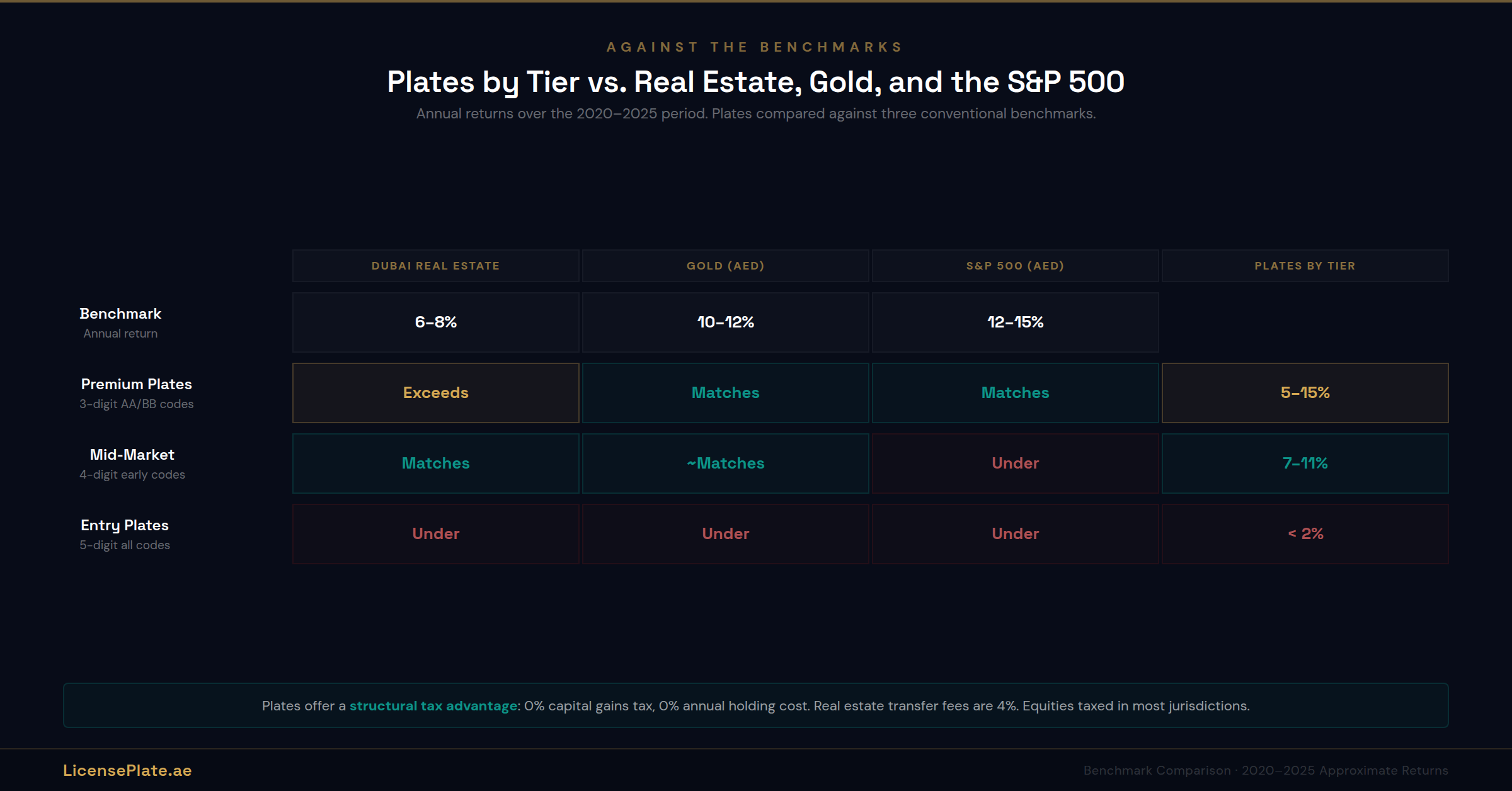
عقارات دبي (مؤشّر أسعار العقارات لدائرة الأراضي والأملاك): عوائد سنوية تقارب 6 إلى 8% خلال الفترة 2020-2025 في دبي، مع تقلّب كبير (انخفض المؤشّر خلال كوفيد وتعافى بحدّة من 2022 فصاعداً). واللوحات في الشريحتين المتميّزة وفائقة التميّز طابقت هذا النطاق أو تجاوزته. أما اللوحات في الشريحتين المتوسطة والدخول فكان أداؤها أدنى منه.
الذهب بالدرهم: عوائد سنوية تقارب 10 إلى 12% خلال الفترة 2020-2025، مدفوعةً بموجة الصعود العالمية للذهب. واللوحات المتميّزة طابقت الذهب. واللوحات فائقة التميّز تتبّعت الذهب تقريباً. أما لوحات شريحة الدخول فكان أداؤها أدنى بكثير من الذهب.
مؤشّر S&P 500 بالدرهم: عوائد سنوية تقارب 12 إلى 15% خلال الفترة 2020-2025، معدّلةً لسعر صرف الدولار مقابل الدرهم (وهو مربوط، فأثر العملة ضئيل). ولم تطابق سوى اللوحات فائقة التميّز والجوائز مؤشّر S&P 500 على أساس إجمالي، ولم تطابقه أيٌّ منها على أساس معدّل للسيولة لأن اللوحات لا يمكن بيعها في دقائق كما تُباع الأسهم.
والخلاصة الصادقة: اللوحات الإماراتية فئة أصول بديلة مشروعة للمشترين في الشريحة المتميّزة وما فوقها، حيث طابقت العوائد تاريخياً أو تجاوزت قليلاً العقار الإماراتي وطابقت الذهب، مع ضريبة أرباح رأسمالية صفرية (وهي ميزة بنيوية توفّرها البيئة الضريبية في الدولة). أما اللوحات دون الشريحة المتميّزة فسلع استهلاكية تحافظ على قيمتها الاسمية لكنها لا تتفوّق على البدائل التقليدية السائلة. وللمشترين الوافدين الذين يقيّمون الأهلية، يغطّي دليل الوافدين الكامل للشراء المتطلّبات الإدارية، ويغطّي دليلنا للوحات أبوظبي ديناميكيات السوق الخاصة بأبوظبي التي تؤثّر في حسابات العوائد للوحات غير الدبيّة.
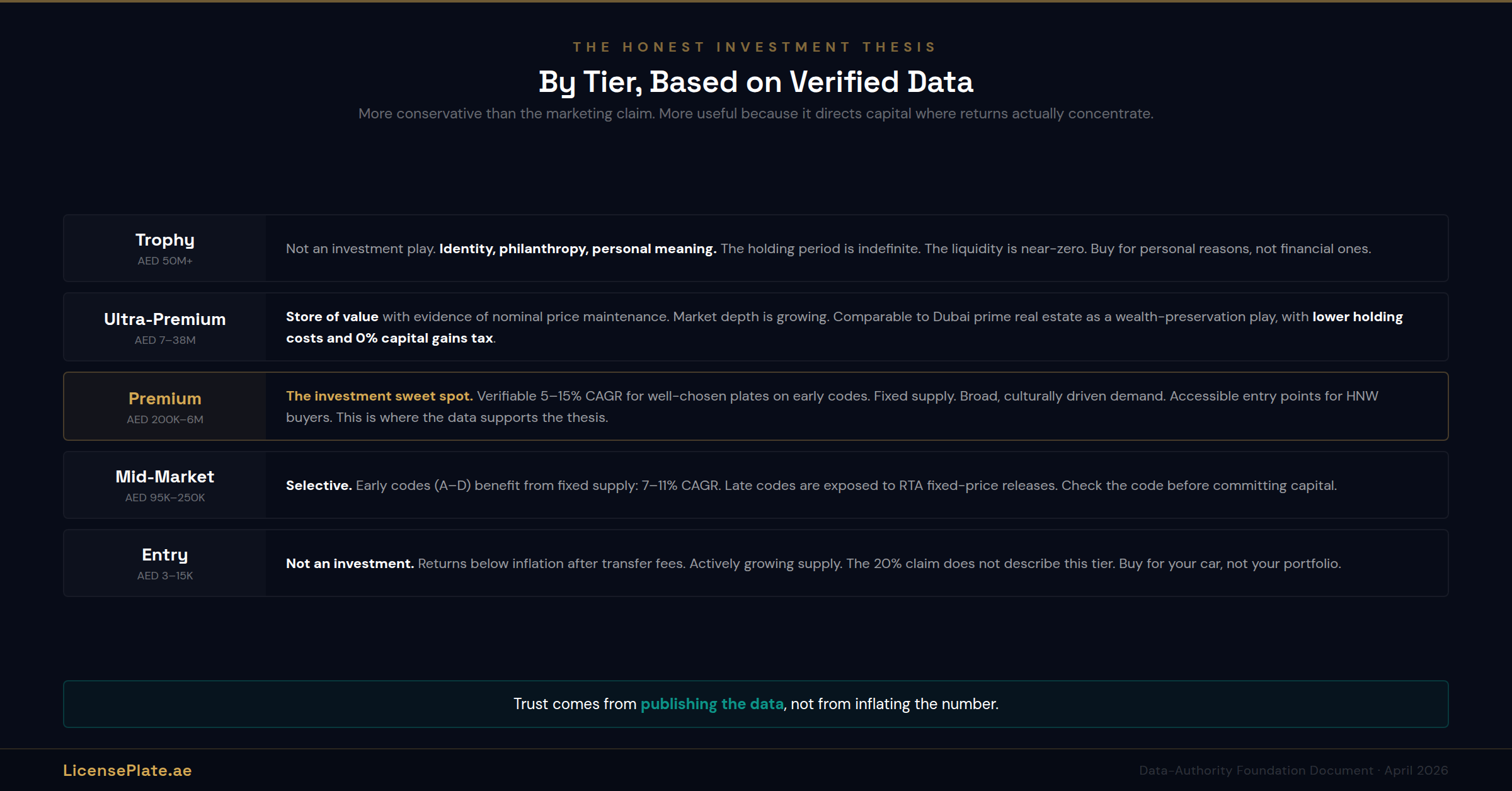
الفرضية الاستثمارية الصادقة، بحسب الشريحة
فيما يلي الفرضية الاستثمارية الخاصة بكل شريحة التي تدعمها هذه البيانات. وهي أكثر تحفّظاً من الادّعاء التسويقي وأكثر نفعاً لأنها توجّه رأس المال إلى الشرائح التي تتركّز فيها العوائد فعلاً.
شريحة الجوائز (أحادية الرقم): ليست لعبة استثمارية. فهذه أصول جوائز تُشترى للإشارة إلى الهوية، والتموضع الخيري، والمعنى الشخصي. والعوائد، إن وُجدت، عارضة. وفترة الاحتفاظ غير محدّدة. والسيولة تقارب الصفر (فاللوحات أحادية الرقم نادراً ما يُعاد بيعها). اشترِ لأسباب شخصية، لا مالية.
الشريحة فائقة التميّز (رقمان، رموز ثنائية الحرف): مخزن قيمة مشروع مع أدلة على الحفاظ على السعر الاسمي عبر فترات احتفاظ متعدّدة السنوات. وعمق السوق ينمو (فسلسلة مزادات أنبل الأرقام تحقّق الآن خمس لوحات أو أكثر لكل فعالية في هذه الشريحة). والسيولة محدودة لكنها تتحسّن. والفرضية الاستثمارية هي الحفاظ على الثروة مع ارتفاع اختياري إن زاد الطلب الثقافي، بضريبة أرباح رأسمالية صفرية. ومماثلة لعقارات دبي الراقية كلعبة حفاظ على الثروة، بتكاليف احتفاظ أقلّ وبلا صيانة، لكن بسيولة أدنى.
الشريحة المتميّزة (ثلاثة أرقام على رموز ثنائية الحرف، ورقمان على رموز أحادية الحرف): نقطة الاستثمار المثلى. فبيانات المزادات القابلة للتحقّق من 2024-2025 تُظهر أسعار تصفية متّسقة بين 3 و6 ملايين درهم للوحات AA وBB ثلاثية الأرقام، مع علاوات أنماط ثقافية تصل إلى 6 إلى 14 مليون درهم للتركيبات المفضّلة (777، و888، و786). ونقاط الدخول متاحة لمشتري الثروات الكبيرة. والمعروض ثابت على الرموز المبكرة. وقاعدة الطلب واسعة ومدفوعة ثقافياً. وعوائد بمعدّل نمو سنوي مركّب من 5 إلى 15% مرصودة للوحات مختارة جيداً على رموز مبكرة عبر فترات احتفاظ من خمس سنوات. ويغطّي دليل الاستثمار لدينا منطق بناء المحفظة لهذه الشريحة.
الشريحة المتوسطة (أربعة أرقام، على الرموز المبكرة فقط): فرصة استثمارية انتقائية. فاللوحات رباعية الأرقام على الرموز المبكرة (A وB وC وD) تستفيد من المعروض الثابت وأظهرت معدّل نمو سنوي مركّب من 7 إلى 11% خلال فترات الخمس سنوات الأخيرة. أما اللوحات رباعية الأرقام على الرموز المتأخّرة فمعرّضة لإصدارات المعروض من الهيئة (وإصدار مايو 2025 ثابت السعر عند 95,000 درهم على رمزَي L وM مثال محدّد) وينبغي ألّا تُشترى كاستثمارات. استخدم حاسبة اللوحات للتحقّق من الرمز الذي تقع عليه لوحتك المستهدفة قبل الالتزام برأس المال.
شريحة الدخول (خمسة أرقام، كل الرموز): ليست استثماراً. شراء وظيفي فقط. فالعوائد دون التضخّم بعد رسوم النقل. والمعروض ينمو فعلياً. وادّعاء "العوائد السنوية 20%" لا يصف هذه الشريحة. اشترِ لسيارتك، لا لمحفظتك.
إشارة عمق السوق التي يغفلها معظم المستثمرين
أهمّ معطى في هذا المقال ليس أي صفقة مفردة. إنه مسار إجماليات المزادات. فقد حقّق المزاد الـ 118 للهيئة في أبريل 2025 نحو 100 مليون درهم. وحقّق الـ 119 في سبتمبر 2025 مبلغ 97.95 مليون درهم. وحقّق الـ 120 في ديسمبر 2025 مبلغ 109 ملايين درهم، وهو أعلى إجمالي في تاريخ مزادات الهيئة. وقد عرضت كل فعالية نحو 90 لوحة.
وهذا يعني أن متوسط سعر التصفية لكل لوحة في مزاد ديسمبر 2025 بلغ نحو 1.21 مليون درهم. وثلاثة مزادات متتالية حقّقت 100 مليون درهم أو أكثر من 90 لوحة لكل منها. وهذه ليست قفزة عابرة. إنها نمط مستدام من طلب عميق وسائل عبر شرائح متعدّدة ورموز متعدّدة. وبالنسبة لأي مستثمر يقيّم نضج السوق، فإن السؤال ذا الصلة ليس "هل بيعت لوحة واحدة بـ 55 مليون درهم" (فقد بيعت، مرة واحدة، في 2023)، بل "هل أستطيع بيع لوحة مختارة جيداً بسعر يمكن التنبّؤ به خلال إطار زمني معقول بشكل موثوق؟" وتشير بيانات إجماليات المزادات إلى أن الإجابة، للوحات في الشريحة المتميّزة وما فوقها، هي نعم بشكل متزايد. وتغطّي مقارنتنا بين قناتَي مزاد الهيئة والسوق الثانوية المفاضلات بين مسارَي الخروج الرئيسيين.
وتعزّز فعالية أنبل رقم 2025 ذلك: 75.9 مليون درهم من لوحات الهيئة وحدها، عبر خمسة معروضات من سلسلة DD. فعمق السوق يتوسّع في القمة، لا على مستوى العناوين فقط. وللقرّاء المهتمّين باستكشاف خطّ المزادات القادم، تتابع روزنامة المزادات لدينا كل فعالية مجدولة.
الأسئلة الشائعة
س: هل ترتفع قيمة اللوحات الإماراتية فعلاً بنسبة 20% سنوياً؟
بالنسبة لأعلى 20% من السوق من حيث القيمة، وتحديداً اللوحات أحادية الرقم وذات الرقمين والثلاثية الأرقام ذات الدلالة الثقافية على الرموز المبكرة أو الثنائية الحرف، تُظهر بيانات المزادات التاريخية عوائد طابقت أو تجاوزت 10 إلى 15% سنوياً على فترات احتفاظ مختارة. ورقم الـ 20% قابل للتحقيق للوحة المناسبة المقتناة بالسعر المناسب في دورة المزاد المناسبة. أما بالنسبة للـ 80% المتبقية من السوق (اللوحات رباعية وخماسية الأرقام على الرموز المتوسطة إلى المتأخّرة)، فالعوائد ثابتة إلى سالبة قليلاً بعد التضخّم ورسوم النقل. فالادّعاء صحيح لشريحة فرعية وخاطئ للغالبية.
س: ما أفضل شريحة للاستثمار في اللوحات الإماراتية في 2026؟
الشريحة المتميّزة: اللوحات ثلاثية الأرقام على رموز AA وBB وCC، واللوحات ذات الرقمين على الرموز أحادية الحرف. فهذه الشريحة تقدّم أفضل مزيج من ارتفاع القيمة القابل للتحقّق (أسعار تصفية بين 3 و6 ملايين درهم في مزادات 2024-2025)، ونقاط دخول متاحة لمشتري الثروات الكبيرة، ومعروض ثابت على الرموز المبكرة، وعمق سوق متنامٍ. والشريحة فائقة التميّز مخزن قيمة أيضاً لكنها تتطلّب رأس مال دخول من 10 إلى 40 مليون درهم، ما يحدّ من مجموعة المشترين.
س: كيف أحسب العائد الفعلي على لوحة أملكها بالفعل؟
استخدم ثلاثة مدخلات. أولاً، تكلفة اقتنائك (شاملةً أي علاوة مزاد ورسوم نقل). ثانياً، القيمة المقدّرة الحالية من حاسبة اللوحات على LicensePlate.ae أو من نتائج المزادات الحديثة المماثلة الموثّقة في مقال التحقّق من الأسعار لدينا. ثالثاً، إجمالي تكاليف الاحتفاظ من دليل تكلفة الملكية لدينا. والمعادلة: (القيمة المقدّرة الحالية ناقص تكلفة الاقتناء ناقص إجمالي تكاليف الاحتفاظ) مقسومة على تكلفة الاقتناء، معبَّراً عنها كنسبة مئوية، ثم محوَّلة إلى معدّل سنوي بعدد سنوات الاحتفاظ.
س: هل اللوحات رباعية الأرقام استثمار جيّد في 2026؟
على الرموز المبكرة فقط (A وB وC وD). فهذه الرموز لم تعد الهيئة تصدرها، ما يخلق ديناميكية معروض ثابت تدعم معدّل نمو سنوي مركّب من 7 إلى 11% عبر فترات احتفاظ من خمس سنوات. أما اللوحات رباعية الأرقام على الرموز المتوسطة إلى المتأخّرة (L وM وN وO وما بعدها) فمعرّضة لإصدارات المعروض ثابت السعر من الهيئة. وإصدار مايو 2025 للوحات رباعية الأرقام على رمزَي L وM بـ 95,000 درهم مثال محدّد على كيف يمكن للمعروض الحكومي أن يحدّ من قيم السوق الثانوية أو يخفضها.
س: لماذا تُعدّ ضريبة الأرباح الرأسمالية الصفرية مهمّة لعوائد اللوحات؟
لا تفرض الإمارات ضريبة دخل شخصي ولا ضريبة أرباح رأسمالية على معاملات اللوحات. فإذا اشتريت لوحة بـ 100,000 درهم في 2020 وبعتها بـ 200,000 درهم في 2026، فإن كامل ربح الـ 100,000 درهم لك دون خصم ضريبي. وتعني هذه الميزة البنيوية أن العوائد الإجمالية والصافية متطابقة تقريباً (بفارق 240 درهماً فقط في رسوم النقل)، وهو ما لا ينطبق على العقار (حيث رسوم النقل 4% في دبي) ولا على الأسهم في معظم الولايات القضائية. ويغطّي دليل الاستثمار لدينا حجّة الكفاءة الضريبية بالكامل.
س: ما مدى سيولة سوق اللوحات في الإمارات؟
تتحسّن. فثلاثة مزادات متتالية للهيئة في 2025 حقّق كلٌّ منها بين 97 و109 ملايين درهم من نحو 90 لوحة. وتوفّر السوق الثانوية عبر منصات مثل LicensePlate.ae والسوق الثانوية الأوسع سيولة إضافية للوحات التي لا تمرّ عبر المزادات. ويتفاوت زمن البيع بحسب الشريحة: فاللوحات فائقة التميّز قد تستغرق أشهراً لإيجاد المشتري المناسب، واللوحات المتميّزة تُباع عادةً خلال 4 إلى 12 أسبوعاً عبر السوق الثانوية، ولوحات شريحة الدخول تُباع خلال أيام لكن بهوامش منخفضة. فاللوحات أقلّ سيولة من الأسهم العامة وأكثر سيولة من العقار المادي. ويغطّي دليلنا لبيع لوحة في الإمارات آليات العرض والإغلاق المحدّدة في السوق الثانوية.
س: هل ينبغي أن أشتري لوحة كاستثمار أم كأصل شخصي؟
كلاهما صحيح، والإجابة تعتمد على الشريحة. فلوحات الجوائز وفائقة التميّز أصول شخصية أو هوياتية في المقام الأول مع ارتفاع استثماري اختياري. ولوحات الشريحة المتميّزة مزدوجة الغرض فعلاً: فهي تخدم كعلامات هوية شخصية وكأصول بديلة مرتفعة القيمة. ولوحات الشريحة المتوسطة استثمارات انتقائية (الرموز المبكرة فقط). ولوحات شريحة الدخول مشتريات شخصية، لا استثمارات. ويساعد مقالنا عن شراء اللوحة قبل السيارة أو بعدها في تأطير قرار الشخصي مقابل الاستثماري عند نقطة شراء المركبة.
س: أين يمكنني رؤية بيانات السوق الحالية لشريحة لوحتي؟
ابدأ بحاسبة اللوحات لدينا للحصول على نطاق قيمة مقدّر، وقابله بمقال التحقّق من الأسعار لنتائج المزادات الحديثة المماثلة بحسب الرمز وعدد الأرقام، وراجع صفحة إعلانات دبي للاطّلاع على الأسعار المطلوبة الحيّة في السوق الثانوية. وللإطار الاستثماري الكامل، يوفّر مقال اللوحات الإماراتية كاستثمار منطق بناء المحفظة.
خاطرة أخيرة عن الصدق وسلطة السوق
سيستمرّ ادّعاء العوائد السنوية بنسبة 20% في التداول في أحاديث الوسطاء والمواد التسويقية للمنصات لأنه جذّاب، وصحيح جزئياً، ويصعب على المشتري المحتمل التحقّق منه دون النوع من البيانات الذي يوفّره هذا المقال. وموقفنا مختلف. فنحن ننشر البيانات لأن البيانات، بما فيها الأجزاء غير المُرضية للادّعاء المطلق، هي أثمن ما يمكن أن نقدّمه لمشترٍ يقرّر أين يخصّص رأس ماله.
فالمشتري الذي يقرأ هذا المقال ويقرّر تخصيص 3.5 مليون درهم للوحة متميّزة ثلاثية الأرقام على رمز AA في مزاد الهيئة القادم يتخذ قراراً مستنداً إلى بيانات ومدعوماً بنتائج مزادات قابلة للتحقّق من 2024 و2025. وذلك المشتري أكثر ميلاً للتعامل بثقة، وأكثر ميلاً للاحتفاظ خلال الأشهر الهادئة الحتمية، وأكثر ميلاً لتحقيق العائد الذي تشير إليه البيانات. أما المشتري الذي يقرأ ادّعاءً تسويقياً، ويشتري لوحة خماسية على رمز متأخّر متوقّعاً عوائد 20%، ويكتشف بعد ثلاث سنوات أن اللوحة لم ترتفع قيمتها ولا يمكن بيعها بما دفعه، فقد تضرّر من غياب التحليل الذي يوفّره هذا المقال.
وتدعم البيانات فرضية استثمارية واضحة وقابلة للدفاع عنها ومدعومة بالأدلة للوحات الإماراتية في الشريحة المتميّزة وما فوقها. وهي لا تدعم الادّعاء المطلق للسوق بأكملها. ومعرفة الفرق هي أهمّ قطعة تحليل مفردة يمكن لأي مشترٍ لوحة محتمل أن يمتلكها. استخدم الحاسبة للتحقّق من لوحتك تحديداً، واقرأ مقال التحقّق من الأسعار للتفصيل الكامل رمزاً برمز، واستكشف إعلانات دبي لترى كيف تبدو السوق الحيّة في كل شريحة. فالأرقام علنية. والتحليل بين يديك.