

10 أخطاء مكلفة يرتكبها مشترو اللوحات لأول مرة في الإمارات
30 مارس 2026
دبي
فريق LicensePlate.ae
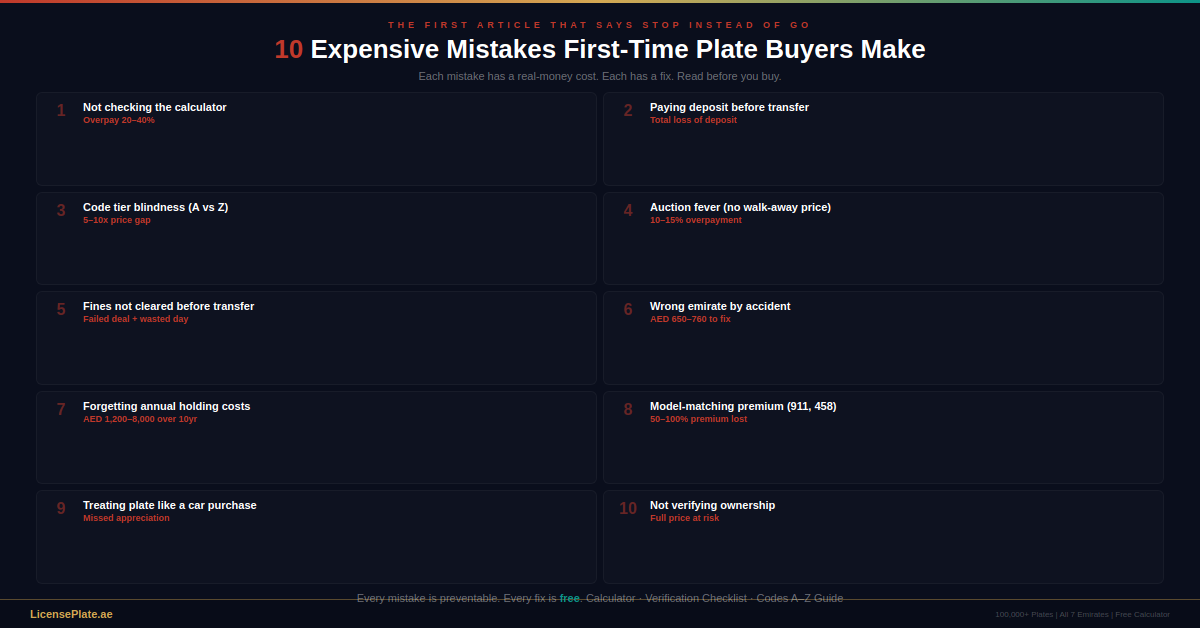
هذا المقال ليس دليل شراء. فلديك بالفعل دليل المشتري، ودليل النقل، وقائمة التحقّق. هذا هو المقال الذي يخبرك بما يجب ألّا تفعله. عشرة أخطاء، لكل منها تكلفة بمال حقيقي، ومثال محسوب، والأداة أو العملية الدقيقة التي تمنعه. فإذا كنت على وشك إنفاق 5,000 درهم أو 500,000 درهم على لوحة، فهذه العشر دقائق من القراءة قد توفّر عليك آلاف الدراهم.
الخطأ رقم 1: عدم التحقّق من قيمة اللوحة قبل الاتفاق على السعر
التكلفة: الدفع الزائد بنسبة 20–40% مقابل القيمة السوقية.
يدرج بائع لوحة دبي V 4521 (5 أرقام، رمز متأخّر) بـ 8,000 درهم. وتظنّ أنها تبدو معقولة لأنه لا نقطة مرجعية لديك. وكانت حاسبة اللوحات ستخبرك بأن لوحات الرمز V المماثلة من 5 أرقام تتداول بين 3,500 و5,500 درهم. فقد دفعت للتوّ زيادة قدرها 2,500 إلى 4,500 درهم. على لوحة واحدة. وسِّع تلك الفجوة إلى لوحة من 3 أرقام ويمكن أن يصل الدفع الزائد إلى 30,000 إلى 50,000 درهم.
السوق ليس لديه قائمة أسعار مركزية. فيحدّد البائعون أسعارهم المطلوبة بناءً على ما يظنّون أن اللوحة تساويه، لا ما تقوله بيانات السوق. وبعض البائعين يسعّرون بدقّة. وبعضهم يسعّرون 30 إلى 50% فوق السوق. ودون مقياس مستقلّ، تتفاوض وأنت أعمى.
الحلّ: مرّر كل لوحة عبر الحاسبة قبل التعامل مع البائع. ويشرح إطار فحص القيمة المتغيّرات الخمسة وراء كل تقييم: الإمارة، وطبقة الرمز، وعدد الأرقام، ودلالة النمط، والطلب السوقي. فإذا كان السعر المطلوب أعلى بأكثر من 15% من تقدير الحاسبة، إما تفاوض على خفضه أو انتقل إلى القائمة التالية.
الخطأ رقم 2: دفع عربون قبل بدء عملية النقل الرسمية
التكلفة: خسارة كاملة للعربون. من 2,000 إلى 50,000 درهم بحسب اللوحة.
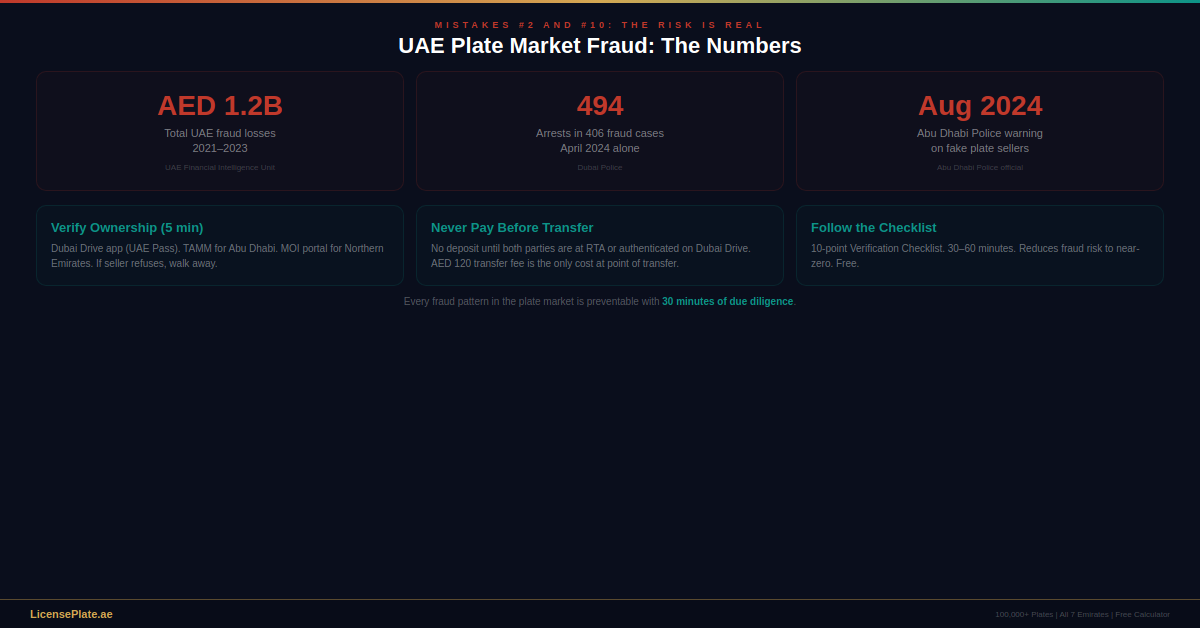
أفادت وحدة المعلومات المالية في الإمارات بخسائر احتيال إجمالية قدرها 1.2 مليار درهم عبر الإمارات بين 2021 و2023. واعتقلت شرطة دبي 494 فرداً في 406 قضايا احتيال في أبريل 2024 وحده. وأصدرت شرطة أبوظبي تحذيراً علنياً في أغسطس 2024 بشأن حسابات وسائل تواصل اجتماعي مزيّفة تعرض لوحات بأسعار دون السوق. وأكثر عمليات احتيال اللوحات شيوعاً بسيطة: يطالب بائع بعربون ("لحجز اللوحة لك") قبل بدء أي عملية نقل رسمية. ترسل 5,000 درهم. يختفي البائع. فاللوحة إما لم تكن ملكه قط، أو أُدرجت على ثلاث منصّات في آنٍ واحد بثلاثة مشترين كل منهم يرسل عرباناً.
الحلّ: لا تحوّل أموالاً أبداً حتى يكون الطرفان إما (أ) في مركز سعادة متعاملين لهيئة الطرق معاً، أو (ب) مصادَقين عبر UAE Pass على تطبيق Dubai Drive مع بدء النقل. ورسم النقل الرسمي 120 درهماً. وهذا هو الدفع الوحيد المطلوب عند نقطة النقل. ويُتبادَل سعر اللوحة بين المشتري والبائع عند أو قرب نقطة النقل، لا قبلها بأيام أو أسابيع. ويوثّق دليل الاحتيال كل نمط احتيال شائع.
الخطأ رقم 3: تجاهل طبقة الرمز (الخطأ الذي لا يتحدّث عنه أحد)
التكلفة: شراء لوحة ترتفع قيمتها أبطأ بـ 3–5 أضعاف من لوحة مكافئة على رمز أبكر. أو الدفع الزائد لرمز متأخّر بسعر رمز مبكر.
يقول كل دليل على الإنترنت "أرقام أقل = أغلى". وهذا صحيح. لكنه نصف القصة فقط. فحرف الرمز يهمّ بقدر عدد الأرقام، ولا أحد يشرح هذا. وإليك الواقع:
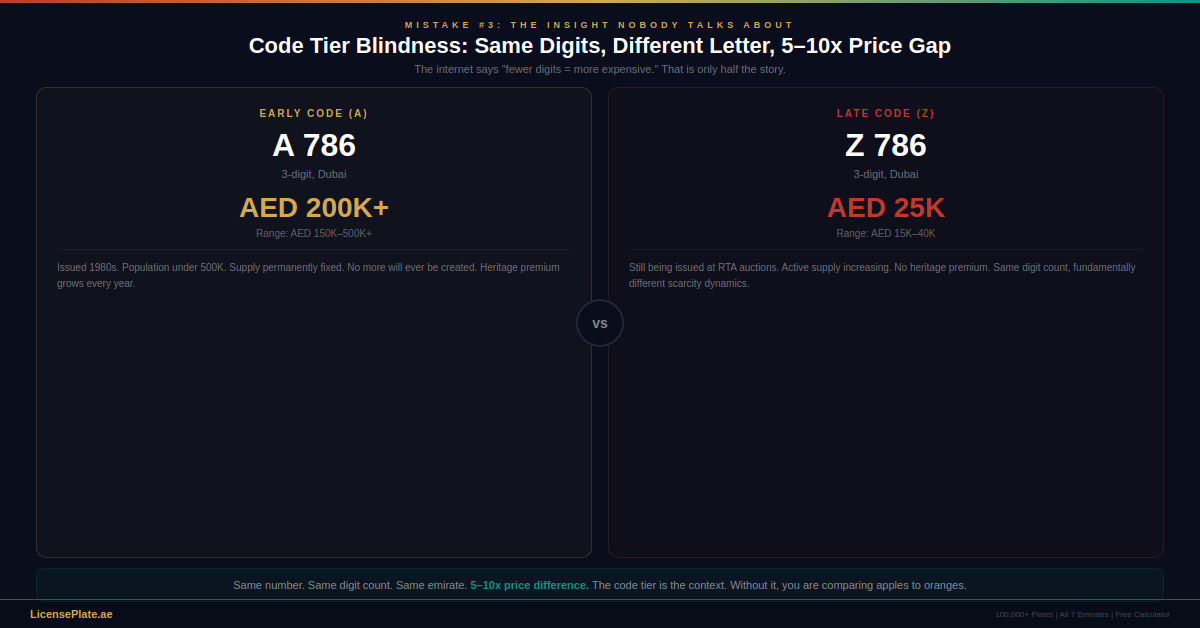
لوحة من 3 أرقام على الرمز A (أقدم سلسلة تسجيل في دبي، صدرت في الثمانينيات) تكلّف عادةً 150,000 إلى أكثر من 500,000 درهم. والرقم نفسه من 3 أرقام على الرمز Z (أحد أحدث الرموز، لا يزال يُصدَر في مزادات هيئة الطرق) يكلّف 15,000 إلى 40,000 درهم. وهذا فرق 5 إلى 10 أضعاف لعدد الأرقام نفسه. فالرقم هو نفسه. والحرف ليس كذلك.
لماذا؟ لوحات الرمز A لها معروض ثابت بشكل دائم. ولن يُنشَأ المزيد أبداً. فقد صدرت عندما كان عدد سكان دبي دون 500,000. واليوم يتجاوز عدد السكان 3.7 مليون. فالطلب ينمو بينما المعروض مجمّد. ولوحات الرمز Z لا تزال تُطرَح في المزاد. فالمعروض يتزايد بنشاط. وديناميكيات الندرة مختلفة جوهرياً. ويشرح دليل الرموز من A إلى Z التسلسل الهرمي الكامل ويوثّق دليل الأسعار ما يكلّفه فعلاً كل رمز وعدد أرقام.
الحلّ: عند مقارنة اللوحات، قارن دائماً ضمن طبقة الرمز نفسها. فلوحة من 3 أرقام على الرمز D بـ 80,000 درهم ليست "باهظة" إذا كانت لوحات الرمز A من 3 أرقام تتداول بأكثر من 200,000 درهم. ولوحة من 3 أرقام على الرمز Z بـ 35,000 درهم ليست "رخيصة" إذا كانت لوحات الرمز Z المماثلة من 3 أرقام مدرجة بـ 20,000 درهم. فطبقة الرمز هي السياق. ودونها، تقارن التفّاح بالبرتقال.
الخطأ رقم 4: المزايدة في المزاد دون سعر انسحاب
التكلفة: دفع زائد بنسبة 10–15% مدفوع بحمّى المزاد.
بيئات المزادات مصمّمة لخلق الإلحاح. قاعة جراند حياة دبي. والمنادي يعلن العروض. والمزايدون الآخرون يرفعون مضاربهم. والساعة تدقّ. واللوحة التي تريدها يتنافس عليها ثلاثة آخرون. وتنطلق غريزتك التنافسية. فتزايد بـ 95,000 درهم على لوحة قيّمتها بـ 75,000 درهم عند الدخول. تفوز. وتدفع أيضاً 20,000 درهم زيادة.
ويُظهر دليل المزاد مقابل السوق الثانوي أن السوق الثانوي غالباً ما يحمل اللوحات نفسها أو مماثلة بأسعار أدنى لأن المبيعات الخاصة لا تحمل 5% ضريبة قيمة مضافة. فلوحة تُرسى بـ 95,000 درهم في المزاد تكلّف 99,750 درهماً بعد ضريبة القيمة المضافة. وتلك اللوحة نفسها، أو واحدة مشابهة جداً لها، قد تكون مدرجة بـ 80,000 درهم على LicensePlate.ae دون ضريبة قيمة مضافة.
الحلّ: حدّد سعر انسحابك قبل دخول المزاد. اكتبه. التزم به. مرّر اللوحة عبر الحاسبة وتحقّق من قوائم السوق الثانوي قبل المزايدة. فإذا كان لدى السوق الثانوي اللوحة نفسها بأقل من سقف مزادك ناقص 5% ضريبة قيمة مضافة، فاشترِها هناك. ويتيح لك تقويم المزادات مراجعة قائمة اللوحات قبل فتح التسجيل.
الخطأ رقم 5: عدم تسوية المخالفات قبل موعد النقل
التكلفة: رحلة ضائعة. نقل فاشل. قد ينسحب البائع من الصفقة.
تتبع المخالفات في الإمارات المركبة، لا اللوحة. لكن إذا كانت اللوحة مركّبة على مركبة عليها مخالفات غير مسدّدة، فلا يمكن نقل اللوحة حتى تُسوّى تلك المخالفات. ويحجب نظام هيئة الطرق النقل تلقائياً. تصل إلى مركز سعادة المتعاملين، مستعدّاً لإتمام الصفقة، ويقول النظام لا. وعلى البائع دفع 3,000 درهم من المخالفات التي نسيها. وليس لديه النقد. وتنهار الصفقة. وقد أضعت نصف يوم.
الحلّ: ينبغي لكل من المشتري والبائع فحص المخالفات عبر بوابة EVG (evg.ae)، أو تطبيق شرطة دبي، أو تطبيق وزارة الداخلية قبل 24 ساعة على الأقل من موعد النقل. وتشمل قائمة التحقّق المخالفات كالخطوة الرابعة من العملية المكوّنة من 10 نقاط. وتقدّم دبي خصماً بنسبة 50% على المخالفات المرورية المسدّدة خلال 60 يوماً و25% خلال 90 يوماً. اعرف هذا قبل التفاوض مع البائع حول من يسوّي المخالفات.
الخطأ رقم 6: الشراء من الإمارة الخاطئة دون فهم ما يعنيه ذلك
التكلفة: الانتهاء بلوحة مسجّلة في إمارة لم تقصدها، برسوم تجديد وعمليات نقل لم تتوقّعها.
لوحة عجمان سارية على جميع طرق الإمارات. ويمكنك قيادتها في دبي كل يوم. وهذا قانوني. لكنها لوحة عجمان إلى الأبد ما لم تمرّ بعملية إعادة التسجيل الكاملة بين الإمارات (تصدير + استيراد، 650 إلى 760 درهماً إجمالاً). فإذا أردت لوحة دبي واشتريت بالخطأ لوحة عجمان لأن القائمة لم تحدّد بوضوح، فأنت الآن لديك تكلفة غير متوقّعة وعملية لم تخطّط لها.
الجانب الآخر: لوحات عجمان والفجيرة تبدأ من 300 إلى 500 درهم للوحات من 5 أرقام، مقارنةً بأكثر من 3,000 درهم للوحات دبي المكافئة. فإذا كنت تشتري للقيمة بدلاً من فخر الإمارة، فالإمارات الشمالية استراتيجية متعمّدة، لا خطأ. والخطأ هو الشراء من الإمارة الخاطئة بالصدفة.
الحلّ: صفِّ دائماً حسب الإمارة على LicensePlate.ae قبل التعامل مع بائع. أكّد الإمارة كتابياً قبل الاتفاق على السعر. فإذا أردت لوحة دبي، تأكّد أنك على صفحة سوق دبي، لا القوائم العامة.
الخطأ رقم 7: نسيان تكلفة الاحتفاظ السنوية
التكلفة: من 1,200 إلى أكثر من 8,000 درهم على مدى 10 سنوات في رسوم تجديد لم تحسبها في ميزانيتك.
اللوحات ليست مجانية الاحتفاظ. فتفرض كل إمارة رسم تجديد سنوياً لإبقاء اللوحة مسجّلة في ملفّك المروري. وتتفاوت هذه الرسوم بشكل درامي:
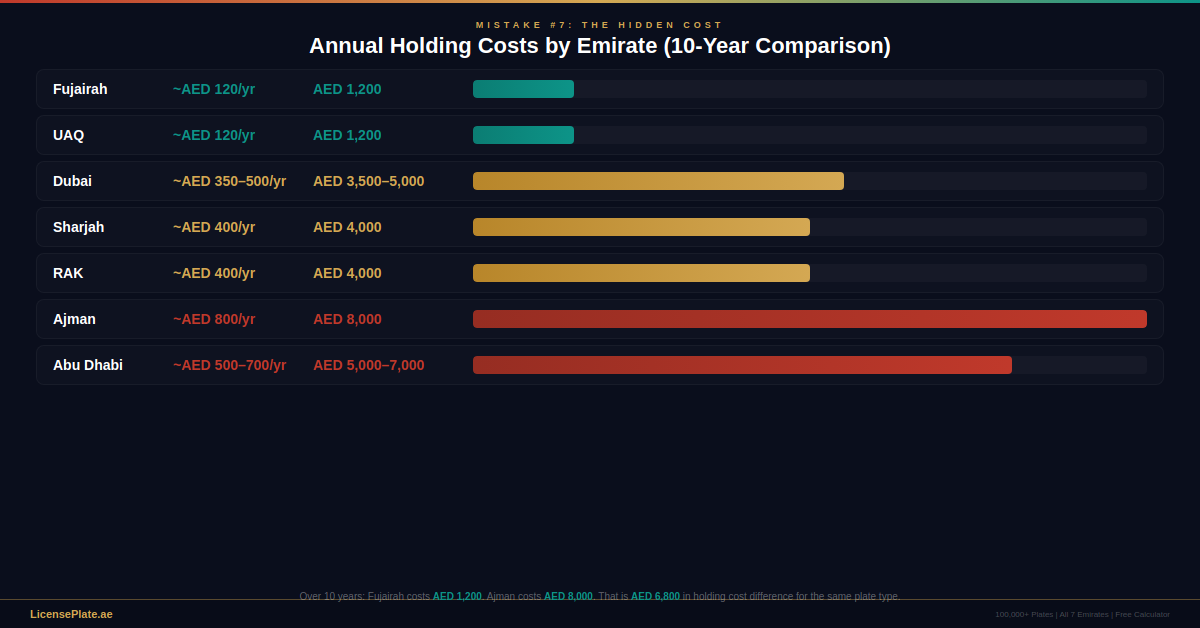
دبي: تتفاوت حسب الرمز ونوع اللوحة، عادةً 350 إلى 500 درهم سنوياً. عجمان: نحو 800 درهم سنوياً. الشارقة: نحو 400 درهم سنوياً. الفجيرة: نحو 120 درهماً سنوياً. أم القيوين: نحو 120 درهماً سنوياً.
وعلى مدى 10 سنوات، تكلّف لوحة عجمان 8,000 درهم في رسوم الاحتفاظ وحدها. وتكلّف لوحة الفجيرة 1,200 درهم على المدة نفسها. وهذا فرق 6,800 درهم. فإذا اشتريت لوحة كاستثمار واحتفظت بها لعقد، فالإمارة التي تشتري فيها تحدّد تكلفة حملك. فلوحة عجمان من 3 أرقام بـ 15,000 درهم باحتفاظ 800 درهم سنوياً لها تكلفة إجمالية على مدى 10 سنوات قدرها 23,000 درهم. ولوحة فجيرة من 3 أرقام بـ 12,000 درهم باحتفاظ 120 درهماً سنوياً لها تكلفة إجمالية على مدى 10 سنوات قدرها 13,200 درهم. فسعر الشراء الأرخص وتكلفة الاحتفاظ الأرخص يتراكمان.
الحلّ: احسب تكاليف الاحتفاظ ضمن إجمالي تكلفة الملكية قبل الشراء، خاصةً إذا كنت تحتفظ باللوحة كاستثمار دون تركيبها على مركبة. ويغطّي دليل الاستثمار تحليل تكلفة الاحتفاظ عبر الإمارات السبع جميعها.
الخطأ رقم 8: شراء لوحة مطابقة للطراز ودفع العلاوة التي تتبخّر
التكلفة: علاوة 50–100% فوق اللوحات العادية تختفي لحظة بيعك للسيارة.
لوحة بالرقم 911 تحمل علاوة لأن ملّاك بورشه 911 يريدونها. ولوحة بالرقم 458 تحمل علاوة لأن ملّاك فيراري 458 يريدونها. ولوحة بالرقم 63 تحمل علاوة لأن ملّاك سلسلة AMG 63 يريدونها. وتتداول هذه اللوحات المطابقة للطراز بنسبة 50 إلى 100% فوق اللوحات المماثلة بعدد الأرقام وطبقة الرمز نفسهما.
المشكلة: العلاوة مرتبطة بالسيارة، لا باللوحة. فعندما تبيع بورشه وتشتري رينج روفر، فالرقم 911 على رينج روفر خاصتك لا يعني شيئاً. وتنخفض قيمة إعادة بيع اللوحة إلى مستواها العادي. فقد دفعت 40,000 درهم للوحة تساوي 20,000 درهم دون بورشه. ويشرح دليل دلالات الأرقام أي الأرقام تحمل قيمة ثقافية عالمية (7، 8، 9، 786) مقابل علاوات خاصة بالطراز عابرة.
الحلّ: إذا كنت تخطّط للاحتفاظ بالسيارة نفسها لأكثر من 10 سنوات، فمطابقة الطراز جيدة. وإذا كنت تغيّر السيارات كل 3 إلى 5 سنوات (كما يفعل معظم مقيمي الإمارات)، فاشترِ لوحة ذات جاذبية عالمية: نمط متكرّر (777، 888)، أو رقم ثقافي (786، 9)، أو عدد أرقام قليل على رمز مبكر. فهذه تحافظ على قيمتها بغضّ النظر عن السيارة التي تجلس عليها.
الخطأ رقم 9: معاملة شراء اللوحة كشراء سيارة
التكلفة: فرص ضائعة، وإطار تقييم خاطئ، واستراتيجية خروج سيّئة.
تنخفض قيمة السيارات لحظة قيادتها خارج المعرض. فسيارة بـ 200,000 درهم تساوي 140,000 درهم بعد سنتين و90,000 درهم بعد خمس. واللوحات تفعل العكس. فلوحة مختارة جيداً اشتُريت بـ 15,000 درهم قد تساوي 25,000 درهم خلال خمس سنوات و40,000 درهم خلال عشر. لكن فقط إذا فهمت أن اللوحات والسيارات أصول مختلفة جوهرياً.
للسيارات تكاليف صيانة، وتأمين، وانخفاض قيمة، وأعمار محدودة. وللوحات 120 إلى 800 درهم سنوياً في رسوم التجديد ولا شيء غير ذلك. لا تغييرات زيت. لا استبدال إطارات. لا سجلّ خدمة. لا أضرار حوادث. ويوثّق دليل الاستثمار نمواً بنسبة 113% في إيرادات مزادات هيئة الطرق على مدى عامين والأطروحة الهيكلية لارتفاع قيمة اللوحات: معروض ثابت زائد سكان متزايدون زائد 0% ضريبة على الأرباح الرأسمالية.
الحلّ: فكّر في اللوحة كأصل مالي قائم بذاته، لا كملحق سيارة. قيّمها على أساس مزاياها الخاصة: طبقة الرمز، وعدد الأرقام، والدلالة الثقافية، وتكلفة الاحتفاظ، والسيولة. فالسيارة التي تجلس عليها غير ذات صلة بقيمتها طويلة الأمد.
الخطأ رقم 10: عدم التحقّق من الملكية عبر أنظمة حكومية رسمية
التكلفة: الدفع للوحة لا يملكها البائع. خسارة محتملة لسعر الشراء الكامل.
يريك بائع لقطة شاشة لتسجيل لوحة. تبدو مشروعة. ترسل 25,000 درهم. كانت لقطة الشاشة معدّلة بالفوتوشوب. فالبائع لا يملك اللوحة. وحذّرت شرطة أبوظبي من هذا النمط بالضبط في أغسطس 2024. وتتضمّن إحصاءات احتيال شرطة دبي (494 اعتقالاً في أبريل 2024 وحده) عمليات احتيال متعلّقة باللوحات.
يستغرق التحقّق الحكومي 5 إلى 10 دقائق ولا يكلّف شيئاً. فتطبيق Dubai Drive (تسجيل الدخول بـ UAE Pass) يُظهر كل لوحة مسجّلة في الملف المروري للبائع. ومنصة تم تفعل الشيء نفسه لأبوظبي. وبوابة وزارة الداخلية تغطّي جميع الإمارات الأخرى. فإذا رفض البائع التحقّق عبر القنوات الرسمية، فتلك هي إجابتك. انسحب.
الحلّ: اتّبع قائمة التحقّق من 10 نقاط لكل معاملة. الخطوة 1: تأكيد الملكية عبر التطبيق الرسمي. الخطوة 2: التحقّق من هوية البائع مقابل الهوية الإماراتية. الخطوة 3: فحص المخالفات. وتستغرق العملية بأكملها 30 إلى 60 دقيقة وتقلّل مخاطر الاحتيال إلى ما يقارب الصفر. ويغطّي دليل الاحتيال أنماط الاحتيال المحدّدة والقنوات الرسمية للإبلاغ عنها.
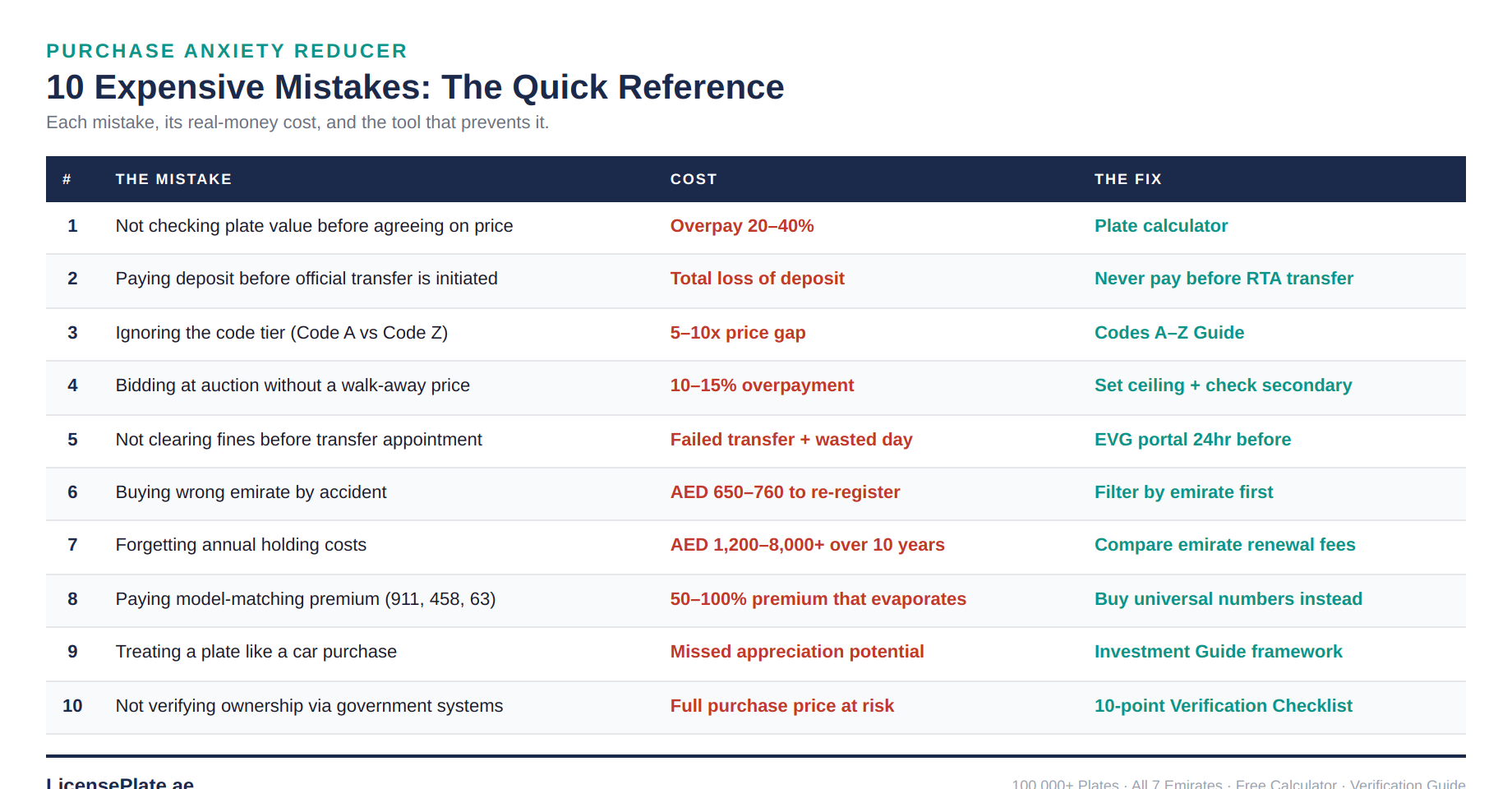
القاسم المشترك: المعلومات تغلب الندم
كل خطأ في هذه القائمة له السبب الجذري نفسه: مشترٍ تعامل دون معلومات كافية. لم يتحقّق من الحاسبة. لم يتحقّق من الملكية. لم يفهم طبقات الرموز. لم يحسب تكاليف الاحتفاظ. لم يحدّد سعر انسحاب. فسوق اللوحات يكافئ المشترين المطّلعين ويعاقب غير المطّلعين، لا لأنه مفترس، بل لأنه غير منظّم من حيث التسعير ومعلومات التسعير غير متماثلة بين المشترين الذين يؤدّون واجباتهم والمشترين الذين لا يفعلون.
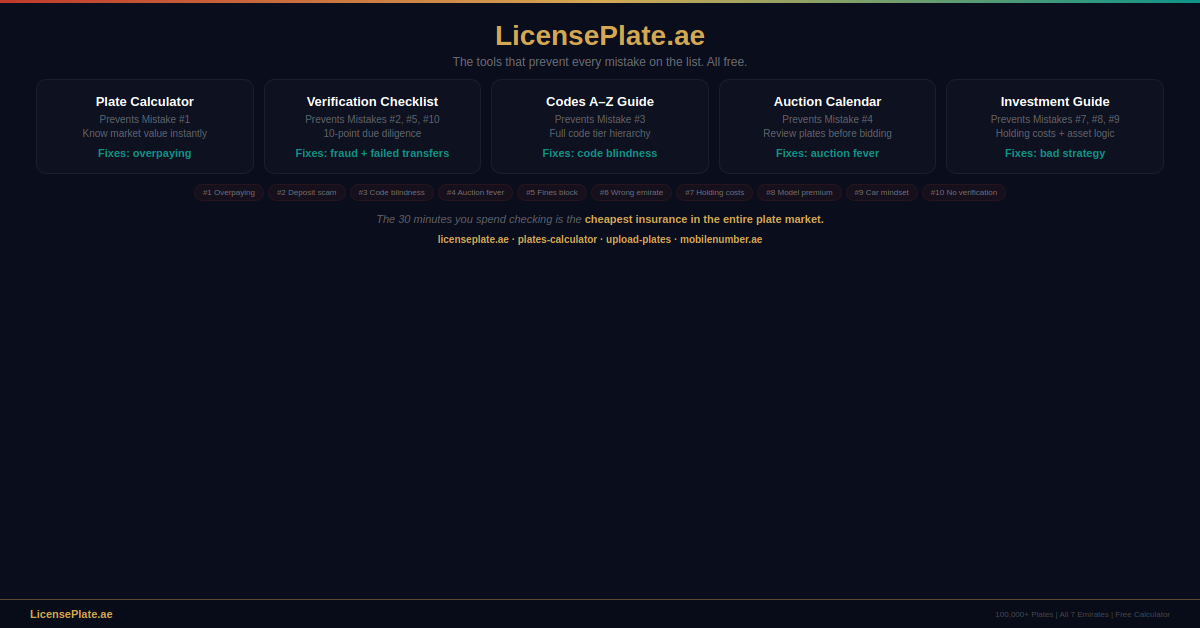
والأدوات لمنع كل خطأ في هذه القائمة مجانية: حاسبة اللوحات للتسعير، وقائمة التحقّق للملكية، ودليل الرموز من A إلى Z لسياق طبقة الرمز، وتقويم المزادات للتوقيت، ودليل الاحتيال لأنماط الاحتيال. استخدمها. فالـ 30 دقيقة التي تقضيها في القراءة والتحقّق هي أرخص تأمين في سوق اللوحات بأكمله.
الأسئلة الشائعة
س: ما هو الخطأ الأكثر شيوعاً عند شراء لوحة في الإمارات؟
عدم التحقّق من القيمة السوقية للوحة قبل الاتفاق على السعر. فتوفّر حاسبة اللوحات تقديراً فورياً بناءً على أكثر من 100,000 نقطة بيانات. ودونها، يدفع المشترون زيادة بنسبة 20–40% في المتوسّط.
س: كيف أتجنّب عمليات احتيال اللوحات في الإمارات؟
لا تدفع عرباناً أبداً قبل بدء عملية النقل الرسمية لهيئة الطرق. تحقّق من الملكية عبر تطبيق Dubai Drive (UAE Pass). اتّبع قائمة التحقّق من 10 نقاط. فإذا رفض البائع التحقّق، انسحب.
س: هل يؤثّر حرف الرمز على السعر إلى هذا الحدّ فعلاً؟
نعم. فلوحة من 3 أرقام على الرمز A (إصدار الثمانينيات) تكلّف 5–10 أضعاف الرقم نفسه من 3 أرقام على الرمز Z (لا يزال يُصدَر). فالرمز يحدّد طبقة ندرة اللوحة. ويشرح دليل الرموز من A إلى Z التسلسل الهرمي الكامل.
س: ما هي تكاليف الاحتفاظ السنوية للوحة؟
تتفاوت حسب الإمارة: دبي 350–500 درهم سنوياً، عجمان نحو 800 درهم سنوياً، الشارقة نحو 400 درهم سنوياً، الفجيرة نحو 120 درهماً سنوياً، أم القيوين نحو 120 درهماً سنوياً. وعلى مدى 10 سنوات، يمكن أن يتجاوز الفرق بين الإمارات 6,000 درهم.
س: هل ينبغي أن أشتري لوحة تطابق طراز سيارتي؟
فقط إذا كنت تخطّط للاحتفاظ بالسيارة لأكثر من 10 سنوات. فاللوحات المطابقة للطراز (911، 458، 63) تحمل علاوات 50–100% تتبخّر عند تغيير السيارات. واللوحات ذات القيمة الثقافية العالمية (7، 8، 786، الأنماط المتكرّرة) تحافظ على قيمتها بغضّ النظر عن المركبة.
س: هل الأفضل الشراء في المزاد أم في السوق الثانوي؟
يعتمد على ميزانيتك وما تريده. ويقارن دليل المزاد مقابل السوق الثانوي ثمانية أبعاد. الرؤية الرئيسية: لوحات المزاد تحمل 5% ضريبة قيمة مضافة؛ والمبيعات الخاصة الثانوية لا تفعل.
س: كم يستغرق التحقّق من الملكية؟
5–10 دقائق عبر تطبيق Dubai Drive أو منصة تم. وتستغرق عملية التحقّق الكاملة من 10 نقاط 30–60 دقيقة. وهي أثمن ساعة ستقضيها على أي معاملة لوحة.
س: هل يمكنني إرجاع لوحة إذا ارتكبت خطأً؟
لا. بمجرد إتمام نقل هيئة الطرق وإصدار شهادة الملكية، تكون المعاملة نهائية. لا توجد سياسة إرجاع. ولهذا فإن التحقّق وفحص القيمة قبل النقل غير قابلين للتفاوض.
حذف التعليق؟
هل أنت متأكد أنك تريد حذف هذا التعليق؟ لا يمكن التراجع عن هذا الإجراء.
حذف المقال؟
هل أنت متأكد أنك تريد حذف هذه المقالة؟ سيؤدي ذلك أيضًا إلى حذف جميع التعليقات. لا يمكن التراجع عن هذا الإجراء.