

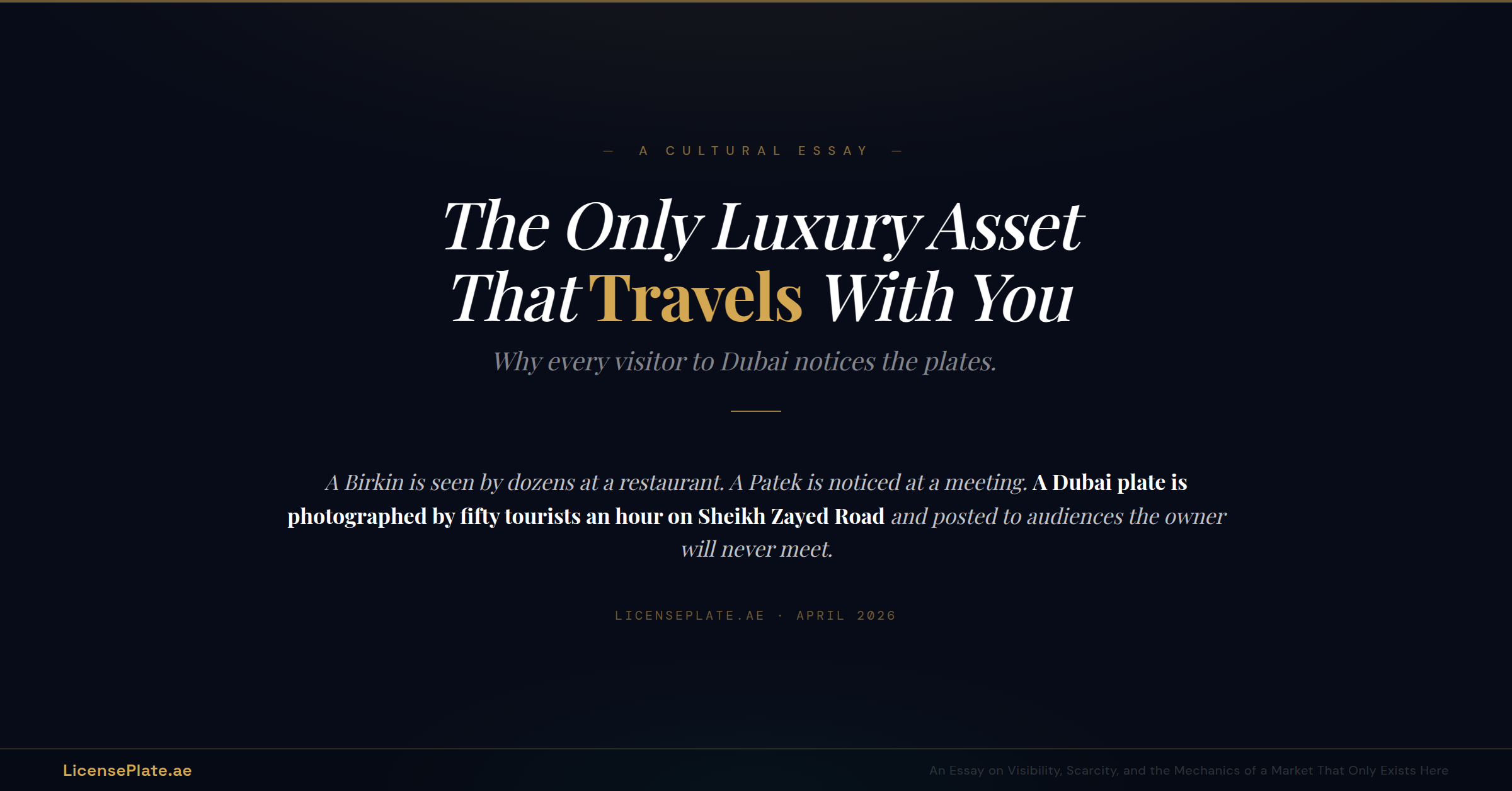
لماذا يلاحظ كل زائر لدبي اللوحات: الأصل الفاخر الوحيد الذي يسافر معك
يحدث ذلك خلال الساعات الست الأولى. تهبط في مطار دبي الدولي، وتجتاز جوازات السفر، وتستقلّ سيارة أجرة متّجهة إلى فندقك، وفي مكان ما على شارع الشيخ زايد بين المطار ووسط المدينة، تمرّ سيارة تجعلك تمدّ يدك إلى هاتفك. قد تكون رولز-رويس بيضاء برقم واحد على اللوحة حيث يُفترض أن يكون الرقم. وقد تكون لامبورغيني سوداء غير لمّاعة بالرقم 7 أو 99 حيث توقّعت خمسة أرقام. وقد تكون فيراري منخفضة إلى الأرض بحيث ترى اللوحة قبل أن ترى السائق، واللوحة تقرأ شيئاً مثل AA 458، وأنت لا تعرف بعد أن تلك الحروف وذلك الرقم اختيرا عن قصد، وأن اللوحة نفسها كلّفت أكثر من السيارة.
فتنشر صورة. وتحصل على ثمانين إعجاباً. ويعلّق غريب: "دبي كون مختلف."
وقد وصل 19.59 مليون شخص إلى دبي كزوّار دوليين مبيتين في 2025، وفقاً لدائرة الاقتصاد والسياحة في دبي. ومعظمهم سيغادرون وهم يتذكّرون ثلاثة أشياء عن المدينة: الأفق العمراني، والتسوّق، والسيارات. وشريحة معتبرة منهم ستغادر وهي تتذكّر اللوحات أيضاً، حتى لو لم يعرفوا قط ما تعنيه الأرقام أو لماذا هي هناك. وهذا المقال لأولئك، ولمن شاهدوا مقطعاً على تيك توك لبوغاتي بلوحة ثلاثية الأرقام وتساءلوا عن القصة الحقيقية.
الإجابة المختصرة: الإمارات هي الدولة الوحيدة في العالم التي يمكن فيها لقطعة معدن واحدة على صدّام سيارة أن تكلّف أكثر من السيارة أو المنزل أو اليخت. أما الإجابة الطويلة فهي هذا المقال.
الأصل الفاخر الوحيد الذي يسافر معك
معظم الأصول الفاخرة خاصة. فحقيبة بيركين يراها بضع عشرات ممّن يصادف وجودهم في المطعم نفسه في الغداء نفسه. وساعة باتيك فيليب غراندماستر شايم يلاحظها قلّة من جامعي الساعات الآخرين في القاعة عند افتتاح معرض. وريتشارد ميل تُرصد عبر صالة رياضية. ولوحة بيكاسو تُعلَّق على جدار لن يراه سوى ضيوف المالك في منزله. وقيمة هذه الأشياء حقيقية، لكن الظهور ضيّق والجمهور صغير.
ولوحة دبي مختلفة. فهي مركّبة على مقدّمة سيارة ومؤخّرتها، وهي بحكم التعريف تتحرّك عبر الفضاء العام. ويحمل شارع الشيخ زايد مئات الآلاف من المركبات يومياً. ومنصّة المشاهدة في برج خليفة تطلّ على الشارع نفسه. وكل سائح بهاتف، وهم بالملايين، مصوّر محتمل. واللوحة دائماً في الخدمة. ولا تحتاج إلى افتتاح معرض أو عشاء خيري لتُرى. بل يراها كل من يمرّ بالسيارة، ثم، بشكل متزايد، الجماهير التي توصلها الخوارزميات إلى من يصوّرونها.
وهذه هي الملاحظة البنيوية التي لا يصرّح بها أحد تقريباً ممّن يكتبون عن سوق اللوحات الإماراتية. فلا توجد سوق أصول فاخرة أخرى في العالم يكون فيها الأصل مرئياً بشكل دائم لملايين الناس يومياً بحكم التصميم. فاللوحة على رولز-رويس متحرّكة في وسط دبي مساء جمعة يراها من الغرباء في ساعة واحدة أكثر ممّا يرى عملاً فنياً بمستوى المتاحف في عام كامل. وبخلاف العمل الفني، فإن جمهور اللوحة يتجدّد باستمرار. فكل حافلة سياحية، وكل طابور خدمة ركن، وكل شرفة مطعم خارجية جمهور جديد.
واللوحة هي الأصل الفاخر الوحيد الذي يكون عرض قيمته هو الظهور نفسه. وللتحليل الكامل لكيفية مقارنة سوق اللوحات الإماراتية بأغلى أسواق اللوحات في العالم في لندن وهونغ كونغ، تصحّ النقطة البنيوية في المدن الثلاث. ودبي فقط تتّكئ عليها بأشدّ ما يمكن.
الأرقام التي تجعلك تفتح جوجل
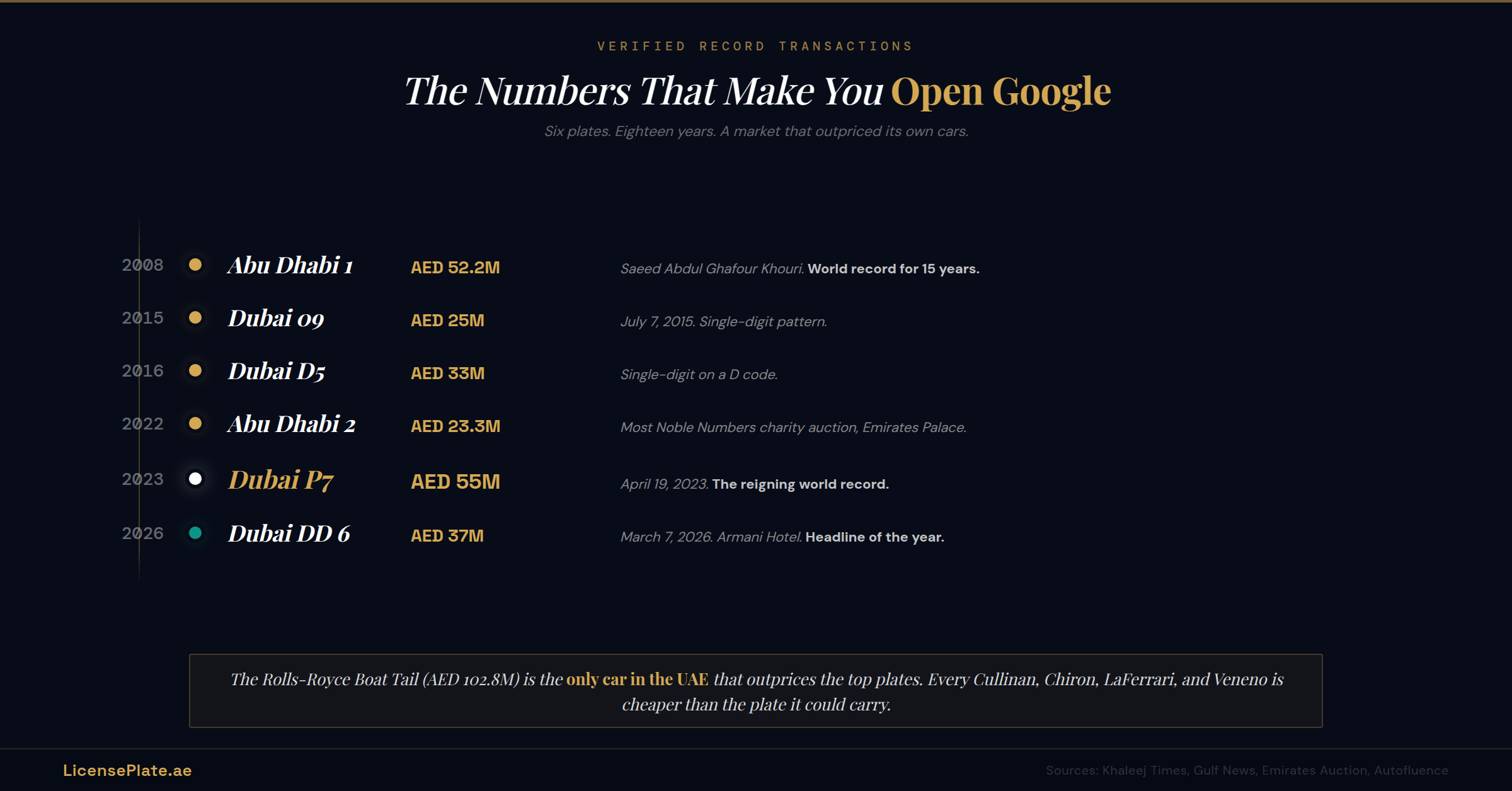
قبل شرح السبب، إليك الأرقام التي تثير السؤال عادةً. وهذه صفقات حقيقية ومؤرّخة ومنسوبة لمصادرها.
بيعت لوحة أبوظبي رقم 1 بـ 52.2 مليون درهم (نحو 14.2 مليون دولار) في فبراير 2008. وكان المشتري سعيد عبد الغفور خوري، مستثمر عقاري إماراتي. واشتُريت اللوحة في مزاد خيري. ولأكثر من خمسة عشر عاماً، حملت لقب أغلى لوحة تسجيل في العالم.
بيعت لوحة دبي P7 بـ 55 مليون درهم (نحو 15 مليون دولار) في 19 أبريل 2023. وكان المشتري مجهولاً. واشتُريت اللوحة في مزاد أنبل الأرقام الخيري في دبي. وقد كسر ذلك رقم أبوظبي القياسي الذي صمد خمسة عشر عاماً.
بيعت لوحة دبي DD 6 بـ 37 مليون درهم في مارس 2026. وكان المشتري مجهولاً. وكان مكان المزاد فندق أرماني عند قاعدة برج خليفة. وكانت هذه الصفقة الأبرز في مزاد أنبل رقم 2026، الذي جمع ما مجموعه 1.136 مليار درهم شاملاً التعهّدات. راجع السياق الكامل في فعالية أنبل رقم 2026.
بيعت لوحة دبي D5 بـ 33 مليون درهم في 2016. وبيعت لوحة دبي 09 بـ 25 مليون درهم في 2015. وبيعت لوحة أبوظبي 2 بـ 23.3 مليون درهم في 2022. ويوثّق مقال الأرقام القياسية التاريخية كل صفقة كبرى من 2007 إلى 2026 بالتواريخ، والمشترين حيثما أُفصح عنهم، والعائدات حيثما عُرفت.
وللسياق: رولز-رويس بوت تيل، التي تُعدّ أغلى سيارة إنتاج متاحة في الإمارات حتى 2025، متوسّط سعرها 102.8 مليون درهم. ولا توجد سوى ثلاث نسخ منها في العالم. وواحدة منها في دبي. وهي، بفارق كبير، أغلى من أي لوحة بيعت في الدولة على الإطلاق.
لكن تلك هي السيارة الوحيدة التي تفوق أعلى اللوحات سعراً. فدون البوت تيل، كل رولز-رويس كولينان (أكثر من 1.4 مليون درهم)، وكل بوغاتي شيرون (من 8 إلى 15 مليون درهم)، وكل فيراري لافيراري، وكل لامبورغيني فينينو، وكل ماكلارين سينا في دبي أرخص من اللوحة التي يمكن للمالك تركيبها عليها. فاللوحة تفوق السيارة سعراً بشكل روتيني. روتيني.
لماذا توجد هذه السوق
الإجابة الثقافية تبدأ بالرقم نفسه. ففي التقاليد العربية، تحمل الأرقام الأحادية والأنماط قليلة الأرقام ثقلاً كثيراً ما يقلّل القرّاء الناطقون بالإنجليزية من شأنه. ويغطّي دليل دلالات أرقام اللوحات في الإمارات التفاصيل، لكن النسخة المختصرة: بعض الأرقام ذات دلالة ثقافية لأسباب تتراوح بين الديني (786، تمثيل عددي للبسملة) والقبلي (1، المرتبط تاريخياً بأرفع أفراد الجماعة) والشخصي (سنة ميلاد، أو تاريخ زواج، أو عام مفصلي لعائلة).
لكن الثقافة وحدها لا تفسّر لماذا تُتداول لوحات دبي بعشرات ملايين الدراهم بينما تُتداول لوحات لندن لأرقام مماثلة بعشرات آلاف الجنيهات. فكلتا الثقافتين تقدّران الأرقام ذات الدلالة. وسوق واحدة فقط أعادت تسعيرها إلى العنان. والعامل الإضافي بنيوي.
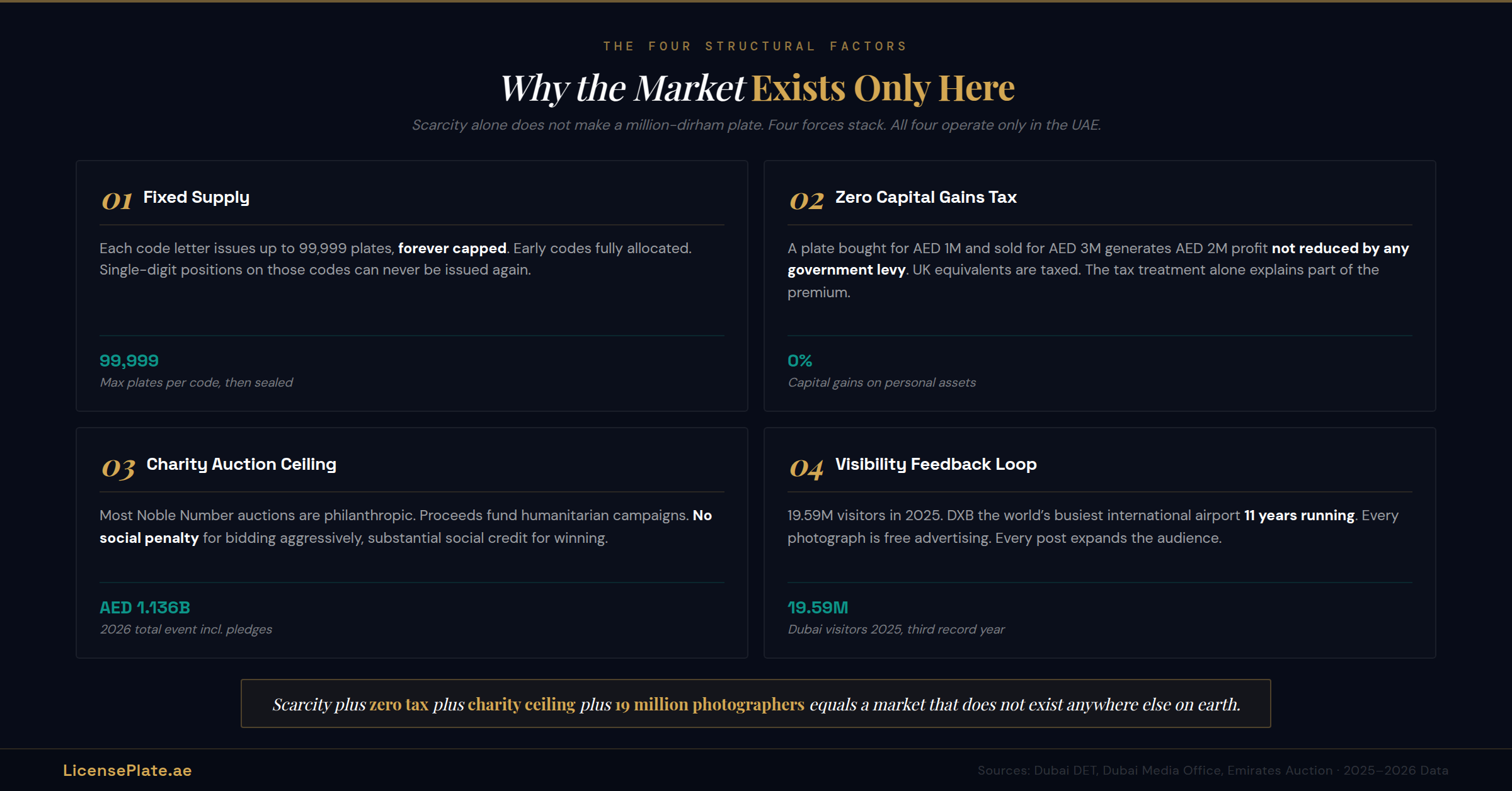
العامل الأول: الندرة مبنيّة في النظام
تصدر هيئة الطرق والمواصلات في دبي والجهات المكافئة في أبوظبي وبقية الإمارات اللوحات وفق نظام حروف رمزية. وتستخدم دبي حروفاً مفردة (من A إلى Z) وحروفاً مزدوجة (AA وBB وCC وDD، وفي توسّع). ويمكن لكل رمز إصدار ما يصل إلى 99,999 لوحة. لكن اللوحات التي تُتداول بالملايين هي أوائل الأرقام على أوائل الرموز: اللوحة 1 على الرمز A، واللوحة 7 على الرمز P، واللوحة 6 على الرمز DD. ولا توجد سوى تسع لوحات أحادية الرقم لكل رمز. ولا توجد سوى تسعين لوحة ذات رقمين لكل رمز. وبالنسبة للرموز المبكرة المكتمل تخصيصها الآن، لن تُصدر أي لوحة جديدة عند تلك المواقع مرة أخرى أبداً. فالمعروض ثابت إلى الأبد.
ويغطّي دليل لوحات دبي الكامل كيفية عمل نظام الرموز، وأي الرموز اكتمل إصدارها، وأيّها لا يزال نشطاً. ويُظهر الدليل البصري كيفية قراءة أي لوحة في نحو ثلاثين ثانية.
العامل الثاني: ضريبة أرباح رأسمالية صفرية
لا تفرض الإمارات ضريبة على الأرباح الرأسمالية للأصول الشخصية. فلوحة اشتُريت بمليون درهم وبيعت بعد خمس سنوات بـ 3 ملايين درهم تولّد مليونَي درهم من الربح لا تخفضه أي جباية حكومية. وهذه هي الميزة المفردة التي تجعل سوق اللوحات تعمل كاستثمار لا كرمز مكانة فحسب. ففي المملكة المتحدة، تخضع الأرباح المماثلة على لوحات التسجيل الخاصة لضريبة الأرباح الرأسمالية. والمعالجة الضريبية وحدها تفسّر جزءاً معتبراً من علاوة السعر في الإمارات.
العامل الثالث: المزادات الخيرية تصنع السقف
مزادات أنبل رقم التي تُقام في دبي وأبوظبي خلال رمضان كل عام فعاليات خيرية. وتذهب العائدات لحملات إنسانية. والمزايدون هم أثرى أهل البلد، والدافع مزيج من العمل الخيري والتموضع العلني. ولأن العائدات تذهب للخير، لا توجد عقوبة اجتماعية على المزايدة بشراسة، بل رصيد اجتماعي كبير للفوز. وهذا يخلق ديناميكية تسعير تدفع السقف صعوداً كل عام. وقد حقّقت فعالية أنبل رقم 2026 مبلغ 1.136 مليار درهم. وحقّق العام السابق 83.7 مليون درهم. والسقف يواصل التحرّك.
العامل الرابع: الظهور يغذّي الطلب
وهنا تُغلق الحلقة. فلأن اللوحة مرئية على سيارة تجوب دبي كل يوم، فإن امتلاك إحدى اللوحات المتميّزة شكل من الإعلان اليومي لملايين من يرون السيارة. وقد استقبلت دبي 19.59 مليون زائر دولي في 2025. واحتفظ مطار دبي الدولي بموقعه كأكثر مطارات العالم ازدحاماً بالمسافرين الدوليين للعام الحادي عشر على التوالي. فعدد الغرباء الذين يمرّون بدبي في شهر أكبر من عدد من سيرون داخل أي صالة عرض خاصة على الإطلاق. واللوحة على رولز-رويس في وسط دبي بثّ يومي لذلك الجمهور. وذلك الظهور هو ما تسعّره سوق اللوحات.
ما يراه الزائر فعلاً على الطريق
امشِ من دبي مول إلى نافورة برج خليفة في الثامنة مساءً في أي سبت. وفي التسعين ثانية التي يستغرقها عبور الجسر من المول إلى منصّة المشاهدة، سترى عادةً بين عشر وثلاثين سيارة يلاحظها متتبّع اللوحات. وإليك ما تلتقطه عين الزائر فعلاً:
الرقم الأحادي على رولز-رويس. صُوّرت اللوحة "1" على رولز-رويس كولينان يُذكر أنها تعود لصاحب السموّ الشيخ محمد بن راشد آل مكتوم، نائب رئيس الدولة وحاكم دبي (لماذا لم تُبَع لوحة دبي رقم 1 قط). واللوحتان "5" و"7" أُبلغ عن وجودهما على سيارتَي رولز-رويس يملكهما المستثمر نفسه. واللوحة "8" ظهرت على رولز-رويس مختلفة في أوقات مختلفة. فإذا رأى الزائر رولز-رويس بلوحة تتكوّن من رقم واحد فقط، فهو ينظر إلى شيء يساوي بين 20 و55 مليون درهم، بحسب الرقم والرمز.
مطابقة رقم الطراز على سيارة خارقة. فيراري 458 بلوحة تقرأ 458. وبورشه 911 بلوحة تقرأ 911. ولامبورغيني SVJ بلوحة تقرأ 770 (إشارةً إلى قوة 770 حصاناً). وهذه الاقترانات مغطّاة بعمق في تحليل اقتصاديات اقتران السيارة باللوحة لدينا. وحين يطابق رقم اللوحة طراز السيارة، فذلك ليس مصادفة. إنه خيار مقصود يمكن أن يضيف من 300,000 إلى مليون درهم إلى قيمة اللوحة مقارنةً بلوحة ثلاثية عشوائية على الرمز نفسه.
اللوحة الثنائية الحرف على سيارة G. مرسيدس-AMG G63 بلوحة مثل AA 7 أو BB 12 أو CC 22 مشهد شائع في دبي. والرموز الثنائية الحرف (AA وBB وCC وDD) هي الفئة المتميّزة بعد الرموز أحادية الحرف. واللوحة ذات الرقمين على أحد هذه الرموز تُتداول في نطاق 6 إلى 40 مليون درهم. وسيارة G شائعة في دبي لأن شريحة السيارات من 600 ألف إلى مليون درهم نمت 104% في النصف الأول من 2025 على منصة السيارات المستعملة الرئيسية في الدولة، وسيارة G تهيمن على تلك الشريحة.
سيارة شرطة دبي الخارقة بلوحة تبدو اعتيادية. يضمّ أسطول شرطة دبي سيارات لامبورغيني وبوغاتي فيرون وفيراري FF ورولز-رويس. واللوحات على هذه السيارات هي لوحات تسجيل شرطة دبي، وهي متميّزة عن لوحات سوق المزادات الموصوفة أعلاه. وتُرابط السيارات في المناطق السياحية كاستراتيجية مزدوجة للسياحة والإنفاذ. وغالباً لا يميّز الزائر بين سيارة شرطة خارقة وسيارة خارقة مدنية، ما يسهم في الانطباع بأن "الجميع يقود بوغاتي في دبي". والنسخة الدقيقة: شرطة دبي تقود بعض سيارات بوغاتي، وكذلك يفعل بعض المواطنين.
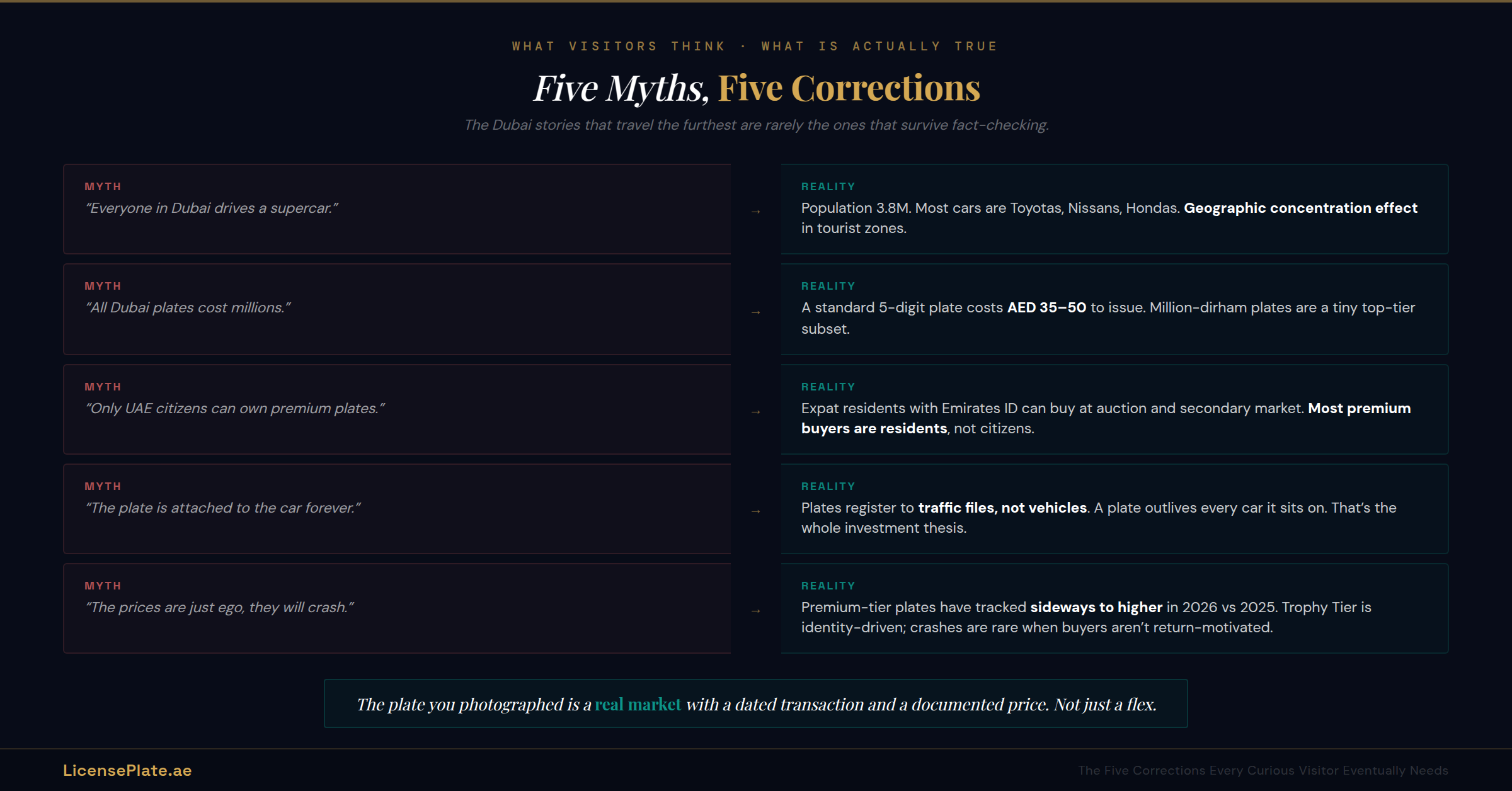
خمس خرافات ربما صادفها الزائر بالفعل
الخرافة الأولى: "الجميع في دبي يقود سيارة خارقة." لا. فعدد سكان دبي نحو 3.8 مليون مقيم وأسطول مركباتها بالملايين القليلة. والغالبية العظمى من السيارات في دبي تويوتا ونيسان وهيونداي وهوندا. وما يراه الزوّار في وسط دبي والخليج التجاري ونخلة جميرا هو أثر تركّز جغرافي: فالسيّاح يتجمّعون في المناطق التي تتجمّع فيها السيارات الخارقة أيضاً. والتوزيع عبر المدينة بأكملها عادي.
الخرافة الثانية: "كل لوحات دبي تكلّف الملايين." لا. فاللوحة الخماسية الاعتيادية على سلسلة رموز متأخّرة (V وW وX وY وZ) الصادرة عبر مراكز سعادة المتعاملين تكلّف بين 35 و50 درهماً للوحة المادية، بالإضافة إلى 400 درهم لتسجيل المركبة الاعتيادي. ومعظم لوحات دبي تكلّف أقلّ من 100 درهم لإصدارها. واللوحات بملايين الدراهم شريحة صغيرة من الطبقة العليا. ويغطّي مقال الأخطاء العشرة الشائعة إطار الشرائح.
الخرافة الثالثة: "المواطنون الإماراتيون وحدهم يمكنهم امتلاك لوحات مميّزة." لا. فالمقيمون الوافدون الذين يحملون بطاقة هوية إماراتية سارية وملفاً مرورياً في دبي يمكنهم شراء اللوحات في مزادات الهيئة ومن السوق الثانوية. ويغطّي دليل شراء الوافدين متطلّبات الأهلية. وغالبية مشتريات اللوحات المتميّزة في دبي يقوم بها مقيمون لا مواطنون، وإن كانت اللوحات أحادية الرقم الأبرز تذهب غالباً لمواطنين إماراتيين.
الخرافة الرابعة: "اللوحة مرتبطة بالسيارة إلى الأبد." لا. فاللوحة في الإمارات مسجّلة في ملف مروري، لا في مركبة بعينها. ويمكن نقل اللوحة نفسها بين عدة مركبات يملكها الشخص نفسه، أو بيعها في السوق الثانوية وإعادة تسجيلها في الملف المروري لمالك جديد. فاللوحة تعمّر أكثر من السيارة، ولهذا تصحّ الفرضية الاستثمارية.
الخرافة الخامسة: "الأسعار مجرّد غرور، وستنهار." ليس بوضوح. فيوثّق تحليل اللوحات مقابل الذهب مقابل العقار و كلاهما أن لوحات الشريحة المتميّزة تتبّعت على نطاق واسع فئات الأصول الإماراتية البديلة أو تفوّقت عليها عبر فترات احتفاظ متعدّدة السنوات. وشريحة الجوائز (اللوحات أحادية الرقم) فئة هوية لا فئة استثمار، لكن الشريحتين فائقة التميّز والمتميّزة تصرّفتا كفئتَي أصول بخصائص عوائد قابلة للرصد. وما إذا كان ذلك سيستمرّ فهو السؤال المفتوح.
حين يتحوّل الفضول إلى اهتمام
هذا المقال ليس عرضاً تسويقياً. لكن شريحة من القرّاء الذين يجدون هذا المقال سينتقلون، في وقت ما خلال العام المقبل أو الخمسة أعوام المقبلة، من "هذا مثير للاهتمام" إلى "أنا أعيش هنا الآن" أو "أزور بما يكفي لأمتلك سيارة هنا". وحين يحدث ذلك، ينتقل السؤال من "لماذا توجد اللوحات" إلى "كيف أشتري واحدة".
وتغطّي المكتبة ذلك الانتقال بالكامل. فيرسم مقال التحقّق من الأسعار كل رمز وعدد أرقام مقابل قيمته السوقية الحالية. وتقدّر حاسبة اللوحات قيمة أي رقم لوحة بعينه. ويشرح دليل المزاد مقابل السوق الثانوية قناتَي الشراء الرئيسيتين. ويغطّي دليل الاحتيال وقائمة التحقّق العناية الواجبة التي يتطلّبها كل شراء لوحة. ويعرّف المعجم كل مصطلح تستخدمه سوق اللوحات الإماراتية.
وللزوّار الراغبين في التصفّح دون شراء، تُظهر إعلانات دبي وإعلانات أبوظبي على المنصة المعروض الحالي بحسب الإمارة. والتنقّل بين الإعلانات تثقيف ثقافي أسرع ممّا يمكن لأي مقال مفرد أن يقدّمه.
الأسئلة الشائعة
س: لماذا تحمل سيارات دبي لوحات بأرقام قليلة؟
لأن نظام اللوحات في الإمارات يصدر اللوحات على أساس حروف رمزية بمعروض محدود عند كل موقع. فاللوحات أحادية الرقم (من 1 إلى 9) هي الفئة الأندر، ولا يوجد سوى تسع ممكنة لكل حرف رمز. والندرة زائد الدلالة الثقافية زائد ضريبة الأرباح الرأسمالية الصفرية أنتجت سوقاً تُتداول فيها هذه اللوحات بملايين الدراهم.
س: ما أغلى لوحة سيارة بيعت في دبي على الإطلاق؟
بيعت اللوحة P7 بـ 55 مليون درهم (نحو 15 مليون دولار) في 19 أبريل 2023 في مزاد أنبل الأرقام الخيري. وكسرت الرقم القياسي السابق الذي حملته لوحة أبوظبي 1 (52.2 مليون درهم في 2008). ويوثّق مقال الأرقام القياسية التاريخية كل صفقة كبرى منذ 2007.
س: هل يمكن للسيّاح شراء لوحات دبي؟
لا، ليس مباشرةً. فملكية اللوحات في دبي تتطلّب ملفاً مرورياً في دبي، وهو يتطلّب بطاقة هوية إماراتية سارية أو ما يعادلها من وثائق الإقامة. ويمكن للسيّاح حضور المزادات كمراقبين لكن لا يمكنهم المزايدة. أما المقيمون الوافدون الذين يحملون بطاقة الهوية الإماراتية فيمكنهم المشاركة في المزادات ومشتريات السوق الثانوية.
س: لماذا اللوحات الإماراتية أغلى بكثير من اللوحات في دول أخرى؟
أربعة أسباب تتراكم: المعروض الثابت (فالندرة بنيوية لا مضارِبة)، وضريبة الأرباح الرأسمالية الصفرية (فالعوائد معفاة من الضريبة)، وديناميكية تسعير المزادات الخيرية (فالقمة يقودها مزايدون خيريون)، والظهور (فاللوحة إعلان يومي لملايين السيّاح والمقيمين في منطقة جغرافية مضغوطة). والتركيبة لا توجد في أي مكان آخر.
س: هل أغلى اللوحات مملوكة لأفراد من العائلات الحاكمة في الإمارات؟
بعضها. فاللوحة "1" أُبلغ عن وجودها على رولز-رويس تعود لصاحب السموّ الشيخ محمد بن راشد آل مكتوم. أما اللوحات المتميّزة الأخرى فيملكها مستثمرون خاصّون ومطوّرو عقارات وقادة أعمال وجامعون. والملكية مزيج من مواطنين إماراتيين ومقيمين وافدين لا حكر على العائلات الحاكمة.
س: هل سوق اللوحات على وشك الانهيار؟
ليس وفق البيانات الحالية. فأسعار الشريحة المتميّزة في الأشهر الأربعة الأولى من 2026 تحرّكت أفقياً إلى أعلى قليلاً مقارنةً بـ 2025. ويوثّق التحليل الاستثماري ومراجعة نصف العام الأداء شريحةً شريحة. وشريحة الجوائز (اللوحات أحادية الرقم) فئة تقودها الهوية والانهيارات فيها نادرة لأن المشترين غير مدفوعين بالعائد. أما الشريحتان المتميّزة وفائقة التميّز فتصرّفتا أشبه بفئات الأصول التقليدية لكنهما لم تُظهرا علامات تصحيح وشيك.
س: ماذا ينبغي أن آخذ من كل هذا إن كنت مجرّد زائر لدبي؟
أن اللوحات التي تصوّرها سوق حقيقية، لا مجرّد استعراض. فلكل لوحة صفقة مؤرّخة، وسعر موثّق، وموقع مرئي على سيارة اختيرت عمداً لحملها. وحين تنشر الصورة، تكون مشاركاً في الظهور الذي يجعل السوق تعمل. فاللوحة التي صوّرتها أثمن لأنك صوّرتها، حتى لو كان الفرق مجهرياً.
س: أين يمكنني رؤية أغلى اللوحات على الطبيعة؟
شارع الشيخ زايد بين مركز دبي المالي العالمي ودبي مول، ووسط مدينة دبي، والخليج التجاري، ونخلة جميرا، وطوابير خدمة الركن في برج العرب وفندق أرماني وفنادق شارع جميرا الكبرى. وأمسيات الجمعة والسبت تنتج أعلى تركيز. كما يُظهر معرض دبي الدولي للسيارات (حين يُقام) مخزون اللوحات المعروضة للبيع.
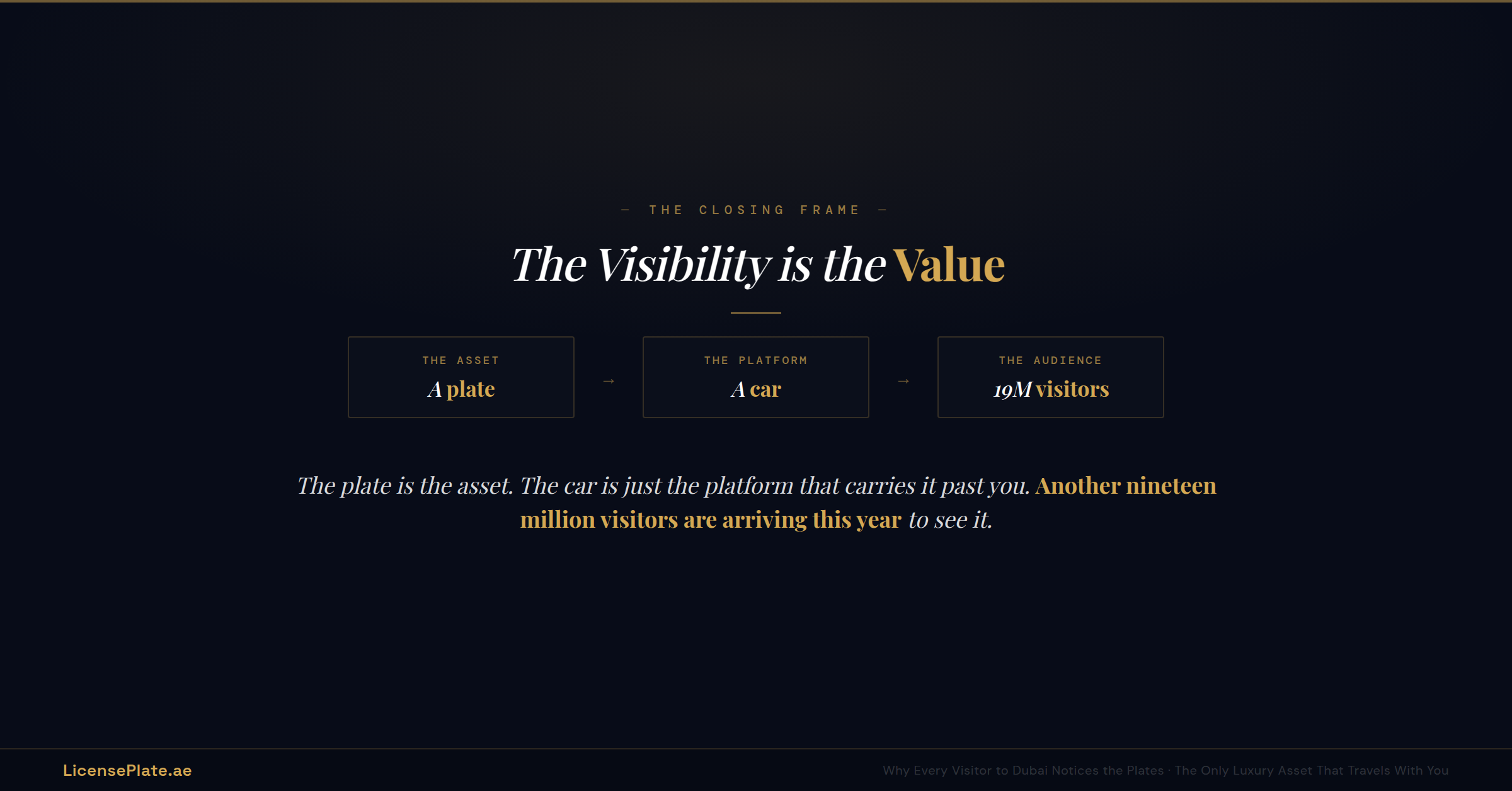
وحين تغادر دبي في نهاية المطاف، ستنسى معظم ما رأيت. ستتذكّر برج خليفة من الخارج. وستتذكّر وجبة واحدة. وستتذكّر اللحظة التي أدركت فيها أن درجة الحرارة خارج المول أعلى من درجة الحرارة داخل فرنك في المنزل. وإن كنت منتبهاً، ستتذكّر اللوحة. تلك التي جعلتك تفتح جوجل. تلك التي انتهت في مجلّد صورك وتظهر عشوائياً بعد ثمانية عشر شهراً حين يعرض لك هاتفك ذكرى.
تلك اللوحة لا تزال على تلك السيارة. وتلك السيارة لا تزال تتحرّك عبر شارع الشيخ زايد. وتسعة عشر مليون زائر آخر يصلون هذا العام ليروها. وهذه ليست غرابة سوقية. هذه هي السوق بأكملها. فالظهور هو المقصود. واللوحة هي الأصل. والسيارة مجرّد المنصّة التي تحملها أمامك.