

من يملك اللوحة؟ ما الذي يتيح لك قانون الخصوصية الإماراتي التحقّق منه فعلاً (2026)
29 يونيو 2026
أبوظبي
فريق LicensePlate.ae
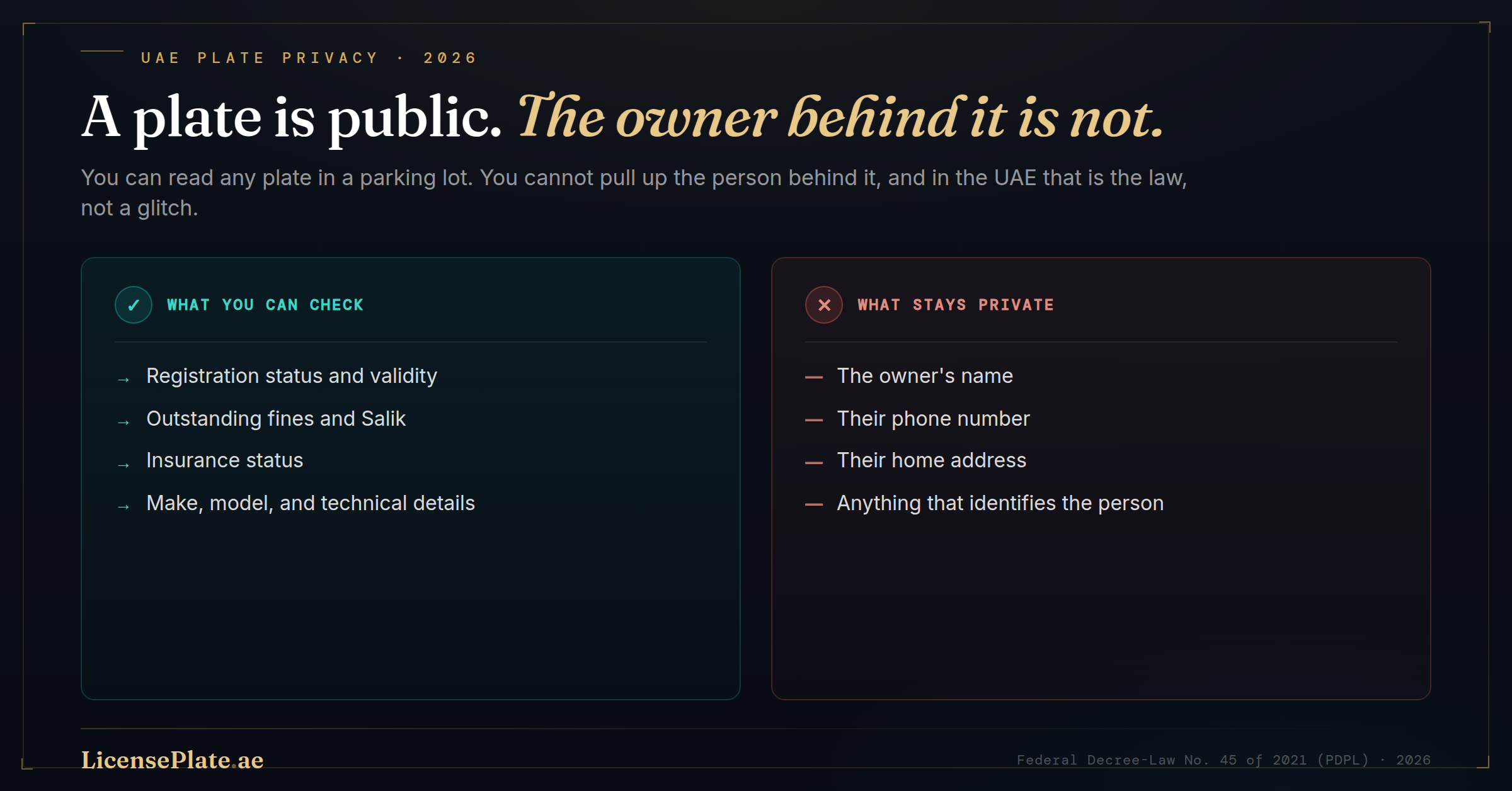 اكتب رقم لوحة في مربّع بحث وتتوقّع أن يعود إليك اسم. إنه الافتراض الطبيعي، فاللوحة ماثلة هناك علناً على مؤخّرة السيارة، لذا ينبغي أن يكون المالك خلفها على بُعد استعلام واحد. في الإمارات، ليس كذلك، وهذا بالتصميم. فهوية المالك بيانات شخصية محميّة، ولن تسلّمك أي أداة عامة أو تطبيق أو خدمة مدفوعة اسماً أو رقم هاتف أو عنواناً من لوحة بشكل قانوني. والمواقع التي تعد بغير ذلك لا تقدّم اختصاراً. إنها تقدّم جريمة.
وهذا يهمّ لأن نتائج البحث عن هذا السؤال فوضى. فالمصادر الدقيقة تخبرك بوضوح أن بيانات المالك خاصة؛ وكومة من غيرها توحي بأنك تستطيع استخراج اسم مقابل رسم، أو تروّج لخدمات استعلام مدفوعة، أو تسيء قراءة الأدوات الرسمية تماماً. وهذا الدليل يعطيك النسخة الدقيقة: ما يقوله القانون فعلاً، وما يمكنك التحقّق منه حقاً باللوحة، ولماذا بُني النظام الرسمي بحيث لا تستطيع بنيوياً رؤية المالك، والطريق القانوني الوحيد لتحديد مالك حين يكون لديك سبب حقيقي.
الإجابة السريعة: في الإمارات، لا يمكنك الاستعلام عن اسم مالك مركبة أو رقم هاتفه أو عنوانه برقم اللوحة. فتلك معلومات شخصية محميّة بموجب المرسوم بقانون اتحادي رقم 45 لسنة 2021 (قانون حماية البيانات الشخصية)، والوصول غير المصرّح به قد يجلب غرامات وسجناً. والأدوات الرسمية من الهيئة ووزارة الداخلية وشرطة دبي وبوابة المركبات الإماراتية تتيح لك التحقّق من المركبة وحالة تسجيلها ومخالفاتها وسالك وحالة تأمينها وتفاصيلها الفنّية، لكن ليس هوية المالك أبداً. وإن كانت لديك حاجة قانونية حقيقية لتحديد مالك (حادث فرار، أو حادث سير، أو مسألة قضائية)، فالطريق القانوني عبر شرطة دبي أو المحاكم أو شركة تأمينك، وهي جهات تستطيع تحديد المالك داخلياً دون الإفصاح لك عن بياناته.
ما يقوله القانون فعلاً
ابدأ بالقاعدة، لأن كل شيء آخر يتبعها. فقانون حماية البيانات الشخصية الإماراتي، المرسوم بقانون اتحادي رقم 45 لسنة 2021، دخل حيّز النفاذ في 2 يناير 2022. ويعرّف البيانات الشخصية تعريفاً واسعاً، أي معلومة تحدّد شخصاً بعينه، وهذا يشمل السجلّات التي تربط مركبة بمالكها المسجّل. فالاسم المرتبط بلوحة بيانات شخصية بالطريقة نفسها التي يكون بها الاسم المرتبط برقم هاتف كذلك.
وما يعنيه ذلك عملياً: الوصول إلى سجلّات المالك تلك دون تصريح غير قانوني. والمصادر التي تتتبّع العقوبات تذكر غرامات تبدأ من عشرات الآلاف من الدراهم واحتمال السجن، ويقف قانون مكافحة الجرائم الإلكترونية فوق قانون حماية البيانات في الحالات المتعلّقة بالوصول غير المصرّح به إلى بيانات محميّة. وتتصاعد العقوبة بحدّة إن استُخدمت البيانات بعدها في احتيال أو تحرّش أو سرقة هوية.
وهذا ليس حذراً بيروقراطياً. إنه خيار خصوصية متعمَّد يحميك بقدر ما يحمي أي شخص آخر. فالقاعدة نفسها التي تمنعك من استخراج اسم غريب من لوحته تمنع غريباً من استخراج اسمك، وأين تعيش، وماذا تقود، وكيف يصل إليك، من رقم يستطيع أي أحد قراءته في موقف سيارات. وبمجرّد أن تراها من جانب المالك، يتوقّف القيد عن الظهور كعائق ويبدأ بالظهور كالمقصد.
ما يمكنك التحقّق منه قانوناً باللوحة
وإليك الجزء الذي تفوّته النسخة المتشائمة: فحص اللوحة مفيد فعلاً، لكن ليس لإيجاد شخص. فالأدوات الرسمية تعيد صورة مفصّلة عن المركبة، وهي تقريباً دائماً ما يحتاجه المشتري أو السائق الحذر فعلاً. فعبر تطبيق الهيئة وموقعها، وتطبيق وزارة الداخلية، وشرطة دبي، وبوابة المركبات الإماراتية، تمنحك اللوحة (مقترنةً غالباً برقم الشاصي) ما يلي:
حالة التسجيل وسريانه. ما إذا كانت المركبة مسجّلة حالياً، ومتى ينتهي التسجيل. فالتسجيل المنقضي على سيارة توشك على شرائها مشكلة تريد اكتشافها أولاً، وهو يرتبط مباشرةً بـعملية تجديد التسجيل، حيث تعقّد اللوحة نفسها التسليم غالباً.
المخالفات المستحقّة وسالك. المخالفات المرورية ورسوم الطرق المرتبطة بالمركبة. ففي الإمارات تتبع المخالفات السيارة لا البائع، لذا يصبح أي مبلغ غير مسدّد مشكلة المشتري عند النقل. ويغطّي دليل فحص المخالفات المرورية الإماراتية كيفية سحب كل مخالفة عبر الإمارات السبع من بوابة واحدة.
حالة التأمين. ما إذا كانت المركبة تحمل تأميناً سارياً ونشطاً، وهو ما يهمّ أيضاً عند تجديد التسجيل.
التفاصيل الفنّية وتفاصيل المركبة. الماركة والطراز وفئة المركبة والحالة الفنّية، وهي مفيدة لتأكيد أن الإعلان يطابق السيارة الماثلة أمامك.
وتلك صورة عناية واجبة شاملة. فهي تخبرك ما إذا كانت السيارة نظيفة ومسجّلة ومؤمَّنة وخالية من الالتزامات، وهو السؤال الحقيقي وراء معظم فحوص اللوحات. وما لا تشمله أبداً هو اسم المالك أو رقمه أو عنوانه. فيمكنك التحقّق من الأصل تماماً دون أن ترى الشخص إطلاقاً. ولسير العمل الكامل قبل الشراء المبني على هذه الأدوات، تشرح قائمة التحقّق العملية كلّها خطوة بخطوة.
التفصيلة التي تشرح النظام كلّه
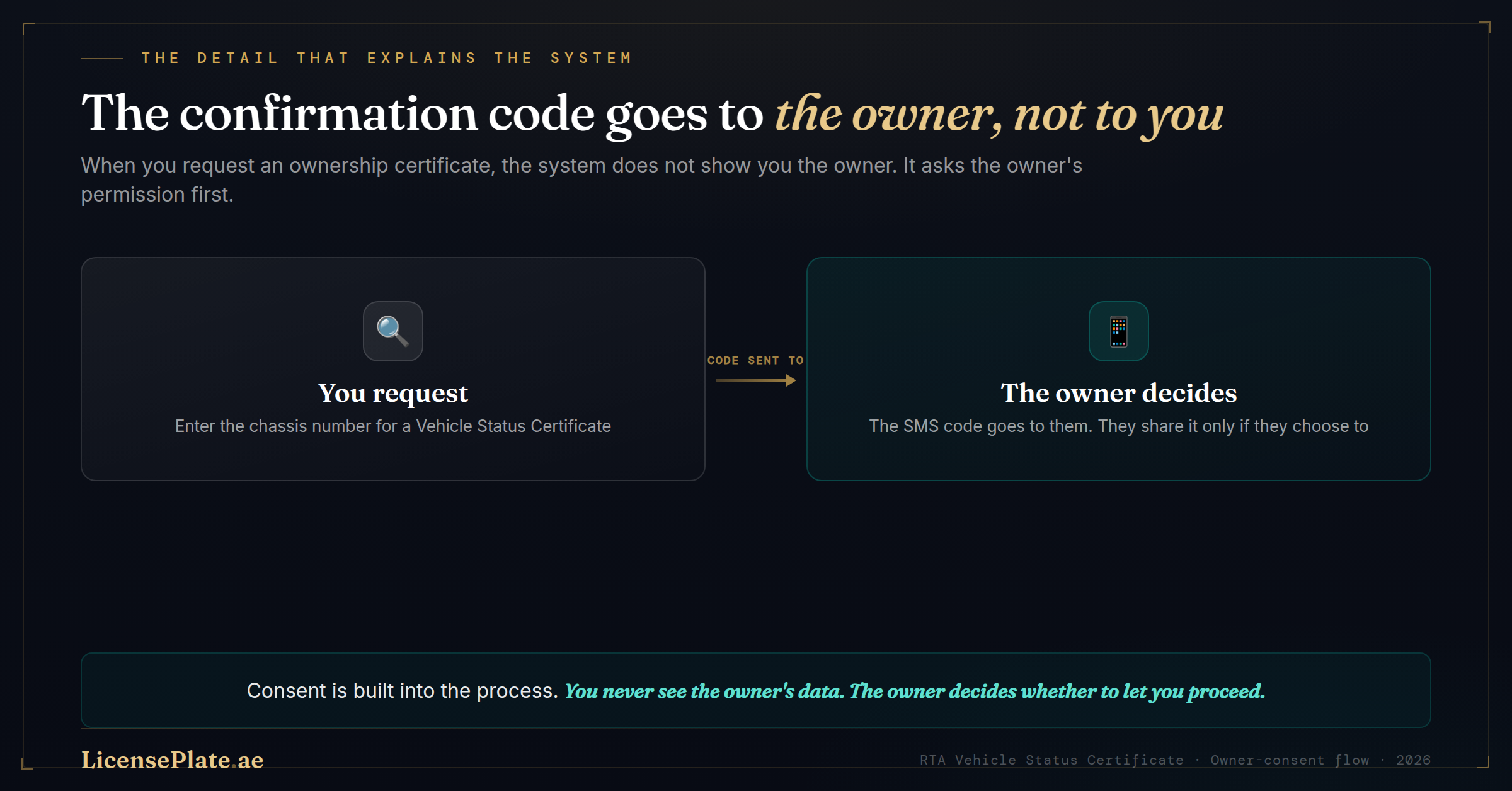
هناك آلية واحدة في العملية الرسمية تجعل مبدأ الخصوصية كلّه مفهوماً، ولا يشير إليها أي دليل تقريباً. فحين تطلب شهادة متعلّقة بالملكية، مثل شهادة حالة المركبة لدى الهيئة، برقم الشاصي، لا يعرض النظام لك تفاصيل المالك. بل يرسل رمز تحقّق برسالة نصية إلى المالك المسجّل. وعلى المالك بعدها مشاركة ذلك الرمز معك لتستمرّ العملية.
اقرأ ذلك مرّة أخرى، لأنه مفتاح كل شيء. فأنت لست أبداً من يحصل على رؤية بيانات المالك. المالك هو من يقرّر ما إذا كان سيتيح لك المضيّ. فالموافقة مهندَسة مباشرةً داخل سير العمل. ولهذا يستطيع بائع حقيقي إثبات الملكية لمشترٍ جادّ بسهولة، إذ يشارك الرمز ببساطة، بينما يصطدم غريب يحاول تحديد شخص لا علاقة له به بجدار بالتصميم. فالنظام لا يخفق في منحك اسم المالك. إنه يرفض ذلك عن حقّ.
الخرافة: إدخال رقم لوحة أو شاصي في نظام الهيئة يكشف اسم المالك لمن يشغّل الفحص.
الواقع: رمز التأكيد يذهب إلى المالك، لا إليك. فالمسار مبنيّ لتأكيد الملكية بمشاركة المالك، لا لكشف المالك لطرف ثالث. وإن بدت عملية تعد بهوية المالك دون مشاركته، فهي إمّا موصوفة بشكل خاطئ أو ليست عملية شرعية.
خدمات الاستعلام المدفوعة علامة حمراء، لا ثغرة
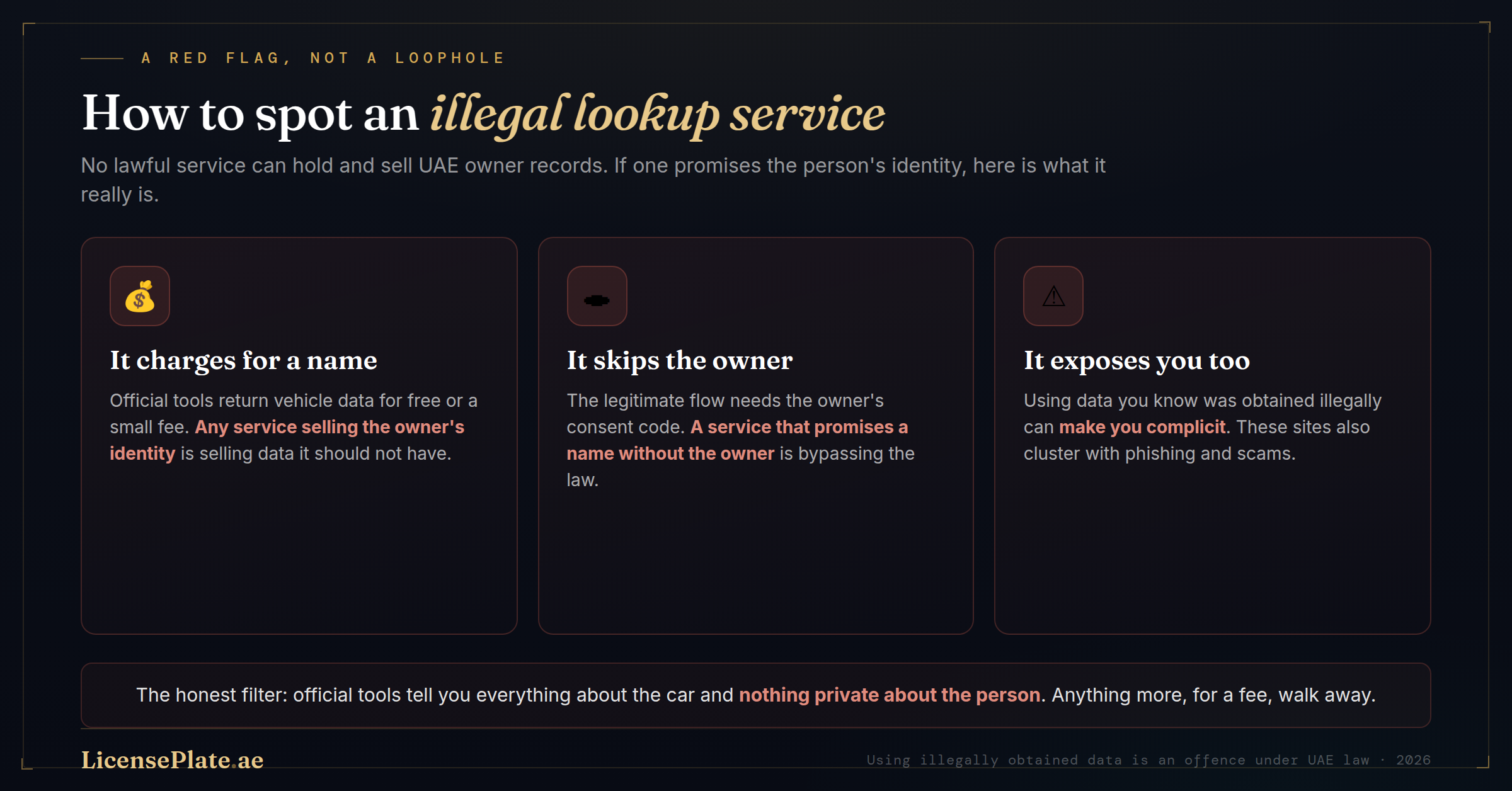
ابحث في هذا الموضوع وستجد مواقع وتطبيقات تعرض تفاصيل مالك المركبة الكاملة برقم اللوحة مقابل رسم. عامل كل واحدة منها كإشارة تحذير. فلا توجد طريقة قانونية لخدمة طرف ثالث لحيازة وبيع سجلّات المالكين في الإمارات، لذا فأي خدمة تدّعي ذلك تعتمد على بيانات حُصل عليها عبر كشط أو تسريبات أو اختراقات، وكلّها غير قانونية.
والمخاطرة ليست مخاطرتهم وحدهم. فبموجب القانون الإماراتي، تلقّي بيانات شخصية واستخدامها وأنت تعلم أنها حُصل عليها بشكل غير قانوني قد يجعلك شريكاً. فالدفع مقابل استعلام عن مالك ليس التفافاً ذكياً؛ بل قد يضعك في الجانب الخاطئ من القانون نفسه الذي يحمي البيانات. وهذه الخدمات تتجمّع أيضاً مع المخاطر المعتادة، من تصيّد وبرمجيات خبيثة وإعلانات مزيّفة، لأن نشاطاً مستعدّاً أصلاً لخرق قانون الخصوصية ليس نشاطاً قلقاً على سلامتك.
والمرشّح الصادق بسيط. فالأدوات الحكومية الرسمية تخبرك بكل شيء عن المركبة ولا شيء خاصّ عن الشخص. وأي خدمة تعد بهوية الشخص مقابل رسم تبيع شيئاً لا ينبغي أن يكون بحوزتها، وشراؤه مخاطرة لا تحتاجها. والغريزة نفسها التي تبقيك في مأمن من عمليات النصب في شراء اللوحات تنطبق هنا: إن وعدت بما تحجبه القناة الرسمية عمداً، فابتعد.
حين تحتاج فعلاً إلى تحديد مالك
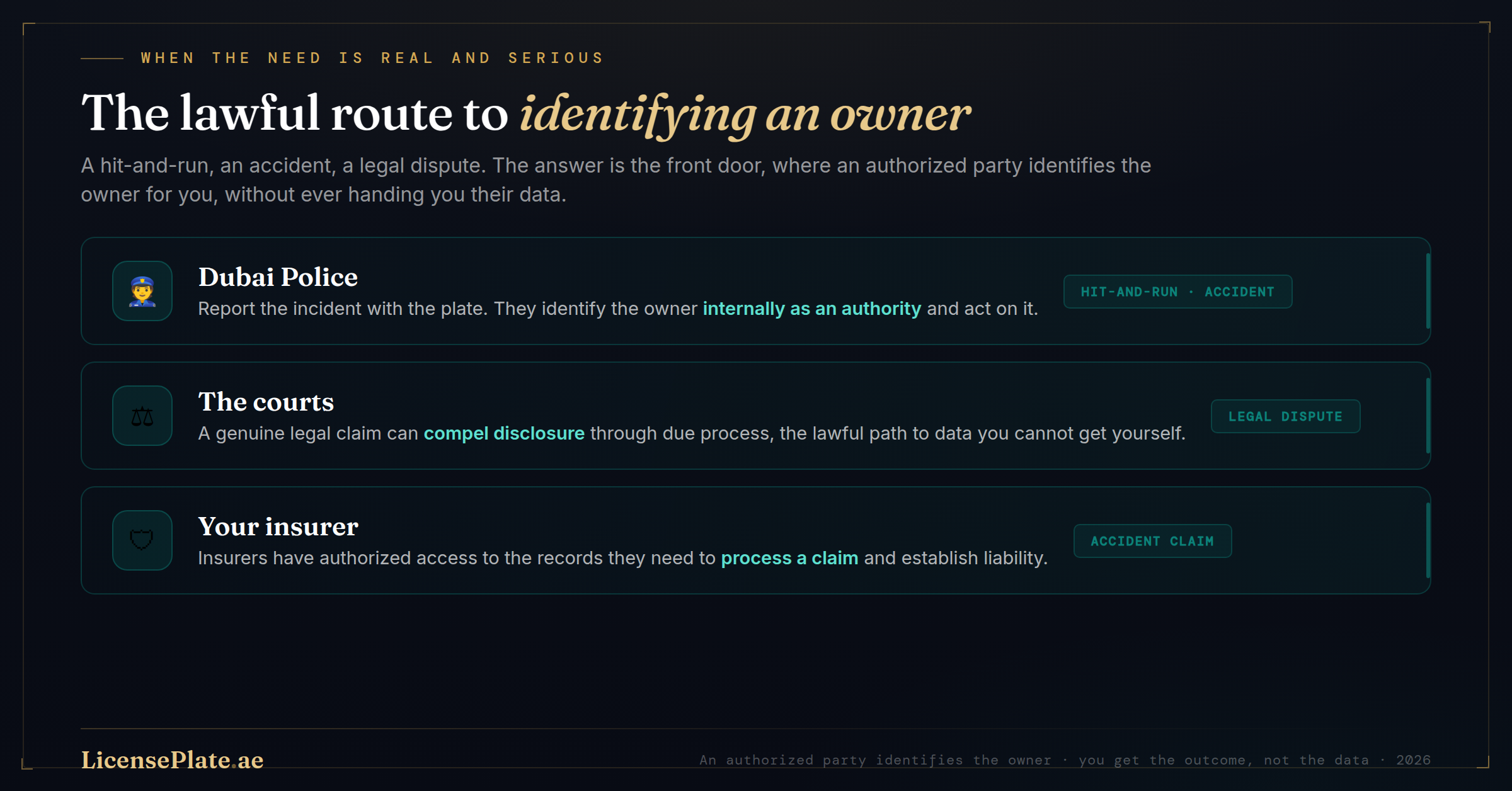
أحياناً تكون الحاجة حقيقية وجدّية. حادث فرار. أو حادث غادر فيه السائق الآخر. أو مركبة تسدّ ملكيتك مراراً. أو نزاع قانوني. وفي تلك الحالات الجواب ليس إيجاد باب خلفي، بل استخدام الباب الأمامي، الموجود تحديداً لهذه المواقف.
اذهب عبر شرطة دبي أو شرطة الإمارة المعنية. أبلغ عن الواقعة برقم اللوحة. وتستطيع الشرطة تحديد المالك المسجّل داخلياً، لأنها جهة مخوّلة، والتصرّف بناءً عليه، دون الإفصاح لك عن بيانات المالك الشخصية إطلاقاً. وللحادث أو حادث الفرار، هذا أيضاً ما ستتطلّبه مطالبة تأمينك.
اذهب عبر المحاكم أو محامٍ لنزاع قانوني. فإن كانت المسألة مطالبة قانونية حقيقية، تستطيع القناة السليمة إلزام الإفصاح عبر الإجراءات القانونية. وهذا هو الطريق القانوني إلى معلومات لا تستطيع، ولا ينبغي، الحصول عليها بنفسك.
اذهب عبر شركة تأمينك لحادث. فلشركات التأمين وصول مصرّح به إلى السجلّات التي تحتاجها لمعالجة مطالبة وتحديد المسؤولية. تعطيها اللوحة وتفاصيل الواقعة؛ وتتولّى هي التحديد ضمن القواعد.
وفي كل واحد من هذه المسارات، يصمد المبدأ: طرف مخوّل يحدّد المالك لغرض مشروع، وتحصل أنت على نتيجتك، المطالبة أو البلاغ أو التسوية، دون أن تحمل شخصياً بيانات أحد الخاصة إطلاقاً. فالنظام يمنحك النتيجة التي تحتاجها فعلاً مع إبقاء الخطّ سليماً.
أخطاء شائعة يرتكبها الناس هنا
افتراض أن اللوحة مثل دليل هاتف عام. ليست كذلك. فاللوحة مرئية؛ وسجلّ المالك خلفها محميّ. ورؤية اللوحة لا تعني الوصول إلى الشخص.
الدفع لخدمة طرف ثالث مقابل تفاصيل المالك. في أحسن الأحوال تهدر مالاً على بيانات لا ينبغي أن تكون بحوزتها. وفي أسوئها تصبح شريكاً في جريمة بيانات ومعرّضاً لعمليات نصب. فلا يوجد استعلام مالك مدفوع شرعي.
إساءة قراءة رمز التحقّق كنتيجتك. الرمز يذهب إلى المالك، لا إليك. وهو يؤكّد موافقة المالك؛ ولا يسلّمك هويّته.
محاولة حلّ حادث فرار بنفسك عبر تتبّع المالك. أبلغ الشرطة. فهي تستطيع تحديد المالك قانونياً وهو ما ستحتاجه شركة تأمينك على أي حال. والتتبّع الذي تجريه بنفسك، حتى لو نجح، لن يصمد حيث يهمّ.
الخلط بين بيانات المركبة وبيانات المالك. يمكنك فحص السيارة تماماً، الحالة والمخالفات والتأمين والتاريخ. وذلك ليس كتحديد الشخص، والأول هو كل ما تتطلّبه معظم المواقف فعلاً.
الأسئلة الشائعة
س: هل يمكنني معرفة من يملك سيارة برقم لوحتها في الإمارات؟
لا. فاسم المالك ورقم هاتفه وعنوانه بيانات شخصية محميّة بموجب المرسوم بقانون اتحادي رقم 45 لسنة 2021، ولا توجد أداة عامة تعيد هوية المالك من لوحة. ويمكنك التحقّق من حالة تسجيل المركبة ومخالفاتها وتأمينها وتفاصيلها الفنّية، لكن ليس الشخص خلفها.
س: هل الاستعلام عن بيانات مالك السيارة برقم اللوحة قانوني في دبي؟
التحقّق من حالة المركبة ومخالفاتها وتسجيلها عبر الأدوات الرسمية قانوني ومفيد. أما الوصول إلى هوية المالك الشخصية دون تصريح فليس كذلك، وقد يجلب غرامات وسجناً بموجب قانون حماية البيانات وقانون مكافحة الجرائم الإلكترونية. والتمييز هو بيانات المركبة (مسموح) مقابل هوية المالك (محميّة).
س: ما المعلومات التي يمكنني الحصول عليها قانوناً من لوحة رقم؟
عبر أدوات الهيئة ووزارة الداخلية وشرطة دبي وEVG الرسمية، يمكنك التحقّق من حالة التسجيل وسريانه، والمخالفات المرورية المستحقّة وسالك، وحالة التأمين، والتفاصيل الفنّية للمركبة. وهذه صورة عناية واجبة كاملة عن السيارة. ولا تشمل أبداً اسم المالك أو وسيلة التواصل معه أو عنوانه.
س: لماذا ترسل الهيئة رمز التحقّق إلى المالك لا إليّ؟
لأن النظام مبنيّ حول موافقة المالك. فحين تطلب شهادة متعلّقة بالملكية، يذهب رمز التأكيد برسالة نصية إلى المالك المسجّل، الذي عليه مشاركته لتستمرّ العملية. ولا ترى بيانات المالك مباشرةً أبداً؛ فالمالك يقرّر ما إذا كان سيتيح لك المضيّ.
س: هل الخدمات المدفوعة التي تعد بتفاصيل المالك برقم اللوحة قانونية؟
لا. فلا توجد طريقة قانونية لخدمة طرف ثالث لحيازة وبيع سجلّات المالكين في الإمارات، لذا فأي خدمة تدّعي ذلك تعتمد على بيانات حُصل عليها بشكل غير قانوني. واستخدام تلك البيانات قد يجعلك شريكاً بموجب القانون الإماراتي، وهذه الخدمات مرتبطة كثيراً بعمليات النصب والتصيّد والبرمجيات الخبيثة. عاملها كعلامة حمراء.
س: كيف أحدّد المالك بعد حادث فرار؟
أبلغ شرطة دبي، أو شرطة الإمارة المعنية، برقم اللوحة. وتستطيع تحديد المالك المسجّل داخلياً كجهة مخوّلة والتصرّف بناءً عليه، دون الإفصاح لك عن بيانات المالك الشخصية. وهذا أيضاً ما ستتطلّبه مطالبة تأمينك.
س: هل يمكنني فحص تاريخ سيارة ومخالفاتها قبل الشراء دون اسم المالك؟
نعم، وهذا بالضبط ما ينبغي أن تفعله. فتسجيل المركبة ومخالفاتها وسالك وتأمينها وحالتها الفنّية كلّها قابلة للفحص عبر الأدوات الرسمية وتخبرك ما إذا كانت السيارة نظيفة وخالية من الالتزامات. ولا تحتاج هوية المالك للتحقّق من الأصل؛ بل تحتاج تعاون البائع لإتمام النقل.
س: هل يتطلّب شراء لوحة أو سيارة كشف هوية البائع لي؟
لا. فالنقل الشرعي يكتمل عبر عملية الهيئة الرسمية بمشاركة الطرفين، وكلٌّ يثبت هويّته للجهة، لا لبعضهما عبر استعلام. ويؤكّد البائع الملكية عبر المسار القائم على الموافقة، وتتولّى الجهة تغيير الملكية القانوني.
الإجابة الدقيقة عن سؤال من يملك اللوحة أقصر من المعلومات المغلوطة حولها: أنت لا تحقّ لك المعرفة، ولا لأي أحد آخر دون تصريح. فهوية المالك محميّة، والأدوات الرسمية تعيد المركبة ولا تعيد الشخص أبداً، والنظام مبنيّ بحيث تقع الموافقة لدى المالك لا لدى الباحث. وهذه ليست ثغرة تُلتفّ حولها. إنها التصميم.
وما يمكنك فعله هو كل ما يهمّ فعلاً لصفقة أو لقلق: افحص السيارة تماماً، وأكّد أنها مسجّلة ومؤمَّنة وخالية من المخالفات، وأتمم أي صفقة عبر القناة الرسمية حيث يثبت الطرفان هويّتهما للجهة. وإن كان لديك سبب حقيقي لتحديد مالك، فالشرطة والمحاكم وشركة تأمينك هي الطرق القانونية، وهي تعمل. تحقّق من المركبة، واحترم الخطّ عند الشخص، واستخدم الباب الأمامي حين تحتاجه فعلاً. ولعملية العناية الواجبة الكاملة قبل أي شراء، قائمة التحقّق هي نقطة البداية، ويوضّح دليل الشراء عبر السوق كيف تُغلق صفقة نظيفة دون أن يستعلم أي طرف عن الآخر، ويغطّي دليل نقل اللوحة تغيير الملكية الرسمي، ويغطّي دليل لوحات دبي الكامل الشراء والبيع بالطريقة الصحيحة من البداية إلى النهاية.
حذف التعليق؟
هل أنت متأكد أنك تريد حذف هذا التعليق؟ لا يمكن التراجع عن هذا الإجراء.
حذف المقال؟
هل أنت متأكد أنك تريد حذف هذه المقالة؟ سيؤدي ذلك أيضًا إلى حذف جميع التعليقات. لا يمكن التراجع عن هذا الإجراء.