


متى تشتري ومتى تبيع لوحة رقم إماراتية (2026): تقويم السوق الذي لا ينشره أحد
آخر تحديث: 20 أغسطس 2026
الإجابة السريعة
لا يوجد «أفضل شهر» لشراء لوحة رقم إماراتية أو بيعها، لأن هذه السوق ليس لها موسم أسعار — بل لها تقويم معروض. وما يحرّكها هو متى تطرح الهيئة اللوحات، والهيئة لا تنشر تقويماً سنوياً: فالمواعيد تُعلَن قبل نحو أربعة إلى ستّة أسابيع. فلا تستطيع تخطيط سنة، بل نافذة فقط. والقاعدتان الموثوقتان الناتجتان: المشترون يحصلون على أفضل ظروفهم في الأسابيع التي تلي مزاداً كبيراً، حين تعود الدفعات غير المباعة والمزايدون المحبَطون إلى السوق الثانوية؛ والبائعون يحصلون على أفضل ظروفهم حين لا يزاحمهم مزاد على الانتباه. وخلافاً للافتراض المعتاد، رمضان ذروة تقويم اللوحات لا توقّفاً فيه.
«هل الآن وقت جيّد للشراء؟» أشيع سؤال مفرد في هذه السوق، ويُطرَح وكأن اللوحات تتصرّف كالأسهم — وكأن ثمّة موسماً وهبوطاً وصعوداً يمكنك اقتناصه إن كنت ذكياً.
وهي لا تفعل. فلوحة الرقم لا أرباح لها ولا عائد ولا مؤشّر. وما لها هو جدول معروض تتحكّم به جهة واحدة، وقاعدة طلب لا تنتبه إلّا حين تقيم تلك الجهة فعالية. أتقن التقويم فيجيب سؤال التوقيت عن نفسه في معظمه. وأخطئ فيه — ومعظم النصائح المنشورة تخطئ، خصوصاً بشأن رمضان — فتفعل عكس ما نويت.
ويعرض هذا الدليل كيف جرى تقويم 2026 فعلاً، ولماذا تتفوّق قاعدة الأربعة إلى الستّة أسابيع على كل نظرية موسمية، وماذا تعني كل مرحلة من الدورة بحسب ما إذا كنت تشتري أم تبيع. وللسجلّ المؤرَّخ فعاليةً بفعالية، فإن تقويم مزادات الهيئة وتحديث منتصف السنة هما المرجع؛ وهذا عن منطق التوقيت الكامن تحتهما.
المحتويات
- السؤال الخطأ، والسؤال الصحيح
- ما الذي يحرّك المعروض فعلاً
- قاعدة الأربعة إلى الستّة أسابيع
- رمضان الذروة لا التوقّف
- خطّتان متعاكستان
- ثلاث خرافات عن توقيت اللوحات
- ما لا نستطيع إخبارك به — ولماذا
- التوقيت الذي يهمّ فعلاً
- القناة التي لا تغلق أبداً
- الأسئلة الشائعة
السؤال الخطأ، والسؤال الصحيح
الإجابة المباشرة: «متى تكون السوق أرخص» ليس له جواب ثابت، أما «متى يوشك المعروض أن يصل، ومن غيرك يبحث» فله جواب.
سعر اللوحة يحدّده أمران: كم ندرة تلك التركيبة بعينها، وكم شخصاً ينافسك عليها في تلك اللحظة. والأول ثابت — فالرقم الثلاثي على رمز مبكّر نادر دائماً، ولا شهر يغيّر ذلك. والثاني وحده يتحرّك، وهو يتحرّك استجابةً للفعاليات.
فإعادة الصياغة النافعة: أنت لا توقّت سوقاً، بل توقّت جمهوراً. فحين تقيم الهيئة مزاداً بارزاً، يتركّز الانتباه هناك. وحين لا تفعل، يتشتّت الانتباه عبر السوق الثانوية. وتلك الديناميكية المفردة تفسّر كل أثر توقيت حقيقي في هذه السوق تقريباً.
ما الذي يحرّك المعروض فعلاً
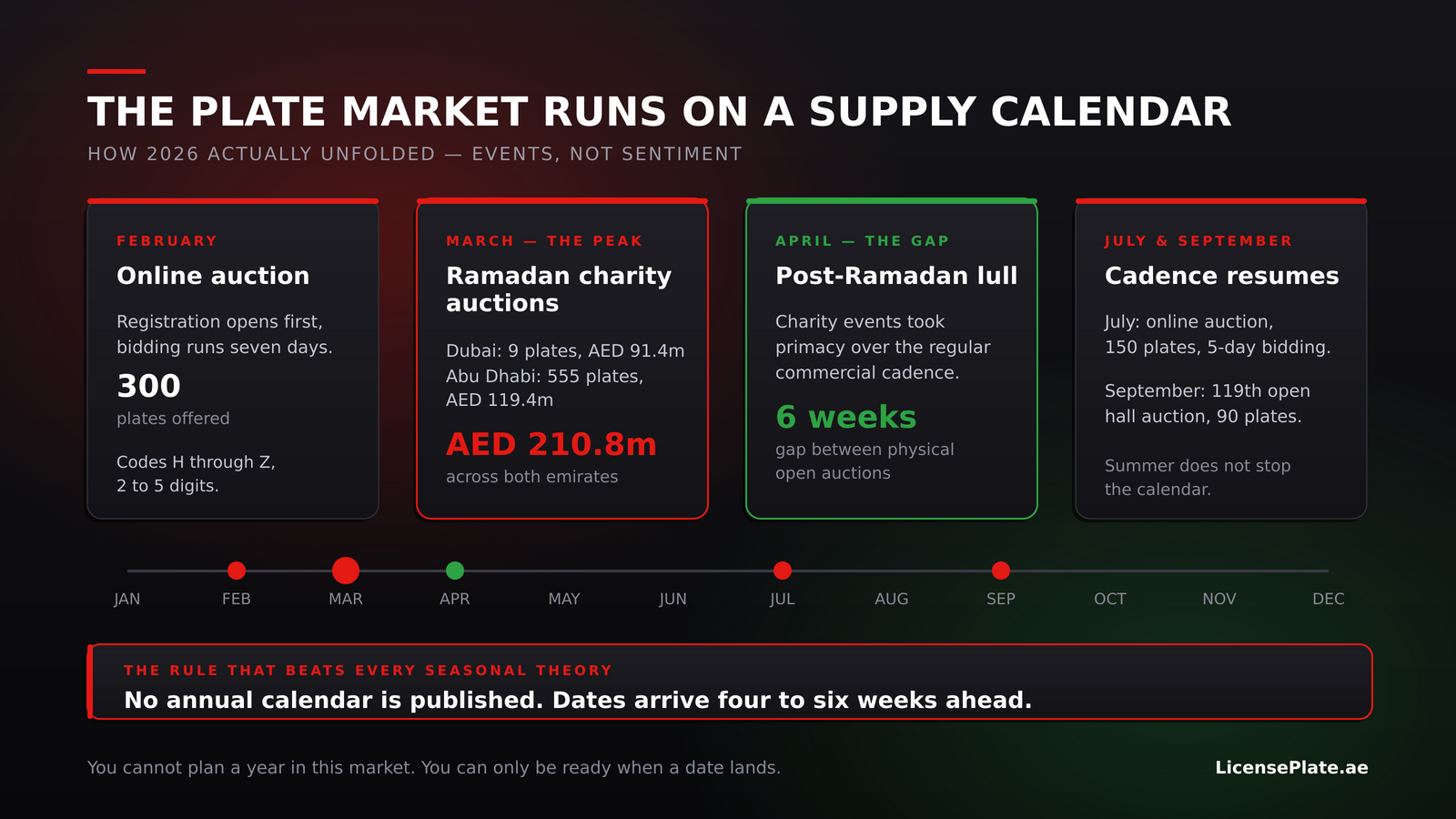
أربعة أنواع من الفعاليات تضع اللوحات في السوق، ولكلٍّ طابع مختلف.
المزادات الإلكترونية
تجري خلال نافذة مزايدة ثابتة من نحو خمسة إلى سبعة أيام، مع فتح التسجيل قبل بدء المزايدة. وهي تحمل حجماً لا غنائم. فمزاد فبراير 2026 الإلكتروني طرح 300 لوحة عبر الرموز من H إلى Z بتركيبات من خانتين إلى خمس خانات، بفتح التسجيل في 2 فبراير والمزايدة من 9 فبراير على مدى سبعة أيام.
مزادات القاعة العلنية
فعاليات حضورية في فنادق، أصغر عدداً وأعلى مكانة. فقد أُقيم المزاد العلني 119 في 27 سبتمبر بـ90 لوحة. وهنا تُحدَّد الأرقام القياسية ومن هنا تنطلق التغطية الصحفية.
المزادات الخيرية
أعلى فعاليات التقويم قيمةً، وتتركّز في رمضان. والمزيد عنها أدناه، لأنها أكثر أجزاء السنة سوء فهم.
إصدارات الرموز الجديدة
حين تفتح الهيئة رمزاً حرفياً جديداً، تدخل دفعة من أرقام نظيفة إلى السوق بأسعار محدَّدة إدارياً قبل أن تتكوّن للسوق رأي في ذلك الرمز. وهذه هي لحظة «ادخل مبكّراً» الحقيقية الوحيدة في التقويم — مغطّاة في دليلنا لـاللوحات بسعر ثابت والبيع المباشر.
| 2026 | الفعالية | الحجم | ماذا عنت للسوق الثانوية |
|---|---|---|---|
| فبراير | المزاد الإلكتروني 82 | 300 لوحة، الرموز H–Z | معروض بالحجم؛ وانتباه موزّع على دفعات كثيرة |
| مارس | المزادات الخيرية في رمضان | دبي 91.4 مليون درهم على 9 لوحات؛ وأبوظبي 119.4 مليون درهم على 555 | ذروة الانتباه. وأسعار بارزة لا صلة لها بالأرقام العادية |
| أبريل | فجوة ما بعد رمضان | فجوة ستّة أسابيع بين المزادات العلنية الحضورية | عودة الانتباه إلى الإعلانات الخاصة |
| يوليو | مزاد إلكتروني | 150 لوحة، مزايدة خمسة أيام | الصيف لا يوقف التقويم |
| سبتمبر | المزاد العلني الحضوري 119 | 90 لوحة | استئناف الخريف، بمكانة عالية |
قاعدة الأربعة إلى الستّة أسابيع
الإجابة المباشرة: الهيئة لا تنشر تقويم مزادات سنوياً كاملاً مسبقاً. فالمواعيد تُعلَن عادةً قبل نحو أربعة إلى ستّة أسابيع من كل فعالية.
وهذه أهمّ حقيقة عملياً في هذا المقال، وهي تهدم بهدوء معظم نصائح التوقيت.
فلا تستطيع أن تقرّر في يناير أنك ستشتري في أكتوبر، لأنه في يناير لا أحد خارج الهيئة يعرف ما يحمله أكتوبر. وما تستطيعه هو أن تكون جاهزاً: ملفّ مروري نشط، وميزانية محدّدة، وأرقام مستهدفة معرَّفة، وتأمين متاح. فالجاهزية تحوّل إشعار أربعة أسابيع إلى فرصة حقيقية؛ وعدمها يحوّله إلى فرصة ضائعة.
ويعني ذلك أيضاً أن الموقف الصحيح مستمرّ لا موسمي. فالذين يبلون حسناً ليسوا من خمّنوا الشهر — بل من كانوا يراقبون أصلاً حين وصل الإعلان. وإن لم يكن لديك ملفّ مروري بعد، فتلك هي الخطوة الأولى الحقيقية، ودليل الملفّ المروري لدينا يغطّيها.
رمضان الذروة لا التوقّف
وهنا تخفق الحكمة الشائعة أشدّ إخفاق. فالافتراض الإقليمي المعياري — الأعمال تتباطأ في رمضان، فانتظر — خاطئ لهذه السوق.
فرمضان هو حين تجري مزادات اللوحات الخيرية في الإمارات، وهي أكبر فعاليات السنة قيمةً. ففي 2026، حسمت نسخة دبي 91.4 مليون درهم على تسع لوحات — بمتوسّط نحو 10.16 ملايين درهم لكل منها — بينما وزّعت أبوظبي 119.4 مليون درهم على 555 لوحة. وذلك معاً 210.8 ملايين درهم من إيرادات مزادات اللوحات الموثّقة في فترة رمضان بين الإمارتين. ومراجعة نصف سنة سوق اللوحات 2026 لدينا توثّق التسلسل كاملاً.
ونتيجتان تهمّان التوقيت:
أولاً، الإيقاع التجاري المعتاد يتوقّف حولها. فالفعاليات الخيرية تأخذ الأولوية، ما ينتج فجوةً من نحو ستّة أسابيع بين المزادات العلنية الحضورية. فإن كنت تنتظر مزاداً عادياً خلال رمضان، فقد تنتظر عبر أزحم فترات السنة من أجل النوع الخطأ من الفعاليات.
وثانياً، الأسعار البارزة ليست أسعارك. فمتوسّط 10 ملايين درهم للوحة في حفل خيري لا يخبرك شيئاً عن رقم من خمس خانات على رمز متأخّر. فهذه أصول غنيمة تُباع في سياق خيري لحفنة من المزايدين. وقراءتها كإشارة سوق أغلى خطأ مفرد يرتكبه بائع فرد — وهو ما يقنع أحدهم أن لوحته العادية تضاعفت قيمتها بين ليلة وضحاها. ولمعرفة ما تكلّفه الأرقام الفردية فعلاً، استخدم دليل الأسعار بحسب الرمز وعدد الخانات لدينا.
خطّتان متعاكستان
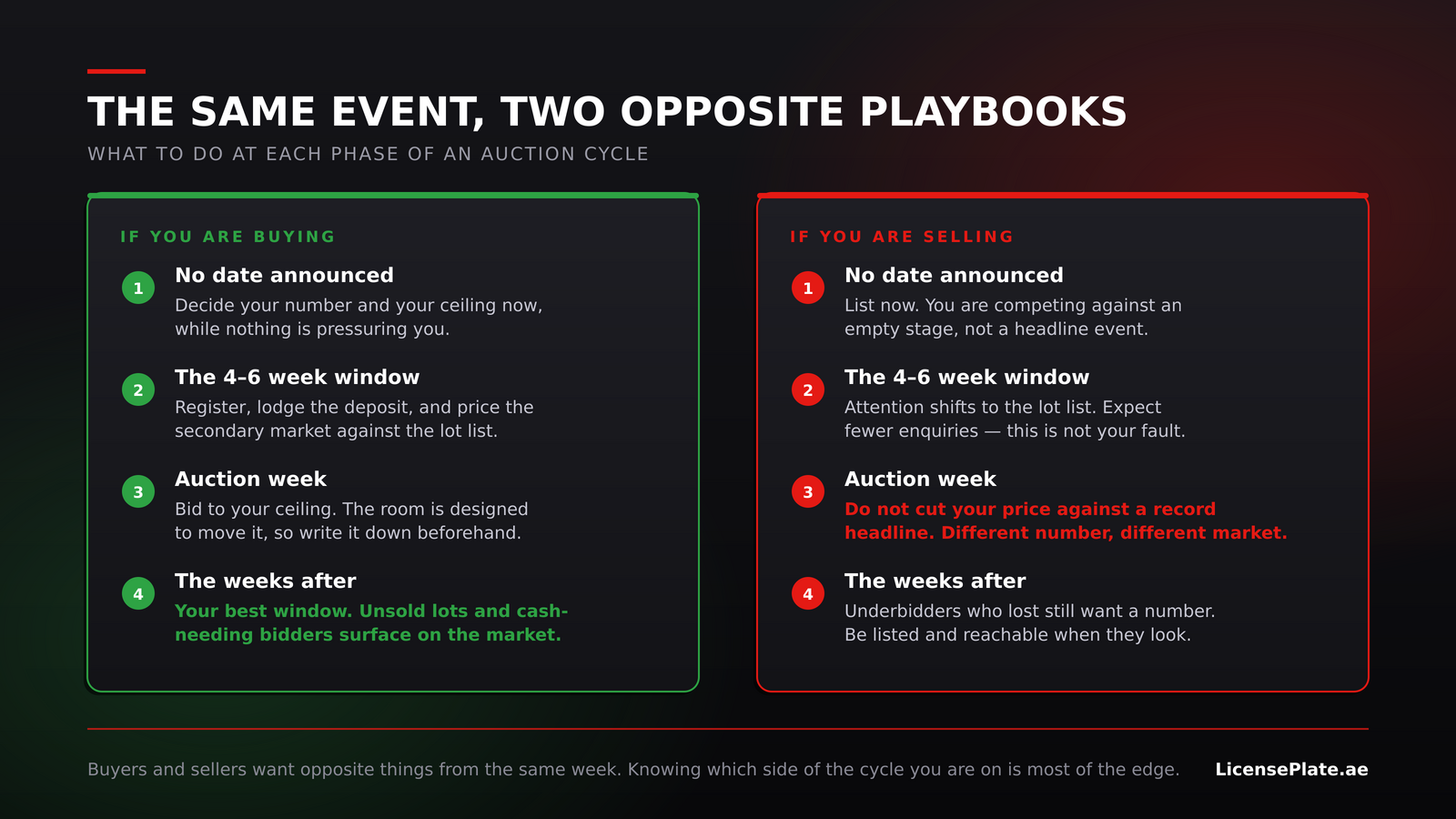
إن كنت تشتري
- لا موعد معلَن. حدّد رقمك المستهدف وسقفك المطلق الآن، وأنت غير مضغوط. فالسقف المحدَّد في أسبوع هادئ ينجو في قاعة مزاد؛ والمحدَّد أثناء المزايدة لا ينجو.
- نافذة الأربعة إلى الستّة أسابيع. سجّل، ورتّب التأمين — عادةً 5,000 درهم للمزادات الإلكترونية و25,000 درهم لمزادات القاعة — وسعّر السوق الثانوية مقابل قائمة الدفعات المنشورة.
- أسبوع المزاد. زايد إلى سقفك وتوقّف. وتذكّر أن عليك السداد خلال نحو عشرة أيام عمل من الفوز، فالمال يجب أن يكون حقيقياً.
- الأسابيع التالية. وهذه عادةً أفضل نافذة للمشتري. فالدفعات التي لم تُبَع، والمزايدون الذين حلّوا ثانين ولا يزالون يريدون رقماً، يظهر كلاهما في السوق الخاصة.
إن كنت تبيع
- لا موعد معلَن. اعرض الآن. فبلا فعالية بارزة جارية، ينافس إعلانك على الانتباه أمام مسرح فارغ.
- نافذة الأربعة إلى الستّة أسابيع. توقّع تراجع الاستفسارات مع انتقال الانتباه إلى قائمة الدفعات. وهذا أثر تقويمي، لا حكم على سعرك.
- أسبوع المزاد. اثبت. لا تخفض سعرك لأن رقماً قياسياً تحقّق — أو لأنه لم يتحقّق. فرقم مختلف في فئة مختلفة ليس مقارنتك.
- الأسابيع التالية. فالمزايدون الخاسرون فقدوا الدفعة لكنهم أبقوا الميزانية والرغبة. كن معروضاً ومسعّراً بعقل وقابلاً للوصول.
وطريقة التسعير نفسها انضباط منفصل — وإطار التقييم ودليل البيع لدينا يغطّيانها، ودليل التفاوض يغطّي الحوار بمجرّد اهتمام أحدهم.
ثلاث خرافات عن توقيت اللوحات
الخرافة 1: «الصيف ميّت، انتظر الخريف.»
تضمّن تقويم 2026 مزاداً إلكترونياً في يوليو بـ150 لوحة بنافذة مزايدة خمسة أيام. فالتقويم المؤسّسي لا يأخذ إجازة صيفية. وقد يلين حجم الاستفسارات الخاصة بينما يسافر الناس، وهذا بالضبط ما يجعل البائع الذي يبقى معروضاً يواجه منافسةً أقلّ لا أكثر.
الخرافة 2: «الأسعار ترتفع بعد مزاد قياسي.»
الأرقام القياسية تُحدَّد على أرقام استثنائية بمزايدين استثنائيين. ولا توجد آلية ترفع بها لوحة تُباع بالملايين سعر تصفية رقم خماسي لا صلة له بها. وما يرتفع فعلاً بعد رقم قياسي هو توقّع البائع — وهو ما يطيل زمن البيع عادةً بدل أن يرفع السعر المتحقّق. وتحليلنا لـكيف ترتفع قيمة اللوحات الإماراتية فعلاً يعالج ذلك بالتفصيل.
الخرافة 3: «انتظر هبوط السوق.»
الهبوط يفترض مؤشّراً عريضاً قابلاً للقياس يهبط ويتعافى. وهذه السوق لا مؤشّر لها من هذا النوع. فالأرقام الفردية شبه فريدة وتُتداوَل نادراً، فلا مجموع لتوقيته. والانتظار يكلّفك في معظمه الأرقام التي تُباع في الأثناء.
ما لا نستطيع إخبارك به — ولماذا
معظم المقالات في هذا الموضوع ستعطيك نسباً شهرية واثقة. ولن نفعل، ويستحقّ الأمر شرح السبب، لأنه يخبرك أيضاً كيف تقرأ أرقام الآخرين.
فقياس موسمية السوق الثانوية كما ينبغي يتطلّب سلسلة موثوقة من المبيعات المكتملة بتواريخها — ما بيع، ومتى، وبكم. وتلك البيانات غير موجودة علناً في هذه السوق. فنتائج المزادات منشورة، ولهذا فأرقام الفعاليات في هذا المقال محدّدة وبمصادر. أما نتائج البيع الخاص فلا: عمليات النقل لا تُنشَر كبيانات سوق، والأسعار المطلوبة ليست أسعار بيع.
فحين ترى ادّعاءً بأن أسعار اللوحات ترتفع 12% في نوفمبر، اسأل من أي معاملات مكتملة حُسِب. وفي خبرتنا يكون الجواب عادةً «أسعار مطلوبة»، وهي تقيس تفاؤل البائع لا القيمة السوقية.
وما نستطيع قوله بثقة هو ما فعله التقويم، لأن فعاليات المزادات موثّقة — وعلى ذلك بُني هذا الدليل.
التوقيت الذي يهمّ فعلاً
بالنسبة إلى كل فرد تقريباً، تكون عوامل التوقيت الحاسمة شخصية لا سوقية.
- شراء سيارة. اللحظة الطبيعية لاقتناء رقم هي حول شراء مركبة أو تجديد تسجيل، حين تكون داخل النظام أصلاً. ويمكنك أيضاً تأمين الرقم قبل السيارة.
- مغادرة الدولة. فالمغادرة تفرض موعداً نهائياً، والمواعيد النهائية تكلّف مالاً. والبيع تحت ضغط الوقت أسوأ موقف في أي سوق — انظر ماذا يحدث للوحتك حين تغادر.
- السيولة. فإن كنت تحتاج النقد بحلول تاريخ، فأنت متلقٍّ للسعر بغضّ النظر عن التقويم.
- ظهور الرقم أصلاً. فإن ظهرت التركيبة التي تريدها بعينها، فتلك هي توقيتك. فالأصول الفريدة لا تنتظر شهراً مناسباً.
وتلك النقطة الأخيرة تستحقّ التشديد. ففي سوق من أصناف فريدة، التوفّر يتفوّق على الموسمية في كل مرّة. والجواب الصحيح لـ«هل أنتظر؟» هو عادةً «لا، إن كان الرقم الذي تريده فعلاً».
القناة التي لا تغلق أبداً
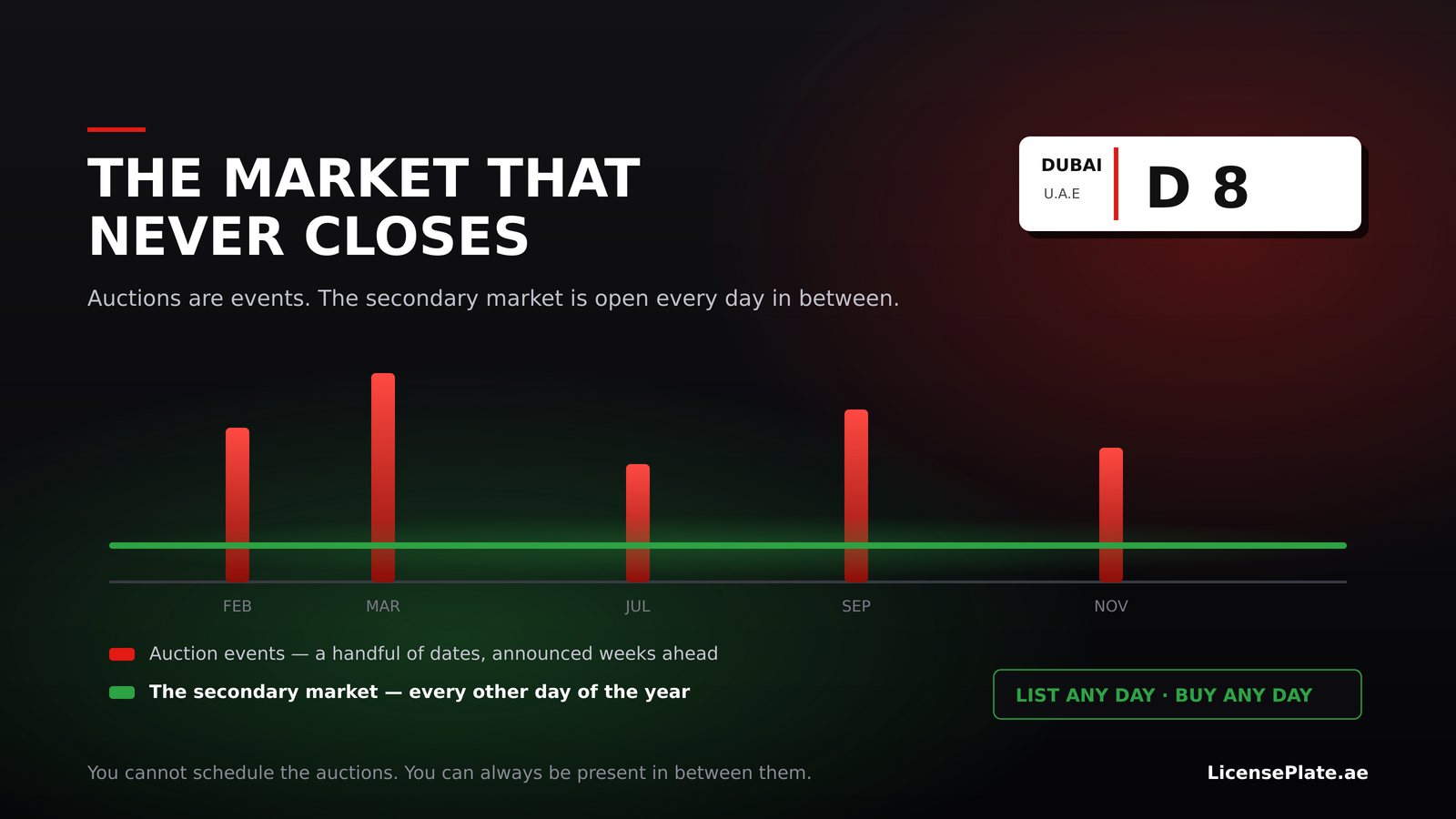
تراجع خطوة إلى الوراء فيصبح الهيكل بسيطاً. فالسوق الأولية متقطّعة: حفنة فعاليات، تُعلَن قبل أسابيع، بنوافذ ثابتة وتأمينات ومواعيد سداد. فوّت واحدة فتنتظر التالية، التي لم ينشر أحد موعدها بعد.
أما السوق الثانوية فـمستمرّة. لا موعد تسجيل فيها، ولا تأمين، ولا نافذة مزايدة، ولا إعلان. وهي مفتوحة يوم المزاد وكل يوم على جانبيه.
وليس ذلك ادّعاءً بأن الشراء الخاص أفضل دائماً — فللأرقام الغنيمة هو ليس كذلك بوضوح، ومقارنتنا بين المزاد والسوق الثانوية صادقة في تحديد أين يفوز كلٌّ منهما. بل هو ادّعاء عن التوقيت: فالقناة الوحيدة التي تستطيع التحرّك فيها في أي يوم هي التي تظلّ مفتوحة دائماً. وكل ما عداها يتطلّب أن تنتظر موعداً.
الأسئلة الشائعة
متى أفضل وقت لشراء لوحة رقم في الإمارات؟
في الأسابيع التالية لمزاد كبير، حين تعود الدفعات غير المباعة والمزايدون الخاسرون إلى السوق الثانوية. ولا يوجد شهر أرخص بشكل موثوق، لأن المعروض يتبع تقويم فعاليات لا موسماً.
متى أفضل وقت لبيع لوحة رقم؟
حين لا يزاحم مزاد كبير على الانتباه — إمّا قبل فعالية معلنة بوقت كافٍ أو في الفترة التي تليها، حين يظلّ المزايدون المحبَطون يبحثون.
هل تنشر الهيئة مواعيد مزاداتها مسبقاً؟
ليس كتقويم سنوي كامل. فالمواعيد تُعلَن عادةً قبل نحو أربعة إلى ستّة أسابيع من كل فعالية.
هل تتباطأ سوق اللوحات في رمضان؟
لا — بل العكس. فرمضان يستضيف مزادات اللوحات الخيرية في الإمارات، وهي أعلى فعاليات السنة قيمةً. وفي 2026 أنتجت نحو 210.8 ملايين درهم بين دبي وأبوظبي.
هل تنخفض أسعار اللوحات في الصيف؟
التقويم المؤسّسي يستمرّ عبر الصيف — فقد تضمّن 2026 مزاداً إلكترونياً في يوليو بـ150 لوحة. وقد يلين حجم الاستفسارات الخاصة بينما يسافر الناس، وهو ما يعني أيضاً منافسةً أقلّ من بائعين آخرين.
هل ينبغي أن أنتظر هبوط الأسعار قبل الشراء؟
لا يوجد مؤشّر عريض ليهبط. فالأرقام الفردية شبه فريدة وتُتداوَل نادراً، والانتظار يكلّفك التوفّر عادةً بدل أن يوفّر عليك مالاً.
هل ترفع الأسعار القياسية في المزادات قيمة لوحتي؟
لا. فالأرقام القياسية تُحدَّد على أرقام استثنائية بمزايدين استثنائيين. وهي تميل إلى رفع توقّعات البائعين لا الأسعار المتحقّقة.
كم أمامي من وقت للدفع إن فزت في مزاد؟
نحو عشرة أيام عمل من نهاية المزاد أو الاعتماد، فالأموال تحتاج أن تكون متاحة فعلاً قبل أن تزايد.
ما التأمين الذي أحتاجه للمزايدة؟
عادةً نحو 5,000 درهم للمزادات الإلكترونية و25,000 درهم لمزادات القاعة العلنية، وهو مسترَدّ إن اتُّبعت القواعد.
كم مزاد لوحات في السنة؟
لا عدد ثابت. فقد تضمّن 2026 مزادات إلكترونية في فبراير ويوليو، ومزادات رمضان الخيرية في مارس، والمزاد العلني الحضوري 119 في سبتمبر، من بين غيرها.
هل الشراء في المزاد أفضل أم بشكل خاص؟
المزادات هي حيث تظهر الأرقام الغنيمة وحيث تحدث صفقات حقيقية أحياناً في قاعات قليلة الحضور. أما السوق الثانوية فمتاحة باستمرار وتتيح لك مقارنة أسعار مطلوبة حقيقية في أي يوم.
هل يؤثّر إصدار رمز جديد في التوقيت؟
نعم. فحين يُفتَح رمز حرفي جديد، تدخل أرقام نظيفة بأسعار محدَّدة إدارياً قبل أن تتكوّن للسوق رأي. وتلك أوضح لحظة «تحرّك مبكّراً» في التقويم.
هل يمكن قياس التغيّرات السعرية الموسمية في السوق الثانوية؟
ليس بشكل موثوق. فذلك يحتاج سلسلة علنية من المبيعات الخاصة المكتملة بتواريخها وأسعارها، وهي غير موجودة. فنتائج المزادات منشورة؛ وعمليات النقل الخاصة ليست كذلك.
ما الذي ينبغي أن يحرّك توقيتي فعلاً؟
عوامل شخصية: شراء سيارة، أو تجديد تسجيل، أو موعد مغادرة نهائي، أو سيولتك — وقبل كل شيء ما إذا كان الرقم الذي تريده بعينه متاحاً.
إن فوّتّ مزاداً، كم حتى التالي؟
غير معلوم حتى يُعلَن، وذلك عادةً قبل أربعة إلى ستّة أسابيع. وذلك الغموض أقوى حجّة للبقاء حاضراً في السوق الثانوية بين الفعاليات.
الخلاصة النهائية
الجواب الصادق عن «متى أشتري أو أبيع» هو أن هذه السوق لا تسير على الشهور. بل تسير على حفنة فعاليات معلَنة، وإنذار من أربعة إلى ستّة أسابيع، والانتباه الذي تجذبه تلك الفعاليات ثم تطلقه. فرمضان الذروة لا التوقّف. والصيف لا يغلق التقويم. والأرقام القياسية لا ترفع الأرقام العادية.
وهو ما يترك خلاصةً عملية لا ذكيّة: كن جاهزاً بدل أن تكون مبكّراً. افتح الملفّ المروري، وحدّد الميزانية، واعرف الأرقام المستهدفة، واكتب السقف — ثم تحرّك حين يتوفّر رقم تريده فعلاً، أياً كان الشهر الذي يصادف ذلك.
وبين الفعاليات، تظلّ السوق مفتوحة. تصفّح أرقام اللوحات المعروضة للبيع في الإمارات، أو اذهب مباشرةً إلى أرقام دبي.