

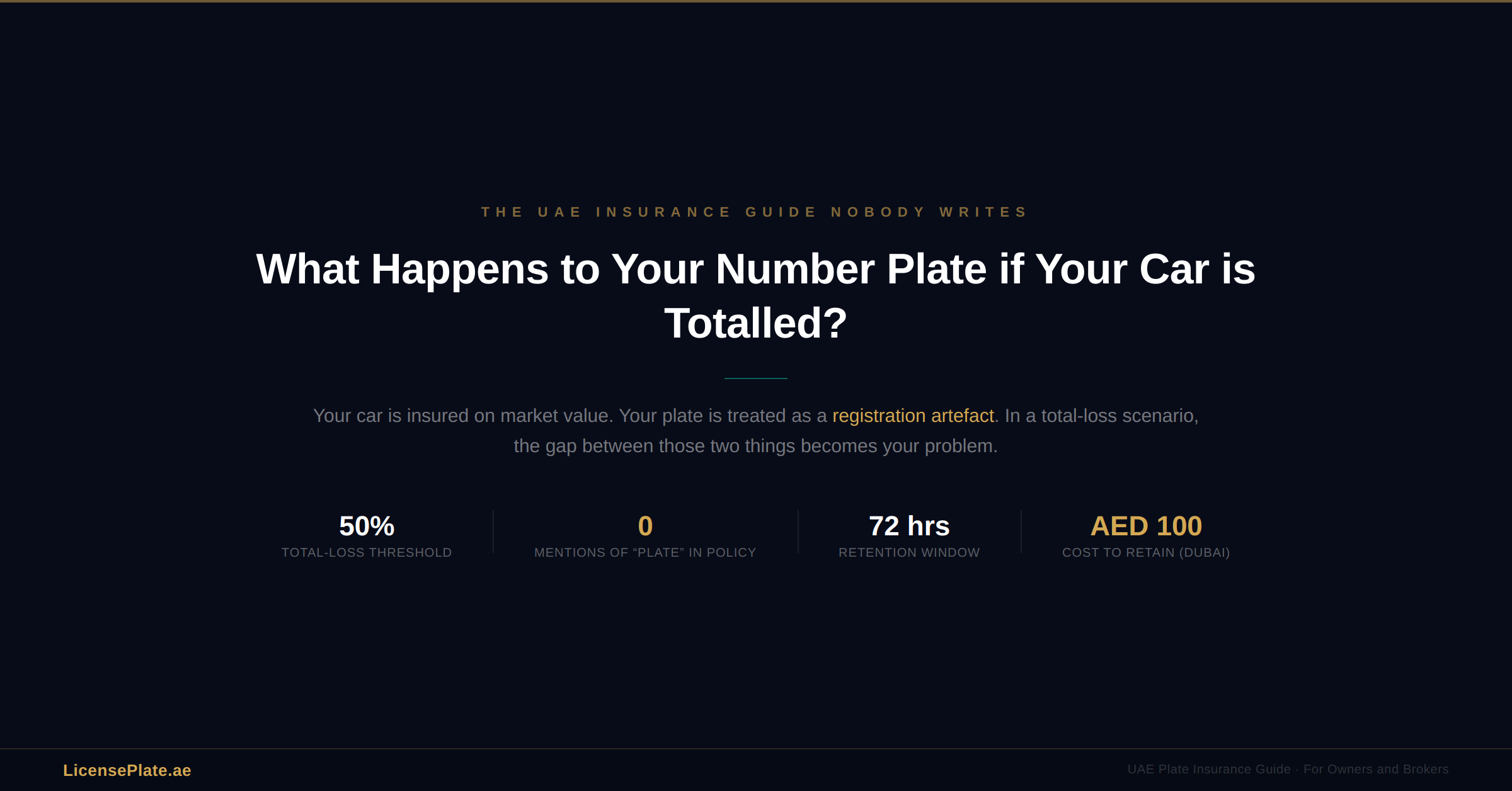
ماذا يحدث للوحة سيارتك إذا اعتُبرت خسارة كلية؟ دليل التأمين الإماراتي الذي لا يكتبه أحد
إنه صباح ثلاثاء في مارس، نحو الساعة 8:20. مقيم في دبي يقود شرقاً على شارع الشيخ زايد باتجاه وسط المدينة، متوجّهاً إلى اجتماع في مبنى البوابة بمركز دبي المالي العالمي. وعلى بُعد حارتين، يسيء سائق سيارة دفع رباعي مستأجرة تقدير حركة المرور أمامه، فيكبح متأخّراً، ويصطدم بالربع الخلفي من سيارة المقيم من طراز مرسيدس الفئة S. ويدفع الارتطام المرسيدس لتدور نحو الحاجز الوسطي. وتنفتح الوسائد الهوائية. ويخرج السائقان سالمَين. أما المرسيدس فلا. وبحلول وصول شاحنة السحب بعد أربعين دقيقة، تكون السيارة غير قابلة للتعرّف عليها. وتصدر شرطة دبي تقريراً. ويُستدعى المؤمِّن.
وبعد أربعة أيام، يجلس المقيم في مكتب المطالبات لدى شركة التأمين في البرشاء. وقد أنهى خبير المعاينة التقييم. وتقدير الإصلاح يتجاوز 50% من القيمة السوقية للسيارة قبل الحادث، وهو ما يفعّل بند الخسارة الكلية في وثيقة التأمين الموحّدة على المركبات. وتعرض شركة التأمين تسوية. كانت المرسيدس تساوي 340,000 درهم وقت الحادث. وبعد خصم الاستهلاك البالغ 20% الذي تفرضه الوثيقة والتعديل الزمني التناسبي لفترة التأمين الجزئية، يبلغ التعويض نحو 248,000 درهم. ويوقّع المقيم الأوراق. ويمرّر إليه الخبير خطاب نقل ملكية ليوقّعه لصالح شركة التأمين، مع المفاتيح.
وإليك ما لم يخبر به أحدٌ ذلك المقيم. اللوحة التي كانت على تلك المرسيدس هي لوحة دبي من رمز O بأربعة أرقام، اشتراها في مزاد لهيئة الطرق والمواصلات قبل أربع سنوات بـ 45,000 درهم. والحاسبة على LicensePlate.ae تقدّر قيمة اللوحة نفسها الآن بنحو 165,000 درهم. وهي غير مذكورة في أوراق التسوية. وغير مذكورة من خبير المعاينة. وغير مذكورة في تقرير الشرطة. إنها موجودة داخل ملف تسجيل المركبة كأصل مرتبط، وفي اللحظة التي يوقّع فيها خطاب نقل الملكية، تدخل قدرته القانونية على فصل تلك اللوحة عن المركبة في نافذة ضيّقة لا يعرف معظم المالكين بوجودها أصلاً. وإذا وقّع دون أن يسأل، تُعالَج اللوحة وفق الوضع الافتراضي للنظام، وهو ما يعني في معظم الحالات إعادتها إلى مجموعة لوحات الهيئة إلى جانب إلغاء تسجيل المركبة.
هذا المقال موجّه لمن لم يتعرّضوا للحادث بعد. وهو أيضاً لمن هم في خضمّ حادث الآن ولا يفهمون لماذا لا تذكر أيٌّ من مقالات التأمين التي يقرؤونها لوحاتهم. فنظام التأمين على المركبات في الإمارات يتعامل مع المركبات. أما اللوحات فتقبع بصمت داخل ملف التسجيل، لا يقيّمها أحد، ولا تذكرها أي وثيقة تأمين، ويُبتّ في مصيرها خلال اثنتين وسبعين ساعة وفق قواعد افتراضية لا يخبرك أحد بوجودها.
ما الذي تغطّيه وثيقة التأمين الموحّدة على المركبات فعلياً
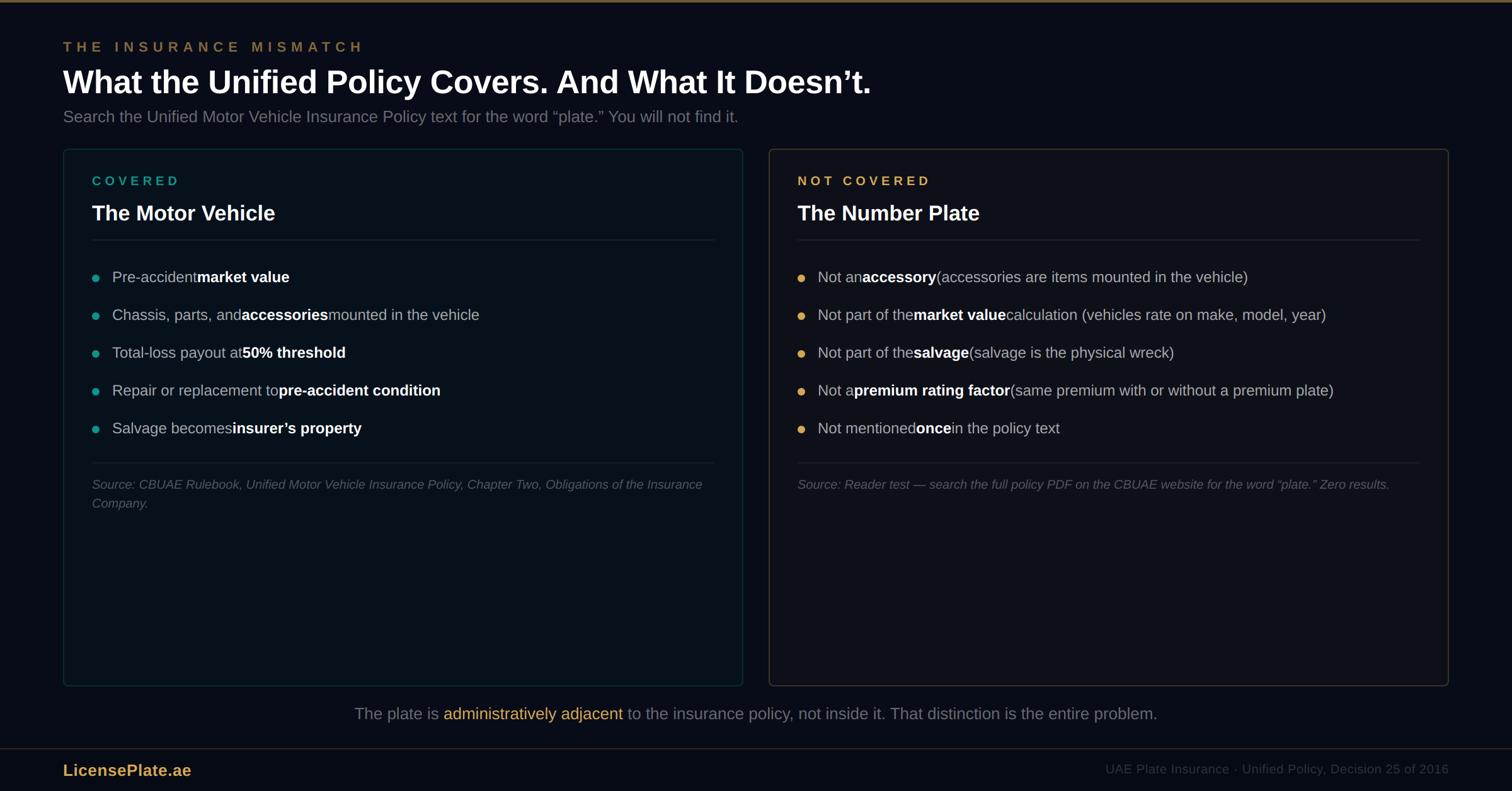
كل وثيقة تأمين شامل على المركبات تُباع في الإمارات تستند إلى وثيقة التأمين الموحّدة على المركبات ضد الفقدان والتلف، الصادرة بموجب قرار مجلس إدارة هيئة التأمين رقم 25 لسنة 2016. وقد أُدمجت هيئة التأمين في مصرف الإمارات المركزي في 2021، ويَنشر دليل قواعد المصرف المركزي الآن هذه الوثيقة الموحّدة بوصفها النموذج المُلزِم لكل مؤمِّن على المركبات في الدولة. اقرأ نصّ الوثيقة كاملاً وستجد أحكاماً تفصيلية تغطّي المركبة، والهيكل، وقطع الاستبدال، وقطع الغيار، وجداول الاستهلاك، وملكية الحطام، وتسوية المنازعات. لكنك لن تجد كلمة "لوحة" في أي موضع.
وهذا ليس سهواً. بل يعكس واقعاً هيكلياً في التأمين الإماراتي على المركبات: فالوثيقة تؤمّن المركبة، المعرَّفة بأنها الأصل المادي المسجّل تحت رقم هيكل محدّد. أما لوحة السيارة فهي كيان إداري منفصل تربطه الهيئة بملف تسجيل المركبة لأغراض التعريف. وللوحة شهادة ملكية خاصة بها، وإجراءات نقل خاصة بها، وسعر خاص بها. لكنها تعيش في عالم إداري مختلف عن وثيقة التأمين التي تغطّي السيارة المركّبة عليها.
ما تغطّيه الوثيقة
يُلزم الفصل الثاني من الوثيقة الموحّدة، الذي يحدّد التزامات المؤمِّن، الشركةَ بتعويض المؤمَّن له عن فقدان المركبة أو تلفها وملحقاتها، أو إعادة المركبة إلى حالتها قبل الحادث عبر الإصلاح، أو إعلانها خسارة كلية عند تجاوز عتبة تكلفة الإصلاح. وعتبة الخسارة الكلية صريحة: إذا تجاوزت تكلفة الإصلاح 50% من قيمة المركبة قبل الحادث، تُعتبر المركبة خسارة كلية وتصبح القيمة المؤمَّن عليها أساس التعويض، مع خصم استهلاك بنسبة 20% من القيمة المؤمَّن عليها المتفق عليها.
ما لا تغطّيه الوثيقة
اللوحة ليست "ملحقاً" وفق أي قراءة معقولة لنصّ الوثيقة، لأن الملحقات معرَّفة بأنها بنود مركّبة في المركبة (أنظمة الصوت، وكاميرات الرؤية الخلفية، والجنوط). واللوحة ليست جزءاً من حساب القيمة السوقية للمركبة لأن شركات التأمين تقيّم المركبات بناءً على الماركة والطراز وسنة الصنع والمسافة المقطوعة والحالة، لا على التسجيل الإداري المرتبط بها. واللوحة ليست جزءاً من الحطام لأن الحطام يشير إلى الهيكل المادي المحطّم، الذي تستحوذ عليه شركة التأمين بعد التسوية. اقرأ الوثيقة من أوّلها إلى آخرها ولن تظهر اللوحة ببساطة، وهذه هي المشكلة.
إجراءات الخسارة الكلية: ما يحدث فعلياً خطوة بخطوة
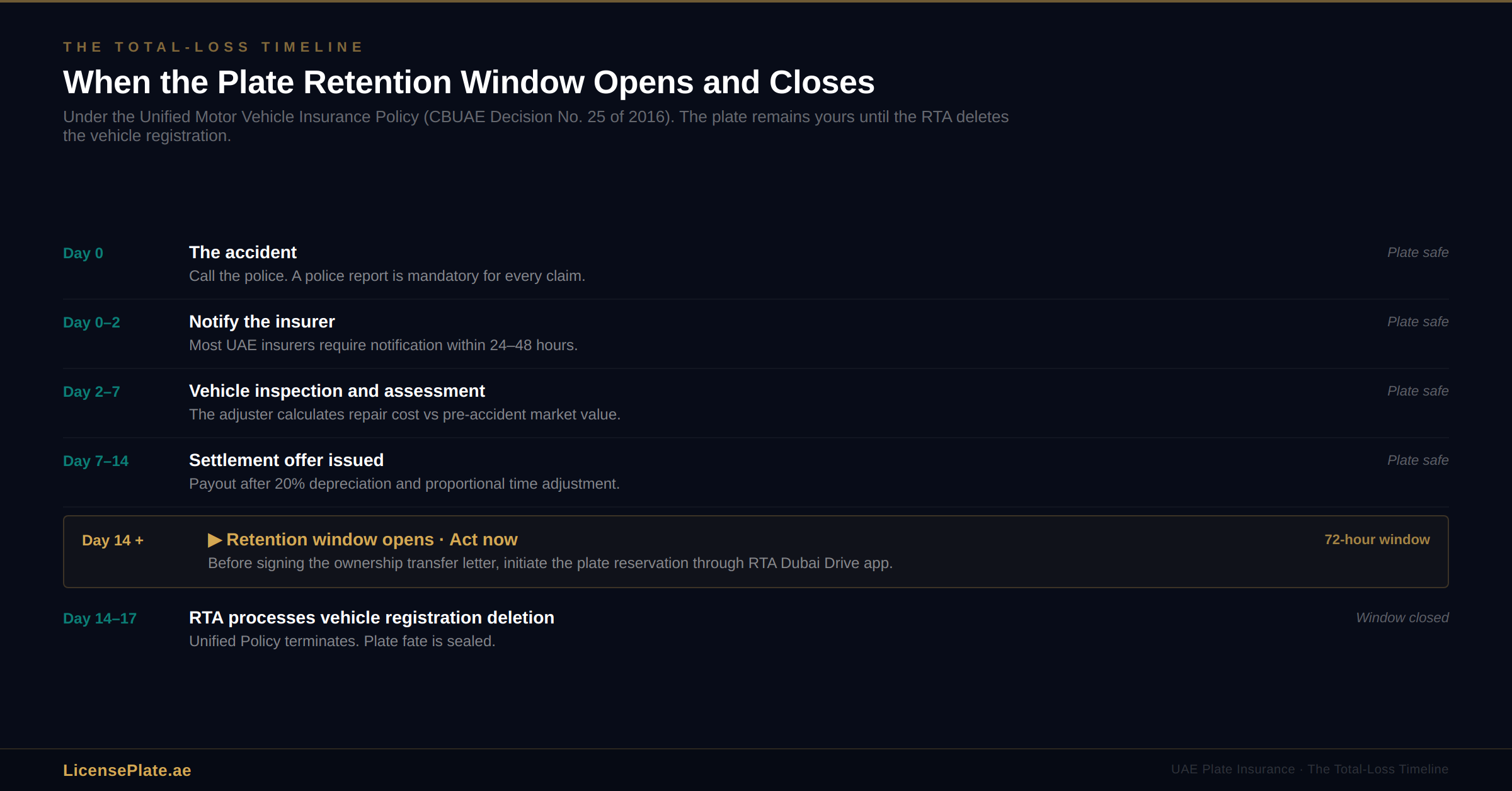
فهم موضع قرار اللوحة يتطلّب فهم تسلسل المطالبة كما يجري عملياً. وفيما يلي المسار المعتاد لمطالبة خسارة كلية في الإمارات، مُعاد تركيبه من نصّ وثيقة التأمين الموحّدة على المركبات، ومن الإرشادات التشغيلية المنشورة من كبار وسطاء التأمين في الدولة ومنهم Savington وPolicyhouse وInsurance Market، ومن دليل قواعد مصرف الإمارات المركزي.
اليوم صفر: الحادث
اتصل بالشرطة. فتقرير الشرطة إلزامي لكل مطالبة تأمين في الدولة. ولن يقبل أي وسيط أو مؤمِّن أو محكمة مطالبةً بدونه. وتصدر الشرطة تقريراً يحدّد الطرف المتسبّب، والملابسات، وفئة الضرر. والتقرير هو مستندك المرجعي لكل ما يليه.
اليوم 0-2: إبلاغ شركة التأمين
تشترط معظم شركات التأمين في الدولة الإبلاغ خلال 24 إلى 48 ساعة من الحادث. أبلغ هاتفياً مكتب المطالبات، وقدّم رقم تقرير الشرطة، وأتبِعه بصور لأضرار المركبة. وتعيّن الشركة خبير معاينة.
اليوم 2-7: معاينة المركبة وتقييمها
يعاين الخبير المركبة، عادةً في الورشة أو الساحة المعتمدة لدى شركة التأمين. ويحسب تكلفة الإصلاح مقابل القيمة السوقية قبل الحادث. وإذا تجاوزت النسبة عتبة الـ 50% بموجب الوثيقة الموحّدة (تطبّق بعض الشركات 60% أو 75% بموجب صيغ وثائقها الخاصة، وإن كانت 50% هي الأساس التنظيمي)، تُعلَن المركبة خسارة كلية. وهذه هي اللحظة التي ينتقل فيها الحديث من الإصلاح إلى التسوية.
اليوم 7-14: عرض التسوية
تحسب شركة التأمين مبلغ التعويض. نقطة البداية: القيمة المؤمَّن عليها المتفق عليها أو القيمة السوقية قبل الحادث، أيّهما تحدّده الوثيقة. الخصومات: استهلاك 20% بموجب البند 3 من الوثيقة الموحّدة، والتحمّل الإلزامي، وأي تعديل تناسبي لفترة التأمين الجزئية. ويعرض الخبير الرقم. ويقبل المالك أو يتفاوض.
اليوم 14 فما بعد: نقل الملكية
وهذه هي اللحظة الحاسمة. فبمجرد قبول المالك للتسوية، تصدر شركة التأمين أوراقاً تتضمّن خطاب نقل ملكية المركبة، الذي يجب أن يوقّعه المالك ويسلّمه إلى الشركة مع المفاتيح المادية. والوثيقة الموحّدة صريحة: "إذا كانت المركبة المؤمَّن عليها خسارة كلية، وعوّضت الشركة المؤمَّن له على هذا الأساس، يُعتبر الحطام ملكاً للشركة." وبمجرد توقيع خطاب نقل الملكية، تستحوذ الشركة على المركبة، وينتقل الحطام إلى ساحتها المعتمدة، وتبدأ الإجراءات الإدارية لإلغاء تسجيل المركبة لدى الهيئة.
وتنصّ الوثيقة الموحّدة كذلك: "تُعتبر هذه الوثيقة منتهية في حالة الخسارة الكلية للمركبة، شريطة شطب تسجيلها بتقرير صادر عن إدارة الطرق والمرور يؤكّد أنها غير صالحة للسير." وشطب التسجيل هو الفصل الختامي. وفي هذه اللحظة بالضبط، وغالباً قبل أيام قليلة من معالجة شطب التسجيل فعلياً لدى الهيئة، يُبتّ في مصير اللوحة.
خطوة حجز اللوحة: ما هي، ومتى تقوم بها، ولماذا لا يخبرك بها أحد
وإليك الحقيقة الإجرائية التي تغيّر كل شيء. تقدّم هيئة الطرق والمواصلات خدمة تُسمّى "حجز رقم لوحة مركبة"، متاحة عبر بوابة وزارة الداخلية وتطبيق دبي درايف، تتيح لأي مالك لوحة الاحتفاظ بها محجوزة دون ربطها بمركبة. وتوجد الخدمة لأسباب عدة: المالكون الذين هم بين سيارتين، والمالكون الذين يريدون إهداء لوحة لاحقاً، والمستثمرون الذين يعاملون اللوحات كأصول قائمة بذاتها، والأهمّ، المالكون الذين توشك مركباتهم على شطب تسجيلها إثر مطالبة خسارة كلية.
ورسوم الحجز منشورة علناً على صفحات خدمات وزارة الداخلية والهيئة، وهي منخفضة بشكل لافت مقابل ما تقدّمه:
دبي: 20 درهماً لحجز 3 أشهر، و40 درهماً لـ 6 أشهر، و80 درهماً لسنة واحدة، بالإضافة إلى 10 دراهم رسم معرفة و10 دراهم رسم ابتكار.
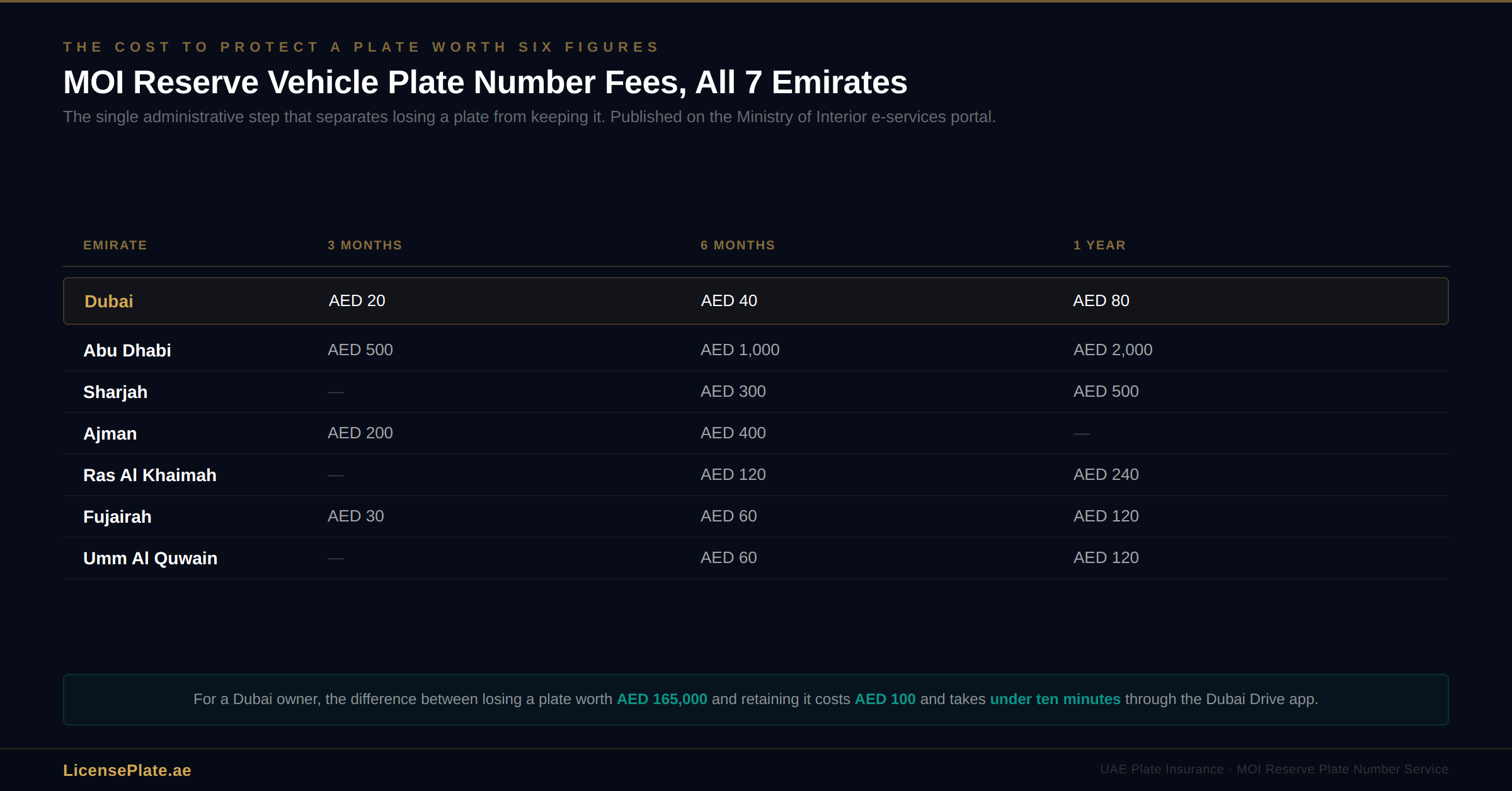
أبوظبي: 500 درهم لـ 3 أشهر، و1,000 درهم لـ 6 أشهر، و2,000 درهم لسنة واحدة.
الشارقة: 300 درهم لـ 6 أشهر، و500 درهم لسنة واحدة.
عجمان: 200 درهم لـ 3 أشهر، و400 درهم لـ 6 أشهر.
رأس الخيمة: 120 درهماً لـ 6 أشهر، و240 درهماً لسنة واحدة.
الفجيرة: 30 درهماً لـ 3 أشهر، و60 درهماً لـ 6 أشهر، و120 درهماً لسنة واحدة.
أم القيوين: 60 درهماً لـ 6 أشهر، و120 درهماً لسنة واحدة.
وبالنسبة لمالك في دبي، فإن الفرق بين خسارة لوحة تساوي 165,000 درهم والاحتفاظ بها يكلّف 100 درهم ويستغرق أقل من عشر دقائق عبر تطبيق دبي درايف. اقرأ تلك الجملة مرة أخرى. فأهمّ ما يمكنك فعله لحماية أصل لوحة بقيمة ستة أرقام في سيناريو خسارة كلية يكلّف ثمن عشاء متواضع. والسبب الوحيد لخسارة المالكين لوحاتهم في هذا السيناريو هو أن لا أحد يخبرهم بوجود الخيار.
متى تبدأ إجراءات الحجز
التوقيت هو كل شيء. فيجب بدء الحجز قبل شطب تسجيل المركبة لدى الهيئة، ما يعني قبل أن تنهي شركة التأمين إجراءات نقل الملكية. وعملياً، يعني ذلك أنه في اللحظة التي يخبرك فيها الخبير بأن السيارة ستُعلن خسارة كلية، ينبغي أن تتوقّف قبل توقيع خطاب نقل الملكية وتطرح سؤالاً محدّداً: "أريد الاحتفاظ برقم اللوحة. هل يمكنك تأكيد الخطوات الإدارية التي أحتاج إلى اتخاذها مع هيئة الطرق والمواصلات قبل أن ننهي نقل المركبة؟"
وخبير المعاينة الجيّد سيقرّ بالطلب فوراً. وقد تتوقّف إجراءاتهم الداخلية أو لا تتوقّف لأجل خطوتك لدى الهيئة، لكن ليس لديهم سبب قانوني أو تعاقدي للاعتراض. فاللوحة ليست ملكهم، لا الآن ولا بعد التسوية. ويمكنك أيضاً التواصل مع الهيئة مباشرةً عبر تطبيق دبي درايف، واختيار المركبة، والانتقال إلى إدارة لوحات المركبة، وبدء الحجز لرقم اللوحة المحدّد المرتبط بمركبتك المتضرّرة كلياً. وهذا ينشئ سجلاً بأن اللوحة ينبغي الحفاظ عليها عند شطب تسجيل المركبة، بدلاً من إعادتها إلى مجموعة التخصيص لدى الهيئة.
نافذة الـ 72 ساعة
بين لحظة قبولك للتسوية ولحظة معالجة الهيئة لإلغاء المركبة، توجد عادةً نافذة من 48 إلى 72 ساعة، وأحياناً أطول، بحسب السرعة التشغيلية لشركة التأمين. وهذه النافذة هي نافذة الاحتفاظ الخاصة بك. فوّتها بأيام أو أسابيع وتكون اللوحة قد ضاعت، بمعنى أن استعادتها تتطلّب خوض إجراءات إعادة لدى الهيئة بنتائج غير مؤكّدة. وأدركها ولو بمكالمة هاتفية واحدة وتكون اللوحة محفوظة في ملفك المروري إلى أجل غير مسمّى، جاهزة للتركيب على مركبتك التالية أو للعرض للبيع في السوق المفتوحة عبر سوق LicensePlate.ae.
فجوة التأمين: لماذا تكون لوحتك غير مرئية لوثيقتك
وإليك المشكلة الهيكلية التي لا يتحدّث عنها أحد تقريباً في قطاع التأمين الإماراتي علناً. مالك في دبي لديه سيارة بقيمة 80,000 درهم مؤمَّنة تأميناً شاملاً ضد الفقدان والتلف، ولوحة بقيمة 200,000 درهم مركّبة على تلك السيارة، لديه تعرّض إجمالي قدره 280,000 درهم على الطريق. وفي سيناريو الخسارة الكلية، تغطّي الوثيقة الـ 80,000 درهم. أما الـ 200,000 درهم فلا تُسترد إلا عبر إجراءات الحجز الموصوفة أعلاه، وهي غير مذكورة في وثيقة التأمين، وغير مُفصَح عنها من شركة التأمين، وليست جزءاً من النصّ المعتاد لخبير المعاينة. والمالك مؤمِّن على نفسه فعلياً بمقدار 200,000 درهم من قيمة الأصول دون أن يدري.
وهذا ليس حكراً على دبي أو الإمارات. فالولايات القضائية حول العالم التي توجد فيها لوحات تسجيل خاصة ذات قيمة (المملكة المتحدة، وهونغ كونغ، وأجزاء من البرّ الصيني) تصارع الفجوة الهيكلية نفسها. والفرق أنه في الإمارات، حيث يمكن لقيم اللوحات أن تتجاوز قيم المركبات بسهولة بمقدار الضِعف أو ثلاثة أضعاف أو عشرة، تصبح الفجوة أهمّ. وتغطّي مقارنتنا بين دبي ولندن وهونغ كونغ السياق الدولي. وإليك النتيجة الخاصة بالإمارات: مالك لوحة متميّزة تتعرّض سيارته لخسارة كلية يكتشف، للمرة الأولى، أن الأصل الذي ظنّ أنه محميّ بوثيقة تأمينه الشامل لم يكن مغطّى قط.
هل تؤثر اللوحة المتميّزة في تكلفة تأمينك؟
في معظم الحالات، لا. فشركات التأمين على المركبات في الدولة تحسب الأقساط بناءً على ماركة المركبة وطرازها وسنة صنعها وسعة محرّكها وعمر السائق وسجلّه في القيادة وتاريخ خصم عدم المطالبة. أما اللوحة المركّبة على المركبة فليست عامل تسعير. فمرسيدس الفئة S بلوحة اعتيادية بقيمة 500 درهم ومرسيدس الفئة S مطابقة بلوحة متميّزة بقيمة 5,000,000 درهم ستحملان عادةً قسط التأمين نفسه من الشركة نفسها، مع تساوي بقية العوامل. فالشركة تقيّم المركبة. واللوحة غير مرئية.
هل يمكنني تأمين اللوحة بشكل منفصل؟
هذا هو السؤال الذي يطرحه كل مالك في نهاية المطاف بمجرد أن يفهم الفجوة. والإجابة المختصرة: منتجات التأمين المستقلة على اللوحات غير موجودة في سوق التأمين على المركبات في الإمارات. والإجابة الأطول أن أصحاب الثروات الكبيرة الذين يملكون لوحات ثمينة متعدّدة يدرجونها أحياناً ضمن وثائق المقتنيات الشخصية الأوسع أو ملاحق الأصول عالية القيمة المرفقة بتأمين منازلهم أو بتغطية إدارة ثرواتهم الخاصة. وهذه منتجات مفصّلة تُرتَّب عبر وسطاء مثل AXA أو Oman Insurance أو مستشاري أصحاب الثروات الكبيرة المتخصّصين. وهي ليست اعتيادية. وليست رخيصة. ولا تستحق البحث فيها إلا إذا كانت القيمة الإجمالية للوحات في منتصف الأرقام الستة أو أعلى. أما بالنسبة لمالك اللوحة المتوسط، فخطوة الحجز هي استراتيجية الحماية. وهي مجانية عملياً، وسريعة، وكاملة.
خمسة سيناريوهات تصبح فيها فجوة اللوحة والتأمين حاسمة
سيناريو الخسارة الكلية هو الأوضح، لكنه ليس الوحيد الذي تهمّ فيه الفجوة. وفيما يلي خمسة مواقف محدّدة ينبغي لمالكي اللوحات في الدولة فهم المعالجة التأمينية فيها قبل أن تصبح مهمّة.
السيناريو الأول: تصادم بخسارة كلية (الحالة المعتادة)
مغطّى في الأقسام أعلاه. وتنجو اللوحة عبر خطوة الحجز التي تُبدأ قبل شطب تسجيل المركبة.
السيناريو الثاني: سرقة المركبة
عندما تُسرق سيارة ولا تُستردّ خلال المدة المحدّدة في الوثيقة (عادةً 60 إلى 90 يوماً)، تعالجها شركة التأمين كخسارة كلية وتسوّي. وتبقى اللوحة مسجّلة قانونياً في الملف المروري للمالك لأن المركبة نفسها مفقودة من النظام. وخطوة الحجز أسهل في هذا السيناريو لعدم وجود مركبة مادية تستحوذ عليها الشركة. ومع ذلك ينبغي للمالك بدء الحجز فوراً بعد الإبلاغ عن السرقة، لأن الإلغاء الإداري لتسجيل المركبة يحدث ضمن الجدول الزمني نفسه.
السيناريو الثالث: أضرار الحريق
الحريق مغطّى بموجب الفصل الثاني من الوثيقة الموحّدة. والمركبة التي يدمّرها الحريق تُعامَل معاملة الخسارة الكلية بالتصادم نفسها لأغراض التأمين، ما يعني انطباق نافذة الحجز نفسها. أما اللوحة، إذا انصهرت مادياً بما يتجاوز إمكانية قراءتها، فيمكن للهيئة إعادة إصدارها بالرقم نفسه لأن المالك يحتفظ بملكية التسجيل. ويوثّق دليل رسوم دبي تكاليف استبدال اللوحات التالفة مادياً.
السيناريو الرابع: أضرار الفيضانات
أدخلت عواصف أبريل 2024 وأبريل 2025 التي ضربت الدولة مئات المركبات في إجراءات الخسارة الكلية. وأضرار الفيضانات مغطّاة بموجب الوثيقة الموحّدة ضمن أحكام الفقدان والتلف. وتنجو اللوحة عبر خطوة الحجز نفسها. أما المالكون الذين شُطبت سياراتهم خلال عواصف 2024 ولم يبدأوا إجراءات الحجز فقد خسروا لوحات متميّزة بطرق أقرّ بها قطاع التأمين بهدوء لاحقاً لكنه لم يعلنها قط. وهذه هي الفئة الأكثر قابلية للمنع من فئات خسارة اللوحات في الدولة، وكانت معظم اللوحات المفقودة على سيارات تساوي أقل من اللوحات نفسها.
السيناريو الخامس: شطب بمبادرة المالك (خسارة كلية اقتصادية)
السيارة القابلة للإصلاح تقنياً لكن إصلاحها غير مجدٍ اقتصادياً (تكلفة الإصلاح دون عتبة الـ 50% لكنها لا تزال تتجاوز ما يرغب المالك في إنفاقه) يمكن معالجتها كخسارة كلية طوعية بالاتفاق مع شركة التأمين. وهذا أندر لكنه يحدث. وينطبق منطق الحجز نفسه: ابدأ حجز اللوحة قبل توقيع خطاب نقل الملكية، وتُحفَظ اللوحة. ويغطّي دليلنا عن ماذا يحدث للوحتك عند بيع سيارتك السيناريو المرتبط حيث تُباع السيارة بدلاً من شطبها، وهو يستخدم سير عمل احتفاظ مشابهاً لكنه يمرّ عبر خدمة مختلفة لدى الهيئة.
قائمة المالك قبل وقوع الحادث
الوقت المناسب لفهم هذا هو قبل الحادث، لا بعده. وإذا كنت مالك لوحة حالياً وتساوي لوحتك أي شيء ذي بال، فإليك ما ينبغي فعله هذا الأسبوع.
1. اعرف القيمة السوقية للوحتك. استخدم حاسبة اللوحات على LicensePlate.ae للحصول على نطاق صادق لرمزك وعدد أرقامك ونمطك تحديداً. واحفظ لقطة شاشة التقييم في مكان يمكن لزوجك أو منفّذ وصيتك العثور عليه. وإذا كانت لوحتك تساوي أقل من 10,000 درهم، فخطوة الحجز لا تزال تستحق القيام بها لكن الإلحاح أقل. أما إذا كانت لوحتك تساوي أكثر من 50,000 درهم، فخطوة الحجز هي أهمّ مهمة من خمس دقائق في خطة حماية أصولك.
2. احفظ اختصار تطبيق دبي درايف على هاتفك. تُبدأ خطوة الحجز عبر التطبيق ضمن ترخيص المركبات ثم إدارة لوحات المركبة. وتأكّد من قدرتك على تسجيل الدخول بالهوية الرقمية UAE Pass قبل أن تحتاج إلى ذلك. ففي حالة الطوارئ، لن ترغب في معالجة مشكلات مصادقة UAE Pass من مكتب المطالبات.
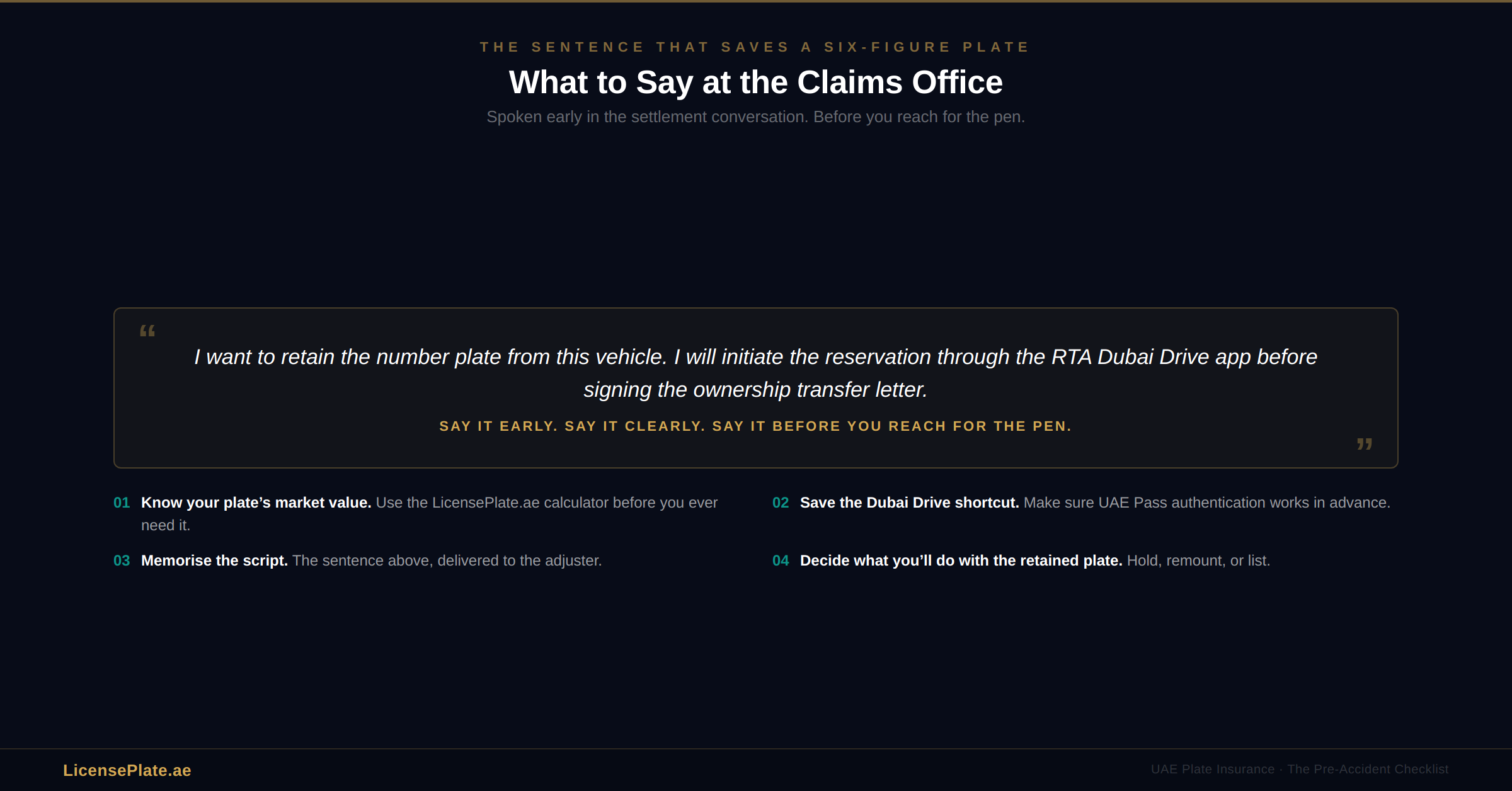
3. احفظ الجملة. إذا أُعلنت سيارتك يوماً خسارة كلية، فالجملة التي تحتاج إلى قولها لخبير المعاينة هي: "أريد الاحتفاظ برقم اللوحة من هذه المركبة. وسأبدأ إجراءات الحجز عبر تطبيق دبي درايف قبل توقيع خطاب نقل الملكية." وهذه الجملة، إذا قيلت مبكراً في محادثة التسوية، تحمي اللوحة بالكامل.
4. وثّق اللوحة في سجلّات تأمينك. عند تجديد تأمين مركبتك سنوياً، دوّن القيمة السوقية الحالية للوحة في سجلّاتك الخاصة. وهذا ليس مستند مطالبة، لكنه دليلك المكتوب على أنك تعاملت مع اللوحة كأصل منفصل. وإذا وصلت المسألة يوماً إلى وساطة أو نزاع، فإن هذا التوثيق يدعم موقفك.
5. قرّر مسبقاً ماذا ستفعل باللوحة المحجوزة. بعد مطالبة خسارة كلية، لا تكون لدى المالك عادةً مركبة لعدة أسابيع بينما يرتّب بديلاً. وتبقى اللوحة المحجوزة في الملف المروري بتكلفة تكاد تكون صفراً، كما هو موثّق في دليل تكلفة الملكية. ويمكنك تركيبها على السيارة الجديدة عند وصولها، أو الاحتفاظ بها لشراء مستقبلي، أو عرضها للبيع فوراً إذا كنت تفضّل تحقيق القيمة. ومعرفة تفضيلك مسبقاً تزيل احتكاك القرار في أسوأ وقت ممكن.
المفاهيم الخاطئة التي يحملها معظم المالكين
"وثيقتي الشاملة تغطّي كل شيء على السيارة، بما في ذلك اللوحة." لا تغطّيها. فالوثيقة تغطّي المركبة وملحقاتها. واللوحة ليست أياً منهما. اقرأ وثيقة التأمين، وابحث عن كلمة "لوحة"، ولن تجد شيئاً. وتؤكّد وثيقة التأمين الموحّدة على المركبات المنشورة في دليل قواعد مصرف الإمارات المركزي ذلك بالإغفال.
"ستتعامل شركة التأمين مع اللوحة كجزء من المطالبة، ولا أحتاج إلى فعل شيء." ستتعامل الشركة مع الحطام. واللوحة ليست جزءاً من الحطام. وليس على الشركة التزام قانوني أو حافز للحفاظ على لوحة ليست من أصولها، وخبير المعاينة الذي يعالج مطالبتك مدرَّب على إتمام تسوية المركبة، لا على حجز اللوحة. وإذا لم تُثِر أنت المسألة، فلن تُثار.
"دفعت مبلغاً إضافياً للحصول على لوحة متميّزة، فلا بد أن تأميني أخذها في الحسبان." لم يأخذها. فقسطك محسوب على أساس المركبة، لا اللوحة. وهذا قابل للتحقّق: اتصل بشركة تأمينك، واطلب منها تسعير سيارة مطابقة بلوحة اعتيادية ثم السيارة نفسها بلوحتك الفعلية. وسيكون العرضان متطابقين في كل الحالات تقريباً.
"إذا لم أحتفظ باللوحة، يمكنني ببساطة إعادة شرائها لاحقاً ممّن يحصل عليها." ليس تماماً. فاللوحات المعادة إلى مجموعة الهيئة بعد إلغاء مركبة تدخل مساراً إدارياً مختلفاً عن اللوحات المباعة في المزادات. والتوليفة المحدّدة التي خسرتها قد تعود للظهور وقد لا تعود، وإذا عادت فبعد سنوات وعبر قنوات لا يمكنك التنبّؤ بها. فاللوحة التي كان بإمكانك الاحتفاظ بها مقابل 100 درهم لا يمكن إعادة شرائها بأي مبلغ يمكن التنبّؤ به.
"هذه حالة استثنائية تمسّ عدداً قليلاً جداً من الناس." إنها تمسّ كل مالك لوحة في الدولة تقع له يوماً مطالبة خسارة كلية، وهو ما لا يُعدّ حالة استثنائية في مدينة تتجاوز فيها قيم اللوحات قيم المركبات بانتظام وتنتج فيها كثافة المرور آلاف مطالبات الخسارة الكلية سنوياً. إنها فجوة هيكلية لم يكتب أحد دليلاً كاملاً لسدّها.
الأسئلة الشائعة
س: ماذا يحدث للوحتي إذا أُعلنت سيارتي خسارة كلية في الإمارات؟
لا تنتقل اللوحة إلى شركة التأمين مع المركبة. بل تبقى مرتبطة بملفك المروري إلى أن يُشطب تسجيل المركبة لدى هيئة الطرق والمواصلات. وإذا بدأت إجراءات حجز اللوحة عبر تطبيق دبي درايف قبل حدوث ذلك الشطب، تُحفَظ اللوحة باسمك إلى أجل غير مسمّى. وإذا لم تفعل، تُعاد اللوحة عادةً إلى مجموعة التخصيص لدى الهيئة عند معالجة إلغاء المركبة.
س: هل يغطّي تأمين السيارات في الإمارات قيمة اللوحة المتميّزة؟
لا. فوثيقة التأمين الموحّدة على المركبات (الصادرة بموجب قرار مصرف الإمارات المركزي رقم 25 لسنة 2016) تؤمّن المركبة وملحقاتها. أما اللوحة فتُعامَل كبيان تسجيل مرتبط بالمركبة، لا كأصل مؤمَّن عليه بشكل منفصل. ويعني ذلك أن وثيقة شاملة على سيارة بقيمة 80,000 درهم تحمل لوحة بقيمة 500,000 درهم لا تزال تغطّي المركبة بقيمة 80,000 درهم فقط في سيناريو الخسارة الكلية.
س: كيف أحتفظ بلوحتي بعد حادث خسارة كلية؟
سجّل الدخول إلى تطبيق دبي درايف بالهوية الرقمية UAE Pass، وانتقل إلى ترخيص المركبات، ثم إدارة لوحات المركبة، واختر اللوحة التي تريد الاحتفاظ بها، وابدأ خدمة حجز رقم لوحة مركبة. رسوم دبي: 20 درهماً لـ 3 أشهر، و40 درهماً لـ 6 أشهر، و80 درهماً لسنة، بالإضافة إلى رسمَي المعرفة والابتكار. وابدأ هذه الخطوة قبل توقيع خطاب نقل ملكية المركبة لشركة التأمين.
س: ما هي عتبة الـ 50% لإعلان الخسارة الكلية في الإمارات؟
بموجب الفصل الثاني من وثيقة التأمين الموحّدة على المركبات، تُعتبر المركبة خسارة كلية عندما تتجاوز تكلفة الإصلاح 50% من قيمة المركبة قبل الحادث. وتعوّض الشركة عندئذٍ على أساس القيمة المؤمَّن عليها المتفق عليها في الوثيقة، مع خصم استهلاك بنسبة 20% وتعديل زمني تناسبي لفترة التأمين الجزئية.
س: هل تؤثر اللوحة المتميّزة في قسط تأميني في دبي؟
في معظم الحالات، لا. فشركات التأمين على المركبات في الدولة تحسب الأقساط بناءً على ماركة المركبة وطرازها وسنة صنعها وسعة محرّكها وعمر السائق وسجلّه في القيادة وتاريخ خصم عدم المطالبة. واللوحة المركّبة على المركبة ليست عامل تسعير معتاداً. فمرسيدس بلوحة اعتيادية ومرسيدس مطابقة بلوحة بملايين الدراهم ستحملان عادةً القسط نفسه.
س: هل يمكنني تأمين لوحة سيارة بشكل منفصل عن السيارة في الإمارات؟
منتجات التأمين المستقلة على اللوحات غير موجودة في سوق التأمين على المركبات في الإمارات. ويدرج أصحاب الثروات الكبيرة أحياناً اللوحات المتميّزة ضمن وثائق المقتنيات الشخصية أو ملاحق الأصول عالية القيمة المرتّبة عبر وسطاء متخصّصين. وهذه منتجات مفصّلة لا تستحق البحث فيها إلا لمحافظ لوحات في منتصف الأرقام الستة أو أعلى. أما بالنسبة لمعظم المالكين، فخطوة الحجز لدى الهيئة هي استراتيجية الحماية الكاملة.
س: كم تكلفة حجز لوحة في دبي؟
20 درهماً لحجز 3 أشهر، و40 درهماً لـ 6 أشهر، و80 درهماً لحجز سنة واحدة، بالإضافة إلى 10 دراهم رسم معرفة و10 دراهم رسم ابتكار. إجمالي تكلفة حجز سنة واحدة: 100 درهم. وهذه الرسوم منشورة على صفحات خدمات وزارة الداخلية وهيئة الطرق والمواصلات وتنطبق على أي مالك يريد الاحتفاظ بلوحة دون تركيبها على مركبة.
س: كم من الوقت أملك للاحتفاظ بلوحتي بعد مطالبة خسارة كلية؟
يجب بدء الحجز قبل شطب تسجيل المركبة لدى الهيئة، وهو ما يحدث عادةً بعد 48 إلى 72 ساعة من معالجة شركة التأمين لنقل الملكية. وعملياً، تمتدّ النافذة من اللحظة التي يخبرك فيها الخبير بأن السيارة خسارة كلية إلى لحظة معالجة الهيئة لإلغاء المركبة. تصرّف فوراً عندما تعلم أن السيارة ستُشطب.
س: ما هي وثيقة التأمين الموحّدة على المركبات في الإمارات؟
وثيقة التأمين الموحّدة على المركبات ضد الفقدان والتلف، الصادرة بموجب قرار مجلس إدارة هيئة التأمين رقم 25 لسنة 2016، هي النموذج المُلزِم للتأمين الشامل على المركبات في الدولة. وهي منشورة في دليل قواعد مصرف الإمارات المركزي وتحدّد الشروط الأساسية التي يجب على كل مؤمِّن على المركبات في الدولة اتّباعها. وتحكم الوثيقة عتبات الخسارة الكلية، والاستهلاك، والحطام، وإجراءات المطالبة.
س: إذا تلفت لوحتي مادياً في الحادث لكنني احتفظت بالملكية، فهل يمكنني الحصول على لوحة بديلة بالرقم نفسه؟
نعم. فخدمة إدارة لوحات المركبة لدى الهيئة تتيح استبدال اللوحات المفقودة أو التالفة. ولأن المالك يحتفظ بالملكية القانونية لرقم اللوحة نفسه، تحمل اللوحة المادية البديلة الرقم نفسه. ورسوم الاستبدال موثّقة في دليل رسوم دبي الخاص بنا. ولا ينجح ذلك إلا إذا أُنجزت خطوة الحجز قبل شطب تسجيل المركبة.
خاطرة أخيرة، بالعودة إلى شارع الشيخ زايد
المقيم الوارد في الفقرة الافتتاحية، ذاك الذي انتهت مرسيدسه دائرةً نحو الحاجز الوسطي صباح ثلاثاء في مارس، غير موجود. فالتفاصيل مركّبة، مجمّعة من ملفات مطالبات شائعة وبنود تأمين إماراتية حقيقية. لكن نسخاً من ذلك المقيم موجودة في كل مكان في نظام التأمين الإماراتي. وقد رآها خبراء المعاينة. وشاهد الوسطاء المحادثة من الجانب الآخر من المكتب. فمالك اللوحة يصل إلى مكتب المطالبات ظانّاً أن الجزء الصعب هو التفاوض على رقم التسوية. ويغادر وقد خسر شيئاً لم يدرك أنه كان على المحكّ.
نظام التأمين على المركبات في الإمارات نظام كفؤ ومنظَّم وفعّال تشغيلياً. ووثيقة التأمين الموحّدة على المركبات التي ينشرها المصرف المركزي وثيقة جوهرية تحمي مالكي المركبات بطرق حقيقية. أما ما لا تفعله، ولم تُصمَّم قط لفعله، فهو حماية مالكي اللوحات من فجوة ورثها قطاع التأمين عن إطار تنظيمي يسبق تحوّل اللوحات إلى فئات أصول جادّة. والفجوة ليست خطأ شركة التأمين. وليست خطأ الوثيقة. إنها موجودة لأن لوحات السيارات تجاوزت عتبة قيمة لم يُحدَّث إطار التأمين قط لمعالجتها، ولم يُضِف أحد على الطريق محادثة حجز اللوحة إلى النصّ المعتاد للمطالبات.
والخبر السار أن سدّ الفجوة لا يتطلّب إصلاحاً تنظيمياً، ولا منتجاً جديداً، ولا تفاوضاً مع شركة التأمين. بل يتطلّب جملة واحدة في مكتب المطالبات وطلب خدمة واحداً عبر تطبيق دبي درايف. وقرّاء هذا المقال الذين لن يتذكّروا شيئاً آخر ينبغي أن يتذكّروا الجملة: "أريد الاحتفاظ برقم اللوحة من هذه المركبة. وسأبدأ إجراءات الحجز عبر تطبيق دبي درايف قبل توقيع خطاب نقل الملكية." قُلها مبكراً. قُلها بوضوح. قُلها قبل أن تمدّ يدك إلى القلم.