

تشريح صفقة اللوحة: ما يحدث فعلاً بين "أريد هذه اللوحة" و"أصبحت مسجّلة باسمي"
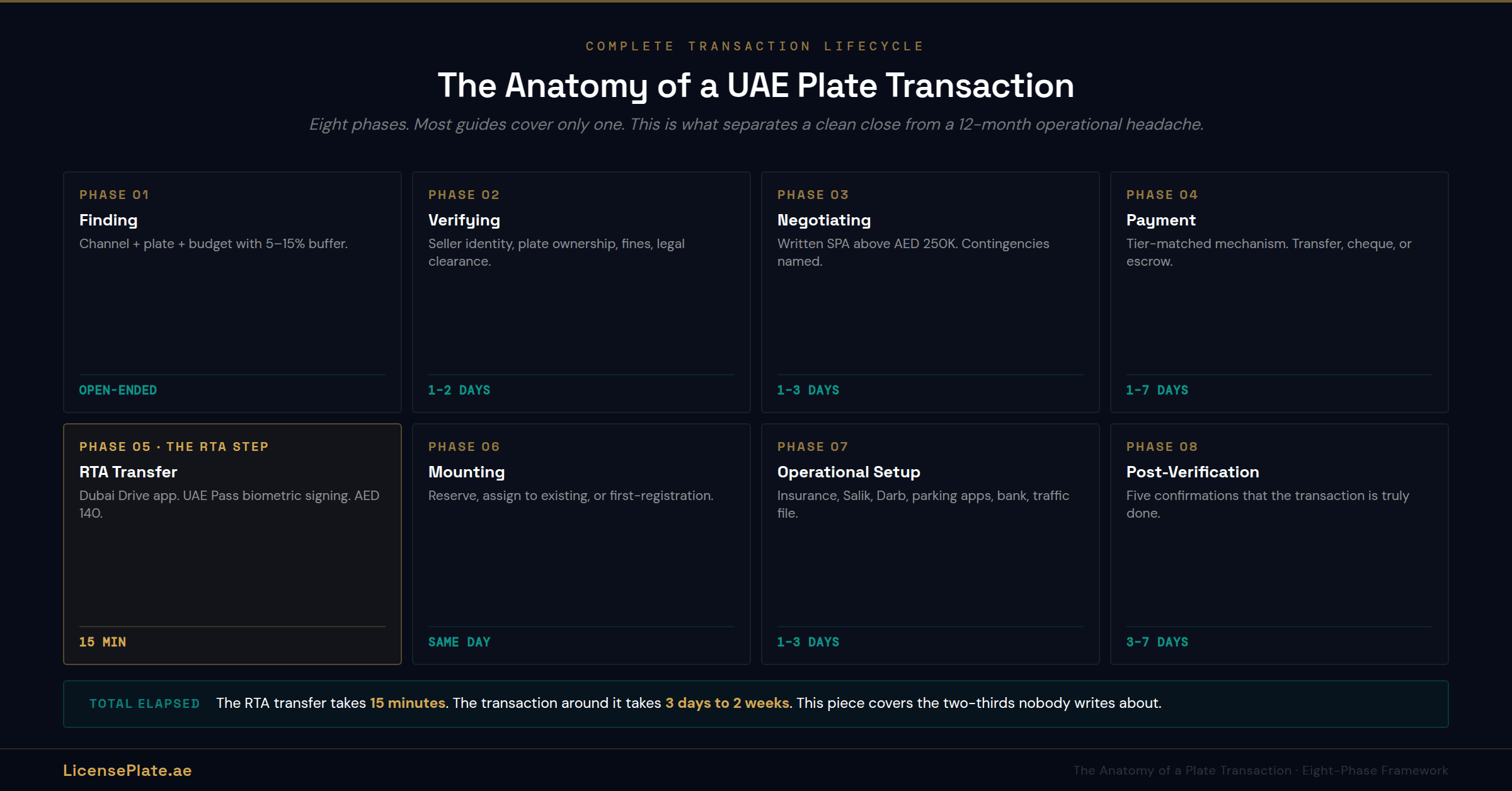
نقل اللوحة نفسه يستغرق خمس عشرة دقيقة. أما الصفقة المحيطة به فتستغرق من ثلاثة أيام إلى أسبوعين.
وهذا هو التفصيل الذي لا يخبر به أحد مشتري اللوحات لأول مرة. فمعظم الأدلّة تصف مسار تطبيق دبي درايف لدى الهيئة: سجّل الدخول بالهوية الرقمية UAE Pass، واختر اللوحة، وأدخل بطاقة هوية المشتري، ووقّع الاتفاقية، وادفع 140 درهماً. وتصفها صفحة خدمة الهيئة نفسها في خمس خطوات نظيفة. لكن تلك الخطوات الخمس هي الدقيقة التاسعة إلى الخامسة عشرة من صفقة بدأت قبل أسابيع. وما يحدث قبل فتح التطبيق، وما يحدث بعد مقاصة الدفعة، هو حيث تنجح الصفقات أو تفشل.
ويرسم هذا المقال دورة حياة صفقة اللوحة الإماراتية الكاملة بمراحلها الثماني. ويغطّي ما تفعله قبل أن تلمس التطبيق، وكيف تعمل آليات الدفع فعلياً عند شرائح سعرية مختلفة، وما تتضمّنه خطوة النقل لدى الهيئة حقيقةً، وما يجب عليك إتمامه بعد وصول اللوحة إلى ملفك المروري. ويغطّي دليل نقل ملكية لوحة في دبي المنفصل المسار الإداري لدى الهيئة بعمق. أما هذه القطعة فتغطّي الثلثين من الصفقة اللذين يحدثان حوله.
المرحلة الأولى: البحث (مرحلة ما قبل الالتزام)
قبل أن ينتقل أي مال، وقبل أن تُشارَك أي هوية، هناك البحث. ويصل القارئ إلى هذه المرحلة وهو يعرف ما يريد، تقريباً. لوحة ثلاثية الأرقام على رمز مبكر. أو رقم بعينه يطابق تاريخ ميلاد. أو مطابقة رقم طراز لسيارة يملكها بالفعل. ويغطّي مقال اقتصاديات اقتران السيارة باللوحة منطق المطابقة. ويغطّي مقال التحقّق من الأسعار التسعير بحسب الرمز وعدد الأرقام. وتقدّر حاسبة اللوحات القيمة السوقية لأي لوحة بعينها.
والبحث هو حيث يُرسى أساس الصفقة. فإذا التزم القارئ بلوحة قبل إتمام هذه المرحلة بشكل سليم، ترث كل مرحلة لاحقة الأخطاء. وقراران يهمّان أكثر من غيرهما. الأول: القناة، ويغطّي تحليل المزاد مقابل السوق الثانوية متى تكون كل قناة مناسبة. فالمزادات تصلح للوحات المتميّزة على رموز AA وBB وCC وDD. والأسواق الثانوية تصلح لكل ما عداها، بما في ذلك معظم لوحات الشريحة المتوسطة. والثاني: الميزانية، إذ ستتجاوز التكلفة الإجمالية للصفقة السعر المعلن للوحة بنحو 5 إلى 15% بعد احتساب جميع رسوم النقل والتسجيل وتكاليف ما بعد الشراء. ويوثّق تفصيل تكلفة الملكية كل بند.
مخرَج المرحلة الأولى: تحديد لوحة بعينها، واختيار القناة، وتأكيد الميزانية بهامش 5 إلى 15%. المدة المعتادة: مفتوحة. فبعض المشترين ينهون هذه المرحلة في بعد ظهر واحد. وآخرون يستغرقون ستة أشهر.
المرحلة الثانية: التحقّق (مرحلة العناية الواجبة)
قبل أي التزام بالدفع، تحقّق من اللوحة والبائع. وتغطّي قائمة العناية الواجبة سير عمل التحقّق الكامل. ويوثّق دليل الاحتيال فئات الاحتيال الخمس وكيفية عمل كل واحدة.
وخطوات التحقّق الحاسمة للمشتري: تأكّد من أن اللوحة في الملف المروري للبائع (لا لوسيط، ولا لقريب)، وتأكّد من عدم وجود مخالفات معلّقة على الملف المروري للبائع (فالمخالفات المعلّقة توقف النقل)، وتأكّد من تاريخ شهادة ملكية اللوحة (فتغيّرات الملكية الحديثة قد تشير إلى مضاربة سريعة لا إلى مخزون سوق ثانوية حقيقي)، وتأكّد من هوية البائع عبر بطاقة هوية إماراتية سارية. وللصفقات التي تتجاوز 500,000 درهم، يكون البحث في سجلّات محاكم مركز دبي المالي العالمي باسم البائع مناسباً أيضاً لاستبعاد أي دعاوى معلّقة قد تعقّد النقل.
مخرَج المرحلة الثانية: هوية بائع موثّقة، وملكية لوحة موثّقة، ووضع مخالفات نظيف، ووضع قانوني نظيف. المدة المعتادة: يوم إلى يومين. ولا تتخطَّ هذه المرحلة أبداً، مهما بدا البائع موثوقاً. ويوثّق مقال الأخطاء العشرة المكلفة حالات متعدّدة أدّى فيها تخطّي التحقّق في هذه المرحلة إلى خسائر بخمسة أرقام لاحقاً.
المرحلة الثالثة: التفاوض (مرحلة الاتفاق)
بمجرد اكتمال التحقّق، يتفق المشتري والبائع على الشروط النهائية. وكثيراً ما تُختصر هذه المرحلة في لغة عابرة كـ"اتفقنا على السعر"، لكن الاتفاق يغطّي أكثر من السعر. فهو يغطّي التوقيت، وآليات الدفع، والمسؤولية عن الرسوم (يدفع المشتري رسوم النقل عادةً، وإن كان ذلك قابلاً للتفاوض)، ومن يوفّر موعد تطبيق دبي درايف، وماذا يحدث إن فشل النقل عند خطوة الهيئة، وأي شروط مرتبطة بحالة اللوحة أو وضعها.
وبالنسبة لصفقات السوق الثانوية التي تتجاوز 250,000 درهم، يُنصح باتفاقية بيع وشراء مكتوبة موجزة حتى لو أنشأت الهيئة اتفاقيتها الرقمية أثناء النقل نفسه. فالاتفاق المسبق يحمي الطرفين خلال الفجوة بين "اتفقنا" و"نفّذنا". وينبغي أن يذكر رقم اللوحة، والسعر المتفق عليه، وطريقة الدفع، وتاريخ النقل المتوقّع، وعواقب إخلال أي من الطرفين.
وبالنسبة لمشتريات المزادات، تُضغط المرحلة الثالثة: فالمزايدة نفسها هي الاتفاق، وتحكم قواعد مزادات الهيئة كل الخطوات اللاحقة. ويصبح تأمين المزاد البالغ 5,000 درهم عربون حسن نيّة، ويكون أمام المشتري نافذة محدّدة (سبعة أيام عادةً) لإتمام الدفع والنقل.
مخرَج المرحلة الثالثة: اتفاق موقّع (للسوق الثانوية) أو تأكيد فوز بمزاد (لمزادات الهيئة)، وجدول دفع واضح، وتاريخ نقل واضح. المدة المعتادة: يوم إلى ثلاثة أيام.
المرحلة الرابعة: الدفع (مرحلة حركة المال)
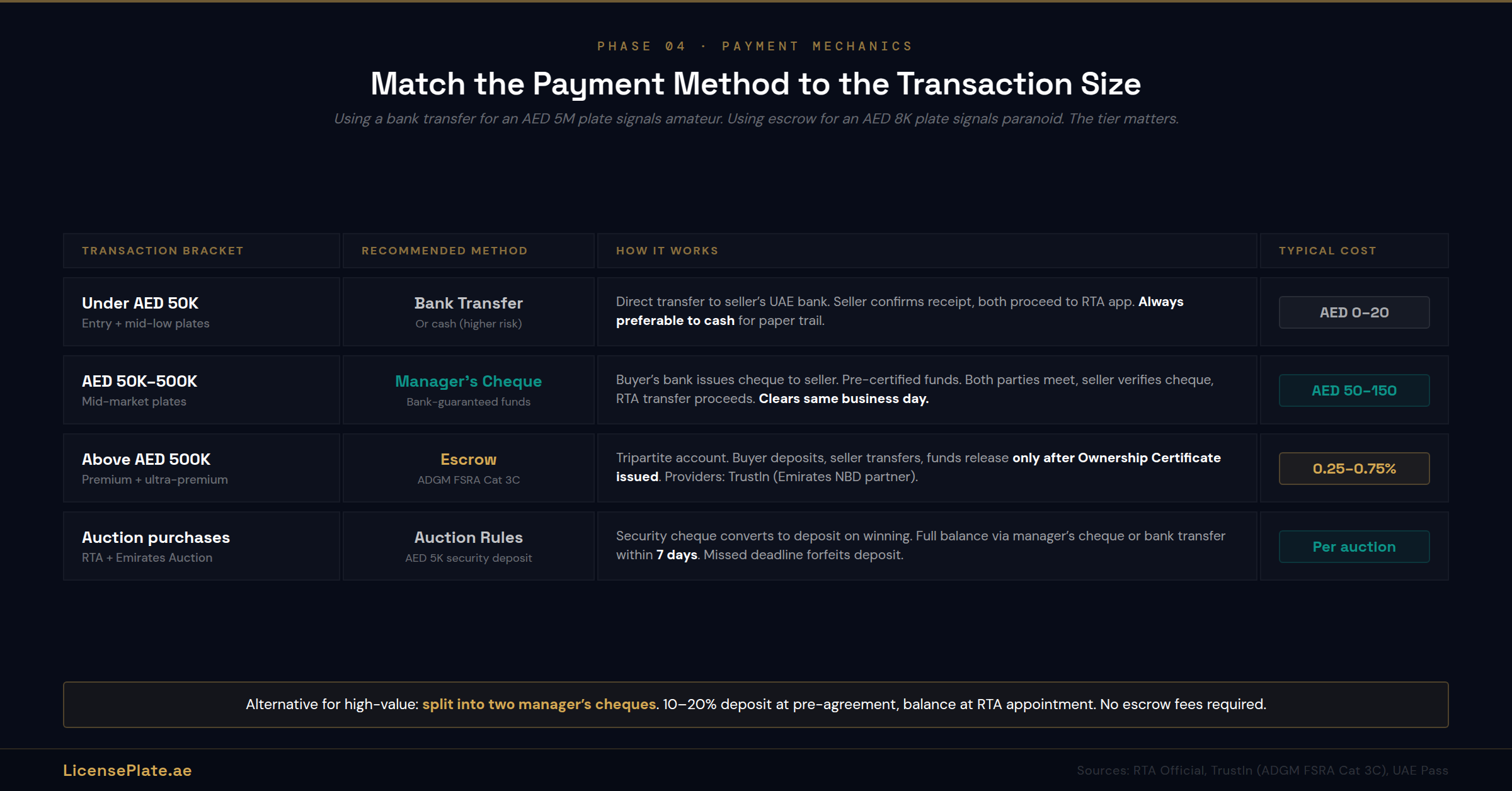
هذه هي المرحلة التي يوجد فيها أوسع تباين بين الصفقات. فلوحة بـ 8,000 درهم ولوحة بـ 8,000,000 درهم تستخدمان آليات دفع مختلفة تماماً. وإليك التفصيل شريحةً شريحة:
الصفقات دون 50,000 درهم: تحويل مصرفي مباشر أو نقد
للوحات منخفضة القيمة (لوحات الدخول الخماسية، وبعض اللوحات الرباعية على الرموز المتوسطة)، التحويل المصرفي المباشر هو المعيار. فيحوّل المشتري إلى حساب البائع المصرفي في الدولة، ويؤكّد البائع الاستلام، ويمضي الطرفان إلى النقل عبر تطبيق الهيئة. ويُستخدم النقد أحياناً للصفقات منخفضة القيمة جداً لكنه يحمل مخاطر أعلى لعدم وجود أثر ورقي. والتحويل المصرفي أفضل دائماً.
الصفقات بين 50,000 و500,000 درهم: شيك مصرفي معتمد
للوحات الشريحة المتوسطة، الشيك المصرفي المعتمد هو معيار السوق. فيطلب المشتري شيكاً معتمداً من بنكه في الدولة، محرّراً باسم البائع. والشيك المعتمد الحقيقي مضمون من البنك — لكن توجد شيكات مزوّرة، ولهذا يجب التأكد منه لدى البنك المُصدِر. ويلتقي المشتري والبائع عند موعد النقل، ويتأكّد البائع من الشيك لدى البنك المُصدِر قبل توقيع النقل لدى الهيئة، ويمضي الطرفان. وتكلّف الشيكات المعتمدة عادةً من 50 إلى 150 درهماً لإصدارها وتُقاصّ خلال يوم العمل نفسه.
الصفقات فوق 500,000 درهم: حساب ضمان أو شيكات معتمدة متعدّدة
للوحات عالية القيمة، حساب الضمان هو الخيار الأكثر أماناً. فمزوّدو خدمات الضمان المرخّصون في الدولة مثل TrustIn، المنظَّم من سلطة تنظيم الخدمات المالية في سوق أبوظبي العالمي ضمن الفئة 3C، يشغّلون حسابات ثلاثية الأطراف يودع فيها المشتري الأموال، وينفّذ البائع النقل، ولا تُفرج الأموال إلا بعد تأكيد المشتري استلام شهادة ملكية اللوحة. وتتراوح رسوم الضمان عادةً بين 0.25% و0.75% من قيمة الصفقة، بحدّ أقصى عند عتبات محدّدة.
وأياً كان المبلغ، لا تدفع جزءاً من السعر كعربون قبل النقل. وإن لم يُستخدم حساب ضمان، فسلِّم الدفعة كاملة عند موعد النقل لدى الهيئة نفسه — بشيك معتمد تتأكد منه لدى البنك المُصدِر، أو بتحويل بنكي يصل أثناء حضور الطرفين. فالعربون المدفوع عند توقيع اتفاق مسبق هو بالضبط ما يعتمد عليه احتيال الودائع؛ اطّلع على كيف تتحقق من شهادة الهيئة قبل الدفع.
الصفقات في المزادات: قواعد الدفع لدى دار المزاد
تفرض الهيئة ومزاد الإمارات قواعد دفع محدّدة. فبالنسبة لمزادات الهيئة، يتحوّل شيك التأمين البالغ 5,000 درهم إلى عربون عند الفوز، ويجب سداد كامل الرصيد خلال سبعة أيام عبر شيك معتمد أو تحويل مصرفي. وبالنسبة لفعاليات مزاد الإمارات، تنطبق قواعد مماثلة مع اختلافات بحسب صيغة المزاد. والتخلّف عن الدفع خلال النافذة يُسقط العربون وتعود اللوحة إلى مجموعة المزاد. ولسياق المزاد والتحضير له، راجع دليل لوحات دبي الشامل ومراجعة نصف العام للاطّلاع على نمط مزادات 2026.
مخرَج المرحلة الرابعة: تأمين الأموال بآلية مناسبة لحجم الصفقة، وتوثيق إثبات الدفع. المدة المعتادة: من يوم إلى سبعة أيام بحسب الآلية.
المرحلة الخامسة: النقل لدى الهيئة (المرحلة الإدارية)
هذه هي المرحلة التي تستغرق 10 إلى 15 دقيقة والتي تصفها معظم الأدلّة بأنها "النقل". وهي مرحلة واحدة فقط من ثماني. والآليات الإدارية الكاملة مغطّاة في دليلنا المخصّص لنقل ملكية لوحة في دبي. والنسخة المختصرة:
يفتح الطرفان تطبيق دبي درايف. ويصادق كلاهما عبر UAE Pass. ويبدأ البائع النقل من ترخيص المركبات > لوحاتي > نقل ملكية اللوحة. ويُدخل البائع بطاقة هوية المشتري ورقم ملفه المروري. ويتحقّق النظام من الطرفين. وتنشئ الهيئة اتفاقية بيع وشراء رقمية. ويوقّع الطرفان بيومترياً عبر UAE Pass. ويدفع المشتري رسم النقل البالغ 120 درهماً بالإضافة إلى 20 درهماً رسم المعرفة عبر التطبيق. وتصدر شهادة ملكية رقم اللوحة فوراً عبر رسالة نصية وبريد إلكتروني. وتصبح اللوحة الآن مسجّلة في الملف المروري للمشتري.
وبالنسبة للنقل الحضوري (إذا كان أحد الطرفين لا يملك UAE Pass، أو للوحات التي تتطلّب معالجة خاصة كاللوحات الكلاسيكية)، تنتقل المعاملة إلى مركز سعادة المتعاملين. والمستندات المطلوبة تشمل بطاقتَي الهوية الإماراتية الأصليتين للطرفين، وشهادة ملكية اللوحة الأصلية للبائع، وطلب نقل لوحة مكتملاً، وإثبات الدفع. ويستغرق النقل الحضوري عادةً من 30 إلى 45 دقيقة من الوصول إلى إصدار الشهادة.
وبالنسبة للوحات أبوظبي، تجري العملية المكافئة عبر منصة أبوظبي للتنقّل (مركز النقل المتكامل سابقاً) وبوابة الخدمات الحكومية تم. وبالنسبة للنقل بين الإمارات (نقل لوحة أبوظبي إلى دبي أو العكس)، يغطّي دليل نقل اللوحات بين الإمارات العملية بالكامل. والرسوم والمدد تختلف عن النقل داخل الإمارة الواحدة.
مخرَج المرحلة الخامسة: إصدار شهادة ملكية اللوحة، وتسجيل اللوحة في الملف المروري للمشتري. المدة المعتادة: 15 دقيقة (إلكترونياً)، أو 30 إلى 45 دقيقة (حضورياً).
المرحلة السادسة: التركيب (مرحلة اللوحة المادية)
أصبحت اللوحة الآن ملك المشتري قانونياً. والسؤال التالي ما الذي يُفعل بها مادياً. وتوجد ثلاثة خيارات، لكلٍّ منها تبعاته المتميّزة:
الخيار A: الاحتفاظ باللوحة محجوزة. تقبع اللوحة في الملف المروري للمشتري دون تخصيصها لأي مركبة. وهذا مناسب للمستثمرين الذين يحتفظون باللوحات كأصول وللمشترين غير المستعدّين بعد لتركيب اللوحة على سيارة بعينها. ولا يوجد رسم سنوي للاحتفاظ بلوحة محجوزة في دبي. ويمكن تخصيص اللوحة لمركبة في أي وقت عبر خدمة تغيير رقم لوحة المركبة لدى الهيئة.
الخيار B: التخصيص لمركبة قائمة. يملك المشتري مركبة بالفعل ويريد تركيب اللوحة الجديدة عليها. ويتطلّب ذلك إزالة اللوحة القائمة من تلك المركبة أولاً (فاللوحة القائمة إما تعود إلى الملف المروري للمشتري كلوحة محجوزة أو يُتنازل عنها للهيئة). ويتمّ التخصيص عبر تطبيق الهيئة أو في مركز سعادة المتعاملين. ويلي ذلك استلام اللوحة المادية: 35 درهماً للوحات القصيرة، و50 درهماً للوحات الطويلة. وتُعاد إصدار ملكية المركبة برقم اللوحة الجديد.
الخيار C: التخصيص لمركبة جديدة تُسجَّل لأول مرة. يقتني المشتري سيارة جديدة ويريد تخصيص اللوحة لتلك السيارة عند التسجيل. وتُحدَّد اللوحة الجديدة أثناء التسجيل الأول للمركبة، وتصدر الملكية بتلك اللوحة من اليوم الأول. وهذه أنظف آلية تخصيص وتتجنّب خطوة إزالة اللوحة في الخيار B.
مخرَج المرحلة السادسة: اللوحة إما مركّبة أو محجوزة أو مخصّصة لمركبة جديدة قيد الإجراء. المدة المعتادة: اليوم نفسه في الخيار B أو C مع مركبة قائمة؛ وأطول في الخيار C مع مركبة جديدة قيد التسجيل.
المرحلة السابعة: الإعداد التشغيلي (مرحلة الأنظمة المرتبطة)
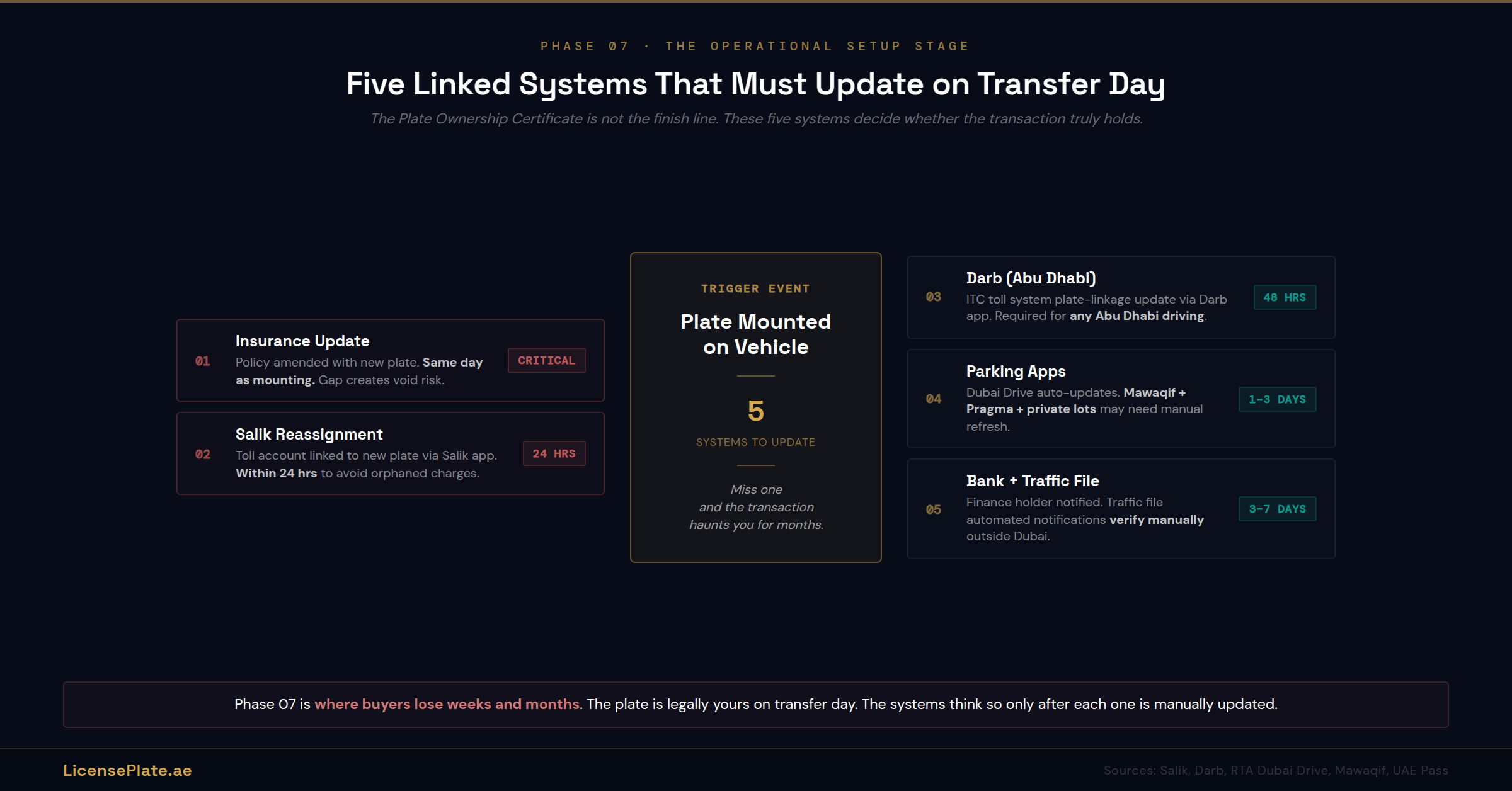
هذه هي المرحلة التي يغفلها معظم المشترين لأول مرة تماماً. فحين تُركَّب اللوحة على مركبة، يجب تحديث عدة أنظمة خارجية لتعترف بالاقتران الجديد بين اللوحة والمركبة. وإغفال هذه الخطوات يخلق مشكلات تشغيلية لأسابيع أو أشهر.
تحديث التأمين
يجب تحديث شهادة تأمين المركبة برقم اللوحة الجديد. وتعالج معظم شركات التأمين ذلك كتعديل بسيط للوثيقة دون تكلفة قسط إضافية، وإن كان بعضها يفرض رسماً إدارياً رمزياً (من 50 إلى 200 درهم). ويجب أن يتمّ التحديث في اليوم الذي تُركَّب فيه اللوحة. فقيادة مركبة لا تطابق لوحتها شهادة التأمين تخلق خطر بطلان التأمين إن وقع حادث. وللتغطية التفصيلية، راجع دليل التأمين الخاص باللوحات.
إعادة ربط بطاقة سالك
بطاقات سالك مرتبطة بملكية المركبة وبالتالي برقم اللوحة. وحين تتغيّر اللوحة على مركبة، يحتاج حساب سالك إلى تحديث كي تستمرّ الرسوم في الارتباط بالحساب الصحيح. وهذا تحديث في اليوم نفسه عبر تطبيق سالك أو موقعه. والتخلّف عن التحديث يعني أن رسوم سالك قد تتحوّل افتراضياً إلى حالة "مركبة غير محدّدة"، ما يُطلق غرامات.
درب (أبوظبي) إن انطبق
بالنسبة للمركبات المستخدمة في أبوظبي، يتطلّب نظام رسوم درب تحديث ربط رقم اللوحة نفسه. ويتمّ التحديث عبر تطبيق درب أو موقع المركز. وبالنسبة للمركبات العابرة للإمارات، يجب تحديث حسابَي سالك ودرب معاً.
تطبيقات المواقف (دبي درايف، ومواقف، وبراجما)
يجب تحديث تطبيقات المواقف المرتبطة برقم لوحة المركبة. وبالنسبة لدبي درايف، يتمّ ذلك تلقائياً بمجرد تحديث الملكية. وبالنسبة لمواقف في أبوظبي، يتمّ التحديث عبر تطبيق مواقف. وبالنسبة للإمارات الأخرى ومشغّلي المواقف الخاصة، قد تكون تحديثات رقم اللوحة يدوية.
إشعارات البنك والملف المروري
إذا كانت المركبة ممولة، يجب إبلاغ البنك الذي يحتفظ بسجلّ التمويل بتغيير اللوحة. ويحدّث البنك سجلّاته مقابل الملكية الجديدة. وبالمثل، إذا كان الملف المروري للمشتري لديه إشعارات آلية (مخالفات، وتجديدات تسجيل)، فإن تغيير اللوحة يحدّث تلك السجلّات تلقائياً في دبي لكنه قد يتطلّب تحقّقاً يدوياً في أبوظبي والإمارات الأخرى.
مخرَج المرحلة السابعة: تحديث جميع الأنظمة المرتبطة، وعدم وجود روابط يتيمة. المدة المعتادة: من يوم إلى ثلاثة أيام لإتمام جميع التحديثات.
المرحلة الثامنة: التحقّق بعد النقل (مرحلة التأكيد)
تؤكّد المرحلة الأخيرة أن الصفقة اكتملت بنظافة عند كل نقطة اتصال. ويلتقط هذا التحقّق أخطاءً كانت ستظهر لاحقاً بعد أسابيع أو أشهر كمخالفات أو مشكلات تأمين أو مشكلات تسجيل.
تأكّد من أن شهادة ملكية اللوحة تذكر بطاقة الهوية الإماراتية الصحيحة. نزّل ملف PDF من تطبيق دبي درايف أو من بريد الهيئة. وتحقّق من تطابق رقم هوية المشتري تماماً. فأي عدم تطابق يستلزم تصحيحاً فورياً من الهيئة قبل أن يصبح خطر بطلان نقل.
تأكّد من أن الملكية الجديدة (إن خُصّصت لمركبة) تعكس اللوحة الجديدة. فيجب أن تذكر الملكية رقم اللوحة الجديد كلوحة المركبة المخصّصة. فالإشارات المتبقّية للوحة القديمة تخلق مشكلات لاحقة عند تجديد التسجيل.
تأكّد من أن شهادة التأمين تذكر اللوحة الجديدة. افتح وثيقة التأمين وتحقّق من رقم اللوحة المعروض. واطبع نسخة أو احفظها في مجلّد مستندات المركبة.
تأكّد من أن حسابَي سالك ودرب يُحمّلان بشكل صحيح. مُرّ عبر بوابة رسوم خلال 3 إلى 5 أيام وتحقّق من ظهور الرسم على الحساب الصحيح. وهذه أسرع طريقة لالتقاط أخطاء الربط.
تأكّد من أن البائع ألغى تغطيته المتبقّية. فتأمين البائع السابق وتطبيقات المواقف وحسابات الرسوم ينبغي ألّا تحمل اللوحة بعد الآن. وتأكيد ذلك يحمي المشتري من رسوم يتيمة مرتبطة بحسابات المالك السابق.
مخرَج المرحلة الثامنة: تأكيد جميع الأنظمة، واكتمال الصفقة. المدة المعتادة: من 3 إلى 7 أيام من الزمن المنقضي للتحقّق من جميع الأنظمة. ومعظم الفحوص تستغرق 5 إلى 10 دقائق من الجهد الفعلي لكل منها.
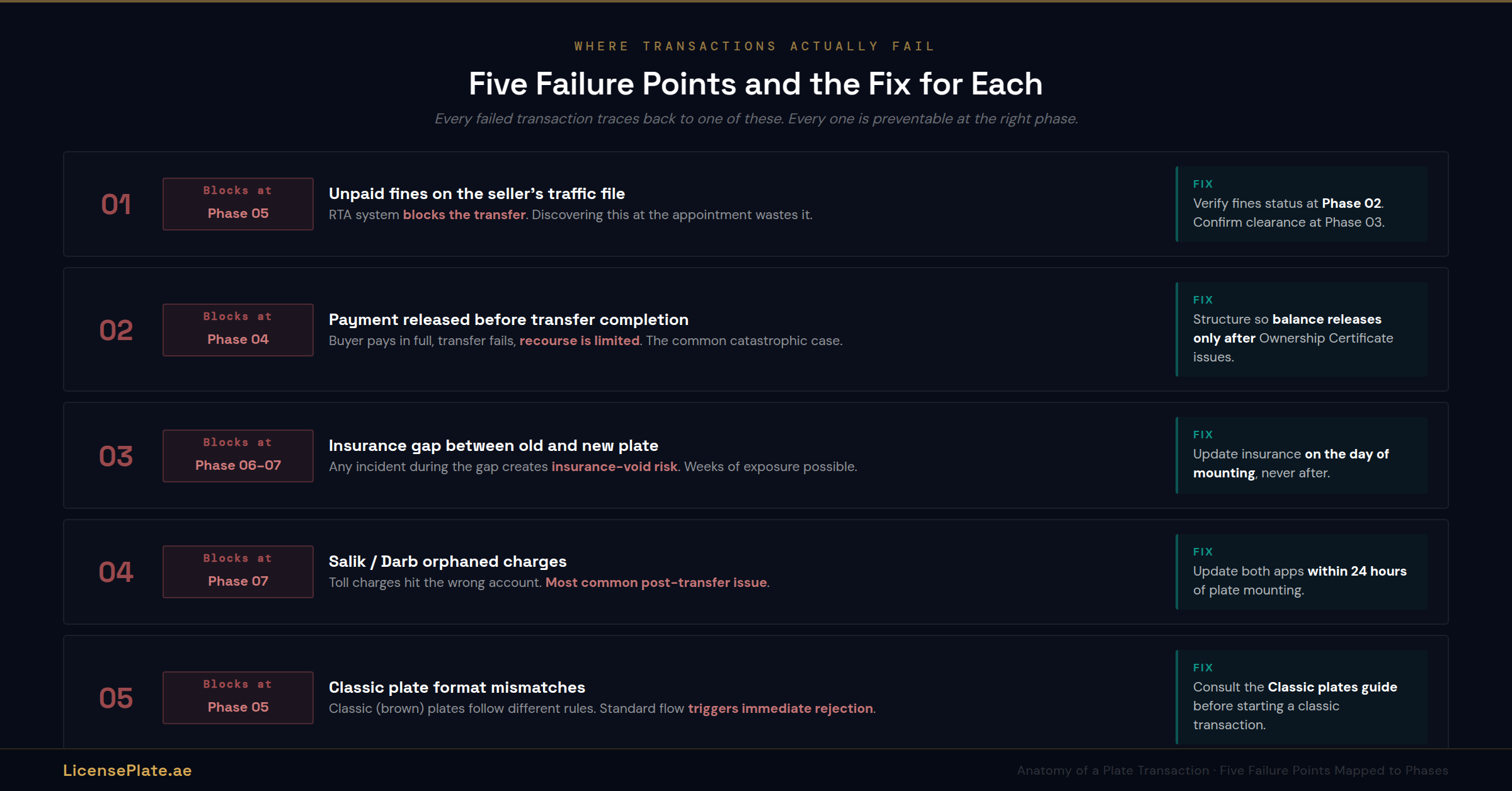
خمس نقاط تفشل عندها الصفقات فعلاً
نقطة الفشل الأولى: مخالفات غير مسدّدة على الملف المروري للبائع (توقّف في المرحلة 2-5). يوقف نظام الهيئة نقل اللوحات حين يكون على الملف المروري للبائع مخالفات مستحقّة. واكتشاف ذلك في المرحلة الخامسة (موعد النقل) يهدر الموعد. تحقّق من وضع المخالفات في المرحلة الثانية وأكّد التسديد في المرحلة الثالثة.
نقطة الفشل الثانية: الإفراج عن الدفعة قبل إتمام النقل. فالمشترون الذين يدفعون كامل المبلغ قبل المرحلة الخامسة ثم يكتشفون وجود ما يمنع النقل لديهم سبل انتصاف محدودة. هيكل الدفع بحيث لا تُفرج الغالبية إلا بعد إصدار شهادة ملكية اللوحة.
نقطة الفشل الثالثة: فجوة تأمينية بين اللوحة القديمة والجديدة. فإذا حملت المركبة اللوحة الجديدة قبل تحديث التأمين، فإن أي حادث خلال الفجوة يخلق خطر بطلان التأمين. حدّث التأمين يوم التركيب، لا بعده.
نقطة الفشل الرابعة: رسوم سالك/درب اليتيمة. وهي أكثر مشكلات ما بعد النقل شيوعاً. فرسوم المرور تواصل الوصول إلى حساب البائع أو تتحوّل افتراضياً إلى حالة مركبة غير محدّدة. حدّث كلا التطبيقين خلال 24 ساعة من تركيب اللوحة.
نقطة الفشل الخامسة: عدم تطابق صيغ اللوحات الكلاسيكية. فاللوحات الكلاسيكية (الفئة البنّية) لها قواعد نقل ومتطلّبات عمر مركبة محدّدة. ومحاولة نقل لوحة كلاسيكية باستخدام مسار اللوحات الخاصة الاعتيادي تؤدّي إلى رفض فوري. راجع دليل لوحات دبي الكلاسيكية قبل بدء صفقة لوحة كلاسيكية.
الأسئلة الشائعة
س: كم تستغرق صفقة اللوحة الكاملة من البداية إلى النهاية؟
بين 3 أيام وأسبوعين. فخطوة النقل لدى الهيئة نفسها تستغرق 10 إلى 15 دقيقة عبر تطبيق دبي درايف، لكن الصفقة المحيطة (التحقّق، والاتفاق، وآليات الدفع، والتركيب، والإعداد التشغيلي، والتحقّق بعد النقل) تضيف عادةً من 3 إلى 13 يوماً من الزمن المنقضي. والمزادات تضغط الجدول الزمني؛ أما صفقات السوق الثانوية التي تتجاوز 500,000 درهم فتميل إلى إطالته.
س: ما الرسوم الفعلية لنقل لوحة فقط في دبي؟
140 درهماً لنقل اللوحة لدى الهيئة نفسه (120 درهماً رسم النقل + 20 درهماً رسم المعرفة). وقد تشمل التكاليف الإضافية لوحة مادية جديدة (35 درهماً للقصيرة، و50 درهماً للطويلة) إن كانت اللوحة تُركَّب على مركبة، وتعديل وثيقة التأمين (من 50 إلى 200 درهم)، وإصدار الشيك المعتمد (من 50 إلى 150 درهماً). إجمالي التكلفة الإضافية المعتادة: من 150 إلى 400 درهم فوق سعر شراء اللوحة.
س: هل يمكنني استخدام حساب ضمان في صفقة لوحة في دبي؟
نعم. فمزوّدو خدمات الضمان المرخّصون في الدولة مثل TrustIn، المنظَّم من سلطة تنظيم الخدمات المالية في سوق أبوظبي العالمي ضمن الفئة 3C، يشغّلون حسابات ضمان مناسبة لصفقات اللوحات. وللصفقات التي تتجاوز 500,000 درهم، يُعدّ الضمان آلية حماية الدفع الموصى بها. وتتراوح الرسوم عادةً بين 0.25% و0.75% من قيمة الصفقة.
س: ماذا لو فشل النقل عند خطوة تطبيق الهيئة؟
لا يفشل النقل إلا إذا لم يتحقّق أحد الشروط المسبقة: مخالفات غير مسدّدة على أي من الطرفين، أو فشل التحقّق من الهوية، أو عدم تطابق بيانات الملف المروري. وإذا فشل النقل، لا تُفرض أي رسوم، ويبقى الطرفان في وضعهما قبل النقل. عالج الشرط المسبق (سدّد المخالفات، وصحّح بيانات الهوية) وأعد بدء النقل. وينبغي تصميم هياكل الدفع بحيث لا تُفرج أموال المشتري حتى يكتمل النقل بنجاح.
س: هل يجب أن أكون حاضراً جسدياً في دبي لإتمام النقل؟
لا، إن كان لدى الطرفين UAE Pass. فالنقل عبر تطبيق دبي درايف رقمي بالكامل ويمكن إتمامه من أي مكان به اتصال بالإنترنت. ويصادق الطرفان عبر بيومترية UAE Pass (الوجه أو البصمة). والحضور الجسدي مطلوب فقط للنقل الحضوري في مراكز سعادة المتعاملين، وهو ما يلزم عادةً حين لا يملك أحد الطرفين UAE Pass أو للوحات ذات متطلّبات معالجة خاصة.
س: ماذا يحدث لبطاقة سالك عند تغيير اللوحة؟
بطاقة سالك مثبّتة مادياً على المركبة، لا على اللوحة. وحين تتغيّر اللوحة على مركبة، يجب تحديث تسجيل حساب سالك لربط الحساب برقم اللوحة الجديد. ويتمّ ذلك عبر تطبيق سالك ويستغرق نحو 5 دقائق. والتخلّف عن التحديث يعني أن الرسوم قد تتحوّل افتراضياً إلى حالة مركبة غير محدّدة.
س: هل يمكنني شراء لوحة في إمارة وتسجيلها في أخرى؟
نعم، عبر إجراءات النقل بين الإمارات المغطّاة في دليل نقل اللوحات بين الإمارات لدينا. وتختلف العملية عن النقل داخل الإمارة الواحدة لأنها تتضمّن إلغاء التسجيل من جهة الإمارة المصدر والتسجيل لدى جهة الإمارة الوجهة. ويستغرق النقل بين الإمارات عادةً من 5 إلى 10 أيام عمل ويتكبّد رسوماً إضافية لدى الجهتين.
س: هل توجد فترة خيار بعد صفقة اللوحة؟
لا توجد فترة خيار رسمية لصفقات اللوحات في الإمارات. فبمجرد إصدار شهادة ملكية اللوحة ودفع رسم النقل، تصبح الصفقة نهائية. ولهذا تهمّ العناية الواجبة (المرحلة الثانية) والاتفاق قبل النقل (المرحلة الثالثة): فهما المرحلتان الوحيدتان اللتان يمكن لأي طرف الانسحاب فيهما دون عواقب جوهرية.
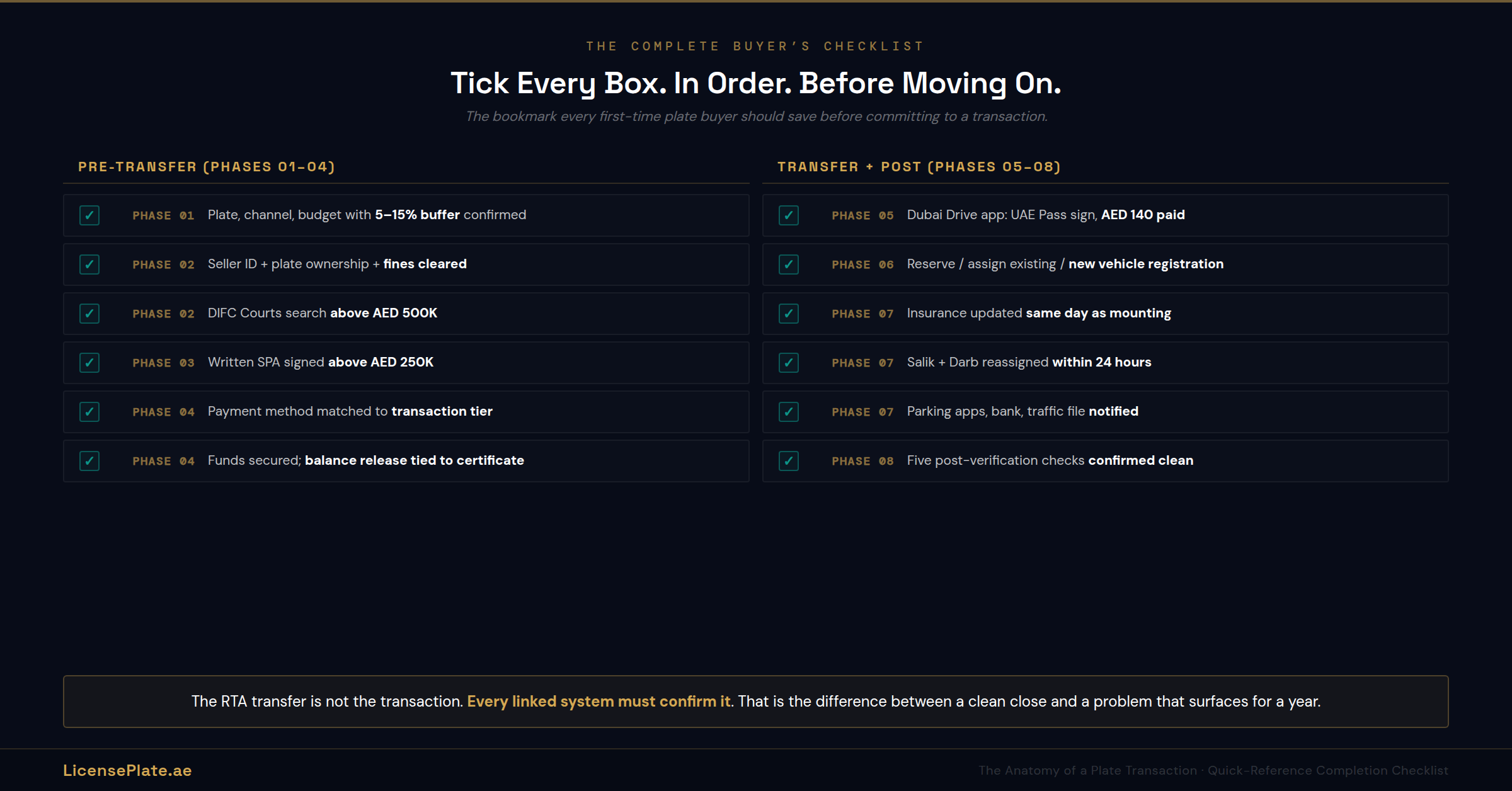
النقل لدى الهيئة ليس هو الصفقة. النقل لدى الهيئة مرحلة واحدة من ثماني. والمشترون الذين يفهمون هذا التسلسل يُتمّون أول صفقة لوحة لهم دون مفاجأة، ودون تأخير، ودون المشكلات التشغيلية التي تلاحق من يعاملون النقل بوصفه العملية بأكملها.
قبل أن تلتزم بلوحة، اقرأ قائمة العناية الواجبة ودليل الاحتيال. وحين تكون مستعداً لتسعير لوحة بعينها، استخدم حاسبة اللوحات. وحين تكون مستعداً للتصفّح، ابدأ بـإعلانات دبي أو إعلانات أبوظبي. وحين يحين النقل الإداري نفسه، يستعرض دليل نقل اللوحات في دبي مسار الهيئة خطوة بخطوة. وكل قطعة في المكتبة موجودة لدعم مرحلة أو أخرى من دورة الحياة هذه.
اللوحة لا تُنقل حين يُظهر التطبيق النجاح. اللوحة تُنقل حين يؤكّد كل نظام مرتبط ذلك. وهذا هو الفرق بين صفقة تُغلق بنظافة وصفقة تخلق مشكلات لعام كامل.