

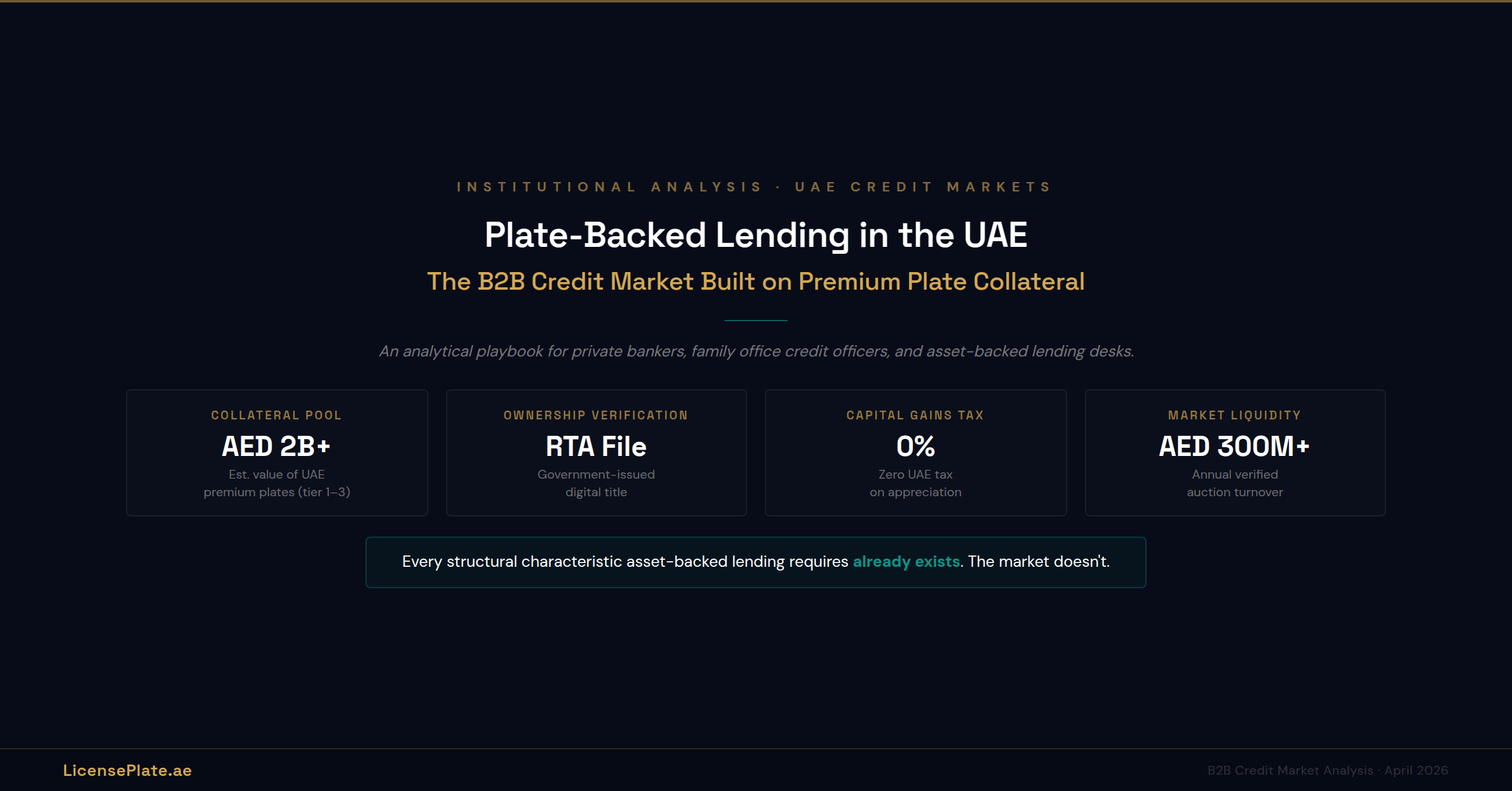
الإقراض بضمان اللوحات في الإمارات: سوق الائتمان بين الشركات المبني على ضمانات اللوحات المميّزة
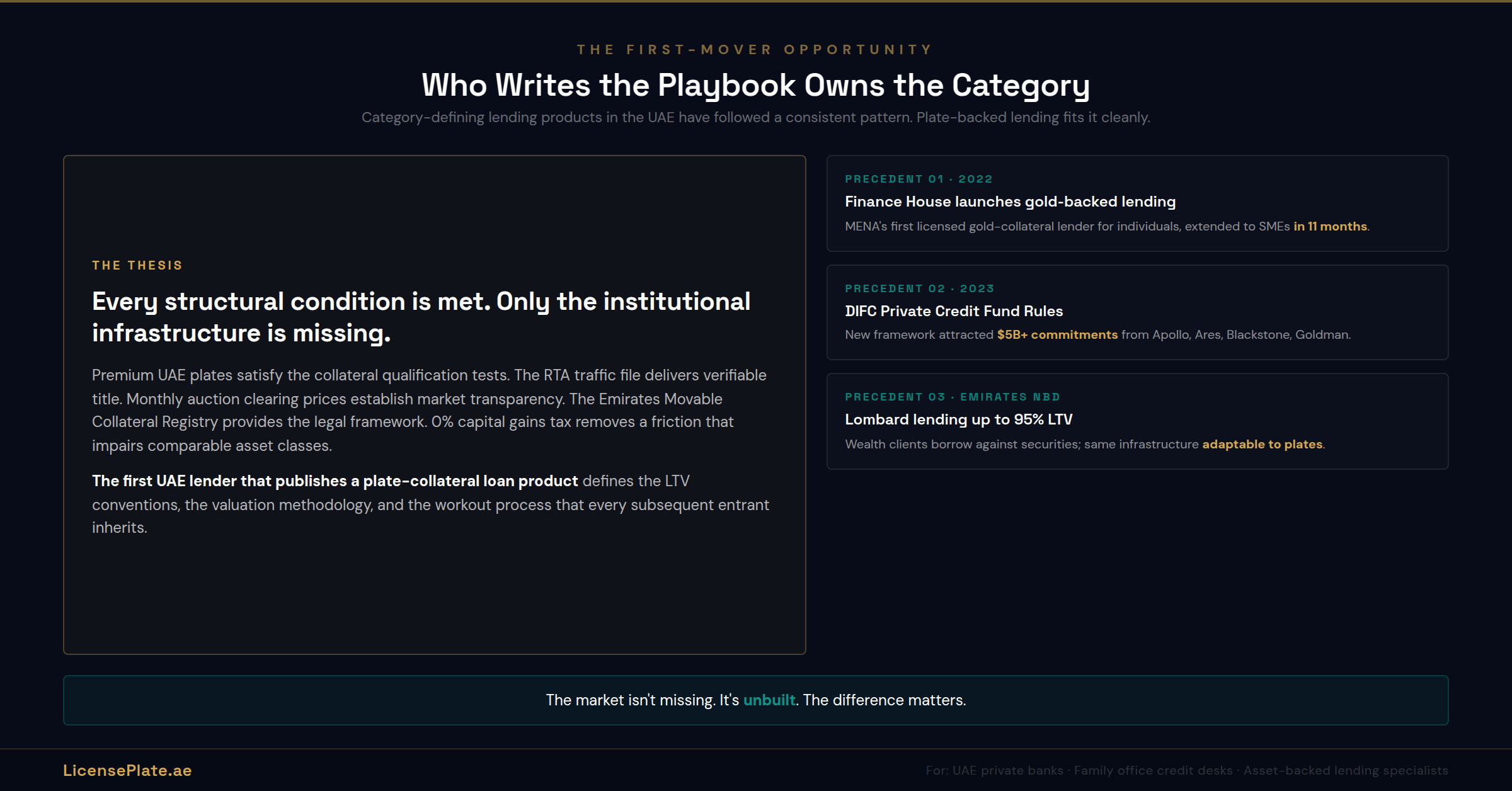
في يناير 2022، أعلنت شركة استثمار مقرّها الإمارات تُدعى Finance House أنها أصبحت أول مُقرض مرخّص في منطقة الشرق الأوسط وشمال أفريقيا يقدّم قروضاً بضمان الذهب للأفراد. وبعد أحد عشر شهراً، وسّعت الشركة المنتج ليشمل أصحاب المنشآت الصغيرة والمتوسطة، وقدّمته بلغة لافتة: القرض "متاح لأي نوع من العملاء، بغضّ النظر عن التاريخ الائتماني أو خطة العمل أو استراتيجية التطوير"، ما دام المقترض قادراً على تقديم ذهب مناسب كضمان وكان مسجّلاً في الدولة. والفكرة البنيوية وراء المنتج بسيطة. فالذهب أصل قابل للتحقّق بسعر سوقي شفّاف، وسوق ثانوية عالمية سائلة، ومعيار وزني ثابت يجعل التقييم مسألة ميزان وتغذية أسعار. وكل ما عدا ذلك ممّا يحدّد ما إذا كان المُقرض سيمنح ائتماناً، بما في ذلك تاريخ دخل المقترض أو خطة عمله، يصبح ثانوياً حين يحمل الضمان نفسه ما يكفي من اليقين.
والسؤال الذي يطرحه هذا المقال هو ما إذا كان بإمكان لوحات السيارات الإماراتية المميّزة، من حيث المبدأ، أن تشغل الموقع نفسه. فاللوحات لها سعر سوقي مرصود بتاريخ مزادات ممتدّ لسنوات. ولها معروض ثابت على الرموز المبكرة. وتنتقل عبر سجلّ حكومي مركزي (الملف المروري لدى هيئة الطرق والمواصلات) يتحقّق من الملكية باستعلام واحد من قاعدة بيانات. وفي قمة السوق، تُتداول بوحدات قدرها 3 ملايين درهم، و10 ملايين، و35 مليوناً، و55 مليوناً، وهي كبيرة بما يكفي لتبرير تكاليف تأسيس تسهيل ائتماني خاص ولإحداث أثر ملموس في ميزانية عميل إماراتي من أصحاب الثروات الكبيرة. ومحفظة لوحات مميّزة، لمكتب عائلة يملك حيازات لوحات إماراتية بقيمة 100 مليون درهم، تبدو ظاهرياً مرشّحاً مثالياً للتمويل بضمان الأصول على طريقة اللومبارد.
لكنها ليست كذلك، بعد. والسبب ليس أن البنوك لا تريد الإقراض بضمان اللوحات. بل إن حكماً بعينه في القانون الاتحادي الإماراتي، مقترناً ببنية سجلّ اللوحات لدى الهيئة، يخلق قيداً بنيوياً لا يستطيع المقترض ولا المُقرض حلّه منفرداً. وفهم هذا القيد هو الخطوة الأولى لفهم المسارات الثلاثة التي يمكن للإقراض بضمان اللوحات أن ينشأ من خلالها في الدولة رغم ذلك. ويرسم هذا المقال المسارات الثلاثة جميعها. وهو مكتوب للمصرفي الخاص في الإمارات، ومسؤول الائتمان في مكاتب العائلات، ومكتب الإقراض بضمان الأصول الذي يقيّم ما إذا كانت سوق اللوحات الإماراتية فئة تستحقّ بناء منتج حولها، أم فئة ستبقى مفصّلة على الطلب في المستقبل المنظور.
ما يقبله المقرضون في الإمارات بالفعل كضمان
قبل بحث ما إذا كانت اللوحات تصلح كضمان، خطّ الأساس: ما تقبله البنوك الإماراتية حالياً، وبأي شروط. والمشهد أكثر تطوّراً ممّا يفترض معظم المراقبين من الخارج، لكنه أيضاً أضيق تعريفاً.
السائد: الإقراض بضمان الأوراق المالية
كل بنك خاص كبير في الإمارات يقدّم إقراضاً على طريقة اللومبارد بضمان الأوراق المالية القابلة للتداول. فـتسهيل الإقراض بضمان الأصول لدى بنك الإمارات دبي الوطني يمنح ائتماناً يصل إلى 95% من قيمة الأصل المرهون مقابل الأسهم وحقوق الملكية والودائع الثابتة، مع نسخة متوافقة مع الشريعة عبر التورّق متاحة لعملاء الخدمات المصرفية الإسلامية. ويقدّم الإقراض المفصّل لدى الخدمات المصرفية الخاصة في بنك أبوظبي التجاري هياكل مماثلة: تسهيلات مقابل أسهم مدرجة في سوق أبوظبي للأوراق المالية وسوق دبي المالي، ومقابل الودائع الثابتة وودائع الوكالة، ومقابل محافظ الأوراق المالية الدولية، ومقابل وثائق التأمين على الحياة الشاملة الصادرة عن شركات مصنّفة A. ويقبل الإقراض بضمان الثروة لدى ستاندرد تشارترد الإمارات الودائع الثابتة وصناديق الاستثمار والسندات ووثائق التأمين والمنتجات المهيكلة كضمانات، بنسب قرض إلى قيمة نموذجية على صناديق الاستثمار تبلغ نحو 70%. وهذه هي المنتجات الجاهزة. وكل عميل من أصحاب الثروات الكبيرة لدى بنك خاص في الإمارات لديه وصول إليها.
الوسطاء المتخصّصون: التسهيلات المعقّدة والعابرة للحدود
وفوق منتجات البنوك بدرجة، يهيكل وسطاء تمويل متخصّصون إقراضاً مقابل أصول لا تستطيع بنوك التجزئة تحمّل مخاطرها. فـGSB Capital، وهي شركة تمويل خاص مقرّها مركز دبي المالي العالمي ومرخّصة من هيئة السلوك المالي البريطانية، ترتّب تسهيلات تبدأ عادةً من مليون جنيه إسترليني، وتعمل مع شبكة انتقائية من البنوك الخاصة والمقرضين المتخصّصين في الصفقات العابرة للحدود. وتتوسّط Enness Global في دبي في التمويل بضمان الأوراق المالية بما في ذلك قروض اللومبارد مقابل الأسهم المدرجة، وقروض ما قبل الطرح العام، وقروض الأسهم غير المدرجة، والقروض مقابل خطوط أسهم مفردة، بآجال تتراوح عادةً بين 12 و24 شهراً. ويعمل هؤلاء المتخصّصون في المساحة بين الخدمات المصرفية السائدة وهيكلة الصفقات الخاصة. وهم الشركات التي ستكتب أول تسهيل بضمان اللوحات حين تسمح الظروف.
السوابق غير التقليدية: الذهب والأعمال الفنية والمركبات
وإلى جانب الأوراق المالية، لدى الإمارات سوابق عاملة للإقراض بضمان ضمانات فاخرة مادية. وبرنامج قروض الذهب لدى Finance House هو المثال الأنظف: مُقرض إماراتي منظَّم يمنح ائتماناً مقابل سلعة مادية بسعر عالمي شفّاف. والأعمال الفنية قابلة للرهن قانونياً بموجب القانون الإماراتي. ويؤكّد تحليل M&Co Legal أن الأعمال الفنية تندرج كمنقولات مادية بموجب المرسوم بقانون اتحادي رقم 4 لسنة 2020 بشأن ضمان الحقوق في الأموال المنقولة، وأن الرهن على عمل فني يمكن تسجيله في السجلّ الإماراتي للضمانات على المنقولات لإنشاء حقّ أولوية نافذ في مواجهة الغير. أما المركبات، بدقّة، فلا يمكن ذلك، لأنها تندرج تحت سجلّ خاص مستثنى من إطار السجلّ. وهذا هو الاستثناء نفسه بالضبط الذي ينطبق على اللوحات، وهو القيد التقني المحوري الذي على هذا المقال معالجته.
البنية القانونية: لماذا اللوحات ليست رهناً معيارياً في السجلّ
يعمل الإقراض المضمون في الإمارات مقابل المنقولات ضمن إطارين رئيسيين. فالإطار الاتحادي داخل الدولة يحكمه المرسوم بقانون اتحادي رقم 4 لسنة 2020 بشأن ضمان الحقوق في الأموال المنقولة، الذي حلّ محلّ قانون الرهن لسنة 2016، بلائحة تنفيذية منصوص عليها في قرار مجلس الوزراء رقم 29 لسنة 2021. ويعمل مركز دبي المالي العالمي وسوق أبوظبي العالمي كمنطقتين ماليتين حرّتين بأطر ضمان خاصة بهما مبنية على القانون العام، ولا ينطبق قانون المنقولات الاتحادي الإماراتي داخل تلك المناطق.
وبموجب الإطار الاتحادي، يعمل السجلّ الإماراتي للضمانات على المنقولات، الذي تديره الآن شركة الإمارات للسجلات المتكاملة التابعة لمصرف الإمارات للتنمية، كسجلّ عام تُقيَّد فيه حقوق الضمان على المنقولات. والتسجيل في السجلّ هو ما يجعل الرهن نافذاً في مواجهة الغير. وهو المعادل، بالنسبة للمنقولات، لسجلّ الرهن العقاري الذي يحكم الإقراض العقاري المضمون. وقائمة الأصول القابلة للتسجيل واسعة: المعدّات، والذمم المدينة، وودائع الحسابات المصرفية، والأوراق التجارية، والمخزون، والمواد الخام، والمنتجات الزراعية، والشهرة التجارية، والأسماء التجارية، والملكية الفكرية. وبموجب المادة 3 من القانون، تدخل المنقولات المادية بما فيها الأعمال الفنية والمقتنيات والمركبات صراحةً في النطاق.
استثناء السجل الخاص
والاستثناء المهمّ للوحات منصوص عليه في المتن القانوني نفسه. وكما حلّلت Lexology، لا ينطبق قانون ضمان المنقولات على الأموال المنقولة التي تُقيَّد الحقوق عليها في سجلّ خاص بموجب القوانين الإماراتية السارية. والأمثلة التي يسمّيها القانون والتعليق القانوني اللاحق صراحةً هي المركبات والسفن والطائرات. فهذه الأصول لها سجلّاتها المخصّصة (سجلّ المركبات لدى الهيئة في دبي، وسجلّ المركبات لدى الهيئة الاتحادية للهوية اتحادياً، وسجلّ السفن الاتحادي، وسجلّ الطائرات لدى الهيئة العامة للطيران المدني). والرهون على تلك الأصول تعمل ضمن الإطار المحدّد لتلك السجلّات، لا ضمن السجلّ الإماراتي للضمانات على المنقولات.
وتقع لوحات السيارات في هذه الفئة بالضبط. فاللوحة مقيّدة في الملف المروري لدى الهيئة. والملف المروري سجلّ خاص. وملكية اللوحة تنتقل عبر نظام الهيئة، لا عبر نظام السجلّ الإماراتي للضمانات. والنتيجة أن المُقرض الذي يريد أخذ رهن مسجّل على لوحة مميّزة لا يستطيع الذهاب إلى السجلّ الإماراتي وتقديم إخطار. فالسجلّ لا يعترف باللوحة كأصل قابل للتسجيل ضمن إطار قانون ضمان المنقولات.
ما لا يعنيه ذلك
الاستثناء ليس حظراً. فالقانون الإماراتي لا يمنع الإقراض بضمان اللوحات. بل يوجّه أي معاملة من هذا القبيل خارج آلية الرهن المعيارية في السجلّ إلى ثلاثة مسارات بديلة، لكلٍّ منها أساسه القانوني وقيوده التشغيلية. والتمييز الحاسم بين: أولاً، أخذ رهن مسجّل مباشر على اللوحة نفسها (وهو غير متاح حالياً عبر الإطار المعياري)، وثانياً، هيكلة المعاملة بحيث تكون القيمة الاقتصادية للوحة هي الدعم الائتماني حتى لو ارتبط حقّ الضمان الشكلي بمحلّ قانوني مختلف.
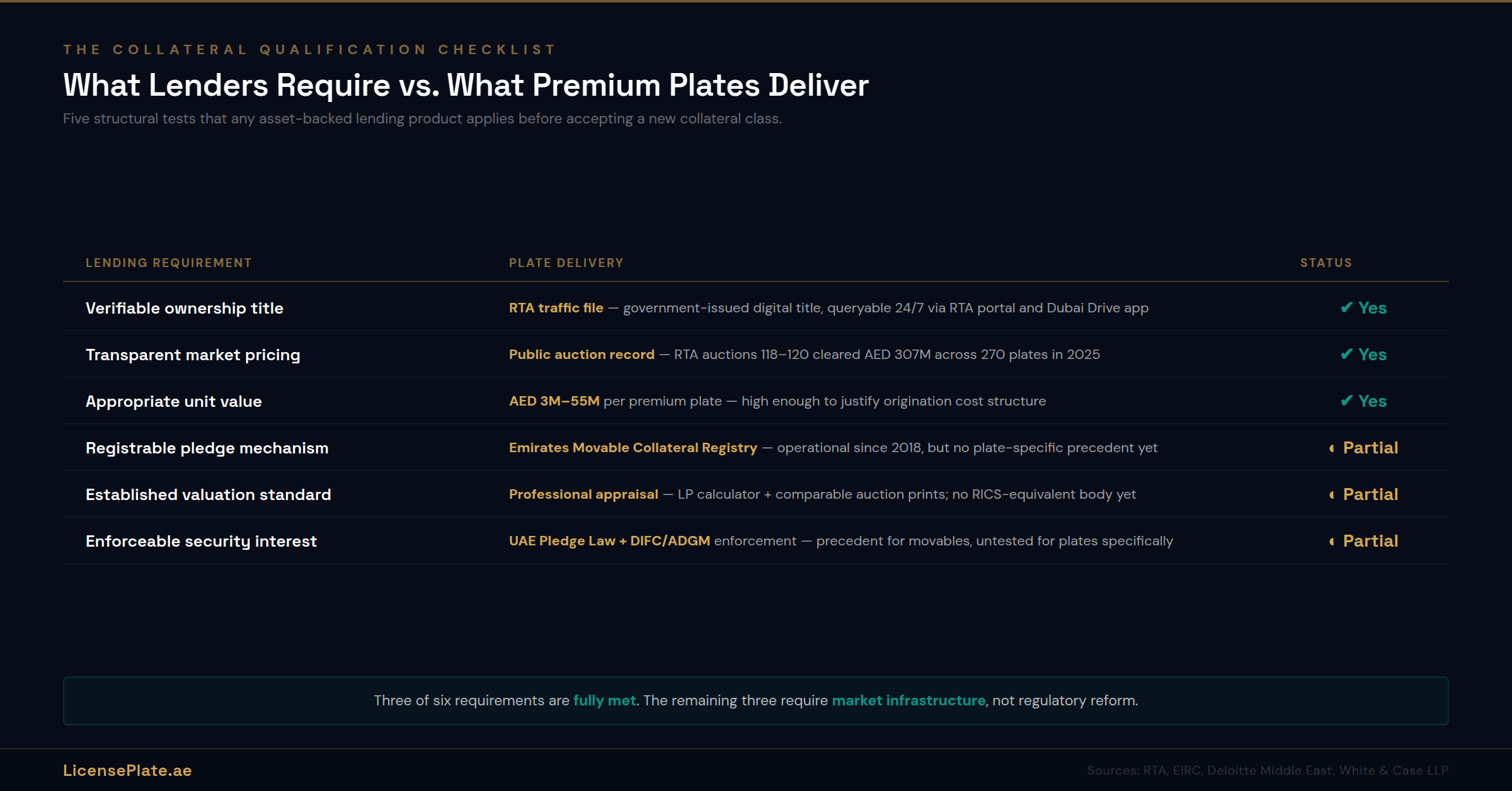
المسارات الثلاثة التي يمكن للإقراض بضمان اللوحات أن ينشأ من خلالها
في ضوء هذا القيد، يصبح السؤال المثير هو كيف سيعمل الإقراض بضمان اللوحات فعلياً لو أراد بنك إماراتي أو مُقرض متخصّص تقديمه. والمسارات الثلاثة أدناه كلٌّ منها قابل للتطبيق قانونياً اليوم. وتختلف في التعقيد البنيوي، وفي الطرف الذي يتحمّل مخاطر التنفيذ، وفي مدى اقترابها من معاملة رهن حقيقي على اللوحة. وينبغي للمُقرض الذي يفكّر في هذه السوق تقييمها جميعاً واختيار ما يناسب قدراته التشغيلية.
المسار الأول: نموذج الوديعة والحيازة
بموجب المادة 10 من قانون ضمان المنقولات، يمكن جعل حقّ الضمان نافذاً في مواجهة الغير بثلاث طرق: التسجيل في السجلّ الإماراتي للضمانات، أو تسليم حيازة الضمان إلى الدائن المرتهن، أو سيطرة الدائن المرتهن على الضمان. والتسجيل هو الآلية المعيارية. والحيازة هي البديل.
وفي سياق اللوحات، تكون الحيازة محرجة بنيوياً لأن اللوحة تعريف صادر عن الحكومة، لا شيء مادي كساعة أو قطعة فنية. لكن المفهوم له مقابل عملي: فالهيئة تسمح بنقل لوحة إلى حساب يملكه المُقرض (أو شركة اسمية يسيطر عليها المُقرض) طوال مدة القرض، وإعادة نقلها إلى المقترض عند السداد الكامل. ويحتفظ المُقرض باللوحة في ملفه المروري خلال مدة القرض. ولا يترتّب على التعثّر سوى احتفاظ المُقرض باللوحة التي يحملها أصلاً، مع خيار بيعها عبر نقل لدى الهيئة إلى مشترٍ من الغير.
والآلية نظيفة قانونياً: فاللوحة باسم المُقرض، ببساطة. ولا يوجد حقّ ضمان يُنفَّذ في مواجهة الغير لأن المُقرض هو المالك المقيّد. ويحمل المقترض حقاً تعاقدياً في استعادة اللوحة عند السداد، وهو ما يعمل اقتصادياً كخيار إعادة شراء. وهذا بنيوياً أقرب إلى معاملة إعادة شراء منه إلى قرض مضمون، والمقرضون المطّلعون على هياكل إعادة الشراء يمكنهم تحمّل مخاطره دون تحليل قانوني مستحدث. والتكاليف هي رسما النقل لدى الهيئة عند نشأة القرض وعند استحقاقه، وهما تافهان عند أحجام المعاملات المعنية (من 120 إلى 350 درهماً لمرة واحدة لكل نقل).
والمقايضة تنظيمية. فالمُقرض الذي يحمل لوحات بقيمة 50 مليون درهم في ملفه المروري هو، بالمصطلح التنظيمي، يحمل سلعاً فاخرة في ميزانيته. ومتطلّبات مصرف الإمارات المركزي الاحترازية للبنوك تعامل هذه الحيازات بشكل مختلف عن الأوراق المالية أو النقد، وقد تتطلّب موافقة تنظيمية محدّدة بحسب فئة ترخيص المُقرض. أما المقرضون المتخصّصون العاملون خارج الإشراف المباشر للمصرف المركزي (شركات التمويل المنظّمة في مركز دبي المالي العالمي، والشركات المنظّمة في سوق أبوظبي العالمي) فيواجهون احتكاكاً تنظيمياً أقلّ على هذا الهيكل. أما البنوك الإماراتية داخل الدولة فتواجه احتكاكاً أعلى.
المسار الثاني: هيكل الشركة القابضة في مركز دبي المالي العالمي أو سوق أبوظبي العالمي
يعمل مركز دبي المالي العالمي وسوق أبوظبي العالمي ضمن أطر ضمان على النمط الإنجليزي مستقلّة عن قانون ضمان المنقولات الاتحادي. وكما حلّلت White & Case، يمكن للدائنين أخذ ضمان قابل للتسجيل على أسهم كيانات سوق أبوظبي العالمي ومركز دبي المالي العالمي بموجب قواعد تلك المناطق، وقد اعتُمدت هذه الهياكل بشكل متزايد في معاملات الائتمان الخاص في الإمارات كبدائل للولايات القضائية "الصديقة" التقليدية في كايمان وجزر العذراء البريطانية وجيرزي ولوكسمبورغ. وتؤكّد Chambers and Partners أن المقرضين الأجانب يمكنهم حيازة ضمانات في مركز دبي المالي العالمي وأن كلاً من المركز وسوق أبوظبي العالمي يحتفظ بسجلّات عقارية متميّزة عن الإطار داخل الدولة.
والخطوة البنيوية هي تأسيس كيان ذي غرض خاص في مركز دبي المالي العالمي أو سوق أبوظبي العالمي يحمل اللوحة (عبر ترتيب اسمي داخل الدولة، بما أن اللوحة نفسها يجب أن تبقى في ملف مروري لدى الهيئة، لكن الملكية المستفيدة للوحة تعود للكيان). ثم يأخذ المُقرض رهناً مسجّلاً على أسهم الكيان بموجب قانون المركز أو السوق. ويطلق التعثّر في القرض حقّ المُقرض في تنفيذ رهن الأسهم، والسيطرة على الكيان، وتسييل اللوحة عبر الوكيل الاسمي للكيان داخل الدولة.
وهذا الهيكل أكثر تعقيداً قانونياً، ويتطلّب تأسيس كيان وتكاليف صيانة مستمرّة، ويستلزم جدولاً زمنياً أطول للتوثيق. لكنه يقدّم أمرين لا يقدّمهما نموذج الوديعة: أولاً، لا يحمل المُقرض اللوحة في ميزانيته، ما يحلّ مسألة المعالجة التنظيمية؛ وثانياً، حقّ الضمان رهن مسجّل بالمعنى الصحيح بموجب قانون المركز أو السوق، ما يوفّر آليات تنفيذ أنظف في سيناريو التعثّر، خصوصاً إذا تضمّن التعثّر مطالبة متنازعاً عليها من المقترض.
والاقتصاديات تصحّ على نطاق. فللوحة واحدة بقيمة مليوني درهم، تكون تكاليف الكيان (التأسيس، والصيانة المستمرّة، والتوثيق القانوني) باهظة نسبةً إلى حجم القرض. أما لتسهيل محفظة بقيمة 50 مليون درهم مضمون بلوحات متعدّدة، فتُستهلك تكاليف الكيان بسلاسة. والمقترض الطبيعي لمعاملة المسار الثاني هو مكتب عائلة أو حائز محفظة لوحات مؤسسية لا فرد يملك لوحة واحدة. ويوثّق تحليلنا للنساء في سوق لوحات دبي الشريحة المتنامية من حائزات محافظ اللوحات في الدولة، وهي شريحة ديموغرافية وثيقة الصلة بهذا الهيكل نظراً لمزايا شفافية الملكية في حيازات الكيانات ذات الغرض الخاص. وتوثّق دراسة حالة بن غاطي حول الاقتناء المؤسسي للوحات ملف مقترض محتمل آخر: المطوّرون والكيانات المؤسسية التي تحمل لوحات مميّزة كأصول علامة تجارية، حيث يتيح التمويل عبر كيان ذي غرض خاص استخراج السيولة دون الإخلال بسجلّ الملكية المؤسسية.
المسار الثالث: النموذج غير المباشر عبر التاجر الضامن
يتجنّب المسار الثالث رهن اللوحة كلياً. فبدلاً من ذلك، يمنح المُقرض ائتماناً لتاجر في سوق اللوحات (لا للمقترض النهائي) يستخدم حصيلة القرض لاقتناء لوحات ثم يبيعها آجلاً بشروط تجارية. ويتحمّل التاجر المخاطر التجارية، وتقبع اللوحات في مخزونه، ويأخذ المُقرض ضماناً على ميزانية التاجر لا على أي لوحة بعينها.
وهذا أقرب إلى خطّ ائتمان لرأس المال العامل لأعمال تجارة اللوحات، مضمون بالأصول العامة للتاجر وذممه المدينة التجارية وربما برهون مخزون على اللوحات المحتفظ بها كبضاعة (حيث تُحفظ اللوحات في الملف المروري للتاجر ويمكن معالجتها بنيوياً عبر منطق الوديعة في المسار الأول). وهو لا يمنح مالكي اللوحات الأفراد وصولاً إلى ائتمان مقابل لوحاتهم، لكنه يوجّه رأس المال إلى سوق اللوحات على مستوى الجملة، ما يزيد عمق السوق وسيولتها للمشترين والبائعين في التجزئة لاحقاً. وقد أخبرنا عدة مديري علاقات في بنوك إماراتية بشكل غير رسمي أنهم يمنحون بالفعل خطوط رأس مال عامل عامة لتجّار اللوحات ضمن هذا النموذج، دون تصنيف التسهيل بأنه "بضمان اللوحات" لأن حزمة الضمان هي الحزمة المؤسسية المعيارية.
وقيمة تسمية المسار الثالث صراحةً هي أنه المسار الأرجح للتوسّع أولاً. فهو لا يتطلّب تطوير منتج جديد من المُقرض (إنه منتج إقراض مؤسسي بملف قطاعي محدّد)، ولا هيكلة قانونية مستحدثة، ولا موافقة تنظيمية تتجاوز تفويض الإقراض التجاري القائم لدى المُقرض. وإذا كان الائتمان الخاص في الإمارات سينمو نحو التعرّض للوحات، فسيفعل ذلك عبر هذه القناة أولاً. ويأتي المساران الأول والثاني لاحقاً، حين تكون السوق قد أرست عمق معاملات كافياً ليصبح الإقراض مقابل لوحة مفردة فعّالاً تشغيلياً.
التقييم ونسبة القرض إلى القيمة ومعايير الاكتتاب التي سيطبّقها المُقرض
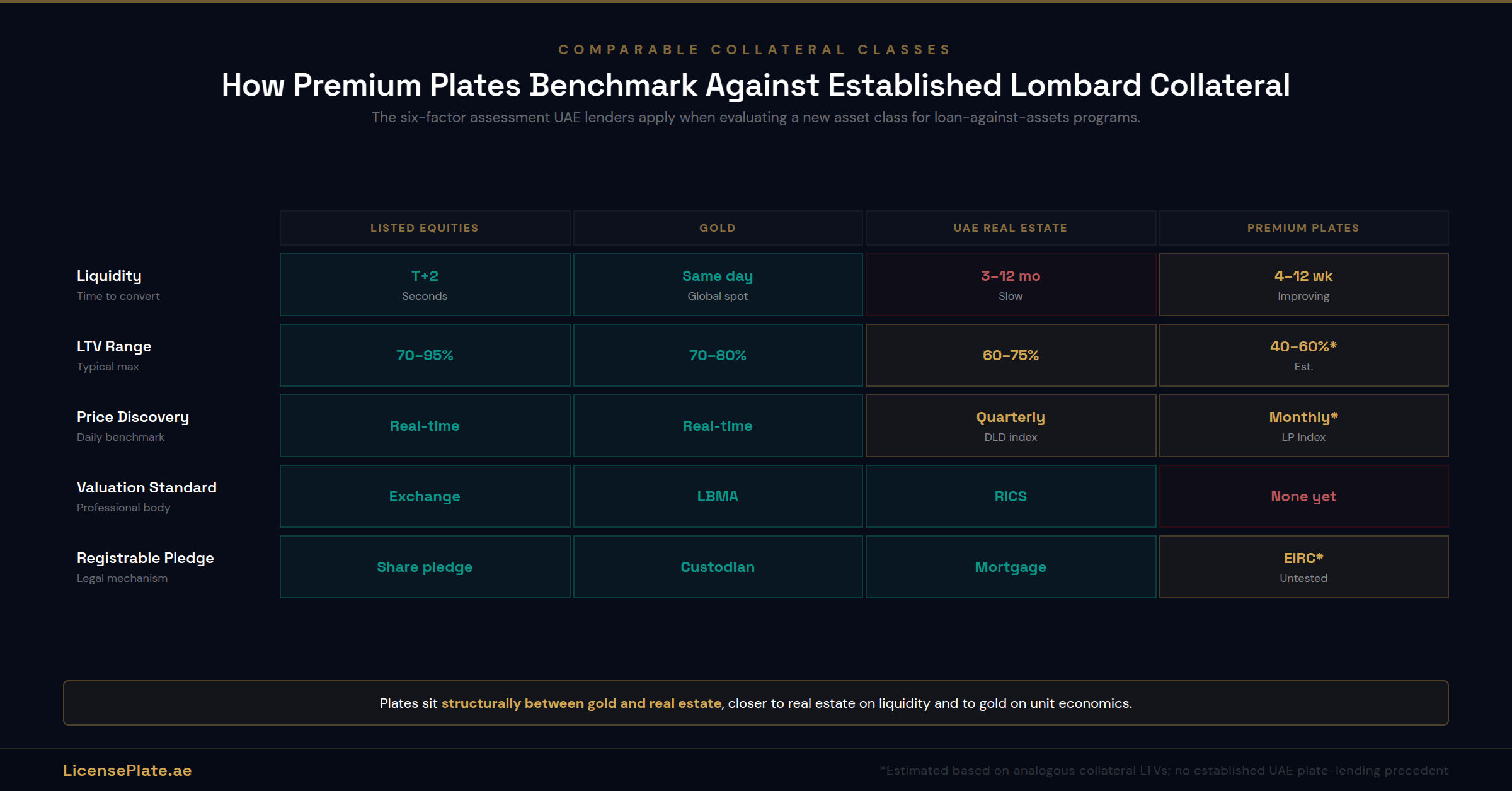
يتطلّب أي تسهيل بضمان اللوحات منهجية تقييم قابلة للدفاع عنها. فالمُقرض يحتاج إلى معرفة، عند النشأة وطوال مدة القرض، ما تساويه الضمانة وفق مجموعة افتراضات متحفّظة. وتوفّر سوق اللوحات الإماراتية بيانات تقييم أقوى من معظم فئات الأصول الفاخرة غير التقليدية، لكنها لا تزال أقلّ سيولة وأقلّ شفافية بشكل ملموس من الأسهم المدرجة أو الذهب.
التسلسل الهرمي للتقييم
للوحات الإماراتية المميّزة، تتوفّر ثلاثة مصادر تقييم بموثوقية تنازلية. والأكثر موثوقية هو تصفية مزاد حديثة مسمّاة للوحة مطابقة جوهرياً: العدد نفسه من الأرقام، وعائلة الرمز نفسها، ونوع النمط نفسه. وهذه موثّقة في مقال التحقّق من أسعار لوحات دبي وفي مقال الأرقام القياسية التاريخية لدينا. وتشمل الأمثلة من 2024-2026 لوحة BB12 بـ 9.66 مليون درهم (ديسمبر 2025، المزاد الـ 120 للهيئة)، وAA25 بـ 8.04 مليون درهم (الفعالية نفسها)، وBB88 بـ 14 مليون درهم (سبتمبر 2025)، وAA707 بـ 3.31 مليون درهم (أبريل 2025). فالمُقرض الذي يكتتب لوحة ثلاثية الأرقام على رمز AA لديه عدة تصفيات مماثلة حديثة كمرتكز تقييم.
والمصدر التقييمي من الدرجة الثانية هو حاسبة اللوحات على LicensePlate.ae، التي تأخذ رمزاً ونمط أرقام محدّدين وتعيد نطاق قيمة مقدّراً بناءً على بيانات السوق. وهذا مماثل لنموذج التقييم الآلي في العقارات: مفيد كرأي ثانٍ، لا كأساس اكتتاب قائم بذاته. والمصدر من الدرجة الثالثة هو الأسعار المطلوبة في السوق الثانوية المرئية على المنصات العامة، وهي تحدّد سقفاً لا سعر تصفية ويجب خصمها لمراعاة الفجوة المعتادة بين السعر المطلوب وسعر البيع.
نسب القرض إلى القيمة المقترحة
المُقرض الإماراتي الحصيف الذي يسعّر تسهيلاً بضمان اللوحات سيطبّق نسب قرض إلى قيمة أكثر تحفّظاً بكثير من نطاق 70 إلى 95% المتاح على الأوراق المالية المدرجة. فاللوحات أقلّ سيولة، ولها فروق أوسع بين سعرَي العرض والطلب، وقد تستغرق أسابيع إلى أشهر لتُباع بسعر يمكن التنبّؤ به. واستناداً إلى تحليلنا لسرعة السوق الثانوية الموثّقة في تحليلنا لمزاد الهيئة مقابل السوق الثانوية، يعكس هيكل نسب القرض إلى القيمة التالي ما سيكتتبه مُقرض متحفّظ في 2026:
شريحة الجوائز (أحادية الرقم، أكثر من 50 مليون درهم): نسبة قرض إلى قيمة من 50 إلى 60%. مجموعة مشترين محدودة للغاية، وزمن بيع طويل جداً (أشهر إلى أكثر من عام)، ومخاطر التركّز تعني أن البيع الاضطراري سيتمّ على الأرجح دون المماثل الحديث بكثير. وينبغي ألّا يكتتب هذه الشريحة إلا أكثر المقرضين المتخصّصين خبرةً.
الشريحة فائقة التميّز (رقمان على رموز ثنائية الحرف، من 7 إلى 40 مليون درهم): نسبة من 55 إلى 65%. عمق السوق يتحسّن (عدة تصفيات مماثلة سنوياً) لكنه لا يزال ضحلاً بما يجعل توقيت البيع الاضطراري مهمّاً جوهرياً. وتوفّر سلسلة مزادات أنبل الأرقام أوضح دليل تسعير متكرّر لهذه الشريحة.
الشريحة المتميّزة (ثلاثة أرقام على رمز ثنائي الحرف أو رقمان على رمز أحادي الحرف، من 200 ألف إلى 6 ملايين درهم): نسبة من 60 إلى 70%. النقطة المثلى للإقراض بضمان اللوحات. عدة تصفيات مزادات مماثلة سنوياً، وعدة إعلانات نشطة في السوق الثانوية، وزمن بيع يمكن التنبّؤ به من 4 إلى 12 أسبوعاً للوحات المسعّرة جيداً. وينبغي للمُقرض الذي يبني منتجاً بضمان اللوحات التركيز هنا.
الشريحة المتوسطة (لوحات رباعية الأرقام، من 95 ألفاً إلى 250 ألف درهم): نسبة من 50 إلى 60%، وللوحات على الرموز المبكرة فقط (من A إلى D) حيث يدعم قيد المعروض التقييم. وينبغي ألّا تُكتتب اللوحات رباعية الأرقام على الرموز المتوسطة إلى المتأخّرة للإقراض بضمان اللوحات بسبب تعرّضها لإصدارات المعروض ثابت السعر من الهيئة، كما هو موثّق في تغطيتنا لإصدار مايو 2025 بقيمة 95,000 درهم على رمزَي L وM.
شريحة الدخول (لوحات خماسية الأرقام): غير قابلة للتطبيق. فالقيمة لكل وحدة منخفضة جداً لاستهلاك تكاليف النشأة، وفئة الأصول لا ترتفع قيمتها. ولن يكتب مُقرض تسهيلاً بضمان لوحات مقابل مخزون خماسي الأرقام.
انضباط التقييم السوقي ونداءات الهامش
يتطلّب كل تسهيل بضمان اللوحات مراقبة تقييم مستمرّة تعادل انضباط التقييم السوقي المطبَّق على التسهيلات بضمان الأوراق المالية. ففي إفصاحات الإقراض بضمان الثروة لدى ستاندرد تشارترد الإمارات، يحتفظ البنك صراحةً بحقّ تعديل نسب القرض إلى القيمة خلال فترة قصيرة بناءً على أوضاع السوق وإطلاق نداءات هامش تلزم المقترض بتقديم ضمانات إضافية أو سداد جزء من التسهيل القائم. وتقييمات اللوحات أقلّ تقلّباً من الأسهم لكنها ليست ثابتة، وتصفية مزاد كبرى أدنى أو أعلى بكثير من التوقّعات قد تُحرّك تقييم اللوحات المماثلة بنسبة 15 إلى 30% في حدث واحد. وينبغي أن يتضمّن التسهيل بضمان اللوحات بنود مراجعة تقييم ربع سنوية كحدّ أدنى، مع محفّزات إعادة تقييم طارئة مرتبطة بفعاليات المزادات الكبرى.
سؤال حجم السوق: إلى أي مدى يمكن أن يكبر الإقراض بضمان اللوحات؟
تقدير حجم سوق لا توجد وظيفياً بعد يتطلّب بعض الافتراض. وتوفّر البيانات القابلة للتحقّق علناً أرضية. فقد حقّقت المزادات الثلاثة المتتالية للهيئة في 2025 مجتمعةً 307 ملايين درهم من نحو 270 لوحة. وحقّقت فعالية أنبل الأرقام 2025 مبلغاً إضافياً قدره 75.9 مليون درهم من لوحات الهيئة وحدها، عبر خمسة معروضات من سلسلة DD. وتتجاوز إجماليات المزادات المنشورة لعام 2025 مبلغ 400 مليون درهم. وهذا حجم الإصدار في السوق الأولية، بما يعادل حجم الطروحات العامة في سوق أسهم عامة. وتتابع روزنامة مزادات الهيئة لدينا كل فعالية مجدولة ونتيجة تاريخية، ما يوفّر بيانات الوتيرة التي يحتاجها أي مُقرض لنمذجة سيولة سوق اللوحات عبر أجل التسهيل.
والسوق الثانوية أكبر بشكل ملموس. فمنصة LicensePlate.ae ومنصات السوق الثانوية الأخرى تعرض مجتمعةً عشرات الآلاف من اللوحات النشطة. والتقدير المتحفّظ لإجمالي رسملة سوق اللوحات الإماراتية، بحساب كل اللوحات عبر كل الإمارات على كل الرموز، يقع في نطاق 20 إلى 40 مليار درهم بأسعار 2026، مع تركّز ربما 5 إلى 10 مليارات درهم في الشريحتين المتميّزة وفائقة التميّز حيث يكون الإقراض بضمان اللوحات الأكثر قابلية للتطبيق.
وإذا أصبح حتى 5% من مخزون الشريحة المتميّزة في النهاية قاعدة الضمانات لتسهيلات بضمان اللوحات، فإن السوق القابلة للاستهداف تبلغ 250 إلى 500 مليون درهم من الائتمان القائم. وبنسبة قرض إلى قيمة مختلطة قدرها 60% وآجال تسهيلات نموذجية من 12 إلى 24 شهراً، يُترجم ذلك إلى حجم نشأة سنوي من 125 إلى 250 مليون درهم. وهذه ليست سوقاً كبيرة بمعايير الصيرفة الإماراتية (فالنظام المصرفي في الدولة كانت أصوله المجمّعة تتجاوز 4 تريليونات درهم في 2024)، لكنها زاوية متخصّصة قابلة للدفاع عنها لمُقرض أو اثنين مكرّسين، مماثلة في الحجم لزوايا تمويل الفنون التي تديرها Sotheby’s Financial Services أو Athena Art Finance في الأسواق العالمية الكبرى.
ومسار النمو أهمّ من الحجم الحالي. فقد أظهرت سوق اللوحات الإماراتية عمقاً متوسّعاً، موثّقاً في تحليلنا لادّعاء العوائد بنسبة 20% وفي مقارنتنا بين اللوحات والعقار والذهب كأصول بديلة. والعوامل نفسها التي تدفع نضج سوق اللوحات (الملكية المؤسسية، واهتمام المشترين العابرين للحدود، والقيم المطلقة الأعلى، وإجماليات المزادات المتنامية) هي العوامل التي تخلق الظروف التي يصبح فيها الإقراض بضمان اللوحات قابلاً للتطبيق. والمُقرض الذي يتحرّك أولاً إلى هذه الفئة اليوم لا يكتتب السوق الحالية بل السوق بعد ثلاث إلى خمس سنوات من الآن.
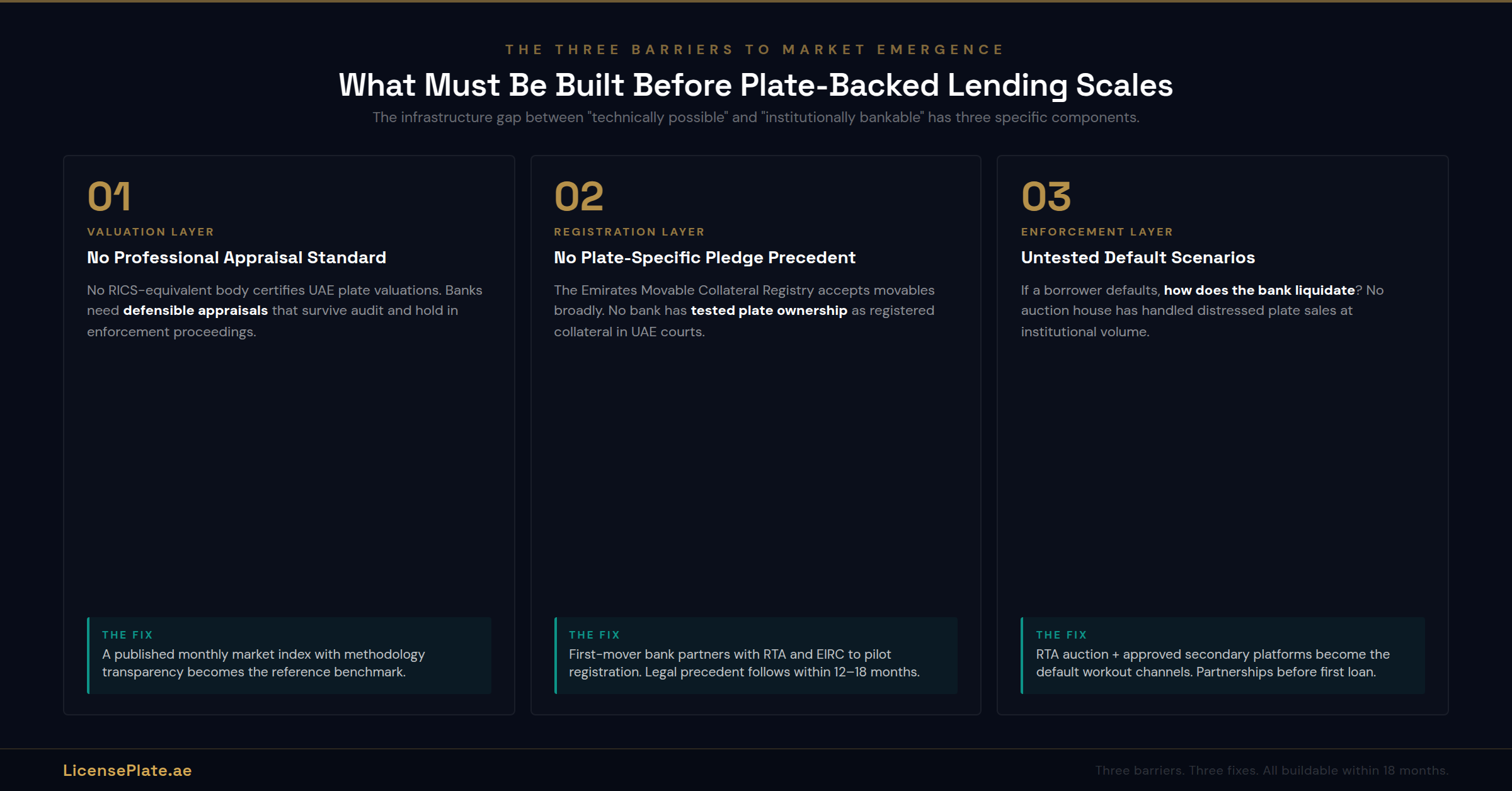
ما يجب أن يحدث ليصبح الإقراض بضمان اللوحات فئة قائمة
تنتقل السوق من الصفر إلى فئة حين تتحقّق ثلاثة شروط محدّدة. وجميعها قابل للتحقيق خلال 24 إلى 36 شهراً بالتنفيذ الصحيح. ولا شيء منها مسدود بنيوياً.
الشرط الأول: نشوء مصدر تقييم مرجعي
لن يكتتب أي مُقرض تسهيلات بضمان اللوحات على نطاق دون مرجع تقييم موثوق يمكنه الاستشهاد به في مذكّرات الائتمان، واستخدامه في سير عمل إعادة التقييم، والدفاع عنه في التفتيش التنظيمي. وحالياً، لا يوجد مثل هذا المرجع. وحاسبة اللوحات على LicensePlate.ae وسجلّات المزادات المنشورة في مقال التحقّق من أسعار لوحات دبي لدينا هما أقرب التقريبات في السوق، لكن أياً منهما لم يُستشهد به بعد في التوثيق الرسمي للمقرضين. ونشوء مؤشّر شهري أو ربع سنوي لسوق اللوحات الإماراتية، يُنشر بمنهجية شفّافة، هو الشرط المسبق الأهمّ للإقراض المؤسسي بضمان اللوحات. وهذه هي الزاوية التي تتموضع LicensePlate.ae بنيوياً في أفضل موقع لملئها.
الشرط الثاني: متحرّك أول يكتب الصفقة السابقة
الأسواق كهذه تتحرّك على السوابق. فأول تسهيل بضمان اللوحات يُعلَن عنه في الإمارات، مهيكلاً من مُقرض مسمّى مقابل مقترض مسمّى بشروط مفصح عنها، ستغطّيه الصحافة الاقتصادية الإماراتية وسيخلق المعاملة المرجعية التي تشير إليها الصفقات اللاحقة. وإلى أن تُوثَّق تلك الصفقة الأولى، يقيّم كل مُقرض محتمل الفئة كأرض بكر تماماً، وهو قرار أصعب بكثير على لجنة الائتمان من التقييم مقابل سابقة. والمتحرّك الأول المرجّح هو شركة ائتمان خاص متخصّصة مقرّها مركز دبي المالي العالمي تستخدم هيكل المسار الثاني في تسهيل محفظة بقيمة 20 إلى 50 مليون درهم مقابل محفظة لوحات يملكها مكتب عائلة. ولم يحدث ذلك بعد. لكنه ليس بعيداً.
الشرط الثالث: إرشادات تنظيمية من مصرف الإمارات المركزي
لم يصدر مصرف الإمارات المركزي إرشادات محدّدة بشأن معالجة ضمانات اللوحات للبنوك المرخّصة داخل الدولة. وإلى أن يفعل، ستبقى البنوك داخل الدولة مترّددة في بناء منتجات في هذه المساحة لأن المعالجة الرأسمالية الاحترازية غير مؤكّدة. أما الشركات المنظّمة في مركز دبي المالي العالمي وسوق أبوظبي العالمي فيمكنها العمل ضمن أطر منظّميها ولا تحتاج هذه الإرشادات بالدرجة نفسها. لكن التوسّع من حفنة من معاملات المقرضين المتخصّصين إلى منتج مصرفي سائد داخل الدولة يتطلّب وضوحاً تنظيمياً بشأن كيفية ترجيح مخاطر ضمانات اللوحات وكيفية معالجة حيازات اللوحات في ميزانية البنك. وإرشادات المصرف المركزي ستتبع على الأرجح أول صفقة سابقة موثّقة لا أن تسبقها. وهذا هو التسلسل الذي اتّبعته سوق الإقراض بضمان الذهب في 2022.
الأسئلة الشائعة
س: هل يمكنني حالياً الحصول على قرض من بنك إماراتي مستخدماً لوحتي المميّزة كضمان؟
كمنتج مصرفي جاهز للتجزئة، لا. فلا يعلن أي بنك إماراتي علناً عن الإقراض بضمان اللوحات كفئة منتج معيارية. وبالنسبة لعملاء الثروات الكبيرة ذوي العلاقات المصرفية الخاصة القائمة، تكون الهياكل المفصّلة ممكنة ضمن المسارات الثلاثة الموصوفة أعلاه، وغالباً عبر مقرضين متخصّصين لا بنوك سائدة. والحدّ الأدنى النموذجي لحجم معاملة تسهيل مفصّل بضمان اللوحات سيكون 5 ملايين درهم أو أكثر، بما يعكس تكاليف نشأة هيكل غير معياري.
س: ما العائق البنيوي أمام الإقراض بضمان اللوحات في الإمارات؟
يستثني المرسوم بقانون اتحادي رقم 4 لسنة 2020 بشأن ضمان الحقوق في الأموال المنقولة من نطاقه الأصول المقيّدة في سجلّ خاص بموجب القانون الإماراتي. والملف المروري لدى الهيئة سجلّ خاص. ونتيجةً لذلك، لا يمكن رهن لوحة عبر الإطار المعياري لشركة الإمارات للسجلات المتكاملة كما تُرهن الأعمال الفنية أو الذهب أو المعدّات أو المخزون. وهذه مسألة هيكل قانوني، لا مسألة رغبة سوقية. وثلاثة مسارات التفافية قابلة للتطبيق قانونياً.
س: ما الهيكل الأرجح لأول قرض بضمان لوحة في الإمارات؟
هيكل الشركة القابضة في مركز دبي المالي العالمي أو سوق أبوظبي العالمي (المسار الثاني في هذا المقال) هو هيكل الصفقة الأولى الأرجح. فهو يوفّر أنظف ضمان قانوني للمُقرض، ويعزل اللوحة عن ميزانية المُقرض داخل الدولة، ويعمل ضمن أطر ضمان مبنية على القانون العام معتادة بالفعل لدى مزوّدي الائتمان الخاص المؤسسيين. والمقترض الأول المرجّح مكتب عائلة أو حائز محفظة لوحات مؤسسية لا فرد، لأن تكاليف الكيان لا تُستهلك إلا على نطاق محفظة.
س: ما نسبة القرض إلى القيمة التي ينبغي أن يقدّمها تسهيل بضمان اللوحات؟
أكثر تحفّظاً بشكل جوهري من الإقراض بضمان الأوراق المالية. واستناداً إلى سيولة سوق اللوحات الإماراتية وبيانات زمن البيع في السوق الثانوية، فإن النسب الحصيفة هي: 50 إلى 60% للوحات الجوائز أحادية الرقم، و55 إلى 65% للوحات فائقة التميّز ذات الرقمين، و60 إلى 70% للوحات المتميّزة ثلاثية الأرقام (النقطة المثلى لفئة الإقراض هذه)، و50 إلى 60% للوحات رباعية الأرقام على الرموز المبكرة فقط. وينبغي ألّا تُكتتب اللوحات خماسية الأرقام.
س: كيف يؤثّر هيكل رسوم النقل لدى الهيئة في اقتصاديات الإقراض بضمان اللوحات؟
رسوم النقل تافهة نسبةً إلى أحجام التسهيلات. فالهيئة تفرض من 120 إلى 350 درهماً لكل نقل بحسب نوع المعاملة، كما هو موثّق في مقالنا عن تكلفة ملكية اللوحة. وعلى تسهيل بقيمة 10 ملايين درهم، تكلّف عمليتا نقل (عند النشأة وعند الاستحقاق) من 240 إلى 700 درهم مجتمعةً، وهو مبلغ غير جوهري. فهيكل الرسوم يدعم اقتصاديات الإقراض بضمان اللوحات ولا يقيّدها.
س: ماذا يحدث إذا تعثّر المقترض في قرض بضمان لوحة؟
الإجابة تعتمد على المسار. فبموجب نموذج الوديعة (المسار الأول)، يحمل المُقرض اللوحة أصلاً ويمكنه بيعها مباشرةً عبر الهيئة لمشترٍ من الغير. وبموجب هيكل الكيان ذي الغرض الخاص في المركز أو السوق (المسار الثاني)، ينفّذ المُقرض رهن الأسهم المسجّل على الكيان، ويسيطر عليه، ويسيّل اللوحة عبر وكيله الاسمي داخل الدولة. وبموجب نموذج التاجر الضامن (المسار الثالث)، يجري التنفيذ على الأصول المؤسسية العامة للتاجر، وتشكّل اللوحات جزءاً من قاعدة تلك الأصول. والمسارات الثلاثة جميعها لديها آليات تعثّر عملية.
س: هل سيؤثّر الامتثال للشريعة في الإمارات على منتج إقراض بضمان اللوحات؟
نعم، والمسارات تستوعب ذلك. فالمعادل في الصيرفة الإسلامية للإقراض على طريقة اللومبارد، أي هيكل التورّق المستخدم بالفعل لدى بنك الإمارات دبي الوطني وبنك أبوظبي التجاري في التسهيلات بضمان الأوراق المالية، قابل للتكييف مع ضمانات اللوحات. فالسلعة الأساسية في هيكل التورّق يمكن أن تكون أي أصل متوافق مع الشريعة، واللوحات مؤهّلة لأنها ليست مرتبطة جوهرياً بأي نشاط محظور. والآليات التشغيلية تتطلّب فريق هيكلة متخصّصاً في التمويل الإسلامي، لكن لا يوجد عائق شرعي جوهري.
س: ما علاقة LicensePlate.ae بسوق الإقراض بضمان اللوحات؟
دور LicensePlate.ae هو توفير طبقة بيانات السوق التي يتطلّبها الإقراض المؤسسي بضمان اللوحات. فالمنصة تنشر نتائج المزادات وبيانات المعاملات ومنهجية التقييم التي يمكن للجنة الائتمان لدى المُقرض الاستشهاد بها. ومع تطوّر سوق الإقراض بضمان اللوحات، تتموضع LicensePlate.ae لتكون مصدر التقييم المرجعي الذي يلجأ إليه المقرضون افتراضياً لتحديد قيم الضمانات، بما يماثل الدور الذي يؤدّيه مؤشّر أبحاث سوق الفنون للإقراض بضمان الأعمال الفنية. راجع دليل الاستثمار لدينا لمنطق بناء المحفظة الذي يقوم عليه التقييم.
ملاحظة أخيرة عن بناء الأسواق قبل وجودها
سينشأ الإقراض بضمان اللوحات في الإمارات. فالمكوّنات البنيوية موجودة، وظروف الطلب تتراكم. وما ليس موجوداً بعد هو الصفقة الأولى، والتقييم المرجعي، والوضوح التنظيمي، وهي مجتمعةً ما يحوّل فئة من المعاملات المفصّلة إلى خطّ منتجات. وكل واحد من هذه المكوّنات الثلاثة قابل للتحقيق خلال نافذة من 24 إلى 36 شهراً بالتنفيذ الصحيح.
والمُقرض الذي يكتب أول تسهيل بضمان اللوحات موثّق علناً في الإمارات يكتسب أمرين ذوي قيمة دائمة. أولاً، رصيداً من خبرة الهيكلة لا يملكه أي منافس. وثانياً، الموقع السردي لمن عرّف الفئة. وكلاهما ميزتان تنافسيتان ذواتا معنى في سوق ائتمان خاص إماراتية نمت بشكل كبير منذ إدخال قواعد صناديق الائتمان الخاص في 2023، مع التزام مبادلة بأكثر من 5 مليارات دولار عبر شراكات دولية متعدّدة، وتشغيل لونيت لأصول بديلة بقيمة 110 مليارات دولار، ومشروع شيميرا المشترك للائتمان الخاص بقيمة ملياري دولار مع Alpha Wave الذي يرسي نموذج الائتمان الخاص واسع النطاق المرتكز في الإمارات. وفي مواجهة تلك الخلفية، يكون برنامج متخصّص للإقراض بضمان اللوحات زاوية صغيرة لكن قابلة للدفاع عنها يمكن لشركة مكرّسة واحدة أن تملكها لعقد.
وبالنسبة لمكاتب العائلات ومالكي اللوحات من أصحاب الثروات فائقة الكبر الذين يقرؤون هذا المقال، فالخلاصة العملية أن الفئة لا تزال مفصّلة على الطلب. فالوصول إلى ائتمان مقابل محفظة لوحات اليوم يتطلّب تواصلاً مباشراً مع مُقرض متخصّص (مقرّه على الأرجح مركز دبي المالي العالمي) بشأن هيكل تفاوضي. وبيانات المزادات المنشورة والمنهجية التي نوثّقها في دليل الاستثمار وتحليل تكلفة الملكية لدينا تمنح مُقرضك الأساس التقييمي لبناء التسهيل. ولحائزي المحافظ الذين يستكشفون الخلافة والانتقال بين الأجيال إلى جانب اعتبارات الائتمان، يوثّق دليل الميراث لدينا كيف تنتقل ملكية اللوحات عبر الملف المروري بطرق تؤثّر مباشرةً في كيفية بقاء وضع ضمان المُقرض عند تغيّر الملكية. وتوفّر حاسبة اللوحات على LicensePlate.ae وإعلانات السوق الثانوية الحيّة في دبي مدخلات التقييم الآنية التي يمكن للجنة الائتمان استخدامها كنقطة انطلاق لأي نقاش حول تسهيل مفصّل. والطريق من "سؤال مثير للاهتمام" إلى "اتفاقية تسهيل موقّعة" أقصر ممّا يفترض معظم عملاء الثروات الكبيرة في الإمارات. وهو يتطلّب فقط الطرف المقابل الصحيح والاستعداد للهيكلة حول الإطار القانوني الحالي بدلاً من انتظار تغيّره.
وبالنسبة للسوق الأوسع، فإن الشروط التي يصبح فيها الإقراض بضمان اللوحات منتجاً عادياً لا معاملة مفصّلة قابلة للمعرفة والرصد. وستواصل LicensePlate.ae نشر بيانات السوق التي تجعل تلبية تلك الشروط أسهل. وأول صفقة موثّقة، متى جاءت، ستُغلق أسرع من الثانية، والثانية أسرع من الثالثة. هكذا تُبنى الأسواق.