

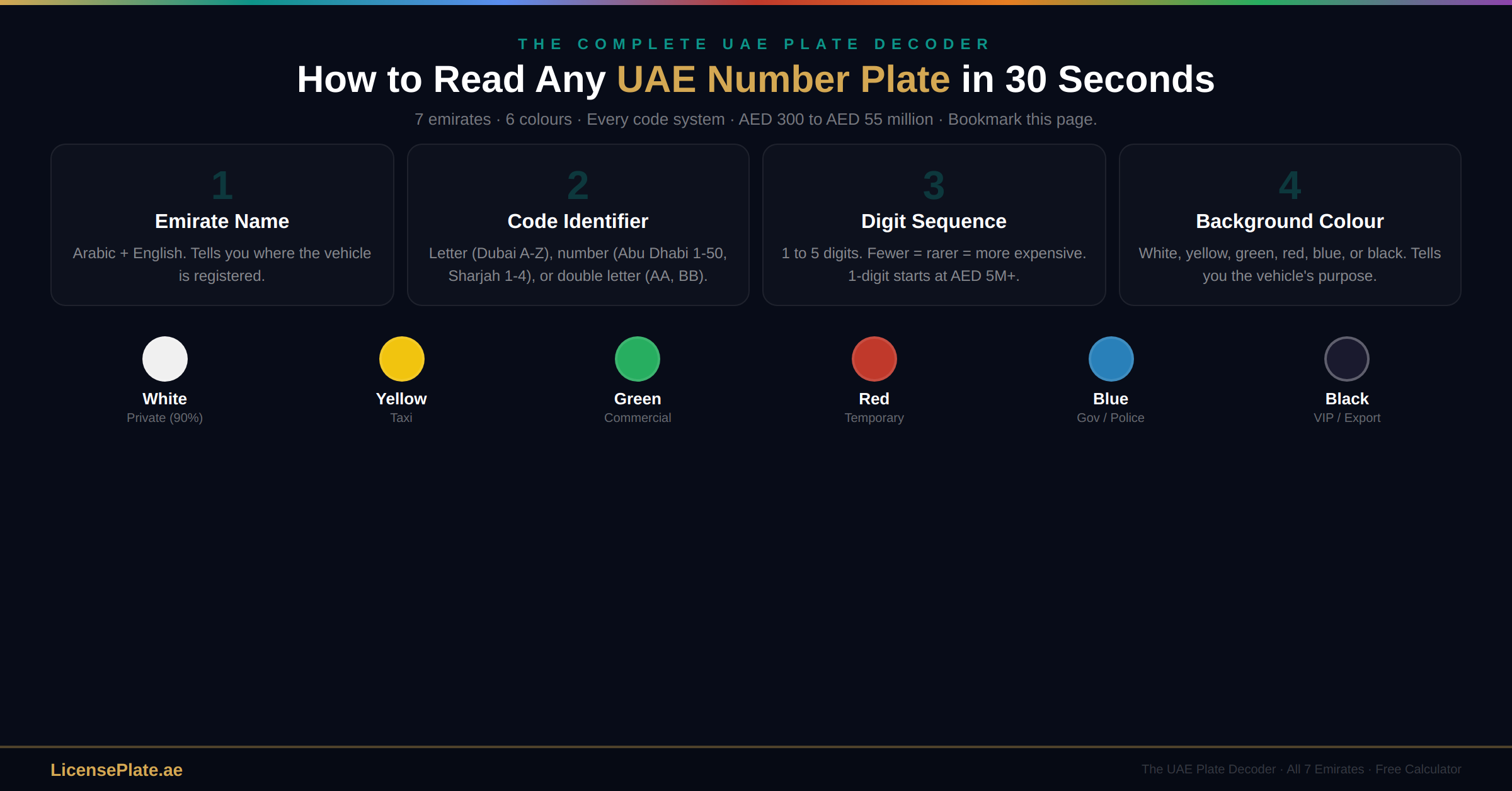
كيف تقرأ أي لوحة سيارة إماراتية في 30 ثانية: فكّاك الشيفرة البصري الكامل
أنت جالس في الازدحام على شارع الشيخ زايد. وتتوقّف رولز-رويس بيضاء بجانبك. ولوحتها تقرأ "دبي A 7". أنت تعرف أنها لوحة دبي، لكن ماذا يعني الـ "A"؟ ولماذا رقم واحد فقط؟ ولماذا دفع أحدهم مقابل تلك اللوحة أكثر ممّا يدفعه معظم الناس مقابل منزل؟
خلف الرولز-رويس، تويوتا كامري بلوحة صفراء تشير للتغيير إلى مسار آخر. وبجانبها، شاحنة توصيل ميتسوبيشي كانتر بلوحة خضراء. وفي المرآة، لاند كروزر بلوحة زرقاء بشعار حكومي. أربع مركبات، وأربعة ألوان، وأربع قصص مختلفة، وما لم تعرف النظام، تبدو كلها متشابهة.
نظام لوحات الإمارات هو واحد من أكثر أطر تعريف المركبات تطوّراً وثراءً ثقافياً في العالم. سبع إمارات، لكل منها تصميمها وبنية ترميزها الخاصة. وستة ألوان لوحات أساسية، كل منها يشير إلى غرض مركبة مختلف. وأعداد أرقام تتراوح من رقم إلى خمسة، بتسعير يمتدّ من 300 درهم إلى 55 مليون درهم. وسوق ثانوي يحرّك مئات الملايين من الدراهم سنوياً.
يفكّ هذا الدليل شيفرة النظام بأكمله. وبعد قراءته، ستتمكّن من النظر إلى أي لوحة إماراتية ومعرفة، في أقل من 30 ثانية، إلى أي إمارة تنتمي، وماذا يعني اللون، وماذا يخبرك الرمز عن حقبة اللوحة وقيمتها، وتقريباً ما قد تساويه اللوحة. احفظ هذه الصفحة. ستعود إليها.
تشريح لوحة سيارة إماراتية
كل لوحة إماراتية، بغضّ النظر عن الإمارة، تحتوي على أربعة عناصر: اسم الإمارة (بالعربية والإنجليزية)، ومعرّف رمز (حرف، أو رقم، أو فئة)، وتسلسل أرقام (من 1 إلى 5 أرقام)، ولون خلفية يشير إلى غرض المركبة. وتشمل بعض اللوحات أيضاً علم الإمارات، أو شعار إمارة، أو تصميماً خاصاً (مثل إصدار إكسبو 2020). ويأتي الشكل المادّي بحجمين: لوحة مستطيلة (520مم × 110مم، تُستخدم في الخلف) ولوحة مربّعة (تُستخدم في الأمام)، وكلتاهما تعرضان المعلومات نفسها بتخطيطات مختلفة.
اسم الإمارة يخبرك أين المركبة مسجّلة. والرمز يخبرك متى صدرت اللوحة مقارنةً باللوحات الأخرى في تلك الإمارة (الرموز الأبكر أندر وأكثر قيمة). وعدد الأرقام يخبرك بمدى ندرة اللوحة (أرقام أقل = أندر = أغلى). واللون يخبرك بما تُستخدم المركبة من أجله. وفهم هذه العناصر الأربعة هو كل ما تحتاجه لقراءة أي لوحة إماراتية.
فكّاك شيفرة الألوان: ماذا يعني كل لون لوحة
لون خلفية اللوحة الإماراتية هو أسرع طريقة لتحديد غرض المركبة. وستة ألوان تغطّي النظام بأكمله:
الأبيض (المركبات الخاصة): اللوحات البيضاء بأحرف سوداء هي الأكثر شيوعاً في الإمارات، وتشكّل نحو 90% من جميع المركبات على الطريق. وهذه مركبات خاصة قياسية يملكها أفراد أو شركات. وكل لوحة تراها على سيارة شخصية، أو سيارة دفع رباعي، أو مركبة فاخرة في دبي مول، أو JBR، أو مركز دبي المالي العالمي هي لوحة بيضاء. وتصدر الإمارات السبع جميعها لوحات بيضاء للاستخدام الخاص. واللوحات التي تُباع بالملايين في المزادات (P 7 بـ 55 مليون درهم، وDD 5 بـ 35 مليون درهم، واللوحة "1" بـ 52.2 مليون درهم) كلها لوحات بيضاء. وعندما يتحدّث الناس عن "شراء لوحة" في الإمارات، فهم يتحدّثون عن اللوحات البيضاء الخاصة.
الأصفر (سيارات الأجرة): اللوحات الصفراء تحدّد سيارات الأجرة المرخّصة. وتراها على مركبات مؤسّسة تاكسي دبي كريمية اللون، وسيارات كريم الخضراء والبيضاء، وسيارات أجرة المطار عبر جميع الإمارات. وتحمل اللوحات الصفراء عادةً حتى أربعة أرقام إضافةً إلى معرّف أجرة. وبمجرد انتهاء عمر خدمة سيارة الأجرة، لا يمكن نقل لوحتها الصفراء إلى ملكية خاصة. فتعود إلى هيئة النقل. واللوحات الصفراء لا تُتداوَل في السوق الثانوي.
الأخضر (المركبات التجارية): اللوحات الخضراء تُخصَّص للمركبات التجارية: شاحنات التوصيل، وشاحنات الشركات، والحافلات، ومركبات الأساطيل المستخدمة لأغراض العمل. فإذا رأيت لوحة خضراء على ميتسوبيشي كانتر، أو شاحنة هينو، أو شاحنة توصيل إيكيا، فالمركبة مسجّلة تجارياً. وتدرج بعض المصادر الأخضر كلون سيارات التأجير في إمارات معيّنة، لكن التصنيف الأساسي هو الاستخدام التجاري/الأسطول.
الأحمر (مؤقت/تصدير): اللوحات الحمراء تشير إلى التسجيل المؤقت. وتُصدَر للمركبات المستوردة حديثاً بانتظار التسجيل الدائم، أو المركبات التي تُنقَل بين الملّاك خلال فترة انتقالية، أو المركبات التي يجري تجهيزها للتصدير. وللوحات الحمراء صلاحية محدودة (عادةً شهر إلى ثلاثة أشهر). وفي أبوظبي، كان للوحات الحمراء تاريخياً معنى مختلف مرتبط بنظام الفئات (لوحات الشريط الأحمر لفئات رقمية محدّدة). وتحمل المركبات العسكرية في بعض الإمارات أيضاً لوحات حمراء.
الأزرق (حكومي/شرطة/دبلوماسي): اللوحات الزرقاء محفوظة للمركبات الحكومية، وسيارات الشرطة، والبعثات الدبلوماسية. فإذا رأيت لوحة زرقاء بعلامات "CD" ومعيّن أبيض، فهي تعود إلى السلك الدبلوماسي (السفارات، والقنصليات). وتحمل مركبات الأمم المتحدة لوحات CD صفراء بمعيّن أبيض. وتستخدم مركبات الشرطة عبر جميع الإمارات لوحات زرقاء بشعارات شرطتها المعنية.
الأسود (كبار الشخصيات/التصدير): اللوحات السوداء هي أندر لون في نظام لوحات الإمارات. وترتبط بمركبات كبار الشخصيات أو ذات الوضع الخاص ولوحات التصدير. وتصف بعض المصادر اللوحات الذهبية كفئة فرعية أندر محفوظة لكبار المسؤولين الحكوميين وأفراد العائلات الحاكمة، رغم أنها غير شائعة إطلاقاً على الطرق العامة.
فكّاك شيفرة الإمارات: كيف تعرف إلى أي إمارة تنتمي اللوحة
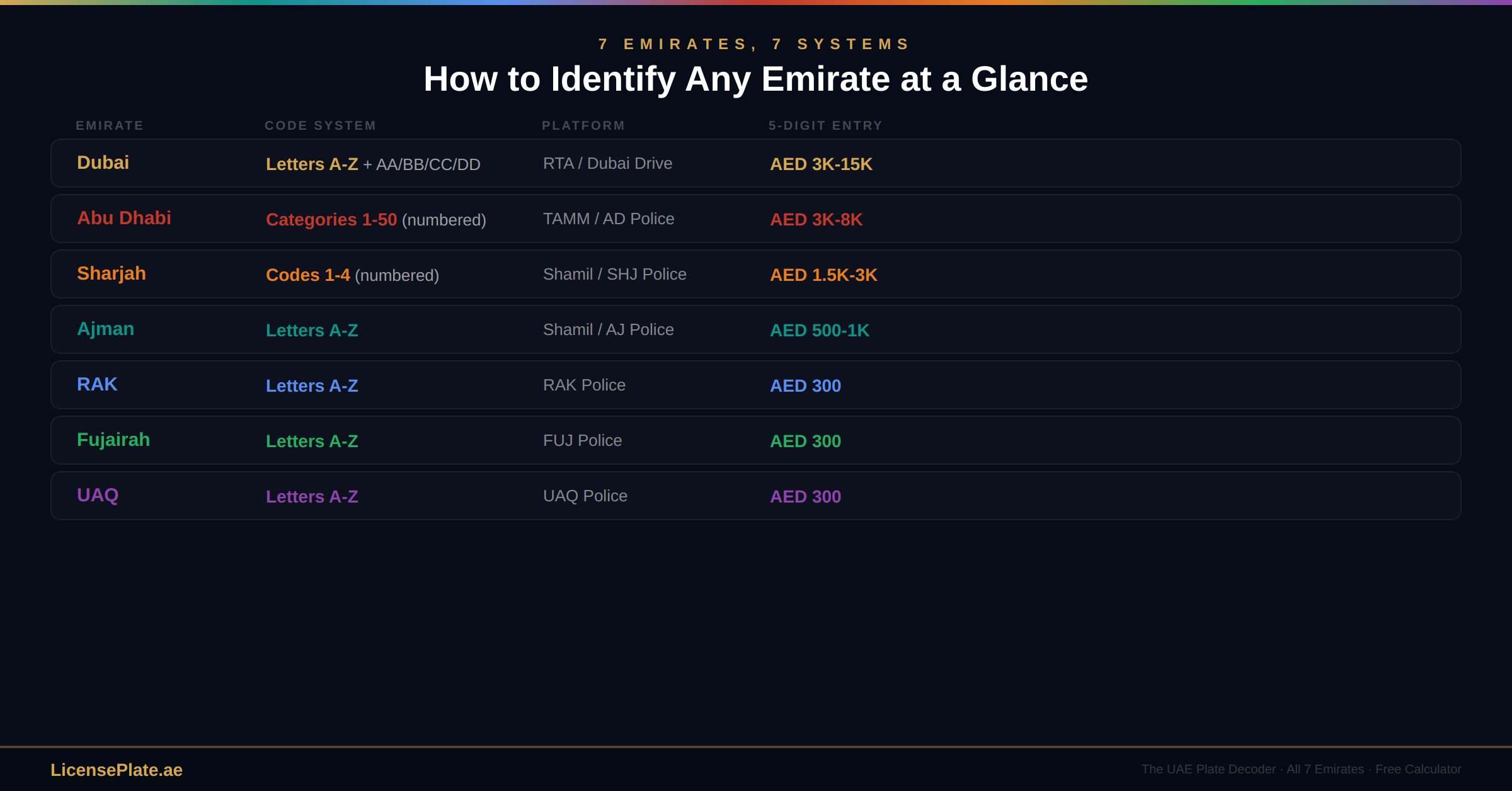
لكل إمارة تصميم لوحة، ونظام رموز، وجهة تسجيل خاصة بها. وإليك كيف تحدّد كل إمارة بنظرة واحدة:
دبي
تعرض لوحات دبي "دبي" بالعربية (الأعلى) والإنجليزية (الأسفل أو الجانب الأيمن)، مع علم الإمارات. والرمز حرف لاتيني واحد (من A إلى Z) أو حرف مزدوج (AA، BB، CC، DD)، متبوعاً بما يصل إلى خمسة أرقام. مثال: دبي A 786 أو دبي CC 22. وتستخدم دبي أوسع نطاق رموز في الإمارات: 26 حرفاً مفرداً إضافةً إلى 8 رموز حرفين على الأقل. والحرف يشير إلى متى صدرت اللوحة. فالرمز A كان أولاً (الثمانينيات). والرمز Z حديث (العقد الثالث من الألفية). والرموز المبكرة أندر وأغلى. فلوحة الرمز A من 3 أرقام تكلّف 5 إلى 10 أضعاف الرقم نفسه من 3 أرقام على الرمز Z. ويشرح دليل الرموز من A إلى Z التسلسل الهرمي الكامل، ويغطّي مركز دبي السوق الكامل.
أبوظبي
تعرض لوحات أبوظبي "أبوظبي" بالعربية والإنجليزية مع علم الإمارات، إضافةً إلى فئة رقمية (من 1 إلى 50) تظهر كشريط ملوّن على اللوحة. وعلى عكس رموز حروف دبي، تستخدم أبوظبي فئات رقمية حيث تشير الأرقام الأدنى إلى لوحات أكثر رقياً. والفئة 1 هي الأكثر قيمة. والفئة 50 هي الأكثر شيوعاً. وتستخدم أبوظبي منصة تم لجميع المعاملات (لا هيئة الطرق). ويغطّي مركز أبوظبي النظام الكامل، ويشرح دليل الفئات من 1 إلى 50 كل فئة.
الشارقة
تعرض لوحات الشارقة "الشارقة" بالعربية والإنجليزية. والرمز رقم (من 1 إلى 4)، متبوعاً بما يصل إلى خمسة أرقام. ونظام الشارقة هو الأبسط: مجرّد أربعة رموز تغطّي مجموعة اللوحات بأكملها. وأطلقت شرطة الشارقة لوحات محدّثة جديدة في مارس 2025 بتصميم محسّن وميزات لمكافحة التزوير. ولوحات الشارقة أرخص بنسبة 40 إلى 60% من مثيلاتها في دبي عند كل عدد أرقام. ويغطّي مركز الشارقة السوق الكامل وأطروحة حزام التنقّل.
عجمان
تعرض لوحات عجمان شعار الإمارة الملوّن (الأسفل للوحات المربّعة، والجانب الأيمن للمستطيلة) مع اسم الإمارة. وتستخدم عجمان رموز حروف من A إلى Z، مشابهة لدبي، متبوعةً بما يصل إلى خمسة أرقام. ولوحات عجمان من بين الأكثر تيسّراً في الإمارات، تبدأ من 500 درهم للوحة من 5 أرقام. ويغطّي دليل عجمان الأسعار والرموز ولماذا عجمان أفضل نقطة دخول في الإمارات.
رأس الخيمة
تعرض لوحات رأس الخيمة شعار الإمارة (الأعلى للوحات المربّعة، والأيمن للمستطيلة) مع اسم الإمارة. وتستخدم رأس الخيمة رموز حروف من A إلى Z، تديرها شرطة رأس الخيمة. ولوحات رأس الخيمة من بين الأرخص في الإمارات (من 300 درهم للوحة من 5 أرقام). ويرتفع ملف الإمارة بحدّة مع افتتاح منتجع كازينو Wynn Al Marjan Island في ربيع 2027.
الفجيرة
تعرض لوحات الفجيرة اسم الإمارة وشعارها. وتستخدم الفجيرة رموز حروف من A إلى Z، مشابهة لعجمان ورأس الخيمة. ولوحات الفجيرة تبدأ من نحو 300 درهم للوحات من 5 أرقام ولها أدنى رسوم تجديد سنوية في الإمارات (نحو 120 درهماً سنوياً). ويغطّي دليل الفجيرة فرصة الساحل الشرقي.
أم القيوين
تعرض لوحات أم القيوين اسم الإمارة وشعارها. وتستخدم أم القيوين رموز حروف من A إلى Z. ولوحات أم القيوين من بين الأرخص في الإمارات، تبدأ من 300 درهم للوحات من 5 أرقام، ما يجعلها أدنى نقطة دخول إلى سوق لوحات الإمارات إلى جانب الفجيرة.
عدد الأرقام: لماذا الأرقام الأقل تكلّف أكثر
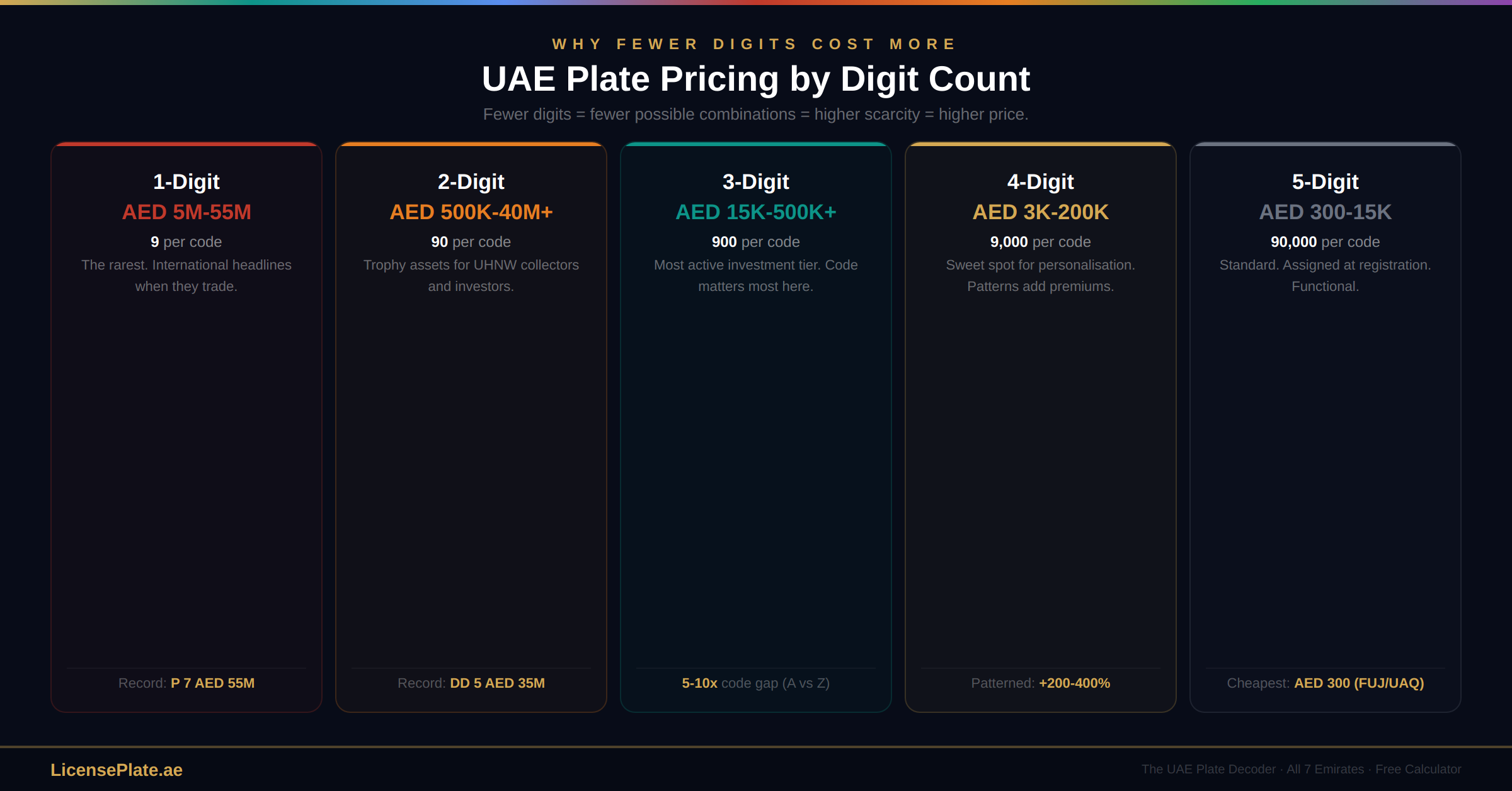
عدد الأرقام على اللوحة الإماراتية هو أقوى مؤشّر منفرد لقيمتها. والمنطق بسيط: أرقام أقل يعني تركيبات ممكنة أقل، ما يعني ندرة أعلى. فلا يوجد سوى 9 لوحات ذات رقم واحد لكل رمز (من 1 إلى 9). وهناك 90 لوحة ذات رقمين لكل رمز (من 10 إلى 99). وهناك 900 لوحة ذات ثلاثة أرقام. وهناك 90,000 لوحة ذات خمسة أرقام. والندرة تدفع السعر.
رقم واحد (من 1 إلى 9): من 5 ملايين إلى 55 مليون درهم. أندر اللوحات. بيعت P 7 بـ 55 مليون درهم (رقم قياسي في موسوعة غينيس، أبريل 2023). وبيعت لوحة أبوظبي "1" بـ 52.2 مليون درهم (2008). ولا يوجد سوى 9 لكل رمز. وتصنع عناوين دولية عند تداولها.
رقمان (من 10 إلى 99): من 500,000 إلى أكثر من 40 مليون درهم. بيعت DD 5 بـ 35 مليون درهم. وبيعت AA 9 بـ 38 مليون درهم. وهذه أصول استعراضية لهواة الجمع والمستثمرين ذوي الملاءة المالية الفائقة.
ثلاثة أرقام (من 100 إلى 999): من 15,000 إلى أكثر من 500,000 درهم في دبي. ومن 50,000 إلى أكثر من 200,000 درهم في أبوظبي. ومن 15,000 إلى 200,000 درهم في الشارقة. وهي أكثر طبقة استثمارية نشاطاً في سوق لوحات الإمارات.
أربعة أرقام (من 1000 إلى 9999): من 3,000 إلى 200,000 درهم. النقطة المثالية للمشترين الراغبين في لوحة شخصية دون التزام من ستة أرقام. والأرقام ذات النمط (1234، 7777) تحمل علاوات.
خمسة أرقام (من 10000 إلى 99999): من 300 إلى 15,000 درهم. اللوحات الأكثر شيوعاً. تُخصَّص أثناء تسجيل المركبة القياسي. وظيفية، لا بدرجة استثمارية. الأرخص في الفجيرة وأم القيوين (من 300 درهم)، والأغلى في دبي (3,000 إلى 15,000 درهم على الرموز المبكرة).
تحقّق مما تساويه أي لوحة على حاسبة اللوحات. ويوثّق فحص أسعار دبي تسعير دبي حسب الرمز وعدد الأرقام. ويغطّي دليل الأخطاء العشرة الأخطاء التي تدمّر العوائد، بما في ذلك الخطأ رقم 3 (عمى طبقة الرمز، حيث يهمّ حرف الرمز بقدر عدد الأرقام).
اللوحات الخاصة: لحظاتك المميّزة، ودبي الكلاسيكية، وإكسبو 2020
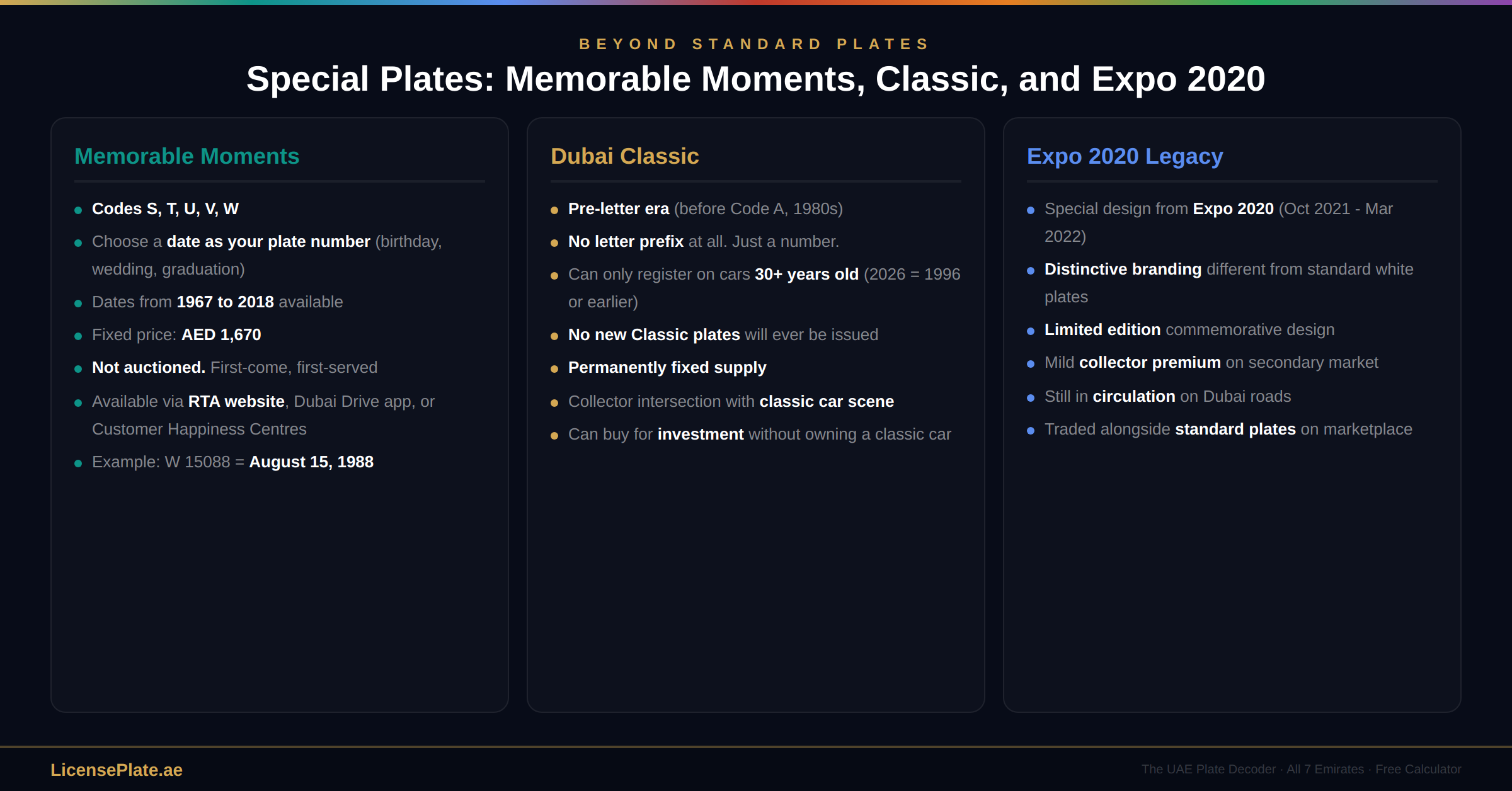
لوحات لحظاتك المميّزة (الرموز S، T، U، V، W)
تتيح مبادرة هيئة الطرق "لحظاتك المميّزة على لوحة مركبتك" لمقيمي دبي اختيار رقم لوحة من 5 أرقام يمثّل تاريخاً مهمّاً في حياتهم: عيد ميلاد، أو ذكرى زفاف، أو تاريخ تخرّج، أو أي محطّة أخرى بين 1967 و2018. وتستخدم اللوحات رموزاً محدّدة (S للمرحلة الأولى التي تغطّي 1981-1998، ثم T وU وV وW لنطاقات تواريخ موسّعة). والرمز W يغطّي التواريخ من 1967 إلى 2018. والتكلفة الإجمالية 1,670 درهماً لكل لوحة، متاحة مباشرةً من مراكز سعادة المتعاملين لهيئة الطرق، أو موقع هيئة الطرق، أو تطبيق Dubai Drive. فمثلاً، لوحة تقرأ W 15088 يمكن أن تمثّل 15 أغسطس 1988 (عيد ميلاد). وهذه لا تُطرَح في المزاد. بل بأسبقية الحضور بسعر ثابت، ما يجعلها أكثر اللوحات الشخصية تيسّراً في دبي.
لوحات دبي الكلاسيكية
تنتمي لوحات دبي الكلاسيكية إلى نظام الترقيم الأصلي السابق للحروف، قبل طرح الرمز A في الثمانينيات. فهي لا تحمل بادئة حرف على الإطلاق، مجرّد رقم. وهي مميّزة بصرياً وذات دلالة تاريخية، تمثّل أبكر حقبة في نظام لوحات دبي. وتأتي اللوحات الكلاسيكية بقيد فريد: يمكن تسجيلها فقط على مركبات عمرها 30 عاماً أو أكثر (في 2026، يجب أن تكون السيارة من طراز عام 1996 أو أقدم). ويربط هذا اللوحات الكلاسيكية بمشهد السيارات الكلاسيكية والقديمة المتنامي في الإمارات. ولن تُصدَر لوحات كلاسيكية جديدة أبداً، ما يجعل المعروض ثابتاً بشكل دائم. واللوحات الكلاسيكية المميّزة تُعامَل كاللوحات الخاصة لأغراض الملكية: يمكنك شراء واحدة للاستثمار دون امتلاك سيارة كلاسيكية، لكن لا يمكنك تسجيلها على مركبة حديثة.
لوحات إرث إكسبو 2020
خلال إكسبو 2020 في دبي (أُقيم من أكتوبر 2021 إلى مارس 2022)، طرحت هيئة الطرق تصميم لوحة خاصاً يحيي الحدث. وتتميّز هذه اللوحات بعلامة إكسبو 2020 وأسلوب بصري مميّز مختلف عن لوحة دبي البيضاء القياسية. ولا تزال بعض لوحات إكسبو متداولة وتحمل علاوة هواة جمع خفيفة كتصميم محدود الإصدار. وتُتداوَل في السوق الثانوي إلى جانب اللوحات القياسية.
جمع كل ذلك معاً: قراءة أي لوحة في 30 ثانية
لديك الآن العناصر الأربعة جميعها. وإليك كيف تطبّقها:
ترى لوحة: دبي A 7. الإمارة: دبي. اللون: أبيض (خاص). الرمز: A (الأبكر، الثمانينيات، الأكثر رقياً). الأرقام: 1 (رقم واحد، الأندر). القيمة التقريبية: 10 ملايين إلى 55 مليون درهم. هذه لوحة استعراضية يملكها شخص في أعلى 0.001% من طيف ثروة الإمارات.
ترى لوحة: الشارقة 2 45210. الإمارة: الشارقة. اللون: أبيض (خاص). الرمز: 2 (رمز شارقة متوسّط النطاق). الأرقام: 5 (خمسة أرقام، الأكثر شيوعاً). القيمة التقريبية: 1,500 إلى 3,000 درهم. هذه لوحة وظيفية قياسية. لا استثمار.
ترى لوحة: أبوظبي (الفئة 5) 786. الإمارة: أبوظبي. اللون: أبيض بشريط لون الفئة. الفئة: 5 (متوسّطة النطاق). الأرقام: 3 (ثلاثة أرقام، طبقة استثمارية). الرقم: 786 (بسم الله، أحد أكثر الأرقام دلالةً ثقافيةً في الإمارات). القيمة التقريبية: 100,000 إلى أكثر من 300,000 درهم. وتجمع هذه اللوحة فئة متوسّطة الهيبة برقم مقدّس، ما يخلق علاوة ثقافية تتجاوز المعدّل الأساسي. ويشرح دليل دلالات الأرقام لماذا يحقّق 786 علاوات عبر مجتمعات جنوب آسيا والعرب.
ترى لوحة صفراء على سيارة أجرة: غير قابلة للتداول. لوحة خضراء على شاحنة توصيل: تجارية، غير قابلة للتداول. لوحة زرقاء على سيارة شرطة: حكومية، غير قابلة للتداول. لوحة حمراء على سيارة جديدة: مؤقتة، ستُستبدَل بلوحة بيضاء دائمة قريباً. فقط اللوحات البيضاء الخاصة ولوحات دبي الكلاسيكية تُتداوَل في السوق الثانوي.
تريد معرفة ما تساويه أي لوحة؟ تأخذ حاسبة اللوحات إمارتك، والرمز، ورقم لوحتك وتعيد نطاق سعر مستنيراً بالسوق في 60 ثانية. ويستعرض دليل الفاحص عملية المقارنة الكاملة.
الأسئلة الشائعة
س: ماذا تعني ألوان لوحات سيارات الإمارات؟
الأبيض = مركبة خاصة (90% من جميع السيارات). الأصفر = سيارة أجرة مرخّصة. الأخضر = مركبة تجارية/أسطول. الأحمر = تسجيل مؤقت أو تصدير. الأزرق = مركبة حكومية أو شرطة أو دبلوماسية. الأسود = مركبة كبار شخصيات أو ذات وضع خاص. وفقط اللوحات البيضاء الخاصة ولوحات دبي الكلاسيكية تُتداوَل في السوق الثانوي.
س: كيف يمكنني معرفة إلى أي إمارة تنتمي لوحة إماراتية؟
اقرأ اسم الإمارة المطبوع على اللوحة (دبي، أبوظبي، الشارقة، عجمان، رأس الخيمة، الفجيرة، أم القيوين). ولكل إمارة أيضاً تصميم مميّز: تستخدم دبي رموز الحروف (A-Z إضافةً إلى AA/BB/CC/DD)، وتستخدم أبوظبي فئات رقمية (1-50)، وتستخدم الشارقة رموزاً رقمية (1-4)، وتستخدم الإمارات الشمالية (عجمان، رأس الخيمة، الفجيرة، أم القيوين) رموز الحروف (A-Z).
س: ماذا يعني حرف الرمز على لوحة دبي؟
الحرف يشير إلى متى صدرت اللوحة. فالرمز A كان أولاً (الثمانينيات)، والرمز Z حديث (العقد الثالث من الألفية). والرموز المبكرة أندر وأكثر قيمة لأن المعروض ثابت بشكل دائم. فلوحة الرمز A من 3 أرقام تكلّف 5-10 أضعاف الرقم نفسه من 3 أرقام على الرمز Z. ويشرح دليل الرموز من A إلى Z التسلسل الهرمي الكامل.
س: لماذا اللوحات ذات الأرقام الأقل تكلّف أكثر؟
الندرة. فلا يوجد سوى 9 لوحات ذات رقم واحد لكل رمز (1-9). ولا يوجد سوى 90 لوحة ذات رقمين (10-99). لكن هناك 90,000 لوحة ذات خمسة أرقام (10000-99999). تركيبات ممكنة أقل = ندرة أعلى = سعر أعلى.
س: ما هي لوحات دبي لحظاتك المميّزة؟
لوحات بالرموز S أو T أو U أو V أو W تتيح لك اختيار تاريخ كرقم لوحتك (عيد ميلاد، زفاف، تخرّج). والتواريخ من 1967 إلى 2018 متاحة. بسعر ثابت قدره 1,670 درهماً. متاحة من موقع هيئة الطرق، أو تطبيق Dubai Drive، أو مراكز سعادة المتعاملين. لا تُطرَح في المزاد.
س: ما هي لوحة دبي الكلاسيكية؟
لوحة من نظام الترقيم الأصلي السابق للحروف (قبل الرمز A). بلا بادئة حرف، مجرّد رقم. يمكن تسجيلها فقط على مركبات عمرها 30 عاماً فأكثر. ولن تُصدَر لوحات كلاسيكية جديدة أبداً. معروض ثابت بشكل دائم. تُتداوَل كمقتنيات لهواة الجمع.
س: هل يمكنني فحص قيمة أي لوحة إماراتية عبر الإنترنت؟
نعم. تدعم حاسبة اللوحات على LicensePlate.ae الإمارات السبع جميعها. أدخل الإمارة، والرمز، ورقم اللوحة للحصول على نطاق أدنى/متوسّط/أعلى بدرجة ثقة، مستمدّ من أكثر من 100,000 نقطة بيانات. مجاني، دون تسجيل، 60 ثانية.
س: هل تُتداوَل اللوحات الصفراء أو الخضراء أو الزرقاء أو الحمراء في السوق الثانوي؟
لا. فقط اللوحات البيضاء الخاصة ولوحات دبي الكلاسيكية تُشترى وتُباع في السوق الثانوي. واللوحات الصفراء (أجرة)، والخضراء (تجارية)، والزرقاء (حكومية)، والحمراء (مؤقتة) تُخصّصها الجهات ولا يمكن تداولها بشكل خاص.
س: ما هي أرخص لوحة إماراتية يمكنني شراؤها؟
اللوحات ذات الخمسة أرقام في الفجيرة وأم القيوين تبدأ من 300 درهم. ولوحات عجمان من 5 أرقام تبدأ من 500 درهم. ولوحات الشارقة من 5 أرقام تبدأ من 1,500 درهم. ولوحات دبي من 5 أرقام تبدأ من 3,000 درهم.
س: بكم بيعت أغلى لوحة إماراتية؟
بيعت دبي P 7 بـ 55 مليون درهم (15 مليون دولار) في مزاد أنبل الأرقام الخيري في 8 أبريل 2023. وحملت لوحة أبوظبي "1" الرقم القياسي سابقاً عند 52.2 مليون درهم (2008).