

كم تكلفة امتلاك لوحة سيارة في الإمارات؟ التفصيل الكامل للتكاليف السنوية
أنت تفكّر في شراء لوحة سيارة. راجعت حاسبة اللوحات ووجدت لوحة دبي من فئة D بثلاثة أرقام معروضة بـ 50,000 درهم. الرقم يبدو مناسباً. السعر يبدو معقولاً. لكن قبل أن تتخذ القرار، يوقفك سؤال: ما الذي يتعيّن عليّ دفعه غير ذلك؟
إذا سبق أن امتلكت عقاراً في الإمارات، فأنت تعرف أن سعر الشراء ليس سوى البداية. فبعد رسوم دائرة الأراضي والأملاك (4% من سعر الشراء في دبي)، ورسوم الخدمة (2-5% من قيمة العقار سنوياً)، والصيانة، وهيئة كهرباء ومياه دبي، ورسوم التبريد، وتكاليف الإدارة، تضيف التكلفة الإجمالية للملكية ما بين 8 و12% من قيمة الأصل كل عام. شقة بقيمة مليون درهم تكلّف ما بين 80,000 و120,000 درهم سنوياً لمجرد الاحتفاظ بها.
لذلك تفترض أن اللوحات تعمل بالطريقة نفسها. لا بد أن هناك رسوم تسجيل سنوية، أو رسوم تجديد، أو تكاليف تخزين، أو ضرائب حكومية، أو نوعاً ما من المصاريف المستمرة التي تجعل التكلفة الحقيقية للملكية أعلى بكثير من سعر الشراء. تبحث في جوجل عن "تكلفة امتلاك لوحة سيارة في الإمارات" فلا تجد إجابة واضحة. كل المقالات تتحدث عن كيفية شراء اللوحة، لكن لا أحد ينشر التكلفة السنوية الكاملة للاحتفاظ بها.
هذا المقال يعالج ذلك. كل تكلفة. كل رسم. كل سيناريو. ثلاثة أمثلة عملية عند ثلاث شرائح سعرية. والإجابة التي تزيل أكبر اعتراض على شراء لوحة في الإمارات: تكلفة الاحتفاظ ثابتة. لوحة بقيمة 5,000 درهم ولوحة بقيمة 5,000,000 درهم تكلّفان المبلغ نفسه تماماً للاحتفاظ بهما. وهذه التكلفة، عملياً، صفر.
التكاليف لمرة واحدة (ما تدفعه عند الشراء)
سعر شراء اللوحة. هذه هي التكلفة الجوهرية الوحيدة. وتتراوح من 300 درهم (لوحة من خمسة أرقام في الفجيرة أو أم القيوين) إلى 55 مليون درهم (اللوحة P 7، الرقم القياسي في موسوعة غينيس). تمنحك حاسبة اللوحات النطاق السوقي لأي لوحة بعينها. ويشرح دليل التحقق عملية المقارنة المرجعية من ثلاث خطوات.
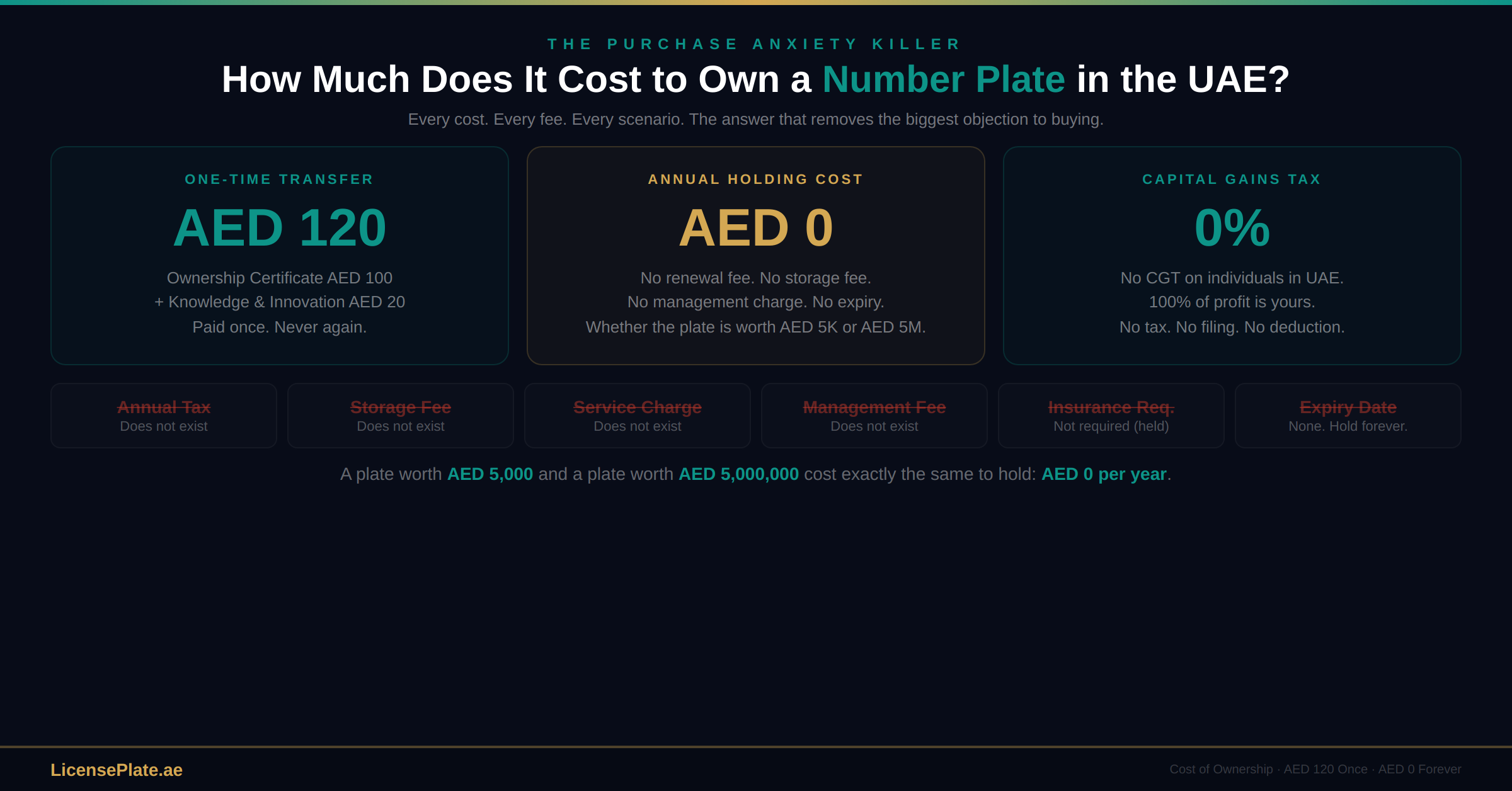
رسوم نقل ملكية اللوحة: 120 درهماً. وهي رسوم تُدفع لمرة واحدة أثناء نقل ملكية اللوحة من البائع إلى المشتري. وتشمل شهادة الملكية (100 درهم) بالإضافة إلى رسم المعرفة والابتكار (20 درهماً). ويمكن إتمام النقل إلكترونياً عبر تطبيق دبي درايف والهوية الرقمية UAE Pass، أو في أي من مراكز سعادة المتعاملين التابعة لهيئة الطرق والمواصلات. ويوثّق دليل الرسوم هيكل رسوم الهيئة بالكامل.
فتح ملف مروري (عند الحاجة): 200 درهم. إذا لم يكن لديك ملف مروري في الإمارة التي سُجّلت فيها اللوحة، فأنت بحاجة إلى فتح واحد. وهذه رسوم لمرة واحدة. ومعظم المقيمين في الإمارات لديهم بالفعل ملف مروري في إمارة واحدة على الأقل. وإذا كنت تشتري لوحة من إمارة مختلفة، فإن دليل النقل بين الإمارات يغطّي العملية. وعادةً ما يدفع المشترون من خارج الإمارة 200 درهم لفتح ملف مروري جديد.
ضريبة القيمة المضافة على مشتريات المزادات: 5%. إذا اشتريت عبر مزاد رسمي لهيئة الطرق والمواصلات أو عبر مزاد الإمارات، تُضاف ضريبة قيمة مضافة بنسبة 5% إلى سعر المزاد. أما إذا اشتريت في السوق الثانوية (LicensePlate.ae، بيع خاص)، فإن ضريبة القيمة المضافة لا تنطبق عادةً على معاملات اللوحات بين الأفراد. ويشرح دليل المزاد مقابل السوق الثانوية المفاضلات بين القناتين.
تأمين المشاركة في المزاد: 25,000 درهم (قابلة للاسترداد). إذا كنت تشتري عبر مزاد هيئة الطرق والمواصلات، تدفع تأميناً مسترداً بقيمة 25,000 درهم بالإضافة إلى رسم تسجيل غير مسترد بقيمة 120 درهماً. ويُعاد التأمين إذا لم تفز. وإذا فزت، يُخصم من سعر الشراء. أما إذا اشتريت من السوق الثانوية، فلا يوجد تأمين على الإطلاق.
إجمالي التكلفة لمرة واحدة (السوق الثانوية): سعر الشراء + 120 درهماً رسوم النقل + 200 درهم للملف المروري (عند الحاجة). هذا كل شيء. لا رسوم دمغة. لا ضريبة تسجيل. ولا عمولة وسيط على معظم المنصات.
التكاليف السنوية إذا كانت لوحتك مسجّلة على مركبة
إذا سجّلت لوحتك على سيارة وقُدتها، فإنك تتحمّل التكاليف السنوية نفسها التي يتحمّلها أي مالك مركبة في الإمارات. وهذه تكاليف ملكية مركبة، لا تكاليف ملكية لوحة. واللوحة نفسها لا تضيف شيئاً إلى هذه المصاريف.
تجديد تسجيل المركبة: من 350 إلى 600 درهم سنوياً. تفرض دبي 350 درهماً للمركبات الخاصة الخفيفة. وتفرض أبوظبي نحو 350-400 درهم. وتفرض الشارقة 350 درهماً. بالإضافة إلى 20 درهماً رسم المعرفة والابتكار. وهذا المبلغ نفسه سواء كانت لوحتك من خمسة أرقام عادية أو رقماً أحادياً بملايين الدراهم. اللوحة لا تغيّر تكلفة التجديد.
تأمين المركبة: متفاوت. يكلّف التأمين الشامل عادةً ما بين 1.5 و3% من قيمة المركبة سنوياً. واللوحة الموجودة على السيارة لا تؤثر في قسط التأمين. فشركات التأمين تسعّر بناءً على الماركة والطراز وسنة الصنع وملف السائق، لا على رقم اللوحة.
فحص المركبة (إذا تجاوز عمرها 3 سنوات): 150-170 درهماً. فحص معتمد من هيئة الطرق والمواصلات في تسجيل أو شامل أو واصل. ومطلوب سنوياً للمركبات التي يزيد عمرها على 3 سنوات. ومرة أخرى، هذه تكلفة مركبة لا تكلفة لوحة.
سالك (رسوم المرور): 6 دراهم لكل عبور. نظام رسوم الطرق في دبي. وهو نفسه لكل لوحة، بغضّ النظر عن قيمتها.
الخلاصة الجوهرية: لا شيء من هذه التكاليف خاص باللوحة. إنها تكاليف مركبة. إذا كنت تملك سيارة، فأنت تدفع هذه المبالغ بغضّ النظر عمّا إذا كانت لوحتك تساوي 3,000 درهم أو 3,000,000 درهم. اللوحة تضيف 0 درهم إلى التكلفة السنوية لامتلاك مركبة.
التكاليف السنوية إذا احتُفظ باللوحة بدون مركبة
هنا يصبح هيكل التكلفة في سوق اللوحات لافتاً بحق. إذا كنت تملك لوحة لكنك لم تسجّلها على مركبة، فإن تكلفتك السنوية للاحتفاظ بتلك اللوحة هي:
0 درهم.
لا رسوم تجديد سنوية. لا رسوم تخزين. لا رسوم إدارة. لا ضريبة حكومية. لا رسوم صيانة. لا رسوم خدمة. لا اشتراط تأمين. لا تاريخ انتهاء. تبقى اللوحة في ملفك المروري باسمك، إلى أجل غير مسمّى، بتكلفة متكررة صفر. ولا يوجد حدّ زمني لمدة احتفاظك باللوحة بدون مركبة. ويؤكّد مقال بيع السيارة ذلك: البائعون الذين يحتفظون بلوحتهم أثناء بيع السيارة يدفعون 120 درهماً مرة واحدة، ثم 0 درهم إلى الأبد حتى يقرروا تسجيل اللوحة على سيارة جديدة أو بيعها.
هذه الحقيقة هي أهم ميزة تكلفة مفردة تتمتع بها اللوحات الإماراتية كفئة أصول. قارنها بكل تكلفة احتفاظ أخرى:
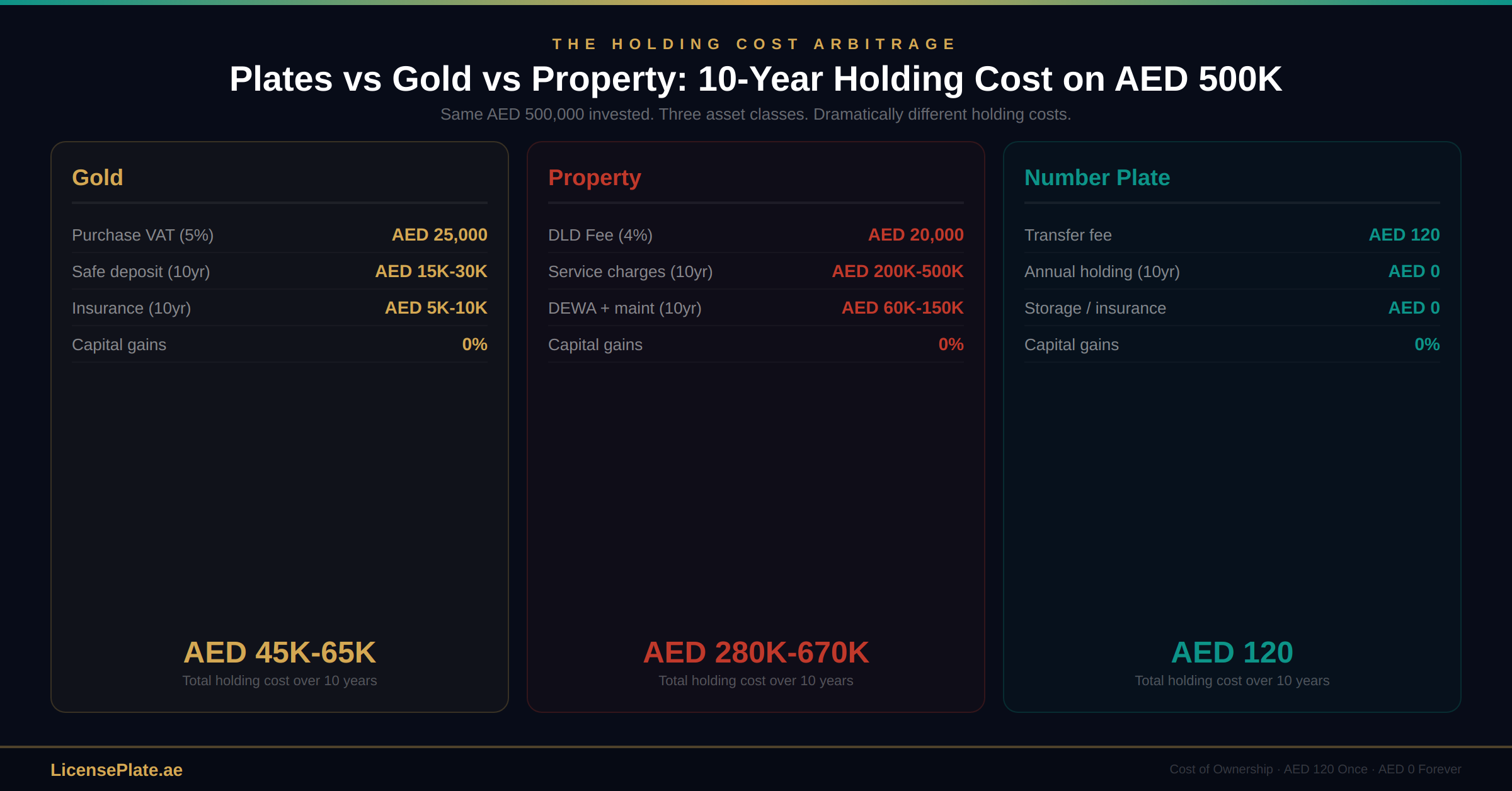
الذهب: ضريبة قيمة مضافة 5% عند الشراء في الإمارات. وصناديق الأمانات في البنوك للتخزين: من 500 إلى 3,000 درهم سنوياً. وتكاليف الحماية المادية. ويوثّق مقال اللوحات مقابل الذهب والعقار المقارنة الكاملة.
العقار: رسوم نقل ملكية 4% لدائرة الأراضي والأملاك عند الشراء (دبي). ورسوم خدمة سنوية: 2-5% من قيمة العقار (من 20,000 إلى أكثر من 100,000 درهم لشقة متميزة). وهيئة كهرباء ومياه دبي: من 6,000 إلى 15,000 درهم سنوياً. ورسوم التبريد. واحتياطيات الصيانة. ورسوم الإدارة. عقار بمليون درهم يكلّف من 80,000 إلى 120,000 درهم سنوياً للاحتفاظ به.
الأسهم: رسوم وساطة (0.05-0.5% لكل صفقة). ورسوم حفظ. ورسوم منصات. وضرائب استقطاع على الأرباح الموزعة في بعض الأسواق.
اللوحات الإماراتية: 120 درهماً مرة واحدة. ثم 0 درهم سنوياً. إلى الأبد. سواء كانت اللوحة تساوي 5,000 درهم أو 50,000,000 درهم. هيكل التكلفة الثابتة هذا فريد بين جميع فئات الأصول في الإمارات.
مفارقة تكلفة الاحتفاظ: لماذا تهمّ التكاليف الثابتة
وهنا الفكرة التي يدركها مستثمرو اللوحات المخضرمون ولا يدركها المشترون لأول مرة: هيكل التكلفة الثابتة يخلق أفضلية غير متماثلة عند كل شريحة سعرية.
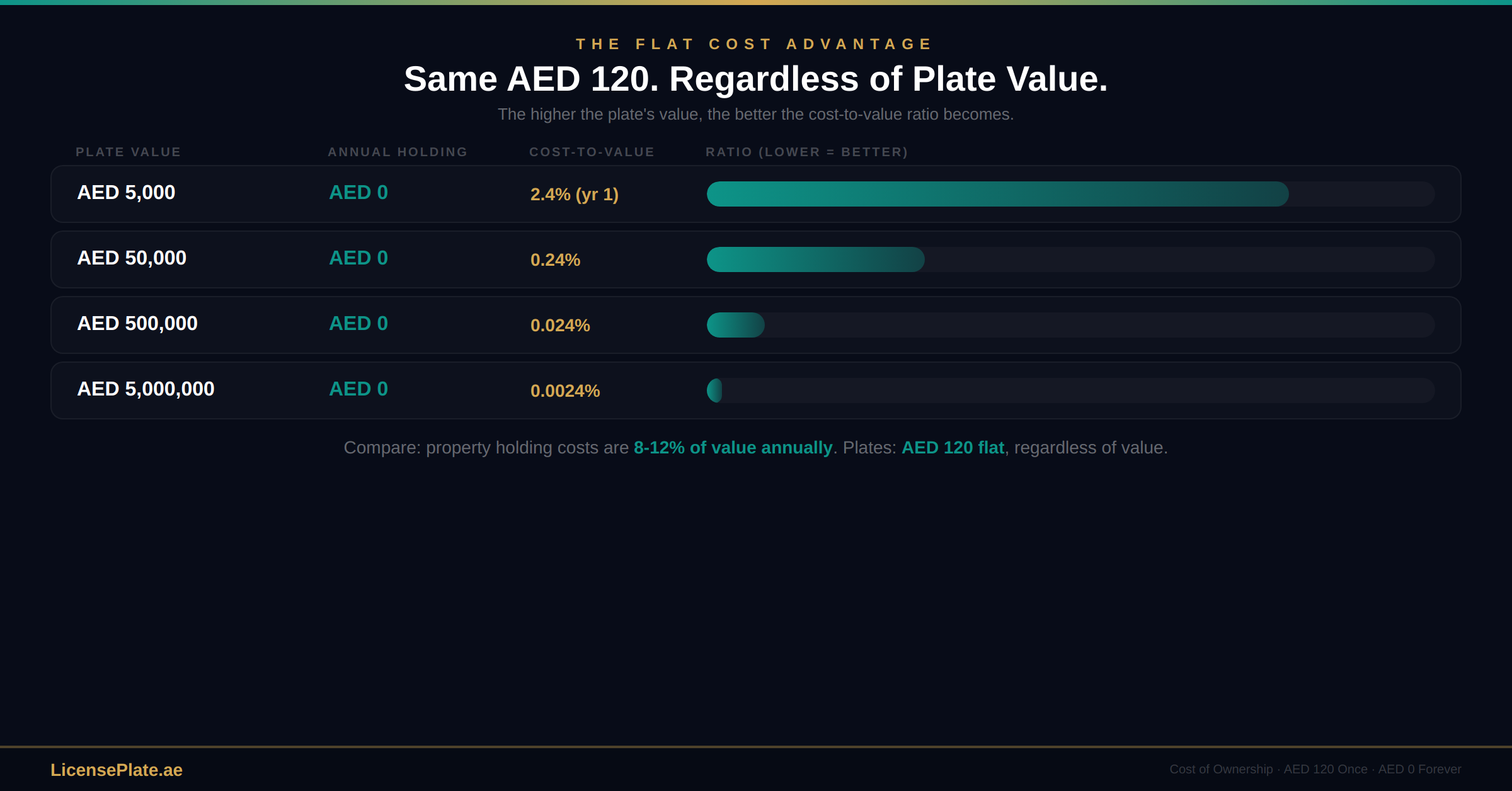
لوحة بقيمة 5,000 درهم تكلّف 120 درهماً للاحتفاظ بها. أي أن تكلفة الاحتفاظ تعادل 2.4% من القيمة في السنة الأولى، وتتراجع كل عام إذا ارتفعت قيمة اللوحة. ولوحة بقيمة 50,000 درهم تكلّف 120 درهماً للاحتفاظ بها. أي 0.24% من القيمة. ولوحة بقيمة 500,000 درهم تكلّف 120 درهماً. أي 0.024% من القيمة. ولوحة بقيمة 5,000,000 درهم تكلّف 120 درهماً. أي 0.0024% من القيمة.
قارن ذلك بالعقار، حيث تتناسب تكاليف الاحتفاظ مع القيمة (عقار بقيمة 5,000,000 درهم يكلّف نحو 400,000 إلى 600,000 درهم سنوياً للاحتفاظ به، أي 8-12% من القيمة كل عام). أو بالذهب، حيث تتناسب تكاليف التخزين والتأمين مع الكمية المحتفظ بها. اللوحات هي الأصل الوحيد في الإمارات الذي تكون فيه تكلفة الاحتفاظ واحدة بغضّ النظر عن قيمة الأصل. هذه هي مفارقة تكلفة الاحتفاظ. وهي تعني أنه كلما ارتفعت قيمة اللوحة، تحسّنت نسبة التكلفة إلى القيمة. وتعني أن اللوحة تحتاج فقط إلى ارتفاع قدره 120 درهماً على مدى فترة احتفاظها بالكامل لتغطية تكاليفها. ولأي لوحة تتجاوز 5,000 درهم، هذا مضمون عملياً بفعل التضخم وحده.
ثلاثة أمثلة عملية: ما تكلفة الملكية فعلياً
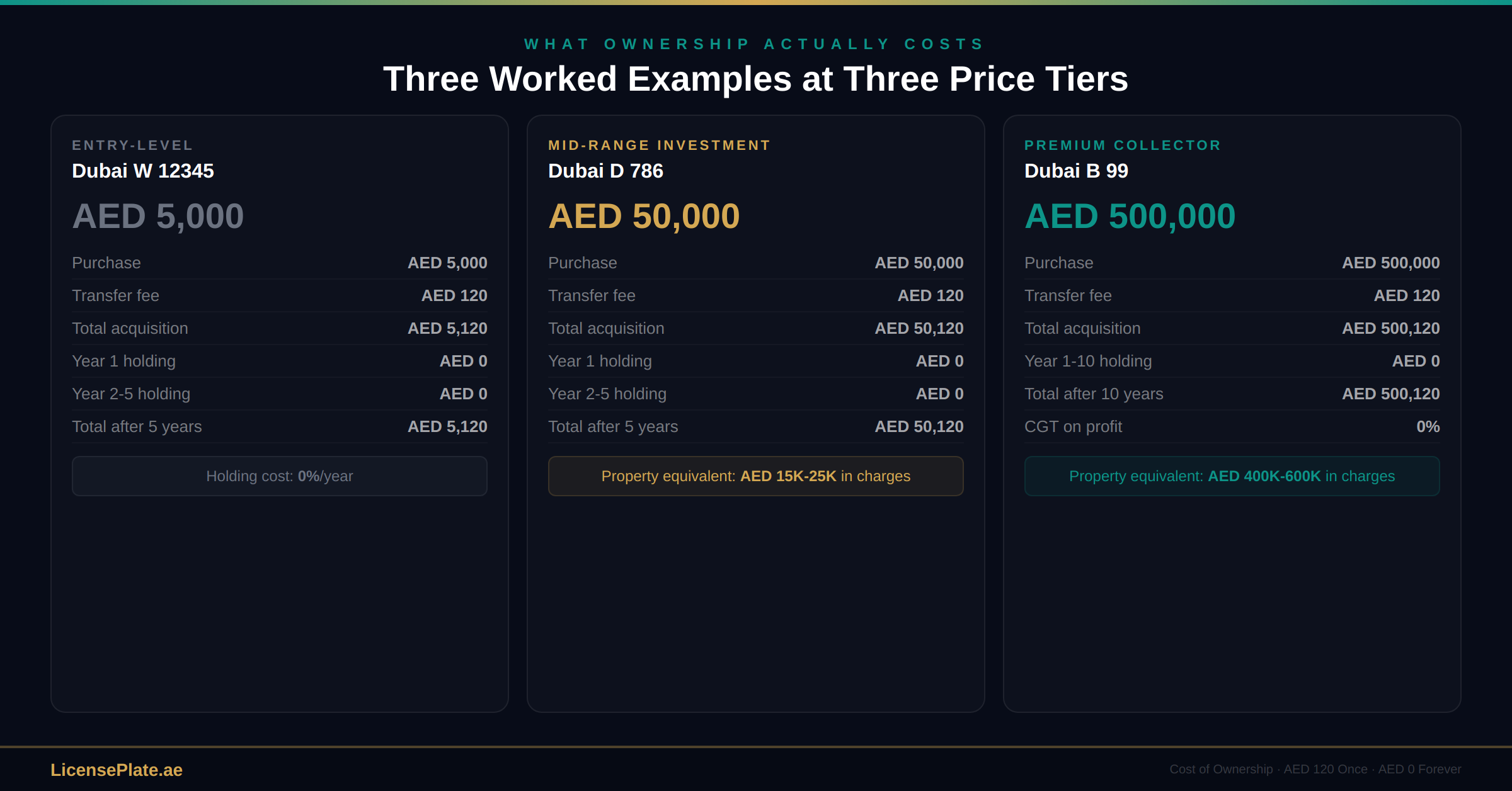
المثال الأول: لوحة للمبتدئين (5,000 درهم)
اللوحة: دبي W 12345 (خمسة أرقام، رمز متأخر، بنمط تاريخ شخصي). سعر الشراء: 5,000 درهم. رسوم النقل: 120 درهماً. الملف المروري: 0 درهم (المشتري لديه ملف بالفعل). إجمالي تكلفة الاقتناء: 5,120 درهماً. تكلفة الاحتفاظ السنوية (بدون مركبة): 0 درهم. تكلفة الاحتفاظ السنوية (مسجّلة على سيارة): 0 درهم إضافةً إلى تكاليف المركبة المعتادة. بعد 5 سنوات من الاحتفاظ: إجمالي المدفوع لا يزال 5,120 درهماً. لا رسوم إضافية متراكمة. وإذا ارتفعت قيمة اللوحة إلى 6,000 درهم (ارتفاع متواضع بنسبة 20% خلال 5 سنوات)، فإن الربح هو 880 درهماً بعد خصم رسوم النقل البالغة 120 درهماً. تكلفة الاحتفاظ السنوية الفعلية كنسبة مئوية: 0% في السنوات من 2 إلى 5.
المثال الثاني: لوحة استثمارية متوسطة (50,000 درهم)
اللوحة: دبي D 786 (ثلاثة أرقام، رمز متوسط، رقم ذو دلالة ثقافية). سعر الشراء: 50,000 درهم. رسوم النقل: 120 درهماً. الملف المروري: 0 درهم (موجود). إجمالي تكلفة الاقتناء: 50,120 درهماً. تكلفة الاحتفاظ السنوية: 0 درهم. بعد 5 سنوات: إجمالي التكلفة لا يزال 50,120 درهماً. أما استثمار عقاري مماثل بقيمة 50,000 درهم (حصة في استوديو مثلاً) فسيكلّف نحو 3,000 إلى 5,000 درهم سنوياً في رسوم الخدمة، أي ما مجموعه 15,000 إلى 25,000 درهم على مدى 5 سنوات. وبذلك يكون مالك اللوحة قد وفّر ما بين 15,000 و25,000 درهم في تكاليف الاحتفاظ مقارنةً بالعقار خلال الفترة نفسها. وتُجري مقارنة اللوحات مقابل الذهب والعقار هذا التحليل عبر فئات الأصول الثلاث بالتفصيل.
المثال الثالث: لوحة جامعين متميزة (500,000 درهم)
اللوحة: دبي B 99 (رقمان، رمز مبكر، رقم مزدوج). سعر الشراء: 500,000 درهم. رسوم النقل: 120 درهماً. إجمالي تكلفة الاقتناء: 500,120 درهماً. تكلفة الاحتفاظ السنوية: 0 درهم. بعد 10 سنوات: إجمالي التكلفة لا يزال 500,120 درهماً. أما حيازة ذهب بقيمة 500,000 درهم فستتطلّب صندوق أمانات في بنك (من 1,500 إلى 3,000 درهم سنوياً = من 15,000 إلى 30,000 درهم على مدى 10 سنوات) بالإضافة إلى ضريبة قيمة مضافة 5% على الشراء الأصلي (25,000 درهم). واستثمار عقاري بقيمة 500,000 درهم سيكلّف من 40,000 إلى 60,000 درهم سنوياً في رسوم الخدمة، أي ما مجموعه 400,000 إلى 600,000 درهم على مدى 10 سنوات. أفضلية تكلفة الاحتفاظ للوحة على مدى 10 سنوات: أكثر من 400,000 درهم مقارنةً بالعقار، وأكثر من 40,000 درهم مقارنةً بالذهب. اللوحة كلّفت 120 درهماً إجمالاً. المبلغ نفسه سواء كانت السنة الأولى أو السنة العاشرة. وسواء ارتفعت قيمة اللوحة إلى 1,000,000 درهم أو بقيت ثابتة.
ما تدفعه عند البيع
رسوم النقل: 120 درهماً. الرسوم نفسها التي دفعها المشتري عندما اشتريت أنت. وهذه المرة، يدفعها المشتري. تكلفتك للبيع: 0 درهم إذا تحمّل المشتري رسوم النقل (وهو العُرف السائد). أو 120 درهماً إذا تحمّلتها أنت كتنازل تفاوضي.
ضريبة الأرباح الرأسمالية: 0%. لا تفرض الإمارات ضريبة أرباح رأسمالية على الأفراد. لوحة اشتُريت بـ 50,000 درهم وبيعت بـ 150,000 درهم تحقّق ربحاً قدره 100,000 درهم، تحتفظ به بالكامل. لا خصم ضريبي. لا إقرار. لا تقديم. وينطبق هذا على جميع اللوحات الإماراتية في الإمارات السبع. وتوثّق مقارنة اللوحات مقابل الذهب والعقار هذا باعتباره أحد الأبعاد الخمسة التي تتفوّق فيها اللوحات على الذهب والعقار معاً.
تكلفة الإدراج: 0 درهم. إدراج لوحتك على LicensePlate.ae مجاني. لا رسوم إدراج، ولا عمولة على البيع، ولا تكلفة اشتراك. ارفع لوحتك في 60 ثانية، وحدّد سعرك مستخدماً الحاسبة كمرجع، ويبقى الإعلان نشطاً حتى تبيع أو تزيله. ويغطّي دليل البائع طريقة التسعير من ثلاث خطوات.
إجمالي تكلفة البيع: من 0 إلى 120 درهماً. في معظم المعاملات، يتحمّل المشتري رسوم النقل. وتكون حصيلتك هي سعر البيع كاملاً دون أي خصومات.
التكاليف الخفية التي لا يذكرها أحد (ولماذا هي أصغر مما تظن)
تكلفة الفرصة البديلة. مبلغ 50,000 درهم الموضوع في لوحة هو 50,000 درهم لا تحقّق فائدة في حساب توفير (نحو 4-5% سنوياً في البنوك الإماراتية في 2026، أي من 2,000 إلى 2,500 درهم). وهذه هي التكلفة الحقيقية للاحتفاظ بأي أصل لا يدرّ عائداً. فاللوحات لا تولّد دخلاً أثناء احتفاظك بها (بخلاف العقار المؤجَّر). وهي لا تحقّق عوائد إلا عندما ترتفع قيمتها وتبيعها. ويغطّي دليل الاستثمار متى يكون الاحتفاظ منطقياً مقابل البيع، وكيفية تقييم فرضية ارتفاع القيمة للوحات بعينها.
مخاطر السرقة للوحات المتميزة. اللوحات فائقة التميّز (الرقم الأحادي، والرقمان على الرموز المبكرة) تعرّضت أحياناً للسرقة من مركبات متوقفة. ويحمي نظام هيئة الطرق والمواصلات من عمليات النقل الاحتيالية (فأنت تحتاج إلى هوية UAE Pass وبطاقة الهوية الإماراتية الخاصة بالمالك لإتمام النقل)، لكن اللوحات المادية يمكن نزعها. ويقوم بعض ملّاك اللوحات التي تتجاوز قيمتها مليون درهم بتركيب براغٍ مقاومة للعبث أو يركنون في مرائب آمنة. وهذه تكلفة هامشية (من 50 إلى 200 درهم لأدوات مقاومة للعبث) لكنها تستحق الذكر للوحات ضمن أعلى 0.1% من حيث القيمة.
التكلفة النفسية. امتلاك لوحة تتجاوز قيمتها 100,000 درهم على سيارة تقودها يومياً يعني القلق بشأن الركن، وسائقي خدمة الركن، والحوادث البسيطة، وظهور اللوحة. ويتجنّب بعض ملّاك اللوحات فائقة التميّز خدمة ركن السيارات عمداً لمنع تصوير لوحاتهم واستهدافها. وهذه ليست تكلفة مالية، لكنها اعتبار حقيقي يأخذه ملّاك اللوحات المخضرمون في حسبانهم ضمن تجربة الملكية.
التكاليف غير الموجودة التي يفترض الناس وجودها. لا توجد ضريبة سنوية على اللوحة. ولا اشتراط تأمين على اللوحة (عند الاحتفاظ بها بدون مركبة). ولا رسوم تخزين. ولا رسوم إدارة. ولا رسوم تجديد للوحة نفسها (بل للمركبة المسجّلة عليها فقط). ولا تاريخ انتهاء لملكية اللوحة. ولا حدّ لمدة احتفاظك بها. ولا ضريبة قيمة مضافة على إعادة البيع الخاصة. ولا ضريبة أرباح رأسمالية على الربح. وغياب هذه التكاليف هو ما يجعل اللوحات الإماراتية مختلفة هيكلياً عن كل فئة أصول أخرى.
الأسئلة الشائعة
س: كم تكلفة الاحتفاظ بلوحة بدون سيارة؟
0 درهم سنوياً. بعد رسوم النقل الأولية البالغة 120 درهماً، لا توجد أي رسوم متكررة. لا تجديد سنوي. لا رسوم تخزين. لا انتهاء صلاحية. تبقى اللوحة في ملفك المروري باسمك إلى أجل غير مسمّى.
س: هل توجد رسوم تجديد سنوية للوحات السيارات؟
لا. رسوم التجديد البالغة 350 درهماً سنوياً هي لتسجيل المركبة، لا للوحة. وإذا احتفظت بلوحة دون تسجيلها على سيارة، فلن تدفع شيئاً سنوياً.
س: هل تؤثر قيمة اللوحة في تكلفة الاحتفاظ بها؟
لا. لوحة بقيمة 5,000 درهم ولوحة بقيمة 5,000,000 درهم تكلّفان 120 درهماً للاقتناء (رسوم النقل) و0 درهم سنوياً للاحتفاظ. وهيكل التكلفة الثابتة هذا فريد بين فئات الأصول في الإمارات.
س: هل أدفع ضريبة أرباح رأسمالية عند بيع لوحة؟
لا. لا تفرض الإمارات ضريبة أرباح رأسمالية على الأفراد. 100% من ربح بيع اللوحة لك. لا ضريبة، ولا تقديم إقرار، ولا خصم.
س: هل توجد ضريبة قيمة مضافة على شراء لوحة؟
تنطبق ضريبة قيمة مضافة بنسبة 5% على المشتريات عبر هيئة الطرق والمواصلات الرسمية أو مزاد الإمارات. أما المبيعات الخاصة بين الأفراد في السوق الثانوية فلا تخضع عادةً لضريبة القيمة المضافة.
س: كم تكلفة إدراج لوحتي للبيع؟
0 درهم. الإدراج على LicensePlate.ae مجاني. لا رسوم إدراج، ولا عمولة، ولا اشتراك.
س: ما الرسوم التي يدفعها المشتري أثناء نقل اللوحة؟
120 درهماً إجمالاً (100 درهم شهادة الملكية + 20 درهماً رسم المعرفة والابتكار). بالإضافة إلى 200 درهم لفتح ملف مروري إذا لم يكن لدى المشتري ملف في تلك الإمارة.
س: هل شراء لوحة أغلى من شراء الذهب أو العقار؟
سعر الشراء متفاوت، لكن تكلفة الاحتفاظ أقل بكثير. فالذهب يتطلّب تخزيناً (من 500 إلى 3,000 درهم سنوياً) وضريبة قيمة مضافة 5% عند الشراء. والعقار يتطلّب رسوم دائرة الأراضي والأملاك بنسبة 4% عند الشراء و2-5% من القيمة سنوياً في رسوم الخدمة. أما اللوحات فتتطلّب 120 درهماً مرة واحدة و0 درهم بشكل متكرر.
س: هل يمكنني الاحتفاظ بلوحة باسمي إذا غادرت الإمارات؟
ما دمت محتفظاً بملفك المروري، تبقى اللوحة تحت اسمك. راجع الجهة المرورية المختصة للاطّلاع على القواعد الخاصة بكل إمارة إذا انتهت إقامتك.
س: ما أرخص لوحة يمكنني شراؤها في الإمارات؟
تبدأ اللوحات من خمسة أرقام في الفجيرة ورأس الخيمة وأم القيوين من 300 درهم. وبإضافة رسوم النقل البالغة 120 درهماً، تصبح التكلفة الإجمالية للملكية 420 درهماً. وتكلفة الاحتفاظ السنوية: 0 درهم.