

لوحات دبي الكلاسيكية: دليل الجامعين إلى أندر فئة لوحات في الإمارات
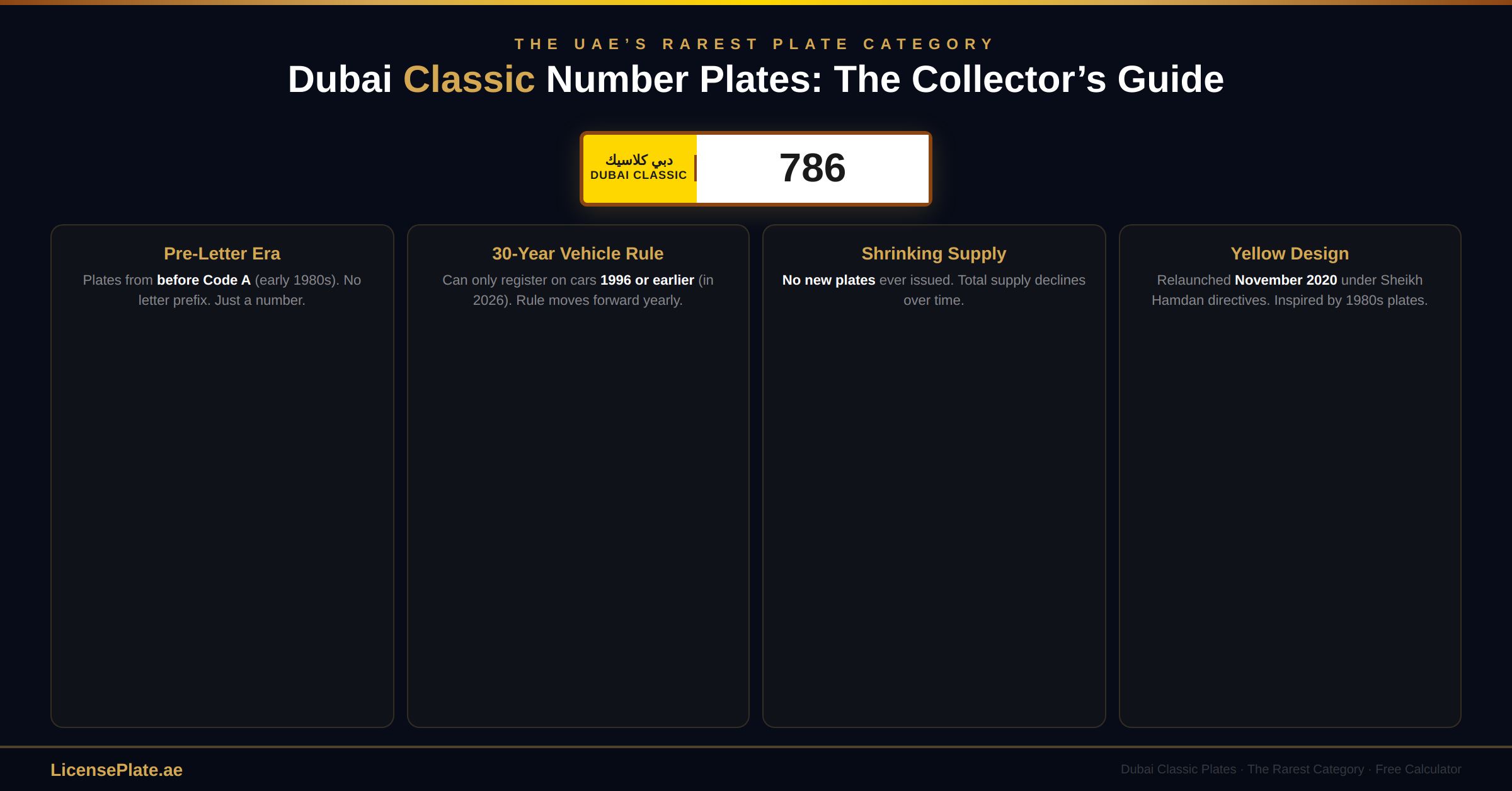
في سبتمبر 2020، وبتوجيهات من سمو الشيخ حمدان بن محمد بن راشد آل مكتوم، ولي عهد دبي ورئيس المجلس التنفيذي لإمارة دبي، أعلنت هيئة الطرق والمواصلات أمراً غير معتاد. فمعظم الإعلانات الحكومية بشأن اللوحات تتعلّق بمزادات جديدة أو رسوم جديدة أو خدمات رقمية جديدة. أما هذا الإعلان فكان مختلفاً. كانت الهيئة تعيد تصميم فئة من اللوحات لم تُصدر منذ عقود، مستوحاةً من لوحات استُخدمت في دبي في ثمانينيات القرن الماضي. واستخدم التصميم الجديد خلفية صفراء تحمل كلمتَي "دبي" و"كلاسيك" بالعربية والإنجليزية. أما الرقم نفسه فوُضع على خلفية بيضاء. وأصبحت اللوحات متاحة اعتباراً من نوفمبر 2020.
كانت تلك المرة الأولى التي يعلم فيها كثير من سكان دبي أن اللوحات الكلاسيكية موجودة أصلاً. فهي ليست ضمن نظام الرموز الاعتيادي من A إلى Z. ولا تظهر في مزادات الهيئة العادية إلى جانب اللوحات المعاصرة. ولا يمكن تسجيلها على سيارة حديثة. ومع ذلك، تُتداول في السوق الثانوية بأسعار تتجاوز في كثير من الأحيان نظيراتها ذات الرموز الحرفية. ولها فئة مخصّصة على LicensePlate.ae. وهي تنتمي إلى القطاع الوحيد في سوق اللوحات الإماراتية الذي يتقلّص فيه إجمالي المعروض بشكل دائم.
يغطّي هذا الدليل كل شيء. ما هي اللوحات الكلاسيكية ومن أين أتت، وقاعدة الثلاثين عاماً للمركبة التي تحدّدها، وكيف تعمل السوق فعلياً (يمكنك امتلاك لوحة كلاسيكية دون امتلاك سيارة كلاسيكية)، والتسعير وعلاوة التراث التي تحقّقها، وإجراءات التسجيل لدى الهيئة، وتقاطعها مع مشهد السيارات الكلاسيكية المتنامي في الإمارات، وفرضية الاستثمار التي تجعل اللوحات الكلاسيكية مختلفة هيكلياً عن كل فئة لوحات أخرى في الدولة.
ما هي لوحات دبي الكلاسيكية
لوحات دبي الكلاسيكية هي لوحات من حقبة ما قبل الحروف، من نظام تسجيل المركبات الأصلي في دبي. فقبل أن تطرح الهيئة نظام الرموز الحرفية (الرمز A في أوائل الثمانينيات)، لم تكن لوحات دبي تحمل أي بادئة حرفية على الإطلاق. كانت مجرد أرقام على لوحة، تعرّف المركبة وإمارة تسجيلها. ومع نمو سكان دبي خلال السبعينيات ودخول الثمانينيات، بلغ نظام الأرقام المجرّدة طاقته الاستيعابية، فطرحت الهيئة الرمز A لبدء النظام الحرفي الحديث. وكل لوحة صدرت من تلك النقطة فصاعداً حملت بادئة حرفية. وكل لوحة كانت موجودة قبل تلك النقطة أصبحت، بأثر رجعي، لوحة كلاسيكية.
وفي سبتمبر 2020، أعلن مطر محمد الطاير، المدير العام ورئيس مجلس المديرين التنفيذيين للهيئة، عن التصميم الجديد للوحة الكلاسيكية. وقال الطاير في بيان رسمي نقلته مجلة Gulf Business: "بالتصميم الجديد، يمكن قراءة اللوحات بوضوح وسهولة من مسافة بعيدة. ويتضمّن التصميم عنصرين مميّزين: كلمتا دبي وكلاسيك مكتوبتان بالعربية والإنجليزية على خلفية صفراء، بينما يُكتب الرقم على خلفية بيضاء." وقد حلّ التصميم الجديد محلّ اللوحات البنّية السابقة، واستخدم طباعة رقمية مبتكرة مقاوِمة للظروف المناخية. وأصبحت اللوحات متاحة اعتباراً من نوفمبر 2020، ويمكن طلبها عبر موقع الهيئة أو مركز سعادة المتعاملين في ديرة.
والتمييز البصري مهمّ. فلوحة دبي الكلاسيكية تبدو مختلفة عن أي لوحة أخرى في الدولة: الشريط الأصفر، ولوحة الرقم البيضاء، ونصّ "دبي كلاسيك" بلغتين، وغياب أي بادئة حرفية. وعندما تظهر لوحة كلاسيكية على سيارة عتيقة في تجمّع Cars and Coffee أو وهي تمرّ في مركز دبي المالي العالمي، فإنها تشير فوراً إلى أن مالكها اختار نوعاً محدّداً من الأصالة. ليست المكانة المعاصرة للوحة برمز A أو B. بل الأصالة التاريخية لقيادة السيارات في دبي ما قبل الثمانينيات.
قاعدة الثلاثين عاماً للمركبة
وإليك القاعدة التي تحدّد اللوحات الكلاسيكية: لا يمكن تسجيل لوحة دبي الكلاسيكية إلا على مركبة يبلغ عمرها 30 عاماً على الأقل، محسوبة من السنة الحالية. وفي 2026، يعني ذلك أن المركبة يجب أن تكون من طراز 1996 أو أقدم. وفي 2027، ستكون 1997 أو أقدم. وتتقدّم القاعدة عاماً واحداً كل عام، فتوسّع تدريجياً مجموعة المركبات المؤهّلة كلما تجاوزت سيارات جديدة عتبة الثلاثين عاماً.
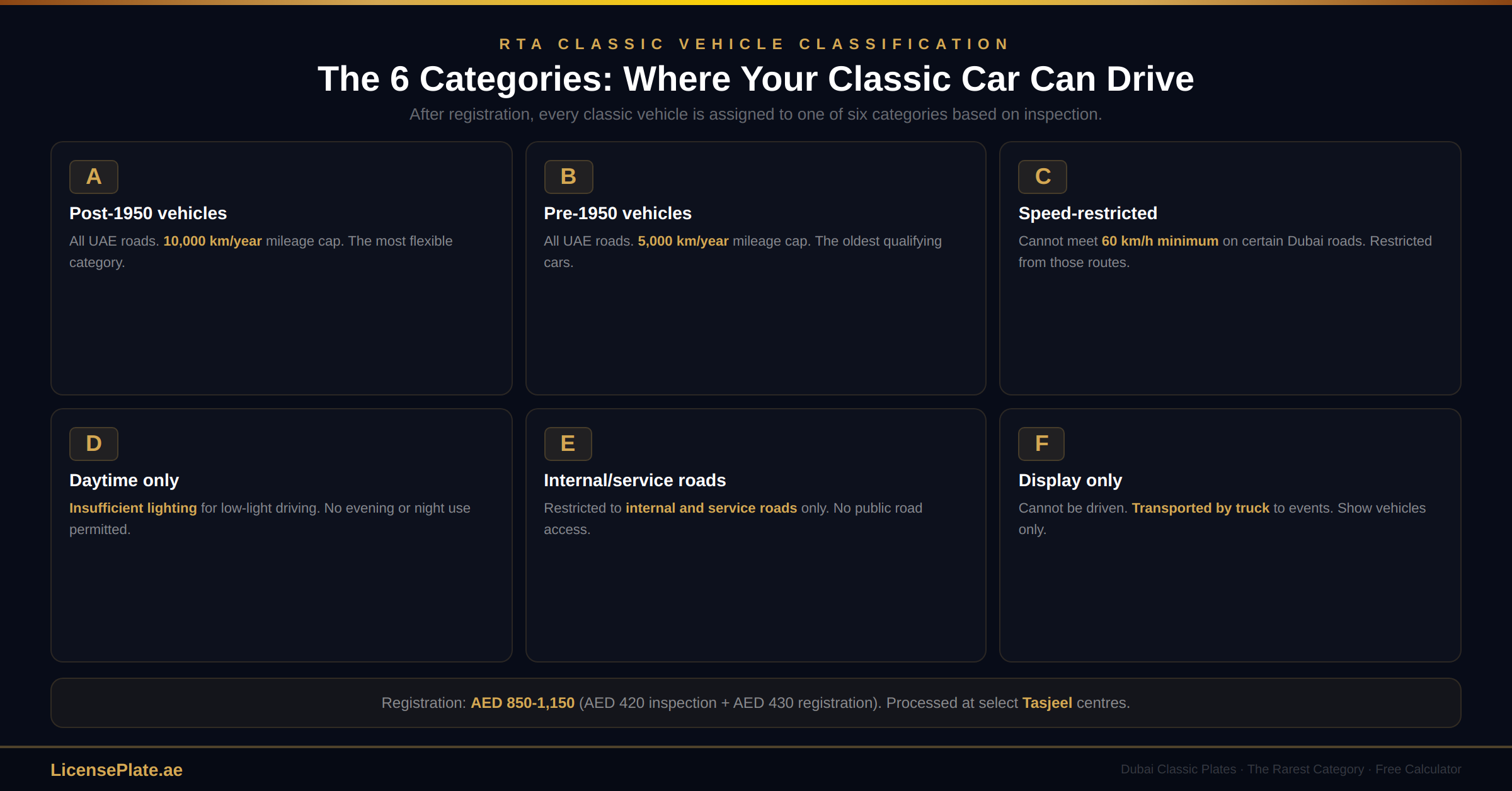
ولتسجيل مركبة كسيارة كلاسيكية في دبي، يجب أن تجتاز السيارة اختبارين لدى الهيئة: فحصاً بصرياً (لتقييم الأصالة والحالة والدقة التاريخية) وتحقّقاً من السلامة (المكابح والأضواء وسلامة الهيكل والامتثال البيئي). وبمجرد التسجيل، تُصنَّف المركبة ضمن إحدى ست فئات تحدّد أين وكيف يمكن قيادتها:
الفئة A: المركبات المصنوعة من عام 1950 فصاعداً. مسموح بها على جميع طرق الدولة. الحد الأقصى للمسافة السنوية: 10,000 كم.
الفئة B: المركبات المصنوعة قبل 1950. مسموح بها على جميع طرق الدولة. الحد الأقصى للمسافة السنوية: 5,000 كم.
الفئة C: المركبات التي لا تستطيع بلوغ الحد الأدنى للسرعة البالغ 60 كم/س على بعض طرق دبي. ممنوعة من تلك الطرق.
الفئة D: المركبات ذات المصابيح أو معدّات الإضاءة غير الكافية. القيادة نهاراً فقط. لا قيادة مساءً أو في الإضاءة المنخفضة.
الفئة E: المركبات المقيّدة بالطرق الداخلية وطرق الخدمة فقط. لا وصول إلى الطرق العامة.
الفئة F: مركبات العرض فقط. لا يمكن قيادتها على الطرق تحت أي ظرف. وتُنقل بالشاحنات إلى الفعاليات.
ويكلّف تسجيل السيارات الكلاسيكية في دبي نحو 850 درهماً (420 درهماً للفحص + 430 درهماً للتسجيل)، ويصل إجمالي الرسوم إلى 1,150 درهماً بحسب الفئة. ويُعالَج التسجيل في مراكز تسجيل مختارة. ويمكن أيضاً تسجيل المركبات ذات المقود الأيمن التي يزيد عمرها على 30 عاماً كسيارات كلاسيكية، وهو المسار القانوني الذي يتيح لملّاك السيارات اليابانية الأسطورية مثل تويوتا سوبرا ونيسان سكايلاين R32/R33 أو لاند كروزر العتيقة قيادتها على طرق الدولة.
ثغرة الاستثمار: الملكية دون قيادة
وإليك الحقيقة التي تغفلها معظم المقالات عن لوحات دبي الكلاسيكية تماماً. يمكنك شراء وامتلاك لوحة دبي كلاسيكية دون امتلاك سيارة كلاسيكية. فاللوحة أصل قائم بذاته مسجّل في ملفك المروري، تماماً كأي لوحة أخرى في دبي. وقاعدة الثلاثين عاماً للمركبة لا تنطبق إلا عندما ترغب في تسجيل اللوحة فعلياً على مركبة. أما إذا أردت الاحتفاظ باللوحة كاستثمار، وحفظها باسمك، وانتظار ارتفاع قيمتها، فلست بحاجة إلى امتلاك سيارة كلاسيكية واحدة.
ويؤكّد ذلك مصادر متعدّدة في السوق الثانوية. فيذكر أحد تجّار السوق الثانوية الراسخين صراحةً: "تُعامَل اللوحات الكلاسيكية ولوحات الدراجات النارية المميّزة معاملة الأرقام الخاصة نفسها من حيث الرسوم والملكية، ما يعني أنه ليس إلزامياً امتلاك سيارة كلاسيكية أو دراجة نارية لشرائها، إذ يمكنك شراؤها بغرض الاستثمار." ويؤكّد دليل تكلفة الملكية أن أي لوحة محتفظ بها في ملف مروري دون مركبة تكون تكلفة الاحتفاظ السنوية بها صفراً.
وهذا يخلق ديناميكية سوقية غير معتادة. فمجموعة المشترين للوحات الكلاسيكية منقسمة إلى فئتين متمايزتين: ملّاك السيارات الكلاسيكية الذين يريدون فعلاً قيادة مركباتهم بلوحة كلاسيكية (ويحتاجون إلى مركبة عمرها 30 عاماً فأكثر لفعل ذلك)، والمستثمرون الخُلّص الذين يريدون التعرّض لفئة اللوحات الوحيدة ذات المعروض المتقلّص دائماً. والفئة الأولى مقيّدة بتوافر المركبات الكلاسيكية المؤهّلة للتسجيل. أما الفئة الثانية فلا قيد عليها سوى رأس المال. ومع اكتشاف مزيد من المستثمرين وجود المسار الثاني، يصبح الطلب على اللوحات الكلاسيكية مدعوماً بقاعدة مشترين لا تحتاج إلى امتلاك سيارة عتيقة.
تسعير لوحات دبي الكلاسيكية وعلاوة التراث
تحمل لوحات دبي الكلاسيكية علاوة على لوحات دبي الاعتيادية ذات عدد الأرقام المكافئ. وتعكس هذه العلاوة ثلاثة عوامل: الندرة التاريخية (لا تُصدر لوحات جديدة، أبداً)، والتميّز البصري للتصميم الأصفر الكلاسيكي، والجاذبية المتقاطعة لدى جامعي السيارات الكلاسيكية ومستثمري اللوحات الخُلّص على حد سواء. وتقارن حاسبة اللوحات اللوحات الكلاسيكية بسوق دبي الأوسع.
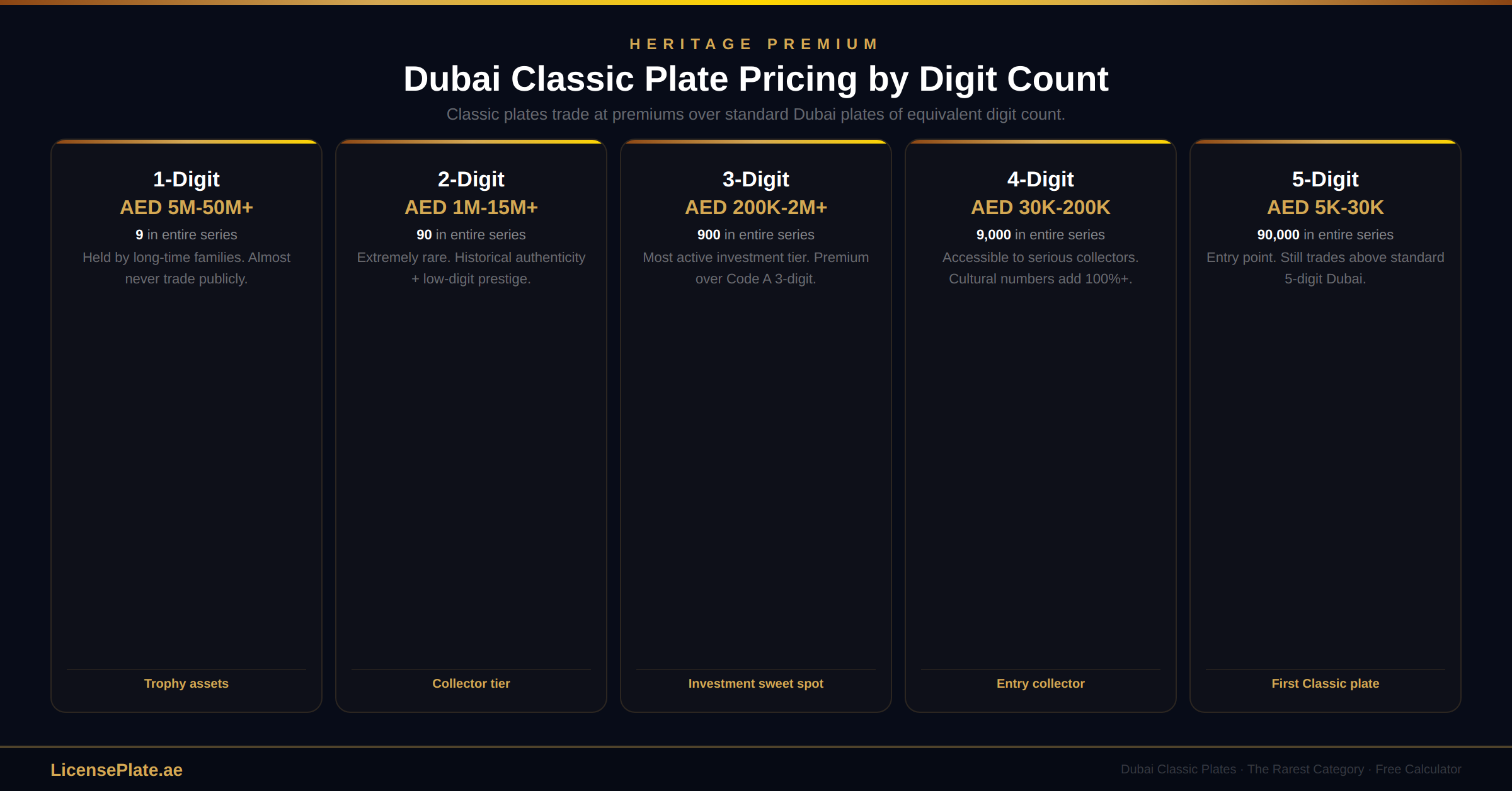
اللوحات الكلاسيكية ذات الرقم الواحد (من 1 إلى 9): من 5 ملايين إلى أكثر من 50 مليون درهم. يستحيل عملياً العثور على لوحات كلاسيكية أحادية الرقم في السوق المفتوحة. فهي بحوزة عائلات إماراتية عريقة أو جامعين مؤسّسيين ونادراً ما تُتداول. وعندما تظهر، تحقّق أسعاراً مماثلة للوحات دبي الحديثة أحادية الرقم. ولا يوجد سوى تسع لوحات في السلسلة الكلاسيكية بأكملها.
اللوحات الكلاسيكية ذات الرقمين (من 10 إلى 99): من مليون إلى أكثر من 15 مليون درهم. نادرة للغاية. وهي أصول تفاخر لجامعين يريدون الأصالة التاريخية ومكانة الأرقام القليلة معاً.
اللوحات الكلاسيكية ذات الثلاثة أرقام (من 100 إلى 999): من 200,000 إلى أكثر من 2 مليون درهم. شريحة الاستثمار الأكثر نشاطاً. وتحمل اللوحات الكلاسيكية ذات الثلاثة أرقام علاوات معتبرة على لوحات الرمز A ذات الثلاثة أرقام بسبب التميّز البصري وتقلّص المعروض.
اللوحات الكلاسيكية ذات الأربعة أرقام (من 1000 إلى 9999): من 30,000 إلى 200,000 درهم. في متناول الجامعين الجادّين. وتحمل الأرقام ذات الأنماط والأرقام ذات الدلالة الثقافية علاوات إضافية. ويشرح دليل دلالات الأرقام لماذا تضيف أرقام مثل 786 و777 و888 نسبة 100% أو أكثر فوق السعر الأساسي.
اللوحات الكلاسيكية ذات الخمسة أرقام (من 10000 إلى 99999): من 5,000 إلى 30,000 درهم. نقطة الدخول إلى امتلاك اللوحات الكلاسيكية. وحتى عند هذه الشريحة، تُتداول اللوحات الكلاسيكية فوق لوحات دبي الاعتيادية ذات الخمسة أرقام بسبب تميّز التصميم وندرة الفئة.
المعروض المتقلّص دائماً: لماذا الكلاسيكي مختلف هيكلياً
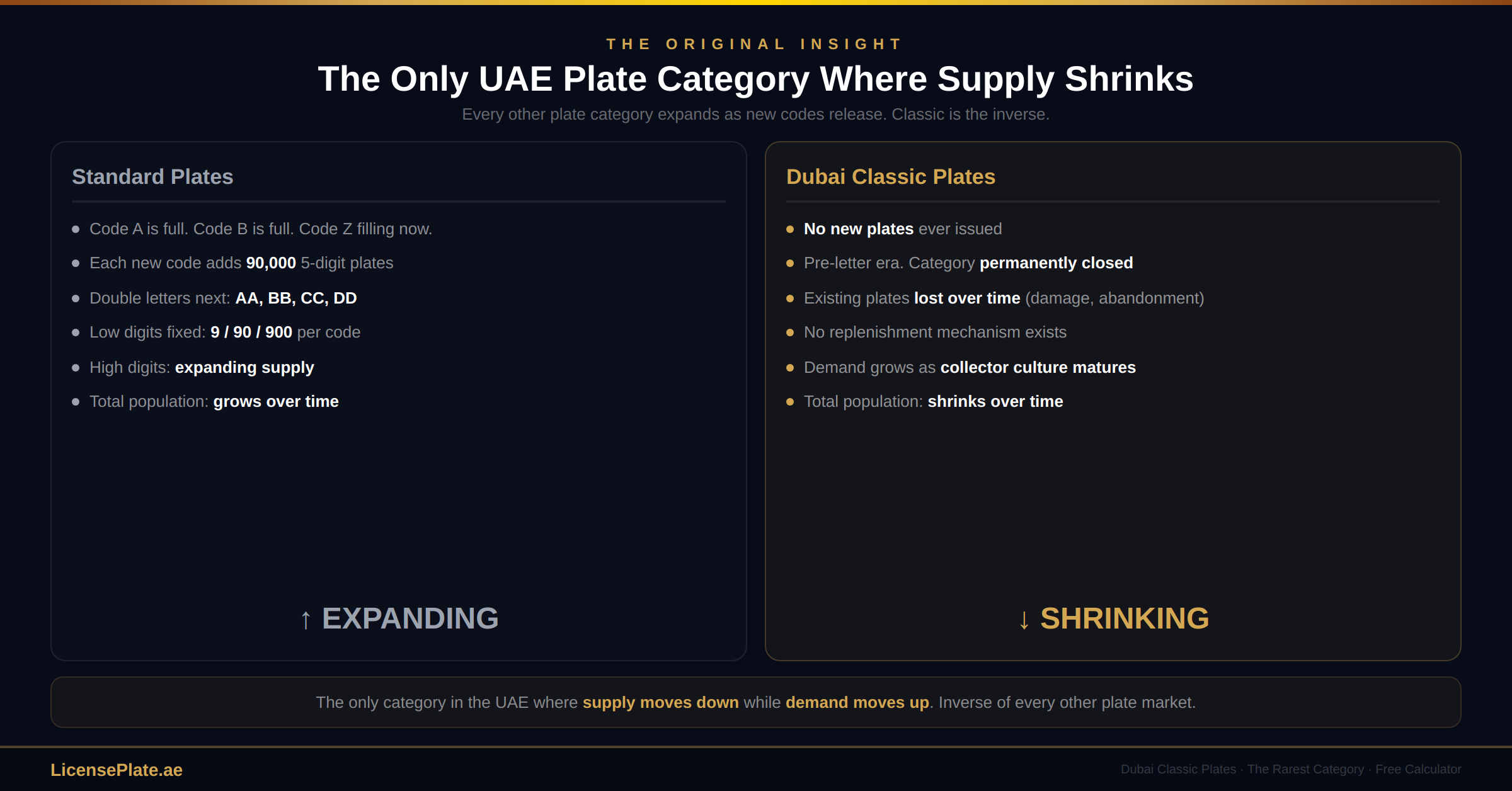
وإليك الفكرة الأصيلة التي لم يوثّقها أحد غيرنا. كل فئة لوحات في الدولة لها بنية المعروض نفسها: اللوحات قليلة الأرقام (رقم واحد ورقمان وثلاثة أرقام) ثابتة المعروض إلى الأبد (9 فقط أحادية الرقم، و90 ذات رقمين، و900 ذات ثلاثة أرقام لكل رمز)، بينما تتوسّع اللوحات كثيرة الأرقام (خمسة أرقام) مع إصدار رموز جديدة. فالرمز A ممتلئ. والرمز B ممتلئ. والرمز Z يجري ملؤه الآن. وعندما يمتلئ الرمز Z، تطرح الهيئة الحروف المزدوجة (AA، BB، CC، DD). وكل رمز جديد يضيف 90,000 لوحة جديدة من خمسة أرقام إلى السوق.
واللوحات الكلاسيكية هي الاستثناء. فلن تُصدر أي لوحة كلاسيكية جديدة أبداً. فقد عُرِّفت الفئة بأثر رجعي لتشمل لوحات حقبة ما قبل الحروف التي كانت موجودة قبل الرمز A. وكان المعروض الأصلي محدوداً عند إغلاق الفئة في أوائل الثمانينيات، وما زال ذلك المعروض يتراجع منذ ذلك الحين. فاللوحات تُفقد، أو تتلف بما لا يمكن إصلاحه، أو تُهمل عندما يتوفّى ملّاكها دون نقلها. ولا توجد آلية لتعويضها. وإجمالي عدد لوحات دبي الكلاسيكية يتقلّص تدريجياً، عاماً بعد عام، بينما ينمو الطلب مع نضج ثقافة الجامعين في دبي.
وهذه هي فئة اللوحات الوحيدة في الدولة التي يتحرّك فيها المعروض في الاتجاه الخاطئ (نزولاً) بينما يتحرّك الطلب في الاتجاه الصحيح (صعوداً). إنها عكس الديناميكية المعتادة لسوق اللوحات. ويغطّي دليل الاستثمار فرضية ارتفاع قيمة اللوحات بشكل أوسع، لكن اللوحات الكلاسيكية هي الفئة الوحيدة التي تكون فيها معادلة العرض والطلب غير متماثلة حقاً بمرور الوقت.
كيف تشتري لوحة دبي كلاسيكية
القناة الأولى: السوق الثانوية
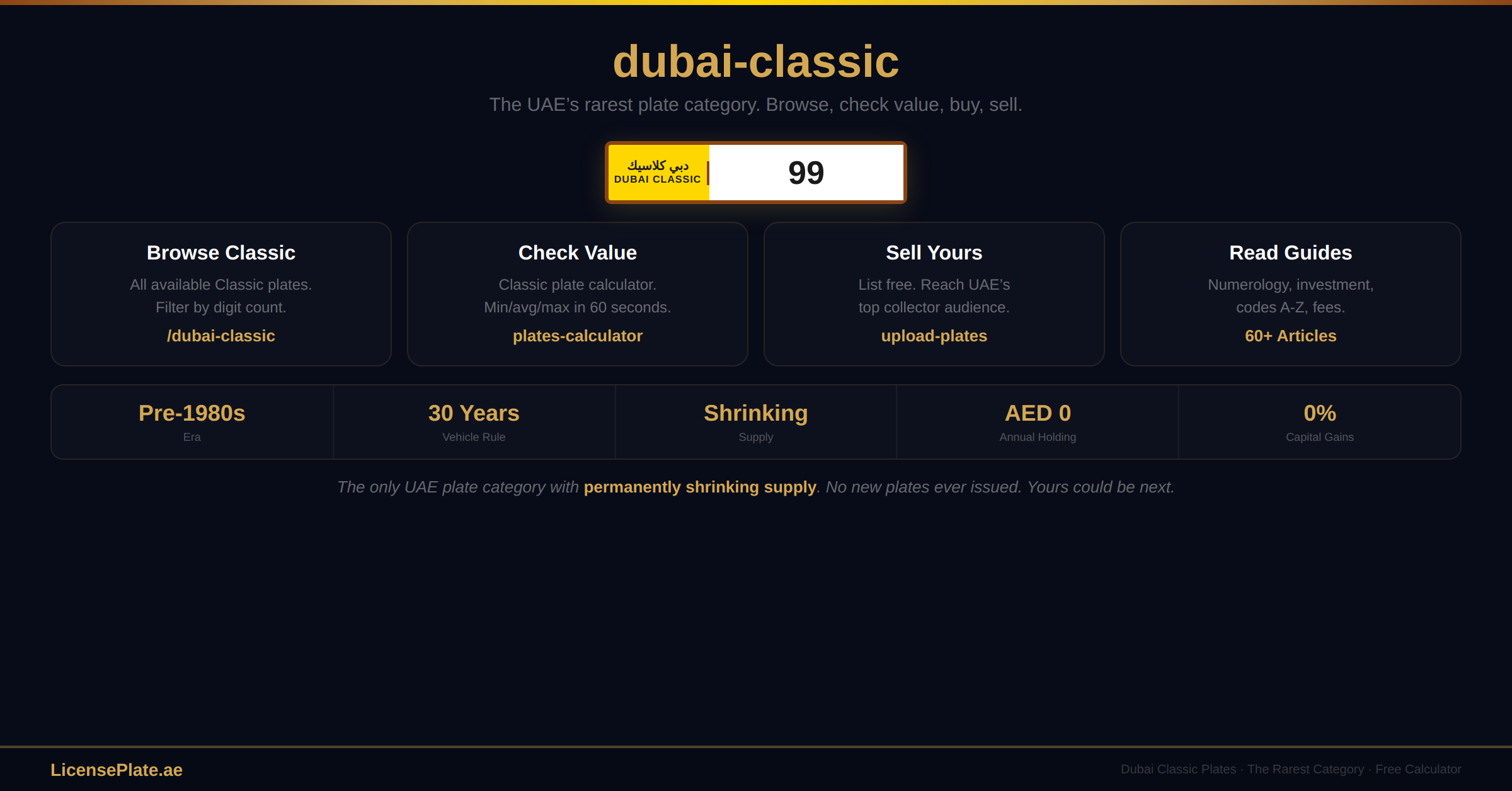
تعرض صفحة LicensePlate.ae /dubai-classic اللوحات الكلاسيكية المتاحة في السوق الثانوية. رشّح النتائج حسب عدد الأرقام والنطاق السعري. واستخدم حاسبة اللوحات لمقارنة أي إعلان بالمبيعات التاريخية. ويغطّي دليل التحقق عملية العناية الواجبة من عشر نقاط لأي شراء خاص، بينما يوثّق دليل الاحتيال أنماط الغش الخاصة بمعاملات اللوحات عالية القيمة.
القناة الثانية: مزادات هيئة الطرق والمواصلات
تظهر اللوحات الكلاسيكية أحياناً في مزادات الأرقام المميّزة التي تنظّمها الهيئة، وإن كان ذلك نادراً. وعندما تظهر، تجتذب عادةً مزايدات شرسة من جامعين كانوا ينتظرون توافر رقم بعينه. ويشرح دليل المزاد مقابل السوق الثانوية المفاضلات بين القنوات. ويوثّق دليل الرسوم تكاليف المزاد (تأمين مسترد بقيمة 25,000 درهم، ورسم تسجيل 120 درهماً، وضريبة قيمة مضافة 5% على سعر الرسو).
القناة الثالثة: شبكات الجامعين الخاصة
كثير من أندر اللوحات الكلاسيكية لا يظهر علناً أبداً. فهي تُتداول عبر شبكات الجامعين الخاصة، غالباً بالتناقل الشفهي في فعاليات السيارات الكلاسيكية مثل مهرجان الإمارات للسيارات الكلاسيكية أو لقاءات متحف الشارقة للسيارات الكلاسيكية. وبناء العلاقات داخل مجتمع السيارات الكلاسيكية في الدولة هو المسار الموثوق الوحيد للوصول إلى هذه الصفقات الخاصة. ويوفّر دليل دبي الشامل سياقاً أوسع للسوق.
كيف تسجّل لوحة دبي كلاسيكية على مركبة
إذا كنت تملك سيارة كلاسيكية (طراز عمره 30 عاماً فأكثر) وتريد تسجيل لوحة دبي كلاسيكية عليها، فإن العملية تتضمّن مسارين متوازيين: تسجيل المركبة كسيارة كلاسيكية، ونقل اللوحة إلى اسمك.
المسار الأول: تسجيل المركبة كسيارة كلاسيكية. خذ سيارتك إلى مركز فحص معتمد من الهيئة (تسجيل أو واصل أو منشأة مخصّصة لفحص المركبات الكلاسيكية). وتخضع المركبة لفحص بصري (الأصالة والحالة والدقة التاريخية) واختبار سلامة (المكابح والأضواء وسلامة الهيكل والانبعاثات). وبناءً على الفحص، تُصنَّف السيارة ضمن إحدى الفئات الست (من A إلى F). وادفع من 850 إلى 1,150 درهماً رسوم فحص وتسجيل.
المسار الثاني: اقتناء اللوحة الكلاسيكية ونقلها. اشترِ اللوحة عبر إحدى القنوات الثلاث أعلاه. وانقل الملكية عبر تطبيق دبي درايف أو في أحد مراكز سعادة المتعاملين. وادفع 120 درهماً (شهادة الملكية 100 درهم + رسم المعرفة والابتكار 20 درهماً). وبذلك تصبح اللوحة في ملفك المروري.
المسار الثالث: تسجيل اللوحة على المركبة. بمجرد اكتمال المسارين، يمكنك تخصيص اللوحة الكلاسيكية للمركبة الكلاسيكية المسجّلة. وتؤكّد الهيئة أهلية المركبة (عمرها 30 عاماً فأكثر، واجتازت الفحص، ومصنّفة كسيارة كلاسيكية)، وتعالج التخصيص، وتصدر اللوحة الكلاسيكية الجديدة مادياً. وتصبح السيارة الآن تحمل اللوحة الكلاسيكية الصفراء المميّزة.
وإذا لم تكن تملك سيارة كلاسيكية، فإنك تتوقّف عند المسار الثاني. وتبقى اللوحة في ملفك المروري بتكلفة متكررة صفر (يؤكّد دليل تكلفة الملكية أن الاحتفاظ السنوي يكلّف 0 درهم) حتى تقتني مركبة مؤهّلة أو تبيع اللوحة لمشترٍ آخر.
مشهد السيارات الكلاسيكية في الإمارات: من أين يأتي الطلب على اللوحات الكلاسيكية
لا توجد لوحات دبي الكلاسيكية في معزل. فقيمتها مدعومة بمجتمع السيارات الكلاسيكية الأوسع في الدولة، الذي نما بشكل كبير خلال العقد الماضي. فمهرجان الإمارات للسيارات الكلاسيكية (يُقام سنوياً في الشارقة) يجتذب مئات المركبات وعشرات الآلاف من الزوار. ويضمّ متحف الشارقة للسيارات الكلاسيكية أكثر من 100 مركبة تاريخية يعود تاريخها من 1915 إلى 1969. وتجمع لقاءات Cars and Coffee في الإمارات ملّاك السيارات العتيقة بانتظام في مواقع عبر دبي وأبوظبي. ويرتقي Gulf Concours (فعالية سنوية لأناقة السيارات الكلاسيكية) بامتلاك السيارات الكلاسيكية إلى مستوى المكانة نفسه الذي تحظى به الفعاليات الدولية في بيبل بيتش أو فيلا ديستي.
وتخدم السوقَ وكالاتٌ كبرى ومتخصّصون في الترميم. فشركة Tomini Classics في دبي تستورد وترمّم السيارات الأوروبية العتيقة النادرة. ويقدّم The Collectors Workshop خدمات ترميم وتخزين متكاملة. ويوفّر عدة مزوّدي تأمين متخصّصين وثائق تأمين للسيارات الكلاسيكية بتغطية القيمة المتفق عليها. وتزداد شعبية سيارات المقود الأيمن اليابانية الأسطورية (سكايلاين R32 وR33 وR34، وتويوتا سوبرا A80، ولاند كروزر العتيقة) بين عشّاق السيارات اليابانية المقيمين في الدولة، الذين يمكنهم تسجيلها كسيارات كلاسيكية بموجب قاعدة الثلاثين عاماً.
وهذا المجتمع هو محرّك الطلب على لوحات دبي الكلاسيكية. فكل مالك سيارة كلاسيكية جديد هو مشترٍ محتمل للوحة كلاسيكية. وكل مشروع ترميم سيارة كلاسيكية يصل إلى خطّ النهاية يخلق مركبة تحتاج إلى لوحة كلاسيكية لاستكمال المظهر المطابق للحقبة. والمجتمع صغير نسبياً مقارنةً بسوق السيارات الإماراتية الأوسع، لكنه ينمو، ويتمتّع بدخل مرتفع قابل للإنفاق، ويقدّر الأصالة التاريخية فوق كل شيء تقريباً. وهذا بالضبط هو ملف المشتري الذي يدعم ارتفاع قيمة اللوحات الكلاسيكية.
الأسئلة الشائعة
س: ما هي لوحة دبي الكلاسيكية؟
لوحة دبي الكلاسيكية هي لوحة من حقبة ما قبل الحروف، من نظام التسجيل الأصلي في دبي، قبل طرح الرمز A في الثمانينيات. ولا تحمل بادئة حرفية، بل رقماً فقط، على تصميم بخلفية صفراء مميّزة (أُعيد إطلاقه في نوفمبر 2020). ولا يمكن تسجيل اللوحات الكلاسيكية إلا على مركبات عمرها 30 عاماً فأكثر.
س: ما هي قاعدة الثلاثين عاماً للمركبة؟
لتسجيل لوحة دبي كلاسيكية على مركبة، يجب أن يكون عمر السيارة 30 عاماً على الأقل، محسوباً من السنة الحالية. وفي 2026، يعني ذلك أن المركبة يجب أن تكون من طراز 1996 أو أقدم. وتتقدّم القاعدة عاماً واحداً كل عام.
س: هل يمكنني شراء لوحة كلاسيكية دون امتلاك سيارة كلاسيكية؟
نعم. يمكن شراء اللوحات الكلاسيكية المميّزة والاحتفاظ بها لغرض الاستثمار البحت. وتبقى اللوحة في ملفك المروري بتكلفة احتفاظ سنوية صفر حتى تقتني مركبة كلاسيكية مؤهّلة أو تبيع اللوحة. وقد أكّدت ذلك مصادر متعدّدة في السوق الثانوية.
س: كم تكلّف لوحة دبي الكلاسيكية؟
خمسة أرقام: من 5,000 إلى 30,000 درهم. أربعة أرقام: من 30,000 إلى 200,000 درهم. ثلاثة أرقام: من 200,000 إلى أكثر من 2 مليون درهم. رقمان: من مليون إلى أكثر من 15 مليون درهم. رقم واحد: من 5 ملايين إلى أكثر من 50 مليون درهم. وتُتداول اللوحات الكلاسيكية بعلاوات فوق لوحات دبي الاعتيادية المكافئة بسبب الندرة التاريخية والتميّز البصري.
س: لماذا اللوحات الكلاسيكية أغلى من اللوحات الاعتيادية؟
لن تُصدر لوحات كلاسيكية جديدة أبداً. وإجمالي المعروض يتقلّص بشكل دائم مع ضياع اللوحات بمرور الوقت. وباجتماع ذلك مع التميّز البصري للتصميم الأصفر والجاذبية المتقاطعة لدى جامعي السيارات والمستثمرين الخُلّص، تنشأ علاوة هيكلية فوق اللوحات الاعتيادية.
س: كيف تبدو لوحة دبي الكلاسيكية؟
يتميّز التصميم الحالي (المطروح في نوفمبر 2020) بخلفية صفراء تحمل كلمتَي "دبي" و"كلاسيك" بالعربية والإنجليزية. ويظهر الرقم نفسه على خلفية بيضاء. وقد استُوحي التصميم من لوحات استُخدمت في دبي في الثمانينيات، بتوجيهات من سمو الشيخ حمدان بن محمد بن راشد آل مكتوم.
س: ما فئات السيارات الكلاسيكية المعتمدة في دبي؟
ست فئات. الفئة A: مركبات ما بعد 1950، جميع الطرق، 10,000 كم سنوياً. الفئة B: مركبات ما قبل 1950، جميع الطرق، 5,000 كم سنوياً. الفئة C: لا تستطيع بلوغ الحد الأدنى للسرعة 60 كم/س. الفئة D: إضاءة غير كافية، نهاراً فقط. الفئة E: الطرق الداخلية وطرق الخدمة فقط. الفئة F: للعرض فقط، وتُنقل بالشاحنات.
س: كم تكلّف تسجيل سيارة كلاسيكية في دبي؟
نحو 850 درهماً (420 درهماً للفحص + 430 درهماً للتسجيل)، ويصل إجمالي الرسوم إلى 1,150 درهماً بحسب الفئة. ويُعالَج في مراكز تسجيل مختارة.
س: هل يمكن تسجيل سيارات المقود الأيمن كسيارات كلاسيكية؟
نعم، إذا كان عمرها 30 عاماً فأكثر. وهذا هو المسار القانوني الذي يتيح لملّاك السيارات اليابانية الأسطورية مثل نيسان سكايلاين R32/R33 أو تويوتا سوبرا A80 أو لاند كروزر العتيقة قيادة هذه المركبات على طرق الدولة.
س: أين يمكنني شراء لوحة دبي كلاسيكية؟
تعرض صفحة LicensePlate.ae /dubai-classic اللوحات الكلاسيكية في السوق الثانوية. رشّح النتائج حسب عدد الأرقام والسعر. واستخدم حاسبة اللوحات لمقارنة أي إعلان. أما أندر اللوحات الكلاسيكية (رقم واحد ورقمان) فغالباً ما تُتداول عبر شبكات الجامعين الخاصة بدلاً من الإعلانات العلنية.