

لوحات سيارات الإمارات كاستثمار: العوائد والمخاطر وكيفية بناء محفظة لوحات
24 فبراير 2026
دبي
فريق LicensePlate.ae
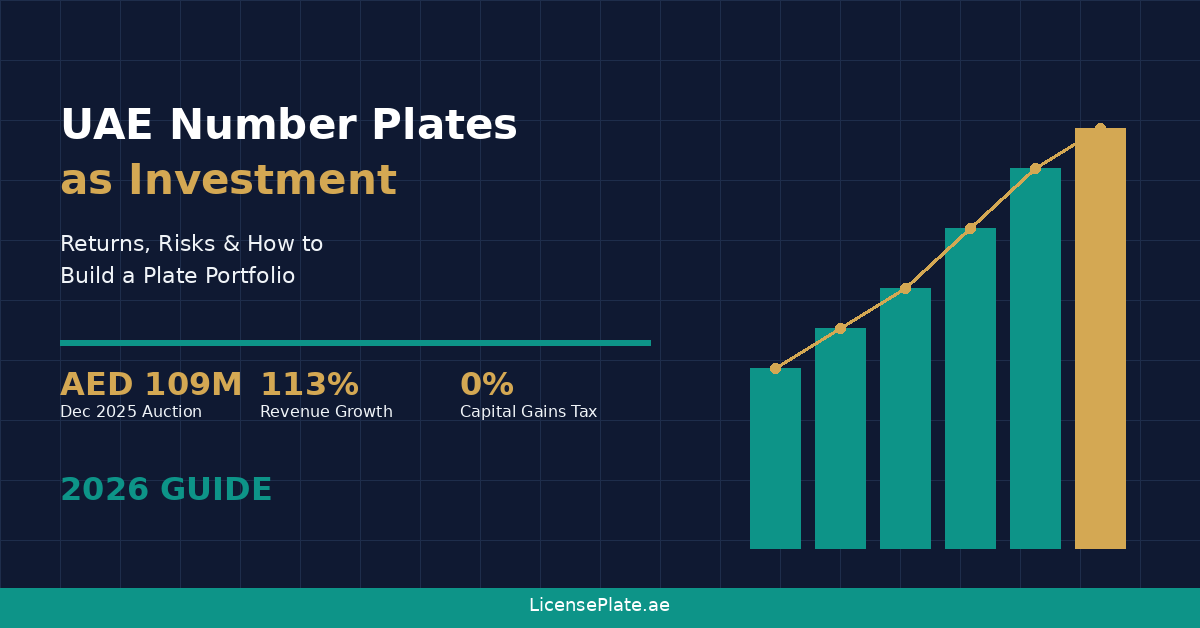
في أبريل 2023، دفع مزايد في فندق فورسيزنز بدبي 55 مليون درهم مقابل اللوحة رقم P 7، مسجّلاً رقماً قياسياً عالمياً جديداً في موسوعة غينيس لأغلى تسجيل مركبة يُباع على الإطلاق. وقبل خمسة عشر عاماً، كانت اللوحة رقم 1 في أبوظبي قد بيعت بـ 52.2 مليون درهم. وبين هاتين الصفقتين، ظل الرقم القياسي قائماً دون أن يُمسّ لعقد ونصف. وحقيقة أنه كُسر أصلاً، وكُسر بعلاوة قدرها 5.4% على الرقم القياسي السابق، تخبرك بشيء جوهري عن هذا السوق: الطلب على لوحات سيارات الإمارات النادرة لا يتلاشى. بل يتسارع.
ومع ذلك، فسوق اللوحات لا يقتصر على المبيعات الكبرى ذات الأرقام التسعة. فتحت تلك الصفقات الاستعراضية يقبع سوق أكبر بكثير وأكثر تيسّراً، حيث تضاعفت لوحات ذات أربعة أرقام اشتُريت بـ 5,000 درهم ثلاث مرات إلى 25,000 درهم، وحيث ترتفع قيمة التركيبات ذات الثلاثة أرقام في رموز الحروف المبكرة بنسبة 5–8% سنوياً، وحيث ارتفعت إيرادات مزادات هيئة الطرق والمواصلات نفسها من 51 مليون درهم في ديسمبر 2023 إلى 109 ملايين درهم في ديسمبر 2025، بزيادة قدرها 113% في عامين فقط. إنه سوق بعوائد قابلة للقياس، وقيود معروض قابلة للتحديد، وبيئة ضريبية مؤاتية بشكل يكاد يكون فريداً للمستثمرين.
هذا الدليل هو أول تحليل شامل قائم على البيانات للوحات سيارات الإمارات كفئة أصول استثمارية. فهو يغطّي العوائد التاريخية حسب عدد الأرقام، وآليات المعروض التي تدعم القيمة على المدى الطويل، والإطار التنظيمي بما في ذلك قرار ملكية أبوظبي في سبتمبر 2025 الذي غيّر قواعد اللعبة، واستراتيجية عملية لبناء محفظة لوحات عبر إمارات وفئات سعرية متعدّدة. وسواء كنت تقيّم أول عملية شراء للوحة أو تدير مجموعة تبلغ قيمتها الملايين، فهذه هي الوثيقة المرجعية. ويمكن استكشاف جميع اللوحات المشار إليها في هذا المقال على LicensePlate.ae، ويمكن تقدير القيم باستخدام حاسبة اللوحات.
1. لماذا تُصنّف لوحات سيارات الإمارات كفئة أصول بديلة
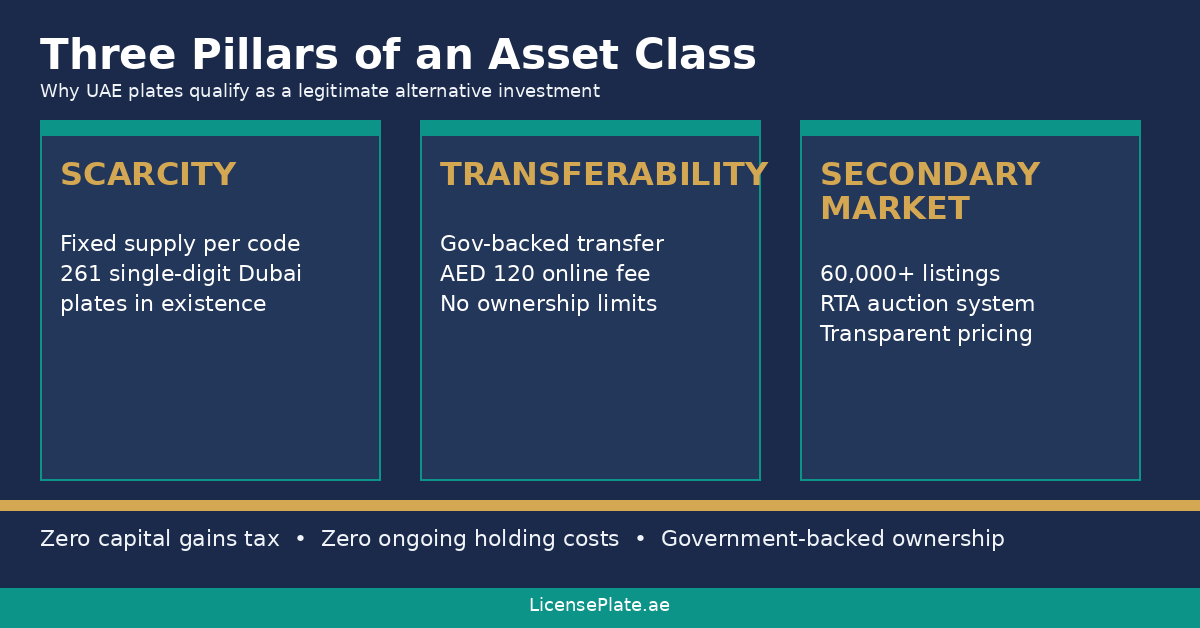
تتحدّد فئة الأصول بثلاث خصائص: الندرة، وقابلية النقل، ووجود سوق ثانوي فاعل. وتستوفي لوحات سيارات الإمارات هذه الخصائص الثلاث جميعها.
الندرة. تدير كل إمارة نظام ترقيم لوحات محدوداً. فتصدر دبي لوحات عبر رموز الحروف من A إلى Z والرموز المزدوجة من AA إلى DD، ويحتوي كل رمز على مجموعة ثابتة من التسجيلات ذات الرقم الواحد حتى خمسة أرقام. وبمجرد استنفاد رمز ما، تصدر هيئة الطرق والمواصلات رمز حرف جديداً بدلاً من توسيع الرموز القائمة. ويعمل نظام الفئات الرقمية في أبوظبي بالطريقة نفسها: فالفئات 5 و6 و10 مخصّصة بالكامل ولن تنتج لوحات جديدة أبداً. والفئة 50 كانت إصداراً تذكارياً لمرّة واحدة بمناسبة اليوبيل الذهبي للإمارات. والمعروض من اللوحات ذات الأرقام القليلة في الرموز أو الفئات المرموقة ثابت بشكل دائم.
قابلية النقل. البنية التحتية ناضجة ومدعومة حكومياً. فتتيح هيئة الطرق والمواصلات في دبي نقل ملكية اللوحات بالكامل عبر الإنترنت من خلال تطبيق Dubai Drive والهوية الرقمية UAE Pass. وتعالج أبوظبي عمليات النقل عبر منصة تم (TAMM). ورسوم النقل في دبي 120 درهماً للمعاملات الإلكترونية ونحو 350 درهماً في مراكز الخدمة. ولا توجد قيود على عدد مرات تداول اللوحة، ويمكن لكل من مواطني الإمارات والمقيمين الذين يحملون هوية إماراتية سارية المشاركة.
السوق الثانوي. تسهّل منصّات متعدّدة اكتشاف الأسعار والمعاملات. إذ تدرج LicensePlate.ae أكثر من 60,000 لوحة عبر الإمارات السبع جميعها مع مرشّحات حسب عدد الأرقام والإمارة والسعر. وتعمل منصّات أخرى في السوق الثانوية أيضاً. ويوفّر نظام مزادات هيئة الطرق والمواصلات نفسه آلية السوق الأولية، مع مزادات علنية منتظمة ومزاد "أنبل الأرقام" الخيري السنوي، ما يخلق مقاييس أسعار شفّافة يستند إليها السوق الثانوي بأكمله.
الميزة الضريبية: صفر ضريبة على الأرباح الرأسمالية
ربما تكون أهمّ ميزة هيكلية منفردة للاستثمار في اللوحات في الإمارات هي الإطار الضريبي. فالإمارات لا تفرض ضريبة دخل شخصي، أو ضريبة على الأرباح الرأسمالية، أو ضريبة على الثروة. فعندما تشتري لوحة بـ 50,000 درهم وتبيعها بـ 150,000 درهم، فإن الربح البالغ 100,000 درهم بأكمله لك. ولا يوجد أي التزام بالإبلاغ عن عمليات البيع الخاصة الفردية. والتكلفة الوحيدة للمعاملة هي رسوم النقل لدى هيئة الطرق أو تم، والتي تتراوح عادةً من 120 إلى 500 درهم بحسب الإمارة وطريقة المعالجة.
قارن هذا بالعقارات في دبي، حيث يدفع المشترون رسوم تسجيل بنسبة 4% لدائرة الأراضي والأملاك في دبي عند الشراء، ورسوم خدمة سنوية بنسبة 1–2% من قيمة العقار، وضريبة محتملة على دخل الإيجار في بلدهم الأصلي إذا كانوا مستثمرين غير مقيمين. وقارنه بالذهب، حيث يطبّق التجّار فروق أسعار بيع وشراء بنسبة 3–5%. فالتكلفة الاحتكاكية لمعاملات اللوحات من بين الأدنى لأي فئة أصول ملموسة متاحة في الإمارات.
2. العوائد التاريخية: ماذا تُظهر البيانات فعلاً
أكبر انتقاد يُوجَّه لسوق اللوحات هو أنه يفتقر إلى بيانات تسعير شفّافة. وهذا صحيح جزئياً بالنسبة لسوق إعادة البيع الخاص، حيث تجري المعاملات بين الأفراد ولا تُسجَّل علناً. ومع ذلك، يوفّر نظام المزادات العلنية لهيئة الطرق والمواصلات سجلاً غنياً وموثّقاً لما تُباع به اللوحات عند الإصدار الأولي. وعندما تظهر تلك اللوحات نفسها لاحقاً في السوق الثانوي، فإن الفرق بين سعر المزاد وسعر الإدراج أو إعادة البيع يمثّل العائد. وإليك ما تُظهره البيانات عبر مستويات استثمارية مختلفة.
طبقة الجوائز: اللوحات ذات الرقم الواحد (5 ملايين درهم فأكثر)
تمثّل اللوحات ذات الرقم الواحد القمة المطلقة للسوق. فلا يوجد سوى تسع لوحات لكل رمز حرف في دبي ولكل فئة في أبوظبي. وتروي المبيعات القياسية قصة ارتفاع متّسق وطويل الأمد في القيمة:
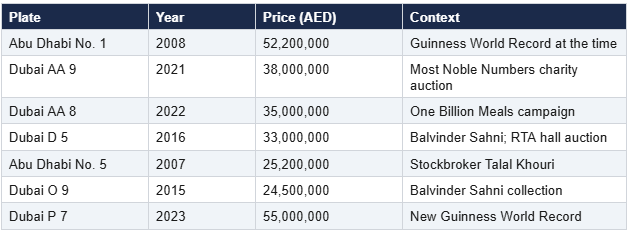
المسار واضح: ارتفعت قيمة لوحات الطبقة العليا بالقيمة الاسمية عبر كل دورة مزاد رئيسية. والتحفّظ الوحيد في هذه الطبقة هو السيولة. فهذه ليست لوحات تشتريها وتعيد بيعها سريعاً. إنها تتداول كل خمسة إلى خمسة عشر عاماً، غالباً في مزادات خيرية حيث تحرّك المشترين دوافع خيرية بقدر ما تحرّكهم دوافع استثمارية. وهذه الطبقة آلية للحفاظ على الثروة وإظهار المكانة لدى الأفراد ذوي الملاءة المالية الفائقة.
الطبقة المميّزة: اللوحات ذات الرقمين (800 ألف – 10 ملايين درهم)
اللوحات ذات الرقمين هي حيث تصبح العوائد القابلة للاستثمار أكثر وضوحاً. ففي مزاد هيئة الطرق في أبريل 2025 (المزاد العلني الـ 118)، بيعت اللوحة CC 22 بـ 8.35 مليون درهم، وBB 20 بـ 7.52 مليون درهم، وBB 19 بـ 6.68 مليون درهم. وفي مزاد ديسمبر 2025 (الـ 120)، بلغت BB 12 مبلغ 9.66 مليون درهم ووصلت AA 25 إلى 8 ملايين درهم. وتمثّل هذه الأسعار علاوات كبيرة على ما بيعت به لوحات مماثلة في سنوات سابقة.
تأمّل هذا: بيعت BB 55 بـ 6.3 مليون درهم في مزاد ديسمبر 2024. وبعد اثني عشر شهراً فقط، بيعت BB 12، وهي لوحة مماثلة في الرمز نفسه، بـ 9.66 مليون درهم، بزيادة قدرها 53% في ما يكون السوق مستعداً لدفعه مقابل لوحة مميّزة من رقمين. واللوحات ذات الرقمين في الفئات والرموز المبكرة تحمل باستمرار أسعاراً من سبعة أرقام، مع تداول أقوى التركيبات (الأرقام المتكرّرة مثل 11، 22، 33، 55، 77، 99) بعلاوات كبيرة على الأزواج غير المتكرّرة.
طبقة الاستثمار الأساسية: اللوحات ذات الثلاثة أرقام (100 ألف – 3 ملايين درهم)
تمثّل اللوحات ذات الثلاثة أرقام النقطة المثالية للمستثمرين الجادّين. فهي تقدّم هيبة ملموسة على الطريق، وارتفاعاً تاريخياً قوياً في القيمة، وسوقاً سائلاً بما يكفي للشراء والبيع ضمن أطر زمنية معقولة. وتشير تحليلات القطاع إلى أن اللوحات المميّزة ذات الثلاثة أرقام في دبي ترتفع قيمتها بنحو 5–8% سنوياً، مع تفوّق تركيبات معيّنة بشكل كبير.
في مزاد هيئة الطرق في أبريل 2025، بيعت AA 707 بـ 3.31 مليون درهم وAA 222 بـ 3.3 مليون درهم. واللوحات ذات الثلاثة أرقام بأرقام ثلاثية متكرّرة (111، 222، 333، 555، 777، 999) تحمل باستمرار أعلى الأسعار ضمن هذه الطبقة. وتحمل أرقام طرازات السيارات (911 لبورشه، 599 لفيراري، 458 لفيراري، 600 لـ Lexus) علاوات لدى عشّاق السيارات.
ويهمّ رمز الحرف بشكل هائل في هذه الطبقة. فالتركيبة نفسها ذات الثلاثة أرقام يمكن أن تتفاوت بمئات آلاف الدراهم بحسب ما إذا كانت في الرمز A (الأصلي والأكثر رقياً)، أو AA، أو BB، أو رمز أحدث مثل V أو Z. وهذا مبدأ أساسي في الاستثمار في اللوحات: تعمل هيبة الرمز والفئة كمُضاعِف لقيمة الرقم الأساسي.
طبقة الدخول والنمو: اللوحات ذات الأربعة والخمسة أرقام (3,000 – 200 ألف درهم)
الطبقة الأكثر تيسّراً هي أيضاً حيث وُثّقت بعض أقوى العوائد بالنسبة المئوية. فقد أفاد أحد المستثمرين علناً بشرائه لوحة من أربعة أرقام (M 8598) بـ 5,000 درهم، ارتفعت قيمتها لاحقاً إلى 25,000 درهم، بعائد قدره 400%. ووصف آخر لوحة تضاعفت قيمتها ثلاث مرات خلال فترة احتفاظ امتدّت عدة سنوات.
وتبدأ اللوحات ذات الخمسة أرقام في الرموز الأحدث من 3,000 إلى 8,000 درهم فقط، ما يجعلها في متناول أي مقيم في الإمارات تقريباً. وفي حين أنه ليست كل لوحة من خمسة أرقام سترتفع قيمتها، فإن اللوحات ذات الأنماط القوية، 12345، 11111، والأرقام المنتهية بـ 000، وسنوات الميلاد مثل 1990 أو 2000، أظهرت نمواً متّسقاً في الطلب مع تقلّص مجموعة اللوحات ذات الأرقام القليلة المتاحة ودخول المزيد من المشترين إلى السوق.
ملخّص العوائد حسب طبقة الاستثمار
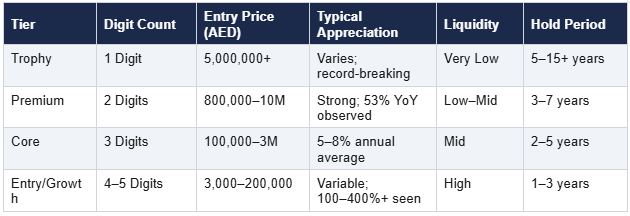
أرقام ارتفاع القيمة مبنية على نتائج مزادات هيئة الطرق الموثّقة، ومقارنات السوق الثانوي، وبيانات إعادة البيع المتكرّرة المعلنة. الأداء السابق لا يضمن العوائد المستقبلية. وتعتمد النتائج الفعلية على خصائص اللوحة المحدّدة، وظروف السوق، والتوقيت.
3. آليات المعروض التي تحرّك قيم اللوحات
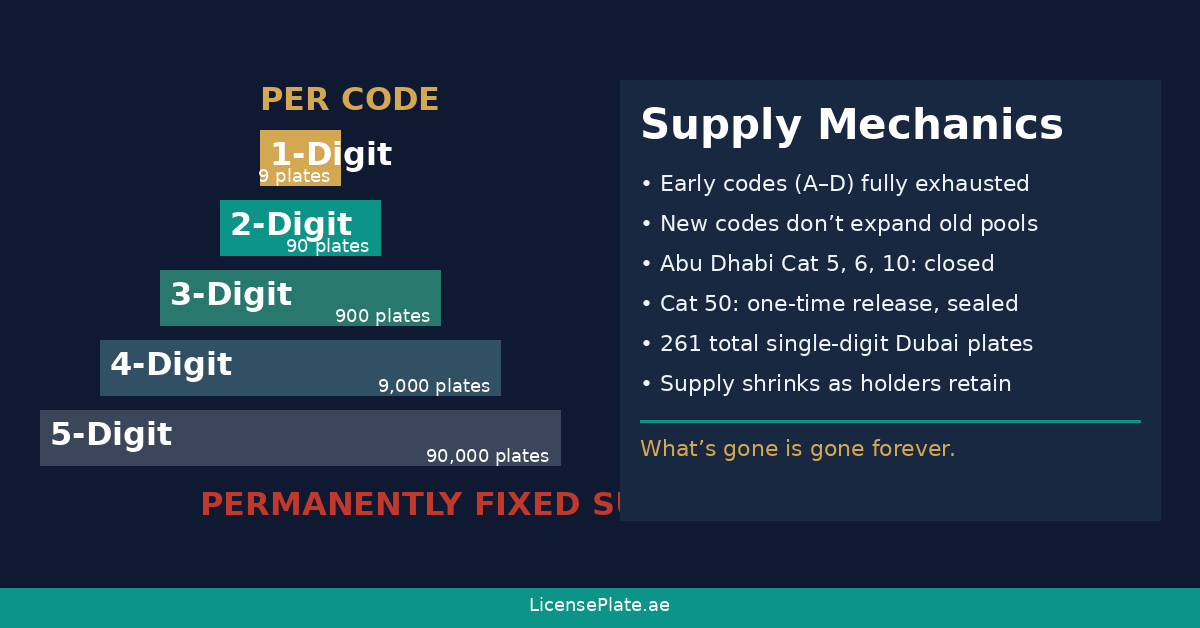
على عكس العقارات، حيث يمكن للمطوّرين بناء المزيد من الوحدات، أو الذهب، حيث تنتج المناجم معروضاً جديداً كل عام، فإن المعروض من تركيبات لوحات محدّدة ثابت بشكل دائم. وهذا هو المبدأ الاقتصادي الأهمّ المنفرد الذي يقوم عليه الاستثمار في اللوحات. وفهم كيفية عمل المعروض بالضبط أمر ضروري لاتخاذ قرارات مدروسة.
نظام رموز الحروف في دبي
تصدر هيئة الطرق والمواصلات في دبي لوحات برموز حروف من A إلى Z (باستثناء O المحجوز) ورموز حروف مزدوجة تشمل AA وBB وCC وDD. ويحتوي كل رمز حرف على 99,999 تسجيلاً ممكناً بالضبط (من 1 إلى 99999). وضمن كل رمز، توجد بالضبط 9 لوحات ذات رقم واحد، و90 لوحة ذات رقمين، و900 لوحة ذات ثلاثة أرقام، و9,000 لوحة ذات أربعة أرقام، و90,000 لوحة ذات خمسة أرقام. وبمجرد تخصيص رمز بالكامل، تطرح هيئة الطرق رمزاً جديداً. وهذا يعني أن الرموز المبكرة مثل A وB وC وD قد استُنفدت منذ زمن طويل عند الأرقام الأقل، وتلك اللوحات موجودة فقط في السوق الثانوي.
وللاطّلاع على تفصيل مفصّل لكل رمز، راجع دليل رموز لوحات دبي من A إلى Z.
حساب الندرة بسيط. فعبر جميع رموز الحرف المفرد (نحو 25 رمزاً نشطاً)، لا توجد سوى 225 لوحة ذات رقم واحد في الوجود. وعبر رموز الحرفين (AA، BB، CC، DD)، توجد 36 لوحة أخرى. وإجمالي المعروض من لوحات دبي ذات الرقم الواحد نحو 261 لوحة، وهذا الرقم لن يزيد أبداً. وفي كل مرة تتداول فيها واحدة في السوق الثانوي، تتقلّص مجموعة اللوحات المتاحة للبيع أكثر لأن كثيراً منها محتفَظ به إلى أجل غير مسمّى من قبل العائلات وهواة الجمع الذين لا نية لديهم للبيع.
نظام الفئات في أبوظبي
تعمل أبوظبي وفق فئات رقمية (1، 2، من 4 إلى 22، و50)، تحتوي كل منها على ما يصل إلى 100,000 تسجيل. والفئات 5 و6 و10 مستنفدة بالكامل، ما يعني أن كل لوحة في تلك الفئات مخصّصة بالفعل ومتاحة فقط عبر إعادة البيع. أما الفئة 50، سلسلة اليوبيل الذهبي التذكارية، فكانت لها نافذة إصدار محدودة في أواخر 2021 وأصبحت الآن مغلقة. وللاطّلاع على تفصيل شامل، راجع دليل فئات لوحات أبوظبي من 1 إلى 50. والدلالة الاستثمارية واضحة: اللوحات في الفئات المستنفدة أو محدودة الإصدار تحمل علاوة معروض دائمة تنمو مع تزايد الطلب.
الإمارات الشمالية: ندرة ناشئة
لكل من الشارقة وعجمان ورأس الخيمة والفجيرة وأم القيوين نظام لوحات خاص بها بمخزونات إجمالية أصغر من دبي أو أبوظبي. وأطلقت الشارقة تصاميم لوحات محدّثة في مارس 2025، ما أثار اهتماماً متجدّداً لدى هواة الجمع. ولوحات رأس الخيمة مطلوبة بشكل متزايد مع نمو قطاعَي العقارات والسياحة في الإمارة. وتقدّم هذه الأسواق الأصغر أسعار دخول أدنى مع عوائد قد تكون كبيرة مع تحوّل اهتمام المشترين إلى ما وراء الإمارتين المهيمنتين.
يمكنك تصفّح لوحات من كل إمارة على LicensePlate.ae: الشارقة، عجمان، رأس الخيمة، الفجيرة، وأم القيوين.
4. إيرادات مزادات هيئة الطرق: المؤشّر الحاسم لنمو السوق
أوضح مؤشّر كلّي لصحة السوق هو إجمالي الإيرادات المتحقّقة في المزادات العلنية لهيئة الطرق والمواصلات. فهذه الفعاليات تقدّم عيّنة موحّدة: نحو 90 لوحة لكل مزاد، تمتدّ من التسجيلات ذات الرقمين حتى خمسة أرقام عبر رموز متعدّدة. ومسار الإيرادات على مدى العامين الماضيين يبرهن على طلب متسارع:
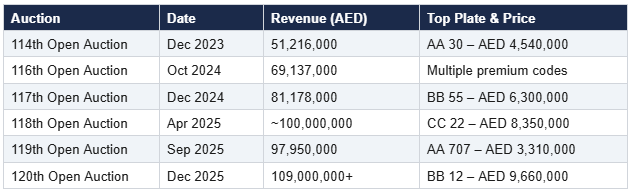
المصادر: Dubai Eye 103.8، الإعلانات الرسمية لهيئة الطرق والمواصلات، Economy Middle East، وكالة أنباء الإمارات (وام). ويمثّل إجمالي المزاد الـ 120 البالغ أكثر من 109 ملايين درهم أعلى إيراد في تاريخ المزادات العلنية لهيئة الطرق.
من 51.2 مليون درهم إلى 109 ملايين درهم في أربعة وعشرين شهراً هو زيادة قدرها 113% في إجمالي إيرادات المزادات. وهذا ليس مدفوعاً بطرح المزيد من اللوحات؛ فهيئة الطرق تطرح باستمرار نحو 90 لوحة لكل مزاد علني. بل هو مدفوع بأسعار أعلى لكل لوحة، ما يعكس طلباً أقوى من المزايدين واستعداداً متزايداً لدفع علاوات مقابل التسجيلات عالية الجودة.
إضافةً إلى ذلك، أسهم مزاد "أنبل الأرقام" الخيري في أبريل 2025 بمبلغ 98.83 مليون درهم، حيث حقّقت ثلاثة "أرقام خارقة" (CC 22، BB 19، BB 20) وحدها نحو ستة أضعاف قيمتها الابتدائية المجمّعة البالغة 16.56 مليون درهم. وعندما تُظهر آلية التسعير الأساسية لسوق ما هذا النوع من التسارع، فإنها تشير إلى طلب حقيقي مستدام لا إلى فقاعة مضاربية.
5. لوحات السيارات مقابل خيارات الاستثمار الأخرى في الإمارات
كيف تُقارن اللوحات بفئات الأصول الأخرى المتاحة عادةً للمستثمرين المقيمين في الإمارات؟ إليك مقارنة منظّمة باستخدام بيانات سوقية حقيقية من الفترة 2020–2025.
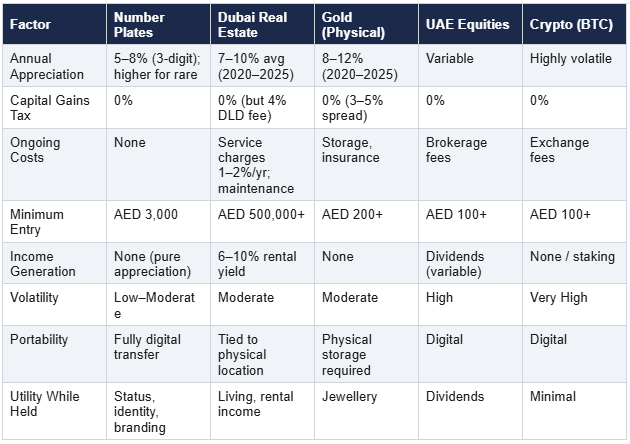
العامل المميّز الرئيسي للوحات هو الجمع بين صفر تكاليف مستمرّة، وصفر ضريبة على الأرباح الرأسمالية، والمنفعة المزدوجة المتمثّلة في إظهار المكانة أثناء الاحتفاظ بها. فالعقارات تقدّم دخل إيجار لا تستطيع اللوحات مضاهاته، لكنها تأتي بتكاليف احتكاكية كبيرة. والذهب يقدّم مخزناً راسخاً للقيمة لكنه لا يدرّ دخلاً وينطوي على تكاليف تخزين وفروق أسعار للتجّار. وتشغل اللوحات مكانة فريدة: أصل ملموس قابل للنقل ببنية ملكية مدعومة حكومياً، دون تكاليف احتفاظ، ومنفعة ثقافية توفّر متعة بينما يرتفع الأصل في القيمة.
ارتفعت قيم العقارات في دبي بنحو 57.9% منذ أواخر 2020، بمتوسّط 7–10% سنوياً. وفي الوقت نفسه، بلغ متوسّط عائد الإيجار الإجمالي نحو 6.8%. وبالنسبة للمستثمر الباحث عن عائد إجمالي (ارتفاع قيمة + دخل)، تظلّ العقارات قوية. لكن بالنسبة للمستثمر الباحث عن ارتفاع قيمة صافٍ باحتكاك أدنى، تكون اللوحات مكمّلاً مقنعاً. والمحفظة المثالية تشمل كليهما.
6. قرار ملكية أبوظبي في سبتمبر 2025: محفّز للسوق
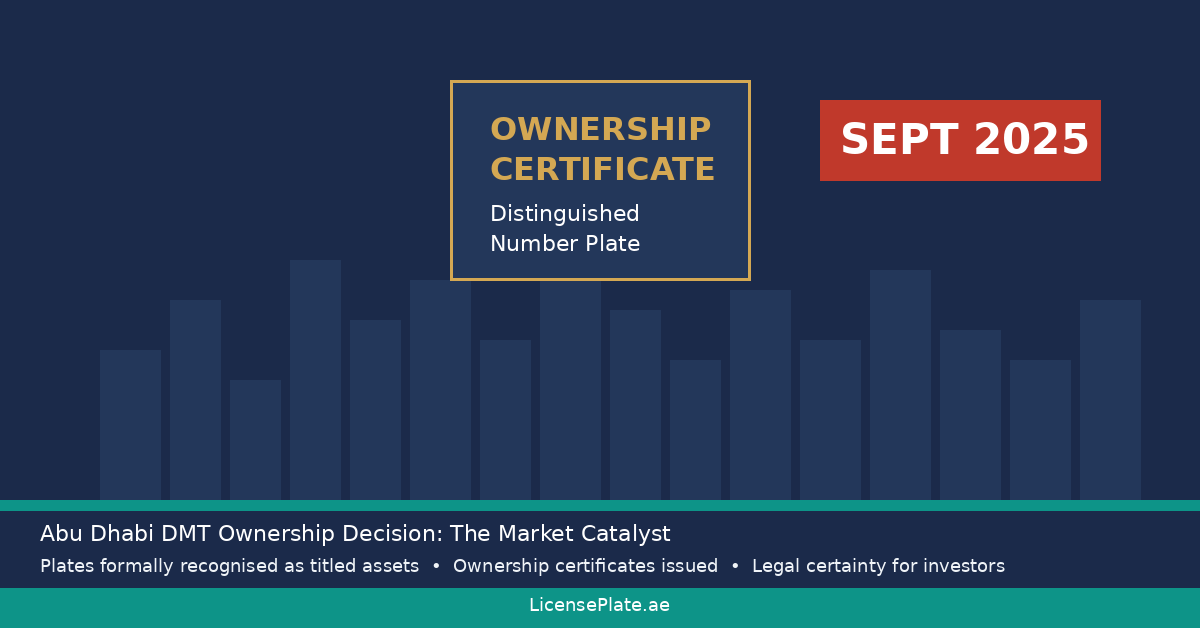
في 13 سبتمبر 2025، أصدرت دائرة البلديات والنقل (DMT) في أبوظبي قراراً إدارياً يمثّل أهمّ تطوّر تنظيمي لمستثمري اللوحات منذ سنوات. وقد أرسى القرار، الذي نُفّذ عبر هيئة أبوظبي للنقل (مركز النقل المتكامل)، رسمياً اللوحات المميّزة كأصول قانونية قائمة بذاتها لها شهادات ملكية خاصة بها.
ما الذي تغيّر
قبل هذا القرار، كانت لوحات أبوظبي تقع في منطقة قانونية رمادية. فقد كانت مسجّلة على مركبات، لكن اللوحة نفسها لم تكن تُعامَل كأصل مملوك بشكل مستقل وقابل للنقل بوثائق سند رسمية. وقد خلق هذا احتكاكاً وعدم يقين ومخاطرة في السوق الثانوي. فلم يكن بمقدور المشترين التأكّد من حصولهم على سند نظيف. ولم يكن بمقدور البائعين إثبات الملكية بسهولة بمعزل عن تسجيل المركبة.
غيّر قرار دائرة البلديات والنقل هذا بإنشاء إطار قانوني واضح. فجميع اللوحات ذات الرقم الواحد والرقمين والثلاثة أرقام والأربعة أرقام مصنّفة الآن كـ"أرقام مميّزة" ويمكن امتلاكها كالممتلكات، مع إصدار شهادات ملكية رسمية عبر هيئة أبوظبي للنقل. وفي أكتوبر 2025، تابعت الهيئة بإطلاق بطاقات هوية مادّية لملّاك اللوحات المميّزة، تتميّز بتقنيات أمنية متقدّمة.
وللاطّلاع على تحليل كامل لهذه القواعد، راجع دليل فئات لوحات أبوظبي من 1 إلى 50.
لماذا يهمّ هذا للاستثمار
يحقّق إضفاء الطابع الرسمي على ملكية اللوحة ثلاثة أمور إيجابية مباشرة للمستثمرين:
1. يقلّل مخاطر المعاملة بتوفير سند قانوني واضح، ما يجذب المزيد من المشترين إلى السوق ويدعم تقييمات أعلى.
2. يزيد السيولة بجعل عملية النقل أكثر شفافية وتوحيداً، ما يقلّل الاحتكاك الذي كبح تاريخياً نشاط السوق الثانوي في أبوظبي.
3. يشير إلى الشرعية الحكومية ما يميل إلى جذب اهتمام المؤسّسات والتغطية الإعلامية التي تنمّي مجموعة المشترين أكثر. فعندما تعامل حكومة اللوحات كأصول ذات سند على قدم المساواة مع العقارات أو المركبات، فإنها ترسل رسالة قوية عن ديمومة فئة الأصول هذه.
وبالنسبة للمستثمرين الذين يمتلكون بالفعل لوحات أبوظبي، فإن القرار محفّز قيمة فوري. وبالنسبة لمن يفكّرون في الدخول، فإنه يوفّر إطاراً من اليقين القانوني لم يكن موجوداً من قبل.
7. المخاطر والقيود: ما الذي قد يسوء
لن يكون أي دليل استثماري موثوقاً دون تقييم صادق للمخاطر. فالاستثمار في اللوحات ليس عائداً مضموناً، ويمكن للعوامل التالية أن تقلّص المكاسب المتوقّعة أو تلغيها.
الخطر 1: نقص السيولة في الوقت الخاطئ
لا يملك سوق اللوحات السيولة الفورية لبورصة الأسهم. فإذا احتجت إلى بيع لوحة بسرعة، فقد تضطرّ إلى قبول سعر أدنى من قيمتها السوقية النظرية. واللوحات ذات الثلاثة والأربعة أرقام في الرموز الشائعة سائلة نسبياً، مع حدوث المعاملات على منصّات السوق بانتظام. لكن لوحة عالية القيمة من رقمين أو لوحة في رمز غير معتاد قد تستغرق أسابيع أو أشهراً لإيجاد المشتري المناسب. والقاعدة العامة هي: كلما كانت اللوحة أكثر تخصّصاً، طال الجدول الزمني للبيع. ضع هذا في حسبان أفق استثمارك.
الخطر 2: المبالغة في الدفع في المزاد
بيئات المزادات مصمّمة لتوليد مزايدة عاطفية. ففي مزاد هيئة الطرق في أبريل 2025، بيعت ثلاثة "أرقام خارقة" بقيمة ابتدائية مجمّعة قدرها 16.56 مليون درهم بمبلغ 98.83 مليون درهم، نحو ستة أضعاف قيمتها الاسمية. ورغم أن هذا يبرهن على الطلب، فإنه يُظهر أيضاً أن أسعار المزادات يمكن أن تتجاوز بشكل كبير تقييمات السوق الثانوي على المدى القريب. قارن دائماً أسعار المزادات بقوائم السوق الثانوي على منصّات مثل LicensePlate.ae قبل المزايدة، وحدّد سقفاً ثابتاً للمزايدة قبل بدء المزاد.
الخطر 3: التغيير التنظيمي
يمكن للسياسة الحكومية أن تؤثّر على السوق بطرق لا يمكن التنبّؤ بها. وفي حين أن قرار أبوظبي في سبتمبر 2025 كان إيجابياً، فإن التغييرات التنظيمية المستقبلية قد تُدخل نظرياً قيوداً على النقل أو رسوماً أو حدوداً للملكية. والاحتمال منخفض نظراً لالتزام الإمارات بسياسات صديقة للمستثمرين والإيرادات الكبيرة التي تدرّها مزادات اللوحات للحكومة والأعمال الخيرية. لكنه خطر ينبغي الاعتراف به.
الخطر 4: تخفيف القيمة بمعروض جديد
عندما تطرح هيئة الطرق رمز حرف جديداً (مثل AA وBB وCC وDD في السنوات الأخيرة)، فإنها تخلق مخزوناً جديداً عند كل عدد أرقام. وهذا يمكن أن يخفّف قيمة اللوحات في الرموز المجاورة. ومع ذلك، يُظهر التاريخ أن الرموز المبكرة تحتفظ بعلاوتها وتزيدها حتى مع طرح رموز جديدة، لأن التسلسل الهرمي للهيبة مفهوم جيداً لدى السوق. والخطر الأكبر يقع على اللوحات في الرموز متوسّطة الطبقة التي ليست الأقدم (وبالتالي الأكثر رقياً) ولا الأحدث (وبالتالي الأكثر توفّراً). فهذه الرموز "الوسطى" يمكن أن تشهد ارتفاعاً أبطأ في القيمة.
الخطر 5: مخاطر الطرف المقابل والاحتيال
تحمل معاملات إعادة البيع الخاصة مخاطر الاحتيال، بما في ذلك القوائم المزيّفة وانتحال الهوية وسرقة العربون. وأفادت وحدة المعلومات المالية في الإمارات بخسائر متعلّقة بالاحتيال قدرها 1.2 مليار درهم بين عامَي 2021 و2023. وبالنسبة لمعاملات لوحات السيارات تحديداً، تحقّق دائماً من ملكية اللوحة عبر نظام هيئة الطرق أو تم قبل تبادل أي أموال. واستخدم منصّات السوق الراسخة بدلاً من قوائم وسائل التواصل الاجتماعي. وللحصول على دليل كامل لحماية نفسك، اقرأ دليل كيفية تجنّب عمليات احتيال لوحات السيارات.
8. كيفية بناء محفظة لوحات: استراتيجية عملية
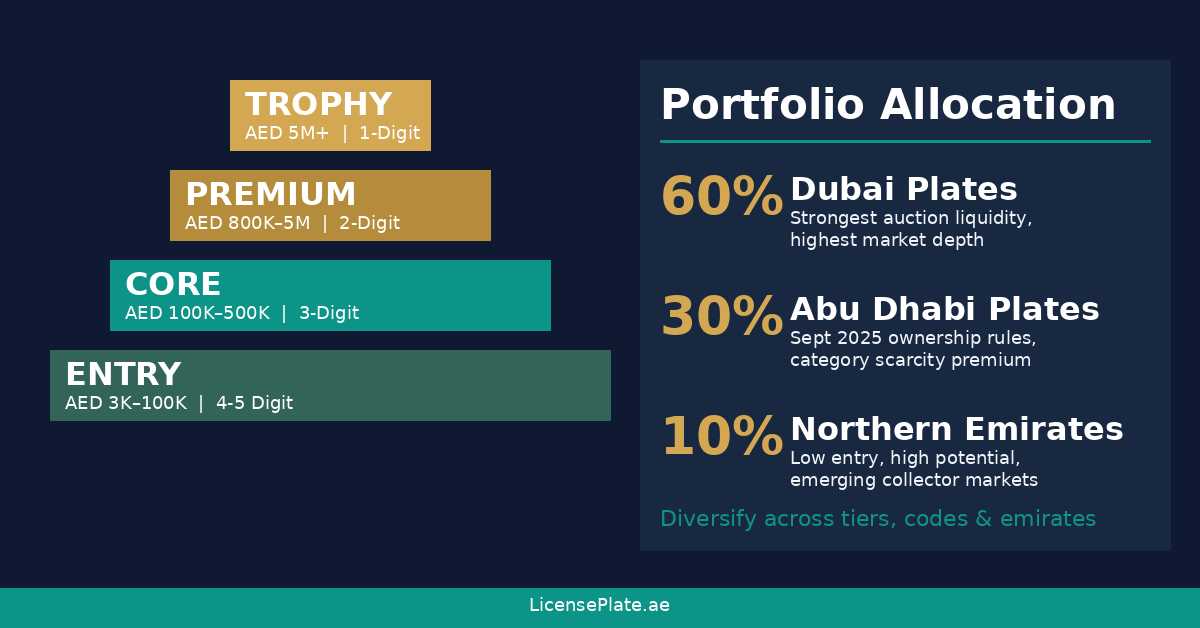
النهج الأكثر فعالية للاستثمار في اللوحات هو التنويع عبر أعداد الأرقام والإمارات والفئات السعرية. وإليك إطاراً يمكن تكييفه مع ميزانيات مختلفة.
الميزانية: 25,000 – 100,000 درهم (محفظة الدخول)
في هذا المستوى، ركّز على تجميع لوحات ذات أربعة أرقام ولوحات قوية ذات خمسة أرقام عبر إمارات متعدّدة. وقد يشمل توزيع نموذجي لوحتين أو ثلاث لوحات ذات أربعة أرقام في رموز دبي مثل L أو M أو N (10,000–25,000 درهم لكل منها)، ولوحة واحدة ذات أربعة أرقام في فئة أبوظبي 11 أو 12 (10,000–20,000 درهم)، ولوحة أو لوحتين ذات نمط من خمسة أرقام في الشارقة أو رأس الخيمة (3,000–10,000 درهم لكل منها). والاستراتيجية هنا هي الحجم والتعرّف على الأنماط: الأرقام المتكرّرة، والأرقام المتناظرة (بالندروم)، والتسلسلات التصاعدية، وسنوات الميلاد. تصفّح جميع اللوحات المتاحة لتحديد الأنماط المتداولة دون وعي السوق بها.
الميزانية: 100,000 – 500,000 درهم (المحفظة الأساسية)
تتيح هذه الميزانية الدخول إلى طبقة الثلاثة أرقام، وهي الأكثر موثوقية لارتفاع القيمة المتّسق. فكّر في لوحة واحدة ذات ثلاثة أرقام في رمز دبي محترم (من A إلى H) أو فئة أبوظبي (من 1 إلى 10) كركيزة للمحفظة. وكمّلها بلوحتين أو ثلاث لوحات ذات أربعة أرقام في رموز مميّزة ولوحة أو لوحتين في الإمارات الشمالية للتنويع الجغرافي. استخدم حاسبة اللوحات لتقدير القيم السوقية الحالية قبل اتخاذ قرارات الشراء.
الميزانية: 500,000 – 5,000,000 درهم (المحفظة المميّزة)
في هذا المستوى، يتحوّل التركيز إلى لوحات ذات ثلاثة أرقام بأنماط قوية (أرقام متكرّرة، أرقام ذات دلالة ثقافية، أرقام طرازات سيارات) في الرموز المبكرة، مكمّلة بلوحة أو لوحتين ذات رقمين في الرموز متوسّطة الطبقة. والتنويع الجغرافي عبر دبي وأبوظبي أمر أساسي. فكّر في تخصيص نحو 60% للوحات دبي (بنية مزادات أقوى وسيولة أعلى)، و30% للوحات أبوظبي (المستفيدة من قواعد الملكية في سبتمبر 2025)، و10% للوحات الإمارات الشمالية كمراكز مضاربية بإمكانات نمو عالية.
مبادئ إدارة المحفظة
احتفظ لمدة سنتين إلى ثلاث سنوات كحدّ أدنى. فسوق اللوحات يكافئ الصبر. وإعادة البيع السريعة على المدى القصير ممكنة لكنها غير متّسقة.
راقب نتائج مزادات هيئة الطرق كمؤشّرك السوقي الأساسي. فإذا كانت إيرادات المزادات ترتفع، فإن السوق الأوسع يتقوّى. وإذا استقرّت أو تراجعت، ففكّر في إيقاف عمليات الاستحواذ الجديدة مؤقتاً.
أعد التوازن سنوياً بتقييم ما إذا كانت أي لوحات قد ارتفعت قيمتها إلى حدّ يجعل بيعها وإعادة تخصيصها منطقياً.
احتفظ بسجلّات مفصّلة لأسعار الشراء والتواريخ والمصادر لجميع المعاملات. وفي حين لا يوجد التزام بالإبلاغ الضريبي للأفراد، فإن السجلّات الجيدة تدعم التقييم الدقيق للمحفظة واتخاذ القرارات المدروسة.
9. أين تشتري: قنوات الاستحواذ للمستثمرين
توجد ثلاث قنوات استحواذ رئيسية، لكل منها ديناميكيات سعرية مختلفة وملاءمة مختلفة للمستثمرين.
القناة 1: هيئة الطرق ومزاد الإمارات (السوق الأولي)
تعقد هيئة الطرق والمواصلات نحو أربعة إلى ستة مزادات علنية سنوياً، يقدّم كل منها نحو 90 لوحة. ويدير مزاد الإمارات المزادات الرسمية لأبوظبي، بما في ذلك فعاليات الهيبة في أماكن مثل قصر الإمارات. ويضمّ مزاد "أنبل الأرقام" الخيري السنوي، الذي يُقام خلال رمضان، أندر اللوحات ويجذب أعلى العروض. وللمشاركة في مزادات هيئة الطرق، تحتاج إلى ملف مروري في دبي، وتأمين قابل للاسترداد (5,000 درهم للمزادات الإلكترونية؛ 25,000 درهم للمزادات في القاعة)، ورسم مشاركة غير قابل للاسترداد قدره 120 درهماً.
وللحصول على مقارنة كاملة بين قنوات المزاد والبيع الخاص والسوق، راجع دليلنا مزاد هيئة الطرق مقابل البيع الخاص مقابل السوق.
القناة 2: منصّات السوق الثانوي
يحدث أكبر حجم من معاملات اللوحات في السوق الثانوي. فتدرج LicensePlate.ae أكثر من 60,000 لوحة عبر الإمارات السبع جميعها بأسعار فورية، وقوائم يديرها وكلاء، وعملية استفسار منظّمة. وهنا سيجد معظم المستثمرين أفضل قيمة، لأن أسعار السوق الثانوي غالباً ما تتأخّر عن أسعار المزادات، ما يخلق فرصاً للمشترين المطّلعين الذين يتتبّعون اتجاهات السوق. وتوفّر حاسبة اللوحات على المنصة تقييمات خوارزمية مبنية على أكثر من 100,000 معاملة تاريخية، وهي أداة أساسية لأي مستثمر جادّ.
القناة 3: البيع الخاص
يمكن للمعاملات المباشرة بين المشتري والبائع أن تقدّم أفضل الأسعار لكنها تحمل أعلى المخاطر. فإذا اتّجهت إلى البيع الخاص، تحقّق دائماً من ملكية اللوحة عبر أنظمة هيئة الطرق أو تم الرسمية، والتقِ في مراكز الخدمة الحكومية لإتمام النقل، ولا ترسل عرابين أبداً قبل التحقّق من جميع الوثائق. وبالنسبة للبائعين الراغبين في إدراج لوحاتهم، ارفع لوحتك إلى LicensePlate.ae لأقصى انتشار في السوق.
10. الأسئلة الشائعة
هل لوحات سيارات الإمارات استثمار جيّد؟
تدعم البيانات القول بأن اللوحات فئة أصول بديلة مشروعة. فقد ارتفعت قيمة اللوحات المميّزة ذات الثلاثة أرقام تاريخياً بنسبة 5–8% سنوياً، وهو ما يضاهي ارتفاع قيمة العقارات في دبي ويتقدّم على كثير من استثمارات الدخل الثابت. وبيئة صفر ضريبة على الأرباح الرأسمالية، وصفر تكاليف احتفاظ، والمعروض الثابت دائماً من اللوحات ذات الأرقام القليلة، تخلق ظروفاً هيكلية تفضّل ارتفاع القيمة على المدى الطويل. ومع ذلك، وكأي استثمار، فإن العوائد غير مضمونة، والسيولة محدودة مقارنةً بالأسواق العامة، ويتفاوت أداء اللوحة الفردية بشكل كبير بناءً على عدد الأرقام والرمز وتوقيت السوق.
هل يمكن للمقيمين الاستثمار في لوحات سيارات الإمارات؟
نعم. يمكن لكل من مواطني الإمارات والمقيمين الذين يحملون هوية إماراتية سارية وملفاً مرورياً شراء اللوحات وامتلاكها وبيعها. ويوسّع قرار دائرة البلديات والنقل في أبوظبي في سبتمبر 2025 صراحةً حقوق الملكية لتشمل المقيمين إلى جانب المواطنين. ولا توجد قيود على الملكية الأجنبية للوحات، ويمكن امتلاك اللوحات دون تخصيصها لمركبة. وإذا غادرت الإمارات، يمكنك الاحتفاظ بالملكية والبيع عن بُعد عبر ممثّل مفوّض.
ما هي أرخص لوحة يمكنني شراؤها كاستثمار؟
تبدأ اللوحات ذات الخمسة أرقام في الرموز الأحدث أو فئات أبوظبي الأعلى من نحو 3,000 إلى 8,000 درهم. واللوحات ذات النمط من خمسة أرقام (أرقام متكرّرة، تسلسلات، سنوات ميلاد) في هذا النطاق تقدّم أدنى نقطة دخول مع إمكانات ارتفاع حقيقية في القيمة. تصفّح أكثر الخيارات تيسّراً على LicensePlate.ae باستخدام مرشّحات عدد الأرقام والسعر.
كيف أعرف قيمة لوحتي؟
استخدم حاسبة اللوحات على LicensePlate.ae، التي تحلّل أكثر من 100,000 معاملة تاريخية لتقديم تقييمات خوارزمية بدرجات ثقة. وقارنها بالقوائم الحالية للوحات مماثلة على المنصة ونتائج مزادات هيئة الطرق الأخيرة لأعداد الأرقام والرموز المماثلة.
هل هناك أي رسوم أو ضرائب عند بيع لوحة؟
بالنسبة لعمليات البيع الخاصة الفردية بين مقيمي الإمارات، لا توجد ضريبة دخل، أو ضريبة على الأرباح الرأسمالية، أو ضريبة قيمة مضافة على الربح. والتكلفة الوحيدة هي رسم النقل الإداري الذي تفرضه هيئة الطرق (120 درهماً إلكترونياً في دبي) أو تم (متغيّر في أبوظبي). وقد يكون للشركات أو التجّار الذين يبيعون اللوحات كجزء من عمليات تجارية تبعات مختلفة على ضريبة القيمة المضافة، وينبغي لهم استشارة مختصّ ضريبي.
ماذا يحدث للوحاتي إذا غادرت الإمارات؟
تحتفظ بملكية لوحاتك حتى بعد مغادرة الإمارات، شريطة أن تظلّ هويتك الإماراتية وملفّك المروري ساريين أو أن تكون اللوحة مسجّلة رسمياً باسمك. ويمكنك تعيين ممثّل مفوّض لإدارة البيع أو النقل نيابةً عنك. واللوحات لا تنتهي صلاحيتها ولا تتكبّد رسوم احتفاظ ما دامت غير مخصّصة لمركبة.
هل قاعدة أبوظبي في سبتمبر 2025 جيّدة أم سيّئة لحاملي اللوحات الحاليين؟
إنها إيجابية بشكل ساحق. فالقاعدة تضفي الطابع الرسمي على الملكية كسند قانوني، ما يزيد ثقة المشترين، ويقلّل احتكاك المعاملات، ويشير إلى دعم حكومي لسوق اللوحات كفئة أصول مشروعة. وينبغي لحاملي اللوحات المميّزة الحاليين في أبوظبي إضفاء الطابع الرسمي على ملكيتهم عبر مراكز خدمة العملاء التابعة لهيئة أبوظبي للنقل للاستفادة الكاملة من الإطار الجديد.
ما هي أغلى لوحة سيارة بيعت على الإطلاق في الإمارات؟
بيعت لوحة دبي P 7 بـ 55 مليون درهم (نحو 15 مليون دولار أمريكي) في مزاد "أنبل الأرقام" الخيري في أبريل 2023، مسجّلةً رقماً قياسياً عالمياً جديداً في موسوعة غينيس. وكان الرقم القياسي السابق بحوزة لوحة أبوظبي رقم 1، التي بيعت بـ 52.2 مليون درهم في 2008. وذهبت جميع عائدات البيعتين إلى أعمال خيرية.
كيف تُقارن لوحات السيارات بالعقارات كاستثمار في دبي؟
كلاهما فئتا أصول قويتان في بيئة الإمارات المعفاة من الضرائب. فقد بلغ متوسّط ارتفاع قيمة العقارات في دبي 7–10% سنوياً منذ 2020، مع الميزة الإضافية المتمثّلة في عوائد إيجار بنسبة 6–10%. وتقدّم لوحات السيارات ارتفاعاً في القيمة بنسبة 5–8% للوحات ذات الثلاثة أرقام (أعلى للتركيبات الأندر) دون تكاليف مستمرّة ودون احتكاك في المعاملات باستثناء رسم نقل صغير. فالعقارات تدرّ دخلاً؛ واللوحات تحقّق ارتفاعاً صافياً في القيمة. وأذكى المستثمرين يشملون كليهما في محفظة إماراتية متنوّعة.
حذف التعليق؟
هل أنت متأكد أنك تريد حذف هذا التعليق؟ لا يمكن التراجع عن هذا الإجراء.
حذف المقال؟
هل أنت متأكد أنك تريد حذف هذه المقالة؟ سيؤدي ذلك أيضًا إلى حذف جميع التعليقات. لا يمكن التراجع عن هذا الإجراء.