

إطارات لوحات السيارات وحواملها وقواعد التركيب في الإمارات 2026: التعديلات التي تُطلق الغرامات
1 مايو 2026
دبي
فريق LicensePlate.ae
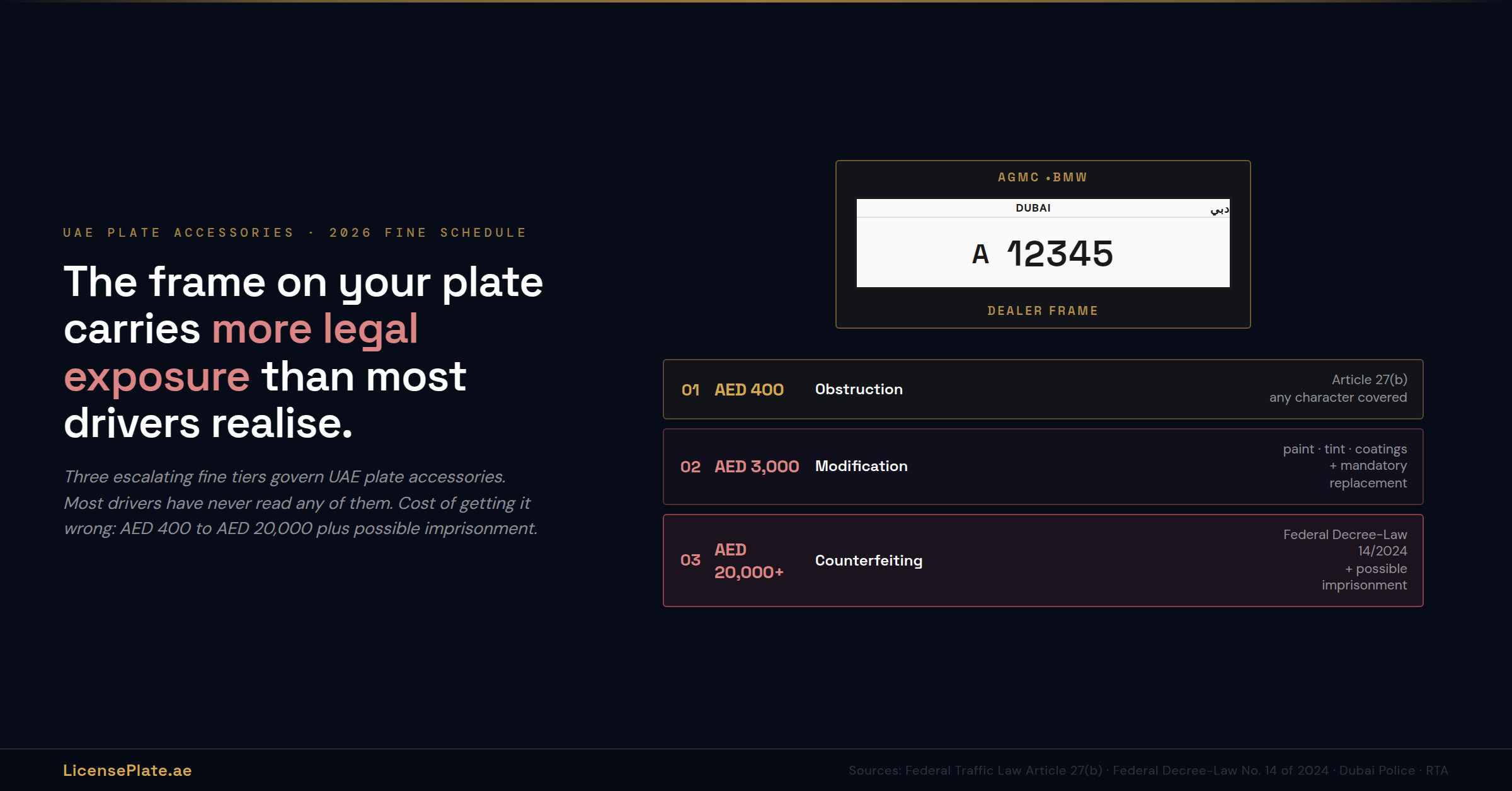
⚠ 400 درهم للوحة محجوبة. و3,000 درهم بالإضافة إلى 23 نقطة سوداء بالإضافة إلى حجز 90 يوماً إن أصبحت اللوحة غير مقروءة. و20,000 درهم بالإضافة إلى احتمال السجن بموجب المرسوم بقانون اتحادي رقم 14 لسنة 2024 إن جرى تحريف لوحة أو تقليدها. فالقرار بشأن الإطار الذي يوضع على سيارتك يحمل تعرّضاً قانونياً أكبر ممّا يدركه معظم السائقين.
تشتري سيارة جديدة من AGMC. ويسلّمك مندوب المبيعات المفاتيح، ويرافقك إلى الساحة، ويسألك إن كنت ترغب في تركيب إطارَي اللوحة الخاصين بالوكيل. أربعون ثانية، بلا رسوم، وعلامة AGMC على طرفَي اللوحة. ويقول معظم المشترين نعم. ولا أحد تقريباً يسأل إن كان ذلك قانونياً.
والإجابة الصادقة في 2026: يعتمد. فبعض إطارات الوكلاء سليمة تماماً. وبعضها قانوني تقنياً لكنه يكلّفك غرامة 400 درهم أول مرة تجد فيها كاميرا التعرّف الآلي لدى شرطة دبي صعوبة في قراءة لوحتك. وبعض الإطارات الزخرفية أو ما بعد البيع يتجاوز إلى نطاق يصنّفه المرسوم بقانون اتحادي رقم 14 لسنة 2024 كتحريف للوحة، بغرامات تبدأ من 20,000 درهم واحتمال السجن.
وتنشر هذه القطعة القواعد التي لم يوثّقها أحد بلغة واضحة لملحقات اللوحات تحديداً. ما الأبعاد التي تشترط كاميرات شرطة دبي بقاءها غير محجوبة. وأي الأغطية الزخرفية يُبطل قابلية قراءة اللوحة. وكيف تعمل إطارات الوكلاء في المنطقة التنظيمية الرمادية. وجدول الغرامات الدقيق للمخالفات المتعلّقة باللوحات محدَّثاً لعام 2026. واختبار امتثال مدّته 30 ثانية يمكنك إجراؤه على سيارتك الآن.
وإن كان على مركبتك إطار وكيل الآن، فينبغي أن تقرأ هذا قبل أن تقود مرة أخرى. وإن كنت على وشك شراء سيارة وعرض عليك الوكيل إطاراً، فاقرأ هذا قبل أن تقول نعم. فالتعرّض القانوني هنا حقيقي، ومعظمه قابل للمنع بخمس دقائق من الوعي.
ما يقوله القانون فعلاً عن ملحقات اللوحات في الإمارات
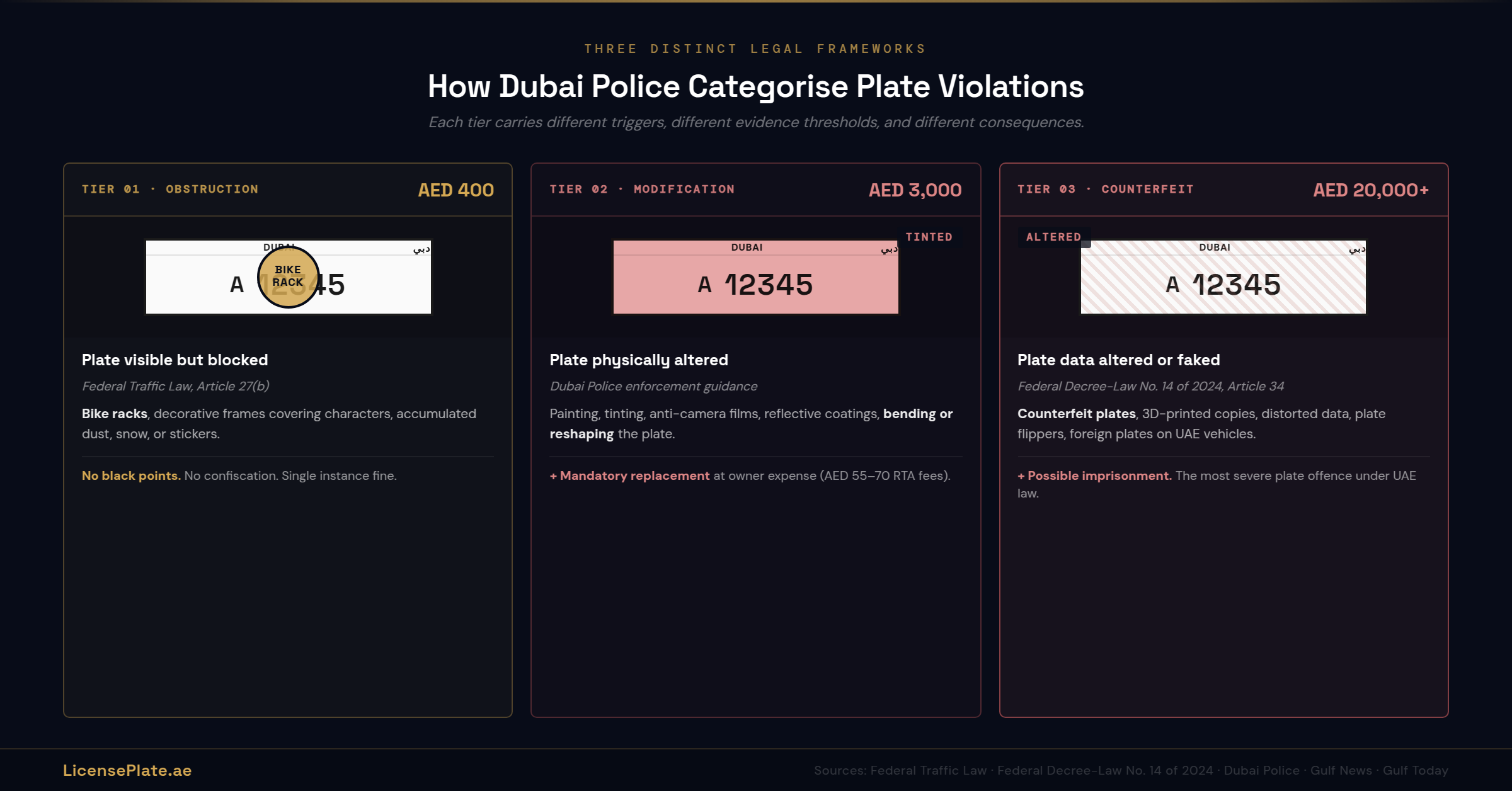
ثلاثة أطر قانونية متميّزة تحكم ما يمكنك وما لا يمكنك فعله باللوحة المادية على مركبتك. ومعظم المقالات على الإنترنت تخلط بينها. ومعظم السائقين لا يعرفون بوجودها. ولكلٍّ منها غرامة مختلفة، وإجراء مختلف، وعتبة مختلفة لإطلاق الإنفاذ.
الإطار الأول: المادة 27(ب) من قانون السير الاتحادي، 400 درهم للحجب
بحسب إرشادات شرطة أبوظبي المنشورة عبر Gulf Today، تفرض المادة 27(ب) من قانون السير الاتحادي غرامة قدرها 400 درهم على أي سائق يحجب أو يعيق لوحة تسجيل مركبته. و"الإعاقة" تشمل:
حوامل الدرّاجات المحمّلة بدرّاجات تحجب اللوحة الخلفية. وهي أكثر غرامات الـ 400 درهم شيوعاً في الدولة.
حوامل الأمتعة الخلفية التي تحجب أي رمز على اللوحة الخلفية.
خطّافات المقطورات وملحقاتها التي تحجب اللوحة حين لا تكون في وضع القطر الفعلي.
الإطارات الزخرفية التي تغطّي اسم الإمارة المُصدرة، أو رمز اللوحة، أو رقم الفئة، أو أي رقم. وهنا تسقط إطارات الوكلاء ذات العلامات حين تكون سميكة أكثر من اللازم أو غير محاذية بشكل سليم.
الثلج أو الطين أو الغبار أو الملصقات التي تتراكم على اللوحة. فالسائق مسؤول عن إبقاء اللوحة مرئية في جميع الأوقات.
وهذه الغرامة هي مستوى الإنفاذ الأوّلي. حالة واحدة، 400 درهم، بلا نقاط سوداء، وبلا حجز. لكن المركبة نفسها إن أُوقفت مرتين في عام للمخالفة نفسها يمكن أن تصعّد الاستجابة.
الإطار الثاني: تعديل اللوحة، 3,000 درهم بالإضافة إلى استبدال إلزامي
بحسب إرشادات الإنفاذ لدى شرطة دبي الموثّقة عبر دليل المخالفات المرورية الكامل لعام 2026 وقائمة غرامات شرطة دبي على Edarabia، يحمل التعديل المادي للوحة التسجيل غرامة قدرها 3,000 درهم بالإضافة إلى استبدال إلزامي للوحة على نفقة المالك. و"التعديل" يشمل:
الطلاء أو الرشّ أو تطبيق أي طبقة لونية على خلفية اللوحة أو رموزها.
التظليل أو تطبيق فيلم مظلَّل فوق اللوحة. ويشمل ذلك الأفلام المضادّة للكاميرات المسوّقة كـ"حماية من الرادار" أو طبقات "واقي اللوحة".
الطبقات العاكسة أو المضادّة للانعكاس التي تتداخل مع قراءات كاميرات التعرّف الآلي لدى شرطة دبي. وتُباع بعض أغطية اللوحات ما بعد البيع بوصفها "مانعة للكاميرات"، وهذه غير قانونية صراحةً.
الثني أو القصّ أو إعادة التشكيل للوحة لتناسب موضع تركيب مخصّص.
إزالة أو تعديل الميزات الأمنية للهيئة (الشعار الهولوغرافي، أو العلامة المائية، أو الختم المعدني البارز).
وهذا هو المستوى الأوسط من الإنفاذ. و3,000 درهم مبلغ كبير. والاستبدال الإلزامي للوحة يضيف نحو 55 إلى 70 درهماً من رسوم الهيئة. ويغطّي دليل استعادة اللوحة المفقودة أو المسروقة إجراءات الاستبدال إن كانت لوحتك قد تلفت أو أصبحت غير ممتثلة.
الإطار الثالث: المادة 34 من المرسوم بقانون اتحادي رقم 14 لسنة 2024، أكثر من 20,000 درهم بالإضافة إلى احتمال السجن
وهذا هو الإطار الذي لم يسمع به معظم السائقين قط، وهو الأشدّ. فبحسب تقارير غلف نيوز عن قانون السير الاتحادي الجديد، تفرض المادة 34 من المرسوم بقانون اتحادي رقم 14 لسنة 2024 (الساري منذ مارس 2025، والنافذ طوال 2026) غرامة قدرها 20,000 درهم كحدّ أدنى بالإضافة إلى احتمال السجن على:
تصنيع لوحة تسجيل مقلّدة أو تقليدها أو استخدامها. ويشمل ذلك النسخ المطبوعة ثلاثية الأبعاد، ونسخ اللوحات المصنوعة في الخارج، واللوحات غير الصادرة عن جهة الإمارة المعنية.
تشويه بيانات لوحة التسجيل أو طمسها أو تغييرها أثناء استخدامها للغرض المخصّص لها. وهذه هي الصياغة القانونية التي تلتقط التعديلات التي يعدّها معظم السائقين "تخصيصاً".
والعتبة هنا هي النيّة والأثر. فالإطار الذي يحجب رمزاً هو الإطار الأول (400 درهم). والطبقة التي تتداخل مع الكاميرات هي الإطار الثاني (3,000 درهم). أما التغيير المتعمّد للبيانات، أو تصنيع لوحة مزيّفة، أو محاولة التغلّب على أنظمة الإنفاذ فهو الإطار الثالث (أكثر من 20,000 درهم واحتمال السجن).
ومعظم السائقين لن يُطلقوا الإطار الثالث أبداً. لكن ينبغي لكل سائق معرفة وجوده، لأن الخطّ بين الإطارين الثاني والثالث يعتمد على النيّة والجسامة، وذلك التحديد يجريه محقّقو شرطة دبي، لا السائق الذي ركّب الملحق.
المواصفات المادية التي يجب أن تحترمها الإطارات
قبل أي حديث عن أي إطار قانوني، أبعاد اللوحة نفسها. فبحسب مدخل ويكيبيديا عن لوحات تسجيل المركبات في الإمارات وبتأكيد من وثائق الهيئة، تأتي اللوحات الإماراتية بثلاثة مقاسات معيارية:
اللوحة الطويلة (الخلفية): 520 مم عرضاً × 110 مم ارتفاعاً. وهي الصيغة الخلفية السائدة على سيارات الركاب في الدولة.
اللوحة القصيرة (الأمامية): 335 مم عرضاً × 155 مم ارتفاعاً. وهي الصيغة الأمامية السائدة. وبعض المركبات تستخدم لوحات طويلة أماماً وخلفاً؛ وبعضها يستخدم لوحات قصيرة أماماً وخلفاً؛ والتركيبات تتفاوت بحسب سوق استيراد المركبة.
لوحة الدرّاجة النارية: 220 مم عرضاً × 155 مم ارتفاعاً. مساحة تركيب أصغر. والإطارات المصمّمة للوحات السيارات لا تناسب لوحات الدرّاجات النارية.
ويجب على أي إطار أو حامل أو محيط استيعاب هذه الأبعاد دون حجب المنطقة المطبوعة. وتشمل المنطقة المطبوعة على اللوحة الإماراتية:
اسم الإمارة (بالإنجليزية والعربية) في الأعلى.
شعار الإمارة المميّز أو علمها (مثل شعار حكومة دبي، وصقر أبوظبي).
حرف رمز اللوحة أو رقم الفئة (من A إلى Z للرموز أحادية الحرف في دبي؛ ومن 1 إلى 50 لفئات أبوظبي؛ ومن 1 إلى 4 للشارقة).
أرقام اللوحة (الرقم الفعلي).
سنة الإصدار أو علامة نوع اللوحة في بعض التصاميم الحديثة.
وإن غطّى إطار أياً ممّا سبق، فإنه يُطلق الإطار الأول (400 درهم). ويغطّي مقال كيفية قراءة أي لوحة إماراتية في 30 ثانية التسلسل البصري الكامل لما تعرضه كل لوحة. وكل ما في ذلك التسلسل يجب أن يبقى مرئياً.
مسألة إطار الوكيل: هل إطارات AGMC والطاير والحبتور قانونية؟
هذا هو السؤال الذي وُجدت هذه القطعة للإجابة عنه. فمعظم مشتري السيارات الجديدة في دبي يُعرض عليهم إطار وكيل كملحق مجاني عند التسليم. AGMC لـ BMW، والطاير لأودي، والحبتور لميتسوبيشي، وليبرتي للسيارات لكاديلاك وشيفروليه، والرستماني لنيسان ورينو. والإطارات دقيقة، ومتوائمة مع العلامة، وغالباً ما تبدو جزءاً من تسليم المركبة الأصلي.
والموقف التنظيمي من إطارات الوكلاء دقيق. فهي ليست محظورة صراحةً. وليست معتمدة صراحةً أيضاً. بل تقع في منطقة رمادية تعتمد على ثلاثة عوامل:
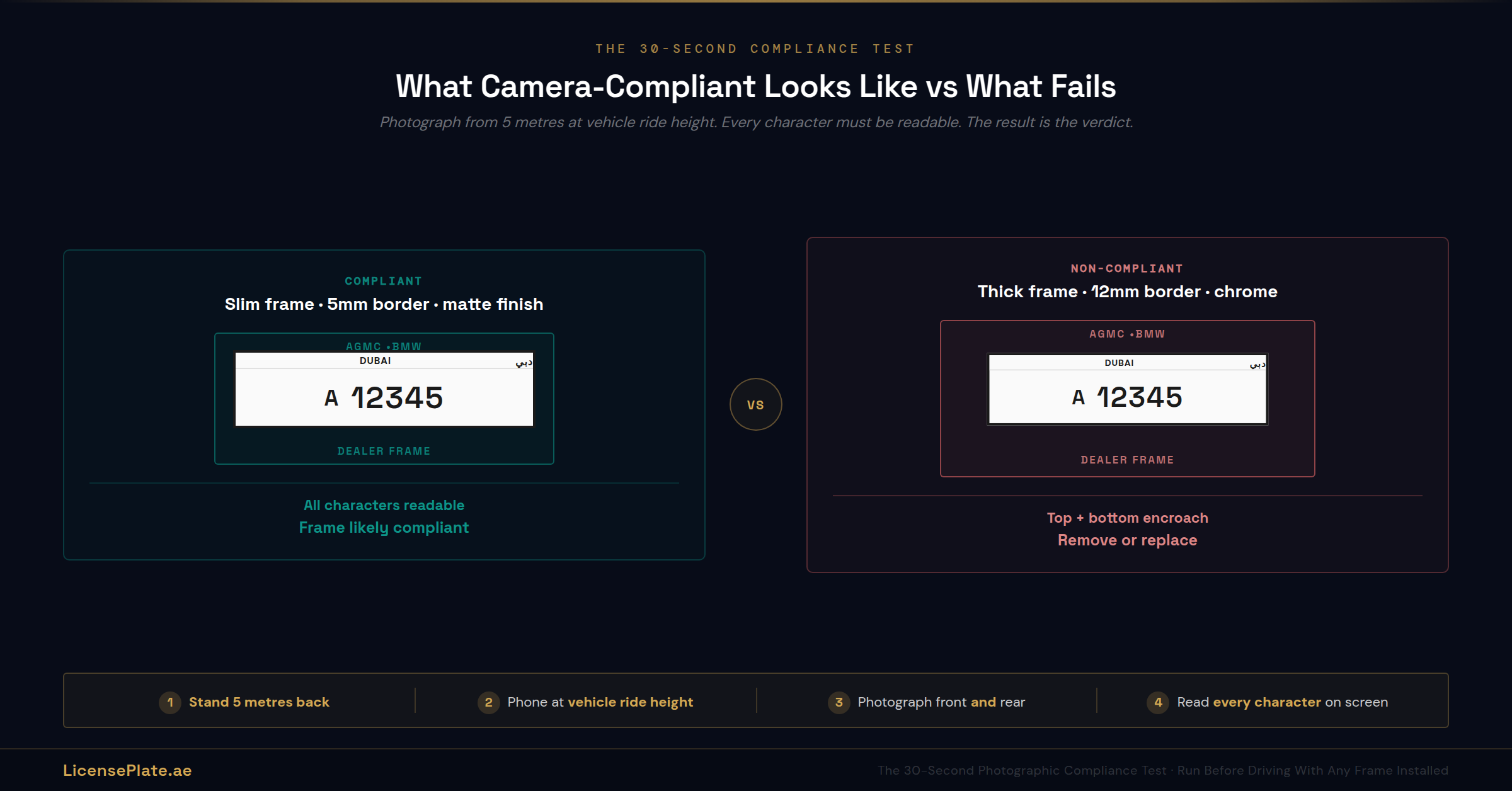
العامل الأول: سُمك الإطار
الإطار الذي يضيف أكثر من نحو 5 إلى 8 مم من الحافة حول أطراف اللوحة المطبوعة يبدأ في التعدّي على منطقة القراءة. ولمعظم كاميرات التعرّف الآلي الحديثة لدى شرطة دبي هامش تسامح حول رموز اللوحة، لكن ذلك الهامش ليس لا نهائياً. والإطارات الأسمك من 8 مم عند الحافتين العلوية أو السفلية يمكن أن تُفشل قراءات الكاميرا بشكل متقطّع، خصوصاً في الإضاءة المنخفضة أو سيناريوهات الاقتراب بزاوية.
اختبار الامتثال: ضع الإطار على اللوحة. وصوّر الأمام والخلف من مسافة نحو 5 أمتار عند ارتفاع المركبة. فإن استطعت قراءة كل رمز بوضوح (اسم الإمارة، والرمز، وكل الأرقام، والشعار) عند تلك المسافة والزاوية، فالإطار ممتثل على الأرجح. وإن كان أي رمز محجوباً جزئياً أو كلياً، فأزل الإطار.
العامل الثاني: موضع علامة الوكيل
شعارات الوكلاء الموضوعة في أعلى الإطار أو أسفله أو على جانبيه خارج المنطقة المطبوعة للوحة ممتثلة عموماً. أما شعارات الوكلاء الموضوعة داخل المنطقة المطبوعة المرئية أو التي تغطّي أي ميزة أمنية للهيئة فليست كذلك. وإطارات الوكلاء المعيارية من كبرى الوكالات في الدولة مصمّمة للامتثال، لكن افحص بعناية، لأن بعض نسخ إطارات الوكلاء ما بعد البيع تنتجها أطراف ثالثة وقد لا تلبّي المعايير الأبعادية نفسها.
العامل الثالث: مادة الإطار وانعكاسيته
الإطارات المطلية بالكروم أو ذات اللمعان المرآوي أو العالية الانعكاسية يمكن أن تتداخل مع معالجة كاميرات التعرّف الآلي في ظروف الفلاش. أما الإطارات المطفية أو المطلية أو منخفضة الانعكاسية فأكثر أماناً. وبحسب دليل قواعد التعديل لعام 2026 من Smart Garage، فإن نظام الكاميرات المدعوم بالذكاء الاصطناعي الذي طرحته شرطة دبي في 2025-2026 أكثر حساسية للتداخل الانعكاسي من الأنظمة الأقدم. فالإطار المطلي بالكروم الذي كان مقبولاً في 2022 قد يُطلق غرامات في 2026.
حكم امتثال إطارات الوكلاء
معظم إطارات الوكلاء الأصلية من AGMC والطاير والحبتور وليبرتي والرستماني ممتثلة للقواعد الحالية حين تُركَّب بشكل سليم. والتعرّض يأتي من ثلاثة سيناريوهات:
أولاً، نسخ إطارات الوكلاء ما بعد البيع، المستوردة غالباً من خارج الدولة، والتي لا تلبّي المعايير الأبعادية نفسها.
ثانياً، الإطارات التالفة أو المشوّهة بمرور الوقت التي تبدأ في التعدّي على منطقة القراءة.
ثالثاً، الإطارات المركّبة على لوحات بمقاس مختلف عن المقاس الذي صُمّم له الإطار. فالإطار المخصّص للوحة طويلة والمركّب على لوحة قصيرة يخلق حجباً في الأعلى والأسفل.
وإن كان على مركبتك إطار وكيل، فأجرِ اختبار الامتثال التصويري الموصوف أعلاه قبل القيادة مرة أخرى. وإن كان أي رمز محجوباً، فأزل الإطار. فإطارات الوكلاء ملحقات لا متطلّبات. والمركبة قانونية تماماً بدونها.
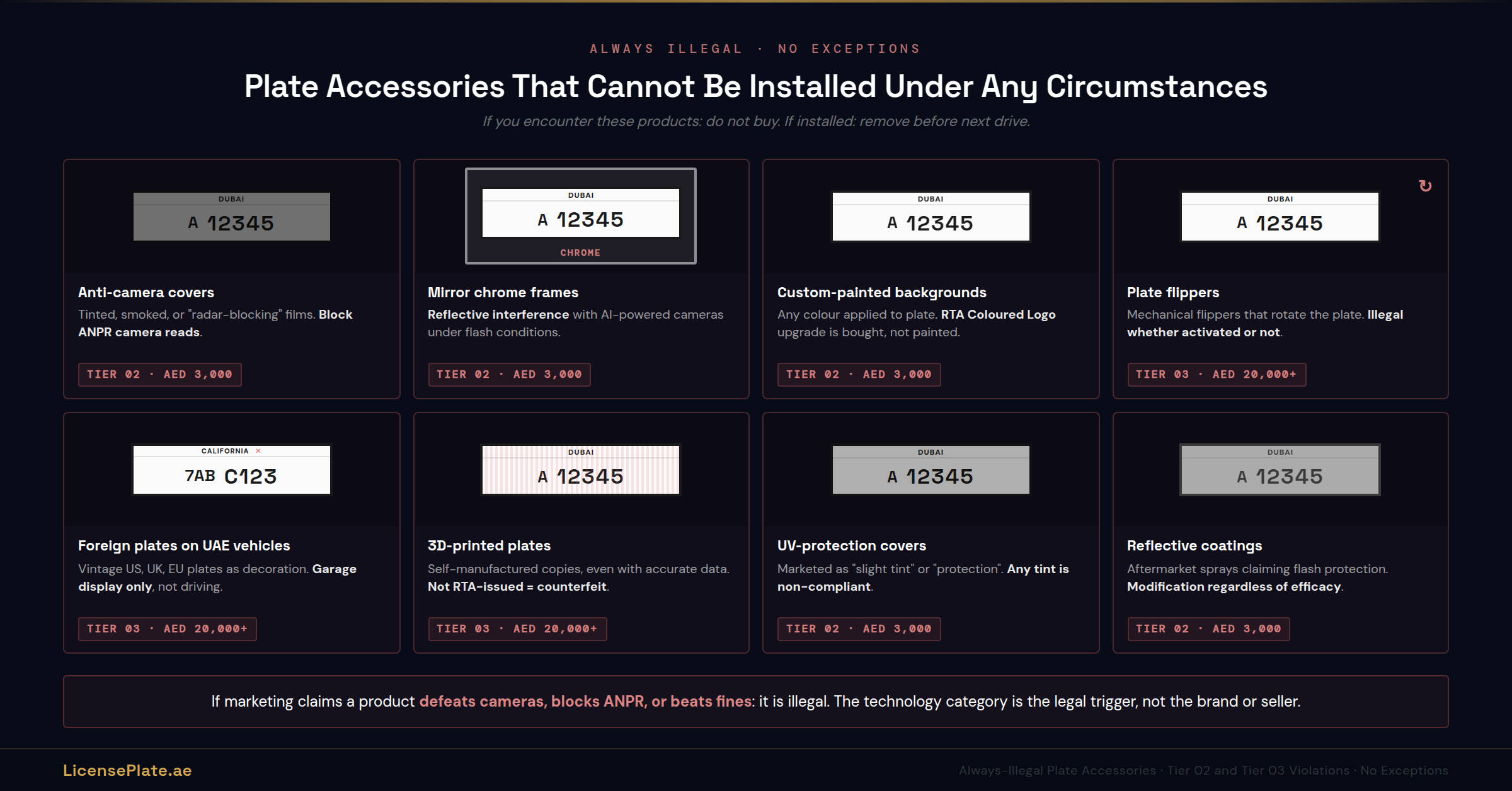
ملحقات اللوحات غير القانونية دائماً
بعض المنتجات المتعلّقة باللوحات المسوّقة في الدولة وعبر الإنترنت محظورة صراحةً بغضّ النظر عن جودة التركيب أو نيّة السائق. فإن صادفت هذه، فلا تشترها. وإن كانت مركّبة لديك، فأزلها قبل قيادتك التالية.
الأغطية المضادّة للكاميرات أو الحاجبة للرادار. تُباع بأسماء مثل "واقي اللوحة"، أو "فيلم مانع للكاميرات"، أو "درع الرادار". وتُسوّق بأنها تمنع كاميرات السرعة وأنظمة التعرّف الآلي من قراءة اللوحة. وهذه غير قانونية صراحةً بموجب الإطار الثاني (3,000 درهم بالإضافة إلى استبدال إلزامي) وقد تتصاعد بحسب النيّة إلى الإطار الثالث (أكثر من 20,000 درهم بموجب المرسوم بقانون اتحادي رقم 14 لسنة 2024). ويوثّق دليل الاحتيال على اللوحات الأنماط الإجرامية التي تتيحها هذه المنتجات.
أغطية اللوحات المظلَّلة. أي فيلم مظلَّل أو مدخَّن أو ملوّن يُطبَّق على سطح اللوحة. وحتى إن سُوّق كـ"تظليل خفيف" أو "حماية من الأشعة فوق البنفسجية"، فإن أي تظليل يتداخل مع قراءات الكاميرا ويُطلق إنفاذ الإطار الثاني.
الإطارات المرآوية أو الكروم المصقول. تشطيبات الإطارات العالية الانعكاسية التي يمكن أن تُعمي كاميرات التعرّف الآلي في ظروف الفلاش. وتستخدم كاميرات شرطة دبي الحديثة تمييز رموز مدعوماً بالذكاء الاصطناعي يتعامل مع بعض الانعكاسية، لكن الانعكاسية الشديدة (الكروم المرآوي، والفولاذ المصقول) لا تزال مشكلة.
خلفيات اللوحات المطلية خصيصاً. أي لون يُطلى على اللوحة غير الأبيض الأصلي الصادر عن الهيئة. فالألوان التي يطبّقها السائق (بما فيها لون الإمارة المُصدرة) ليست نفسها ترقية شعار دبي الملوّن الرسمية لدى الهيئة، وهي نسخة لوحة مصرّح بها. وترقية شعار دبي الملوّن تُشترى من الهيئة، لا تُطلى بعد البيع.
قلّابات اللوحات أو حوامل اللوحات الدوّارة. أجهزة ميكانيكية تدوّر اللوحة أو تقلبها لحجبها عند الطلب. وتُباع عبر الإنترنت لأغراض مختلفة منها التهرّب من الإنفاذ. وهذه غير قانونية بموجب الإطار الثالث (المرسوم بقانون اتحادي رقم 14 لسنة 2024) بغضّ النظر عمّا إذا كانت الآلية مستخدمة.
اللوحات من خارج الإمارات المعروضة إلى جانب اللوحات الإماراتية أو بدلاً منها. يعرض بعض هواة السيارات الكلاسيكية لوحات أمريكية أو بريطانية أو أوروبية عتيقة كقطع زخرفية. وهذا مقبول لأغراض العرض (في مرآب، أو في معرض)، لكن إن عُرضت على مركبة تُقاد في الدولة، فإن اللوحة الأجنبية تشكّل استخدام لوحة مقلّدة بموجب الإطار الثالث.
اللوحات المطبوعة ثلاثية الأبعاد أو المصنّعة ذاتياً. حتى إن كانت دقيقة في الأبعاد والمعلومات، فإن أي لوحة غير صادرة عبر قناة الهيئة الرسمية مقلّدة بموجب الإطار الثالث. ويغطّي مقال كيفية التحقّق من لوحة إماراتية قبل الشراء آليات التحقّق للوحات الشرعية.
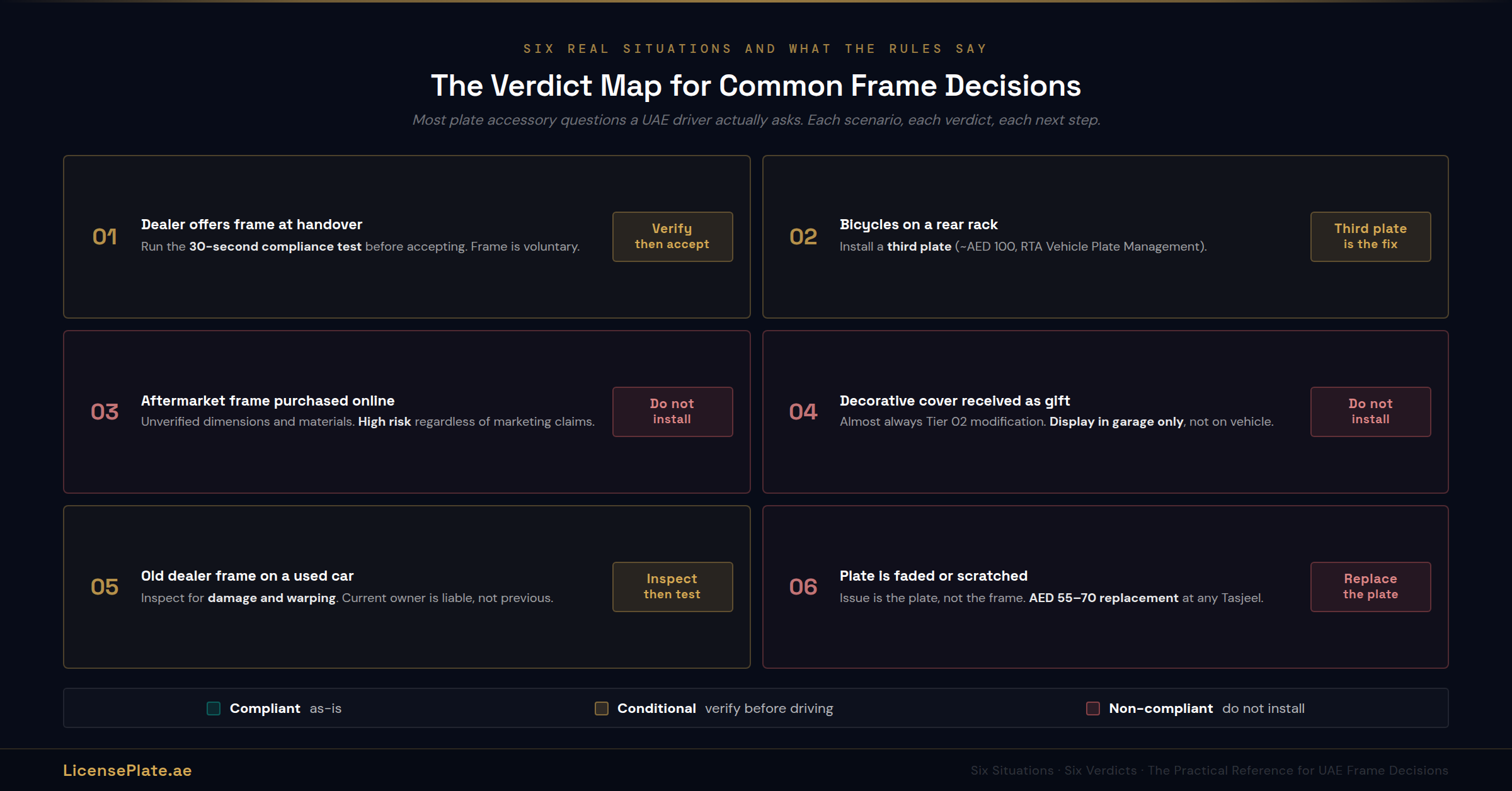
ستة مواقف حقيقية وما تقوله القواعد عن كلٍّ منها
الموقف الأول: سيارة جديدة، والوكيل يعرض إطاراً عند التسليم
أجرِ اختبار الامتثال. صوّر اللوحة مع الإطار من 5 أمتار عند ارتفاع المركبة. فإن كان كل رمز مقروءاً بوضوح، فاقبل. وإن كان أي رمز محجوباً، فارفض واطلب من الوكيل إزالة الإطار. ولا يمكن للوكيل الإصرار؛ فالإطارات ملحقات اختيارية.
الموقف الثاني: تحميل درّاجات على حامل خلفي لرحلة نهاية أسبوع
إن حجبت الدرّاجات أي جزء من اللوحة الخلفية، تنطبق غرامة الإطار الأول البالغة 400 درهم. والحلول: تركيب لوحة ثالثة (بحسب دليل إدارة لوحات المركبة لدى الهيئة، تكلّف اللوحة الثالثة نحو 100 درهم لإصدارها وتُركَّب على حامل الدرّاجات نفسه)، أو استخدام تصميم حامل لا يحجب اللوحة، أو حمل الدرّاجات على حوامل سقفية فقط حيث تبقى اللوحة الخلفية مرئية.
الموقف الثالث: إطار لوحة ما بعد البيع مشترى عبر الإنترنت
مخاطرة عالية. أبعاد غير موثّقة، ومواد غير موثّقة، وامتثال غير موثّق. ولغة البائع التسويقية ("معتمد في دبي"، "متوافق مع الهيئة") ليست ضماناً قانونياً. وإن كنت قد اشتريت إطاراً ما بعد البيع، فأجرِ اختبار الامتثال. وإن ساورك أي شكّ، فلا تركّبه.
الموقف الرابع: غطاء لوحة زخرفي تلقّيته كهدية
غير ممتثل في معظم الأحوال. فالأغطية الزخرفية (بلاستيك شفّاف فوق اللوحة، وتصاميم مطبوعة على طبقة شفّافة، وأغلفة بأشكال أطفال) تقع عادةً ضمن تعديلات الإطار الثاني. اعرضها في مرآبك أو على جدار. ولا تركّبها على مركبة تُقاد.
الموقف الخامس: إطار وكيل قديم على سيارة اشتريتها مستعملة
افحص الإطار. فإن كان إطار الوكيل الأصلي من وكالة إماراتية كبرى وغير تالف، ينطبق اختبار الامتثال نفسه. وإن كان تالفاً (مشوّهاً، أو متشقّقاً، أو متعدّياً على منطقة القراءة)، فأزله. فتركيب المالك السابق لا ينقل المسؤولية. فمالك المركبة الحالي مسؤول عن حالة اللوحة.
الموقف السادس: اللوحة نفسها باهتة أو مخدوشة أو غير مقروءة جزئياً
استبدل اللوحة، لا الإطار. فإن كانت لوحتك باهتة من التعرّض للشمس، أو مخدوشة من حادث ركن، أو بها أي رمز يتعذّر قراءته بوضوح من 5 أمتار، فالمشكلة في اللوحة نفسها لا في أي ملحق عليها. ويغطّي إجراء الاستبدال في مراكز تسجيل الاستبدال بـ 35 إلى 50 درهماً بالإضافة إلى 20 درهماً رسم المعرفة. فمن 55 إلى 70 درهماً من الرسوم يمنع 3,000 درهم من الغرامات.
الأسئلة الشائعة
س: هل إطارات اللوحات من AGMC أو الطاير أو الحبتور قانونية في دبي؟
نعم عموماً، حين تُركَّب بشكل سليم وتكون غير تالفة. فهي تقع في منطقة تنظيمية رمادية تعتمد على سُمك الإطار وموضع العلامة وانعكاسية المادة. أجرِ اختبار الامتثال التصويري (صوّر من 5 أمتار عند ارتفاع المركبة) وتأكّد من أن كل رمز على اللوحة مقروء بوضوح. فإن كان كذلك، فالإطار ممتثل على الأرجح. وإن كان أي رمز محجوباً، فأزل الإطار.
س: ما غرامة اللوحة المحجوبة في الإمارات؟
400 درهم بموجب المادة 27(ب) من قانون السير الاتحادي. وينطبق ذلك على حوامل الدرّاجات وحوامل الأمتعة والإطارات الزخرفية التي تغطّي أي رمز والأوساخ أو الملصقات المتراكمة. غرامة لحالة واحدة، بلا نقاط سوداء، وبلا حجز مركبة.
س: ما غرامة تعديل لوحة التسجيل أو طلائها؟
3,000 درهم بالإضافة إلى استبدال إلزامي للوحة على نفقة المالك (من 55 إلى 70 درهماً من رسوم الهيئة). وينطبق ذلك على الطلاء والتظليل والطبقات المطبّقة والأفلام المضادّة للكاميرات وأي تغيير مادي لسطح اللوحة أو رموزها.
س: هل يمكن سجني بسبب ملحق لوحة غير قانوني؟
بموجب المادة 34 من المرسوم بقانون اتحادي رقم 14 لسنة 2024، تحمل أشدّ مخالفات اللوحات (التقليد، وتصنيع لوحات مزيّفة، وتشويه بيانات اللوحة بنيّة التغلّب على الإنفاذ) غرامات لا تقلّ عن 20,000 درهم بالإضافة إلى احتمال السجن. أما مخالفات الإطارات والحجب المعتادة فلا تبلغ هذه العتبة. فإطارات الوكلاء والأغطية الزخرفية والحجب العرضي تبقى في نطاق الإطار الأول أو الثاني.
س: هل أغطية اللوحات المظلَّلة قانونية في الإمارات؟
لا. فأي فيلم مظلَّل أو مدخَّن أو ملوّن يُطبَّق على سطح اللوحة يُطلق الإطار الثاني (3,000 درهم بالإضافة إلى استبدال إلزامي). ويشمل ذلك المنتجات المسوّقة كـ"حماية من الأشعة فوق البنفسجية" أو "تظليل خفيف". فحتى التظليل الطفيف يتداخل مع قراءات كاميرات التعرّف الآلي.
س: ماذا لو كانت لوحتي تبهت من التعرّض للشمس؟
استبدل اللوحة في أي مركز تسجيل تابع للهيئة. فالبهتان ليس مخالفة، لكن القيادة بلوحة غير مقروءة مخالفة. والاستبدال يكلّف من 55 إلى 70 درهماً من رسوم الهيئة ويستغرق 10 دقائق عند الشبّاك. ويغطّي دليل استعادة اللوحة المفقودة أو المسروقة الإجراء.
س: هل يمكنني تركيب لوحة ثالثة على حامل درّاجاتي؟
نعم. فالهيئة تقدّم لوحة ثالثة كجزء من إدارة لوحات المركبة. وتكلّف نحو 100 درهم لإصدارها وهي الحلّ القانوني للسائقين الذين ينقلون الدرّاجات أو ملحقات خارجية بشكل متكرّر ممّا قد يحجب اللوحة الخلفية. ويغطّي دليل تغيير اللوحة إجراءات التقديم.
س: الوكيل ركّب الإطار لي. هل أبقى مسؤولاً إن أطلق غرامة؟
نعم. فمالك المركبة مسؤول قانونياً عن حالة اللوحة بغضّ النظر عمّن ركّب أي ملحق. وإن أطلق إطار وكيل غرامة، تُصدر الغرامة لمالك المركبة المسجّل. وينبغي أن يُجري المالك الفحص واختبار الامتثال التصويري قبل استلام المركبة، حتى لو ركّب الوكيل الإطار.
اللوحة على مركبتك هي أكثر ملحق تملكه تعرّضاً قانونياً. من 400 إلى 20,000 درهم من الغرامات بحسب ما تضعه حولها أو عليها أو أمامها. ومعظم السائقين لا يفكّرون في هذا حتى يصل إشعار الرسالة النصية. وعند تلك النقطة، يكون الأوان قد فات لإلغاء أي قرار أطلق المخالفة.
والإطار أعلاه هو المرجع العملي لكل قرار ملحق لوحة يتخذه سائق في الإمارات. فإطارات الوكلاء مقبولة عادةً حين تُتحقّق باختبار الامتثال. وإطارات ما بعد البيع عالية المخاطر. والمنتجات المظلَّلة أو المطلية أو المضادّة للكاميرات غير قانونية صراحةً. وخيار اللوحة الثالثة موجود للاحتياجات المشروعة للملحقات كحوامل الدرّاجات. واختبار الامتثال التصويري الذي يستغرق 30 ثانية يستغرق وقتاً أقلّ من قراءة هذا المقال ويمنع آلاف الدراهم من الغرامات.
وإن كنت تشتري سيارة جديدة هذا الأسبوع، فاسأل الوكيل عن الإطار قبل التوقيع. وإن كان لديك إطار قائم، فصوّر اللوحة من 5 أمتار واقرأ كل رمز. وإن أغراك غطاء ما بعد البيع، فلا تركّبه. فالقرار بشأن ملحقات لوحتك من أسهل القرارات القانونية في قيادة السيارات في الإمارات. القواعد واضحة، والغرامات موثّقة، واختبار الامتثال تصويري.
ولأسئلة ملكية اللوحات الأوسع، يغطّي تشريح صفقة اللوحة دورة حياة الملكية الكاملة. ويغطّي دليل استعادة اللوحة المفقودة أو المسروقة الاستبدال حين تتلف اللوحة أو تصبح غير ممتثلة. ويغطّي دليل إدارة لوحات المركبة لدى الهيئة طلبات اللوحة الثالثة وسائر خدمات إدارة اللوحات.
والإطارات والأغطية ليست سوى المستوى الأول من إنفاذ اللوحات. وللاطّلاع على سلّم العقوبات الكامل — غرامة اللوحة المحجوبة البالغة 400 درهم، و3,000 درهم والحجز 90 يوماً للقيادة بلا لوحة، ومخالفات المادة 34 التي تحمل عقوبة السجن — راجع دليلنا الكامل لمخالفات وغرامات لوحات السيارات في الإمارات.
حذف التعليق؟
هل أنت متأكد أنك تريد حذف هذا التعليق؟ لا يمكن التراجع عن هذا الإجراء.
حذف المقال؟
هل أنت متأكد أنك تريد حذف هذه المقالة؟ سيؤدي ذلك أيضًا إلى حذف جميع التعليقات. لا يمكن التراجع عن هذا الإجراء.