

دليل التفاوض على اللوحات: كيف تزايد وتقابل العرض وتُغلق الصفقة على لوحة إماراتية
5 مايو 2026
دبي
فريق LicensePlate.ae
ثمّة لحظة في كل صفقة لوحة لا تغطّيها الأدلّة الإجرائية. فـدليل الشراء لدى الهيئة يخبرك أي استمارة تملأ. والحاسبة تخبرك ما تساويه اللوحة تقريباً. وروزنامة المزادات تخبرك متى تحلّ الفعالية التالية. ولا شيء من ذلك يخبرك ماذا تقول فعلاً حين يردّ عليك بائع برسالة تحمل سعراً أعلى بنسبة 30% ممّا تراه عادلاً، أو كيف تزايد في قاعة الهيئة حين يخيّم الصمت فجأة وتكون اللوحة التي جئت من أجلها عند 180,000 درهم بمزايد واحد أمامك.
تلك اللحظة هي التفاوض. والتفاوض هو ما يحدّد ما إذا كنت قد حصلت على اللوحة بالسعر الذي أردته، أم دفعت 20% أكثر من اللازم، أم انسحبت من لوحة كانت في متناولك فعلاً لأنك أسأت قراءة القاعة. فكل قطعة أخرى في هذه المكتبة تغطّي الإجراء والحساب والقانون والاستراتيجية. أما هذه القطعة فتغطّي المحادثة.
والتأطير الصادق أولاً. مفاوضات اللوحات في الإمارات لا تشبه أي تفاوض أجريته من قبل. فاللوحات بلا حالة. ولا نزاعات مصدر. ولا شروط فحص. ولا انهيارات تمويل. فاللوحة إما مسجّلة، وإما غير مسجّلة، باسم الشخص الذي تحدّثه، والسعر إما هو، وإما ليس هو، ما تتفقان عليه. جرّد كل متغيّر، وما يتبقّى لعبة سعر وتوقيت خالصة. وتلك البساطة البنيوية تجعل مفاوضات اللوحات مكثّفة نفسياً بطريقة لا تكون فيها معظم مفاوضات الأصول. فالمحادثة كلّها ترتكز على رقمين والفجوة بينهما.
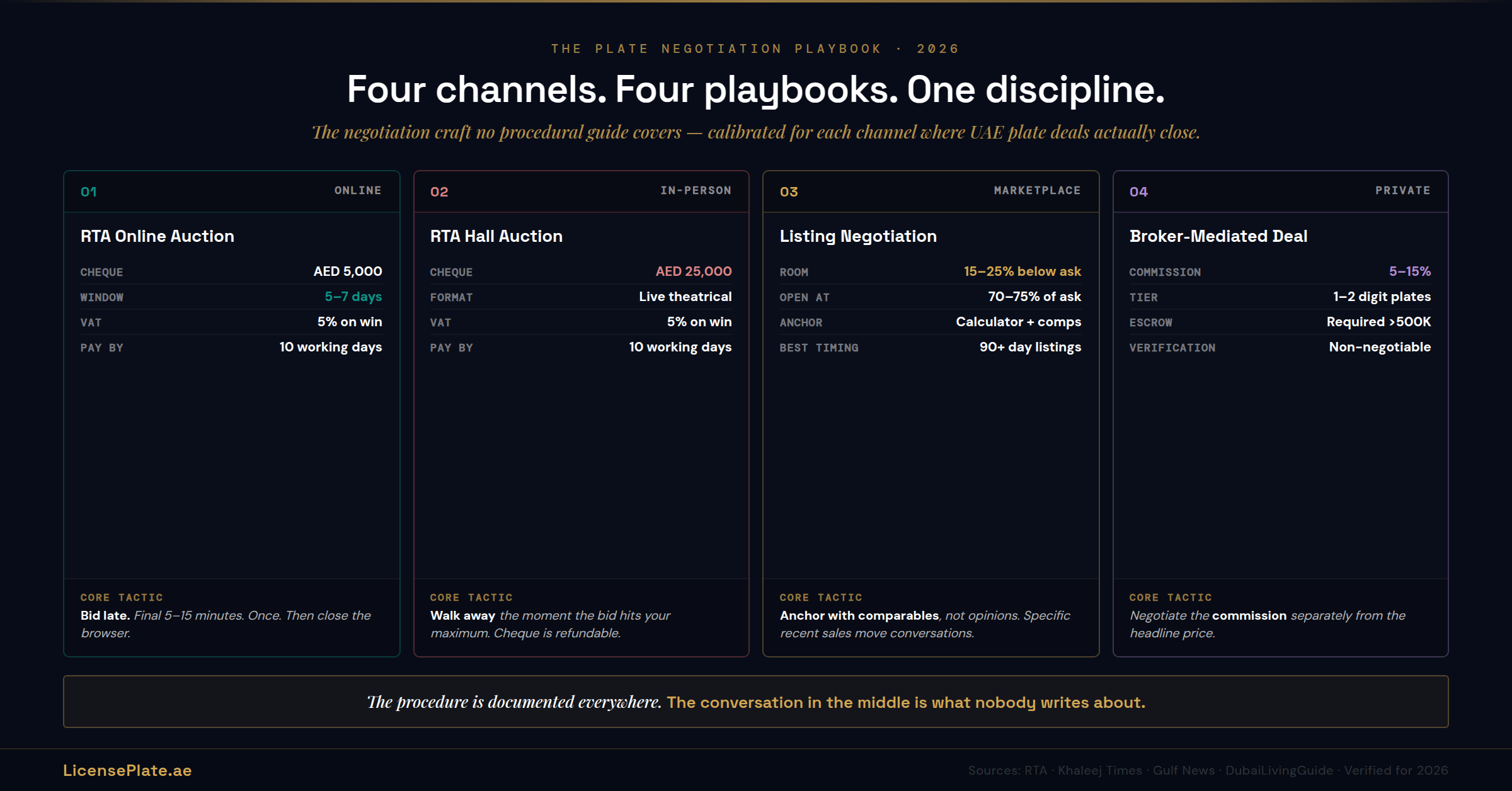
وتنشر هذه القطعة دليل التفاوض لتلك المحادثة، قناةً بقناة. مزاد الهيئة الإلكتروني. ومزاد الهيئة في القاعة. وإعلان في سوق على منصات مثل LicensePlate.ae. وصفقة وسيط خاصة. ولكل قناة ديناميكياتها الخاصة، وافتتاحياتها المثلى، وإشارات الانسحاب الخاصة بها. اقرأ القناة التي تنطبق عليك. أو اقرأ الأربع جميعها إن كنت تفاضل بينها.
القنوات الأربع وأين يعيش التفاوض في كلٍّ منها
قبل أي تكتيك، اختيار القناة. فتغطّي قطعة المزاد مقابل السوق الثانوية الخيار الاستراتيجي بين القنوات. ولأغراض التفاوض، السياقات العملية الأربعة هي التالية:
القناة الأولى: مزاد الهيئة الإلكتروني
بحسب تغطية الخليج تايمز لمزادات الهيئة الإلكترونية الأخيرة، الهيكل ثابت: شيك تأمين بقيمة 5,000 درهم، ورسم مشاركة غير مسترد بقيمة 120 درهماً، وملف مروري مطلوب، وضريبة قيمة مضافة 5% على المزايدة الفائزة، والدفع خلال 10 أيام عمل. ويستمرّ المزاد عادةً من 5 إلى 7 أيام. والمزايدات مرئية لجميع المشاركين. ولا يوجد تفاوض بشري، بل مزايدات تصاعدية متتالية تُقدَّم عبر موقع الهيئة أو تطبيق دبي درايف.
القناة الثانية: مزاد الهيئة في القاعة (المزاد المفتوح)
بحسب قواعد مزاد القاعة المنشورة لدى الهيئة وتغطية تايم آوت دبي للمزادات، تتطلّب صيغة القاعة شيك تأمين بقيمة 25,000 درهم (خمسة أضعاف التأمين الإلكتروني)، ورسم مشاركة غير مسترد بقيمة 120 درهماً، وملفاً مرورياً سارياً، وضريبة قيمة مضافة 5% على المزايدات الفائزة، ونوافذ دفع مدّتها 10 أيام عمل. ويُدار المزاد حضورياً في مواقع مثل قاعة محمد بن راشد في هيئة الطرق والمواصلات. ويزايد المزايدون بالمضرب أو بالصوت آنياً في مواجهة منادي المزاد.
القناة الثالثة: الإعلان في السوق
تستضيف LicensePlate.ae ومنصات مماثلة إعلانات من بائعين موثّقين. ولكل إعلان سعر مطلوب، لكن السعر المطلوب نادراً ما يكون سعر الصفقة. ويجري التفاوض عبر نظام الرسائل في المنصة أو عبر وكلاء المنصة الذين ينسّقون بين المشتري والبائع. وبحسب رواية البائع لدى DubaiLivingGuide، فإن هامش التفاوض النموذجي في الإعلانات الخاصة من 15 إلى 25% دون السعر المطلوب، مع 5 إلى 10% إضافية متاحة في ظروف بعينها (بائعون متحفّزون، وسوق بطيئة، وتوقيت نهاية السنة المالية).
القناة الرابعة: صفقة وسيط خاصة
يعرّف الوسيط المشتري بالبائع، غالباً للوحات غير المعروضة علناً. ويأخذ الوسيط عمولة (عادةً من 5 إلى 15% من قيمة الصفقة) ويهيكل الصفقة. وتمرّ المفاوضات عبر الوسيط لا مباشرةً بين الأصيلين. وتتولّى هذه القناة أعلى الصفقات قيمةً: اللوحات أحادية الرقم، وذات الرقمين، واللوحات ذات الدلالة العددية بعينها التي لا تكاد تظهر في الأسواق العامة.
وتكتيكات التفاوض التي تنجح في القناة الأولى لا تنتقل إلى القناة الرابعة (والعكس). ومعظم مشتري اللوحات يفشلون باستيراد الدليل الخاطئ. والأقسام الأربعة التالية تصحّح ذلك.
دليل القناة الأولى: الفوز بمزاد الهيئة الإلكتروني
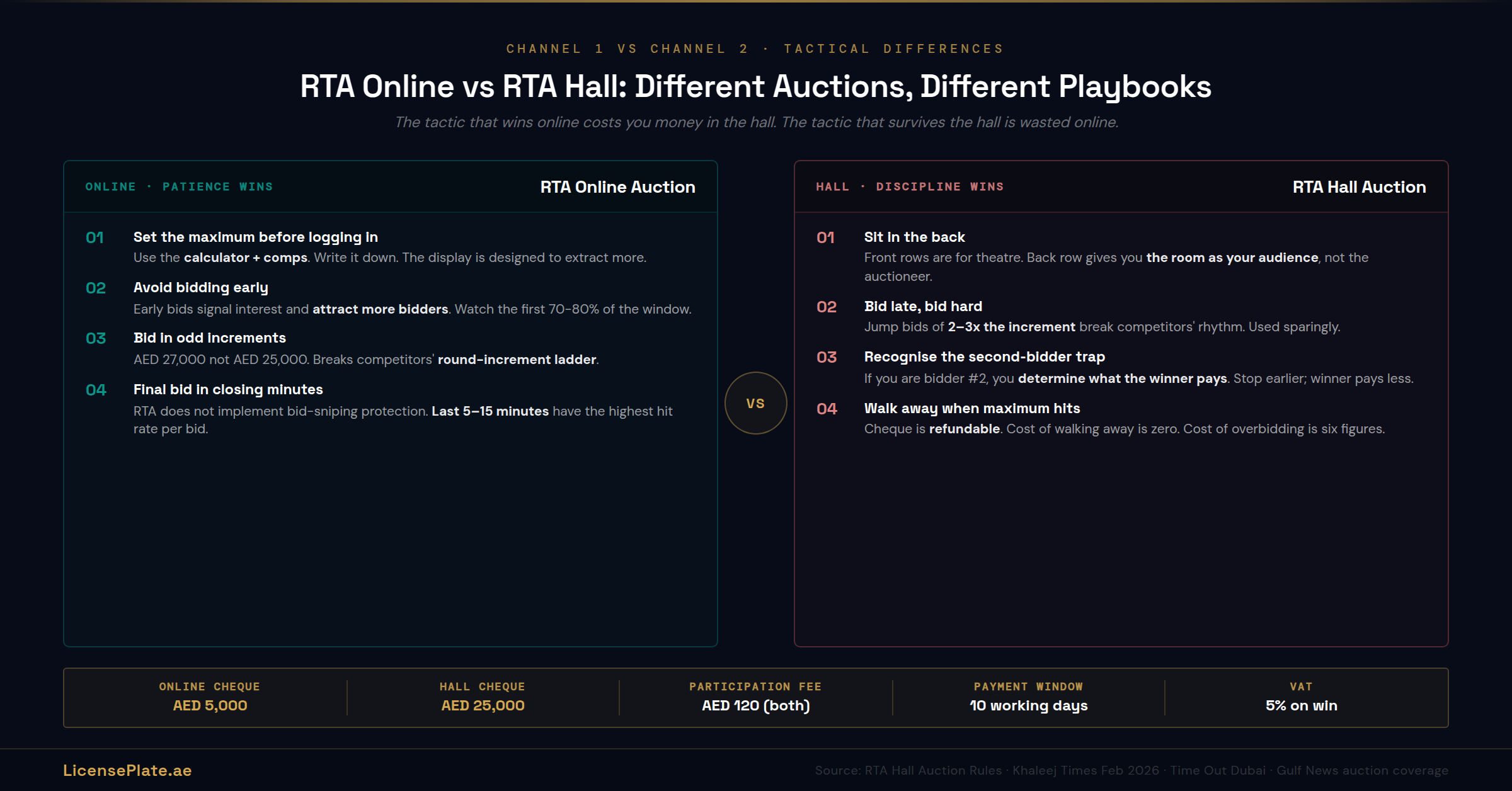
المزادات الإلكترونية تكافئ الصبر والانضباط. فالمزاد يمتدّ أياماً، والمزايدة مرئية، ولا يوجد منادٍ يمارس ضغطاً اجتماعياً. والميزة البنيوية تذهب للمزايد الذي حدّد حدّاً أقصى، وكتبه، ورفض تجاوزه.
التكتيك الأول: حدّد الحدّ الأقصى قبل تسجيل الدخول
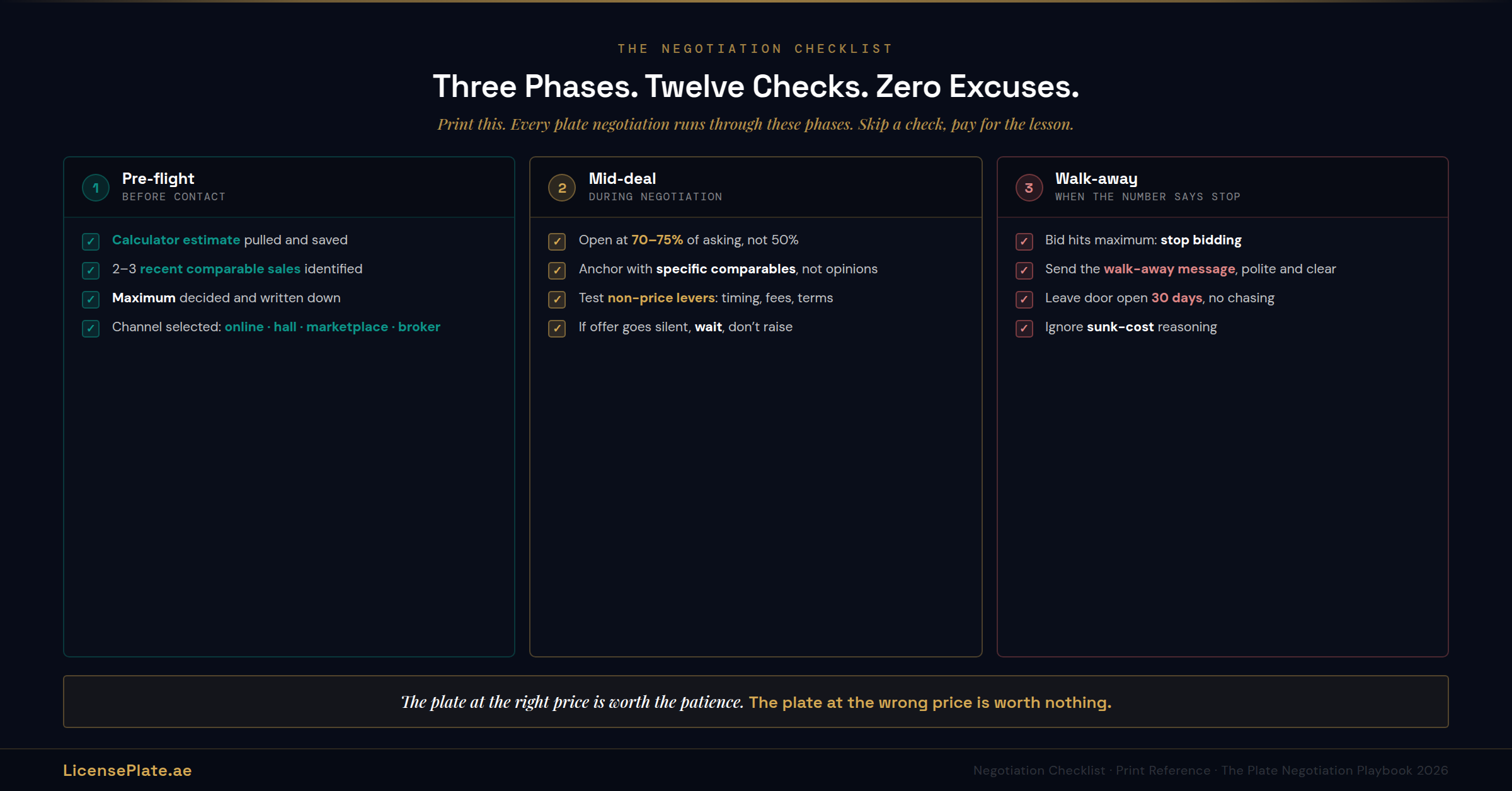
قبل فتح بوابة الهيئة، قرّر حدّك الأقصى المطلق. استخدم حاسبة اللوحات للمرجع السوقي. وأضف 10% إن كانت للوحة دلالة شخصية لا ترغب في خسارتها. واخصم 10% إن كانت لديك لوحات مماثلة أخرى تسعدك ملكيتها. اكتب الرقم. فالانضباط يهمّ لأن عرض المزايدة التصاعدي مصمَّم نفسياً لانتزاع أكثر من حدّك الأقصى. والمزايدون الذين يقرّرون حدّهم الأقصى في منتصف المزاد يتجاوزون رقمهم المحدّد مسبقاً بنسبة 30% أو أكثر بشكل روتيني.
التكتيك الثاني: تجنّب المزايدة مبكراً
المزايدات المبكرة تُعلم المزايدين الآخرين بمستوى الاهتمام. فاللوحة عند 30,000 درهم بلا مزايدات في الأيام الثلاثة الأولى من مزاد مدّته خمسة أيام تبدو لوحة لا يريدها أحد. واللوحة نفسها بثلاث مزايدات في اليوم الأول تبدو لوحة متنازعاً عليها. وإشارة التنازع تجتذب مزيداً من المزايدين.
ونمط المزايدة الأمثل: راقب في أول 70 إلى 80% من نافذة المزاد، ثم ابدأ المزايدة في الـ 20% الأخيرة فقط. وهذا يعكس الأدبيات الراسخة عن المزايدة المثلى على eBay وينطبق مباشرةً على هيكل مزاد الهيئة الإلكتروني.
التكتيك الثالث: زايد بزيادات غير مستديرة
معظم المزايدين يزايدون بزيادات مستديرة (5,000 درهم، و10,000 درهم، و25,000 درهم). والمزايدة بزيادات غير مستديرة (5,500 درهم، و11,000 درهم، و27,000 درهم) تشير إلى أنك أجريت حسابات محدّدة ولا تتّبع سلّم زيادات عاماً. وهذا يجعل المزايدين المنافسين أكثر حذراً من المزايدة الزائدة بزيادتهم المستديرة التالية، لأن المزايدة المستديرة التالية (30,000 درهم) تتفوّق عليك بـ 3,000 درهم فقط بدلاً من 5,000 درهم التي كانوا يتوقّعونها.
التكتيك الرابع: ضع المزايدة النهائية في نافذة الإغلاق
بحسب تغطية غلف نيوز لمزاد فبراير 2025، يُغلق مزاد الهيئة الإلكتروني في وقت محدّد. ومزايدات اللوحات في آخر 5 إلى 15 دقيقة من النافذة لها أعلى معدّل نجاح لكل مزايدة. فالمزايدات الأسبق تدعو إلى مزايدات مضادّة؛ والمزايدات الموضوعة في نافذة الإغلاق تترك وقتاً أقلّ لتسجيل المزايدات المضادّة.
ولا تطبّق منصة الهيئة حماية من القنص (تمديد المزاد إن وردت مزايدة في الدقيقة الأخيرة). وهذا يعني أن مزايدة موقّتة جيداً في دقيقة الإغلاق تفوز غالباً. اضبط تذكيراً في التقويم لوقت الإغلاق. وأبقِ هاتفك جاهزاً. وزايد بحدّك الأقصى المحدّد مسبقاً مرة واحدة، في الدقيقة الأخيرة، ثم أغلق المتصفّح.
دليل القناة الثانية: النجاة في مزاد الهيئة بالقاعة
مزادات القاعة مختلفة. فالقاعة صغيرة. والمنادي مسرحي. والمزايدون الآخرون مرئيون، ويعرف بعضهم بعضاً غالباً، ويؤدّون أحياناً عمداً لأجل الظهور. والأثر التراكمي ضغط نفسي لم تحسبه الحاسبة. والمزايدون الذين دخلوا بحدّ أقصى قدره 200,000 درهم يخرجون روتينياً وقد دفعوا 280,000 درهم لأن القاعة كسرت انضباطهم.
التكتيك الأول: اجلس في الخلف
مقاعد الصفّ الأمامي للبائعين والمسرح. ومقاعد الصفّ الخلفي تمنحك القاعة كجمهور لك بدلاً من المنادي. فيمكنك رؤية من يزايد ضدك، وقراءة لغة الجسد، وتوقيت مزايداتك دون أن تُقرأ بالمقابل. ولمعظم مزادات القاعة مقاعد أولوية للمزايدين المسجّلين، فسجّل مبكراً واطلب موقعاً خلفياً.
التكتيك الثاني: زايد متأخّراً، وزايد بقوة
مزادات القاعة تكافئ ما يُسمّى تكتيك "المزايدة القافزة" أو "مزايدة الصدمة". فبدلاً من رفع السعر بزيادة المنادي التدريجية (عادةً 10,000 درهم أو 25,000 درهم)، ترفع المزايدة القافزة السعر بضعفين أو ثلاثة أضعاف الزيادة في مزايدة واحدة. وهذا يكسر إيقاع المزايدين المنافسين ويشير غالباً للمنافسين الأقلّ التزاماً بأنهم خارج نطاق قدرتهم.
وباستخدامه باعتدال، يمكن لهذا التكتيك تقصير المزاد والتقاط لوحة بسعر إجمالي أدنى ممّا كان سينتجه تسلّق تصاعدي بطيء. أما باستخدامه كثيراً، فهو يستنزف حدّك الأقصى أسرع. ومزايدة قافزة أو اثنتان لكل مزاد هي النقطة المثلى.
التكتيك الثالث: تعرّف على فخّ المزايد الثاني
لمزادات القاعة ظاهرة موثّقة ينتهي فيها المزايد الثاني إلى تحديد السعر المدفوع. فاللوحة تذهب لأعلى مزايدة، لكن أعلى مزايدة دالّة على مدى استعداد ثاني أعلى مزايدة للذهاب. فإن كنت المزايد الثاني وواصلت المجاراة، فأنت من يحدّد السعر الذي يدفعه الفائز. فمزايدة الفائز هي مزايدتك زائد زيادة واحدة.
وهذا يعني أنك كمزايد ثانٍ، سلوكك يهمّ أكثر من سلوك الفائز. فإن توقّفت عن المزايدة مبكراً، دفع الفائز أقلّ. وإن واصلت المجاراة، دفع الفائز أكثر. والتعرّف على دورك في القاعة (هل أنت القائد عميق الجيب أم مسنّن المزايد الثاني؟) يغيّر اللعب الأمثل.
التكتيك الرابع: انسحب حين يُبلَغ الحدّ الأقصى
هذه هي القاعدة التي لن يخبرك بها أي دليل آخر. فشيك التأمين البالغ 25,000 درهم الذي أودعته قابل للاسترداد إن لم تفز. وتكلفة الانسحاب صفر. وتكلفة تجاوز حدّك الأقصى قد تبلغ عشرات أو مئات الآلاف من الدراهم. فالانسحاب ليس فشلاً. الانسحاب هو الانضباط الذي يجعل الحدّ الأقصى ذا معنى.
ومعظم الإفراط في الإنفاق في مزادات القاعة يحدث بين 50,000 و200,000 درهم فوق الحدّ الأقصى الأصلي، بزيادات من 10,000 إلى 25,000 درهم لكل منها. وكل مزايدة فردية تبدو صغيرة نسبةً إلى الإجمالي. وتراكمياً، ينتهي المزايد إلى ما بعد رقمه المقرّر بكثير. والعلاج ميكانيكي: حين تبلغ المزايدة حدّك الأقصى، اجلس على يديك. لا ترفع المضرب. فالشخص التالي الذي يزايد ليس مشكلتك.
دليل القناة الثالثة: مفاوضات السوق
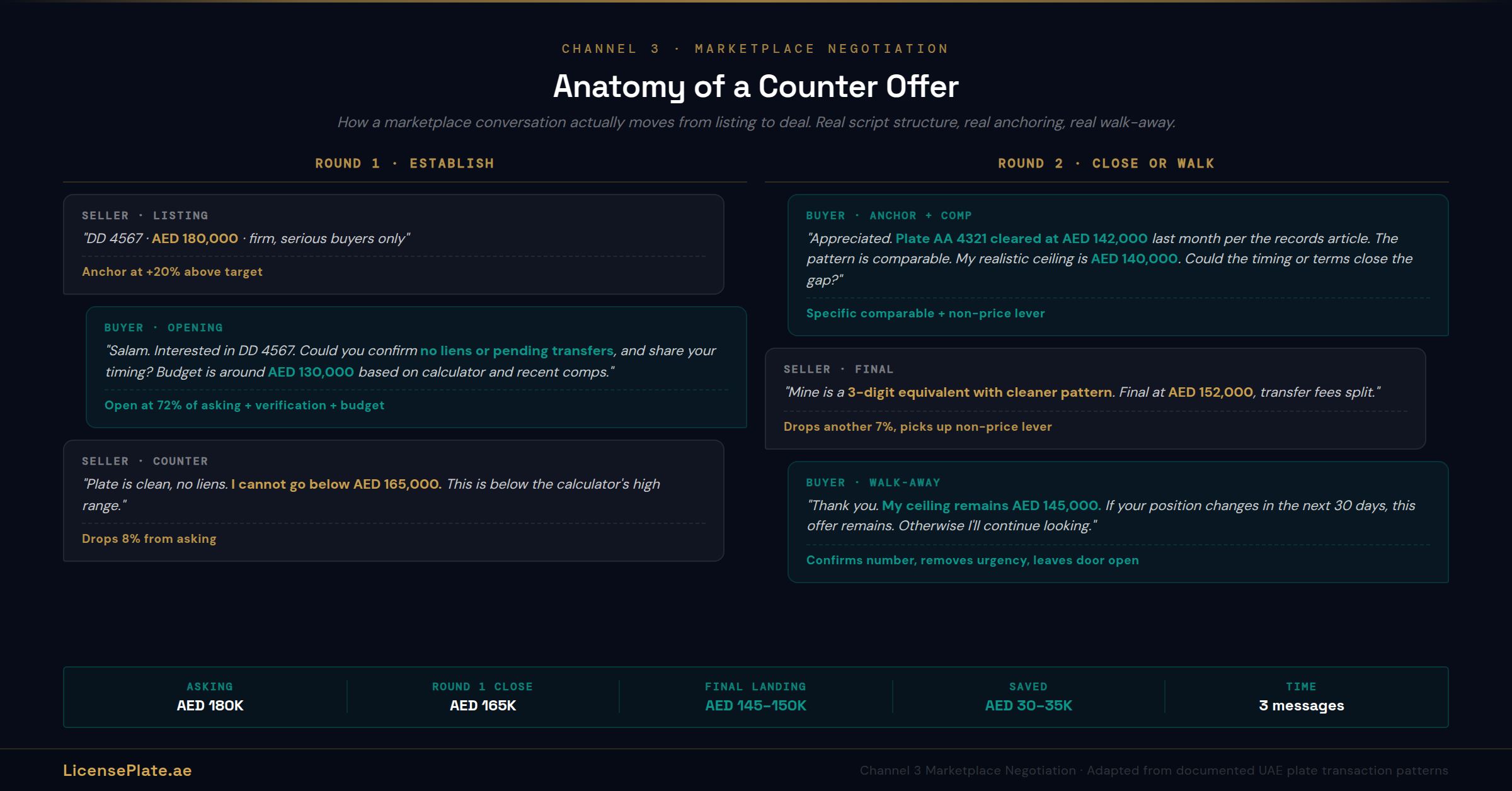
مفاوضات السوق على منصات مثل LicensePlate.ae هي القناة الأكثر شيوعاً لصفقات لوحات الشريحة المتوسطة (نطاق من 50,000 إلى 1,000,000 درهم). وهي تقدّم أيضاً أكبر هامش تفاوض بين كل القنوات. فبحسب التغطية من جانب البائع في رواية التفاوض لدى DubaiLivingGuide، يحدّد البائعون عادةً أسعاراً مطلوبة أعلى بنسبة 15 إلى 25% من هدفهم الواقعي لترك هامش تفاوض.
وهذا يعني أن السعر المطلوب نادراً ما يكون المرتكز الصحيح لعرضك. فالمرتكز الصحيح هو تقدير الحاسبة زائد هدف البائع المحتمل، لا السعر المطلوب من البائع.
التكتيك الأول: افتح عند 70 إلى 75% من المطلوب، لا عند 50%
نصيحة التفاوض الكلاسيكية (افتح عند نصف المطلوب، واصعد إلى 75%) لا تنطبق بنظافة على اللوحات. فبائعو اللوحات يعرفون أن سعرهم المطلوب متضخّم بنسبة 15 إلى 25%، فالعرض عند 50% يُقرأ كعرض متدنٍّ غير جادّ. والردّ المحتمل من البائع هو تجاهل العرض كلياً أو رفض المضيّ في الحوار.
والافتتاح عند 70 إلى 75% من المطلوب يشير إلى أنك أجريت الحساب، وتعرف أن المطلوب متضخّم، وأنك مستعدّ للتفاوض بجدّية. والعرض المقابل المحتمل من البائع عند 90% من المطلوب. ويستقرّ المنتصف حول 80 إلى 82% من المطلوب، وهو تقريباً هدف البائع الفعلي زائد علاوة صغيرة لسرعة الإغلاق.
التكتيك الثاني: ارتكز على المقارنات
أقوى ردّ على مرتكز البائع هو مرتكزك أنت. فعبارة "لاحظت أن اللوحة AA 4567 بيعت الشهر الماضي بـ 165,000 درهم وفقاً لمقال السجلّات على LicensePlate.ae" تحمل وزناً أكبر بكثير من "سعرك المطلوب مرتفع أكثر من اللازم". فالمقارنات المحدّدة تحرّك المفاوضات. والآراء العامة لا تفعل. ويوفّر مقال السجلّات ومقال التحقّق من الأسعار قاعدة بيانات المقارنات لهذا الغرض.
التكتيك الثالث: استخدم الحاسبة كطرف ثالث
تحمل حاسبة اللوحات مصداقية على وجه الدقة لأنها ليست رأيك. فعبارة "تقدّر الحاسبة النطاق بين 110,000 و145,000 درهم" تتيح لك تقديم حجّة سعرية دون جعلها شخصية. فيمكن للبائع الاختلاف معك، لكن الاختلاف مع الحاسبة يتطلّب منه الحجاج ضد البيانات، وهي محادثة أصعب.
التكتيك الرابع: وقّت عرضك
لإعلانات اللوحات أثر عمر موثّق. فاللوحة المعروضة منذ 60 يوماً بالسعر نفسه قبل 60 يوماً أثبتت مقاومة للبيع بذلك السعر. والبائع يعرف ذلك. والعرض عند 75% من المطلوب على إعلان جديد من غير المرجّح أن ينجح. والعرض نفسه على إعلان عمره 90 يوماً له فرص أفضل جوهرياً.
والإعلانات الأقدم من 120 يوماً معرّضة للتفاوض بشكل خاص، لأن البائع يفكّر الآن فيما إذا كان سيعيد العرض، أو يخفض السعر علناً، أو يقبل عرضاً أدنى بشكل خاص. وقّت اقترابك لتلك اللحظة من القرار.
التكتيك الخامس: رسالة الانسحاب
إن رفض بائع أفضل عروضك مرتين، فأرسل رسالة أخيرة: "أقدّر وقتك. سقفي هو [س] درهم. فإن تغيّر موقفك خلال الثلاثين يوماً المقبلة، يبقى هذا العرض قائماً. وإلا فسأواصل البحث." وهذه الرسالة تفعل ثلاثة أشياء: تؤكّد رقمك، وتزيل الإلحاح الذي قد يستخدمه البائع لانتزاع المزيد، وتترك الباب مفتوحاً دون أن تبدو ملاحقاً.
ونحو 20 إلى 30% من هذه الرسائل تنتج قبولاً خلال 14 يوماً، لأن حساب البائع بشأن الانتظار شهراً آخر لعرض أعلى يتغيّر بمجرد معرفته أن رقمك حقيقي وأن الباب قد يُغلق.
دليل القناة الرابعة: الصفقات بوساطة الوسطاء
لمفاوضات الوسطاء فيزياء مختلفة. فالوسيط ليس طرفك المقابل؛ الوسيط وسيط بنيوي حافزه إغلاق الصفقة. والبائع هو طرفك المقابل، وأنت تتواصل عبر الوسيط. وهذا يعني أن التكتيكات التي تنجح في المفاوضات المباشرة (الارتكاز، وضغط التوقيت، والمقارنات) تحتاج إلى معايرة لمحادثة ثلاثية الأطراف لا ثنائية.
التكتيك الأول: تفاوض على عمولة الوسيط منفصلة
كثير من ترتيبات الوسطاء يدمج العمولة في سعر الصفقة. فيتفق المشتري على سعر، ويأخذ الوسيط عمولته منه. والمشتري غير المتمرّس يركّز على السعر المعلن فقط. أما المشتري المتمرّس فيسأل الوسيط صراحةً: "ما هيكل العمولة؟" فإن كان الوسيط يأخذ 10% على لوحة بمليون درهم، فذلك 100,000 درهم من الاحتكاك في الصفقة. ومعرفة الهيكل تتيح لك التفاوض على السعر المعلن مع احتساب العمولة.
التكتيك الثاني: تحقّق من وجود البائع
صفقات الوسطاء أعلى مخاطر احتيال من إعلانات الأسواق على وجه الدقة لأن البائع غير مرئي مباشرةً. ويغطّي دليل الاحتيال على اللوحات ومقال العناية الواجبة للتحقّق آليات التحقّق. ولصفقات الوسطاء تحديداً، اطلب: توثيقاً بأن الوسيط قابل البائع شخصياً، وشهادة ملكية اللوحة من الهيئة الخاصة بالبائع تُظهر التسجيل الحالي، وقناة تواصل قابلة للتحقّق مباشرةً مع البائع قبل انتقال أي دفعة.
التكتيك الثالث: استخدم حساب ضمان
لصفقات الوسطاء التي تتجاوز 500,000 درهم، الضمان غير قابل للتفاوض. فدفعة المشتري تقبع في ضمان لدى محامٍ أو كاتب عدل مرخّص في الدولة. ولا يُفرج الضمان إلا حين تصدر شهادة ملكية اللوحة من الهيئة باسم المشتري. وهذا يحمي الطرفين: فدفعة المشتري مؤمّنة ضد الاحتيال، ولوحة البائع مؤمّنة ضد فشل الدفع. والوسطاء الذين يرفضون استخدام الضمان في الصفقات عالية القيمة يشيرون إلى شيء ما. أصغِ.
التكتيك الرابع: الصبر هو منتج الوسيط
يكسب الوسطاء عمولات على الصفقات المغلقة. ولا يكسبون عمولات على صفقات تنسحب منها. وهذا يعني أن لدى الوسيط حافزاً للدفع نحو الإغلاق حتى حين لا يكون الإغلاق في مصلحة المشتري. والعلاج هو الصبر: فالوسيط الذي يخبرك أن البائع سيدرس عروضاً أخرى غداً إن لم تُغلق اليوم يمارس ضغطاً. وقد يكون لدى البائع عروض أخرى فعلاً، أو لا. ولا يمكنك التحقّق.
وردّ المشتري: "أقدّر الإلحاح، لكنني أتخذ القرارات وفق جدولي الزمني. فإن بيعت اللوحة قبل أن أكون مستعداً، فليكن." فإن كان الوسيط صادقاً، تُغلق الصفقة حين تكون مستعداً. وإن كان الوسيط يمارس ضغطاً، يتلاشى الإلحاح عادةً خلال 24 ساعة.
سبعة أخطاء تكلّف المشترين والبائعين الآلاف
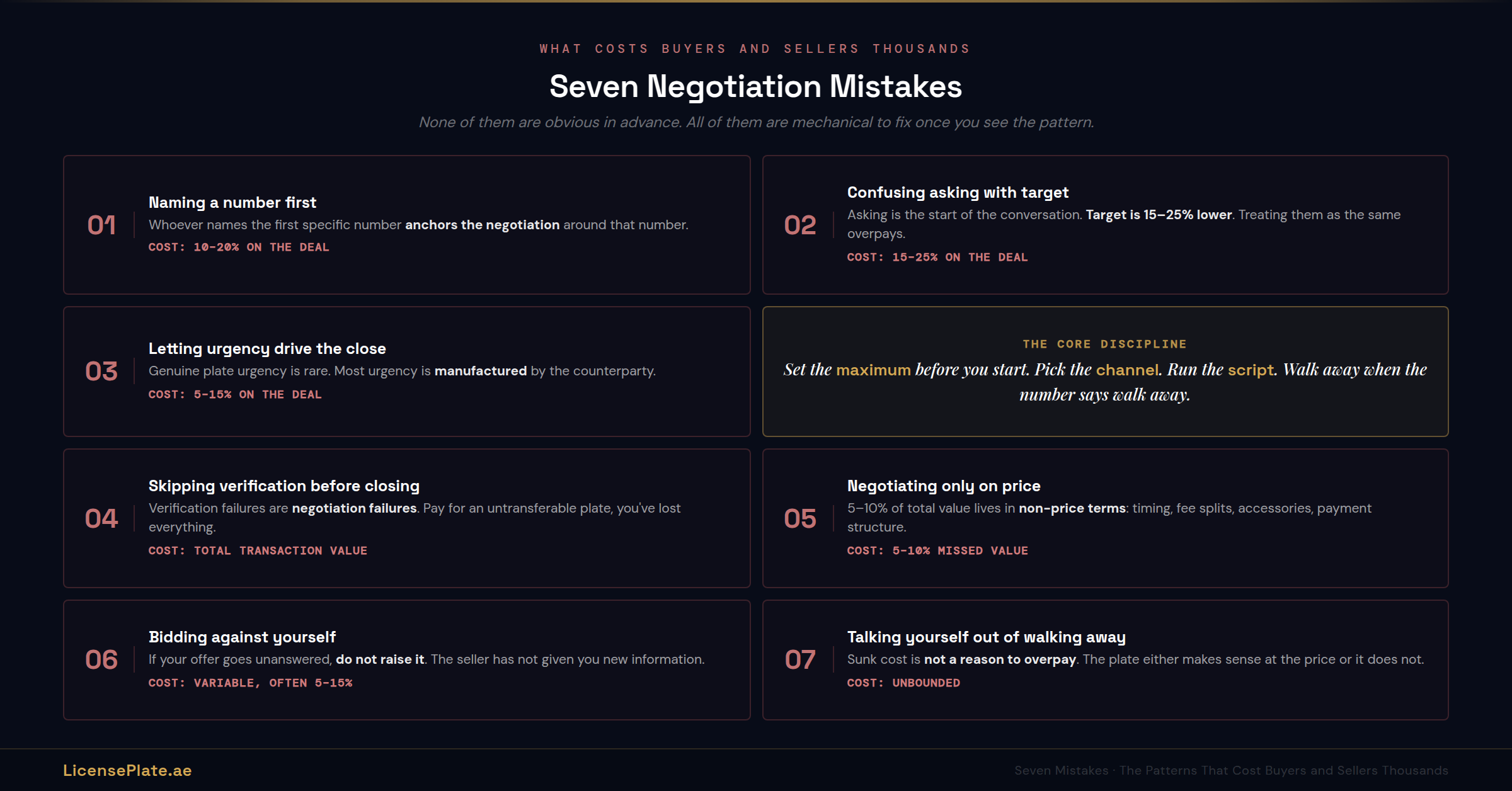
الخطأ الأول: ذكر رقم أولاً. سواء كنت تشتري أو تبيع، فذكر أول رقم محدّد يرتكز التفاوض حول ذلك الرقم. فإن سألك البائع "ما عرضك؟" قبل ذكر سعر مطلوب، فالردّ الصحيح "أودّ رؤية سعرك المطلوب أولاً، بما أنك أنت من وضع الإعلان." وهذا ليس تهرّباً؛ إنه انضباط بشأن من يرسي المرتكز.
الخطأ الثاني: الخلط بين المطلوب والهدف. فالسعر المطلوب بداية المحادثة لا نهايتها. والمشترون الذين يعاملون المطلوب كهدف البائع الحقيقي يدفعون زائداً بنسبة 15 إلى 25% في المتوسط. والبائعون الذين يعاملون هدفهم كسعرهم المطلوب العلني يستردّون أقلّ بترك هامش تفاوض معدوم.
الخطأ الثالث: ترك الإلحاح يقود الإغلاق. فالإلحاح الحقيقي في اللوحات نادر. ومعظم الإلحاح في مفاوضات اللوحات مصنوع من الطرف المقابل. فاللوحة التي قبعت 90 يوماً من غير المرجّح أن تُباع غداً لشخص آخر. والمشتري الذي انتظر شهرين للوحة المناسبة يمكنه انتظار أسبوع آخر للتفاوض بشكل سليم. فالإلحاح تكتيك في معظم الأحوال.
الخطأ الرابع: تخطّي التحقّق قبل الإغلاق. فالتحقّق ليس تفاوضاً، لكن إخفاقات التحقّق إخفاقات تفاوضية. فالمشتري الذي يدفع مقابل لوحة لا يمكن نقلها يكون قد خسر التفاوض كلياً. وتمنع قائمة التحقّق ذلك؛ وتنفيذها غير قابل للتفاوض بغضّ النظر عن مدى جودة السعر.
الخطأ الخامس: التفاوض على السعر فقط. فلمفاوضات اللوحات روافع غير سعرية: توقيت الدفع (بعض البائعين يفضّل الأسرع)، وهيكل الدفع (شيك مقابل تحويل مقابل نقد ضمن حدود الهيئة)، وإدراج الملحقات (الإطارات المخصّصة، ونقل الملكية)، والمسؤولية عن رسوم النقل. والمشترون الذين يتفاوضون على السعر فقط يفوّتون 5 إلى 10% من القيمة الإجمالية التي تعيش في الشروط غير السعرية.
الخطأ السادس: المزايدة ضد نفسك. فإن قدّمت عرضاً ولم يقابله البائع، فخطوتك التالية ليست رفع عرضك. خطوتك التالية هي الانتظار. فالمشترون الذين يتبعون عرضاً لم يُردّ عليه بعرض أعلى يتفاوضون ضد أنفسهم. فالبائع لم يمنحك أي معلومة جديدة تبرّر رقماً أعلى؛ أنت فقط توصل أن عرضك السابق لم يكن أفضل ما لديك.
الخطأ السابع: إقناع نفسك بعدم الانسحاب. فلكل سعر متفاوض عليه عتبة انسحاب. فانسحاب المشتري سعر يصبح فوقه الاتفاق غير مجدٍ؛ وانسحاب البائع سعر يصبح تحته البيع غير منطقي. وأغلى خطأ تفاوضي هو إقناع نفسك بتجاوز عتبة انسحابك بحجّة التكلفة الغارقة ("لقد أمضيت شهرين على هذا"). فالتكلفة الغارقة ليست سبباً للدفع الزائد. فاللوحة إما منطقية بالسعر وإما لا.
نصوص عملية يمكنك تكييفها
أصعب جزء في التفاوض على اللوحات، لمعظم المشترين، هو الصياغة الفعلية. وفيما يلي خمسة نصوص مكيّفة من صفقات لوحات مرصودة في الإمارات. وكلٌّ منها قابل للتعديل حسب وضعك.
النصّ الأول: أول رسالة إلى بائع في السوق
"السلام عليكم. أنا مهتمّ بلوحتك [الرمز + الأرقام]. هل يمكنك تأكيد أن اللوحة خالية حالياً من أي رهون أو عمليات نقل معلّقة، ومشاركة موعد توفّرك لموعد لدى الهيئة إن اتفقنا على الشروط؟ لديّ ميزانية قدرها [س] درهم استناداً إلى الحاسبة والمقارنات الحديثة."
لماذا ينجح هذا: يؤكّد توقّعات التحقّق مسبقاً، ويشير إلى أن لديك ميزانية (لا موارد لا نهائية)، ويُظهر أنك أجريت بحثاً. ولا يذكر رقماً نهائياً، تاركاً مجالاً للتفاوض. ولا يقدّم عرضاً متدنياً؛ بل يذكر ميزانية يمكن للبائع الردّ عليها.
النصّ الثاني: ردّ مقابل على ردّ البائع الأول
"شكراً على الردّ. أقدّر أن السعر المطلوب يعكس القيمة المحتملة للوحة. واستناداً إلى تقدير الحاسبة البالغ [س إلى ص] والمبيعات المماثلة الحديثة لـ[المرجع]، فإن سقفي الواقعي هو [ع]. فهل توجد مرونة في توقيتك أو شروطك يمكن أن تسدّ الفجوة؟"
لماذا ينجح هذا: يقرّ بموقف البائع دون تنازل. ويقدّم بيانات محدّدة (الحاسبة + المقارنات). ويذكر سقفاً (لا عرضاً حالياً). ويفتح رافعة غير سعرية (التوقيت/الشروط) تمنح البائع خيارات للإغلاق دون خفض السعر المعلن.
النصّ الثالث: رسالة الانسحاب
"أقدّر وقتك واهتمامك. سقفي على هذه اللوحة هو [س]. فإن تغيّر موقفك خلال الثلاثين يوماً المقبلة، يبقى هذا العرض مفتوحاً. وإلا فسأواصل البحث. أطيب التمنّيات في الحالتين."
لماذا ينجح هذا: يؤكّد رقمك بلا لبس. ويزيل الإلحاح الذي قد يعتمد عليه البائع. ويترك الباب مفتوحاً 30 يوماً دون أن تبدو ملاحقاً. وهو مهذّب بما يكفي لتتمكّن من إعادة التواصل لاحقاً إن لزم.
النصّ الرابع: الحوار الداخلي في مزاد القاعة
ليس نصاً للقاعة، بل النصّ الذي تشغّله في رأسك: "حدّي الأقصى هو [س]. وكل مزايدة أقدّمها فوق [س] مزايدة سأندم عليها في الصباح. فالمنادي يؤدّي. والقاعة تؤدّي. واللوحة ستكون موجودة في المزاد التالي بشكل ما. وانضباطي هو الشيء الوحيد في هذه القاعة الذي أتحكّم فيه." كرّرها عند الحاجة حين تقترب المزايدة من حدّك الأقصى.
النصّ الخامس: توقيت المزايدة النهائية في المزاد الإلكتروني
قبل دقيقتين من إغلاق المزاد: افتح المنصة، وانتقل إلى لوحتك المستهدفة، وأكّد المزايدة العليا الحالية، وقرّر ما إذا كنت تريد المزايدة بحدّك الأقصى أم الانسحاب. فإن زايدت: أدخل مبلغ حدّك الأقصى، وأكّد، وأرسل، وأغلق المتصفّح. وإن انسحبت: أغلق المتصفّح. وفي الحالتين، لا تحدّث الصفحة مراراً لمشاهدة الثواني الأخيرة. فالقرار يُتخذ قبل نافذة الإغلاق.
الأسئلة الشائعة
س: ما هامش التفاوض النموذجي على إعلان لوحة خاص؟
من 15 إلى 25% دون السعر المطلوب هو المعيار لإعلانات الأسواق، مع 5 إلى 10% إضافية متاحة في ظروف بعينها (بائع متحفّز، وسوق بطيئة، وإعلان عمره 90 يوماً فأكثر). والسعر المطلوب نادراً ما يكون هدف البائع الفعلي؛ فالبائعون يحدّدون المطلوب أعلى بنسبة 15 إلى 25% من الهدف لترك هامش تفاوض. وهذا موثّق في روايات البائعين على منصات مثل DubaiLivingGuide.
س: هل ينبغي أن أزايد مبكراً أم متأخّراً في مزاد الهيئة الإلكتروني؟
متأخّراً. فنمط المزايدة الأمثل هو المراقبة في أول 70 إلى 80% من نافذة المزاد والمزايدة في الـ 20% الأخيرة فقط، مع مزايدتك الحاسمة في آخر 5 إلى 15 دقيقة. فالمزايدات المبكرة تشير إلى الاهتمام وتجتذب مزيداً من المزايدين؛ والمزايدات المتأخّرة تترك وقتاً أقلّ لتسجيل المزايدات المضادّة.
س: ماذا يعني شيك تأمين القاعة البالغ 25,000 درهم إن لم أفز؟
إنه قابل للاسترداد. فبحسب قواعد الهيئة المنشورة، يُعاد شيك التأمين لجميع المزايدين غير الفائزين. وتكلفة الحضور دون الفوز هي رسم المشاركة غير المسترد البالغ 120 درهماً فقط. أما تكلفة الحضور والمزايدة الزائدة للفوز فقد تبلغ عشرات أو مئات الآلاف فوق حدّك الأقصى. والانسحاب هو الانضباط الذي يجعل الحدّ الأقصى ذا معنى.
س: ما فخّ المزايد الثاني في مزاد القاعة؟
الظاهرة التي يحدّد فيها ثاني أعلى مزايد السعر الذي يدفعه الفائز. فمزايدة الفائز هي مزايدتك زائد زيادة واحدة. فإن توقّفت عن المزايدة مبكراً، دفع الفائز أقلّ؛ وإن واصلت المجاراة، دفع الفائز أكثر. والتعرّف على دورك في القاعة (قائد عميق الجيب مقابل مسنّن المزايد الثاني) يغيّر اللعب الأمثل.
س: كم عمولة يأخذ وسطاء اللوحات عادةً؟
عادةً من 5 إلى 15% من قيمة الصفقة، بحسب التعقيد وعلاقة الوسيط بالبائع. والصفقات الخاصة الراقية (اللوحات أحادية الرقم وذات الرقمين) تحمل أحياناً من 10 إلى 15%؛ والصفقات في الشرائح الأدنى عادةً من 5 إلى 8%. تفاوض دائماً على هيكل العمولة منفصلاً عن السعر المعلن.
س: هل ينبغي أن أقابل ردّ البائع الأول بعرض مقابل دائماً؟
نعم، في معظم الحالات. فالبائعون يتوقّعون عروضاً مقابلة، وعدم تقديم عرض مقابل يشير إما إلى عدم اهتمام أو إلى ضعف انضباط تفاوضي. والاستثناء: إن كان ردّ البائع الأول عند تقدير الحاسبة أو دونه بالفعل، فالقبول السريع يُغلق الصفقة قبل أن يعيد البائع النظر. ومعظم الحالات تقع بين تقدير الحاسبة والسعر المطلوب، حيث يكون تقديم عرض مقابل هو الخطوة الصحيحة.
س: ماذا لو قال البائع إن لديه عروضاً أخرى؟
تعامل مع ذلك بشكّ مناسب. فالعروض الأخرى الحقيقية موجودة لكنها غير شائعة، ومعظم ادّعاءات العروض المنافسة تكتيكات ضغط تفاوضي. وردّك: "هذا مفهوم. سقفي يبقى [س]. فإن كان عرضهم أعلى، فتفضّل بالمضيّ معهم؛ وسأواصل البحث." فإن كان العرض الآخر حقيقياً، فلم تخسر شيئاً كان بإمكانك الفوز به. وإن لم يكن حقيقياً، فالإلحاح يتلاشى عادةً خلال 24 ساعة.
س: هل الضمان ضروري لصفقات اللوحات؟
للصفقات التي تتجاوز 500,000 درهم، نعم. ولصفقات الوسطاء، نعم بغضّ النظر عن القيمة. وللصفقات المباشرة في الأسواق على منصات بأنظمة بائعين موثّقين ومسارات تسليم منظّمة (مثل LicensePlate.ae)، تعمل عملية المنصة فعلياً كضمان. وللصفقات الخاصة غير الموثّقة، لا تحوّل الدفعة حتى تصدر شهادة ملكية اللوحة من الهيئة باسمك.
مفاوضات اللوحات تتلخّص في الانضباط. الحدّ الأقصى المقرّر مسبقاً. والنصّ المشغّل قبل دقيقة الإغلاق. ورسالة الانسحاب المرسلة بلا مرارة. والصبر الذي يتيح لإلحاح البائع أن يتلاشى حين لم يكن حقيقياً أصلاً. ولا شيء من هذا برّاق. وكلّه هو ما يفصل المشترين الذين يحصلون على اللوحة المناسبة بالسعر المناسب عن المشترين الذين يحصلون على اللوحة المناسبة بسعر أعلى 25% من المناسب.
والخبر السار أن حِرفة التفاوض قابلة للتعلّم. والخبر السيّئ أن معظم مشتري اللوحات يتعلّمونها بالطريقة المكلفة: بالدفع الزائد في صفقتهم الأولى والتعديل في الثانية. وهذه القطعة موجودة لضغط ذلك التعلّم في قراءة واحدة. حدّد الحدّ الأقصى. واختر القناة. وشغّل النصّ. وانسحب حين يقول الرقم انسحب. فاللوحة بالسعر المناسب تستحقّ الصبر. واللوحة بالسعر الخاطئ لا تساوي شيئاً.
وللجانب الإجرائي، يغطّي دليل الشراء لدى الهيئة ودليل الشراء في السوق التوثيق. وللتقييم، تغطّي الحاسبة ومقال التحقّق من الأسعار الحسابات. وللتحقّق، تغطّي قائمة التحقّق ودليل الاحتيال الحمايات. وهذه القطعة تغطّي الجزء الذي لا يكتب عنه أحد غيرنا: المحادثة في المنتصف.
حذف التعليق؟
هل أنت متأكد أنك تريد حذف هذا التعليق؟ لا يمكن التراجع عن هذا الإجراء.
حذف المقال؟
هل أنت متأكد أنك تريد حذف هذه المقالة؟ سيؤدي ذلك أيضًا إلى حذف جميع التعليقات. لا يمكن التراجع عن هذا الإجراء.