

لوحات السيارات مقابل الذهب مقابل العقارات: أي أصل بديل يحقّق أداءً فعلياً في الإمارات؟
30 مارس 2026
أبوظبي
فريق LicensePlate.ae
في 2017، أفادت خليج تايمز بأن عبدالله الحمادي اشترى لوحة سيارة بـ 12 درهماً قبل عقود وباعها بـ 28 مليون درهم. اثنا عشر درهماً إلى ثمانية وعشرين مليوناً. ومع التعديل للزمن، تظلّ واحدة من أعلى الأصول البديلة عائداً في تاريخ الإمارات. وفي المدة نفسها، انتقل الذهب من نحو 35 دولاراً للأونصة إلى 1,300 دولار. ومرّت عقارات دبي بدورتَي ازدهار وكساد كاملتين. وتفوّقت اللوحة على كليهما بعامل يجعل المقارنة سخيفة تقريباً.
تلك القصة متطرّفة. وليست ممثّلة لكل عملية شراء لوحة. فلوحة من 5 أرقام اشتُريت بـ 3,000 درهم في 2020 لا تزال تساوي نحو 3,000 درهم اليوم. فليست كل لوحة استثماراً. لكن السؤال الذي يطرحه مستثمرو الإمارات الجادّون بتكرار متزايد سؤال منصف: كيف تُقارَن لوحات السيارات فعلاً بالذهب والعقارات كأصول بديلة؟ لا كمشتريات غرور. لا كرموز مكانة. بل كأدوات مالية بعوائد قابلة للقياس، وتكاليف احتفاظ، وملفّات سيولة، ومعاملة ضريبية.
يجيب هذا المقال عن ذلك السؤال عبر خمسة أبعاد باستخدام بيانات سوق الإمارات الموثّقة من بورصة دبي للذهب والسلع، ودائرة الأراضي والأملاك في دبي، وTrading Economics، وValuStrat، وخليج تايمز، وسجلّات مزادات هيئة الطرق. وهو ليس عرضاً ترويجياً للوحات. بل مقارنة منظّمة تُظهر متى تتفوّق اللوحات، ومتى تكون أداؤها ضعيفاً، وما هي الفروق الهيكلية بين فئات الأصول الثلاث.
إذا كنت تخصّص رأس المال في الإمارات ولم تفكّر أبداً في اللوحات، فهذا سيغيّر طريقة تفكيرك فيها. وإذا كنت تملك لوحات بالفعل، فهذا سيمنحك الإطار لتشرح السبب لكل من يسأل "لماذا لم تشترِ الذهب فحسب؟"
"يملك بالفيندر ساهني عشر لوحات تساوي معاً أكثر من 100 مليون درهم. ولم يشترها ليقود. بل اشتراها لأن قيمتها تزيد بمرور الوقت، مثل العقارات الراقية أو الفنّ النادر."
— Zigwheels UAE، يناير 2026
العوائد: من فاز في السنوات الخمس الماضية؟
الذهب: نحو 196% (يناير 2020 إلى مارس 2026)
افتتح الذهب 2020 عند نحو 1,520 دولاراً للأونصة. واعتباراً من أواخر مارس 2026، يتداول فوق 4,500 دولار. أي مكسب قدره نحو 196% على مدى ست سنوات، أو نحو 20% سنوياً. وتسارع الارتفاع خلال 2025 وأوائل 2026، مدفوعاً بالتوترات الجيوسياسية (الولايات المتحدة-إيران، وعدم يقين التعريفات)، وطلب البنوك المركزية (اشترى بنك الشعب الصيني الذهب لـ 15 شهراً متتالياً حتى يناير 2026)، وتوقّعات خفض أسعار الفائدة من الاحتياطي الفيدرالي. وبلغ الذهب أعلى مستوى تاريخي قدره 5,414 دولاراً في 28 يناير 2026 قبل التراجع بحدّة. وبالدرهم الإماراتي، يترجم هذا من نحو 5,580 درهماً للأونصة في يناير 2020 إلى أكثر من 16,530 درهماً للأونصة في مارس 2026 (باستخدام ربط الدرهم عند 3.6725). وأفادت بورصة دبي للذهب والسلع بتداول أكثر من 2 مليون عقد في 2025، بقيمة اسمية إجمالية تتجاوز 46.96 مليار دولار، بارتفاع 30% على أساس سنوي. وشهد عقد الذهب الفوري المتوافق مع الشريعة قفزة في قيم التداول بنسبة 199% على أساس سنوي.
عقارات دبي: نحو 85% (2020 إلى أواخر 2025)
كان متوسّط سعر العقارات السكنية في دبي للقدم المربّع 914 درهماً في 2020، عند قاع الجائحة. وبحلول ديسمبر 2025، بلغ المقياس المرجّح على مستوى المدينة لدى ValuStrat مبلغ 1,689 درهماً للقدم المربّع، بارتفاع 19.8% على أساس سنوي. أي مكسب إجمالي قدره نحو 85% على مدى خمس سنوات، أو نحو 13% سنوياً. وتفوّقت الفلل على الشقق: فأظهر مؤشّر REIDIN ارتفاع الفلل بنسبة 15.16% والشقق بنسبة 12.52% على أساس سنوي اعتباراً من ديسمبر 2025. وسجّلت دبي أكثر من 197,000 معاملة عقارية بقيمة 624 مليار درهم بين يناير ونوفمبر 2025 وحده، متجاوزةً جميع الأرقام القياسية السنوية الكاملة السابقة. وأفادت دائرة الأراضي والأملاك بـ 94,700 مستثمر في النصف الأول من 2025، بزيادة 26% على أساس سنوي.
وأدّت بعض القطاعات أفضل بكثير من المتوسّط. فحقّقت شقق نخلة جميرا ودبي هيلز مكاسب 15 إلى 20% سنوياً. وارتفعت فلل Victory Heights بنسبة 39% على أساس سنوي. وارتفعت شقق قرية جميرا الدائرية من 389 درهماً للقدم المربّع في 2021 إلى 1,448 درهماً للقدم المربّع في 2025. لكن هذه حالات استثنائية ضمن سوق أوسع بلغ متوسّطه نحو 13% سنوياً.
لوحات سيارات الإمارات: 80–200%+ (المميّزة) / ثابتة (القياسية)
ليس للوحات مؤشّر مركزي مثل REIDIN أو سعر فوري مثل الذهب. وتعتمد العوائد كلياً على ما اشتريته. والانقسام صارخ:
ارتفعت قيمة اللوحات المميّزة (رقمين إلى 3 أرقام على الرموز المبكرة، والأرقام الثقافية) بنسبة 80 إلى 200%+ منذ 2020. وتروي إيرادات مزادات هيئة الطرق القصة: فسجّل المزاد العلني الـ 118 في أبريل 2025 رقماً قياسياً تاريخياً قدره 100 مليون درهم من 90 لوحة. وجمع المزاد الـ 120 في ديسمبر 2025 مبلغ 109 ملايين درهم. وجمعت فعالية أنبل الأرقام الخيرية في مارس 2025 مبلغ 83.6 مليون درهم، مع تحقيق DD 5 مبلغ 35 مليون درهم، وبلوغ CC 22 مبلغ 8.35 مليون درهم، ووصول BB 777 إلى 6 ملايين درهم. وهذه ليست عروضاً مضاربية. بل أنماط متكرّرة من ارتفاع الأسعار عبر مزادات متتالية. وجمعت سلسلة أنبل الأرقام 2026 إجمالاً قدره 1.136 مليار درهم. ويغطّي دليل الاستثمار هيكل الطبقات بالكامل.
واللوحات القياسية (5 أرقام، الرموز المتأخّرة من V إلى Z) كانت ثابتة إلى سلبية قليلاً. فلوحة الرمز V من 5 أرقام اشتُريت بـ 3,000 درهم في 2020 تساوي نحو 3,000 إلى 3,500 درهم اليوم. وهذه ليست أصولاً استثمارية. بل لوحات وظيفية تخدم غرض القيادة قانونياً. ويرسم دليل الأسعار ما يكلّفه فعلاً كل رمز وعدد أرقام وكيف يعمل التسلسل الهرمي للتسعير.
الحكم على العوائد: الذهب يتصدّر العنوان بنحو 196%. واللوحات المميّزة منافسة عند 80 إلى 200%+. وعقارات دبي متينة عند 85%. واللوحات القياسية ثابتة. والخلاصة ليست أن فئة أصول أفضل من الأخريات. بل أن اختيار الأصل ضمن أي فئة يهمّ أكثر من الفئة نفسها. فعقار مختار بشكل سيّئ، أو شراء ذهب في توقيت سيّئ، أو لوحة الرمز Z من 5 أرقام، جميعها تؤدّي أداءً ضعيفاً. والعلاوة ضمن كل فئة أصول هي حيث تعيش العوائد.
السيولة: كم بسرعة يمكنك الخروج؟
الذهب سائل في اليوم نفسه. فيمكنك الدخول إلى سوق الذهب في ديرة، وتسليم سبيكة أو عملات، والخروج بالنقد بحلول الغداء. وأي تاجر معتمد من مركز دبي للسلع المتعدّدة سيشتري الذهب المادّي في الحال. والفرق بين الشراء والبيع عادةً 2 إلى 4%. وتقدّم صناديق الذهب المتداولة ومنصّات الذهب الرقمية خروجاً أسرع. والذهب هو الأصل البديل الأكثر سيولة في العالم. فلا فترة انتظار، ولا عملية موافقة، ولا مخاطر طرف مقابل على السبائك المادّية.
وتستغرق عقارات دبي 30 إلى 90 يوماً للتسييل. فإيجاد مشترٍ، والتفاوض على السعر، والحصول على شهادة عدم ممانعة من المطوّر، وترتيب رسم النقل 4% لدائرة الأراضي والأملاك، ومعالجة نقل سند الملكية عبر مكتب الأمين، يستغرق أسابيع. ويسرّع المشترون النقديون (الذين يمثّلون 87% من معاملات دبي في 2025) العملية، لكن العبء الهيكلي يبقى. فلا يمكنك تسييل شقة استوديو بعد ظهر يوم جمعة. وحتى في سوق ساخن، تُعتبر 30 يوماً من الإدراج إلى النقل المكتمل سريعة.
وتقع لوحات سيارات الإمارات بين الاثنين، ويعتمد النطاق بشكل كبير على جودة اللوحة. فلوحة مميّزة (رقمين إلى 3 أرقام، رمز مبكر، رقم ثقافي مثل 786 أو 777) مدرجة على LicensePlate.ae يمكن أن تُباع خلال ساعات إلى أيام. والسوق الثانوي للوحات المرغوبة عميق لأن مجموعة المشترين تشمل أكثر من 200 جنسية، لكل منها ثقافة أرقامها الخاصة. ولوحة قياسية من 5 أرقام قد تبقى لأسابيع أو أشهر لأن مجموعة المشترين للوحات العادية أصغر وأقل تحفّزاً. والنقل نفسه سريع: 15 دقيقة عبر تطبيق Dubai Drive بتكلفة 120 درهماً. والاختناق هو إيجاد المشتري، لا معالجة البيع. ويغطّي دليل البائع استراتيجية التوقيت وكيفية تموضع لوحة لبيع أسرع.
الحكم على السيولة: الذهب الأكثر سيولة. واللوحات في المرتبة الثانية للجودة المميّزة (ساعات إلى أيام). والعقارات الأقلّ سيولة (أسابيع إلى أشهر). فإذا كنت بحاجة إلى الخروج بسرعة، الذهب يفوز. وإذا كنت تحتفظ بلوحات جيدة، فأنت أقرب إلى سيولة الذهب منك إلى سيولة العقارات.
تكاليف الاحتفاظ: المفارقة التي لا يتحدّث عنها أحد
هذا هو البُعد الذي يغيّر المحادثة بأكملها. إنها الرؤية الهيكلية التي لم ينشرها أحد في مجال الأصول البديلة في الإمارات، وهي السبب في أن اللوحات تنتمي إلى أي نقاش محفظة جادّ.
تكاليف احتفاظ الذهب تتوسّع مع القيمة. فيتطلّب الذهب المادّي تخزيناً آمناً. وصندوق أمانات في بنك في دبي يكلّف 500 إلى 3,000 درهم سنوياً بحسب الحجم. والتخزين في خزنة عبر منشأة معتمدة من مركز دبي للسلع المتعدّدة يكلّف نحو 0.5 إلى 1% من قيمة الذهب سنوياً. ويضيف التأمين 0.1 إلى 0.3% أخرى. فعلى 50,000 درهم من الذهب، تدفع نحو 250 إلى 650 درهماً سنوياً. وعلى 500,000 درهم، تصبح 2,500 إلى 6,500 درهم سنوياً. وعلى 5,000,000 درهم، تصل تكلفة الاحتفاظ السنوية إلى 25,000 إلى 65,000 درهم. والتكلفة تتوسّع خطّياً مع قيمة مركزك.
تكاليف احتفاظ العقارات هي الأثقل والأكثر تعقيداً. فشقة استوديو بقيمة 1,000,000 درهم في قرية جميرا الدائرية تحمل تكاليف سنوية بنحو 12,000 إلى 18,000 درهم في رسوم الخدمة، و3,000 إلى 5,000 درهم في هيئة كهرباء ومياه دبي (حتى لو كانت شاغرة)، و1,500 إلى 3,000 درهم في التأمين، و2,000 إلى 5,000 درهم في احتياطيات الصيانة. وإذا كان العقار مؤجَّراً، فإدارة العقار تأخذ 5 إلى 8% من الإيجار السنوي فوق ذلك. إجمالي تكلفة الحمل السنوية: 18,000 إلى 31,000 درهم سنوياً. وعلى مدى 10 سنوات، هذا 180,000 إلى 310,000 درهم في تكاليف الاحتفاظ وحدها. وهذا قبل رسم النقل 4% لدائرة الأراضي والأملاك عند الشراء (40,000 درهم على عقار بمليون درهم)، ما يعني أنك تبدأ بخسارة 40,000 درهم قبل أول درهم من ارتفاع القيمة.
تكاليف احتفاظ اللوحات ثابتة بغضّ النظر عن قيمة الأصل. هذه هي المفارقة. فرسم تجديد اللوحة السنوي يعتمد على الإمارة، لا على القيمة السوقية للوحة. فتفرض الفجيرة نحو 120 درهماً سنوياً. وتفرض عجمان نحو 800 درهم سنوياً. وتفرض دبي 350 إلى 500 درهم. فلوحة تساوي 50,000 درهم تكلّف الاحتفاظ بها نفس لوحة تساوي 5,000,000 درهم: 120 إلى 800 درهم سنوياً. لا صيانة. لا مستأجرون. لا كهرباء ومياه. لا رسوم خدمة. لا تأمين. لا رسوم إدارة. لا خزنة. والتكلفة الوحيدة هي رسم التجديد السنوي للإمارة.
وعلى مدى 10 سنوات، مقارنة تكلفة الاحتفاظ عند 500,000 درهم من قيمة الأصل: الذهب يكلّف 25,000 إلى 65,000 درهم. والعقارات تكلّف 90,000 إلى 155,000 درهم (باستثناء رسم دائرة الأراضي والأملاك 4% لمرة واحدة). واللوحات تكلّف 1,200 إلى 8,000 درهم. وعند 1,000,000 درهم: الذهب يكلّف 50,000 إلى 130,000 درهم. والعقارات تكلّف 180,000 إلى 310,000 درهم. واللوحات تكلّف 1,200 إلى 8,000 درهم. وعند 5,000,000 درهم: الذهب يكلّف 250,000 إلى 650,000 درهم. والعقارات تكلّف 900,000 إلى 1,550,000 درهم. واللوحات: لا تزال 1,200 إلى 8,000 درهم. وكلما ارتفعت قيمة الأصل، اتّسعت الفجوة. تلك هي مفارقة تكلفة الاحتفاظ.
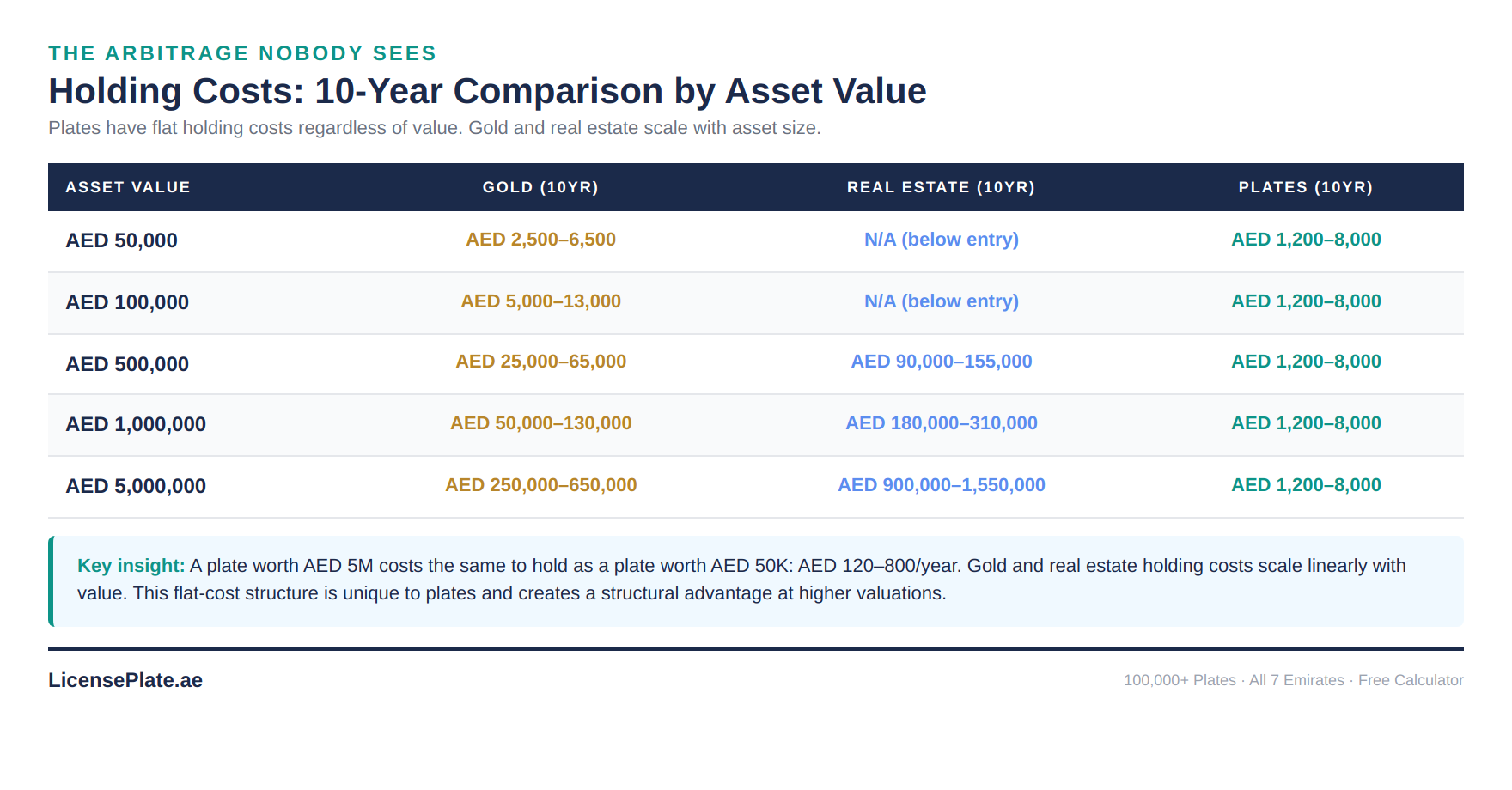
الحكم على تكاليف الاحتفاظ: اللوحات تفوز بمرتبة من حيث الحجم. فهيكل التكلفة الثابت (مرتبط بالإمارة، لا بقيمة الأصل) فريد بين الأصول البديلة الملموسة في الإمارات. ولا توجد فئة أصول أخرى تقدّم هذا.
المعاملة الضريبية: أين تحتفظ بالأكثر
جميع فئات الأصول الثلاث تستفيد من نظام 0% ضريبة الأرباح الرأسمالية في الإمارات. ولا أحد منها يخضع لضريبة دخل اتحادية على مكاسب الاستثمار. لكن ضرائب المعاملات على الشراء تختلف بشكل كبير، وتلك الفروق تتراكم بمرور الوقت.
الذهب: 5% ضريبة قيمة مضافة على الشراء. عندما تشتري ذهباً مادّياً في الإمارات، تدفع 5% ضريبة قيمة مضافة على سعر التجزئة. فعلى 100,000 درهم من الذهب، هذا 5,000 درهم تختفي في اليوم الأول. وتحتاج إلى ارتفاع قيمة الذهب بنسبة 5% على الأقل لمجرّد التعادل. 0% ضريبة على الأرباح الرأسمالية عند إعادة البيع. لا ضريبة سنوية.
عقارات دبي: 4% رسم نقل لدائرة الأراضي والأملاك على الشراء. فتفرض دائرة الأراضي والأملاك في دبي 4% من قيمة العقار كرسم نقل عند نقطة الشراء. فعلى عقار بمليون درهم، هذا 40,000 درهم في اليوم الأول. زائد نحو 2% في عمولة الوكالة ورسوم الأمين، ليصل إجمالي التكلفة الأولية إلى نحو 6 إلى 7% من سعر الشراء. وتحتاج إلى ارتفاع قيمة العقار بنسبة 6 إلى 7% قبل أن ترى أي عائد صافٍ. 0% ضريبة على الأرباح الرأسمالية عند إعادة البيع. لا ضريبة عقارية سنوية.
لوحات سيارات الإمارات: 0% على شراء البيع الخاص. 0% على إعادة البيع. فلوحة مشتراة في السوق الثانوي بين فردين لا تحمل ضريبة قيمة مضافة. والتكلفة الوحيدة هي رسم نقل الملكية البالغ 120 درهماً (100 درهم شهادة زائد 20 درهماً رسم المعرفة والابتكار). ولوحة مشتراة في مزاد هيئة الطرق تحمل فعلاً 5% ضريبة قيمة مضافة (مؤكّد من خليج تايمز، فبراير 2026)، لكن إعادة البيع في السوق الثانوي معفاة من ضريبة القيمة المضافة. 0% ضريبة على الأرباح الرأسمالية. ويفصّل دليل المزاد مقابل السوق الثانوي هذا التمييز. فلوحة مشتراة بـ 50,000 درهم في السوق الثانوي ومباعة بـ 100,000 درهم تولّد 49,880 درهماً من الربح الصافي بعد رسم النقل البالغ 120 درهماً. لا ضريبة قيمة مضافة مخصومة. لا رسم دائرة أراضي. لا عمولة وكالة.
الحكم على الضريبة: اللوحات هي الأصل البديل الأكثر كفاءةً ضريبياً في الإمارات. 0% ضريبة شراء (بيع خاص) زائد 0% ضريبة بيع زائد 120 درهماً إجمالي تكلفة المعاملة. والذهب يخسر 5% في اليوم الأول. والعقارات تخسر 6 إلى 7% في اليوم الأول. وعند 1,000,000 درهم، تكلفة الذهب في اليوم الأول 50,000 درهم. وتكلفة العقارات 60,000 إلى 70,000 درهم. وتكلفة اللوحات: 120 درهماً.
سعر الدخول: من يدخل أولاً؟
يبدأ الذهب من نحو 550 درهماً لغرام واحد من عيار 24 في دبي (أسعار مارس 2026). وتكلّف أونصة كاملة نحو 16,500 درهم. ويمكن للمشتريات الجزئية عبر منصّات الذهب الرقمية والصناديق المتداولة خفض نقطة الدخول، لكن للذهب المادّي، 550 درهماً هي الأرضية. ميسور، لكن ليس مصروف جيب.
وتبدأ عقارات دبي من نحو 500,000 درهم لأرخص شقق الاستوديو في مناطق مثل المدينة العالمية، أو دبي الجنوب، أو أرجان. ومع رسم دائرة الأراضي والأملاك 4% والتكاليف الإضافية، يصبح الحدّ الأدنى الفعلي للدخول 530,000 إلى 550,000 درهم. ويمكن لخطط الدفع على الخارطة خفض متطلّب النقد الأولي، لكن الالتزام الإجمالي يبقى بثبات في ستة أرقام. والعقارات هي الأصل البديل الأعلى حاجزاً في الإمارات.
وتبدأ لوحات سيارات الإمارات من 300 درهم للوحة من 5 أرقام في الفجيرة أو أم القيوين. و500 إلى 1,000 درهم تمنحك لوحة من 5 أرقام في عجمان. و3,000 إلى 5,000 درهم تدخلك سوق دبي بلوحة من 5 أرقام. وللوحات أدنى نقطة دخول لأي أصل بديل ملموس في الإمارات. فيمكنك دخول السوق بأقل من تكلفة عشاء في زوما. ويغطّي دليل عجمان ودليل الفجيرة استراتيجيات المستوى المبتدئ بالتفصيل.
الحكم على سعر الدخول: اللوحات لديها أدنى حاجز دخول. 300 درهم مقابل 550 درهماً (غرام ذهب) مقابل أكثر من 500,000 درهم (استوديو عقاري). فلمن يريد التعرّض لفئة أصول بديلة دون الالتزام بستة أرقام، اللوحات هي الخيار الوحيد.
بطاقة النتائج: من يفوز فعلاً؟
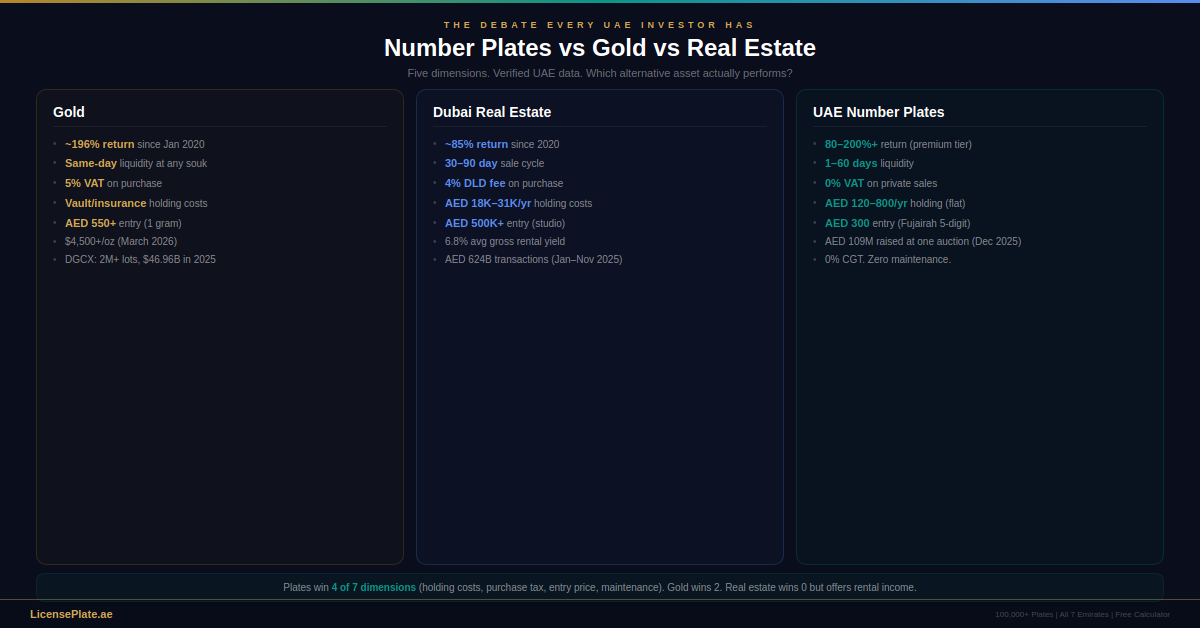
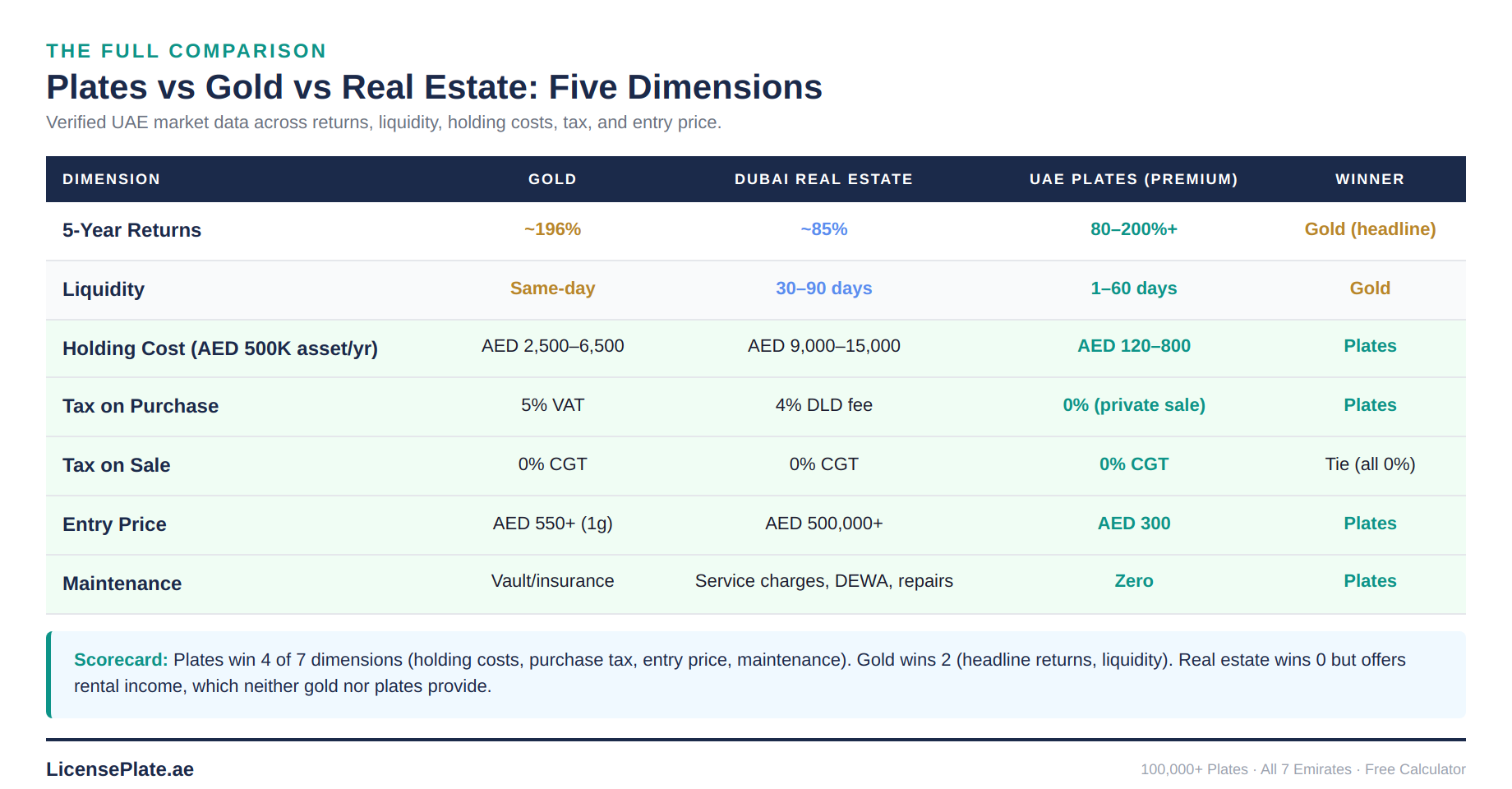
عبر الأبعاد الخمسة، تنقسم النتائج كالتالي. في العوائد، الذهب يفوز بالعنوان بنحو 196%، رغم أن اللوحات المميّزة منافسة عند 80 إلى 200%+ والعقارات عند نحو 85%. في السيولة، الذهب يفوز بخروج في اليوم نفسه. في تكاليف الاحتفاظ، اللوحات تفوز بمرتبة من حيث الحجم برسوم سنوية ثابتة قدرها 120 إلى 800 درهم بغضّ النظر عن قيمة الأصل. في المعاملة الضريبية، اللوحات تفوز بـ 0% ضريبة قيمة مضافة على المشتريات الخاصة و0% ضريبة أرباح رأسمالية. في سعر الدخول، اللوحات تفوز بأرضية قدرها 300 درهم.
وهذا يعني فوز اللوحات في ثلاثة من خمسة أبعاد بشكل صريح (تكاليف الاحتفاظ، والضريبة، وسعر الدخول)، وفوز الذهب في اثنين (عنوان العوائد، والسيولة)، وفوز العقارات في صفر. لكن بطاقة النتائج غير مكتملة دون تحفّظ حاسم: العقارات تولّد دخل إيجار، وهو ما لا يوفّره الذهب ولا اللوحات. فشقة بمليون درهم في دبي تدرّ 6.8% إجمالياً تولّد نحو 68,000 درهم سنوياً في دخل الإيجار. والذهب واللوحات يولّدان صفر دخل أثناء الاحتفاظ. وللمستثمرين الذين يحتاجون تدفّقاً نقدياً، تظلّ العقارات لا يمكن استبدالها رغم تكاليفها الأعلى وسيولتها الأدنى.
الإجابة الحقيقية: يعتمد على ما تشتريه
المقارنة ليست اللوحات مقابل الذهب مقابل العقارات كفئات أحادية. بل هي: أي لوحات، وأي مركز ذهب، وأي عقار؟ فلوحة الرمز Z من 5 أرقام لا تؤدّي كلوحة الرمز A من رقمين. وصندوق ذهب متداول لا يؤدّي كسبائك مادّية في خزنة. واستوديو في المدينة العالمية لا يؤدّي كفيلا في تلال الإمارات.
والنمط عبر فئات الأصول الثلاث متطابق: الأصول المميّزة تتفوّق، والأصول القياسية ثابتة أو أسوأ، والندرة المقرونة بالجودة هي الشيء الوحيد الذي يهمّ على المدى الطويل. ويشرح دليل الرموز من A إلى Z التسلسل الهرمي للندرة للوحات. فالرموز المبكرة (A، B، C، D) صدرت عندما كان عدد سكان دبي دون 500,000. والمعروض مجمّد بشكل دائم. والرموز المتأخّرة (V، W، X، Y، Z) لا تزال تُصدَر في مزادات هيئة الطرق. وديناميكيات الندرة مختلفة جوهرياً، ويغطّي دليل الأخطاء العشرة خطأ عمى طبقة الرمز الذي يدمّر عوائد الاستثمار في اللوحات.
وما تقدّمه اللوحات ولا يمكن للذهب ولا العقارات مضاهاته هو الجمع بين العوامل الخمسة جميعها في آنٍ واحد: عوائد منافسة في الطبقة المميّزة، وسيولة لا بأس بها للأصول الجيدة، وتكاليف احتفاظ قريبة من الصفر ثابتة بغضّ النظر عن القيمة، وصفر ضريبة شراء وبيع على المعاملات الخاصة، وأدنى سعر دخول لأي أصل ملموس في الإمارات. ولا توجد فئة أصول أخرى تملك الخمسة جميعها.
"اشترى عبدالله الحمادي لوحة بـ 12 درهماً. وباعها بعد عقود بـ 28 مليون درهم. وهذا ليس حظاً. بل نتيجة شراء أصل نادر في سوق بمعروض ثابت وطلب متزايد."
— خليج تايمز، 2017
نهج المحفظة: لماذا يملك مستثمرو الإمارات الأذكياء الثلاثة جميعاً
أكثر المستثمرين تطوّراً في الإمارات لا يختارون بين اللوحات والذهب والعقارات. بل يملكون الثلاثة جميعاً. ومنطق التنويع واضح: الذهب يتحوّط ضدّ المخاطر الجيوسياسية وضعف العملة. والعقارات تولّد دخل إيجار وتوفّر منفعة نمط حياة. واللوحات توفّر ارتفاع قيمة معفى من الضريبة بصيانة قريبة من الصفر في سوق بمعروض ثابت هيكلياً وسكان متزايدين من أكثر من 200 جنسية، كل منها يجلب ثقافات أرقامه الخاصة.
توزيع افتراضي قدره 1,300,000 درهم: 1,000,000 درهم في عقارات دبي (عائد إيجار 6.8%، ارتفاع قيمة 8 إلى 13% سنوياً، تكاليف احتفاظ 18,000 إلى 31,000 درهم سنوياً). و200,000 درهم في الذهب المادّي (ارتفاع أخير نحو 20% سنوياً، تكاليف احتفاظ 1,000 إلى 2,600 درهم سنوياً). و100,000 درهم في اللوحات عبر إمارتين إلى ثلاث، مستهدفةً لوحتين من 3 أرقام ولوحة واحدة من 4 أرقام ذات دلالة ثقافية (تكاليف احتفاظ 360 إلى 2,400 درهم سنوياً إجمالاً، 0% ضرائب معاملات، إمكانات ارتفاع قيمة 10 إلى 30% سنوياً على الاختيارات الجيدة). وكل منها يخدم غرضاً مختلفاً. ولا أحد يستبدل الآخرين.
وتخصيص اللوحات هو الأصغر بالقيمة المطلقة لكنه الأكثر كفاءةً على أساس معدّل حسب المخاطر ومعدّل حسب التكلفة. صفر صيانة. صفر مستأجرين. صفر فواتير كهرباء ومياه. صفر رسوم خدمة. صفر ضريبة معاملة على المشتريات الخاصة. وتجديد سنوي قدره 120 إلى 800 درهم لكل لوحة. ويغطّي دليل الاستثمار أطروحة المحفظة الكاملة، وهيكل الطبقات، والبيانات وراء اتجاهات ارتفاع قيمة اللوحات.
تحقّق من القيمة السوقية الحالية لأي لوحة على الحاسبة. تصفّح لوحات بدرجة استثمارية عبر الإمارات السبع جميعها على LicensePlate.ae. أدرج لوحاتك مجاناً على upload-plates.
الأسئلة الشائعة
س: هل لوحات السيارات استثمار مشروع في الإمارات؟
نعم. يحرّك سوق لوحات الإمارات مئات الملايين من الدراهم سنوياً. فجمع مزاد هيئة الطرق في ديسمبر 2025 مبلغ 109 ملايين درهم من 90 لوحة. وارتفعت قيمة اللوحات المميّزة بنسبة 80 إلى 200%+ على مدى السنوات الخمس الماضية. 0% ضريبة أرباح رأسمالية. 0% ضريبة قيمة مضافة على المبيعات الخاصة. وتكاليف احتفاظ سنوية قدرها 120 إلى 800 درهم.
س: كيف تُقارَن عوائد اللوحات بالذهب منذ 2020؟
حقّق الذهب نحو 196% من يناير 2020 إلى مارس 2026 (من 1,520 دولاراً للأونصة إلى أكثر من 4,500 دولار للأونصة). وحقّقت لوحات الإمارات المميّزة (رقمين إلى 3 أرقام، الرموز المبكرة) 80 إلى 200%+ في المدة نفسها. واللوحات القياسية من 5 أرقام كانت ثابتة. وتعتمد المقارنة كلياً على جودة اللوحة وطبقة الرمز.
س: ما هي تكاليف الاحتفاظ السنوية للوحات مقابل العقارات؟
لوحة تكلّف 120 إلى 800 درهم سنوياً للاحتفاظ بها بغضّ النظر عن قيمتها السوقية. وشقة بمليون درهم تكلّف 18,000 إلى 31,000 درهم سنوياً في رسوم الخدمة والكهرباء والمياه والتأمين والصيانة. وعلى مدى 10 سنوات، تكلّف اللوحات 1,200 إلى 8,000 درهم إجمالاً مقابل 180,000 إلى 310,000 درهم للعقارات. والفجوة بمرتبة من حيث الحجم.
س: هل هناك ضريبة أرباح رأسمالية على مبيعات اللوحات في الإمارات؟
لا. المبيعات الخاصة للوحات بين الأفراد تحمل 0% ضريبة قيمة مضافة و0% ضريبة أرباح رأسمالية. والتكلفة الوحيدة 120 درهماً لنقل الملكية. ومشتريات مزادات هيئة الطرق تحمل 5% ضريبة قيمة مضافة، لكن إعادة البيع اللاحقة في السوق الثانوي معفاة من الضريبة.
س: ما هي أرخص نقطة دخول إلى سوق لوحات الإمارات؟
300 درهم للوحة من 5 أرقام في الفجيرة أو أم القيوين. و500 إلى 1,000 درهم في عجمان. و3,000 إلى 5,000 درهم في دبي. وللوحات أدنى نقطة دخول لأي أصل بديل ملموس في الإمارات.
س: من هو عبدالله الحمادي؟
مواطن إماراتي اشترى لوحة سيارة بـ 12 درهماً قبل عقود وباعها بـ 28 مليون درهم، وفقاً لتقرير خليج تايمز في 2017. وتمثّل قصته الطرف المتطرّف من عوائد الاستثمار في اللوحات.
س: هل ينبغي أن أشتري اللوحات بدلاً من الذهب أو العقارات؟
ليس بدلاً منها. اعتبر اللوحات مكمّلاً للمحفظة. الذهب يتحوّط ضدّ المخاطر الجيوسياسية. والعقارات تولّد دخل إيجار. واللوحات توفّر ارتفاع قيمة معفى من الضريبة بتكاليف احتفاظ قريبة من الصفر. وأذكى مستثمري الإمارات يملكون الثلاثة جميعاً.
س: ما مدى سيولة اللوحات مقارنةً بالذهب والعقارات؟
الذهب سائل في اليوم نفسه في أي سوق ذهب أو تاجر. واللوحات المميّزة تُباع خلال ساعات إلى أيام في السوق. واللوحات القياسية تستغرق أسابيع. والعقارات تستغرق 30 إلى 90 يوماً. وللأصول الجيدة، اللوحات هي ثاني أكثر أصل بديل سيولةً في الإمارات بعد الذهب.
س: هل يملك بالفيندر ساهني فعلاً أكثر من 100 مليون درهم في اللوحات؟
نعم. تفيد مصادر متعدّدة (Zigwheels، وCNN، وFriendsCarRental) بأن ساهني يملك نحو عشر لوحات مميّزة تساوي معاً أكثر من 100 مليون درهم. وهو يعاملها كمحفظة إلى جانب عقاراته ومصالحه التجارية.
س: ماذا يحدث إذا انهار سوق اللوحات؟
معروض اللوحات تسيطر عليه الحكومة وهو ثابت بشكل دائم للرموز المبكرة. وتدخل الرموز الجديدة السوق تدريجياً عبر مزادات هيئة الطرق، لكن اللوحات القائمة لا يمكن تخفيف قيمتها. والأطروحة الهيكلية هي معروض ثابت زائد طلب متزايد (نمو سكان الإمارات، وأكثر من 200 جنسية). وسيتطلّب الانهيار تغييراً جوهرياً في ديموغرافيا الإمارات أو السياسة الحكومية. ويغطّي دليل الاستثمار إطار المخاطر.
حذف التعليق؟
هل أنت متأكد أنك تريد حذف هذا التعليق؟ لا يمكن التراجع عن هذا الإجراء.
حذف المقال؟
هل أنت متأكد أنك تريد حذف هذه المقالة؟ سيؤدي ذلك أيضًا إلى حذف جميع التعليقات. لا يمكن التراجع عن هذا الإجراء.