

كيف تقيّم أي لوحة رقم إماراتية: إطار التقييم الذاتي الكامل
13 مايو 2026
دبي
فريق LicensePlate.ae
بائع في مقهى بدبي يدفع صورة لوحته عبر الطاولة. "كم تظنّها تساوي؟" واللوحة تركيبة رباعية من دبي برمز H بنمط نظيف. ومعظم من في موقع البائع يمضون مع أي رقم اقتبسه الوسيط، أو خمّنه صديق، أو بدا مناسباً. والمشكلة أن الأساليب الثلاثة تخطئ عادةً القيمة السوقية الفعلية بنسبة 20 إلى 40% في أي من الاتجاهين. فالبائعون يبيعون بأقلّ. والمشترون يدفعون أكثر. واللوحة تبقى، أو تتحرّك، بسعر لا يعكس ما كانت ستُنجَز به لو كان الطرفان يعرفان ما يفعلان.
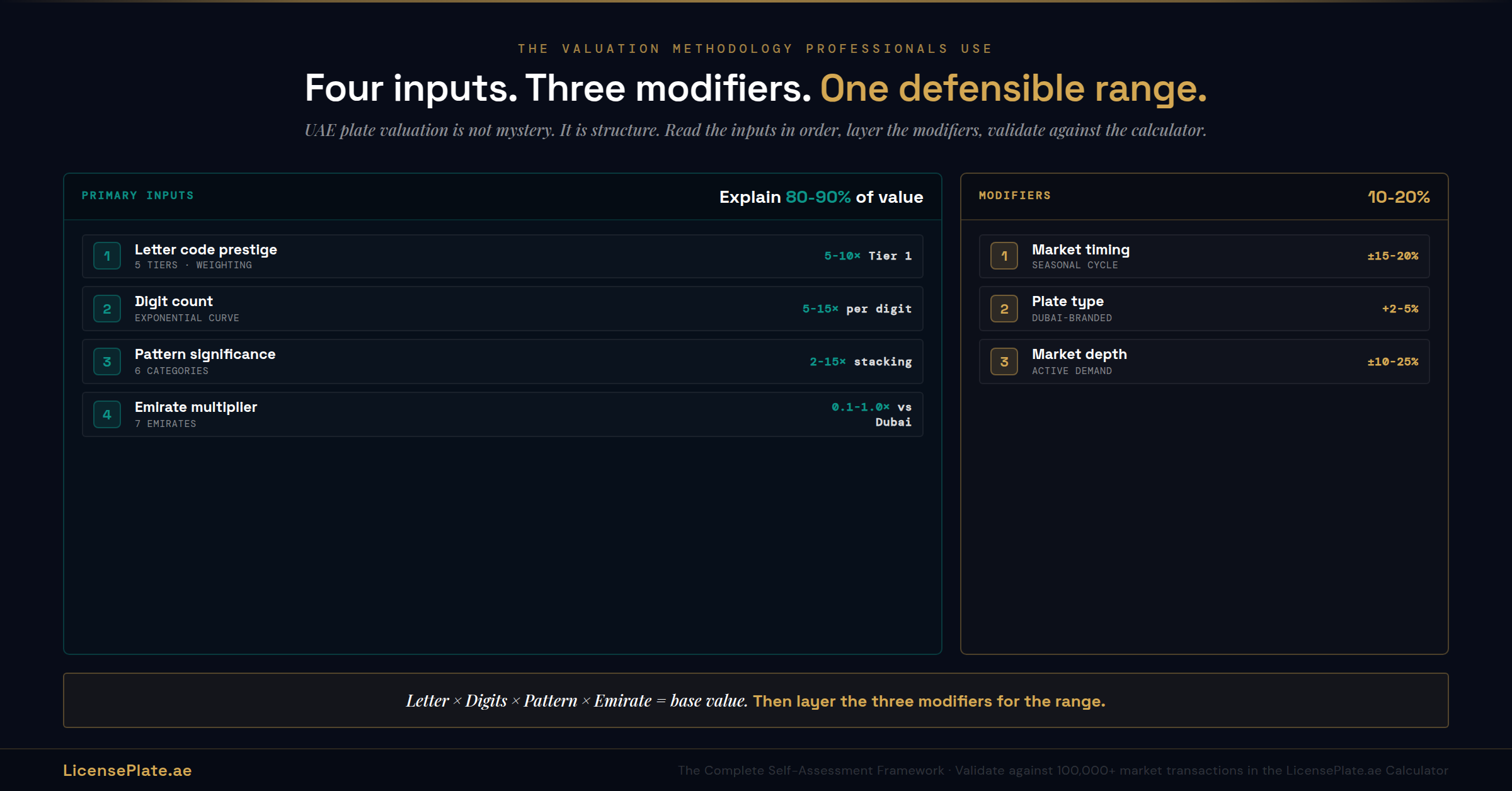
والحلّ ليس سحراً. فتقييم اللوحات يُعامَل على نطاق واسع كفنّ لا يمارسه إلا المطّلعون، لكنه في الواقع حساب منظّم بأربعة مدخلات أساسية وثلاثة معدّلات ثانوية. اقرأ المدخلات بالترتيب الصحيح، وطبّق الوزن الصحيح، وراكم المعدّلات، وتصل إلى نطاق قيمة قابل للدفاع. والإطار هو نفسه الذي يستخدمه المحترفون. والفارق أن لا أحد كلّف نفسه عناء نشره بوضوح.
وهذه القطعة تنشره بوضوح. وبنهايتها ستكون قادراً على تقييم أي لوحة إماراتية، من لوحة دبي R خماسية بـ 2,900 درهم إلى P 7 بـ 55 مليون درهم. فالإطار نفسه ينطبق عبر الطيف لأن المدخلات تتدرّج؛ والمقادير وحدها تتغيّر. وبعد أن تعبر الإطار يدوياً، يمكنك التحقّق من النتيجة مقابل حاسبة قيمة اللوحات على LicensePlate.ae، التي تستخدم المدخلات نفسها على نطاق يتجاوز 100,000 صفقة سوقية لإنتاج نطاق موثّق. والجمع بين التقييم اليدوي والتحقّق بالحاسبة هو أوثق نهج لتقييم اللوحات الإماراتية موجود اليوم.
الإطار في لمحة: أربعة مدخلات وثلاثة معدّلات
قبل العبور التفصيلي، الصورة العامة. فتقييم اللوحات الإماراتية ينقسم إلى أربعة مدخلات أساسية يسهم كل منها في القيمة الأساسية، وثلاثة معدّلات ثانوية تضبط النتيجة.
المدخلات الأساسية الأربعة (بترتيب الوزن):
(1) شريحة هيبة رمز الحرف.
(2) عدد الأرقام.
(3) دلالة النمط.
(4) مضاعف الإمارة.
وهذه المدخلات الأربعة تفسّر نحو 80 إلى 90% من قيمة أي لوحة إماراتية. أتقنها ويكون التقييم مكتملاً مادياً.
المعدّلات الثانوية الثلاثة:
(1) توقيت السوق (الموضع في الدورة الموسمية، والحالة الكلّية).
(2) نوع اللوحة (بشعار دبي مقابل القياسية، والكلاسيكية، والفاخرة).
(3) عمق السوق (الطلب النشط على تركيبة الحرف والنمط تحديداً).
وهذه المعدّلات الثلاثة تفسّر الـ 10 إلى 20% المتبقّية من القيمة وتنتج نطاق السعر بدل التقدير النقطي.
والإطار تسلسلي: قيّم المدخلات أولاً، ثم راكم المعدّلات. وتخطّي التسلسل (القفز إلى قيمة عاطفية أو غريزية دون العبور عبر المدخلات) هو كيف ينتهي المشترون والبائعون بتقييمات تبتعد عن السوق بنسبة 20 إلى 40%. فالمدخلات ليست اختيارية.
المدخل الأساسي الأول: شريحة هيبة رمز الحرف
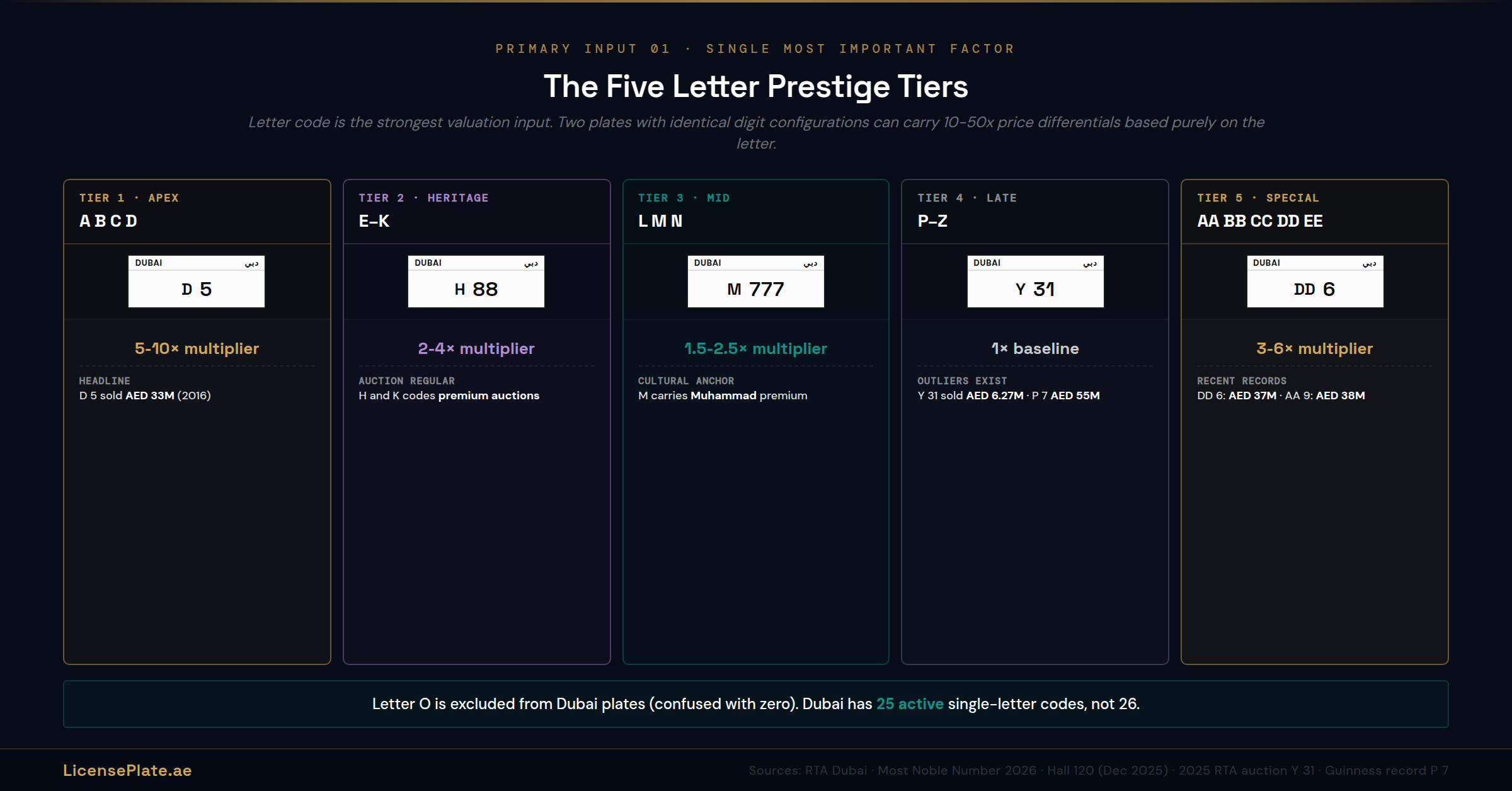
رمز الحرف هو أهمّ مدخل مفرد في تقييم اللوحات الإماراتية. فلوحتان بتكوينات أرقام متطابقة يمكن أن تحملا فروق أسعار من 10 إلى 50 ضعفاً بناءً على الحرف وحده. ويقسّم دليل رموز دبي من A إلى Z على LicensePlate.ae رموز الحروف إلى أربع شرائح هيبة يحرّكها تاريخ الإصدار وعمق منحنى العرض.
الشريحة الأولى: رموز القمّة أحادية الحرف (A، وB، وC، وD)
بدأت دبي إصدار اللوحات بالرمز A عام 1973. والرموز من A إلى D صدرت أولاً ولديها أصغر عرض تاريخي، وأعمق اعتراف ثقافي، وأقوى عمق سوق ثانوية. وهذه الحروف الأربعة تحمل أعلى قيم أساسية عبر كل أعداد الأرقام. واللوحات من هذه الشرائح تنتج بانتظام صفقات عنوانية: D 5 بـ 33 مليون درهم عام 2016، واللوحة 1 بـ 52.2 مليون درهم في أبوظبي، وA 88 بـ 35 مليون درهم عام 2023.
أثر التقييم: حروف الشريحة الأولى تسهم بمضاعف من 5 إلى 10 أضعاف فوق لوحات الشريحة الرابعة المكافئة عند عدد الأرقام نفسه.
الشريحة الثانية: رموز التراث (E، وF، وG، وH، وI، وJ، وK)
صدرت ثانياً في تدرّج دبي، وتحمل هذه الحروف هيبة ملموسة لكن بعلاوات أدنى من الشريحة الأولى. وكثير منها أُغلق أمام الإصدار الجديد منذ سنوات (E وF تحديداً)، ما يجعلها رموز تراث وظيفياً. وتُظهر تغطية المزادات في الخليج تايمز ظهور الرمزين H وK بانتظام في المزادات المميّزة بأسعار محقّقة قويّة.
أثر التقييم: حروف الشريحة الثانية تسهم بمضاعف من 2 إلى 4 أضعاف فوق لوحات الشريحة الرابعة عند عدد الأرقام نفسه.
الشريحة الثالثة: رموز العرض المتوسّط (L، وM، وN)
صدرت في منتصف تدرّج دبي. ونوافذ إصدارها نشطة لمعظمها، بعرض كافٍ لإبقاء أسعار الدخول في المتناول لكن بندرة كافية لحمل علاوة ملموسة عند تكوينات الأرقام المميّزة. وM تحديداً تستفيد من الارتباط الثقافي باسم محمد، ما يضيف علاوة طلب ناعمة.
أثر التقييم: حروف الشريحة الثالثة تسهم بمضاعف من 1.5 إلى 2.5 ضعف فوق لوحات الشريحة الرابعة عند عدد الأرقام نفسه.
الشريحة الرابعة: الرموز أحادية الحرف المتأخّرة (P، وQ، وR، وS، وT، وU، وV، وW، وX، وY، وZ)
الشريحة المتاحة. أقلّ أسعار دخول للمشترين الذين يبنون لوحتهم الأولى. واللوحات القياسية ذات الخمسة أرقام في هذه الرموز تتداول بين 2,000 و5,000 درهم. لكن الافتراض الفضفاض بأن هذه الرموز بلا إمكانية صعود تناقضه صفقات بعينها، بحسب مقال خرافات اللوحات: فـ Y 31 بيعت بـ 6.27 مليون درهم في مزاد الهيئة 2025، وP 7 بيعت بـ 55 مليون درهم عام 2023 (بافل دوروف، مؤسّس تيليجرام، حاملاً رقم غينيس القياسي لأغلى لوحة). فالأنماط المحدّدة داخل الرموز المتأخّرة لا تزال قادرة على إنتاج أسعار استثنائية.
أثر التقييم: حروف الشريحة الرابعة هي خطّ الأساس (مضاعف 1) للتكوينات القياسية. والأنماط الاستثنائية داخل الشريحة الرابعة يمكن أن تقفز إلى مستويات الشريحة الأولى لكنها تتطلّب دلالة نمطية.
الشريحة الخامسة (خاصة): الرموز ثنائية الحرف (AA، وBB، وCC، وDD، وEE)
هذه ليست امتدادات للشريحة الأولى أو الرابعة. ويشرح تحليل الرموز من A إلى Z أن الرموز ثنائية الحرف تعمل كسلاسل هيبة متمايزة أُدخلت بعد استنفاد سعة الحرف الواحد. وهي تحمل شريحة قيمتها الخاصة. والصفقات العنوانية الأخيرة: BB 12 بـ 9.66 مليون درهم (القاعة 120، ديسمبر 2025)، وAA 9 بـ 38 مليون درهم (مزاد خيري)، وDD 5 بـ 35 مليون درهم (أنبل رقم 2025)، وDD 6 بـ 37 مليون درهم (أنبل رقم 2026).
أثر التقييم: الرموز ثنائية الحرف تحمل مضاعفات من 3 إلى 6 أضعاف فوق لوحات الشريحة الرابعة أحادية الحرف عند عدد الأرقام نفسه. وAA تحمل أعلى علاوة داخل سلسلة الحرفين.
ملاحظة: الحرف O مستثنى من لوحات دبي لأنه قد يُخلط مع الرقم صفر. فلدى دبي 25 رمزاً أحادي الحرف نشطاً، لا 26. وهذه التفصيلة تهمّ عند التحقّق من أن رمز اللوحة حقيقي وعند مقارنة منحنيات العرض بين الرموز.
المدخل الأساسي الثاني: عدد الأرقام
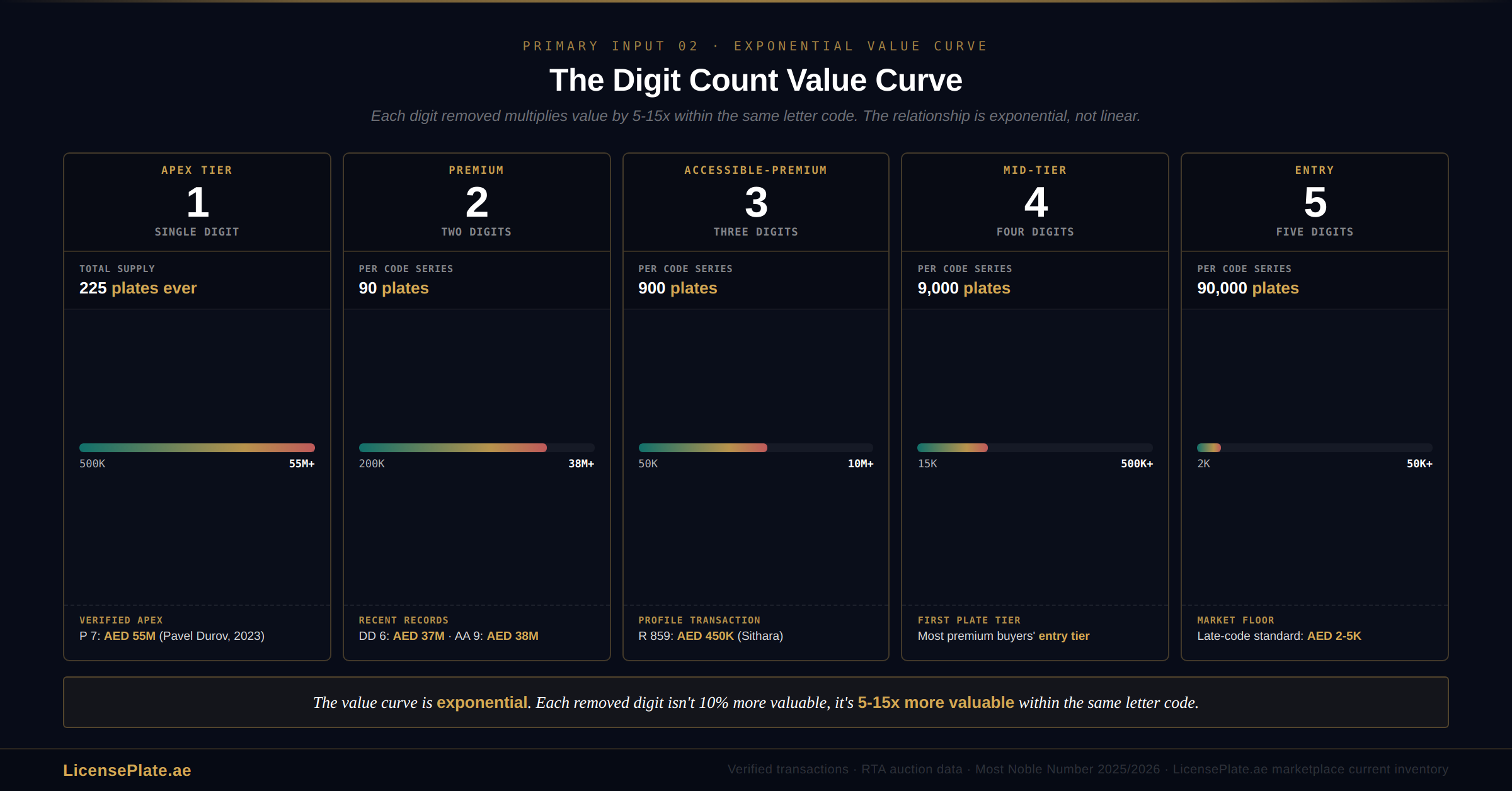
بعد رمز الحرف، عدد الأرقام هو ثاني أكبر محرّك للقيمة. والعلاقة أسّية لا خطّية: فكل رقم يُحذف يضاعف القيمة تقريباً من 5 إلى 15 ضعفاً داخل رمز الحرف نفسه. ويوثّق مقال التحقّق من الأسعار ومقال الأرقام القياسية على LicensePlate.ae منحنى قيمة عدد الأرقام عبر السوق.
اللوحات أحادية الرقم (شريحة القمّة)
تسع لوحات لكل سلسلة رمز (من 1 إلى 9). وعبر كل رموز دبي مجتمعةً، لم توجد سوى 225 لوحة أحادية الرقم على الإطلاق (9 لوحات × 25 رمزاً). والندرة البنيوية تدفع تسعيراً استثنائياً لتركيبات الحروف الرفيعة. والصفقات القمّة الموثّقة: P 7 بـ 55 مليون درهم، واللوحة 1 (أبوظبي) بـ 52.2 مليون درهم، واللوحة 5 بـ 33 مليون درهم.
نطاق القيمة النمطي: من 500,000 درهم (أحادية الرقم من رمز متأخّر) إلى أكثر من 55,000,000 درهم (أحادية الرقم من رمز القمّة).
اللوحات ثنائية الأرقام (الشريحة المميّزة)
تسعون لوحة لكل سلسلة رمز (من 10 إلى 99). ولا تزال نادرة بنيوياً عبر السوق كاملةً. وشريحة الرقمين أنتجت معظم الصفقات القياسية الأخيرة: DD 5 بـ 35 مليون درهم، وDD 6 بـ 37 مليون درهم، وAA 9 بـ 38 مليون درهم، وBB 12 بـ 9.66 مليون درهم، وA 88 بـ 35 مليون درهم.
نطاق القيمة النمطي: من 200,000 درهم (ثنائية الأرقام من رمز متأخّر) إلى أكثر من 38,000,000 درهم (ثنائية الأرقام من رمز مميّز بنمط ثقافي).
اللوحات ثلاثية الأرقام (الشريحة المميّزة المتاحة)
تسعمئة لوحة لكل سلسلة رمز. والشريحة التي يبدأ فيها التميّز بأن يصبح في متناول أصحاب الثروات الكبيرة لا فائقي الثراء وحدهم. ويضع تحليل Shory لتسعير الثلاثة أرقام النطاق النمطي بين مليون و10 ملايين درهم مع طلب الأنماط الثقافية المحدّدة (777، و786، و911) علاوةً. صفقة موثّقة: R 859 بـ 450,000 درهم من ملفّ أمجد سِثارا الموثّق في تغطية الخليج تايمز.
نطاق القيمة النمطي: من 50,000 درهم (ثلاثية الأرقام من رمز متأخّر) إلى أكثر من 10,000,000 درهم (ثلاثية الأرقام من رمز مميّز بنمط ثقافي).
اللوحات رباعية الأرقام (الشريحة الوسطى)
تسعة آلاف لوحة لكل سلسلة رمز. والشريحة التي ينفق فيها معظم المشترين المميّزين ميزانية لوحتهم الأولى. والرموز المميّزة بأنماط قويّة يمكن أن تحمل أسعاراً بستّة أرقام؛ أما الرموز القياسية بأنماط عادية فتتداول بين 15,000 و50,000 درهم.
نطاق القيمة النمطي: من 15,000 درهم (رباعية الأرقام من رمز متأخّر) إلى أكثر من 500,000 درهم (رباعية الأرقام من رمز مميّز بنمط ثقافي).
اللوحات خماسية الأرقام (شريحة الدخول)
تسعون ألف لوحة لكل سلسلة رمز. الشريحة الأوفر وأرضية أسعار السوق. واللوحات القياسية ذات الخمسة أرقام في دبي من الرموز المتأخّرة تتداول بين 2,000 و5,000 درهم بحسب مخزون سوق LicensePlate.ae الحالي.
نطاق القيمة النمطي: من 2,000 درهم (خماسية الأرقام قياسية من رمز متأخّر) إلى أكثر من 50,000 درهم (خماسية الأرقام من رمز مميّز).
المدخل الأساسي الثالث: دلالة النمط
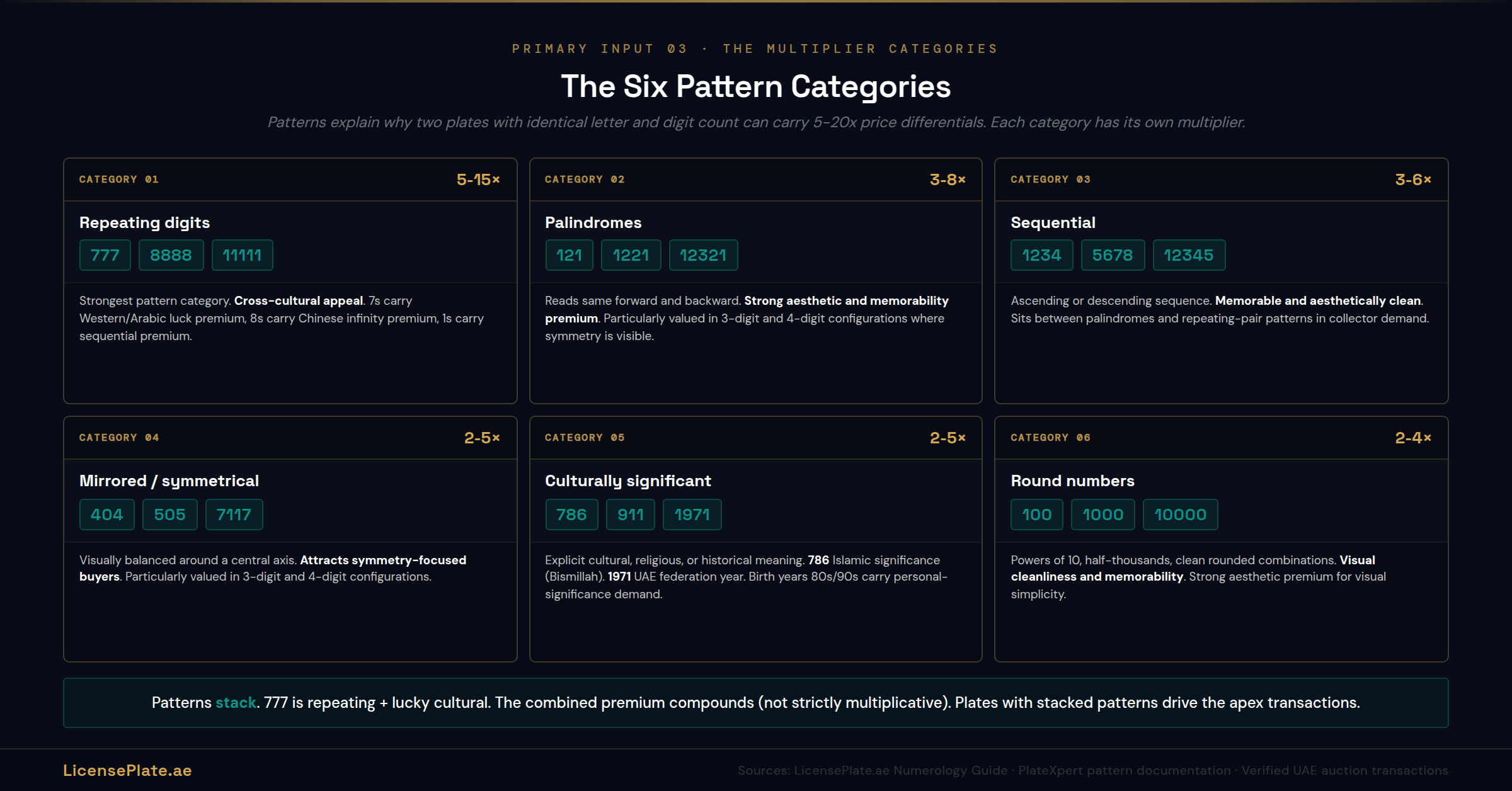
دلالة النمط هي المضاعف الذي يفسّر لماذا يمكن للوحتين برمز حرف وعدد أرقام متطابقين أن تحملا فروق أسعار من 5 إلى 20 ضعفاً. ويقسّم دليل علم الأعداد على LicensePlate.ae الأنماط إلى ستّ فئات، لكلٍّ منها أثرها التقييمي.
الفئة الأولى: الأرقام المتكرّرة (777، و8888، و11111)
الرقم نفسه كلّه. أقوى فئة أنماط لأسباب ثقافية وجمالية. والسبعات المتكرّرة تحمل أقوى علاوة عبر معظم الثقافات (الغربية والعربية والصينية)، والثمانيات المتكرّرة تحمل طلباً صينياً قوياً، والآحاد المتكرّرة تحمل علاوة غربية وتسلسلية.
المضاعف: من 5 إلى 15 ضعفاً فوق اللوحات المكافئة ذات الأرقام العشوائية.
الفئة الثانية: المتماثلة عكسياً (121، و1221، و12321)
تُقرأ نفسها طرداً وعكساً. جاذبية جمالية قويّة وعلاوة سهولة تذكّر. ومقدَّرة خصوصاً في التكوينات الثلاثية والرباعية حيث يكون التناظر مرئياً.
المضاعف: من 3 إلى 8 أضعاف فوق اللوحات المكافئة ذات الأرقام العشوائية.
الفئة الثالثة: المتسلسلة (1234، و5678، و12345)
تسلسل تصاعدي أو تنازلي. سهلة التذكّر ونظيفة جمالياً. والأنماط المتسلسلة تجلس أدنى قليلاً من المتماثلة عكسياً في العلاوة الثقافية لكن أعلى قليلاً من أنماط الأزواج المتكرّرة في طلب الجامعين.
المضاعف: من 3 إلى 6 أضعاف فوق اللوحات المكافئة ذات الأرقام العشوائية.
الفئة الرابعة: المرآتية أو المتناظرة (404، و505، و7117)
متوازنة بصرياً حول محور مركزي. وتشير وثائق السوق إلى أن التركيبات المرآتية مثل 404 أو 505 تجتذب مشترين يقدّرون التناظر، خصوصاً في التكوينات الثلاثية والرباعية.
المضاعف: من 2 إلى 5 أضعاف فوق اللوحات المكافئة ذات الأرقام العشوائية.
الفئة الخامسة: الأرقام ذات الدلالة الثقافية (786، و911، و1947، و1971)
أرقام بمعنى ثقافي أو ديني أو تاريخي صريح. فـ 786 يحمل دلالة إسلامية قويّة (التمثيل العددي للبسملة). و1971 عام اتّحاد الإمارات، ويحمل علاوة وطنية. وسنوات الميلاد من العقود الشائعة (الثمانينيات والتسعينيات) تحمل طلباً ثابتاً للدلالة الشخصية بحسب تحليل أنماط السوق الثانوية.
المضاعف: من 2 إلى 5 أضعاف فوق اللوحات المكافئة ذات الأرقام العشوائية، مع طلب أنماط بعينها (786 خصوصاً) مضاعفات أعلى.
الفئة السادسة: الأرقام المستديرة (100، و1000، و10000)
قوى العشرة، وأنصاف الآلاف، والتركيبات المستديرة النظيفة. علاوة جمالية قويّة للنظافة البصرية وسهولة التذكّر.
المضاعف: من 2 إلى 4 أضعاف فوق اللوحات المكافئة ذات الأرقام العشوائية.
تراكم الأنماط
الأنماط تتجمّع. فاللوحة المتكرّرة وقليلة الأرقام وذات الدلالة الثقافية في آن (مثل 777، وهي متكرّرة + محظوظة ثقافياً) تراكم المضاعفات. والعلاوة المجمّعة ليست ضربية بدقّة لكنها تتراكم بشكل ملموس. ويوثّق مقال الأرقام القياسية كيف تقود الأنماط المتراكمة صفقات القمّة.
المدخل الأساسي الرابع: مضاعف الإمارة
يوثّق مقال مقارنة أسعار اللوحات في الإمارات السبع على LicensePlate.ae كيف يمكن للنمط الرقمي نفسه أن يحمل فارق سعر من 50 إلى 100 ضعف بين الإمارات. فالإمارة أحد أهمّ المتغيّرات في تقييم اللوحات. ودبي وأبوظبي تجلسان على القمّة، والشارقة تشغل الشريحة الوسطى، والإمارات الشمالية تشكّل الشريحة المتاحة.
دبي: أعلى مضاعف على الإطلاق. أعمق سوق ثانوية، وأعلى اعتراف ثقافي، وأنشط تقويم مزادات، وأوسع نطاق تسعير متاح. مضاعف القمّة 1.0 (خطّ أساس مرجعي للمقارنة بين الإمارات).
أبوظبي: مضاعف قويّ من الشريحة الثانية بالفارق البنيوي الفريد المتمثّل في الفئات المرقّمة (من 1 إلى 22 إضافةً إلى التذكارية 50) بدل رموز الحروف. وتحمل الرقم القياسي العالمي (اللوحة 1 بـ 52.2 مليون درهم). المضاعف من 0.8 إلى 1.0 نسبةً إلى مكافئات دبي عند شريحة القمّة؛ وأدنى عند شرائح الدخول.
الشارقة: مضاعف الشريحة الوسطى. عمق سوق ثانوية أصغر من دبي أو أبوظبي. ونظام بادئات من ثلاث فئات (1، و2، و3). المضاعف من 0.3 إلى 0.5 نسبةً إلى دبي.
عجمان: من أكثر إمارات اللوحات قابليةً للوصول بحسب تقارير السوق. المضاعف من 0.15 إلى 0.30 نسبةً إلى دبي.
رأس الخيمة: تكتسب اهتماماً مع نموّ ملفّ التطوير الدولي لرأس الخيمة. المضاعف من 0.15 إلى 0.30 باتّجاه صاعد.
الفجيرة: أدنى أرضية سعرية للوحات بسبب صغر عدد السكّان. المضاعف من 0.10 إلى 0.20 نسبةً إلى دبي.
أم القيوين: أصغر عدد سكّان، وأدنى خطّ أساس بنيوياً. وتكوينات مميّزة بعينها (من طراز M 3300) يمكن أن تقفز. المضاعف من 0.10 إلى 0.25 نسبةً إلى دبي.
المعدّلات الثانوية الثلاثة
بعد أن تنتج المدخلات الأساسية الأربعة قيمة أساسية، تضبط ثلاثة معدّلات ثانوية النتيجة لإنتاج النطاق النهائي القابل للدفاع.
المعدّل الأول: توقيت السوق
تُظهر ملاحظات السوق عبر التحليل الموسمي من DubaiLivingGuide ودليل الاستثمار أن أسعار اللوحات الإماراتية تتقلّب بنسبة 15 إلى 20% بناءً على التوقيت داخل الدورة السنوية. فموسم المكافآت من أكتوبر إلى ديسمبر يحمل تسعيراً بعلاوة إذ يتسلّم المشترون الوافدون مكافآت نهاية العام. وفترة السفر الصيفي في يوليو وأغسطس تشهد هدوءاً في السوق بنوافذ مواتية للبائعين. وفترة رمضان تشهد عادةً صفقات لوحات مميّزة أبطأ إذ يتحوّل التدفّق النقدي إلى أولويات أخرى. وتوقيت المزادات الخيرية (فعاليات أنبل رقم المغطّاة في قطعة أنبل رقم 2026) يضغط تسعير شريحة القمّة صعوداً في الأشهر المحيطة.
أثر المعدّل: ±15 إلى 20% على القيمة الأساسية بحسب التوقيت داخل الدورة السنوية.
المعدّل الثاني: نوع اللوحة
يوثّق دليل أنواع اللوحات على LicensePlate.ae كيف يحمل نوع اللوحة المادي معدّل قيمة صغيراً لكنه ذو معنى. فاللوحات بشعار دبي الملوّن تحمل علاوة إعادة بيع من 2 إلى 5% فوق اللوحات القياسية المكافئة. واللوحات الكلاسيكية (البنّية التراثية) لها إطار قيمتها الخاص المرتبط بالمركبة الكلاسيكية الأساسية. واللوحات الفاخرة ذات الملصق الأمامي لا تحمل شريحة قيمة منفصلة؛ فقيمتها تأتي من رقم اللوحة الأساسي.
أثر المعدّل: +2 إلى 5% للوحة بشعار دبي؛ و0% للأنواع المادية القياسية والكلاسيكية والفاخرة (القيمة تأتي من الرقم).
المعدّل الثالث: عمق السوق للتركيبة المحدّدة
بعض تركيبات الحرف والنمط عليها طلب مشترين نشط الآن؛ وأخرى تجلس مع عرض أوسع. ويعامل مقال شرح حاسبة قيمة اللوحات على LicensePlate.ae عمق السوق كالمتغيّر الذي ينتج نطاق السعر بدل تقدير نقطي. فاللوحة ذات الطلب النشط يمكن أن تُنجَز عند قمّة النطاق المشار إليه؛ واللوحة نفسها دون طلب نشط قد تُنجَز عند القاع أو تبقى دون بيع.
أثر المعدّل: ±10 إلى 25% على القيمة الأساسية بحسب طلب المشترين الحالي على التركيبة المحدّدة.
الجمع بينها: التقييم الذاتي في خمس خطوات
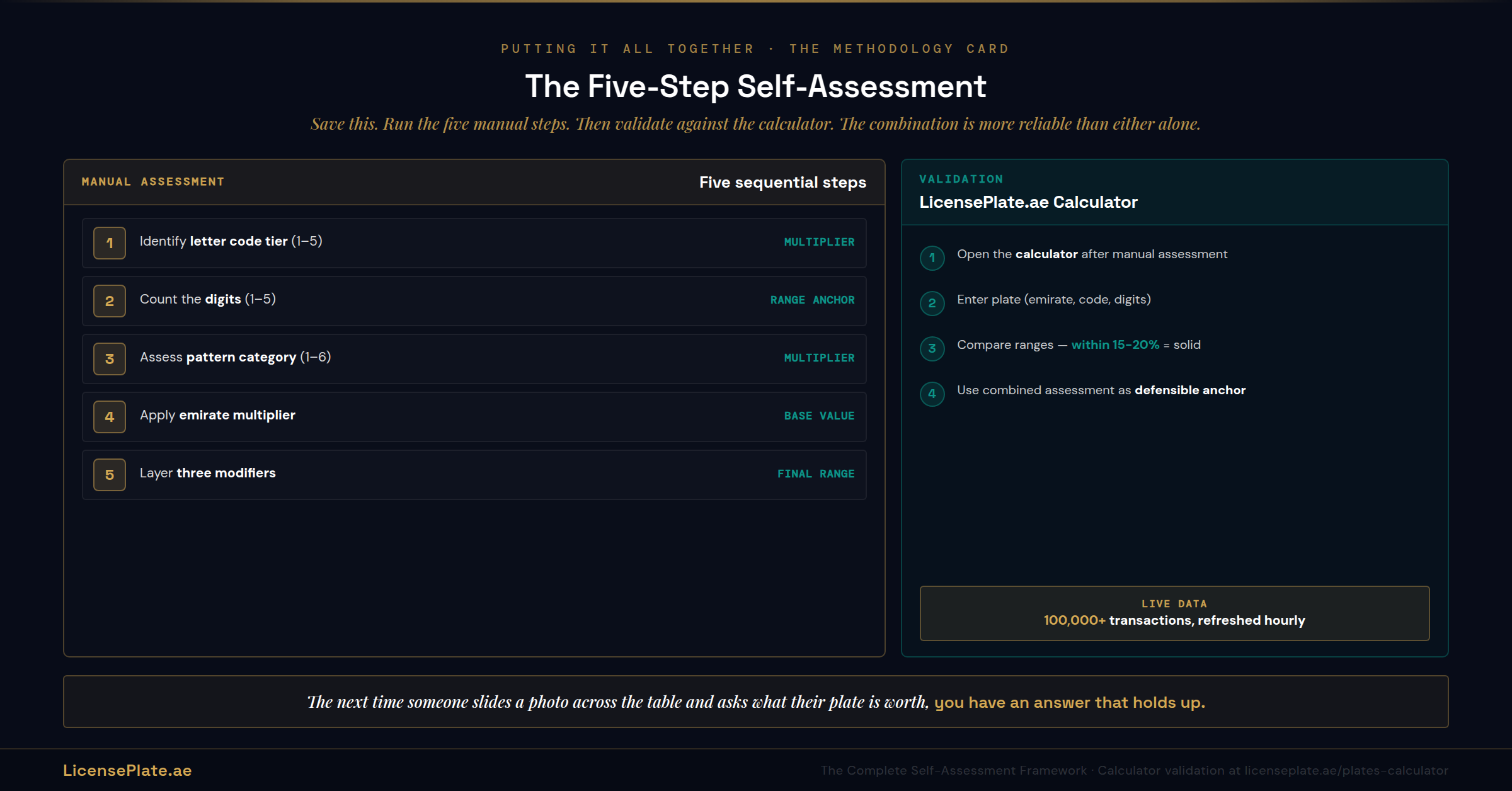
مع ترسّخ الإطار، يجري التقييم في خمس خطوات. وكل خطوة تنتج مخرجاً وسيطاً يغذّي التالية.
الخطوة الأولى: حدّد شريحة رمز الحرف. انظر إلى الحرف على اللوحة. طابقه مع إحدى الشرائح الخمس (القمّة من A إلى D، والتراث من E إلى K، والوسطى من L إلى N، والمتأخّرة من P إلى Z، والخاصة من AA إلى EE). سجّل المضاعف الأساسي (الشريحة الأولى = 5 إلى 10 أضعاف، والثانية = 2 إلى 4، والثالثة = 1.5 إلى 2.5، والرابعة = 1 خطّ أساس، والخامسة = 3 إلى 6).
الخطوة الثانية: حدّد عدد الأرقام. عُدّ الأرقام. ثبّتها على نطاق القيمة النمطي لعدد الأرقام ذاك داخل شريحة الحرف (خماسية الأرقام من 2,000 إلى 50,000 درهم خطّ أساس؛ ورباعية من 15,000 إلى أكثر من 500,000؛ وثلاثية من 50,000 إلى أكثر من 10 ملايين؛ وثنائية من 200,000 إلى أكثر من 38 مليوناً؛ وأحادية من 500,000 إلى أكثر من 55 مليوناً).
الخطوة الثالثة: قيّم دلالة النمط. افحص الأرقام بحثاً عن أنماط متكرّرة أو متماثلة عكسياً أو متسلسلة أو مرآتية أو ذات دلالة ثقافية أو مستديرة. وطبّق المضاعف المناسب (المتكرّرة من 5 إلى 15، والمتماثلة عكسياً من 3 إلى 8، والمتسلسلة من 3 إلى 6، والمرآتية من 2 إلى 5، وذات الدلالة الثقافية من 2 إلى 5، والمستديرة من 2 إلى 4). وإن لم يوجد نمط، فخطّ الأساس 1.
الخطوة الرابعة: طبّق مضاعف الإمارة. دبي 1.0 خطّ أساس. وأبوظبي من 0.8 إلى 1.0. والشارقة من 0.3 إلى 0.5. وعجمان من 0.15 إلى 0.30. ورأس الخيمة من 0.15 إلى 0.30. والفجيرة من 0.10 إلى 0.20. وأم القيوين من 0.10 إلى 0.25. وهذا ينتج تقدير قيمتك الأساسية.
الخطوة الخامسة: راكم المعدّلات الثانوية الثلاثة. طبّق توقيت السوق (±15 إلى 20%)، ونوع اللوحة (+2 إلى 5% للوحة بشعار دبي)، وعمق السوق (±10 إلى 25%). والتركيبة تنتج نطاق سعرك القابل للدفاع بطرف أدنى وتقدير وسطي وطرف أعلى.
التحقّق مقابل حاسبة LicensePlate.ae
التقييم الذاتي اليدوي أساسي لبناء الحدس وفهم المحرّكات الكامنة. وللتحقّق النهائي، تشغّل حاسبة قيمة اللوحات على LicensePlate.ae الإطار نفسه مقابل أكثر من 100,000 صفقة سوقية لإنتاج نطاق موثّق بأسعار دنيا ومتوسّطة وعليا ودرجة ندرة.
سير العمل الموصى به:
الخطوة الأولى: شغّل تقييمك اليدوي ذا الخطوات الخمس لإنتاج نطاق قابل للدفاع.
الخطوة الثانية: افتح حاسبة LicensePlate.ae وأدخل لوحتك (الإمارة، والرمز، والأرقام).
الخطوة الثالثة: قارن نطاقك اليدوي مقابل مخرجات الحاسبة. إن كان الاثنان ضمن 15 إلى 20% من بعضهما، فتقييمك متين. وإن تباعدا جوهرياً، أعد النظر في المدخلات الأساسية الأربعة لتحديد مصدر الفجوة.
الخطوة الرابعة: استخدم التقييم المجمّع كمرساتك القابلة للدفاع في التفاوض (إن كنت تشتري) أو في الإعلان (إن كنت تبيع). ويتيح لك سوق LicensePlate.ae الإعلان فوراً بعد التقييم، ناقلاً مخرجات الحاسبة مباشرةً إلى إعلان.
ويشير مقال شرح حاسبة LicensePlate.ae إلى أن الحاسبة تحدّث مدخلات التقييم كل ساعة لتبقى متوائمة مع الطلب الآني. فالتقييم اليدوي تحقّقك المستقلّ؛ والحاسبة تحقّقك السوقي. ومعاً يشكّلان أوثق نهج لتقييم اللوحات الإماراتية موجود اليوم.
سبعة أخطاء يرتكبها المقيّمون ذاتياً
الخطأ الأول: تخطّي تقييم رمز الحرف. رمز الحرف أكبر محرّك مفرد للقيمة. والمقيّمون ذاتياً الذين يرتكزون على عدد الأرقام دون وزن شريحة الحرف يخطئون تقدير اللوحات باستمرار بـ 5 إلى 10 أضعاف. ابدأ بالحرف دائماً.
الخطأ الثاني: المقارنة عبر أعداد أرقام غير مناسبة. اللوحة الرباعية واللوحة الثلاثية تعملان في شرائح قيمة مختلفة. ومقارنتهما مباشرةً تنتج مضاعفات مضلّلة. قارن دائماً المتماثل بالمتماثل داخل عدد الأرقام نفسه.
الخطأ الثالث: معاملة كل الأنماط كأنها متكافئة. اللوحات ذات الأرقام المتكرّرة والمتماثلة عكسياً ليستا الفئة نفسها. ويخصّص دليل علم الأعداد على LicensePlate.ae لكل فئة نمط مضاعفها المتمايز. حدّد فئة النمط المحدّدة قبل تطبيق المضاعف.
الخطأ الرابع: تجاهل الإمارة. يوثّق مقال مقارنة الإمارات السبع كيف تنتج الإمارة فروقاً بين الإمارات من 50 إلى 100 ضعف. والمقيّمون ذاتياً الذين يتخطّون مضاعف الإمارة ينتجون تقييمات صالحة لدبي لكنها خاطئة تماماً لأي إمارة أخرى.
الخطأ الخامس: الارتكاز على صفقات القمّة. المزادات العنوانية (DD 5 بـ 35 مليون درهم، وP 7 بـ 55 مليون درهم) قيم شاذّة إحصائياً. والمقيّمون ذاتياً الذين يرتكزون على هذه الصفقات للوحات غير مكافئة يبالغون في تقييمهم. فصفقات القمّة تُعلم سقف الإطار لا خطّ أساسه.
الخطأ السادس: تخطّي المعدّلات الثانوية. التوقيت ونوع اللوحة وعمق السوق تنتج تبايناً مجمّعاً من 30 إلى 50% على القيمة الأساسية. والمقيّمون ذاتياً الذين يتخطّون المعدّلات ينتجون تقديرات نقطية بدل نطاقات، والتقديرات النقطية لا تعكس كيف تُنجَز السوق فعلاً.
الخطأ السابع: معاملة التقييم الذاتي ككلمة نهائية. التقييم اليدوي يبني الحدس؛ والتحقّق بالحاسبة ينتج ثقة مرتكزة على السوق. والمقيّمون ذاتياً الذين يتخطّون خطوة التحقّق بالحاسبة يمضون بتقييمات لم تُختبر مقابل مجموعة بيانات الصفقات الكامنة. والاثنان معاً هما المنهجية.
الأسئلة الشائعة
س: ما مدى دقّة التقييم الذاتي فعلاً؟
ضمن 15 إلى 20% من أسعار الإنجاز السوقية للوحات داخل الفئات المعيارية، حين يُطبَّق الإطار بعناية. أما للوحات ذات الأنماط المتراكمة (مضاعفات متعدّدة تتراكم)، فيصبح التقييم الذاتي أقلّ دقّةً لأن تركيبات المضاعفات غير خطّية. وللصفقات القمّة (لوحات أحادية الرقم من رموز مميّزة)، لا ينتج التقييم الذاتي سوى نطاقات واسعة؛ والتسعير الدقيق يتطلّب مقارنات مزادات حديثة، وهو ما ترتكز عليه حاسبة LicensePlate.ae.
س: لماذا تهمّ الإمارة إلى هذا الحدّ؟
لأن قيمة اللوحة الإماراتية يحرّكها عمق طلب المشترين، وعمق الطلب يختلف بـ 10 إلى 50 ضعفاً بين الإمارات. فلوحة دبي لديها وصول إلى أكبر سوق ثانوية وأكثرها سيولة. ولوحة عجمان لديها وصول إلى تجمّع مشترين أصغر بكثير. ورقم اللوحة نفسه يحمل قيمة وظيفية مختلفة بحسب تجمّع المشترين الذي يمكنه الوصول إليه. ويوثّق مقال مقارنة الإمارات السبع هذا بوصفه المتغيّر الأقلّ تقديراً في تقييم اللوحات الإماراتية.
س: ماذا لو كانت لوحتي تحمل أنواع أنماط متعدّدة؟
راكم المضاعفات، لكن طبّقها بخصم. فاللوحة المتكرّرة + ذات الدلالة الثقافية + قليلة الأرقام يمكن أن تتراكم إلى 30 إلى 50 ضعف خطّ الأساس بدل الحاصل الضربي الصارم. فالتراكم حقيقي لكنه غير خطّي. والحاسبة تتعامل مع هذه اللاخطّية أفضل من التقييم اليدوي؛ عامل التقييم اليدوي للأنماط المتراكمة كنطاق واسع وتحقّق منه مقابل الحاسبة.
س: هل يؤثّر نوع اللوحة فعلاً في القيمة؟
هامشياً. فدليل أنواع اللوحات يغطّي اللوحات بشعار دبي الملوّن التي تحمل علاوة إعادة بيع من 2 إلى 5%. واللوحات الكلاسيكية لها إطار قيمتها الخاص المرتبط بالمركبة الكلاسيكية الأساسية. واللوحات الفاخرة ذات الملصق الأمامي لا تحمل شريحة قيمة منفصلة؛ فالقيمة تأتي من الرقم. والقصيرة مقابل الطويلة أثرها على القيمة صفر. فنوع اللوحة أصغر المدخلات السبعة.
س: كم مرّة تتغيّر قيمة اللوحة؟
يومياً، عند الهامش. ففعاليات المزادات الكبرى تحرّك تسعير القمّة خلال أيام؛ وبحسب قطعة تقويم المزادات على LicensePlate.ae، أضاف أنبل رقم 2026 مراجع سقف جديدة بـ DD 6 عند 37 مليون درهم. وموسم المكافآت ينتج علاوة طلب ملموسة في الربع الأخير. والظروف الكلّية (دورات البيتكوين المؤثّرة في سيولة الوافدين، ودورات العقار المؤثّرة في نقد المستثمرين) تحرّك عمق الطلب. ولأغراض عملية، حدّث تقييمك عند تشغيل صفقة؛ والحاسبة تحدّث كل ساعة لالتقاط الحالة الراهنة.
س: هل يمكنني الوثوق بحاسبات المنافسين للتحقّق المتقاطع؟
نعم، مع الوعي بمصادر بياناتها. فحاسبات اللوحات الإماراتية الأخرى تشغّل أطراً مشابهة مقابل مجموعات بياناتها الخاصة. والتقديرات ينبغي أن تتّفق ضمن 15 إلى 20%؛ وإن تباعدت جوهرياً، فقد تكون مجموعات البيانات الكامنة مختلفة الحجم أو الترجيح. وللصفقات عالية المخاطر، شغّل تقييمك اليدوي إضافةً إلى حاسبة LicensePlate.ae إضافةً إلى حاسبة منافس واحدة ووفّق بين الثلاثة.
س: ماذا عن اللوحات ذات التكوينات غير المعيارية (إكسبو، والفاخرة)؟
يعامل دليل أنواع اللوحات لوحات إكسبو كوضع قديم (مغلق أمام الإصدار الجديد) يحمل علاوة تذكارية صغيرة (من 5 إلى 15%) للجامعين. واللوحات الفاخرة ذات الملصق الأمامي لا تحمل شريحة قيمة منفصلة. ولأغراض التقييم، قيّم هذه اللوحات بالإطار المعياري (الحرف، والأرقام، والنمط، والإمارة) وطبّق علاوة جامعي إكسبو الصغيرة حيثما ناسب. فالصيغة الفاخرة لا أثر لها على التقييم بما يتجاوز الرقم.
س: كيف أقيّم لوحتي إن أردت بيعها على LicensePlate.ae؟
شغّل تقييمك اليدوي ذا الخطوات الخمس لبناء الحدس، وتحقّق مقابل حاسبة LicensePlate.ae لإنتاج النطاق المرتكز على السوق، ثم أعلن عند الطرف المتوسّط إلى الأعلى من النطاق لتمنح نفسك مساحة تفاوض. ويأخذ مسار الرفع على LicensePlate.ae مخرجات الحاسبة مباشرةً إلى إعلان. وسير العمل المجمّع يستغرق نحو عشر دقائق وينتج سعر طلب قابلاً للدفاع يعكس الفهم اليدوي وبيانات السوق معاً.
ولسياق أعمق عن توقيت المزادات تحديداً، انظر تقويم مزادات اللوحات لدى الهيئة 2026 الذي يوثّق كل تاريخ مزاد مؤكَّد ومتوقَّع مع معايير الإيرادات التاريخية. فتوقيت المزادات يؤثّر في التقييم مباشرةً عبر ظهور صفقات مقارنة جديدة في مجموعة بيانات السوق.
تقييم اللوحات ليس لغزاً. إنه بنية. فأربعة مدخلات أساسية (هيبة الحرف، وعدد الأرقام، ودلالة النمط، والإمارة) تفسّر 80 إلى 90% من قيمة أي لوحة. وثلاثة معدّلات ثانوية (التوقيت، ونوع اللوحة، وعمق السوق) تفسّر الباقي. اقرأ المدخلات بالترتيب، وطبّق المضاعفات الصحيحة، وراكم المعدّلات، وتحقّق مقابل الحاسبة، ويكون لديك نطاق قابل للدفاع يصمد عند التماسّ مع السوق الفعلية.
والإطار هو نفسه الذي يستخدمه المحترفون. والفارق بين التقييم المحترف والتقييم الذاتي هو عمق البيانات وسرعة التعرّف على الأنماط، لا المنهجية. وبعبورك الخطوات الخمس أعلاه، صارت المنهجية لديك. أما عمق البيانات فيقيم في حاسبة LicensePlate.ae (أكثر من 100,000 صفقة موثّقة، وتحديث كل ساعة). استخدم الاثنين. فالتركيبة أوثق من أيّهما وحده.
وللطبقة المرجعية الكامنة، يوسّع دليل رموز دبي من A إلى Z إطار شرائح الحروف، ويوسّع مقال علم الأعداد إطار دلالة الأنماط، ويوسّع مقال مقارنة الإمارات السبع إطار الإمارة، ويرسّخ مقال التحقّق من الأسعار معايير محدّدة رقماً برقم، ويوثّق مقال الأرقام القياسية صفقات القمّة التي تعاير سقف الإطار، ويغطّي دليل التفاوض كيفية استخدام تقييمك في المحادثات مع البائعين والمشترين، ويغطّي دليل كيفية البيع سير العمل الكامل من الإعلان حتى الإغلاق بمجرّد أن يكون لديك نطاقك القابل للدفاع. وهذه القطع، مع دليل المنهجية هذا، تشكّل طبقة التقييم المرجعية الكاملة للوحات الإماراتية. وفي المرّة القادمة التي يدفع فيها أحدهم صورة عبر الطاولة ويسأل كم تساوي لوحته، سيكون لديك جواب يصمد.
حذف التعليق؟
هل أنت متأكد أنك تريد حذف هذا التعليق؟ لا يمكن التراجع عن هذا الإجراء.
حذف المقال؟
هل أنت متأكد أنك تريد حذف هذه المقالة؟ سيؤدي ذلك أيضًا إلى حذف جميع التعليقات. لا يمكن التراجع عن هذا الإجراء.