

دبي باعت 90 لوحة رقم في أمسية واحدة بـ 109 ملايين درهم. وإليك أين يذهب ذلك المال فعلاً
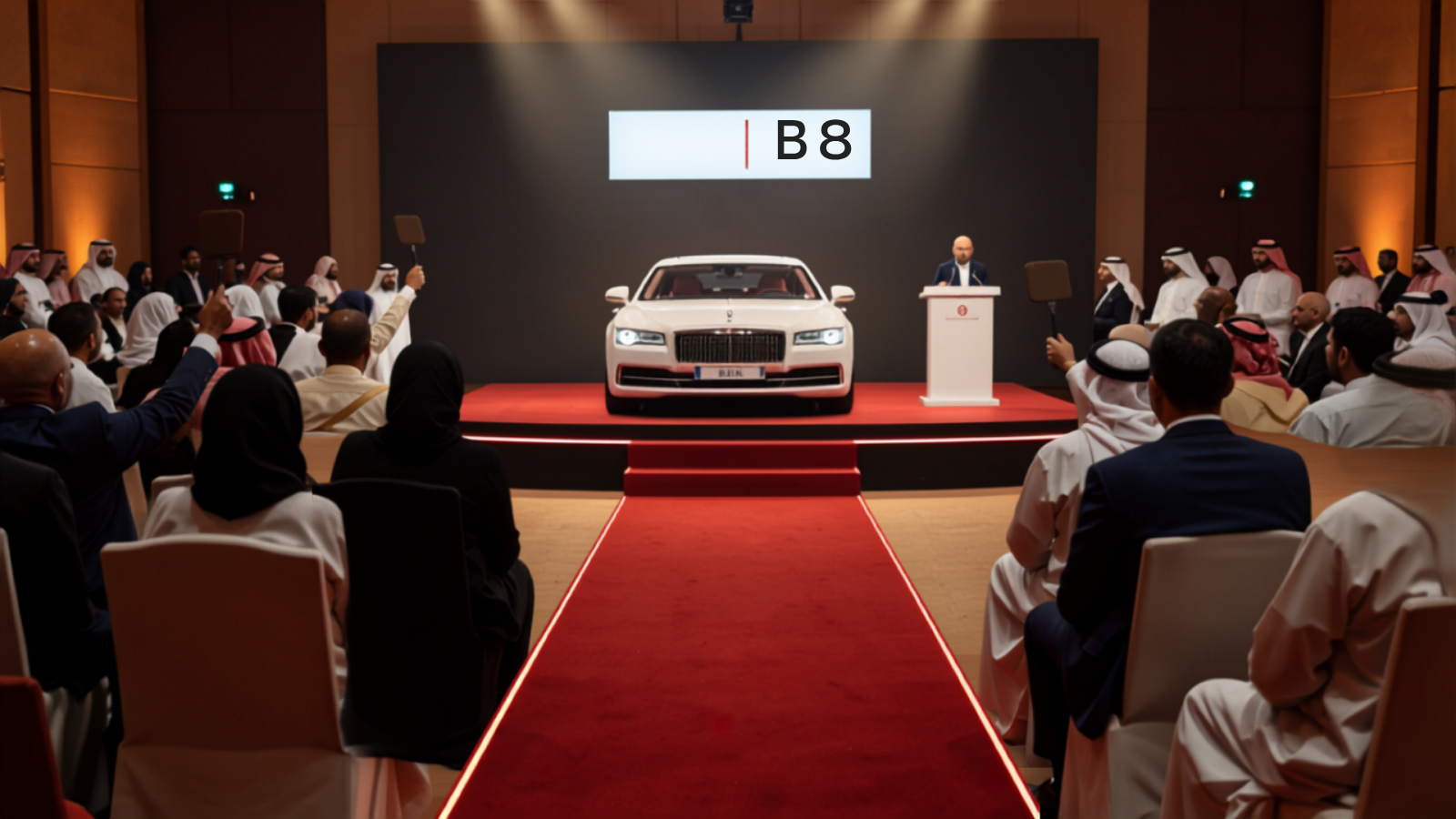
في أمسية واحدة من ديسمبر 2025، باعت دبي 90 لوحة رقم بـ 109,026,000 درهم — نحو 29.7 مليون دولار. لا سيارات. ولا عقارات. تسعون سلسلة قصيرة من الرموز. كان أعلى مزاد لوحات إيراداً تعقده الهيئة على الإطلاق، ووحدها لوحة BB 12 شكّلت 9.66 ملايين درهم منه. والسؤال البديهي، الذي لا يكاد أحد يجيب عنه، هو أين يذهب ذلك المال فعلاً — وهل حكومة تبيع أرقاماً طرفة أم بند إيرادات جادّ حقاً. وإليك ما يقوله السجلّ فعلاً، وما هو موثّق علناً عن المال، و— بصراحة — ما ليس كذلك.
الإجابة في 30 ثانية.
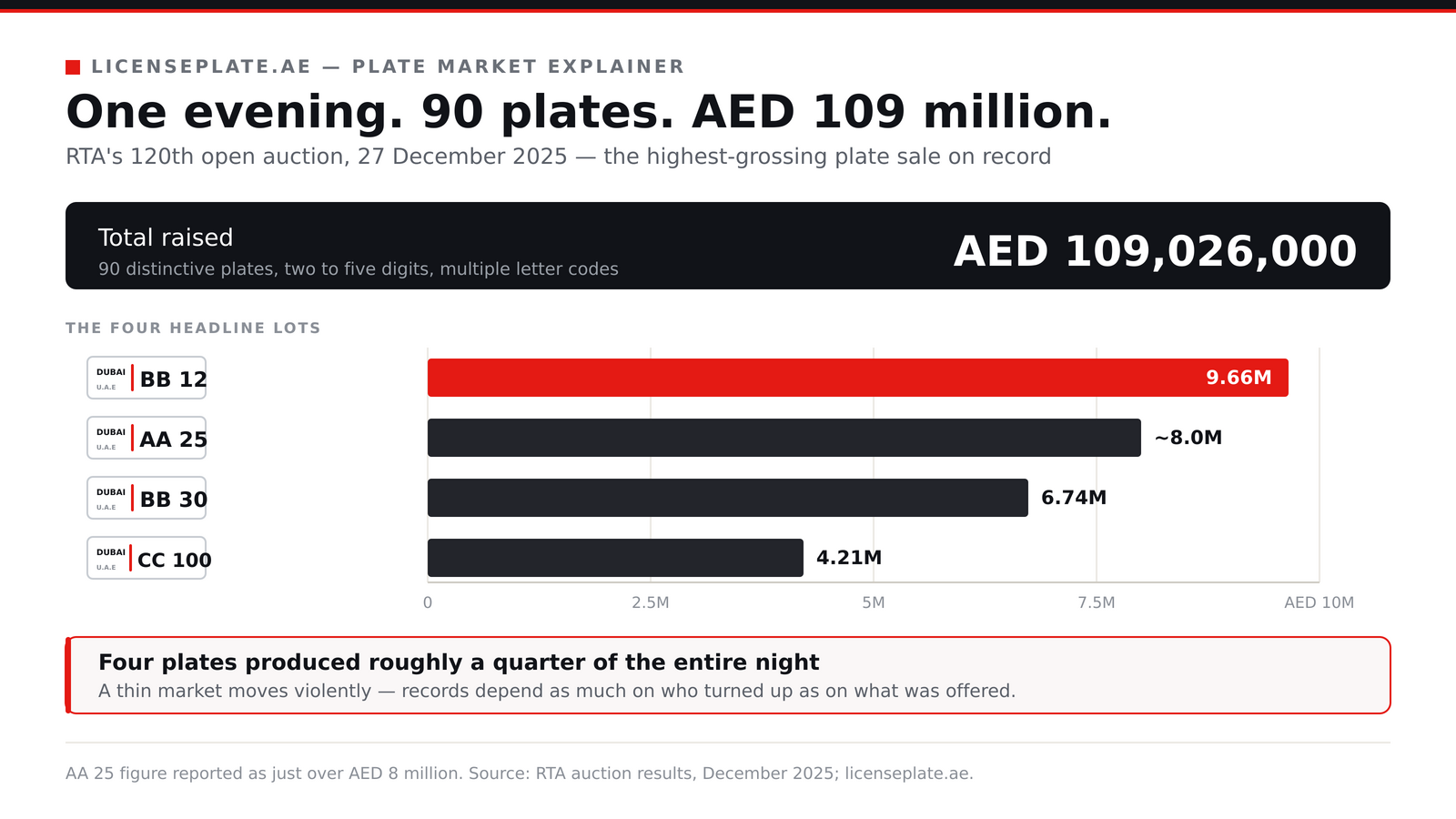
- الرقم القياسي: 109,026,000 درهم (نحو 29.7 مليون دولار) في المزاد العلني رقم 120 للهيئة، 27 ديسمبر 2025 — 90 لوحة.
- أعلى دفعة: BB 12 بـ 9.66 ملايين درهم، تليها AA 25 بما يزيد قليلاً على 8 ملايين درهم.
- من يديره: الهيئة — جهة حكومية في دبي. وهذه مبيعات دولة رسمية، لا إعادة بيع خاصة.
- أين يذهب المال: عوائد مزادات الهيئة إيراد حكومي. أما المزادات الخيرية مثل «الرقم الأنبل» فآلية منفصلة بقضايا معلنة.
- ما ليس علنياً: تفصيل ببنود لكيفية إنفاق إيرادات اللوحات. وكل من يدّعي خلاف ذلك يخمّن.
ما يغطّيه هذا الدليل
- ليلة الرقم القياسي، بالأرقام
- لماذا تبيع حكومة لوحات أرقام أصلاً
- أين يذهب المال فعلاً
- المزادات الخيرية آلية مختلفة
- كيف يقارَن هذا بإيرادات عامة أخرى
- ما الذي حدّد الأسعار تلك الليلة فعلاً
- ما ليس موثّقاً علناً
- ماذا يعني هذا إن كنت أنت المزايد
- هل لا تزال السوق صاعدة؟
- الأسئلة الشائعة — 14 سؤالاً مُجاباً
ليلة الرقم القياسي، بالأرقام
الإجابة المباشرة: المزاد العلني رقم 120 للهيئة على لوحات المركبات المميّزة، الذي أُقيم في 27 ديسمبر 2025، حقّق 109,026,000 درهم — أعلى إيراد منذ بدء المزادات.
| اللوحة | السعر (درهم) | ملاحظة |
|---|---|---|
| BB 12 | 9,660,000 | أعلى دفعة في الليلة |
| AA 25 | ~8,000,000 | الثانية الأعلى |
| BB 30 | 6,740,000 | علاوة الحرفين المتماثلين |
| CC 100 | 4,210,000 | ثلاث خانات بنمط نظيف |
| الإجمالي، 90 لوحة | 109,026,000 | نحو 29.7 مليون دولار |
وتفصيلان بنيويان يسهل إغفالهما. فالمزاد طرح لوحات من خانتين إلى خمس خانات عبر رموز حرفية متعدّدة، فالإجمالي ليس أربع دفعات غنيمة — بل توزيع. كما أتاحت الهيئة الدفع ببطاقة الائتمان عبر موقعها، فوسّعت قاعدة المزايدين إلى ما وراء من يستطيعون تقديم شيك مصرفي في تلك الليلة. الوصول يتغيّر، والأسعار تتبع.
ولبيع BB 12 قصّته الخاصة، وقد غطّيناها حين حدثت — انظر BB 12 تُباع بـ 9.66 ملايين درهم. وللتقويم الكامل والنتائج الجارية، انظر تقويم مزادات الهيئة لعام 2026.
لماذا تبيع حكومة لوحات أرقام أصلاً
الآلية أكثر منطقيةً ممّا تبدو للوهلة الأولى. فالجهة المرورية تحتكر إصدار أرقام اللوحات، والطلب على الأرقام القصيرة والسهلة التذكّر وذات الدلالة الثقافية يفوق المعروض بكثير. وطرحها في مزاد يفعل ثلاثة أمور دفعةً واحدة:
- يحوّل ندرةً مصطنعة إلى إيراد عام دون فرض ضريبة على أحد. فلا أحد مضطرّ لشراء لوحة بـ 9 ملايين درهم.
- يوزّع بعدالة بالسعر لا بالعلاقات. فالمزاد العلني طريقة شفّافة لتقرير من يحصل على الـBB 12 الوحيدة المتاحة.
- يخلق سوقاً ثانوية تظلّ الجهة تتحكّم بها. فكل إعادة بيع لاحقة تمرّ عبر إجراء النقل نفسه لدى الهيئة، ما يُبقي السجلّ مرجعياً.
والنقطة الأخيرة هي ما يجعل سوق اللوحات الإماراتية غير معتادة. فالأصل تصدره الدولة، ويُتداوَل بين الأفراد، وتعيد الدولة تسجيله عند كل انتقال. وإن أردت المنطق الكامن وراء فرض بعض الأرقام لهذه المبالغ، فدليلنا لـعلم أعداد اللوحات الإماراتية يشرح التسعير الثقافي، واللوحات ثلاثية التكرار يغطّي أندر طبقة.
أين يذهب المال فعلاً
الإجابة المباشرة: عوائد مزادات لوحات الهيئة إيراد لحكومة دبي، تحصّله هيئة الطرق والمواصلات. وهي ليست أرباح شركة خاصة وليست، افتراضياً، تبرّعات خيرية.
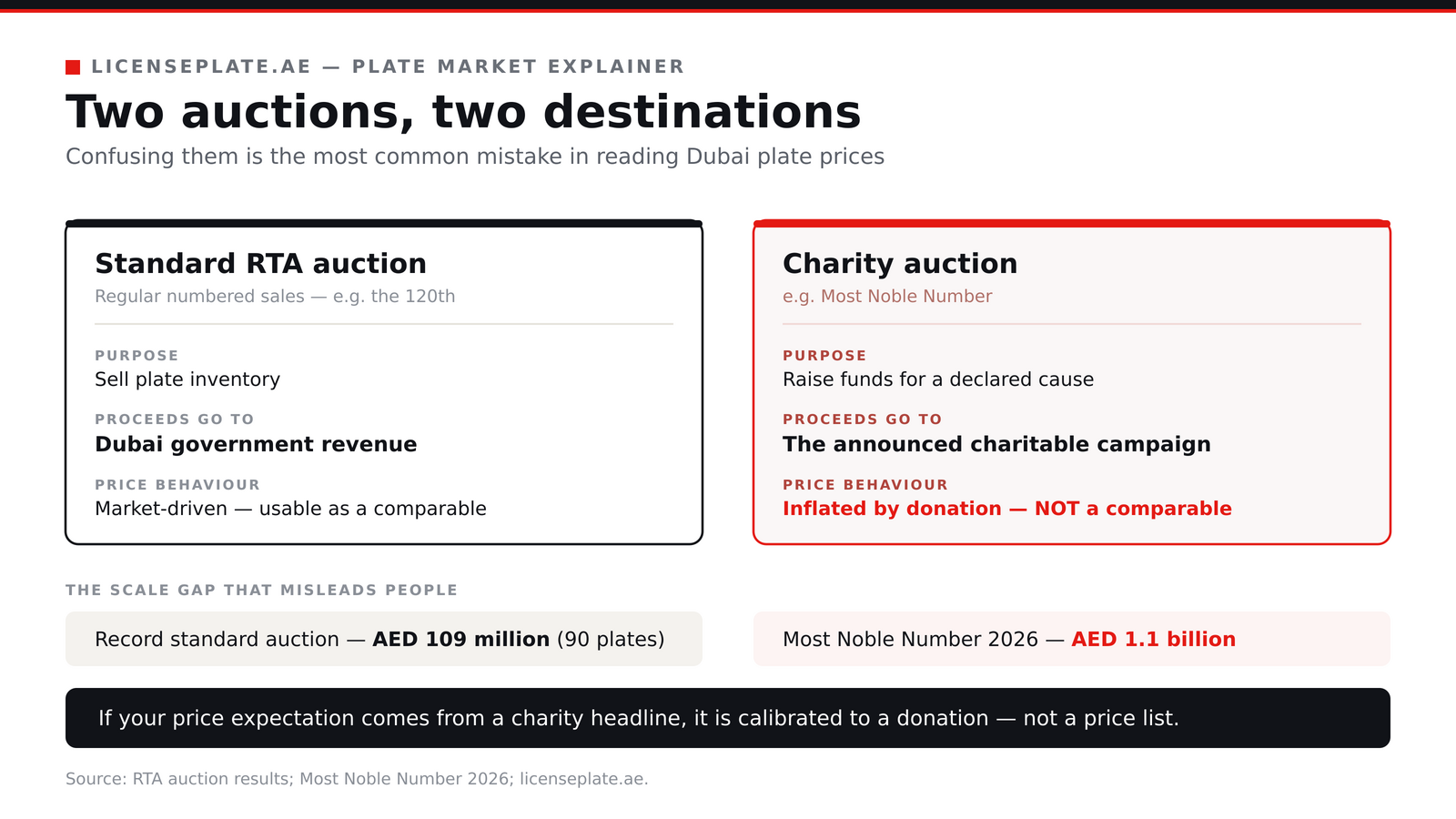
والتمييز الذي يهمّ، والذي يُطمَس باستمرار في التغطية الصحفية:
| مزاد الهيئة المعياري | المزاد الخيري (مثل «الرقم الأنبل») | |
|---|---|---|
| الغرض | بيع مخزون اللوحات | جمع أموال لقضية معلنة |
| العوائد | إيراد حكومي | توجَّه إلى الحملة الخيرية المعلنة |
| التكرار | مزادات منتظمة ومرقّمة | فعاليات بارزة متفرّقة |
| سلوك الأسعار | تحرّكها السوق | يضخّمها الدافع الخيري |
فحين تُباع لوحة بـ 35 مليون درهم في أمسية خيرية، فذلك الرقم يعكس تبرّعاً بقدر ما يعكس تقييماً. ومعاملة تلك الأرقام كمقارنات سوقية هي أشيع خطأ تحليلي مفرد في هذه السوق — ولهذا فإن مقالنا عن كيفية ارتفاع قيمة اللوحات فعلاً يستبعد نتائج المزادات الخيرية قبل استخلاص أي اتّجاه.
المزادات الخيرية آلية مختلفة
مزاد «الرقم الأنبل» هو أوضح مثال على العمود الثاني. ففي نسخته لعام 2026 جمع 1.1 مليار درهم في أمسية واحدة، ببيع DD 6 بـ 37 مليون درهم — حجم لا يقاربه أي بيع اعتيادي للهيئة، لأن المزايدة خيرية لا اقتنائية. وقد غطّينا الفعالية كاملةً في الرقم الأنبل 2026.
ولماذا يهمّ هذا مشترياً عادياً: فالأرقام البارزة التي رأيتها منقولة عن لوحات دبي هي بنسبة غير متناسبة نتائج مزادات خيرية. فلوحة من مزاد اعتيادي للهيئة بمئات الآلاف المنخفضة هي الطرف الواقعي للسوق. وإن كانت نقطة مرجعك DD 6 بـ 37 مليون درهم، فتوقّعاتك معايَرة على فعالية جمع تبرّعات، لا على قائمة أسعار.
كيف يقارَن هذا بإيرادات عامة أخرى
109 ملايين درهم من أمسية واحدة رقم لافت، لكن الحجم يهمّ لتفسيره بأمانة. وبعض السياق:
- إنه مزاد واحد، لا إجمالي سنة. فالهيئة تعقد مزادات مرقّمة بانتظام، والرقم السنوي عبر كل المبيعات أكبر بكثير.
- إنه إيراد بلا كلفة بضاعة تقريباً. فخلافاً لبيع أرض أو بنية تحتية، «المنتَج» هنا قيد في سجلّ. والهامش قريب من الكلّي.
- إنه طوعي ومركَّز بشدّة. فعدد صغير من المشترين يسهم بمعظم الإجمالي — وأربع لوحات وحدها شكّلت نحو ربع ليلة الرقم القياسي.
- وليس بديلاً عن البنود الكبرى. فمقابل ميزانية مدينة-دولة، إيراد اللوحات ذو معنى لكنه ليس بنيوياً.
والطريقة الصحيحة لقراءته: مزادات اللوحات آلية إيراد كفؤة على نحو غير معتاد، لا ركيزة للمالية العامة. فهي تحوّل الوجاهة إلى مال من أناس يريدون الإنفاق فعلاً، وهو أقلّ أشكال دخل الحكومات إيلاماً تقريباً.
ما الذي حدّد الأسعار تلك الليلة فعلاً
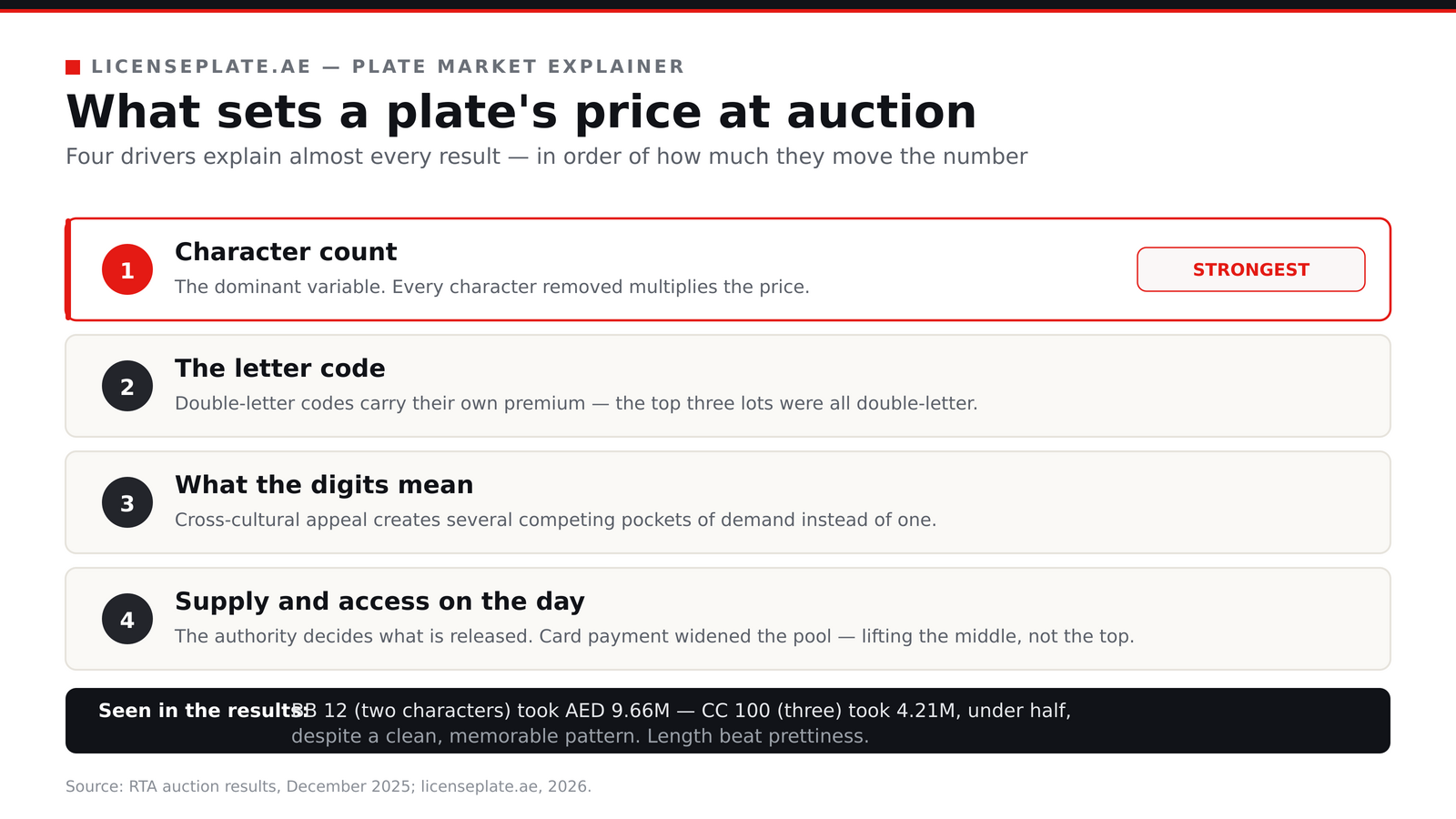
انظر إلى الدفعات الأربع الأعلى ويصبح منطق التسعير مرئياً في النتائج نفسها — BB 12 وAA 25 وBB 30 وCC 100. وأربعة محرّكات تفسّر كل ذلك تقريباً.
- عدد الرموز. فكل رمز تحذفه يضاعف السعر. وBB 12 وAA 25 رقمان من رمزين؛ أما CC 100 فثلاثة وبيعت بأقلّ من نصف BB 12 رغم نمطها النظيف السهل التذكّر. الطول هو المتغيّر المهيمن، متقدّماً على كل شيء آخر.
- الرمز الحرفي. فالرموز ذات الحرفين المتماثلين تحمل علاوتها الخاصة في دبي، والدفعات الثلاث الأعلى كانت كلّها بحرفين متماثلين. والرمز ليس غلافاً محايداً — فـAA وBB قابلان للاقتناء بذاتهما، ولهذا يعامل دليل الحرفين المتماثلين لدينا هذه اللوحات كفئة منفصلة.
- ما تعنيه الخانات. فالأرقام القوية ثقافياً تجذب مزايدةً أعرض، والمزايدة الأعرض هي ما ينتج نتيجةً منفلتة. فالرقم الذي يروق للمشترين الإماراتيين والجنوب آسيويين والشرق آسيويين والغربيين تقف خلفه عدّة جيوب متنافسة لا جيب واحد.
- المعروض والوصول في ذلك اليوم. فالجهة تقرّر كم رقماً مميّزاً تطرح ومتى. اطرح لوحتي غنيمة متماثلتين في أمسية واحدة فتتنافسان على المشترين أنفسهم؛ واطرح واحدة فتقف وحدها. والدفع بالبطاقة وسّع قاعدة المزايدين في الوقت نفسه، وهو ما يرفع وسط النطاق أكثر من قمّته.
والفائدة العملية من هذا: تستطيع توقّع أين ستستقرّ دفعة تقريباً قبل فتح المزايدة، بتقييمها على تلك المحاور الأربعة مقابل نتائج ماضية مماثلة. وهذا بالضبط ما يقنّنه إطار التقييم الذاتي لدينا، وهو دليل أفضل بكثير من الرقم البارز في آخر أمسية خيرية.
وتحذير ينتج مباشرةً عن التركّز في النتائج: السوق الرقيقة تتحرّك بعنف. فحين تنتج أربع دفعات ربع إيراد الليلة، فإن حضور مزايدين مصمّمَين أو غيابهما يغيّر النتيجة تغييراً هائلاً. والأرقام القياسية تتعلّق بمن حضر بقدر ما تتعلّق بما طُرِح.
ما ليس موثّقاً علناً
هنا تختلق معظم المقالات أشياء بهدوء، فلنكن صريحين بشأن الحدود.
لا يوجد تفصيل علني ببنود يبيّن كم من إيراد مزادات اللوحات يموّل أي مشروع بعينه. فالإيراد الحكومي يُجمَّع عموماً ويُخصَّص عبر عمليات الموازنة لا بتخصيصه مزاداً بمزاد. وبالتالي:
- الادّعاءات بأن مال اللوحات «بنى طريقاً أو خطّ مترو بعينه» غير قابلة للتحقّق من المصادر المنشورة. عاملها كسردية لا كحقيقة.
- الهيئة تنشر نتائج المزادات، لا مخصّصات الإنفاق. فأرقام الإيرادات صلبة؛ أما تفاصيل الوجهة فليست منشورة بتلك الدقّة.
- عوائد المزادات الخيرية استثناء — فتلك الحملات تعلن قضيّتها، وهذا بالضبط سبب الإعلان عنها منفصلةً.
ونفضّل أن نخبرك بحدّ المعلوم على أن نملأه بتفاصيل تبدو معقولة. وإن أعطاك مصدر تفصيلاً دقيقاً لإنفاق إيرادات اللوحات، فاسأل من أين جاء الرقم.
ماذا يعني هذا إن كنت أنت المزايد
أربع نتائج عملية لكل ما سبق:
- أنت تشتري من الدولة لا من وسيط إعادة بيع. فلوحات السوق الأولية تأتي من مخزون الجهة نفسها، ما يعني مصدراً نظيفاً — وهي إحدى المزايا الحقيقية على الشراء الخاص.
- الدفع بالبطاقة وسّع الميدان. فالوصول الأيسر يعني مزايدين أكثر، والمزايدون الأكثر يعنون أن الدفعات الرخيصة لم تعد بتلك الرخص. خصّص ميزانية للمنافسة على الأرقام المتوسّطة.
- لا ترتكز على النتائج الخيرية. قيّم هدفك بنتائج مزاد اعتيادي مماثلة — وإطار التقييم لدينا يمرّ بك على ذلك.
- نظّف ملفّك المروري قبل أن تزايد. فالمخالفات المستحقّة تمنع الإصدار حتى بعد فوزك — انظر شرح الملفّ المروري. وللدفع المرحلي على فوز كبير، هناك التقسيط بموجب القرار 917.
هل لا تزال السوق صاعدة؟
الإجابة المباشرة: الإجمالي القياسي يخبرك أن الطلب قوي، لكن إجمالياً قياسياً ليس كأسعار صاعدة لكل لوحة. فالإجمالي الأعلى قد يأتي من دفعات أكثر، أو دفعات أفضل، أو وصول أوسع — والثلاثة انطبقت في ليلة الرقم القياسي.
وما ينبغي مراقبته فعلاً:
- السعر لكل لوحة مماثلة، لا إجمالي إيراد المزاد. لوحة من رمزين هذه السنة مقابل لوحة من رمزين السنة الماضية.
- عدد المزايدين وسهولة الدفع. فكل توسيع للوصول يضيف طلباً في الطرف الأدنى.
- قرارات المعروض. فالجهة تتحكّم بعدد الأرقام المميّزة المطروحة وتوقيتها — وهو أكبر عامل مفرد في السعر.
- استبعاد الفعاليات الخيرية من خطّ اتّجاهك، للأسباب أعلاه.
ودليل الاستثمار في اللوحات ومقارنة اللوحات مقابل الذهب مقابل العقار لدينا يتعمّقان أكثر في مسألة العوائد.
الأسئلة الشائعة
كم جمع مزاد لوحات الأرقام القياسي في دبي؟
109,026,000 درهم — نحو 29.7 مليون دولار — في المزاد العلني رقم 120 للهيئة يوم 27 ديسمبر 2025، عبر 90 لوحة. وكان أعلى مزاد لوحات إيراداً تعقده الهيئة.
ما أغلى لوحة في المزاد القياسي؟
BB 12، بـ 9.66 ملايين درهم. تلتها AA 25 بما يزيد قليلاً على 8 ملايين درهم، ثم BB 30 بـ 6.74 ملايين درهم وCC 100 بـ 4.21 ملايين درهم.
أين يذهب مال مزادات اللوحات في دبي؟
عوائد مزادات الهيئة المعيارية إيراد لحكومة دبي تحصّله هيئة الطرق والمواصلات. وهي ليست أرباح شركة خاصة. أما المزادات الخيرية فمنفصلة وتوجّه الأموال إلى قضية معلنة.
هل يُستخدَم مال مزادات اللوحات في الأعمال الخيرية؟
فقط حين يكون المزاد فعالية خيرية صراحةً، مثل «الرقم الأنبل». أما مزادات الهيئة المرقّمة الاعتيادية فإيراد حكومي عادي لا جمع تبرّعات.
هل أستطيع معرفة ما يُنفَق عليه إيراد اللوحات بالضبط؟
لا. فلا يوجد تفصيل منشور ببنود يربط إيراد مزادات اللوحات بمشاريع بعينها. والهيئة تنشر نتائج المزادات لا مخصّصات الإنفاق، لذا ينبغي التعامل بريبة مع أي ادّعاء دقيق عن وجهة المال.
لماذا تبيع حكومة لوحات أرقام؟
لأن الطلب على الأرقام القصيرة السهلة التذكّر يفوق المعروض بكثير. والمزاد يحوّل تلك الندرة إلى إيراد عام طوعي، ويوزّع الأرقام النادرة بشفافية بالسعر، ويُبقي السجلّ تحت سيطرة الجهة.
هل هذه مزادات حكومية رسمية؟
نعم. فمزادات لوحات الهيئة مبيعات رسمية لجهة حكومية في دبي، مسحوبة من مخزون الجهة نفسها — ولهذا يكون المصدر نظيفاً مقارنةً ببعض عمليات إعادة البيع الخاصة.
كم لوحة تُباع في مزاد واحد؟
يختلف. فمزاد ديسمبر 2025 القياسي طرح 90 لوحة من خانتين إلى خمس خانات عبر رموز حرفية متعدّدة. ومزاد إلكتروني منفصل لعام 2026 كان مقرّراً أن يطرح 300 لوحة مميّزة.
هل يمكن الدفع ببطاقة الائتمان في مزاد لوحات لدى الهيئة؟
أتاحت الهيئة الدفع ببطاقة الائتمان عبر موقعها في المزاد القياسي، ما وسّع الوصول إلى ما وراء وسائل الدفع التقليدية.
لماذا أسعار المزادات الخيرية أعلى بكثير؟
لأن المزايدة خيرية بقدر ما هي اقتنائية. فاللوحة التي تُباع بعشرات الملايين في أمسية خيرية تعكس تبرّعاً لا تقييماً سوقياً، لذا ينبغي استبعاد تلك النتائج من اتّجاهات الأسعار.
هل 109 ملايين درهم مبلغ كبير لحكومة؟
هو رقم لافت لأمسية واحدة وكفؤ على نحو غير معتاد، لأن كلفة إنتاج الأصل قريبة من الصفر. لكنه مقابل ميزانية مدينة كاملة ذو معنى لا بنيوي.
هل يعني إجمالي مزاد قياسي أن أسعار اللوحات ترتفع؟
ليس بالضرورة. فالإجمالي القياسي قد ينتج عن دفعات أكثر أو دفعات أفضل أو وصول أوسع للمزايدين. وللحكم على الأسعار، قارن لوحات مماثلة عبر السنوات بدل تتبّع الإيراد الإجمالي.
من يشتري هذه اللوحات؟
مجموعة مركَّزة من الأفراد ذوي الملاءة العالية والشركات. وفي ليلة الرقم القياسي، شكّلت أربع لوحات نحو ربع الإجمالي، وهو نمط معتاد في توزيع هذه المبيعات.
هل يستطيع المشترون العاديون الحصول على شيء في هذه المزادات؟
نعم. فالمزادات تشمل أرقاماً أطول من أربع وخمس خانات تُحسَم بأقلّ بكثير من الدفعات البارزة. فاللوحات الغنيمة تنال التغطية؛ ومعظم المخزون لا يُباع بالملايين.
الخلاصة النهائية
حوّلت دبي قيداً في سجلّ إلى أمسية بـ 109 ملايين درهم، وفعلت ذلك ببيع شيء لا تستطيع إصداره سواها لأناس يريدون شراءه فعلاً. وتلك قطعة أنيقة من المالية العامة — طوعية وعالية الهامش وشفّافة عند نقطة البيع.
وحيث تتوقّف الشفافية هو ما بعد ذلك: فإجماليات الإيراد منشورة، وتفاصيل الإنفاق ليست كذلك. ومن يخبرك بالضبط أي مشروع موّلته مزايدتك إنما يملأ فراغاً. وإن كنت تعاير ميزانيتك، فالرقم الذي ترتكز عليه هو نتيجة مزاد اعتيادي — لا العنوان الخيري الذي تصدّر الأخبار.
تفكّر في المزايدة، أو في الشراء بلا منافسة؟ تصفّح لوحات دبي وسوق الإمارات الكاملة، أو قارن المسارات في المزاد مقابل السوق الثانوية.
حذف التعليق؟
هل أنت متأكد أنك تريد حذف هذا التعليق؟ لا يمكن التراجع عن هذا الإجراء.
حذف المقال؟
هل أنت متأكد أنك تريد حذف هذه المقالة؟ سيؤدي ذلك أيضًا إلى حذف جميع التعليقات. لا يمكن التراجع عن هذا الإجراء.