

اقتصاديات اقتران السيارة باللوحة: ما تخبرك به ثقافة السيارات في دبي عن تقييم اللوحات
في أي بعد ظهر جمعة على شارع الشيخ زايد، بين مول الإمارات ووسط مدينة دبي، يمكنك مشاهدة قواعد اقتران اللوحات الثلاث في الإمارات وهي تتكشّف آنياً من إشارة مرور واحدة. فبورشه 911 GT3 RS بيضاء تحمل اللوحة K 911 تتوقّف بجانب مرسيدس-AMG G63 سوداء تحمل اللوحة AA 63. وخلفهما، رولز-رويس غوست رمادية تقبع على لوحة أحادية الرقم كلّفت أكثر من السيارة نفسها. ثلاث مركبات. وثلاثة مالكين. وثلاثة مقاربات مختلفة تماماً للسؤال نفسه: كيف تطابق لوحة سيارة بسيارة في مدينة تكون فيها اللوحة نصف الهوية؟
وهذا هو السؤال الذي لا يكتب عنه أحد بشكل سليم لأن الإجابة عنه تتطلّب فهم شيء يقع عند تقاطع ثقافة السيارات والرمزية العددية واقتصاديات السوق. فالمطابقة ليست عشوائية. إنها تتبع أعرافاً طوّرها مجتمع السيارات في دبي على مدى عقدين من تداول اللوحات، وقد تصلّبت تلك الأعراف إلى قواعد تسعير سوقية تؤثّر في ما تساويه أرقام لوحات بعينها ولماذا.
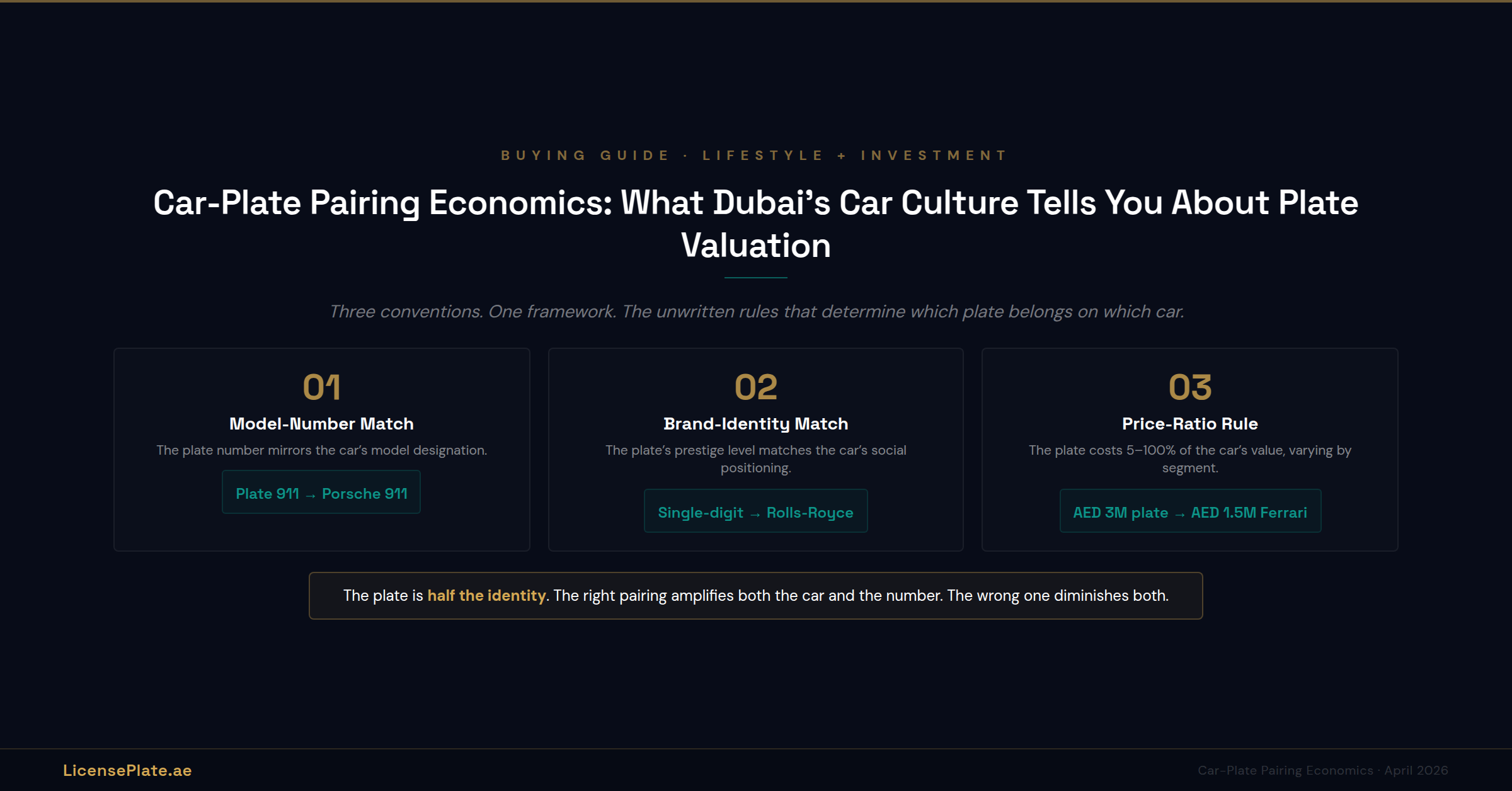
ويرسم هذا المقال أعراف الاقتران الثلاثة التي تهيكل سوق مطابقة السيارة باللوحة في دبي: مطابقة رقم الطراز، ومطابقة هوية العلامة، ومطابقة نسبة السعر. ولكل عُرف منطقه الخاص، وتبعاته السعرية الخاصة، وجمهوره الخاص. وينطبق الإطار سواء كنت تشتري لوحتك الأولى لسيارة جديدة (يغطّي مقال قرار اللوحتين ما إذا كان عليك شراء اللوحة أو السيارة أولاً) أو كنت تضيف لوحة إلى مجموعة تبنيها منذ سنوات.
العُرف الأول: مطابقة رقم الطراز
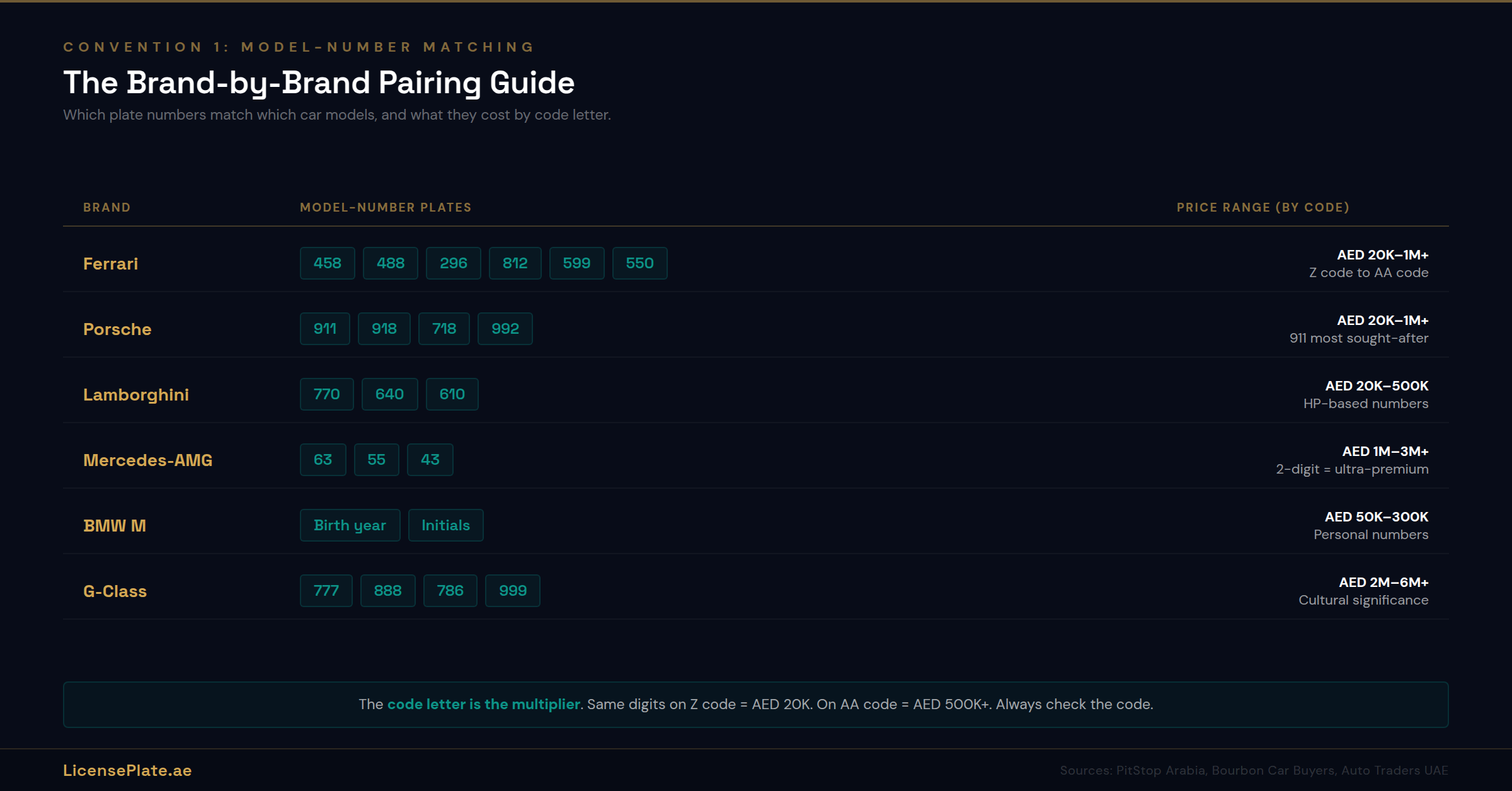
أوضح أعراف الاقتران في دبي وأسهلها فهماً. فرقم اللوحة يطابق تسمية طراز السيارة. وتؤكّد PitStop Arabia أن المالكين "يخصّصون اللوحات بأرقام تطابق طراز سيارتهم (مثل '458' لفيراري 458)." وتشير Bourbon Car Buyers إلى أن اللوحات المطابقة لأرقام الطرازات مثل "911 (لبورشه)، أو 488 (لفيراري)، أو 770 (للامبورغيني)" تضيف قيمة للوحة والسيارة معاً.
ويعمل هذا العُرف لأنه يخلق ارتباطاً بصرياً واحداً لواحد بين اللوحة والمركبة. فالمارّ الذي يرى اللوحة 911 على بورشه لا يحتاج إلى معرفة أي شيء عن سوق اللوحات ليفهم الاقتران. إنه بديهي، ولهذا تحمل لوحات أرقام الطرازات علاوة على اللوحات الثلاثية العشوائية على الرمز نفسه.
دليل اقتران أرقام الطرازات بحسب العلامة
فيراري: 458 (فيراري 458 إيطاليا/سبايدر)، و488 (فيراري 488 GTB/بيستا)، و296 (فيراري 296 GTB/GTS)، و812 (فيراري 812 سوبرفاست/كومبيتيزيوني)، و599 (فيراري 599 GTB)، و360 (فيراري 360 مودينا)، و550 (فيراري 550 مارانيلو). ونظام أرقام طرازات فيراري هو الأنظف في الصناعة لأن فيراري تستخدم أرقاماً ثلاثية تقابل مباشرةً سعة المحرّك أو تسمية السلسلة. واللوحة الثلاثية على رمز مبكر (A أو B أو AA) المطابقة لطراز فيراري من أكثر الاقترانات طلباً في الإمارات. راجع أسعار اللوحات الثلاثية بحسب الرمز في مقال التحقّق من الأسعار.
بورشه: 911 (كل جيل من 964 إلى 992)، و918 (918 سبايدر)، و718 (718 كايمان/بوكستر)، و992 (تسمية الجيل الحالي من 911). واللوحة 911 هي أكثر اقتران رقم طراز اعترافاً ثقافياً في ثقافة السيارات العالمية، لا في الإمارات وحدها. ولوحة 911 على أي نسخة من بورشه 911 يفهمها فوراً كل عاشق سيارات. وتؤكّد الصحافة المتخصّصة في السيارات في الإمارات أن "بورشه 911 بلوحة K 911 يمكن أن تضيف جاذبية بصرية وسحراً عند إعادة البيع."
لامبورغيني: 770 (أفينتادور SVJ، إشارةً إلى قوة 770 حصاناً)، و640 (هوراكان بيرفورمانتي، 640 حصاناً)، و610 (هوراكان LP610-4). وأعراف أرقام طرازات لامبورغيني أقلّ اتّساقاً من فيراري لأنها تتناوب بين السعة والقوة وأسماء السلاسل، لكن أرقام القوة (770 و640) هي الأكثر مطابقةً.
مرسيدس-AMG: 63 (تسمية AMG الممتدّة عبر G63 وC63 وE63 وS63 وGT63)، و55 (تسمية AMG القديمة للمحرّك الثماني)، و43 (طرازات AMG الأخفّ). والرقم 63 هو المعرّف الحاسم لـ AMG، واللوحة ذات الرقمين 63 على أي مركبة AMG اقتران يُعرف فوراً. ولأن اللوحات ذات الرقمين تحقّق أسعاراً متميّزة (انظر إطار الشرائح الخمس)، فإن اقتران 63 مكلف التنفيذ: إذ تبدأ لوحة برمز أحادي الحرف بالرقمين 63 من نحو مليون إلى 3 ملايين درهم بحسب الرمز.
بي إم دبليو M: لا يستخدم قسم M تسميات طرازات رقمية بالطريقة نفسها، لكن سنوات الميلاد والأرقام الشخصية بدائل شائعة. فمالك بي إم دبليو M5 قد يختار 555 أو تاريخاً شخصياً. وعُرف تسمية قسم M (M3 وM4 وM5 وM8) يستخدم أرقاماً أحادية تتداخل مع ندرة الأرقام الأحادية في السوق الأوسع، ما يجعل المطابقة المباشرة للطراز باهظة التكلفة (فاللوحة أحادية الرقم تتجاوز 10 ملايين درهم).
رينج روفر ولاند روفر: لا توجد تسميات طرازات رقمية. ويلجأ المالكون عادةً إلى سنوات الميلاد، أو الأحرف الأولى كأرقام، أو الأنماط ذات الدلالة الثقافية المغطّاة في دليل دلالات الأرقام لدينا.
العُرف الثاني: مطابقة هوية العلامة
هذا العُرف أدقّ من مطابقة رقم الطراز لكنه أعمق ترسّخاً في ثقافة السيارات واللوحات في دبي. فاللوحة لا تطابق رقم طراز السيارة. بل تطابق هوية العلامة والتموضع الاجتماعي للسيارة. والاقتران يتعلّق بما تقوله اللوحة عن المالك مقترنةً بالسيارة، لا بخلق صدى عددي.
رولز-رويس: عُرف الرقم الأحادي والرقمين المنخفضين
في دبي، القاعدة غير المكتوبة لمالكي رولز-رويس هي أن اللوحة ينبغي أن تكون على الأقل بأهمية السيارة. فرولز-رويس كولينان تُباع من نحو 1.4 مليون درهم. ورولز-رويس غوست تبدأ من نحو 1.2 مليون درهم. ورولز-رويس فانتوم تتجاوز مليونَي درهم. وتميل اللوحات على سيارات رولز-رويس في دبي إلى أن تكون أحادية الرقم (من 10 إلى 55 مليون درهم) أو ذات رقمين منخفضين على رموز متميّزة (من 5 إلى 40 مليون درهم). وتفيد Autofluence بأن اللوحتين المرقّمتين "5" و"7" بيعتا كلتاهما "بنحو عشرة أضعاف قيمة السيارة المرتبطتين بها"، وكلتاهما على سيارتَي رولز-رويس. ويوثّق مقال الأرقام القياسية التاريخية لوحة أبوظبي "1" بـ 52.2 مليون درهم، ويُذكر أنها على رولز-رويس كولينان.
ويرسي عُرف رولز-رويس قمة التسلسل الهرمي للاقتران: فاللوحة ليست مكمّلاً للسيارة. اللوحة هي البيان، والرولز-رويس هي المركبة المختارة لحملها. وهذا عكس كل اقتران علامة أخرى، وهو فريد لثقافة اللوحات في الإمارات.
مرسيدس فئة G: عُرف الأرقام الثقافية
سيارة G (مرسيدس-AMG G63) هي أشهر سيارة دفع رباعي فاخرة في دبي وعبر الإمارات. وتُظهر بيانات سوق السيارات المستعملة في الإمارات لعام 2025 أن الشريحة من 600,000 إلى مليون درهم شهدت نمواً بنسبة 104% في النصف الأول من 2025، مدفوعاً بشكل كبير بالطلب على فئة G. ويميل مالكو سيارات G في دبي نحو الأرقام ذات الدلالة الثقافية لا مطابقة أرقام الطرازات: الأرقام المتكرّرة (777 و888 و999)، والمتناظرة (787 و818)، والأرقام ذات المعنى الشخصي أو الديني (786). ويغطّي دليل دلالات الأرقام الدلالة الثقافية لأرقام بعينها في التقاليد الخليجية والإسلامية الأوسع.
السيارات الخارقة (فيراري ولامبورغيني وماكلارين): عُرف الثلاثة أرقام على الرموز المبكرة
مالكو السيارات الخارقة الذين لا يستخدمون مطابقة أرقام الطرازات يميلون نحو اللوحات الثلاثية على الرموز المبكرة أو الثنائية الحرف (AA وBB وA وB). فاللوحة تشير إلى أن المالك يشارك في سوق اللوحات كما في سوق السيارات. وفيراري 296 GTB على لوحة ثلاثية برمز AA توصل هوية مختلفة عن السيارة نفسها على لوحة خماسية برمز متأخّر. فاللوحة تشير إلى العضوية في طبقة الجامعين. واللوحات الثلاثية على رمزَي AA وBB تُصفّى حالياً بين 3 و6 ملايين درهم في مزادات الهيئة، كما هو موثّق في تحليل عوائد الـ 20%. ولكثير من مالكي السيارات الخارقة، يكون هذا الاستثمار متناسباً مع تكلفة السيارة نفسها البالغة من مليون إلى 3 ملايين درهم.
الترف اليومي (بي إم دبليو وأودي ولكزس): عُرف الأربعة أرقام على الرموز المتوسطة
مالكو المركبات بين 200,000 و500,000 درهم (بي إم دبليو الفئة الخامسة، وأودي Q8، ولكزس LX) يقترنون عادةً بلوحات رباعية الأرقام على رموز متوسطة (من H إلى N) أو مبكرة (من A إلى D). فاللوحة توصل قصدية دون التفاوت المالي للوحة أحادية الرقم على سيدان متوسطة. وتتراوح اللوحات الرباعية على الرموز المبكرة بين 100,000 و250,000 درهم، وهو ما يمثّل 20 إلى 50% من قيمة السيارة ويقع ضمن النطاق المتناسب. ويحدّد مقال الأخطاء العشرة لدينا تحديداً مزلق شراء لوحة رباعية برمز متأخّر كاستثمار بينما لا تملك سوى لوحات الرموز المبكرة ديناميكية المعروض الثابت التي تدعم ارتفاع القيمة.
العُرف الثالث: قاعدة نسبة السعر التي لا ينشرها أحد
هذا هو العُرف الذي يعمل بصمت تحت الاثنين الآخرين. وهو غير مكتوب في أي مكان، ومعظم المشاركين في سوق لوحات دبي سينكرون وجوده لو سُئلوا مباشرةً. لكنه قابل للرصد من أي طابور خدمة ركن في فندق خمس نجوم في وسط مدينة دبي.
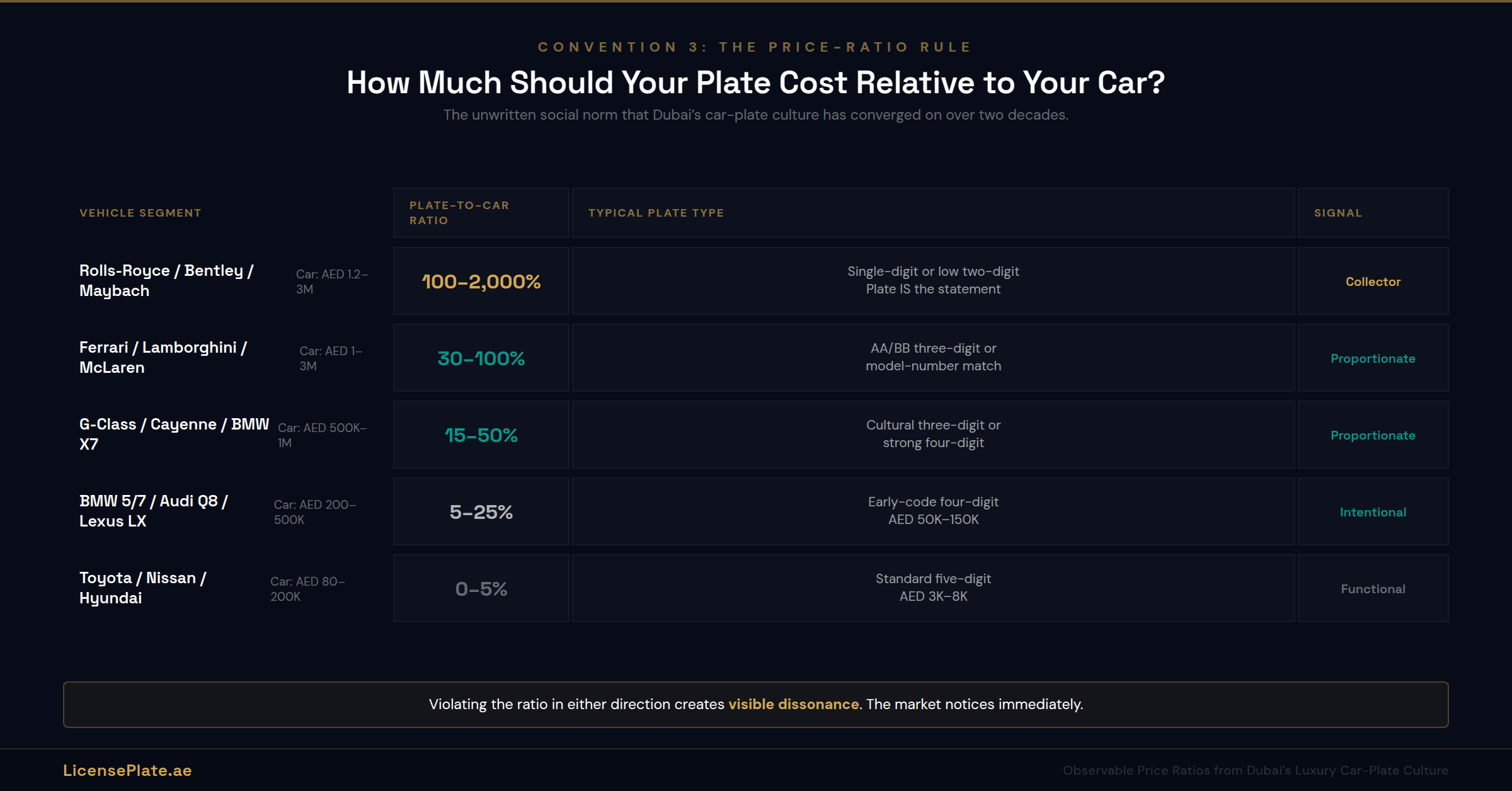
القاعدة: في ثقافة السيارات واللوحات الفاخرة في دبي، ينبغي أن تكلّف اللوحة بين نحو 5% و100% من قيمة السيارة لتبدو متناسبة. فدون 5%، تبدو اللوحة فكرة لاحقة (لوحة خماسية على لامبورغيني). وفوق 100%، تشير اللوحة إلى جامع اهتمامه الأساسي بالرقم لا بالمركبة (لوحة أحادية الرقم على تويوتا).
والنطاق واسع لأنه يتفاوت بحسب شريحة المركبة. ويرسم الجدول أدناه النسب المرصودة من طرقات دبي:
رولز-رويس وبنتلي ومايباخ (سيارة من 1.2 إلى 3 ملايين درهم): اللوحة عادةً من 100 إلى 2,000% من قيمة السيارة. فاللوحة هي الأصل الأساسي. والسيارة هي الحاملة. مثال مسمّى: اللوحتان "5" و"7" بيعتا بنحو عشرة أضعاف الرولز-رويس التي تحملانها.
فيراري ولامبورغيني وماكلارين (سيارة من مليون إلى 3 ملايين درهم): اللوحة عادةً من 30 إلى 100% من قيمة السيارة. فاللوحة والسيارة إشارتا مكانة متكافئتان تقريباً. مثال مسمّى: لوحة ثلاثية برمز AA بقيمة 3 إلى 5 ملايين درهم على فيراري 296 GTB بقيمة 1.5 مليون درهم تمثّل نسبة من 200 إلى 330%، وهي تُعتبر متناسبة في هذه الشريحة لأن مطابقة رقم الطراز تضيف قيمة هوية تتجاوز النسبة المالية.
مرسيدس فئة G وبورشه كايين وبي إم دبليو X7 (سيارة من 500 ألف إلى مليون درهم): اللوحة عادةً من 15 إلى 50% من قيمة السيارة. لوحة ثلاثية ذات دلالة ثقافية أو رباعية قوية في نطاق 100 ألف إلى 500 ألف درهم. متناسبة ومقصودة.
بي إم دبليو الفئة الخامسة/السابعة وأودي Q8 ولكزس LX (سيارة من 200 ألف إلى 500 ألف درهم): اللوحة عادةً من 5 إلى 25% من قيمة السيارة. لوحة رباعية برمز مبكر في نطاق 50 ألفاً إلى 150 ألف درهم. ملحوظة دون أن تكون غير متناسبة.
تويوتا ونيسان وهيونداي (سيارة من 80 ألفاً إلى 200 ألف درهم): اللوحة عادةً من 0 إلى 5% من قيمة السيارة. لوحة خماسية اعتيادية بين 3,000 و8,000 درهم. وظيفية، لا تطلّعية. ولا وصمة مرتبطة بذلك لأن فئة المركبة لا تشارك في ثقافة اللوحات كإشارة مكانة.
والنسبة ليست معادلة. إنها عُرف اجتماعي تقاربت عليه السوق عبر عقدين من تداول اللوحات وثقافة السيارات في الإمارات. وانتهاكه في أي من الاتجاهين يخلق تنافراً بصرياً يلاحظه المشاركون الآخرون في الثقافة فوراً. ويوفّر مقال التحقّق من الأسعار لدينا التسعير الدقيق بحسب الرمز وعدد الأرقام، وتقدّر حاسبة اللوحات نطاق القيمة الحالي لأي لوحة بعينها، ويوثّق تفصيل تكلفة الملكية تكاليف الاحتفاظ المستمرّة التي تؤثّر في الاقتصاديات الإجمالية لأي اقتران.
ما يفعله الاقتران الصحيح بقيمة إعادة البيع
هذا هو القسم الذي يربط اقتران السيارة باللوحة بالتحليل المالي في بقية المكتبة. فاللوحة المقترنة جيداً لا تبدو صحيحة فحسب. بل تؤثّر في قيمة إعادة بيع حزمة السيارة واللوحة بثلاث طرق قابلة للقياس.
أولاً، لوحة رقم الطراز تُباع أسرع حين تقترن بالسيارة المطابقة. فاللوحة 911 المعروضة مع بورشه 911 تُباع أسرع من اللوحة نفسها معروضةً وحدها لأن المشتري يحصل على اقتران جاهز. وتقليص زمن البيع قابل للرصد في بيانات إعلانات السوق الثانوية: فالإعلانات المقترنة تولّد استفسارات يومية أكثر من إعلانات اللوحات المفردة للرقم نفسه.
ثانياً، الحزمة المجمّعة تحقّق علاوة على مجموع أجزائها. ففيراري 458 بقيمة 600,000 درهم ولوحة 458 على رمز A بقيمة 300,000 درهم ستُباعان بنحو 950,000 إلى مليون درهم كإعلان مجمّع، أي علاوة من 5 إلى 10% على بيوع منفصلة مجموعها 900,000 درهم. والعلاوة تعكس استعداد المشتري للدفع مقابل اقتران مكتمل بدلاً من تجميع واحد من الصفر.
ثالثاً، الاقتران الصحيح يحمي القيمة المتصوَّرة للسيارة أثناء الاستهلاك. ففيراري 458 عمرها خمس سنوات بلوحة 458 تحتفظ بنسبة أعلى من قيمتها المجمّعة مقارنةً بالسيارة نفسها بلوحة خماسية عشوائية، لأن قيمة اللوحة مستقلّة عن منحنى استهلاك السيارة. ويوثّق تحليلنا الاستثماري ومقارنة اللوحات بالأصول البديلة كيف تحافظ اللوحات المميّزة على قيمتها بينما تستهلك المركبات قيمتها بنسبة 10 إلى 20% سنوياً.
ولأي شخص يفكّر في بيع تركيبة سيارة ولوحة مقترنة، يغطّي دليل البيع الآليات المحدّدة للعرض والتسعير وإغلاق بيع في السوق الثانوية.
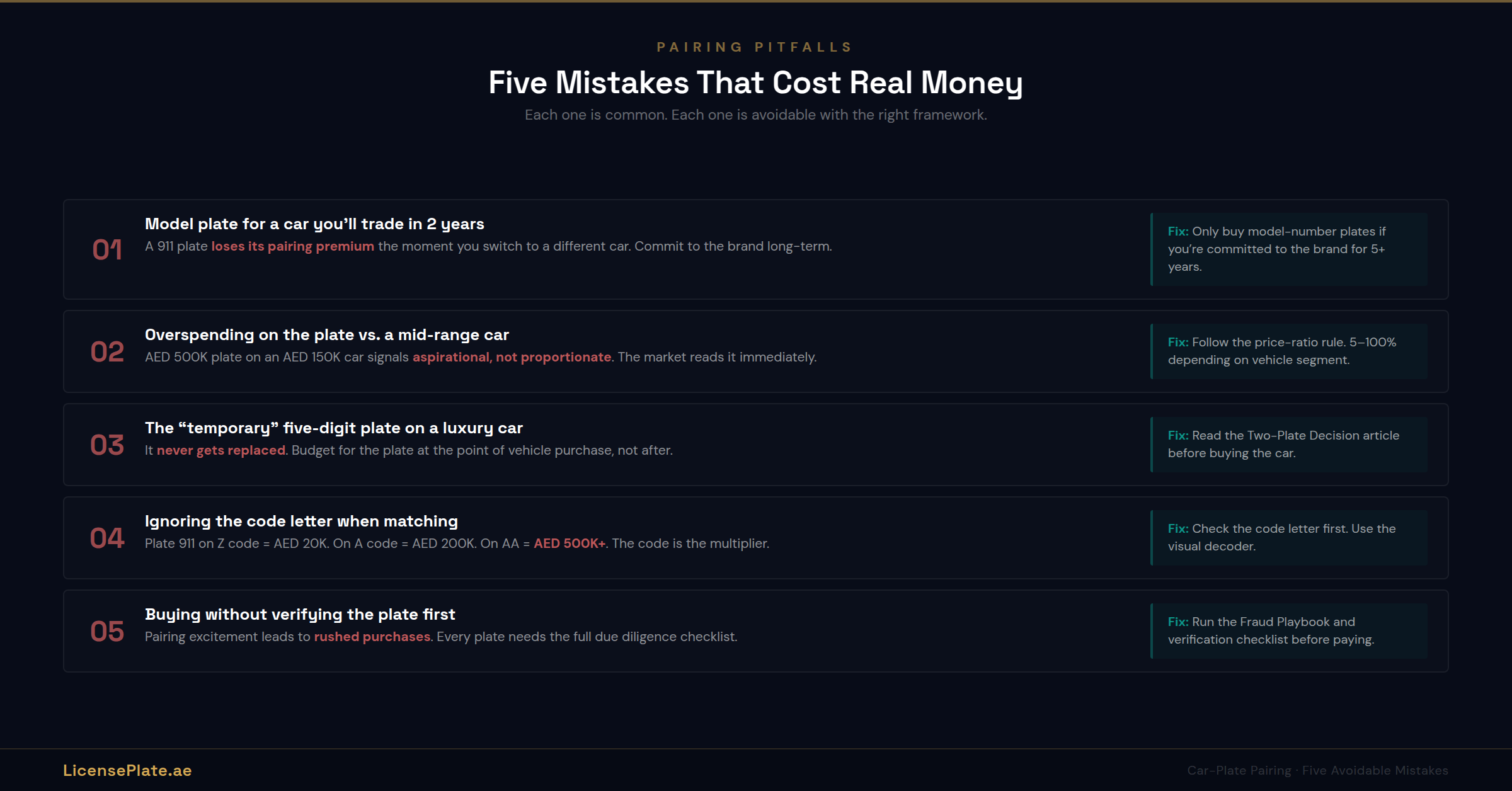
خمسة أخطاء في الاقتران تكلّف مالاً حقيقياً
الخطأ الأول: شراء لوحة رقم طراز لسيارة تنوي استبدالها خلال عامين. فإذا اشتريت لوحة 911 لبورشتك الحالية ثم استبدلتها بسيارة مختلفة، تفقد اللوحة علاوة اقترانها. فلوحات أرقام الطرازات تكون أثمن حين يلتزم المالك بالعلامة على المدى الطويل.
الخطأ الثاني: الإفراط في الإنفاق على اللوحة نسبةً إلى سيارة متوسطة. فلوحة بقيمة 500,000 درهم على سيارة بقيمة 150,000 درهم تخلق تفاوتاً بصرياً ومالياً تقرؤه السوق كطموح لا كتناسب. وما لم تكن جامع لوحات مركبته ثانوية، تشير النسبة إلى سوء تخصيص.
الخطأ الثالث: شراء لوحة خماسية لسيارة فاخرة وتسميتها "مؤقّتة". لا تكون كذلك أبداً. فاللوحة الخماسية المؤقّتة تصبح دائمة لأن استبدالها يتطلّب جهداً، والسيارة تسير بشكل جيد دونها. فإذا كنت تشتري سيارة فاخرة، خصّص ميزانية للوحة عند نقطة شراء المركبة لا بعدها. ويغطّي مقال قرار اللوحتين ذلك بالتفصيل.
الخطأ الرابع: تجاهل حرف الرمز عند المطابقة. فاللوحة 911 على رمز Z تساوي نحو 20,000 إلى 40,000 درهم. والأرقام نفسها على رمز A تساوي من 150,000 إلى 300,000 درهم. وعلى رمز AA، من 500,000 إلى أكثر من مليون درهم. فالرمز هو المضاعِف الذي يحدّد ما إذا كان الاقتران يُقرأ كمقصود أم عارض. ويشرح دليلنا البصري معنى كل رمز.
الخطأ الخامس: شراء لوحة دون التحقّق منها أولاً. فحماس الاقتران يقود إلى مشتريات متعجّلة. وينبغي أن يمرّ كل شراء لوحة عبر قائمة التحقّق ودليل الاحتيال قبل انتقال المال، مهما بدا الاقتران مثالياً.
الأسئلة الشائعة
س: ما أفضل لوحة لبورشه 911 في دبي؟
لوحة ثلاثية الأرقام تقرأ 911 على رمز مبكر أو ثنائي الحرف (A أو B أو AA أو BB). فعلى رمز A، توقّع من 150,000 إلى 300,000 درهم. وعلى AA، من 500,000 إلى أكثر من مليون درهم. وعلى رمز متأخّر (من V إلى Z)، من 20,000 إلى 40,000 درهم. فالرمز يحدّد السعر، والأرقام تحدّد الاقتران. افحص التركيبة المحدّدة عبر حاسبة اللوحات.
س: كم ينبغي أن أنفق على اللوحة نسبةً إلى سيارتي؟
العُرف المرصود في دبي هو 5 إلى 100% من قيمة السيارة، بحسب شريحة المركبة. فمالكو رولز-رويس ينفقون روتينياً على اللوحة أكثر من السيارة. ومالكو الترف اليومي (بي إم دبليو وأودي) ينفقون عادةً من 5 إلى 25%. ولا توجد قاعدة ثابتة، لكن انتهاك النسبة في أي من الاتجاهين يخلق تنافراً ظاهراً.
س: هل تزيد اللوحة المطابقة قيمة سيارتي عند إعادة البيع؟
نعم، بشكل قابل للقياس. فلوحة رقم الطراز المقترنة بالسيارة المطابقة تُباع أسرع وتحقّق علاوة من 5 إلى 10% على مجموع البيوع المنفصلة. كما تحمي اللوحة القيمة المتصوَّرة للسيارة أثناء الاستهلاك لأن قيمة اللوحة مستقلّة عن عمر المركبة.
س: هل ينبغي أن أشتري اللوحة قبل السيارة أم بعدها؟
قبلها، إذا كنت تعرف أي سيارة ستشتري وتريد تأمين الرقم المطابق. وبعدها، إذا كنت تريد رؤية السيارة أولاً ثم إيجاد لوحة تكمّلها. ويغطّي مقال قرار اللوحتين إطار القرار الكامل.
س: ماذا لو لم توجد لوحة برقم طراز لسيارتي؟
الجأ إلى مطابقة هوية العلامة (العُرف الذي يطابق مستوى مكانة اللوحة بشريحة السيارة) أو إلى رقم ذي دلالة ثقافية ومعنى شخصي. ويغطّي دليل دلالات الأرقام أي الأرقام تحمل ثقلاً ثقافياً في التقاليد الخليجية والإسلامية الأوسع.
س: هل يمكنني نقل لوحة بين سيارات مختلفة أملكها؟
نعم. فيمكن نقل لوحة بين مركبات مسجّلة باسم المالك نفسه عبر هيئة الطرق والمواصلات (في دبي) أو الجهة المختصّة في الإمارة المعنية. فاللوحة تنتقل معك، لا مع السيارة. وهذا مهمّ للمالكين الذين يستبدلون سياراتهم كثيراً لكنهم يريدون الاحتفاظ برقم اللوحة نفسه عبر المركبات.
س: ما اللوحات الأنسب لمرسيدس فئة G؟
عُرف فئة G في دبي هو الأرقام ذات الدلالة الثقافية لا مطابقة أرقام الطرازات. فالأرقام المتكرّرة (777 و888 و999)، والمتناظرة (787 و818)، والأرقام ذات المعنى الشخصي أو الديني (786) هي الاقترانات الأكثر شيوعاً. واللوحات الثلاثية على رمزَي AA أو BB هي خيار المكانة لمالكي فئة G.
س: أين يمكنني البحث عن أرقام لوحات محدّدة لمطابقة سيارتي؟
ابدأ بسوق LicensePlate.ae. رشّح النتائج بالأرقام التي تريدها، ثم تحقّق من حرف الرمز والنطاق السعري. واستخدم حاسبة اللوحات للحصول على قيمة مقدّرة، واقرأ مقال التحقّق من الأسعار لنتائج المزادات المماثلة. وتصفّح إعلانات دبي لترى ما هو متاح حالياً.
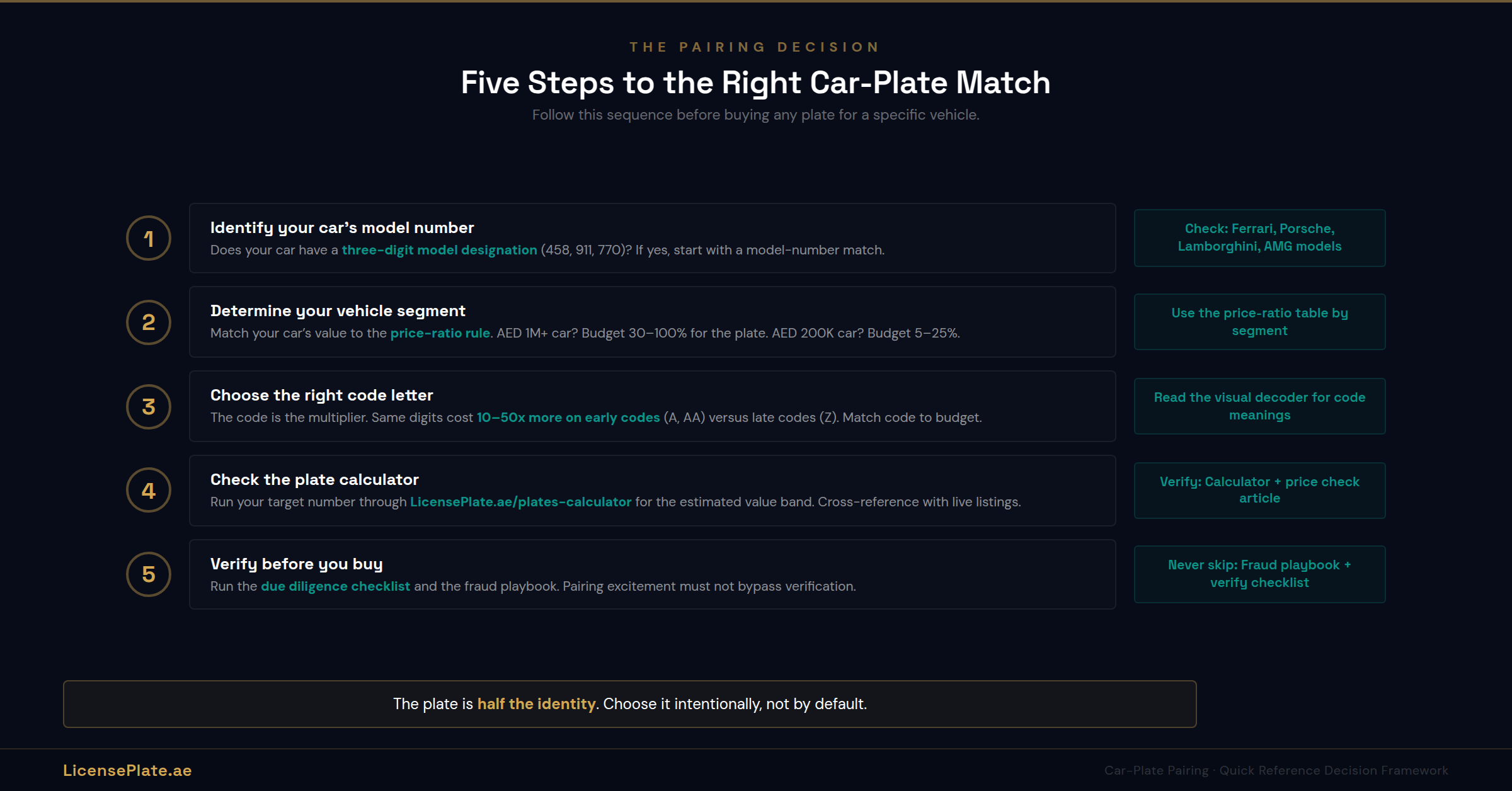
اللوحة على سيارتك ليست تفصيلاً. ففي دبي، هي نصف الهوية. والاقتران الصحيح يضخّم السيارة والرقم معاً. والاقتران الخاطئ يقلّل من شأنهما معاً. والإطار أعلاه يمنحك الأعراف التي تستخدمها السوق، ونسب الأسعار التي تتوقّعها السوق، والأخطاء التي تعاقب عليها السوق.
ابدأ بـحاسبة اللوحات للتحقّق من نطاق القيمة لرقمك المستهدف. وتصفّح إعلانات دبي لترى ما هو متاح الآن. واقرأ مقال التحقّق من الأسعار للتفصيل الكامل رمزاً برمز. وإذا كنت لا تزال تقرّر ما إذا كنت ستشتري اللوحة أو السيارة أولاً، فمقال قرار اللوحتين يحسم ذلك السؤال. الاقتران في الانتظار. والسؤال هو ما إذا كنت ستختاره عن قصد أم ستدعه يحدث افتراضياً.